
REVIEW · CHENGDU
13 Day Classic Tibet Tour on Flight and Soft Sleeper Train
The best feature here is the route itself. You do not simply fly into Lhasa, take a few city tours, and leave. You reach Tibet by the Qinghai-Tibet Railway, then travel through Nyingchi, Lhasa, Shigatse, Everest Base Camp, and Namtso Lake in one carefully packed 13-day journey.
I like the small-group format, capped at 10 people, and the practical setup: four-star hotels, airport transfers, the Tibet Travel Permit, oxygen on the Everest portion, and a team doctor. I also like the variety, from Potala Palace and Jokhang Temple to forests, glaciers, high lakes, and the world’s highest mountain.
The tradeoff is the pace. You cover vast distances, cross several very high passes, and face rough roads near Everest. You need moderate fitness, patience with long drives, and a willingness to give up some free time for the sake of seeing a lot.
Key points to know before booking
- Soft sleeper arrival: Fly from Chengdu to Xining, then continue toward Lhasa by soft sleeper train, a more gradual and scenic way to reach Tibet.
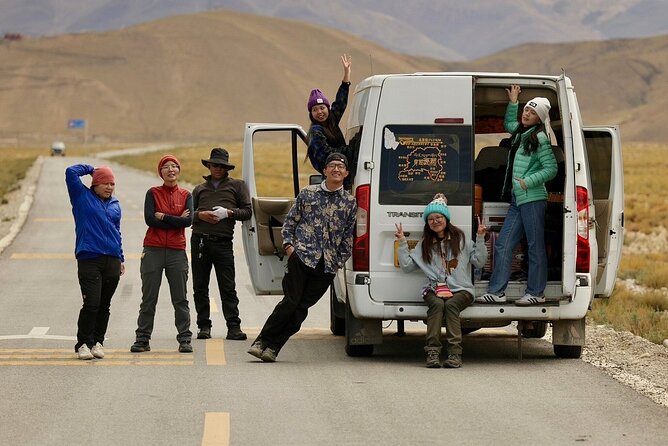
- Up to 10 people: The VIP small-group plan keeps the vehicle less crowded, with the tour promising more than 30 percent of seats left open.
- Seven major Tibet highlights: Potala Palace, Jokhang Temple, Yamdrok Lake, Karola Glacier, Tashilhunpo Monastery, Everest Base Camp, and Namtso Lake all appear on the route.
- Nyingchi adds a different Tibet: Basomtso Lake, Lulang Forest, Nyingchi, and Kadanggou Waterfall bring forests and river valleys into a trip otherwise known for bare high-altitude terrain.
- Useful high-altitude supplies: Oxygen is provided while traveling to Everest Base Camp, and winter departures include a hot water bottle and sleeping bag for that section.
- Strong value at $2,030: The price covers 4-star hotels, transport, attraction tickets, breakfast, the permit, insurance, and listed flights and train arrangements, but not most lunches and dinners.
From Chengdu to the Qinghai-Tibet Railway
Your trip begins with airport pickup in Chengdu and a night at the Tianfu International Hotel. The first day is mainly a travel and check-in day, so do not expect sightseeing in Chengdu unless your flight arrives early and you arrange extra time on your own.
On Day 2, the listed reference flight leaves Chengdu Tianfu International Airport at 9:10 a.m. and reaches Xining at 10:40 a.m. From there, you board a Qinghai-Tibet Railway service toward Lhasa. The exact train may be Z8991, Y971, or Z22, depending on the final operating schedule.
A soft sleeper berth is a worthwhile part of the trip. It gives you a more comfortable overnight train ride than a hard seat, and the gradual climb toward the Tibetan plateau can be easier on your body than flying directly to Lhasa. You also get a look at the changing scenery from the train window, though the train portion is still a long journey rather than a quick transfer.
The schedule is not especially flexible. Train and flight times can change, and much of Day 2 is spent getting into position for Tibet. Still, this is a sensible way to combine transport with the experience of crossing the plateau by rail.
More Overnight and Sleeper Trains in China:
- Egypt on Budget – 8 Days ( Cairo , Aswan , Nile Cruise – Luxor ) Sleeper Train
★ 4.5 · 121 reviews - From Hanoi: 2-Day 2-Night Sapa Tour by Overnight Train
★ 4.4 · 96 reviews - Sapa: 3-Day, 3-Night Trek and Hotel with Overnight Train
★ 4.2 · 64 reviews
Lhasa arrival and the first days at altitude
You arrive in Lhasa on Day 3, where your guide meets you in the arrival hall and takes you to the hotel. The sensible plan is to rest rather than rush out to sightsee. At this altitude, a quiet first day is not wasted time. It gives you a chance to see how your body responds before the harder road sections begin.
Your hotel is described as a standard four-star property in the city center, generally within 1 to 3 kilometers of Potala Palace and Jokhang Temple. That location matters. You are close enough to reach the main sights without spending every city visit in a vehicle, though the exact hotel is not named in the available information.
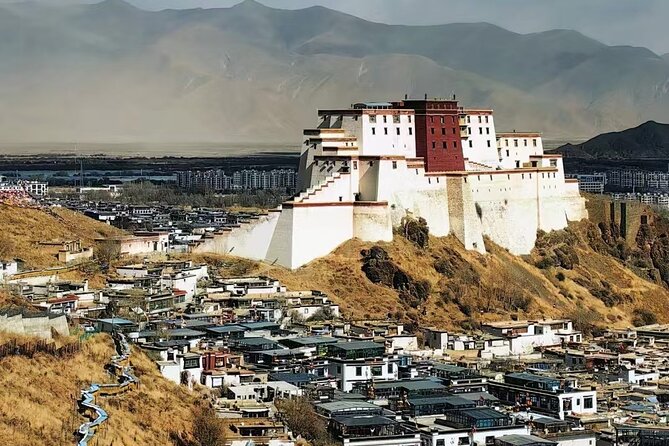
Day 4 brings the most important sights in central Lhasa. At Potala Palace, you visit the former residence of the Dalai Lamas and a major center of Tibetan political and religious life. The palace complex is large, historic, and built at serious altitude, so take the stairs slowly and keep water close.
The afternoon is given to Jokhang Temple, one of the most sacred Buddhist sites in Tibet. Its design brings together Tibetan, Tang, Nepalese, and Indian influences. This is a more intimate visit than Potala Palace, with a strong sense of living devotion rather than only monumental architecture.
Afterward, you can walk clockwise around the temple and explore Barkhor Street. The route is not just a market stop. It is a chance to watch local religious practice, browse Tibetan handicrafts, and get a feel for central Lhasa beyond the major monuments. Your free time here is useful, so avoid filling it with extra shopping unless you are sure you have enough energy.
A Tibetan-style welcome dinner is included as one of the tour gifts. Bottled water is also provided, which is a small but helpful detail during long road days.
Nyingchi brings forests, rivers, and Basomtso Lake
Day 5 changes the scenery completely. You leave Lhasa and travel east along the Nyang River toward Basomtso Lake in Gongbo’gyamda County. The route crosses Mila Mountain Pass at about 5,013 meters before descending toward the lake and the southern side of the Nyang River area.
Basomtso offers a calmer stop after Lhasa’s temples and city traffic. The drive is long, and the three-hour stop listed for the lake should be viewed as a focused visit rather than a full day of lakeside relaxation. Later, you continue to Nyingchi, known in the tour material as the Throne of the Sun.
The Nyingchi region is valuable because it shows a side of Tibet many first-time visitors do not expect. You see river valleys, forests, and mountain scenery rather than only dry high plateaus. The contrast helps explain why this route feels broader than a standard Lhasa and Everest trip.
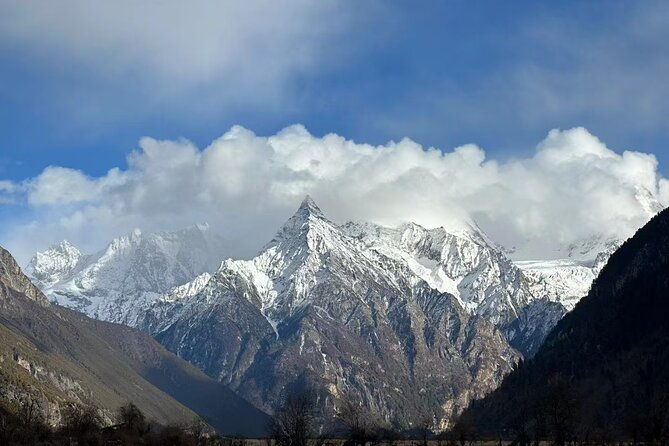
On Day 6, you travel from Nyingchi toward Lulang, roughly 100 kilometers away and about two hours by road. You cross Segrila Mountain at approximately 4,515 meters, with views toward Namjagbarwa Mountain if conditions are clear.
The stop at Lulang Forest is one of the trip’s more unusual choices. Lulang means a place where gods reside in Tibetan, and the area is presented as a pastoral, forested setting with mountain slopes and open pasture. You then descend toward Lulang Pasture, where the scenery has a softer, greener feel than the high desert roads near Everest.
Day 7 includes Kadanggou, also called Heavenly Buddha Waterfall. The area features a gorge, deep valleys, high mountains, and primitive forest. It is a good break from the formal sightseeing rhythm of temples and monasteries, though road conditions and weather can affect how much time you actually spend outdoors.
These three Nyingchi days are not throwaway additions. They make the tour more varied. The drawback is that they add long drives before you return west toward the better-known Tibet sights.
Yamdrok Lake, Karola Glacier, and Shigatse
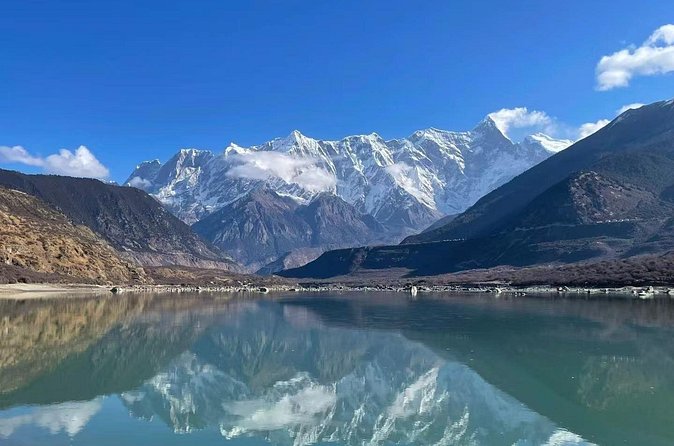
Day 8 takes you west through the Nyangchu Valley toward Yamdrok Yumtso, also called Yamdrok Lake. This turquoise high-altitude lake is one of the classic views of southern Tibet, and the road gives you a chance to see farmland and changing mountain colors along the way.
You also pass Karola Glacier beside the road at about 4,960 meters. This is a short, dramatic stop rather than a glacier expedition. The altitude and cold can be sharp, so keep your visit practical and follow your guide’s advice about how long to remain outside.
The day ends in Shigatse, Tibet’s second-largest city and an important religious center associated with the Panchen Lama. Expect another full driving day. Yamdrok Lake and the glacier are the main visual rewards, while Shigatse provides the base for the Everest section.
The following day takes you toward Tingri along the Friendship Highway. The road between Tingri and Rongbuk is described as bumpy and under construction. This is where the tour becomes less comfortable. You may spend several hours in a vehicle over rough ground, and the scenery will not make every jolt disappear.
That warning matters because Everest Base Camp is not a quick roadside attraction. The approach is remote, slow, and physically tiring. You should book this section for the mountain itself, not for comfort.
More Train Tours in China:
- Hong Kong: Big Bus Hop-On Hop-Off Tour & Optional Peak Tram
★ 4.4 · 982 reviews - Hong Kong: Peak Tram and Sky Terrace 428 Pass
★ 4.2 · 479 reviews - Suzhou Private Day Trip from Shanghai with Bullet Train Option
★ 5.0 · 366 reviews - Private Suzhou Day Trip from Shanghai by Bullet Train with All Inclusive Option
★ 5.0 · 283 reviews
Everest Base Camp and the hard road to Rongbuk
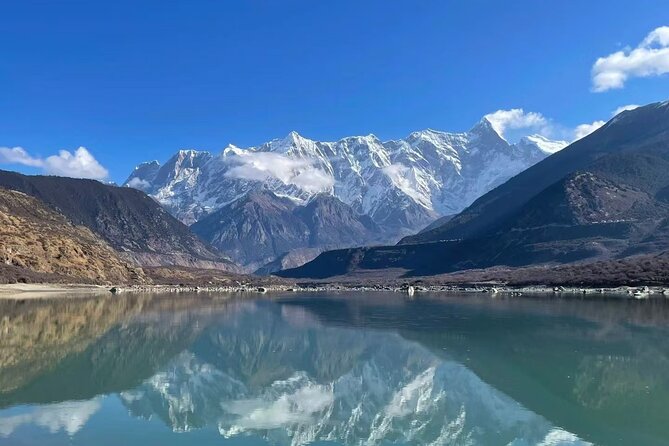
From Tingri, the route continues through the Qomolangma National Nature Preserve toward Everest Base Camp. The road is rough, crossing open grassland, rivers, and high mountain terrain. On a clear day, you may see several peaks above 8,000 meters, but mountain weather can hide the views.
You spend the night around Rongbuk, then rise early on Day 10 for sunrise and views of Mount Everest. The timing is demanding, but morning light is the reason for the early start. From Rongbuk, you take a local bus for the final half-hour ride to Everest Base Camp.
The base camp visit is the emotional high point for many people on this route. It is also the place where altitude, cold, tiredness, and road fatigue are most likely to catch up with you. Oxygen is provided during the journey to Everest Base Camp, and winter departures include a hot water bottle and sleeping bag, but these supplies do not remove the need to pace yourself.
After the base camp visit, you return toward Tingri and continue back toward Shigatse. The schedule says you begin the descent around 1 p.m., so this is not a leisurely morning with unlimited time at the mountain. You need to be ready to move when the group departs.
Tashilhunpo Monastery and the return to Lhasa
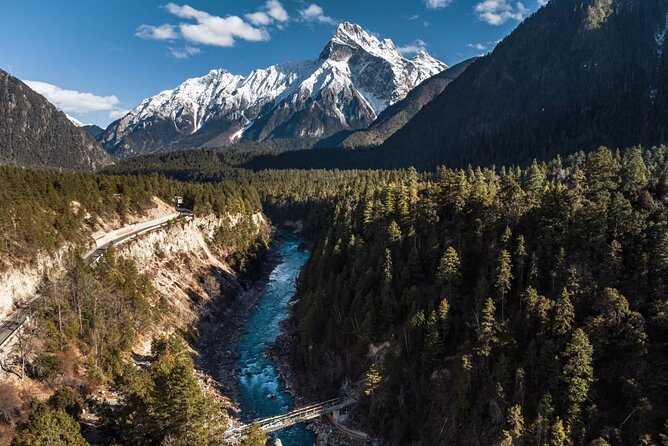
Day 11 includes Tashilhunpo Monastery, the largest monastery in western Tibet and one of the major historic sites on the route. The stop gives you more religious context after Potala Palace and Jokhang Temple, but the atmosphere and scale are different.
The day also involves roughly four hours of driving back toward Lhasa from Shigatse. That makes Tashilhunpo a useful final major cultural stop before the trip shifts back to natural scenery.
Day 12 is another early start, this time for Namtso Lake. You drive through northern Tibet’s wide grasslands, passing prayer flags and traveling along the Qinghai-Tibet Highway. The route crosses the 5,190-meter Lakenla Pass, one of the highest points on the trip.
Namtso is a fitting final outing. The lake gives you another high-altitude setting, but the journey there is part of the attraction. You see open country, distant mountains, and the broad sense of space that defines northern Tibet. It is also another demanding day, with altitude and driving time to consider after Everest.
On Day 13, transport takes you to Lhasa Gonggar Airport, about 60 kilometers from Lhasa. The listed reference flight leaves at 6:30 p.m. and reaches Chengdu at 8:55 p.m. The drive to the airport is about one hour, so you should have a little time in the morning, but the tour does not promise a final city program.
What the $2,030 price really covers
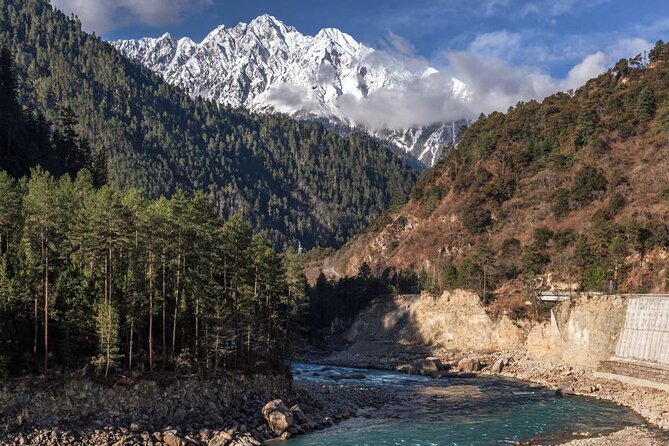
At $2,030 per person, this is not a budget backpacking trip, but the price includes a great deal of costly planning. You receive:
- Round-trip listed airfare connected to the route
- Soft sleeper train arrangements from Xining toward Lhasa
- Four-star hotels throughout the tour
- Transport during the trip
- Attraction admission
- Tibet Travel Permit
- Breakfast on 11 mornings
- Tourist accident and casualty insurance
- Oxygen for the Everest Base Camp section
- Winter hot water bottle and sleeping bag for the Everest section
- A welcome dinner, bottled water, and other listed gifts
Most lunches and dinners are not included. That gives you some control over food spending, but you should budget for many meals across 13 days. Guides can recommend places to eat, though the tour does not set out a daily meal allowance.
A single-room supplement costs about $25 per day. For solo visitors, that extra amount is modest compared with the full trip price, but it is still worth adding to your calculation before booking.
The early booking plan and group discounts may lower the price, but the exact savings are not specified. I would treat $2,030 as the working price and regard any discount as a bonus rather than something to count on.
Who will appreciate this route most
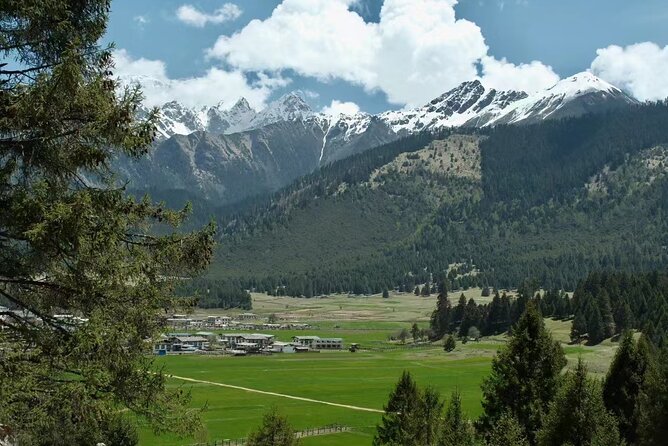
I would choose this tour if you want to see many of Tibet’s major sights in one organized trip and do not want to manage permits, train tickets, high-altitude transport, and remote road arrangements yourself.
It suits people who value logistics and coverage more than a slow schedule. It can also work for older adults who are reasonably fit and comfortable with long travel days. One comparable journey on this route included people in their 60s and 70s, which suggests age alone is not the deciding factor. Fitness, altitude tolerance, and patience matter more.
You should think twice if you dislike early departures, rough roads, shared transport, or changing hotels. The tour is capped at 10 people, but that is still a group schedule. You will not always be able to linger at a lake or temple when the group has a long road ahead.
The local Tibetan agency, guaranteed permit support, and exclusive team doctor add reassurance. Still, you should discuss any medical concerns with a doctor before booking, since the route reaches several points above 5,000 meters.
Cancellation is flexible only up to a point. Cancel at least six full days before departure for a full refund, two to six days before for a 50 percent refund, and within two days for no refund. The minimum group requirement also matters, since a cancellation by the operator would lead to another date or a full refund.
Should you book this Tibet tour?
Book it if you want the big Tibet checklist, plus Nyingchi’s forests and Basomtso Lake, without arranging the permit and transport yourself. The strongest parts are the soft sleeper approach to Lhasa, the small group, the included support at Everest, and the range of places covered.
Do not book it expecting a restful holiday. This is a demanding road journey with high passes, rough pavement near Everest, long drives, and little spare time. At $2,030, it offers solid value for a 13-day guided trip with hotels, transport, train, flights, permits, tickets, and breakfast, provided you are comfortable paying separately for most lunches and dinners.
FAQ
Where does the tour start?
The tour starts at Chengdu Airport in Chengdu, China. Pickup is offered, and the first hotel is the Tianfu International Hotel.
How do I reach Lhasa?
You fly from Chengdu to Xining, then continue toward Lhasa on the Qinghai-Tibet Railway in a soft sleeper berth. The exact train service can vary.
What is the maximum group size?
The tour has a maximum of 10 travelers. It also promises that more than 30 percent of seats remain empty as part of its VIP small-group format.
Are hotels included?
Yes. Four-star hotels are included throughout the tour. The hotels are described as city-center properties, generally 1 to 3 kilometers from Potala Palace and Jokhang Temple in Lhasa.
Are meals included?
Breakfast is included on 11 mornings, and a Tibetan-style welcome dinner is included. Most lunches and dinners are not included, though guides can recommend places to eat.
Is the Tibet Travel Permit included?
Yes. The Tibet Travel Permit is included, and the local agency guarantees permit arrangements as part of the tour service.
Just added around China
- Xi’an: Maiji Grottoes & Fuxi Temple Day Trip by Bullet Train★ 5.0 · 2 reviews
- 5-Day Combo Package of Zhangjiajie With Fenghuang (By Fast Train)★ 5.0 · 14 reviews
- Zhengzhou Private Day Trip to Mutianyu Great Wall by Bullet Train★ 5.0 · 2 reviews
- Form Xi’an To Luoyang Longmen Grottoes & Shaolin Temple Day Tour by Bullet Train★ 5.0 · 6 reviews
- Private High-speed Train Arrival Transfer: Xi’an Bei (North) Station to Hotel★ 5.0 · 5 reviews
- Private tour to Longmen Grottoes and Shaolin from Xi’an by train★ 5.0 · 4 reviews
- Private Chengdu Highlights Day Trip: Panda Base and City from Xi’an by Train★ 5.0 · 4 reviews
- 2 Days Tour of Xian & Beijing via Train: Terracotta Warriors & Great Wall★ 5.0 · 6 reviews
Chengdu Train Tours, compared.
Private 3Day Jiuzhaigou&Huanglong Tour by Fast Train from Chengdu
Read our review →
Xi’an Day Trip Terracotta Warriors and City from Chengdu by Train
Read our review →
2 Days Xian Private Tour from Chengdu by Bullet Train
Read our review →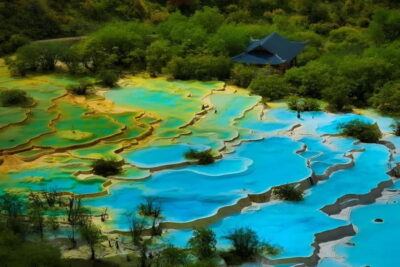
private 2-Day Huanglong Jiuzhaigou tour by train
Read our review →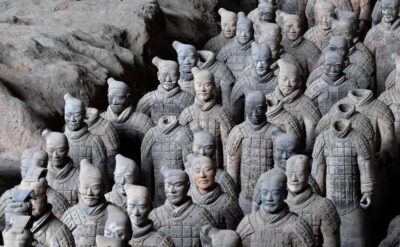
Xi’an Terracotta Warriors Day Trip by Bullet Train
Read our review →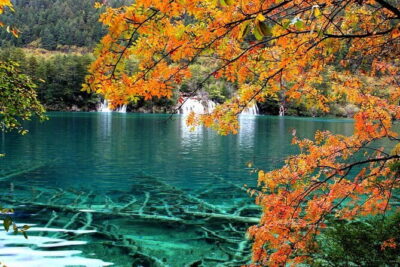
Private 2-Day Jiuzhaigou & Huanglong Tour by Train from Chengdu
Read our review →Browse the lists this tour appears in