
REVIEW · BEIJING
Datong Yungang Grottoes and Hanging Monastery 1-day from Beijing by Train
The most striking part of this day trip is the contrast: one stop takes you into 5th-century Buddhist cave art, while the other clings to a cliff with wooden supports and narrow walkways. The new Beijing to Datong bullet train turns a distant cultural visit into a possible day out, though you will spend much of the day on the move.
I like the private format, since your guide can keep the day moving and explain what you are seeing without a large group slowing things down. I also like the chance to eat Shanxi-style food, something different from the usual Beijing menu. The main drawback is the early start and tight schedule, especially if the Hanging Monastery has a long queue.
Key points to know before booking
- Two-hour bullet train ride each way: The train makes Datong practical as a long day trip from Beijing.
- Yungang Grottoes admission included: Allow about two hours for one of China’s major ancient Buddhist art sites.
- Hanging Monastery access can be difficult: From March through October, advance reservations are required and demand is high.
- Private tour with an English-speaking guide: Guide Star is named in the available feedback and is praised for clear historical explanations and strong time management.
- Shanxi-style lunch included: You get a taste of regional food rather than another standard Beijing meal.
- About $399 per person: The price makes the most sense if you value private transport arrangements, a dedicated guide, included admissions, and a carefully managed day.
Why Datong makes sense as a very long day from Beijing
Datong is not next door to Beijing, but the bullet train changes the calculation. The ride takes about two hours each way, making a same-day visit possible without spending a night away from the capital.
You should think of this as a 12-hour cultural mission, not a slow holiday. The train ride itself is described as smooth and quiet, and it gives you a comfortable break between the early start and the sightseeing. Still, the schedule leaves little room for delays, long meals, or a relaxed wander.
The value comes from seeing two major sites that feel entirely different. Yungang offers carved figures, caves, and centuries of Buddhist art. The Hanging Monastery provides the visual shock of a temple attached to a sheer rock face. Put together, they make Datong far more rewarding than a quick visit to only one attraction.
A private tour matters here. You are not simply being delivered to Datong and left to work out the connections yourself. A dedicated team handles the day, and the local guide is expected to keep an eye on timing. That is useful when two major sites, train travel, lunch, and admission arrangements all need to fit into one outing.
More Day Tours in Beijing:
- Private Day Trip to Tianjin from Beijing by Bullet Train
★ 5.0 · 22 reviews - Private Day Trip: Discover Tianjin by Bullet Train from Beijing
★ 5.0 · 14 reviews - Private Day Trip to Terracotta Army from Beijing by Bullet Train
★ 5.0 · 7 reviews
The Beijing to Datong bullet train
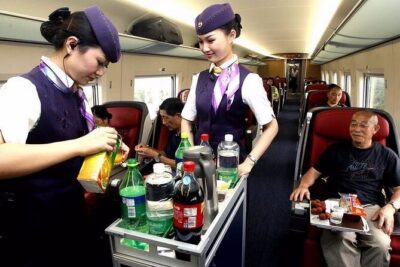
The day begins with the practical advantage of modern rail travel. The train ride takes roughly two hours each way, much less than the old image of an exhausting overland journey.
You can use this time to rest, look out the window, or prepare for a full day of sightseeing. The available feedback describes the ride as smooth and quiet, which is exactly what you want before several hours on your feet.
The tour offers pickup, but the exact pickup details are not provided here. Confirm the meeting arrangement after booking. The activity is also near public transportation, and the stated operating hours run from 7:00 AM to 11:30 PM daily during the listed period.
The train is a major reason to choose this tour instead of trying to arrange Datong as an overnight side trip. It saves hotel time and keeps your Beijing plans open. The tradeoff is simple: you gain convenience, but you must accept an early start and a long day.
Yungang Grottoes: two hours with Northern Wei Buddhist art
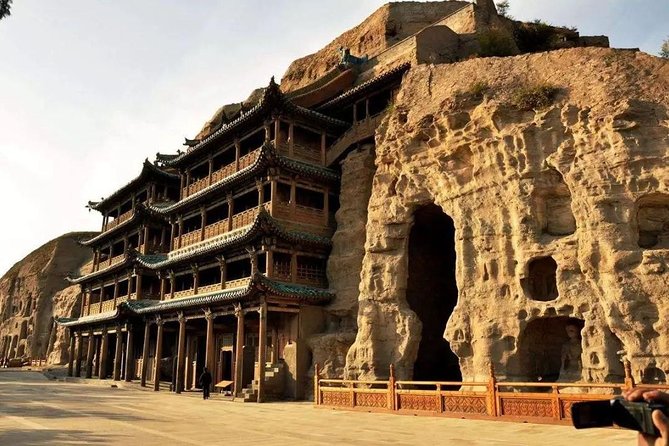
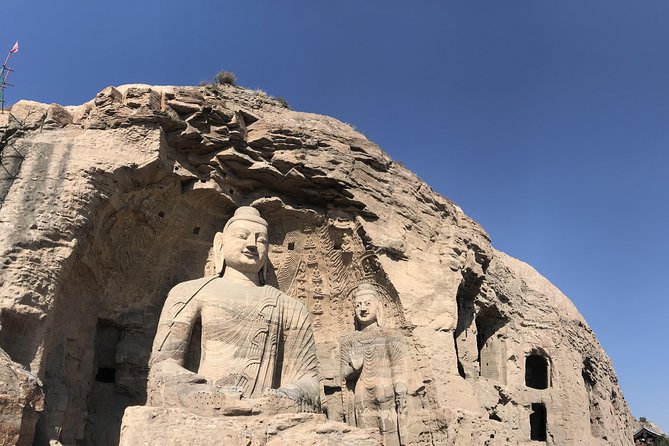
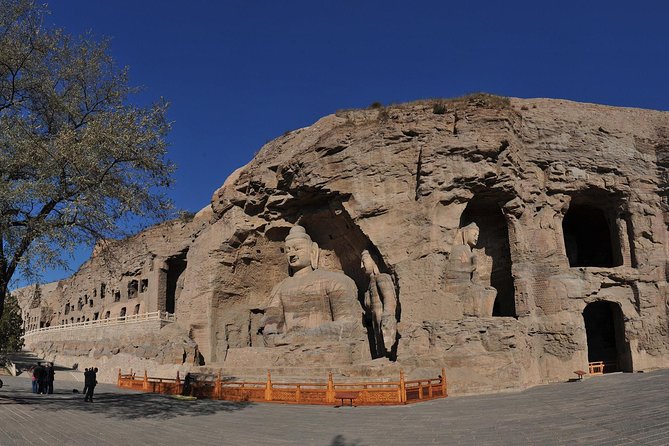
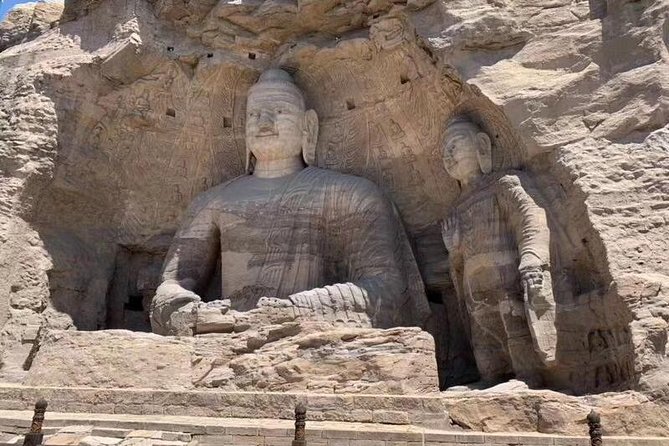
Yungang is the first major sight and likely the artistic center of the day. The site contains 252 grottoes and more than 51,000 Buddha statues and smaller figures, carved between 460 and 525 AD during the Northern Wei Dynasty.
That scale is hard to grasp from a short description. You are not visiting a single decorated chamber. You are moving through a broad group of caves and carved spaces created over several generations. The work shows Buddhist imagery shaped by artistic ideas from south and central Asia, joined with Chinese traditions under imperial sponsorship.
The grottoes are one of China’s three best-known ancient sculptural sites. They were named a UNESCO World Heritage Site in 2001, in recognition of their importance as early Chinese Buddhist cave art.
Plan on about two hours here. That is enough for a meaningful introduction, but it is not enough to inspect every carving at leisure. Your guide’s role becomes important because the site can otherwise feel like a succession of dramatic faces, hands, robes, and painted surfaces without a clear story.
Guide Star is specifically praised for explaining local history in fluent English and for making the visit easier to follow. That kind of interpretation is valuable at Yungang. The carvings are visually powerful on their own, but the Northern Wei setting and the meeting of outside and Chinese artistic traditions give the figures much more meaning.
Take your time with the details that catch your eye. Look at the scale changes between huge Buddha figures and small surrounding carvings. Notice how the cave setting changes the feeling of the art. The stone, shadow, and enclosed spaces make this different from seeing Buddhist statues in an open museum hall.
There is also a practical limit. Two hours can pass quickly, especially if you stop often for photographs. Since the day includes another major site, you will need to follow the guide’s timing rather than linger indefinitely at one cave.
Admission to Yungang is included, which removes one task from the day. You should still treat the visit as an active sightseeing stop, with walking and time spent moving between different parts of the grotto complex.
A Shanxi lunch between the two historic sites
Lunch is intended to give you a taste of Shanxi-style food, rather than keeping you within the familiar Beijing dining pattern. That regional change is a small but worthwhile part of the tour.
The supplied details do not name the restaurant or specific dishes, so you should not book this expecting a particular menu. The useful point is that lunch is built into the day and gives you a chance to try food associated with Shanxi.
This also helps with pacing. A full day that combines train travel, Yungang, and the Hanging Monastery needs a proper pause. The meal will not turn the outing into a leisurely food tour, but it adds a local touch and breaks up the sightseeing.
More Train Tours in Beijing:
- Beijing to Xi’an See Terracotta Warriors with Bullet Train Round Trip Transfer
★ 5.0 · 238 reviews - Beijing to Datong See YunGang Cave, Hanging Temple (Bullet Train)
★ 5.0 · 39 reviews - Beijing: Xi’an Terracotta Tour by Train-All Tickets Included
★ 5.0 · 27 reviews - Beijing:Bullet Train Tour to Hanging Temple&Yungang Grottoes
★ 5.0 · 16 reviews
The Hanging Monastery and its cliffside setting
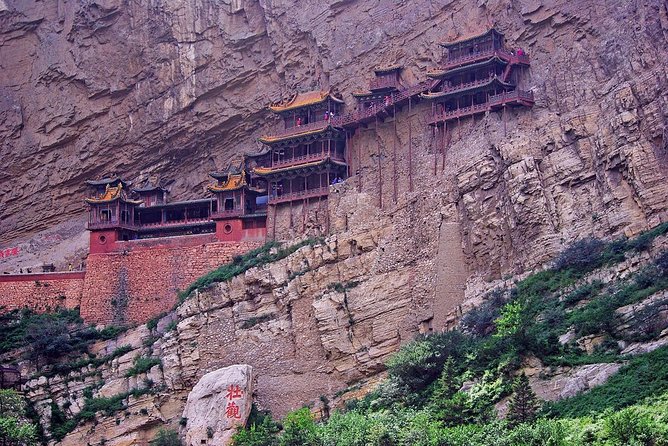
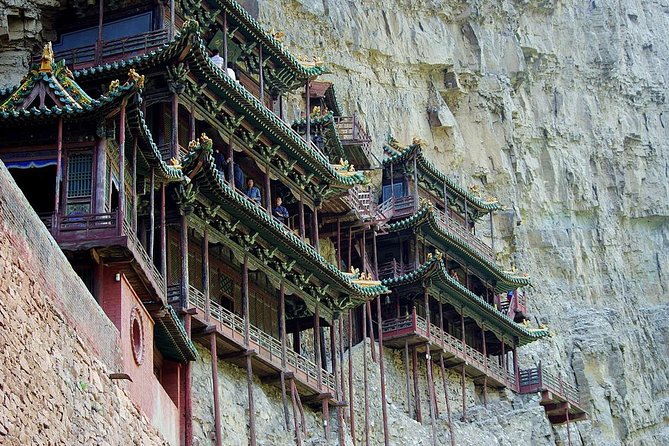
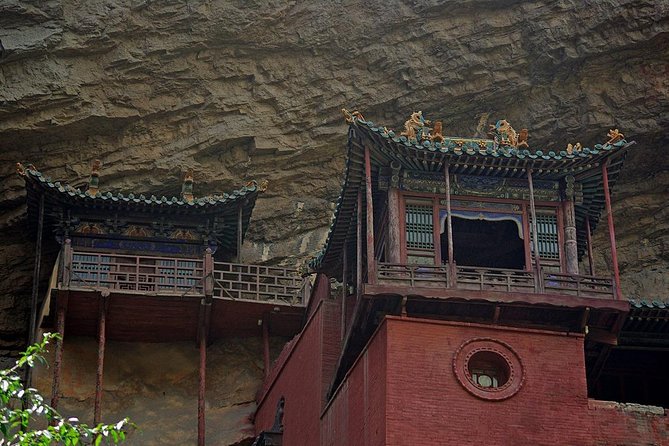
The Hanging Monastery, also called Xuankong Temple, is about 1,500 years old and built into a sheer precipice near Datong. It is famous for combining Buddhism, Taoism, and Confucianism in one complex.
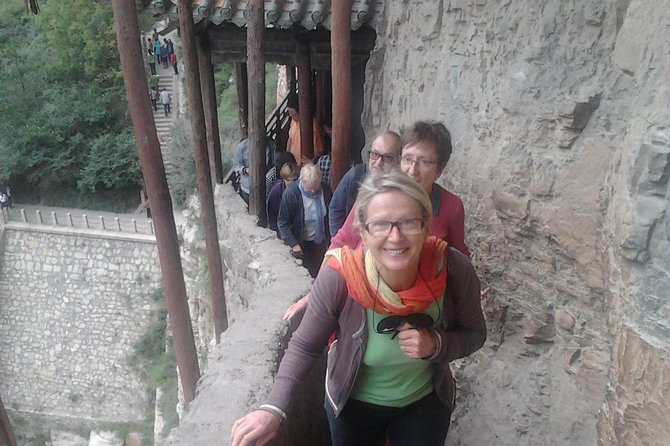
The temple is supported by hidden wooden beams set into the rock. The surrounding cliff helps protect it from the weather, while the position gives the structure its startling appearance. From below, it looks almost too delicate to support itself.
The visit is scheduled for about one hour. That is enough to understand the site and take in its setting, but it does not allow for a slow exploration if access is crowded.
This is the tour’s biggest uncertainty. From March through October, visitor numbers are high, and advance reservations of at least one week are required. Demand for entry can be very competitive. If the wait at the site runs beyond 1.5 hours, the recommended approach is to view the temple from below instead of spending a large part of the day in line.
That policy is sensible. A temple visit is valuable, but losing much of the remaining schedule to a queue could damage the whole day. Viewing the building from below still lets you appreciate the cliff construction and unusual design. If entering the temple is your main reason for booking, ask how access will be handled before you commit.
The physical setting also deserves honest attention. The temple is built into a cliff, so the visit may involve narrow paths, stairs, or exposed sections. The supplied information does not give a formal accessibility description, so ask the operator about current conditions if mobility is a concern.
What the private format adds
This is a private activity, meaning only your own group participates. That gives you more control than a large coach outing, even though the main schedule remains fixed by train times and site access.
I see the strongest benefit in the guide. The route is not difficult to understand on a map, but the day is packed with logistics. You need to reach two major attractions, keep an eye on the clock, and deal with the Hanging Monastery’s reservation pressure.
Guide Star is praised for fluent English, strong historical explanations, and careful time management. One particularly useful point is that the guide can make the local and historic sights meaningful rather than leaving you to decode them alone.
Private touring also suits people who prefer questions and conversation. At Yungang, you can ask why the sculpture looks the way it does or how the Northern Wei period shaped the site. At the Hanging Monastery, you can focus on construction, religion, or the cliff setting according to your interests.
The private format does not make the day leisurely. It simply gives you a dedicated team rather than requiring you to manage every connection independently. That distinction matters. You are paying for coordination and interpretation as much as for transport.
Is $399 per person fair value?
At about $399 per person, this is not a cheap day trip. The price needs to be judged against what it replaces: separate train planning, local transport in Datong, admission arrangements, a guide, and the risk of trying to fit two major sites into one tight day.
The tour includes a private experience, a guide in Datong, train travel as the core connection, admission to both listed sites, and a Shanxi-style lunch. Pickup is offered, although the exact arrangement should be confirmed.
For a solo traveler, the price may feel high. For a couple, family, or small group that wants a dedicated guide and does not want to build the day from separate bookings, the cost can make more sense. Group discounts are available, which may improve the value as the party grows.
I would not choose this trip only because it is the least expensive way to reach Datong. It is not. I would choose it because it makes a difficult day manageable and gives the two sites context.
The best value comes if you care about history, architecture, and religious art. If you mainly want a relaxed day away from Beijing, the early start and packed schedule may leave you tired rather than refreshed.
Timing, reservations, and the best fit
The tour is best for you if you have an extra day in Beijing and want to see major sites beyond the capital without changing hotels. It suits people who enjoy cultural sights and do not mind spending a long day on trains and at historic monuments.
It also fits you if you prefer a guide’s help with context. Yungang is large and historically layered, while the Hanging Monastery has a complicated access situation during the busy months.
March through October deserves special planning. Advance reservations for the Hanging Monastery are required at least one week ahead and can be hard to secure. Ask about this before booking, particularly if entering the temple is essential to you.
The tour is less suitable if you dislike early starts, want a slow lunch, or hope to spend many hours at either site. It is also not ideal if you are unwilling to accept a possible view from below at the Hanging Monastery when the entry wait becomes too long.
Confirmation is sent within 48 hours of booking, subject to availability. Free cancellation is available up to 24 hours before the start time. Changes or cancellations inside that 24-hour window are not accepted for a refund.
Should you book this Datong day trip?
I would book it if you have one spare day in Beijing and want a tightly organized visit to two of northern China’s most unusual cultural sites. Yungang is the stronger reason to go, while the Hanging Monastery adds the memorable visual punch.
The private guide, included admissions, regional lunch, and two-hour bullet train connection give the $399 price a practical purpose. Just confirm pickup details and ask about Hanging Monastery entry before payment, especially from March through October.
Skip it if you want an easy, unhurried outing. Book it if you want a full day of Buddhist sculpture, cliffside architecture, Shanxi food, and clear English guidance, and you are willing to trade leisure for access to Datong in a single day.
FAQ
How long does the tour last?
The experience lasts approximately 12 hours.
How long is the train ride from Beijing to Datong?
The bullet train takes about two hours each way.
Is pickup offered?
Yes, pickup is offered, though the exact pickup arrangement is not specified.
Is this a private tour?
Yes. Only your group participates in the activity.
Is admission to the Yungang Grottoes included?
Yes, admission to the Yungang Grottoes is included.
Is admission to the Hanging Monastery included?
Yes, admission to the Hanging Monastery is included.
How much time is planned at the Yungang Grottoes?
The planned visit lasts about two hours.
How much time is planned at the Hanging Monastery?
The planned visit lasts about one hour.
Do I need to reserve the Hanging Monastery in advance?
From March through October, advance reservations of at least one week are required, and availability can be highly competitive.
What happens if the wait at the Hanging Monastery is too long?
If the on-site wait exceeds 1.5 hours, viewing the temple from below is recommended instead of waiting to enter.
Just added around Beijing
- Tianjin City and Haihe River Boating Tour from Beijing by High-speed Train★ 5.0 · 3 reviews
- One day tour to downtown Tianjin from Beijing by high speed train★ 5.0 · 3 reviews
- Beijing: to Xi’an Terracotta Day Tour by Roundtrip Bullet Train★ 5.0 · 9 reviews
- Private Tianjin Port Departure Transfer from Beijing by Bullet Train Experience★ 5.0 · 3 reviews
- Beijing Private Tour: Xi’an Terracotta Warriors by Bullet Train★ 5.0 · 6 reviews
- Private Day Tour to Shaolin Temple from Beijing by Bullet Train with Kungfu Show★ 5.0 · 2 reviews
- Private Day Trip to Terracotta Army from Beijing by Bullet Train★ 5.0 · 7 reviews
- Bullet Train To Datong Yungang Grottoes from Beijing Private Day Tour★ 5.0 · 3 reviews
Beijing Train Tours, compared.
Beijing to Xi’an See Terracotta Warriors with Bullet Train Round Trip Transfer
Read our review →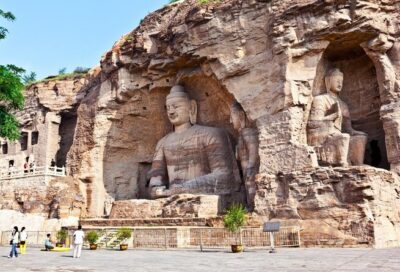
Beijing to Datong See YunGang Cave, Hanging Temple (Bullet Train)
Read our review →
Xi’an Terracotta Tour by Train-All Tickets Included
Read our review →
Private Day Trip to Tianjin from Beijing by Bullet Train
Read our review →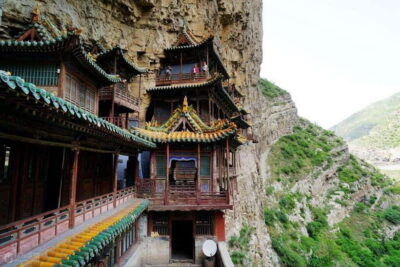
Bullet Train Tour to Hanging Temple&Yungang Grottoes
Read our review →
Private Day Trip: Discover Tianjin by Bullet Train from Beijing
Read our review →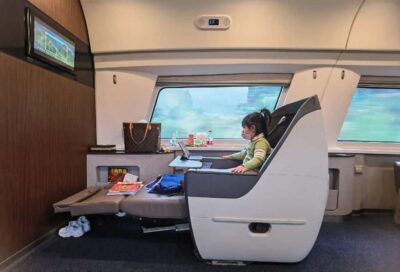
Beijing to Xi’an Terracotta Tour by Roundtrip Bullet Train
Read our review →
Browse the lists this tour appears in