
REVIEW · ITALY
Cagliari: Conti Vecchi Salt Flats Train and Tour
At Cagliari’s Conti Vecchi Saltworks, pink flamingos and towering white salt piles share the scene with working machinery, old offices, and a narrow-gauge tourist train. It is an unusual outing: part nature trip, part industrial museum, and part Sardinian social history lesson.
I like the easy mix of indoor and outdoor sights, especially the restored workshop, chemical lab, and films before the train ride. I also like the price: at $14 for two hours, you get a working salt plant, museum access, a guided visit, and an hour on the train. The main drawback is language. The live tour is in Italian, and some English-speaking visitors found the train commentary brief or hard to hear.
Key points to know before you go
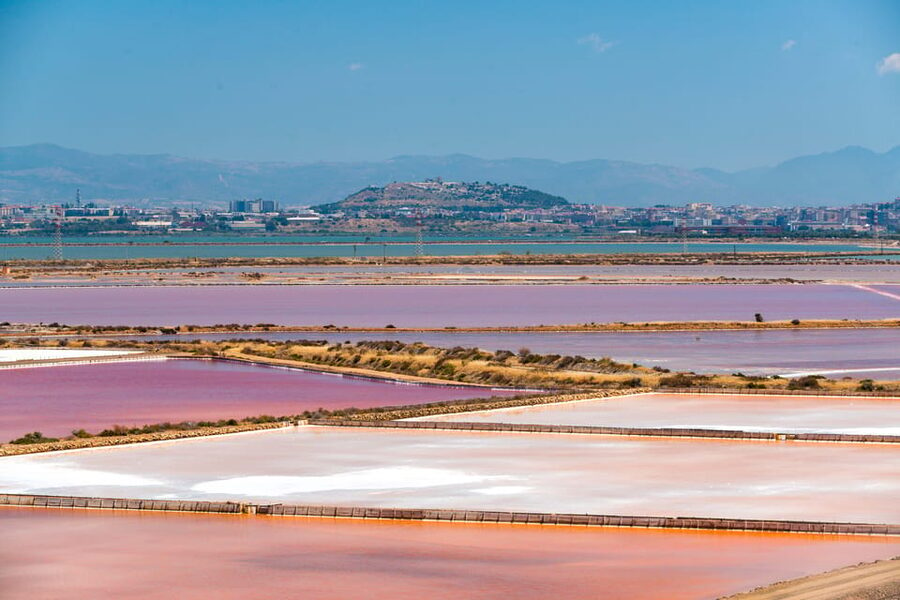
- Flamingos in the Santa Gilla Basin: The train crosses one of Sardinia’s most important wetlands, where pink flamingos and other birds may be visible.
- A working salt operation: You see more than an old museum. The site remains an active salt plant, with salt pans and huge white heaps.
- A two-part visit: The indoor museum and historic buildings come first, followed by a one-hour train ride through the salt flats.
- Useful English support: The films include English subtitles, but the live guide speaks Italian.
- Strong value at $14: The admission covers the guide, old buildings, films, and train ride, with no separate entry fee listed.
- Easy access by car: The saltworks are in the Assemini and Macchiareddu industrial area, with free parking near the entrance.
Why this saltworks visit feels different from a standard museum
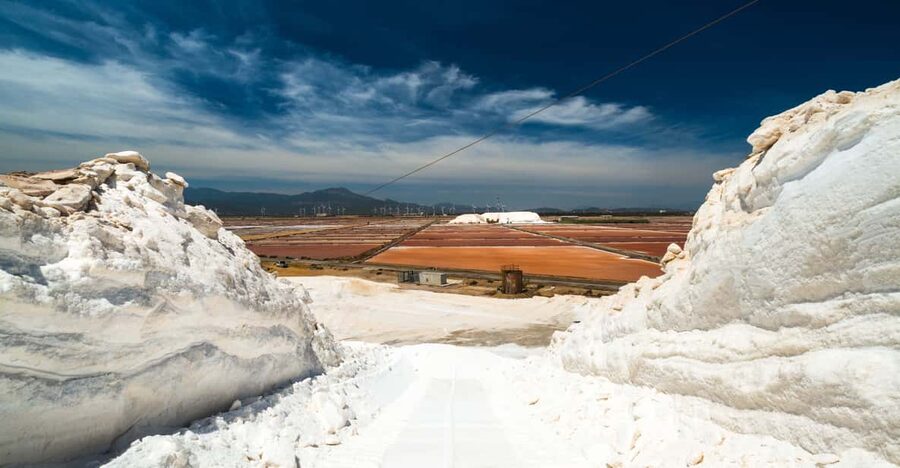
Cagliari has plenty of Roman, medieval, and seaside sights, but the Conti Vecchi Saltworks gives you a look at the working side of Sardinia. Salt was once white gold, a valuable product that supported jobs, trade, and the growth of the area around Cagliari.
The site is linked to engineer Luigi Conti Vecchi, whose work helped develop the salt industry and the surrounding region. That connection gives the visit a human focus. You are not simply looking at ponds full of salt water. You are learning how an industry shaped daily routines, employment, engineering, and the fortunes of local communities.
I like this kind of attraction because it explains a place through ordinary work. The tools, documents, workshop, and laboratory show how people made a living. The experience also makes clear that Sardinia’s story is not only about beaches and ancient ruins.
The setting adds another layer. The saltworks sit beside the Santa Gilla Basin, a broad wetland that attracts birds. The contrast is striking: industrial buildings and processing equipment on one side, shallow water, salt pans, and flamingos on the other.
More Train Tours in Italy:
- From Milan: Lake Como Cruise, St. Moritz & Bernina Red Train
★ 4.6 · 5,648 reviews - From Milan: Bernina Train and St. Moritz Day Trip
★ 4.5 · 4,495 reviews - Bernina Red Train, Swiss Alps & St Moritz From Milan
★ 5.0 · 2,954 reviews
Finding the entrance in Assemini and Macchiareddu
The saltworks are in the industrial area known as Assemini and Macchiareddu, outside the central streets of Cagliari. You drive into the industrial area and leave your car in the free parking area. From there, walk to the bookshop at the main entrance.
This is worth planning for because the setting is not a polished city attraction with a grand central entrance. You are heading to a working industrial site. Keep the meeting instructions handy, allow time to park, and follow the signs toward the bookshop.
There is no hotel pickup or drop-off, so you need to arrange your own way there. The location makes most sense for people with a car or for anyone already planning to explore the Cagliari area independently.
The two-hour schedule is compact. Check the available starting times when booking, since the visit combines a set indoor program with a train departure. Arriving with enough time to locate the entrance will make the experience calmer.
The museum explains how salt became Sardinian wealth
The visit begins inside the saltworks, with a guide introducing the history of the site and the salt workers who made the operation function. You learn about the process of salt production and the economic importance of the industry.
The old documents help put names and dates to the story. Tools and working equipment show what the job required, while the vintage workshop and restored chemical laboratory reveal the technical side of salt production. These are useful details because salt harvesting can seem simple from a distance. The museum shows the planning, testing, maintenance, and daily labor behind it.
Two short films add background before you board the train. One film gives a wider history of Sardinia and Cagliari, while the films together help explain the saltworks and their role in local development. English subtitles are available, which is particularly helpful because the live guiding is in Italian.
If you understand Italian, you will get the fullest spoken explanation. If you do not, the visual displays and subtitled films still give you a solid base. Some English-speaking visitors found that the spoken explanation on the train was shorter than the Italian version, so I would pay close attention to the films and museum displays before heading outside.
The indoor portion is also useful on a hot day or if the weather turns poor. A thunderstorm once forced an early return from the train, showing that the outdoor part depends on conditions. The old building is wheelchair accessible on the first floor.
The train ride enters the Santa Gilla Basin
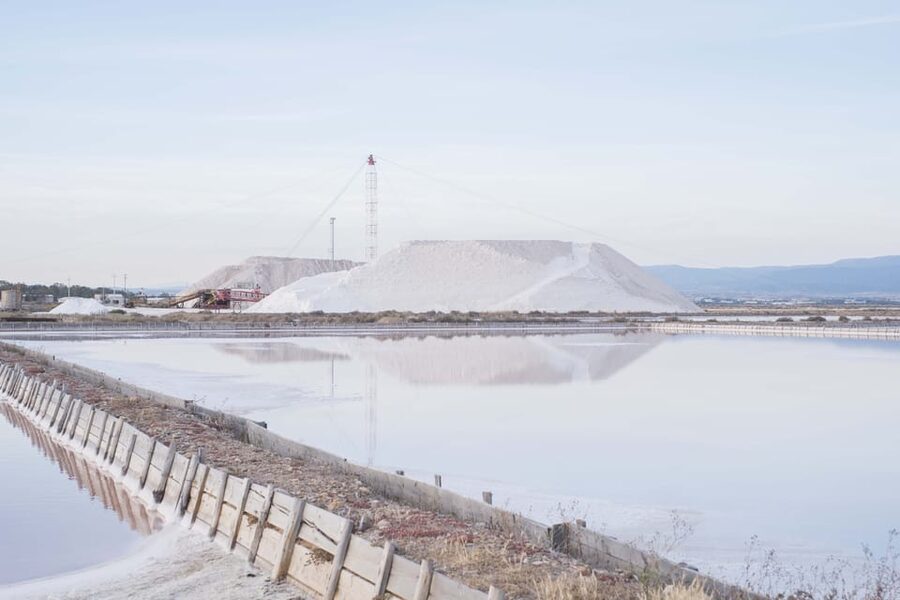
The train ride lasts about one hour and carries you into the salt flats and natural area of the Santa Gilla Basin. This is the heart of the visit. From the train, you see the different stages and settings connected with salt production, including salt pans and mountains of collected salt.
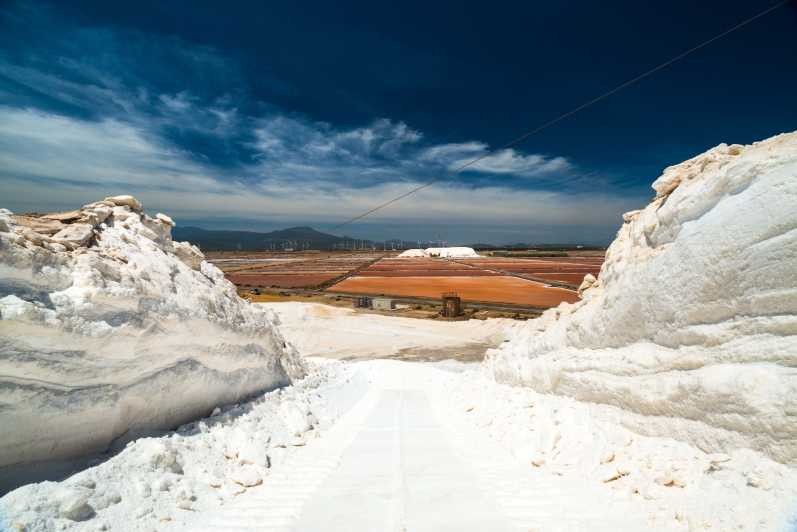
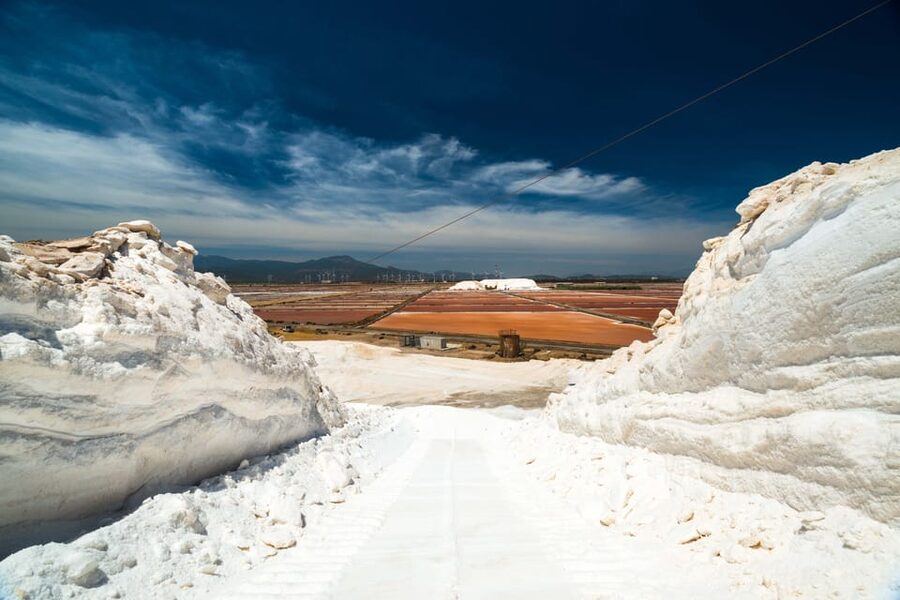
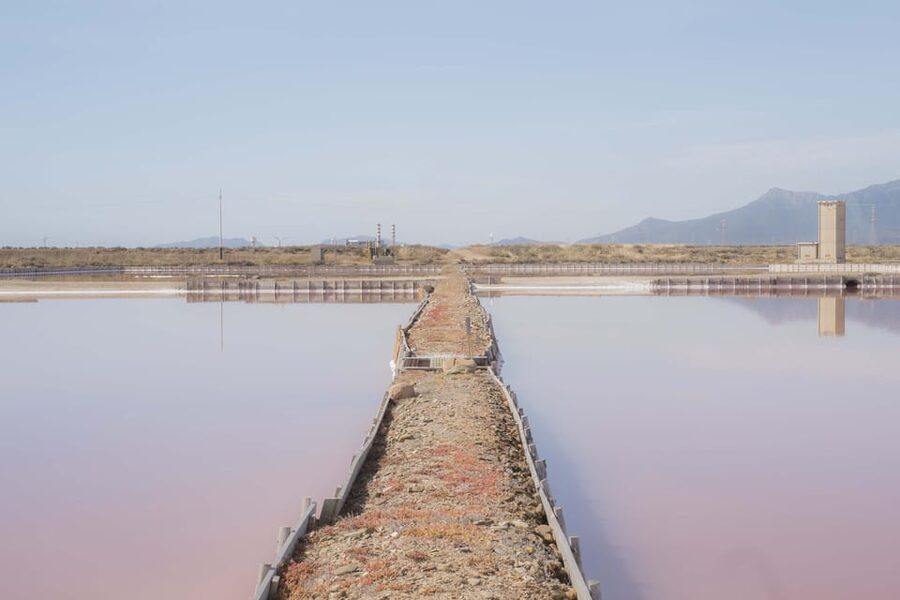
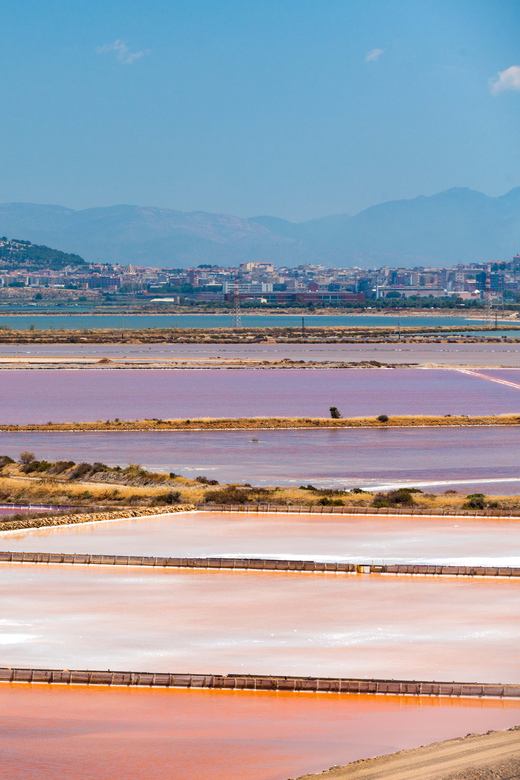
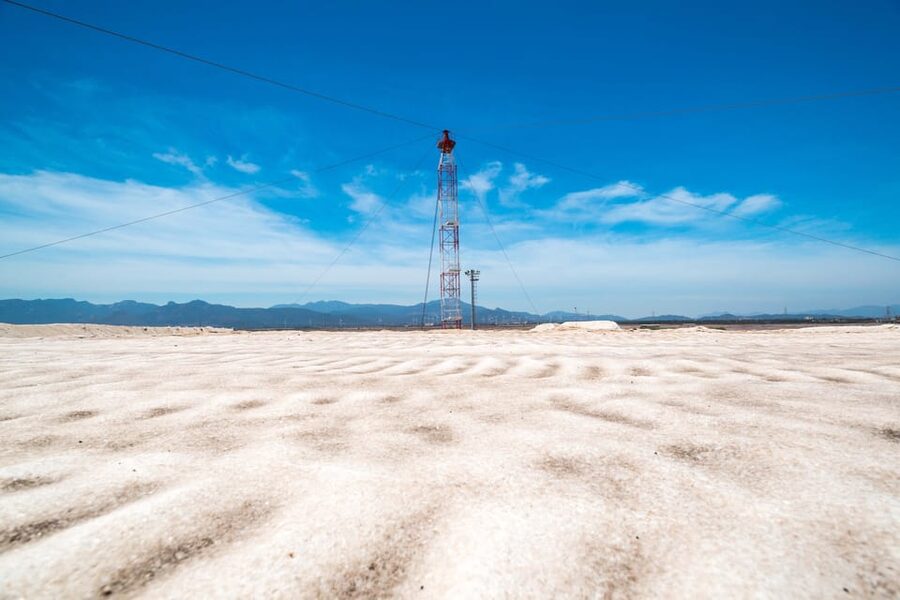
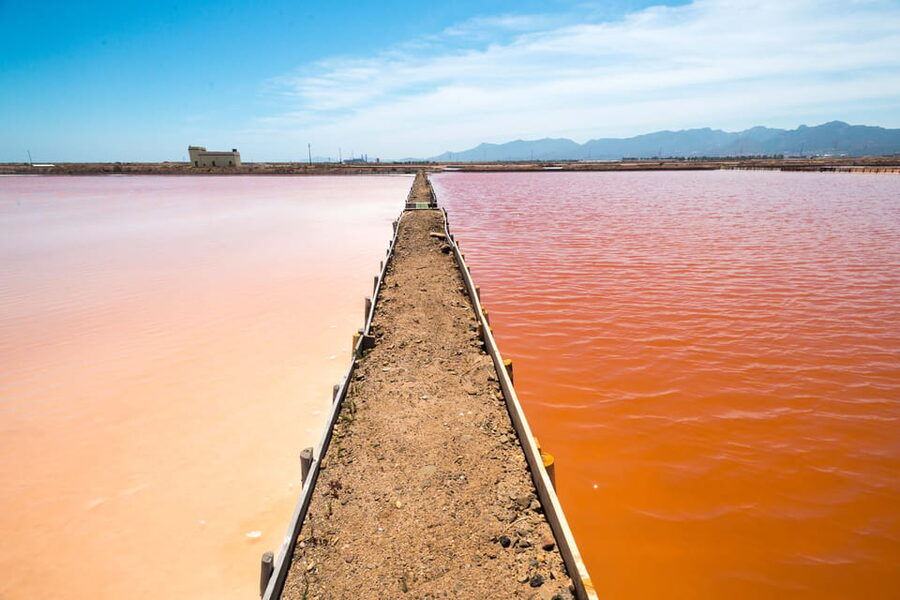
The white heaps are the visual showpiece. Against the low, open basin, they look almost snowy, although this is a working industrial product rather than a natural mountain range. The water can take on pink or reddish tones, and the mix of white salt, shallow ponds, and open sky makes the ride very photogenic.
The train also gives you a chance to spot birds. Flamingos are the star attraction, but the area supports a variety of birdlife. Seeing flamingos in their own wetland setting is more memorable than seeing them in a formal enclosure, though the exact number and distance will depend on conditions and where the birds are feeding.
Bring patience and keep watching. The train does not promise a dedicated birdwatching stop, and the ride moves through a large area. One visitor hoped for time to get off the train and stand closer to the salt, while another wished for more time to watch birds. That is a fair point: the ride is designed as a guided overview, not a long, quiet birding session.
The train is wheelchair accessible. It has openable or closable plastic windows, which can help with weather, though the train can be noisy and the speaker in the second carriage may be difficult to hear. If clear commentary matters to you, sitting where the guide can be heard will improve the experience.
Same tracks, a very different ride:
- Swiss Alps Bernina Red Train and St.Moritz Tour from Milan
★ 4.5 · 2,369 reviews - Sorrento: Skip-the-Line Pompeii Express Tour by Train
★ 4.8 · 2,038 reviews - Rome to Pompeii Guided Tour with Wine & Lunch by High Speed Train
★ 5.0 · 1,379 reviews - Small-Group Lake Como & Lugano by Swiss Train + Boat Cruise
★ 5.0 · 1,084 reviews
Macchiareddu adds a human side to the industrial site
The historic village of Macchiareddu helps you picture the community that grew around the saltworks. The visit is not only about production figures or engineering. It also looks at the lives of the workers and the routines tied to the salt industry.
This is where the story of Luigi Conti Vecchi becomes more meaningful. His work was part of a wider effort to develop the area, but the saltworks depended on many people doing practical jobs every day. The old buildings and objects make that connection visible.
I find industrial sites most rewarding when they explain both the machinery and the people. Here, the museum materials and guided talk help connect the salt pans to employment and economic change in Cagliari. The result is a more grounded picture of Sardinia than you get from a quick visit to a scenic viewpoint.
The village and old buildings also give you more to photograph beyond the flamingos. Look for the textures of weathered walls, tools, documents, and working spaces. Since the overall visit lasts only two hours, the schedule keeps you moving, so you may want to decide in advance what matters most to you: machinery, village buildings, birds, or photographs.
How good is the value at $14?
The price is one of the clearest strengths. For $14 per person, you receive entry to the Conti Vecchi Saltworks, a guide, access to historic buildings, two films, and a one-hour train ride. That is a lot of content for a two-hour outing.
The value is especially good if you want something beyond Cagliari’s usual historic center. A short visit to the museum alone would offer some context, but the train ride makes the price easier to justify. You get into the salt flats, see the operating environment, and have a chance to spot flamingos.
The visit is less suitable if you want a slow, independent nature walk. The train follows a set route, and the group stays with the program. You are looking from the train rather than wandering freely across the salt pans.
The flexible booking terms also help. You can reserve now and pay later, and cancellation is available up to 24 hours in advance for a full refund. Those policies are useful if your Cagliari schedule may change, but the main value still comes from the combination of a working plant, local history, and wetland views at a modest price.
Language, guiding, and what to expect on the day
The live tour guide speaks Italian. This is important to understand before booking, especially if you are expecting a full English-language tour. English subtitles on the films provide useful help, and the museum displays, objects, and scenery communicate much of the story visually.
The quality of the indoor explanation can be strong. Elena, one guide praised for her enthusiasm and clear presentation, has led visits that made the story of Luigi Conti Vecchi and the salt workers especially engaging. Guide assignments can vary, so do not assume Elena will lead every departure.
The train commentary is the weaker part for some English speakers. The train shakes and makes noise, and the speaker in the second carriage may not carry well. At times, the English explanation may be shorter or delivered after the train has passed a feature.
I would treat the train commentary as a helpful extra rather than the only way to understand the visit. Watch both films, listen closely during the museum section, and use the train ride for the views, birds, salt mountains, and atmosphere. If the live language is a deciding factor, confirm the language arrangements before you pay.
Who will enjoy the Conti Vecchi Saltworks most?
I would recommend this experience to you if you like places where nature and working industry meet. It suits curious adults, families with older children, photographers, bird watchers who are happy with a short guided outing, and anyone looking for a different side of Cagliari.
It is also a good choice for people who enjoy local history told through objects. The documents, tools, workshop, laboratory, and worker stories provide more substance than a simple scenic train ride.
You may want to skip it if your main goal is a long, quiet birdwatching session or an English-language tour with detailed live commentary throughout. The outing is structured, and the train portion may feel brief if you want to stop often for photographs.
The site is wheelchair accessible in important areas. The train is accessible, and the first floor of the old building is accessible. Because the information only specifies the first floor, you should confirm any additional access needs before arrival.
Practical tips for a better visit
- Read or watch the English-subtitled films carefully before the train leaves. They provide useful context for the outdoor portion.
- Keep your camera ready for white salt mountains, pink water, industrial details, and flamingos.
- Do not expect the flamingos to appear on demand. They are in a natural wetland, and bird sightings can vary.
- Try to sit where the train guide can be heard clearly, especially if you do not understand Italian.
- Allow time to find the free parking area and walk to the bookshop at the entrance.
- Treat the train as a scenic overview, not a walking tour of the salt pans.
- Check the weather forecast. Storms can shorten or interrupt the outdoor ride.
- If you need wheelchair access beyond the train and first floor of the old building, ask before booking.
Should you book the Conti Vecchi Saltworks tour?
Book it if you want an affordable, unusual half-day activity that links Cagliari’s economic past with one of its important wetlands. The strongest parts are the working salt plant, the museum objects, the historic Macchiareddu setting, the train ride, and the chance to see flamingos against huge white salt piles.
I would be more cautious if you need a fully English-speaking guide or want extended time beside the birds. The live language is Italian, train audio can be hard to hear, and the schedule leaves limited time for independent exploration.
For most people who can work with those limits, $14 is a fair price for two hours of memorable scenery and useful local context. It is a good choice for seeing how Sardinia’s people, industry, and wetlands fit together.
FAQ
Where is the Conti Vecchi Saltworks?
The saltworks are in the industrial area of Cagliari known as Assemini and Macchiareddu. You can park for free in the industrial area and walk to the bookshop at the main entrance.
How long does the experience last?
The complete visit lasts about two hours. The train ride inside the salt flats and natural area lasts one hour.
Is the train ride included in the ticket?
Yes. The price includes a one-hour train ride through the salt flats and the natural area.
What language is the live tour in?
The live tour guide speaks Italian. The films shown during the visit include English subtitles, but the live train commentary may be limited for English-speaking visitors.
Can I see flamingos during the visit?
You have the chance to see pink flamingos in the Santa Gilla Basin, their natural wetland habitat. Sightings and viewing time can vary.
Is the experience wheelchair accessible?
The train is wheelchair accessible. The old building is wheelchair accessible on the first floor.
Is hotel transportation included?
No. Hotel pickup and drop-off are not included, so you need to arrange your own transportation to the saltworks.
Can I cancel the booking?
You can cancel up to 24 hours before the activity for a full refund. You can also reserve now and pay later.
Just added around Italy
- From Milan: Villa del Balbianello and Varenna by Train★ 4.2 · 27 reviews
- From Milan: Valmalenco 1-day Ski Pass with Train and Shuttle★ 5.0 · 2 reviews
- Verona Private City Tour including Arena and Funicular for Kids and Families★ 5.0 · 6 reviews
- Venice Tour by High-Speed train from Florence★ 5.0 · 6 reviews
- Verona Guided Tour from Venice by Train★ 4.5 · 12 reviews
- Florence & Uffizi Gallery Ticket: Day-Trip from Venice by Train★ 4.5 · 2 reviews
- Venice Beginner’s Kayak Tour: train & visit the Medieval Arsenal★ 5.0 · 5 reviews
- Private Full Day Tour from Milan to Venice with local tour guide and fast train★ 4.5 · 3 reviews
Italy Train Tours, compared.
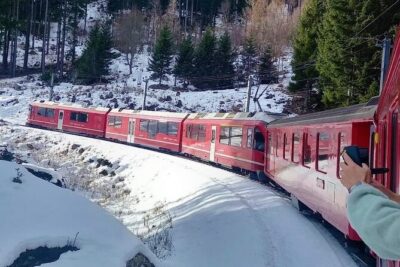
Lake Como Cruise, St. Moritz & Bernina Red Train
Read our review →
Bernina Red Train, Swiss Alps & St Moritz From Milan
Read our review →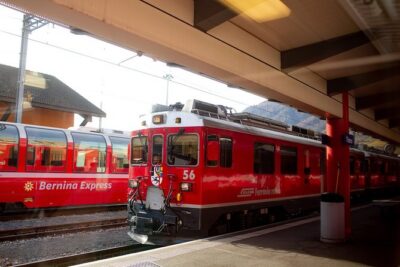
Swiss Alps Bernina Red Train and St.Moritz Tour from Milan
Read our review →
Rome to Pompeii Guided Tour with Wine & Lunch by High Speed Train
Read our review →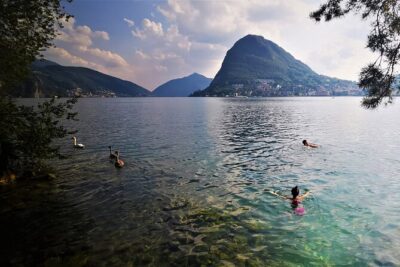
Small-Group Lake Como & Lugano by Swiss Train + Boat Cruise
Read our review →
From La Spezia: Shore Excursion to Cinque Terre by Train
Read our review →
Browse the lists this tour appears in