
REVIEW · CHINA
Chongqing: Active Wellness, Monorail, and Hidden Gems Tour
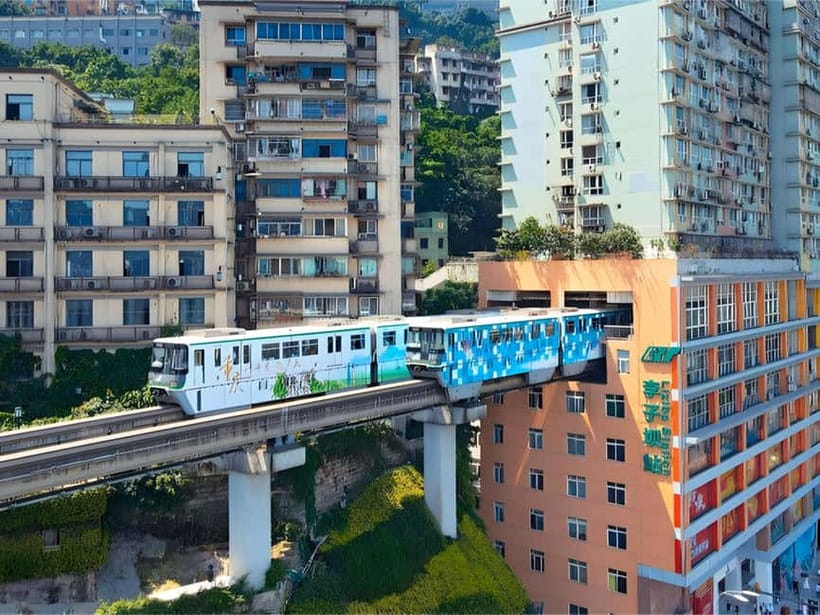
Chongqing’s most famous train ride is not underground or across a bridge. At Liziba Station, the monorail runs through the upper floors of an apartment building. You watch it appear every few minutes, then vanish into the concrete, a perfect snapshot of this city’s odd and practical urban design.
I like the tour’s mix of local neighborhoods and big city views, and I like that the day ends with Baduanjin and Tai Chi rather than another hurried photo stop. Guide Tian speaks English well and has also guided in Italian, which helps make the day easy for international visitors.
The main drawback is the amount of walking. Steep streets, cliffside paths, gardens, and transit connections make this a poor fit for wheelchair users or anyone with serious mobility limits. At $166 per person, it offers good value for a private eight-hour day, but lunch, drinks beyond the included tea, and some transport costs may be extra.
Key points to know before booking
- Liziba’s train passes through an apartment building: Watch the monorail enter and leave the building from a viewing platform across the street.
- A private day with several different moods: Move from gardens and old residential streets to creative workshops, city viewpoints, and a Taoist sanctuary.
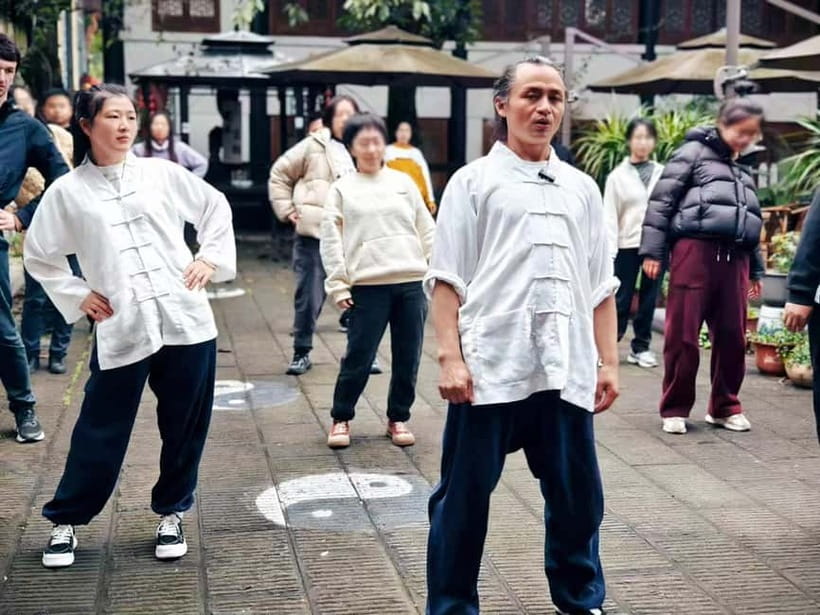
- Baduanjin is beginner-friendly: A national Tai Chi master teaches the Eight Silken Movements in a simple two-hour session.
- Chongqing’s steep terrain shapes the day: Expect stairs, hills, cliff paths, and plenty of walking on uneven streets.
- Tea and small temple gifts are included: Lunch and most food are not, so plan for an additional meal budget.
- Spring adds a seasonal touch: March and April may bring cherry blossoms along the monorail and garden section.
Why this tour shows you more than Chongqing’s skyline
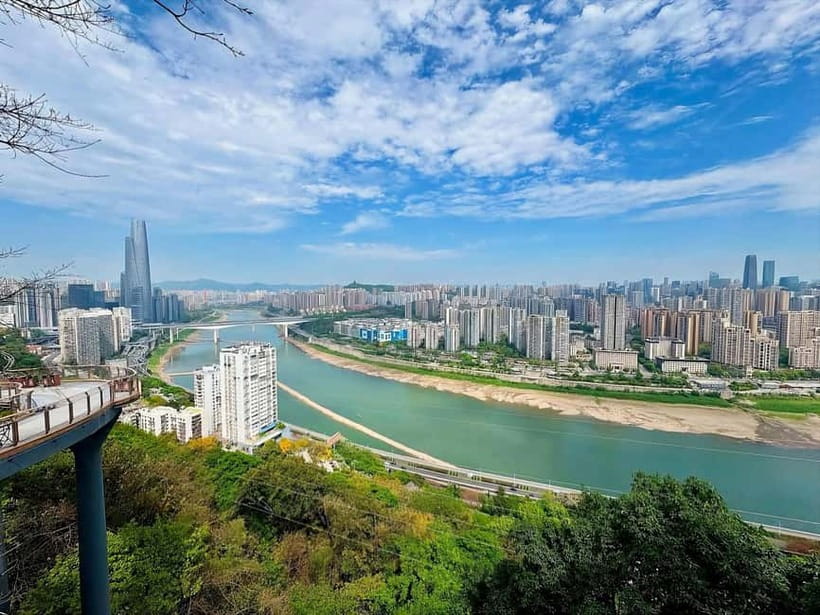
Chongqing can be hard to understand from a bus window. It is built over hills, river valleys, bridges, towers, old lanes, and layers of transport infrastructure. This tour gives you several ways to read the city, from a Chinese garden designed around rocks and water to a train line passing through a residential block.
That variety is the real strength of the day. You are not spending eight hours at one major attraction. Instead, you see how Chongqing works and how people use its spaces. The route includes an old park, an industrial arts district, a local residential area, a monorail station, a cliffside walkway, and a Taoist setting for gentle exercise.
The private format matters here. Your guide can explain why a garden is arranged in a certain way, help you manage the public transit sections, and adjust the pace within reason. Tian has received especially warm feedback for being patient, friendly, and easy to meet. One Italian-speaking guide experience also makes this a useful choice for visitors who prefer not to rely only on English.
Other train trips people book around China:
- Hong Kong: Big Bus Hop-On Hop-Off Tour & Optional Peak Tram
★ 4.4 · 982 reviews - Hong Kong: Peak Tram and Sky Terrace 428 Pass
★ 4.2 · 479 reviews - Suzhou Private Day Trip from Shanghai with Bullet Train Option
★ 5.0 · 366 reviews
Starting among rocks, ponds, and pavilions at Eling Park
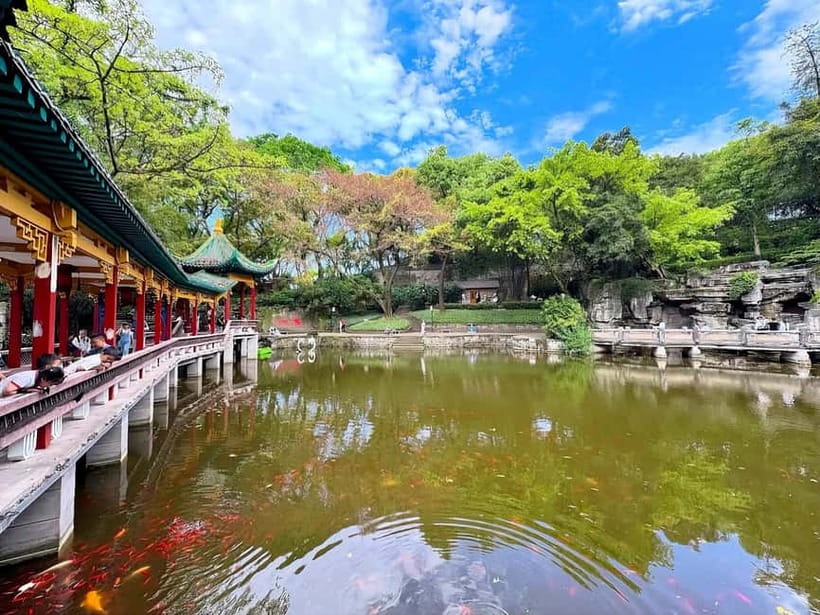
The day begins in Yuzhong District, then moves to Eling Park for about an hour. The park is more than a green pause in the city. Its Chinese garden design uses rocks, ponds, pavilions, paths, and changes in height to create different views as you walk.
Your guide discusses Chinese garden aesthetics and compares Eastern and Western approaches to garden design. That conversation gives the park more meaning than a quick stroll. You begin to notice that the arrangement is deliberate, with framed views and carefully placed features rather than random decoration.
The park also provides early city views. Chongqing is built on dramatic slopes, so a viewpoint here may show towers at one level and roads or buildings far below. Bring a camera, but do not rush through the park. This is one of the calmer parts of the tour and a good place to get used to the city’s steep geography.
Comfortable shoes are essential from the start. The tour involves walking, and the day becomes more demanding later. Water, comfortable clothing, and insect repellent are also sensible items to bring.
Erchang Creative Park turns old industry into an afternoon stop
A short ride of about 15 minutes brings you to Erchang Culture and Creative Park. This former industrial setting has been reworked into a place for art, small design businesses, and independent shops.
You can browse handcrafted jewelry and upcycled clothing, then stop for a fresh local tea drink. The visit lasts around 30 minutes, so think of it as a compact look at contemporary Chongqing rather than a long shopping session. The appeal is the contrast between old factory halls and newer creative work.
I like this stop because it gives the day a present-day edge. The garden introduces older design ideas, while Erchang shows how abandoned industrial space can support small creative businesses. You may find something interesting to buy, but shopping is not the main reason to come. The short timing keeps the day moving.
A local residential area and a simpler lunch
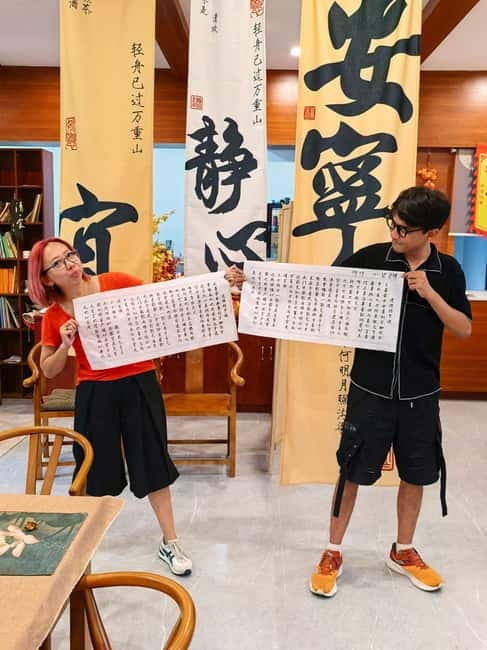
After Erchang, the route continues through a less polished residential area. Here you get a feel for older Chongqing, with local streets and a more everyday rhythm than the major sightseeing zones.
The tour includes a guided walk and time for local food. The dishes are described as authentic and less heavily flavored, which may suit you if very spicy Chongqing cooking is a concern. Food is not included in the base price, but you can arrange a simple local lunch or a non-spicy hotpot option as an add-on.
That distinction is important when you compare the $166 price with other private tours. You pay for the guide, planning, transport arrangements, garden and viewpoint visits, and the Baduanjin session. You should still budget for lunch and drinks. If you want a particular meal, ask about the add-on when booking rather than assuming it is part of the package.
The one-hour lunch break gives you time to eat without turning the meal into a formal restaurant event. This part of the day is best for people who want to try ordinary local food instead of staying with familiar international choices.
More Train Tours in China:
- Private Suzhou Day Trip from Shanghai by Bullet Train with All Inclusive Option
★ 5.0 · 283 reviews - Beijing to Xi’an See Terracotta Warriors with Bullet Train Round Trip Transfer
★ 5.0 · 238 reviews - Flexible Hangzhou Private Tour from Shanghai by Bullet Train
★ 5.0 · 220 reviews - Shanghai: Southern Great Wall Day Trip by Bullet Train
★ 4.9 · 179 reviews
Liziba Monorail Station and Chongqing’s famous engineering trick
After lunch, you reach Liziba Viewing Platform for about 30 minutes. The attraction is simple but unforgettable: a monorail train passes through an apartment building. It is not a visual trick or a special effect. The line was built through the upper floors of the residential complex, with the station integrated into the structure.
The viewing platform across the street is the practical place to wait. Trains pass roughly every four to six minutes, so you should not need a long wait. Keep your camera ready, but take a moment to watch the building itself. People live in the surrounding area, and the station is part of the city’s working transport system, not a set built only for photographs.
This stop is brief, yet it explains Chongqing better than a standard monument might. The city has limited flat ground and enormous transport needs. The solution is to build upward, around, and through existing structures. You see the same layered planning in the roads, bridges, towers, and steep streets throughout the day.
The viewing area can be busy, and 30 minutes is enough for the sight without leaving much spare time. Stay close to your guide and follow directions near the platform.
The 35-minute transit section leads to a cliffside view
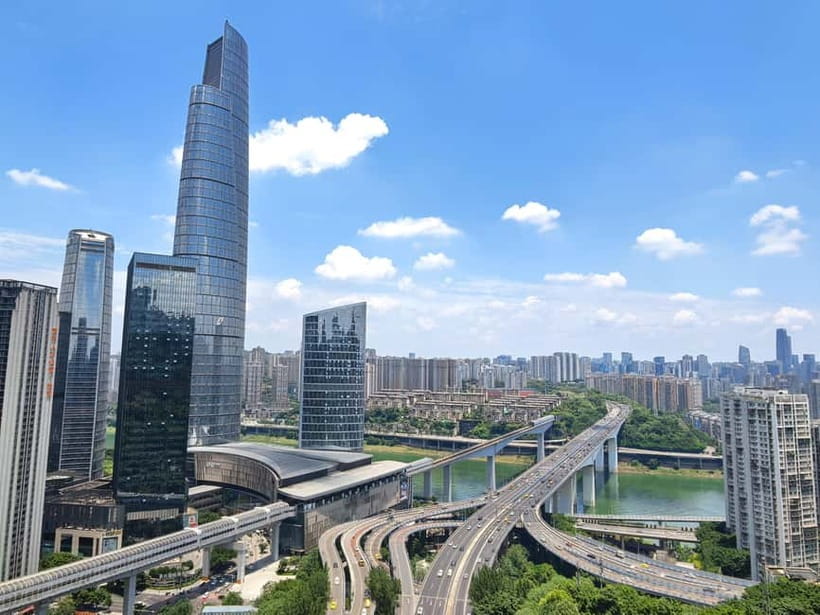
The tour then uses the subway or other public transport for about 35 minutes. Public transportation is part of the experience, since Chongqing’s rail system is one of the clearest ways to understand the city’s scale. Depending on the arrangements, the tour may also use Didi or a chartered car.
Later, you reach a walkway built into a mountain cliff. This is one of the best places for photography. From the path, Chongqing’s buildings appear stacked across steep slopes, with modern towers rising above deep valleys and roads bending around the hills.
The view is impressive because it is not a flat skyline. Buildings sit at different heights and distances, making the city look almost assembled in layers. You get a better sense of the terrain than you would from a single tower or river cruise.
The cliffside setting is also the day’s clearest physical challenge. The activity is not suitable for people with mobility impairments or wheelchair users, and the operator also excludes people over 80 and those with epilepsy. Those limits are worth taking seriously. Wear shoes with a secure grip, take water, and expect stairs or uneven sections even though every exact surface is not specified.
An old park, 3D sculptures, and the Monorail to Spring
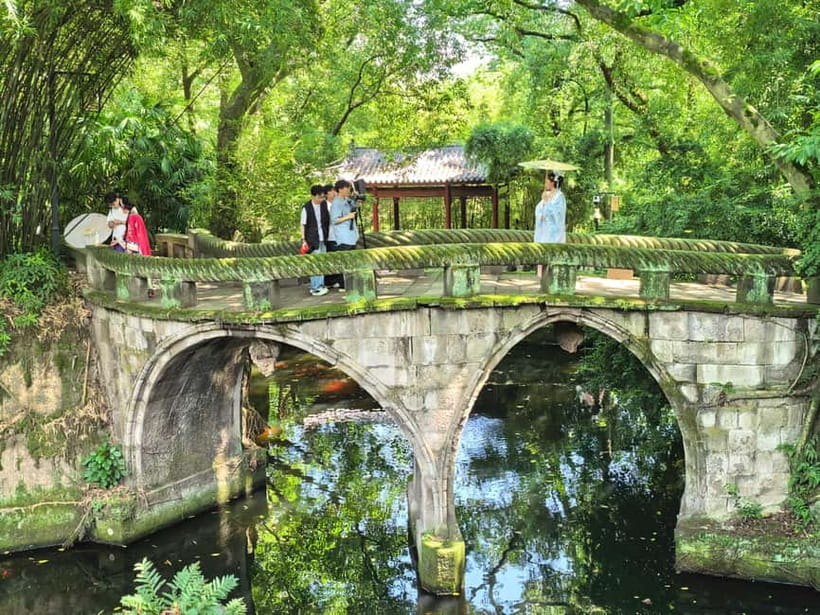
One of the later stops is an old park reached through narrow alleys. It sees fewer international visitors than Chongqing’s headline attractions and contains 3D sculptures connected with the city’s past as a port built across hills.
This is a good place to slow down and look closely. The sculptures add a visual explanation of the city’s older identity, while the surrounding alleys show how the urban fabric changes just a few streets away from major transport routes.
The route also includes a memorable sight called the Monorail to Spring. A bright train moves past seasonal flowers, greenery, and urban buildings. In March and April, cherry blossoms may add color to the view. The timing matters, so do not book specifically for blossoms outside those months.
You get about 40 minutes here for walking, photographs, and the guide’s explanation. It is not a long botanical visit. Its appeal comes from the combination of moving train, flowers, old paths, and dense city construction.
Ending with Baduanjin in a Taoist sanctuary
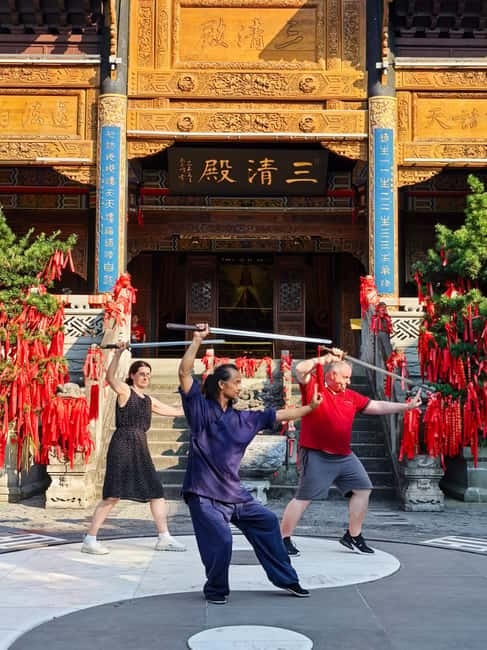
The final two-hour section takes place at a Taoist sanctuary tucked into the urban area. Here, a national Tai Chi master and inheritor of an Intangible Cultural Heritage tradition leads a session in Tai Chi and Baduanjin.
Baduanjin means Eight Silken Movements. The practice is more than 800 years old and uses a sequence of controlled positions intended to steady breathing, movement, and attention. You do not need previous experience. The movements are simple enough for beginners, including older adults, although you should still work within your own physical limits.
This ending gives the tour a different pace. After a day of walking, watching trains, and taking in city views, you have time to slow down and focus on posture and movement. A cup of tea is included, and you receive small presents from the temple.
The session is not a medical treatment, and you should not expect a strenuous martial arts class. It is better understood as a cultural activity with gentle exercise. If you enjoy learning how a tradition is practiced rather than only photographing it, this may be the most meaningful part of the day.
What $166 includes, and what it does not
At $166 per person, this is priced as a private full-day experience rather than a basic sightseeing transfer. The value is strongest if you want one guide to connect many separate parts of Chongqing and help you manage public transport, food choices, cultural explanations, and the final exercise session.
Included are a multilingual professional guide, public transportation with Didi or a chartered car, the Baduanjin and Tai Chi session, one cup of tea per person, small temple gifts, the cliffside walk, the large Chinese garden, and panoramic city views.
Lunch and other food are not included. Travel insurance is also not included, along with any cost not specifically named. For a fair comparison, add your likely lunch and drink costs to the advertised price. A private group can make the total worthwhile for families or friends who want flexible attention, but solo visitors on a tight budget may prefer a simpler group tour.
The tour offers free cancellation up to 24 hours before the start and a reserve now, pay later option. Those policies help if your Chongqing schedule is still changing.
Who should book this Chongqing day?
I would choose this tour if you want more than the usual city-center checklist. It suits curious first-time visitors, photographers, people interested in Chinese gardens, and anyone who wants a cultural activity that involves doing rather than only looking.
It also works well for families with older children who can handle a full day of walking. The Tai Chi and Baduanjin session is gentle, but the hills and cliff paths still require stamina.
I would hesitate if your priority is a relaxed day with little walking, a food-focused tour, or guaranteed access for a wheelchair. The route changes settings often, which is its strength, but also means there are transfers, hills, and a fairly full schedule.
Should you book it?
Book this experience if you want to connect Chongqing’s strange transport design, older neighborhoods, garden traditions, local food, and wellness culture in one private day. The Liziba train and cliffside views provide the photographs, while the garden, residential streets, and Taoist session give the day more substance.
Skip it if you prefer to explore at your own pace or do not want to pay extra for lunch and drinks. For an active visitor who values a personal guide and unusual stops, $166 is a reasonable price for eight hours of varied sightseeing and cultural instruction.
FAQ
How long does the Chongqing tour last?
The experience lasts eight hours, including the garden visit, creative park, local area, lunch break, Liziba Station, cliffside walk, hidden park, and Baduanjin session.
Where does the tour begin and end?
Pickup and return are in Chongqing’s Yuzhong District.
Is this a private tour?
Yes. The activity is arranged for a private group.
Which languages can the guide speak?
Live guiding is available in English, Traditional Chinese, French, Italian, and Spanish.
Is lunch included in the price?
No. Food and drinks are not included in the base price. A simple local lunch or a non-spicy hotpot restaurant can be arranged through an add-on.
What should I bring?
Bring your passport, comfortable shoes, water, comfortable clothing, and insect repellent.
Is the tour suitable for people with mobility issues?
No. The activity involves substantial walking and is not suitable for people with mobility impairments or wheelchair users. It is also listed as unsuitable for people with epilepsy and people over 80.
Just added around China
- Xi’an: Maiji Grottoes & Fuxi Temple Day Trip by Bullet Train★ 5.0 · 2 reviews
- 5-Day Combo Package of Zhangjiajie With Fenghuang (By Fast Train)★ 5.0 · 14 reviews
- Zhengzhou Private Day Trip to Mutianyu Great Wall by Bullet Train★ 5.0 · 2 reviews
- Form Xi’an To Luoyang Longmen Grottoes & Shaolin Temple Day Tour by Bullet Train★ 5.0 · 6 reviews
- Private High-speed Train Arrival Transfer: Xi’an Bei (North) Station to Hotel★ 5.0 · 5 reviews
- Private tour to Longmen Grottoes and Shaolin from Xi’an by train★ 5.0 · 4 reviews
- Private Chengdu Highlights Day Trip: Panda Base and City from Xi’an by Train★ 5.0 · 4 reviews
- 2 Days Tour of Xian & Beijing via Train: Terracotta Warriors & Great Wall★ 5.0 · 6 reviews
China Train Tours, compared.
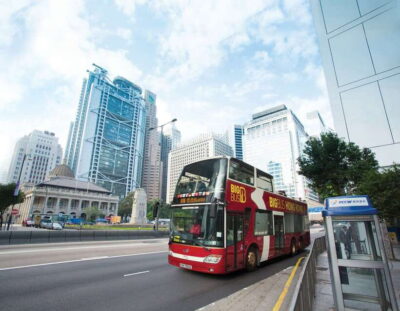
Big Bus Hop-On Hop-Off Tour & Optional Peak Tram
Read our review →
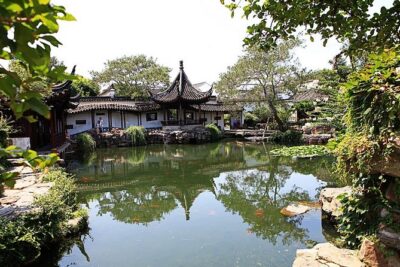
Suzhou Private Day Trip from Shanghai with Bullet Train Option
Read our review →
Private Suzhou Day Trip from Shanghai by Bullet Train with All Inclusive Option
Read our review →
Beijing to Xi’an See Terracotta Warriors with Bullet Train Round Trip Transfer
Read our review →
Flexible Hangzhou Private Tour from Shanghai by Bullet Train
Read our review →
Browse the lists this tour appears in