
REVIEW · HANOI
Trekking Sapa – Bac Ha Market: Sleep on Train & Homestay
Sapa’s best moments come on foot, and this trip gets you beyond town quickly: from the Black H’Mong villages of Cat Cat and Lao Chai to a night at a Ta Van homestay, then on to Bac Ha’s Sunday market. I like the mix of mountain trekking and everyday village life, and I like that transport choices may include an overnight train or sleeper bus.
The $56 price is unusually low for transport, meals, a guide, two nights of accommodation, and private touring around Bac Ha. The trade-off is a demanding schedule, basic shared homestay facilities, and an overnight journey that can leave you short on sleep. Bring water, pack light, and expect a moderate level of walking.
Key points to know before booking
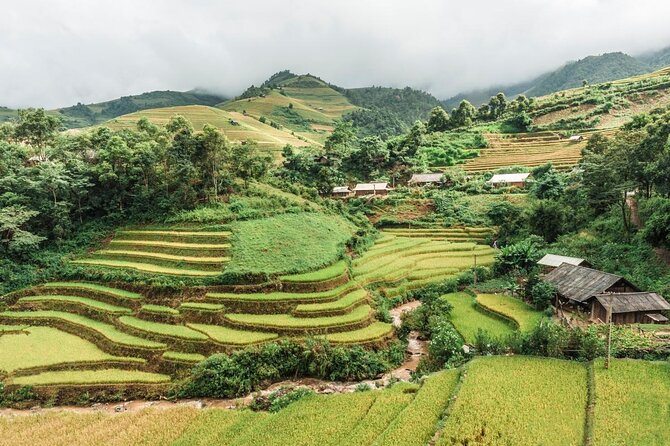
- The overnight train gets you from Hanoi to Lao Cai while you sleep, followed by a 40-kilometer transfer to Sapa.
- Ta Van homestay is the heart of the trip, with shared sleeping arrangements and a public bathroom.
- Cat Cat, Lao Chai, and Giang Ta Chai give you three different village settings, from waterfalls to bamboo forest and rice terraces.
- Bac Ha Market only operates on Sunday morning, so check your departure date before paying.
- Guide Sùa is one possible local guide, and she is noted for explaining local culture as well as the places visited.
- You can continue directly to Ha Giang from Sapa, avoiding a return to Hanoi, if you choose the extra bus option.
Why this route works for a short mountain trip

This is not a leisurely Sapa hotel break. It is a compact mountain circuit built around movement: night transport from Hanoi, village walks, a homestay, and a market morning in Bac Ha. You get a lot for three days, but the pace leaves little room for wandering off on your own.
The main attraction is the change in setting. Sapa town is the practical base, but the more memorable parts happen in the Muong Hoa area, where villages sit beside streams and hillsides are cut into rice terraces. The route also introduces several ethnic communities, including Black H’Mong, Red Dao, and Giay people.
I like that the tour uses a local English-speaking guide in Sapa rather than sending you out with only a map. The guide helps put the village visits into context. Guide Sùa, who may lead the route, is specifically noted for explaining both culture and the places along the way.
You should keep your expectations grounded. This is not a private luxury trip. The group can reach 15 people, and the Ta Van stay uses a shared room or a single mattress with a public bathroom. For many people, that is part of the point. If you need a private bathroom, a quiet room, or a late start, this is the wrong format.
More Walking and Hiking Trips in Hanoi:
- Sapa: 3-Day, 3-Night Trek and Hotel with Overnight Train
★ 4.2 · 64 reviews - Sa Pa Trekking 2 Days 3 Nights Homestay by Night Train
★ 4.5 · 11 reviews - Sapa Trekking Tour by Night Train from Hanoi 3 Nights – 2 days
★ 5.0 · 7 reviews
The overnight journey from Hanoi to Sapa
The trip begins at Hanoi Train Station, at 120 Le Duan, where you meet the operator for the night departure. The stated train options include SP1, SP2, or SP3, leaving around 9:30 pm. You then arrive at Lao Cai at about 5:00 am and transfer roughly 40 kilometers uphill to Sapa.
That schedule saves a daytime travel block, which is valuable on a three-day trip. You wake near the mountains instead of spending the first day on a road. The catch is obvious: sleep on a train or sleeper transfer is not the same as a full night in a hotel.
The exact transport depends on the option selected at booking. The package may use an overnight train, a limousine sleeper bus, or another sleeper transfer arrangement. Read the selected option carefully, since the headline price and inclusions can vary by transport choice.
You will want a small overnight bag rather than your full luggage. The first day includes walking soon after breakfast, and carrying a large suitcase into a village or homestay makes the morning harder than it needs to be. Keep water, a light layer, sturdy shoes, and essentials close at hand.
Cat Cat Village and the first Sapa walk
After arriving in Sapa and having breakfast at a hotel, you prepare a light bag for a short trek to Cat Cat Village. The walk is guided and takes about three hours in total, with roughly one hour allocated to Cat Cat itself.
Cat Cat is associated with the Black H’Mong community and is known for a waterfall, Muong Hoa Stream, and terraced fields. You also see a hydroelectric power plant dating from the French period, along with local schools and village features.
This opening walk is a useful introduction because it eases you into the region without demanding the full length of the later trail. At the same time, the word short should not make you picture a flat stroll. The tour requires moderate physical fitness, and wet or uneven sections may make the walk feel more serious.
Your guide is important here. Rather than simply pointing at a waterfall and moving on, a local guide can explain the connection between the villages, farming, and the ethnic groups who live in the area. Ask questions as you walk. The cultural explanation is one of the strongest reasons to choose this tour instead of arranging only a transfer to Sapa.
Lao Chai and the Muong Hoa route
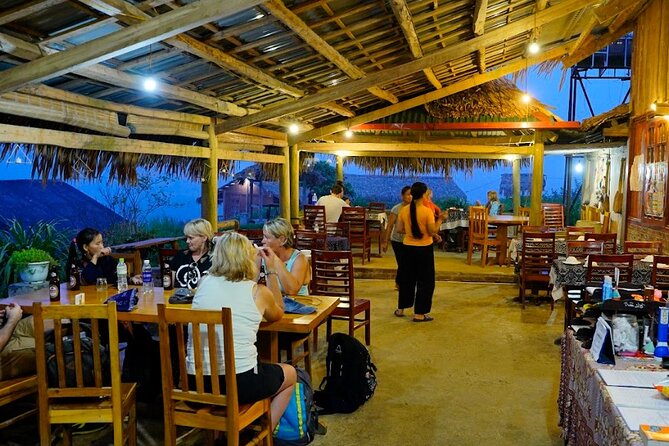
From Cat Cat, the trip continues toward Lao Chai, a Black H’Mong village beside the Muong Hoa Valley and stream, at the foot of Fansipan. The trek through Lao Chai takes about three hours and is built around views of terraced hillsides and village life.
This is the section where good footwear matters most. The route is described as a mud road, and the tour’s appeal lies partly in walking through a real rural setting rather than staying on a polished path. Depending on conditions, mud can slow you down and make downhill sections slippery.
I like the fact that this walk connects the scenery with inhabited villages. You are not just looking at terraces from a distant viewpoint. You pass through an area where Black H’Mong families live and work, with the stream and valley shaping the route.
The trip description presents the path as one of its unusual features, but you should interpret that sensibly. It is scenic and memorable, not effortless. Wear shoes with grip, and bring water. One past participant specifically advised carrying water and preparing for sport, a useful warning for anyone expecting a gentle sightseeing outing.
More Market Trips in Hanoi:
- 2 Day Sapa-Bac Ha Market: Night Train& Homestay-Bus Ha Giang
★ 5.0 · 2 reviews - Bangkok: Damnoen Saduak Market and Maeklong Railway Market
★ 4.5 · 26,723 reviews - The Old Siam: Damnoen Saduak and Maeklong Railway Market
★ 4.5 · 10,992 reviews - Bangkok: Train Market & Floating Market with Boat Ride
★ 4.7 · 9,547 reviews
Ta Van homestay and an evening in the village
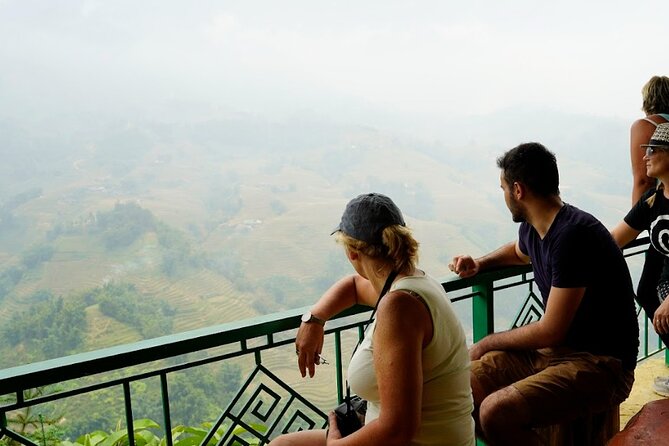
After Lao Chai, you continue to Ta Van Village, home to Giay people, near the Muong Hoa Stream. The village section takes about two hours, with views and walking routes through the surrounding area.
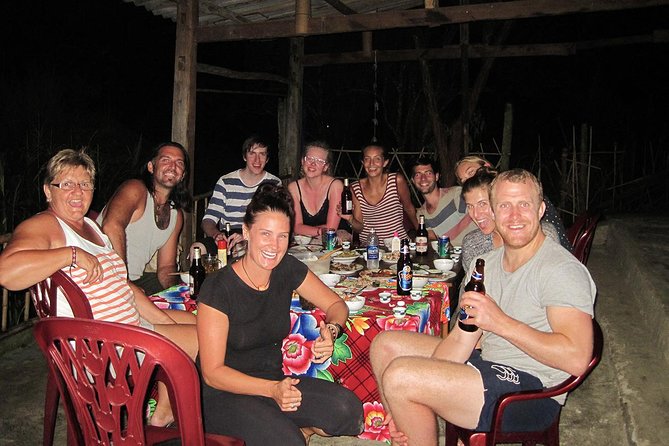
Ta Van is where the trip becomes more than a standard Sapa day tour. You spend the night in a local homestay rather than returning to town. That gives you a closer look at village life and lets you meet your host through the guide and the shared evening setting.
The accommodation is basic. You may sleep in a shared room or on a single mattress, and the bathroom is public. The information provided does not promise private rooms or hotel-style facilities, so pack with that in mind.
Dinner is included, as are breakfast and three lunches across the trip. Drinks are not included, so budget for water and other beverages. Personal expenses and tips are also separate.
For me, the homestay is the strongest part of the package because it changes the rhythm. You are not racing back to Sapa after the walk. You stay in the village and wake close to the next day’s route. If you value comfort above local contact, this overnight may feel too simple. If you want a more direct connection with the area, it is a fair trade.
Giang Ta Chai, bamboo forest, and the second morning

The second day focuses on Giang Ta Chai, a village where Red Dao, Giay, and Black H’Mong communities live. The route takes about two hours and includes views toward the Muong Hoa Valley, bamboo forest, and rice terraces.
This stop adds variety to the first day. Cat Cat and Lao Chai give you waterfall, stream, and terrace views, while Giang Ta Chai brings a different village setting and a bamboo-covered section of the route. You should not expect a long, separate expedition here. It is a shorter walk that fits into the larger transfer toward Bac Ha.
The homestay portion is listed as taking much of the day, which means the schedule may include time with the host before or after the village walk. The exact flow can depend on road conditions, group timing, and the route assigned by the operator.
You should keep your day bag light again. The tour is built around repeated walks and transfers, not unpacking and repacking a full suitcase at each stop.
Bac Ha Market on Sunday morning
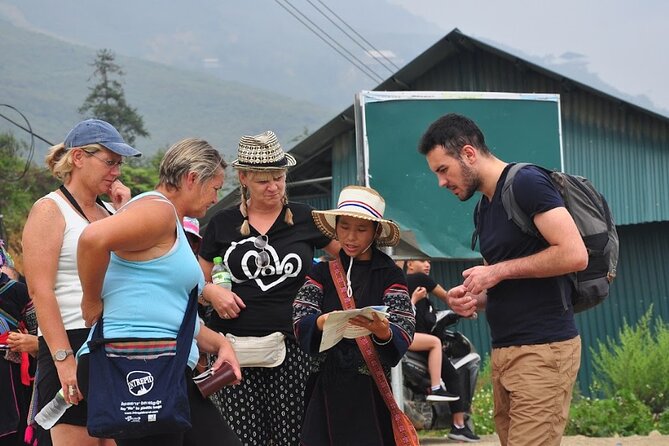
The third day moves to Bac Ha, but the timing is crucial: Bac Ha Market takes place only on Sunday morning. This is the single detail most likely to affect your booking decision.
The market is presented as a place where people exchange everyday goods, including pigs, hens, souvenirs, and other products. That gives it a more local purpose than a market designed only for sightseeing. You can see trade, food, and social life in one place, although the schedule gives you about four hours, so you will need to manage your time.
Bac Ha is not simply a photo stop. The market shows how commerce works across the surrounding ethnic communities, with goods moving between villages and town. Your private car and guide make the visit easier than attempting to connect independently after a short night and several mountain transfers.
Still, four hours passes quickly. If you enjoy browsing slowly, tasting food, or taking photographs, resist the urge to spend the entire visit at the first row of stalls. Ask your guide where the most useful areas are, then leave enough time to meet the vehicle.
Hoang A Tuong’s Castle and nearby Pho Village

During the Bac Ha visit, you spend about 30 minutes at Hoang A Tuong’s Castle. It is described as the former home of the H’Mong king and his family, as well as a place from which he ruled local ethnic communities.
Half an hour is enough for a compact visit, but not for a long study of the building. Think of it as a short architectural and historical stop that adds context to the market morning. The entrance fee is included.
You also have about 30 minutes in Pho Village, located near Bac Ha Market. The walk is described as peaceful and offers a look at everyday life in the area. This shorter stop balances the noise and activity of the market with a quieter village setting.
The Bac Ha portion is handled as a private tour by car and guide, which is a useful contrast to the shared arrangements elsewhere. You get more control over the local sightseeing, though the larger trip still includes shared transport and group coordination depending on the option you book.
The $56 value, with a few conditions
At $56 per person, the package offers strong value on paper. It includes the Hanoi to Sapa transfer arrangement according to the selected option, a local English-speaking guide, the Ta Van homestay, meals, entrance fees at Ta Van and Hoang A Tuong’s Palace, government tax, and the private Bac Ha excursion.
The price works best for an independent-minded budget traveler who would otherwise have to arrange transport, a guide, meals, and separate village visits. The tour bundles the difficult connections, especially the early Lao Cai pickup and the route between Sapa and Bac Ha.
The low price also reflects simple accommodation and a tight schedule. Drinks, insurance, tips, and personal expenses are extra. Holiday dates carry a surcharge of 700,000 Vietnamese dong per person for April 30, May 1, September 1 through 3, December 31, and January 1.
Check the transfer choice before booking. The package describes both overnight train and sleeper bus possibilities, and the selected version may affect what is included. Confirmation is provided at booking, and cancellation is allowed up to six days before the experience for a full refund.
Who should book this Sapa and Bac Ha trip?
I would recommend this trip to you if you have only three days, want to see more than Sapa town, and are comfortable trading hotel comfort for village access. It suits hikers with moderate fitness, budget travelers, and anyone who wants a guide to explain local communities rather than simply point out scenery.
It also works well if you are planning a longer northern Vietnam route. From Sapa, you can choose to continue directly to Ha Giang by bus instead of returning to Hanoi. Two departure options are listed, at 2:30 pm by an 18-seat limousine bus or at 7:00 pm, with the journey taking about six hours.
I would hesitate if you dislike overnight transport, shared sleeping rooms, public bathrooms, or early starts. The trip is also a poor fit if you need flexible market timing, since Bac Ha’s main market only runs on Sunday morning.
Should you book it?
Book this trip if your priority is variety: an overnight journey, Sapa’s best-known village routes, a Ta Van homestay, and Bac Ha Market in one compact package. The local guide, the village walks, and the direct Ha Giang option give it more practical value than a simple Sapa day tour.
Skip it if you want a slow holiday or private comfort. For everyone else, the $56 price makes sense, provided you confirm the transport option, pack light, bring water, and choose dates that include Sunday in Bac Ha.
FAQ
Where does the tour start?
It starts at Hanoi Train Station, at 120 Le Duan, Cua Nam, Dong Da, Hanoi.
How long does the tour last?
The experience lasts approximately three days.
How do I travel from Hanoi to Sapa?
Depending on the option selected, you travel by overnight train or sleeper transfer. Listed train services depart around 9:30 pm, with a pickup at Lao Cai at about 5:00 am for the 40-kilometer transfer to Sapa.
Is Bac Ha Market open every day?
No. Bac Ha Market takes place only on Sunday morning.
What is the accommodation like?
You stay in a Ta Van homestay in a shared room or on a single mattress. The bathroom is public.
Is the tour physically demanding?
A moderate level of physical fitness is required. The program includes walks through Cat Cat, Lao Chai, Ta Van, and Giang Ta Chai, including a route described as a mud road.
More Shopping Trips in Hanoi
- Bangkok: Floating Market and Train Market Experience
★ 4.8 · 3,998 reviews - Half-Day Railway Market and Floating Market Tour in Thailand
★ 4.5 · 3,924 reviews - Bangkok: Damnoen Saduak, Train Market & Mahanakhon Day Trip
★ 4.7 · 2,162 reviews - Damnoen Saduak Floating Market and Maeklong Railway Market Tour
★ 4.5 · 1,588 reviews
Just added around Hanoi
- Visit Train Street Hear History &Eat Local Food Know Culture★ 5.0 · 20 reviews
- Uncover Hanoi’s Hidden Treasures: Old Quarter & Train Street★ 5.0 · 61 reviews
- The insider’s Hanoi + Train Street 4,5 Hours Female Ao Dai Riders★ 5.0 · 53 reviews
- The insider’s Hanoi 4.5 hours All highlight Places & Train Street★ 5.0 · 41 reviews
- Female Riders Vespa Night Street Food + Train Street food 4 Hours★ 5.0 · 35 reviews
- Highlights and Secrets of Hanoi Old Quarter Through Train Street★ 5.0 · 24 reviews
- Red River island backroad, Rural Countyside Area and Train Street★ 5.0 · 57 reviews
- Hanoi Vespa After Dark Street food + Train Street+ Live Music★ 5.0 · 18 reviews
Hanoi Train Tours, compared.
Street Food Tour with Train Street & Hidden Alleyways
Read our review →
Guided Street Food Tour with Train Street Experience
Read our review →
Hanoi City Tour Highlight, Train Street Combine visit Countryside
Read our review →
Hanoi Walking Street Food Tour with Train-Street Visit
Read our review →
Hanoi Jeep City Highlight, Backstreet, Train Street, Countryside
Read our review →

Walking Street Food Tour in Hanoi and Train Street
Read our review →Browse the lists this tour appears in