
REVIEW · NEW DELHI
3-Days Delhi and Varanasi Tour by Express Train.Includes,Hotel Transfers.
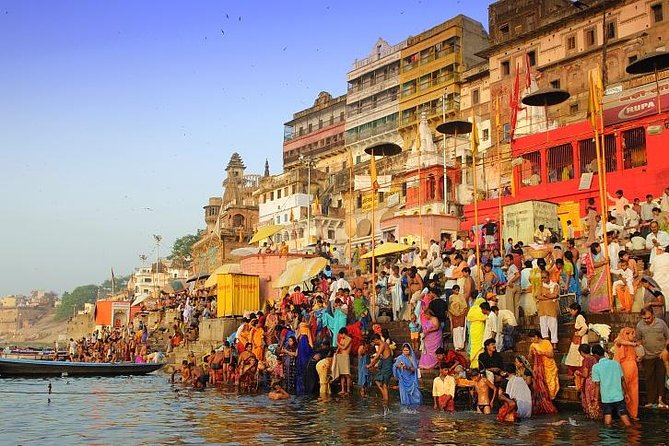
Varanasi is the heart of this trip: at sunrise, you’ll glide along the Ganges while priests, pilgrims, mourners, and worshippers begin the day beside the ghats. The route also gives you a fast look at Delhi’s Mughal monuments, all without arranging Indian trains, station transfers, or a Varanasi car yourself.
I especially like the private-tour format, since your party has its own guide, driver, and vehicle rather than being folded into a large group. I also like the practical design: round-trip train tickets, hotel transfers, a Varanasi boat ride, and one hotel night are bundled into the $275 price. The catch is the pace. You’ll spend long hours on trains, and several major entry fees and most meals are extra.
Key points to know before booking
- Sunrise boat ride on the Ganges: The early outing gives you a close view of the riverfront rituals and cremation ghats.
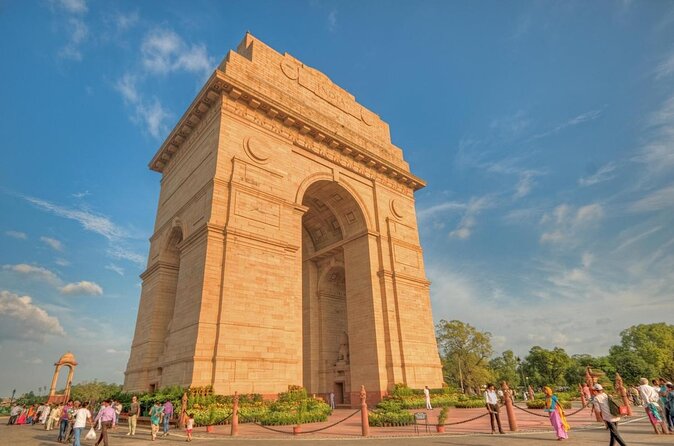
- Delhi in one packed day: Qutub Minar, Humayun’s Tomb, Lotus Temple, India Gate, Red Fort, and Jama Masjid are all scheduled before the overnight train.
- Private transport in Varanasi: Your group receives station transfers, sightseeing, and the boat ride by arranged local transport.
- One night in a Varanasi hotel: You arrive by train, rest at the hotel, tour the city and Sarnath, then return to the hotel before the next morning’s river outing.
- A useful short-trip price: The $275 covers transport and key arrangements, but you should budget separately for food and several admission tickets.
- A demanding schedule: This suits you if you value seeing a lot in little time and can handle overnight rail travel.
Why this three-day route works
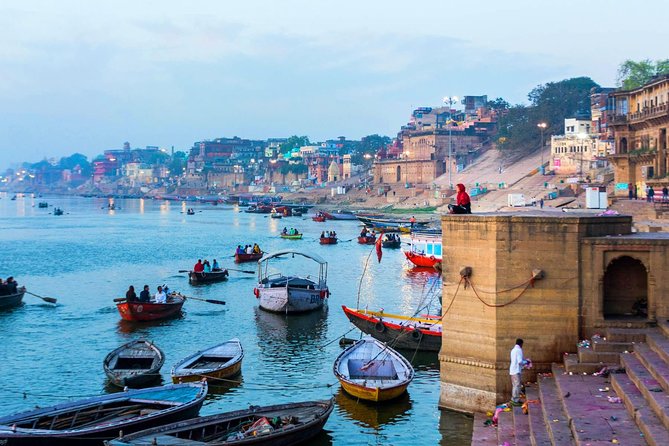
This trip connects two very different sides of North India. Delhi gives you imperial architecture, grand avenues, and major monuments. Varanasi gives you sacred riverfront life, narrow streets, markets, temples, and Buddhist history at Sarnath.
You pay $275 per person, which is a reasonable package price for a private three-day route that includes round-trip train tickets, a hotel night, local transfers, sightseeing transport, and a boat ride. The value depends on how much you would otherwise spend arranging each part yourself. Indian rail tickets and Varanasi transport can be awkward to coordinate, especially when you arrive after an overnight journey.
The price does not cover lunch, dinner, drinks, alcohol, or several attraction tickets. That matters because Day 1 includes many paid Delhi sights, while Day 2 includes paid entries at Kashi Vishwanath Temple and Dhamek Stupa. I would keep extra cash available for admissions, meals, and small purchases in the markets.
The tour is private for your own group, but the train journey is shared public transport. The included vehicle depends on group size: one to three people travel by Tata Indigo or Swift Dzire, while four to six people use a Toyota Innova. That is a useful detail if you care about car space during a long sightseeing day.
More Train Tours in New Delhi:
- Taj Mahal Day Tour from Delhi by Superfast Train – TOP RATED TOUR
★ 5.0 · 4,166 reviews - Taj Mahal Tour from Delhi by Express Train (Viator Award Winner)
★ 5.0 · 2,849 reviews - From Delhi: Private Taj Mahal and Agra Tour by Express Train
★ 4.9 · 1,605 reviews
Delhi’s monuments before the night train
Your first morning begins with pickup at your hotel, although the listed meeting point is Indira Gandhi International Airport. Confirm the exact pickup location before departure if you are staying elsewhere in Delhi.
The sightseeing day covers about seven hours before you head to New Delhi Railway Station. That is enough time to see the city’s leading sights, but not enough for slow museum visits or long wandering. Think of this as a carefully chosen introduction, not a relaxed Delhi tour.
Qutub Minar
Qutub Minar is one of Delhi’s major early Islamic monuments and part of a UNESCO World Heritage Site. The tall minaret and surrounding Qutb complex reward a little time to look closely at the carved stone and inscriptions.
The schedule allows about an hour. Admission is not included, so ask your guide about the current ticket process and price. This is one of the stops where a guide adds useful context, since the complex contains more than the tower alone.
Lotus Temple
The Lotus Temple offers a change of mood. Its flower-shaped design is easy to recognize, and the Bahá’í House of Worship welcomes people of all faiths. Admission is free.
The visit is scheduled for about an hour. You can expect a quieter stop than the crowded historic sites, though entry arrangements and access may affect how much time you spend inside. It is a good pause between Delhi’s larger Mughal monuments.
Same tracks, a very different ride:
- Taj Mahal, Agra Fort, Baby Taj Tour from Delhi by Superfast Train
★ 5.0 · 1,494 reviews - Delhi to Agra and Taj Mahal Private Day Trip by Express Train with Lunch
★ 5.0 · 1,389 reviews - From Delhi: Taj Mahal & Agra Tour by Gatimaan Express Train
★ 4.8 · 1,041 reviews - All Inclusive Taj Mahal & Agra Tour by Superfast Train From Delhi
★ 5.0 · 918 reviews
Humayun’s Tomb
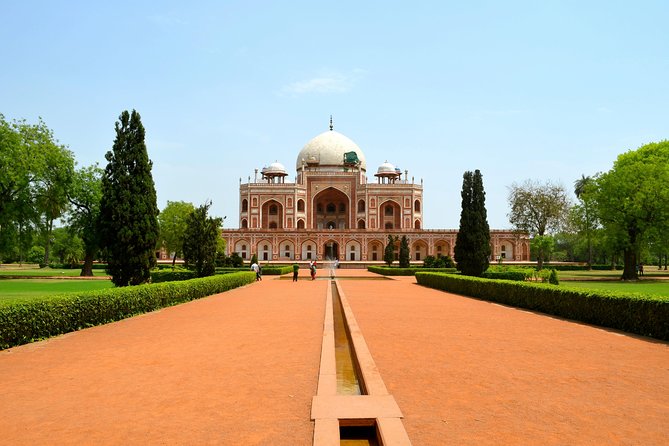
Humayun’s Tomb is one of the most important architectural stops on the route. Commissioned by Empress Bega Begum after the death of Emperor Humayun, it was designed by Persian architects and later influenced Mughal building traditions.
Allow about an hour here. Admission is extra. I would not treat this as a quick photo stop. The garden layout and red sandstone details are a large part of the appeal, and this is one of the places where moving too fast would weaken the experience.
India Gate and Rashtrapati Bhavan
You’ll drive past Rashtrapati Bhavan on the way to India Gate, giving you a view of New Delhi’s ceremonial district. India Gate is a war memorial on the eastern end of that grand avenue.
The stop lasts about 30 minutes and admission is free. This is primarily an exterior visit, so expect a brief look rather than a full historical tour. It also gives you a break from monument interiors before the final old Delhi stops.
Red Fort and Jama Masjid
The Red Fort was the main residence of Mughal emperors for nearly two centuries. Its walls and remaining buildings help explain the political power of old Delhi, but admission is not included and the site can take more time than the schedule allows.
Jama Masjid, built by Shah Jahan between 1644 and 1656, is one of India’s largest mosques. Admission is listed as extra. Dress respectfully and follow local instructions, particularly around areas used for prayer.
These two sites sit within the old Delhi portion of the day, where traffic and crowds can slow the schedule. You may need to choose between lingering at a monument and reaching the railway station without stress. I would ask the guide early in the day which stops are flexible.
What the overnight train means in practice
You board at New Delhi Railway Station in the evening and spend about 12 hours traveling to Varanasi. The package includes round-trip train tickets in air-conditioned class with a sleeping bed, though the wording also refers to chair class, so confirm the exact carriage and berth type before you travel.
This train ride saves a full daytime transfer and lets you wake in Varanasi. It also means that Day 2 begins after a night on the railway rather than in a hotel bed. Pack a small overnight bag with water, toiletries, a light layer, and anything you need close at hand. Your larger luggage may be less convenient to access during the journey.
The train is one of the tour’s biggest practical advantages and one of its clearest demands. If you sleep easily on trains, it makes the itinerary efficient. If you need a quiet hotel night, the schedule will feel tough.
Arriving in Varanasi and seeing the sacred city
On arrival at Varanasi railway station, your driver meets you and takes you to the hotel. You have some time to rest before the day’s sightseeing, an important buffer after the overnight ride.
The Varanasi portion combines Hindu sacred sites with Sarnath, the Buddhist center about 13 kilometers away. Transport is arranged by private vehicle, so you are not left to negotiate local connections after arriving tired.
Assi Ghat
Assi Ghat is the southernmost ghat on the route. It is known as a place where foreign students, researchers, and long-term visitors stay, but its main value for you is the chance to begin understanding how the Ganges shapes daily life in Varanasi.
The visit lasts about an hour and admission is free. Take time to watch the riverfront rather than treating the ghat as a checklist stop. The setting changes through the day, and the river is central to the city’s religious life.
Manikarnika Ghat
Manikarnika Ghat is one of Varanasi’s most sacred riverfront sites and a major cremation ghat. Hindu belief holds that cremation here can help a dead person’s soul reach salvation.
This is a serious place, not a tourist spectacle. Your guide can help you understand the customs, but you should behave quietly and respectfully. Admission is listed as extra, though the more important point is knowing what you are about to see and giving families privacy.
Kashi Vishwanath Temple
The Kashi Vishwanath Temple is dedicated to Shiva and is one of the twelve Jyotirlingas, among the holiest Shiva temples. Its location near the Ganges makes it central to Varanasi’s religious identity.
Entry is not included, and access may follow temple rules. Keep your schedule flexible and follow your guide’s instructions. This stop can feel more demanding than a standard monument visit because it is an active place of worship, not simply an archaeological site.
Dhamek Stupa at Sarnath
Dhamek Stupa sits at Sarnath, outside Varanasi, and gives the tour a clear Buddhist counterpoint to the Hindu riverfront. The stop is scheduled for about two hours, and admission is extra.
The distance from the city means this visit adds driving time, but it also broadens the trip. You are not seeing only Varanasi’s ghats and temples. You are also visiting a major religious site connected with Buddhist tradition and ancient pilgrimage.
After sightseeing, you spend the night at the Varanasi hotel. One breakfast is included, but other meals are your responsibility. Ask your guide or driver for practical meal suggestions rather than losing time searching on your own.
The Ganges at sunrise and the final night train
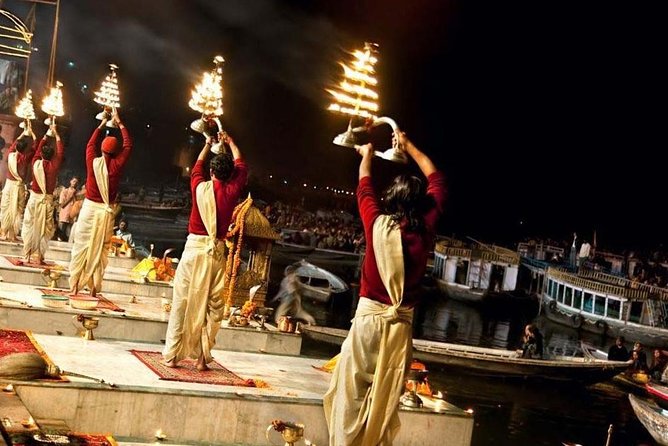
Day 3 begins early with a boat ride on the Ganges. This is the emotional center of the trip. From the water, you can watch the sun rise over the cremation ghats and see sacred rituals taking place along the banks.
The boat ride gives you a wider view than walking the riverfront alone. You see the ghats as one connected stretch, with different activities unfolding side by side. Keep your expectations respectful. This is a living religious setting, not a staged performance.
After the boat trip, you walk along the cobblestone streets beside the river and browse shops selling holy beads, handicrafts, and other handmade goods. The remainder of the day is at leisure, which gives you some control after two tightly scheduled days.
In the evening, your transport takes you to Varanasi railway station. You board the overnight train back to Delhi. Once you arrive in Delhi, the organized service ends and you are on your own. Plan your onward transport in advance, particularly if you have a flight or a hotel booking.
How the guides, cars, and timing affect the experience
The tour uses a guide and driver for the sightseeing portions, and the private format lets your group ask questions and adjust the pace where possible. The strongest benefit is not luxury. It is having someone meet you at the Varanasi station, transfer you to the hotel, and handle local sightseeing after a long train ride.
The schedule is tight enough that traffic, temple access, or a delayed train could affect the day. India’s rail system can also run behind schedule, so avoid booking an immediate onward flight after your return to Delhi. The tour data does not promise a specific guide by name, so you should not book expecting a particular person.
Comfortable walking shoes are essential. Delhi monuments, old city streets, ghats, and Sarnath all involve walking on different surfaces. Most people can participate, but the pace and overnight trains may not suit anyone who needs frequent rest or quiet travel conditions.
The experience requires good weather. If poor weather forces a cancellation, you are offered another date or a full refund. The standard cancellation policy is strict, however, and the booking is otherwise non-refundable and cannot be changed.
Who should book this Delhi and Varanasi tour?
I would recommend it to you if you have only three days, want both Delhi and Varanasi, and prefer having trains, cars, hotels, and the boat ride arranged together. It is also a good fit for a small family or group of friends who value a private vehicle and direct help at the station.
I would hesitate if you want a slow, restful holiday. Delhi sightseeing is packed, both train journeys are overnight, and Varanasi is intense by nature. You should also check the included train class carefully, since the description uses both air-conditioned chair class and sleeping-bed language.
At $275 per person, the tour offers solid value for a fast introduction to two major North Indian destinations. Book it if efficiency, cultural variety, and practical support matter more to you than spacious timing. Skip it if you prefer to choose every meal, monument, and train detail yourself.
FAQ
Where does the tour start?
Pickup is offered from your hotel, while the listed meeting point is Indira Gandhi International Airport in New Delhi. Confirm your exact pickup arrangement when booking.
How long is the tour?
The experience lasts approximately three days. Day 1 includes Delhi sightseeing and an overnight train to Varanasi. Day 3 ends with another overnight train to Delhi.
Are train tickets included?
Yes. Round-trip train tickets are included in air-conditioned class with a sleeping bed, although the description also refers to chair class. Confirm the precise train accommodation before departure.
Is hotel accommodation included?
Yes. One night in Varanasi is included in a double or twin-sharing room. Extra people are accommodated with an extra bed or shared room arrangements based on group size.
Are meals included?
One breakfast is included. Other food and drinks are extra, and alcoholic drinks can be purchased separately.
Is this a private tour?
Yes. Only your group participates in the sightseeing tour. Vehicle size depends on group size, with a Tata Indigo or Swift Dzire for one to three people and a Toyota Innova for four to six.
Just added around New Delhi
- Same day Agra tour from Delhi by express train★ 5.0 · 5 reviews
- Taj Mahal by Superfast Train Gatimaan Express★ 5.0 · 3 reviews
- Private Tour of Taj mahal from Delhi by Train in 90 Min★ 5.0 · 46 reviews
- All Inclusive Luxury Taj Mahal Tour from Delhi by Express Train★ 5.0 · 51 reviews
- Private Tajmahal Day Tour From New Delhi By Gatiman Express Train★ 5.0 · 14 reviews
- Taj Mahal and Agra Fort tour By Superfast Train from Delhi★ 4.5 · 3 reviews
- Taj Mahal same day luxurious Tour by Superfast Train from Delhi★ 5.0 · 27 reviews
- Overnight Taj Mahal and Agra Private Tour by Train from Delhi★ 5.0 · 6 reviews
New Delhi Train Tours, compared.
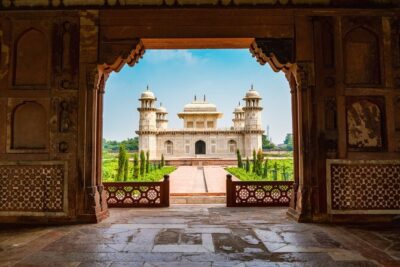
Taj Mahal Tour from Delhi by Express Train (Viator Award Winner)
Read our review →
Taj Mahal, Agra Fort, Baby Taj Tour from Delhi by Superfast Train
Read our review →
Delhi to Agra and Taj Mahal Private Day Trip by Express Train with Lunch
Read our review →
Taj Mahal & Agra Tour by Gatimaan Express Train
Read our review →
All Inclusive Taj Mahal & Agra Tour by Superfast Train From Delhi
Read our review →
Delhi to Agra Taj Mahal Private Day Trip by Superfast Train
Read our review →
Jaipur Day Trip from Delhi by Car or Train – All Inclusive
Read our review →
Private Taj Mahal & Agra Day Tour by Superfast Train From Delhi
Read our review →Browse the lists this tour appears in