
REVIEW · POLAND
From Warsaw: Auschwitz-Birkenau Tour with Premium Train Transportation
Auschwitz is not a casual sightseeing stop. It is a place of remembrance, and this long day from Warsaw gives you a practical way to reach it without arranging several separate trains, transfers, and tickets. I especially like the door-to-door transport and the fast Warsaw to Krakow rail journey. I also like that a licensed Auschwitz guide leads the museum visit rather than leaving you to piece together the meaning of the site alone.
The main drawback is the pace. The day can stretch well beyond the advertised 15 hours from pickup to return, and the museum visit involves a lot of walking on uneven ground. Mobility matters here, and some visitors have found the headset sound and fast-moving group difficult to manage.
Key points to know before booking
- Fast Warsaw to Krakow train: The rail journey takes about 2 hours and 20 minutes each way, making this far more practical than a slow or complicated public-transport plan.
- Two Auschwitz sites included: You visit Auschwitz I, with its museum exhibits and original camp structures, then Auschwitz II-Birkenau.
- Door-to-door help: A host collects you at your accommodation, helps you board the train, and meets you again at Warsaw station for the return transfer.
- Licensed local guide: The Auschwitz portion is led in your chosen language, with headsets supplied so you can follow the explanation while walking.
- A very long day: The advertised duration is about 15 hours, but the full door-to-door day can run closer to 18 hours.
- Not suited to limited mobility: Expect extensive walking, uneven paths, stairs or difficult surfaces, and little time to linger if you fall behind.
Why the fast train makes Auschwitz possible from Warsaw
The biggest strength of this outing is its transport plan. You are not asked to find your way through Warsaw, Krakow, and Oświęcim on your own. A host picks you up at your accommodation in Warsaw, takes you to the station, and helps you board the reserved fast train.
The train ride to Krakow takes around 2 hours and 20 minutes. That is a good use of your morning. You can sit down, rest, and let the rail network do the hard work instead of changing between several local services.
The return follows the same basic pattern. After the museum visit, a driver takes you back to Krakow station, where you catch the fast train to Warsaw. A host then meets you at the Warsaw station and returns you to your accommodation.
That last step matters. Auschwitz is an emotionally tiring place, and arriving back in Warsaw late at night with one more taxi or local connection to arrange would be a poor ending. Here, the final transfer is part of the plan.
The pickup time is 6:00 am. You should be ready before then, with comfortable shoes, water, and only the items allowed by the museum. The early start is not glamorous, but it is necessary for a day that includes long rail journeys and roughly four hours at the memorial site.
More Train Tours in Poland:
- Krakow: Zakopane, Funicular, Cheese, and Highland Day Trip
★ 4.7 · 1,489 reviews - Krakow to Zakopane: Funicular, Tasting and Thermal Baths Day Trip
★ 5.0 · 1,189 reviews - Warsaw: Tour to Krakow and Auschwitz by Train with Pickup
★ 4.6 · 822 reviews
The Krakow transfer and short van ride
When you arrive in Krakow, an English-speaking driver meets you and takes you by van to the Auschwitz Museum. The road transfer connects the fast train with the museum visit, so you do not have to locate a separate bus or work out the regional route.
The transfer is handled by a high-standard van, and the booked group is listed as no more than 15 people. That is a useful size for a day built around tight timings. Still, the guided visit inside Auschwitz may operate as a local museum group, and one outing had a group of about 30 people. You should not assume that every part of the day will feel like a private tour.
The stop before entering the museum can be brief. One past outing allowed only about five minutes for a toilet break before continuing. I would treat every available station or rest stop as useful and avoid assuming there will be plenty of spare time later.
The Krakow portion is primarily a transport link. Some schedules may leave you enough time to see part of the city, but Krakow sightseeing is not a guaranteed part of the experience. The core purpose is Auschwitz, and the timetable gives priority to getting there and back.
Auschwitz I: camp buildings, exhibits, and original structures
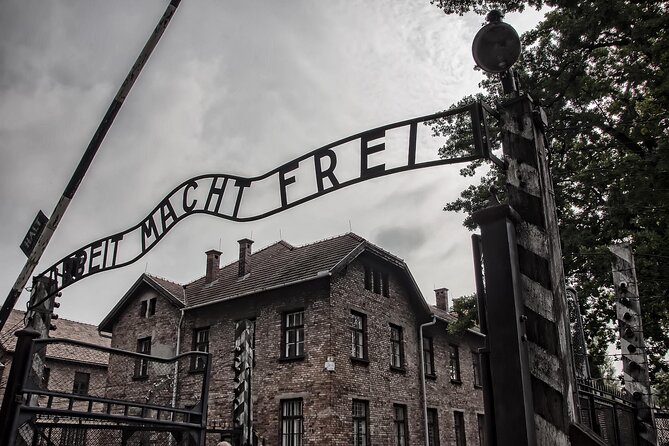
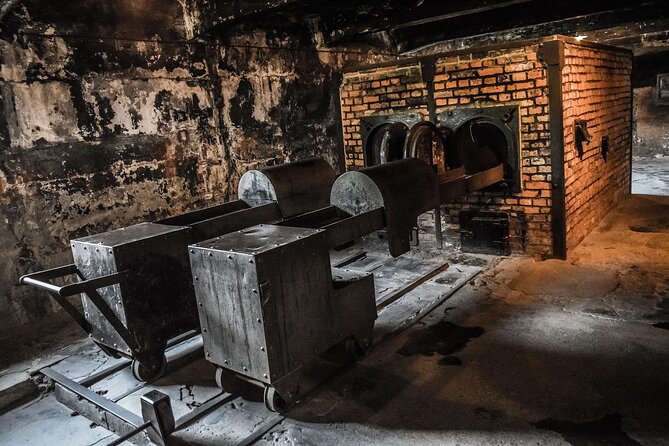
The museum visit begins at Auschwitz I. This is the older section of the camp complex, with preserved roads, fences, watchtowers, buildings, and exhibits. The site makes the system of imprisonment and mass murder easier to understand in physical terms. You are not simply looking at a memorial from a distance. You are walking through the actual camp grounds.
A licensed guide leads the visit in your chosen language. That is important because the meaning of Auschwitz is too large to grasp from signs alone. The guide explains the camp’s role in the Holocaust and places the remaining structures within that wider history.
You receive a headset and receiver so you can hear the guide while moving through the site. In theory, this is a strong system for a walking tour. In practice, make sure your headset is working before the group sets off. One outing had poor reception, and the sound became difficult to follow when people fell behind.
This is also where the walking pace can cause trouble. The guide may need to keep the group moving to meet the timetable. If you walk slowly, stay near the guide rather than at the back. Once you are too far away, even a working headset may not help much.
A 15-minute break follows the Auschwitz I portion. That is enough to pause, use facilities, and gather yourself, but it is not a long rest. The emotional weight of this place can be greater than the physical effort, so give yourself a few quiet moments whenever the schedule allows.
Auschwitz II-Birkenau and the scale of the site
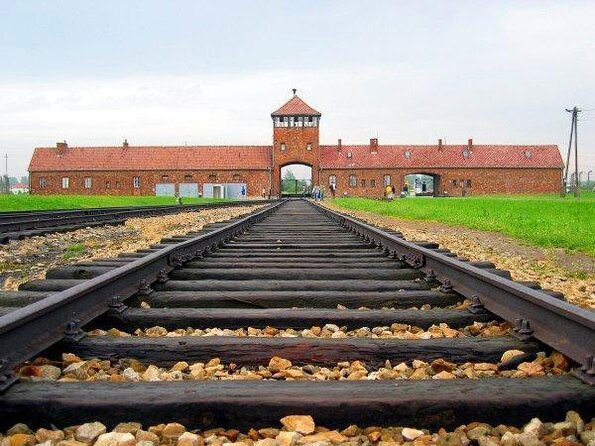
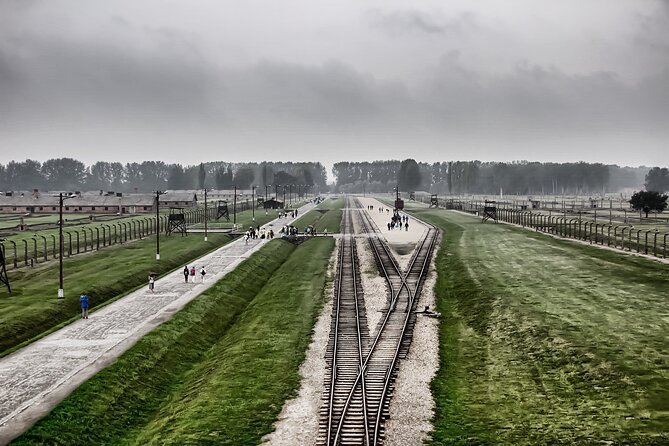
The second part takes you to Auschwitz II-Birkenau. This site is much more open and spread out, with long distances between key areas. You see the original roads, fences, watchtowers, and remains connected with the camp complex.
Birkenau gives you a strong sense of scale. Auschwitz I can feel enclosed by its brick buildings and museum rooms. Birkenau opens out across a much larger area, and the walking itself becomes part of understanding how the camp was organized.
The ground is not uniformly smooth. You may encounter uneven paths and surfaces that make wheelchairs or walking aids difficult to use. The experience is not presented as handicap accessible, and anyone with limited mobility should think carefully before booking. The tour requires a moderate level of physical fitness.
You also need to keep track of the guide. At Birkenau, the distances can make it easy to fall behind. Stay close, listen for instructions, and do not count on being able to stop whenever you wish. The schedule has to bring the group back to the van and then to the Krakow train.
The combination of Auschwitz I and Birkenau is the right choice if you want a fuller visit. Seeing only one section would leave out an important part of the site. The tradeoff is time and stamina. This is not a gentle museum morning. It is a serious, walking-heavy visit across two separate areas.
Same tracks, a very different ride:
- ZAKOPANE & THERMAL SPRINGS, Funicular, Cheese Tasting
★ 5.0 · 459 reviews - From Warsaw Auschwitz and Krakow one day tour by train with pick up and drop off
★ 4.5 · 267 reviews - From Krakow: Zakopane Day Tour with Tasting & Funicular Ride
★ 4.7 · 227 reviews - Zakopane Day Tour from Krakow with Tasting and Funicular ride
★ 5.0 · 171 reviews
What the guide adds to the visit
The guide is one of the strongest parts of the experience. You are led by a licensed local guide familiar with Auschwitz and its role in the Holocaust. The guide speaks your chosen language, and headsets are included.
A good guide helps you read the site with care. Fences, buildings, roads, and empty spaces can seem plain until their purpose is explained. The guide connects what you see to the people who were imprisoned and murdered there, giving the visit a clear moral and historical frame.
The strongest feedback about the guiding has focused on deep knowledge, respectful delivery, and the ability to make the history understandable without turning the visit into a performance. That tone matters. Auschwitz calls for clear facts and restraint, not theatrical storytelling.
There is still a practical limit. This is a guided group experience, not a private conversation. You may have little chance to ask extended questions, and the guide must maintain a steady pace. Keep questions short while walking, then use any pause to ask for clarification.
The headset can be a help or a weak point. Test the volume and reception early. If you cannot hear, tell the guide or driver quickly rather than struggling for two hours. Staying at the front of the group is the simplest way to improve your chances of hearing every explanation.
A realistic look at the 15-hour day
The stated duration is about 15 hours, but you should allow more time. One complete day ran to roughly 18 hours from hotel pickup to hotel return. Delays, train timing, the pace of the museum group, and the final transfer can all stretch the schedule.
A typical day looks like this:
- 6:00 am pickup at your Warsaw accommodation
- Transfer to the Warsaw train station with help boarding the fast train
- About 2 hours and 20 minutes by train to Krakow
- Meeting with the English-speaking driver
- Van transfer to the Auschwitz Museum
- Guided visit to Auschwitz I and its exhibits
- A 15-minute break
- Guided visit to Auschwitz II-Birkenau
- Van return to Krakow station
- Fast train back to Warsaw
- Pickup at the Warsaw station and return to your accommodation
That is a lot of movement in one day. You should not book an evening restaurant reservation, theater ticket, or airport connection that depends on returning at a precise hour.
The benefit is that you avoid paying for a hotel night in Krakow or building your own transport chain. The cost is a very long day with little flexibility. If you want a slower Auschwitz visit, time to sit quietly, or a relaxed look at Krakow, staying overnight in the area would be more comfortable.
Is the $224.76 price fair?
At $224.76 per person, this is not a budget rail day. You are paying for the convenience of coordinated transport, museum admission, a licensed guide, the van connection in Krakow, train assistance, and the return transfer to your accommodation.
The price makes the most sense if you value certainty. You do not need to buy separate train tickets, work out the route from Krakow to the museum, find the right entrance, or organize the return after an intense visit. The door-to-door service also helps if you are unfamiliar with Poland’s rail system.
It is less attractive if you are comfortable arranging transport yourself or if you want to spend several days in Krakow. Independent planning could cost less, but it would require more responsibility on a day when missed connections would be especially stressful.
Group discounts may be available, which could improve the value for families or small parties. Gratuities are not included, so plan for that separately if you wish to thank the guide or drivers.
The best value here is not luxury. It is reduced friction. You pay to make a difficult day easier to execute. For many visitors, that is worth more than a small saving on individual tickets.
Who should book this Auschwitz day trip?
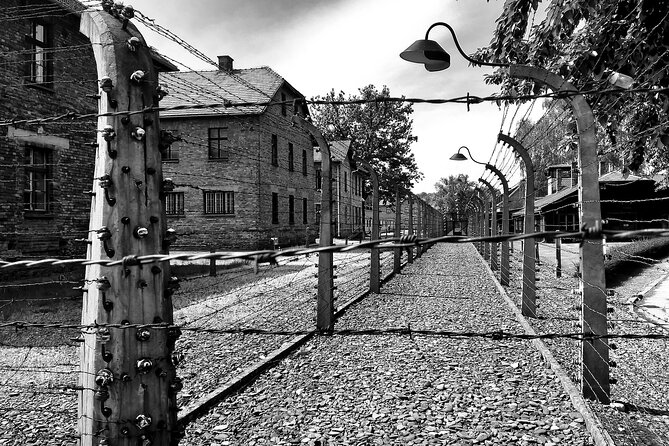
This outing suits you if you are staying in Warsaw and have only one day available for Auschwitz. It is also a good fit if you want a guide to explain the site, prefer help with train connections, and do not want to spend the night in Krakow.
It works well for people with moderate fitness who can walk for several hours and manage uneven ground. Comfortable shoes are essential. You should also be prepared for an early start, limited breaks, and a late return.
I would be cautious if you use a wheelchair, walker, or have trouble walking long distances. The experience is not described as handicap accessible, and the Birkenau paths can be difficult. The fast pace may leave you behind the group, while the timetable offers little room for a slower visit.
You should also reconsider it if you need plenty of personal space or quiet time. The guided group format keeps the day moving. That structure is useful for transport, but it can feel rushed inside a place where many people need time to process what they see.
Practical ways to make the day better
Wear shoes with solid support. The distance at Birkenau matters more than the train journey, and uneven ground can make an already long day tiring.
Bring water and a small amount of food if needed, but follow the museum’s rules about what you can carry inside. The included break is short, so do not count on a leisurely meal.
Keep your phone charged. You may need messages from the host or driver, and the day includes several handoffs between Warsaw, the train, Krakow, the van, and the museum group.
At the first meeting, confirm the return plan. Know where the driver will meet you after the museum and where your host will meet you in Warsaw. The organized structure is useful, but clear communication still matters when a day includes several vehicles.
Stay near the guide and check the headset before walking away from the entrance. If the receiver has weak sound, report it at once. This small step can make the difference between following the explanation and hearing only fragments.
Finally, give the visit the attention it deserves. Do not treat Auschwitz as a quick box to tick between train rides. The transport is efficient, but the memorial itself calls for patience, respect, and a willingness to walk through difficult history.
Should you book this Warsaw to Auschwitz tour?
Book it if you want the simplest organized route from Warsaw to Auschwitz and back. The fast train, coordinated van, admission, local guide, and accommodation pickup remove much of the planning burden. The guided visit to both Auschwitz I and Birkenau gives you the full main site experience in one demanding day.
Do not book it expecting a relaxed outing, a private guide, or guaranteed time for Krakow sightseeing. The day may last 18 hours, the group can move quickly, headset reception may not be perfect, and the ground at Birkenau is hard for anyone with limited mobility.
For a fit visitor with limited time in Poland, this is a practical and serious choice. For anyone who needs a slow pace, extra rest, or accessible paths, an overnight plan with a more flexible arrangement would be wiser.
FAQ
What time does the tour start?
Pickup begins at 6:00 am from your accommodation in Warsaw.
How long does the train ride from Warsaw to Krakow take?
The fast train journey takes about 2 hours and 20 minutes each way.
Does the tour include pickup and drop-off?
Yes. A host collects you at your Warsaw accommodation, assists you at the station, and meets you at the Warsaw station after the return journey.
Which Auschwitz sites are included?
The visit includes Auschwitz I Museum and Auschwitz II-Birkenau.
Is a guide included?
Yes. A licensed local guide leads the Auschwitz visit in your chosen language. An English-speaking driver handles the Krakow van transfers.
Are entrance fees included?
Yes. Entrance fees and headsets are included.
How much walking is involved?
The tour requires a moderate level of physical fitness and includes extensive walking, especially at Birkenau, where some paths are uneven.
Can I cancel for a full refund?
You can cancel at least 24 hours before the experience start time for a full refund. Changes or cancellations made less than 24 hours before the start are not accepted for a refund.
Just added around Poland
- Wroclaw: Private Tour by smal Historic Tram (1,5h, 16 seats)★ 4.8 · 24 reviews
- From Warsaw: Krakow and Auschwitz Day Tour by Train★ 3.5 · 2 reviews
- In 10 days around Poland – by train, with hotels and local tours★ 5.0 · 5 reviews
- Discover Poznan: Walk, Take a tram and have a traditional snack★ 5.0 · 4 reviews
- Zakopane Funicular Hill & Thermal Springs regular tour★ 5.0 · 9 reviews
- Zakopane & Gubalowka Funicular – Private Winter Tour from Krakow★ 5.0 · 10 reviews
- Krakow Zakopane Tour Tatra Mountains and Funicular Car★ 5.0 · 5 reviews
- Zakopane, Tatras, Funicular Ride & Thermal Pools (Fully Private Tour)★ 5.0 · 32 reviews
Poland Train Tours, compared.

Zakopane, Funicular, Cheese, and Highland Day Trip
Read our review →
Krakow to Zakopane: Funicular, Tasting and Thermal Baths Day Trip
Read our review →
Tour to Krakow and Auschwitz by Train with Pickup
Read our review →
ZAKOPANE & THERMAL SPRINGS, Funicular, Cheese Tasting
Read our review →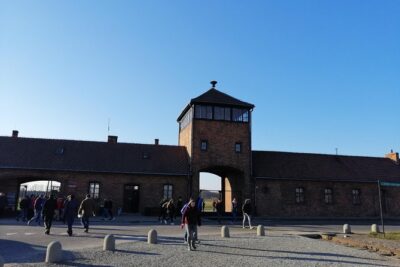
From Warsaw Auschwitz and Krakow one day tour by train with pick up and drop off
Read our review →
Zakopane Day Tour with Tasting & Funicular Ride
Read our review →
Zakopane Day Tour from Krakow with Tasting and Funicular ride
Read our review →
Browse the lists this tour appears in