REVIEW · TRAIN
Chinggis statue, Terelj NP Gobi by train Visit World energy
The most unusual feature here is the overnight train journey into the Gobi. In just two and a half days, you move from Ulaanbaatar’s city views to the open rock country of Terelj, then south to Khamariin Khiid, known as Mongolia’s World Energy Center. It is a lot of Mongolia in a short stretch, with very little wasted time.
I like the mix of famous sights and local meaning. The Chinggis Khaan equestrian statue is a grand, easy-to-reach landmark, while Khamariin Khiid connects you with Danzanravjaa and Mongolian Buddhist tradition. I also like that this is a private tour with an English-speaking guide, vehicle, meals, train tickets, park and museum fees, and bottled water included.
The trade-off is the pace. Day one includes several stops before an overnight train, and day two begins early in Sainshand before returning by train that evening. You should be comfortable with a one to two-hour hike, long transport stretches, and a schedule that leaves little room for sleeping in.
Key points at a glance
- Overnight train into the Gobi: Ride from Ulaanbaatar to Sainshand, then return on the 20:50 train.
- Chinggis Khaan Statue Complex: See one of Mongolia’s most famous monuments, described as the world’s largest horse-and-rider statue.
- Terelj National Park hike: Walk to Aryabal Meditation Temple and stop at Turtle Rock for photos.
- Khamariin Khiid and Shambala: Visit the monastery, Danzanravjaa Museum, sacred Bayanzurkh Mountain, and Shambala Stupa.
- Private, guided format: Pickup from your Ulaanbaatar accommodation, a dedicated vehicle, and guides in several languages.
- Best for active short trips: A good fit if you want major sights beyond Ulaanbaatar without arranging separate transport.
Why this short tour covers so much Mongolia
This trip links three very different parts of the country. You begin around Ulaanbaatar, where Zaisan Hill gives you a broad view over the capital. Then you head northeast to Terelj National Park, a place of granite formations, open space, and one of Mongolia’s best-known temples. After that, you take the train south into Dornogovi Province for a spiritual and cultural visit to Khamariin Khiid.
That range is the main reason to consider the tour. You are not spending two and a half days on one theme. Instead, the trip gives you city scenery, a monumental statue, a national park, a Buddhist center, a museum, sacred sites, and a real taste of Mongolian rail travel.
The schedule is compact because these destinations are spread out. The tour works best if you see it as a carefully packed introduction rather than a slow holiday. You will collect many strong impressions, but you will not have long, unplanned blocks for wandering.
More Train Tours in the world:
- Bangkok: Damnoen Saduak Market and Maeklong Railway Market
★ 4.5 · 26,723 reviews - Mt Fuji and Hakone 1-Day Bus Tour Return by Bullet Train
★ 5.0 · 26,383 reviews - The Old Siam: Damnoen Saduak and Maeklong Railway Market
★ 4.5 · 10,992 reviews
Zaisan Hill gives you a quick view of Ulaanbaatar
Pickup is at 9:00 am from your accommodation in Ulaanbaatar. The first stop is Zaisan Hill, a useful way to get your bearings before leaving the capital.
From the hill, you can look across the city and see how Ulaanbaatar sits within a wide basin surrounded by open country. It is a short stop, but it gives context to the city you may otherwise experience only from street level. Bring your camera, as the tour specifically recommends one and this is an obvious early photo point.
Because the tour continues to several major sights, do not expect a long city orientation here. Zaisan Hill is more about the view than a full historical visit. Your guide is there to explain the setting and help you understand what you are seeing before the countryside takes over.
The Chinggis Khaan Statue is big in every sense
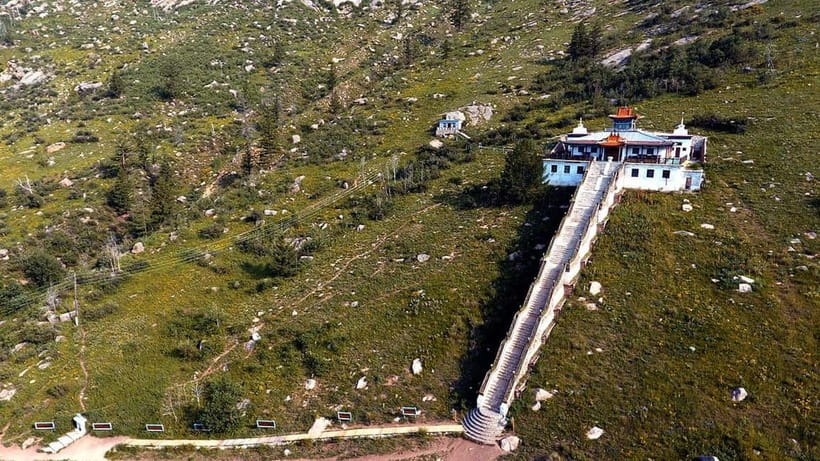
From Ulaanbaatar, the tour continues to the Chinggis Khaan Statue Complex. The statue is one of Mongolia’s signature attractions, showing Chinggis Khaan on horseback. It is promoted as the largest horse-and-rider statue in the world, and its scale is hard to miss.
This is a straightforward stop for photos, but the guide adds value by placing the monument within Mongolia’s national story. Chinggis Khaan is not just a medieval figure here. His name, image, and legacy appear throughout modern Mongolia, so the statue helps explain the country’s strong connection to its imperial past.
The complex is also a useful contrast with the rest of the day. You move from a modern capital viewpoint to a monumental tribute, then into the more natural setting of Terelj. If you enjoy taking photos, allow time for different angles rather than treating the statue as a quick roadside stop.
The practical issue is timing. This tour includes several major places before the train, so your guide will need to keep the group moving. You get the key visit, but this is not a full museum day or an unhurried architectural study.
Turtle Rock and Terelj bring a change of pace
Gorkhi Terelj National Park is the scenic heart of the first day. The park is known for its striking granite formations and open natural setting, and Turtle Rock is the most recognizable stop on this route.
Turtle Rock is exactly the sort of place that rewards a camera. Its shape gives the stop a clear visual focus, and your guide can point out the formation before you continue into the park. It is an easy place to pause, take photos, and appreciate how sharply the surroundings differ from Ulaanbaatar.
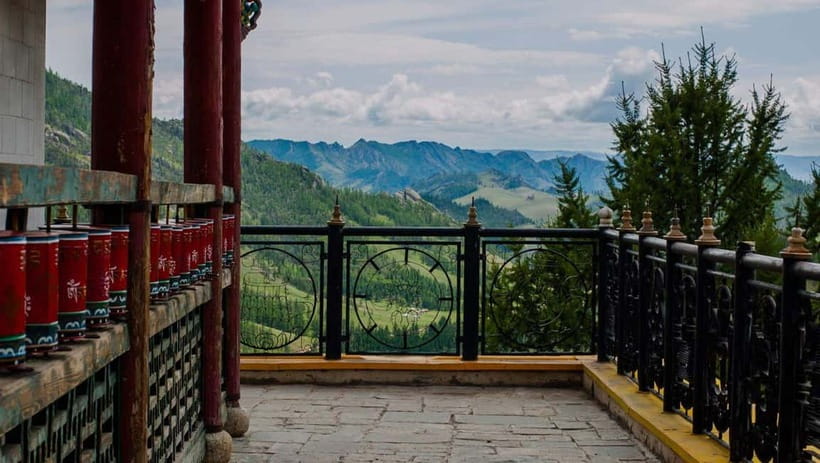
The park visit is not only a drive with photo stops. The tour includes a hike to Aryabal Meditation Temple, with a total hiking requirement of about one to two hours. That walk is one of the most active parts of the trip, so wear shoes suitable for uneven ground and bring water, even though bottled water is supplied.
Aryabal Meditation Temple gives Terelj a quieter side. The visit combines walking, scenery, and Buddhist practice rather than treating the park as a simple photo backdrop. You should expect a moderate outing, not technical trekking. Still, the tour is not a good choice if you need a fully vehicle-based sightseeing day.
The park portion is especially valuable because it breaks up the transport. After time in the city and at the statue, you get fresh air and movement before heading back toward Ulaanbaatar. Just keep an eye on the clock. You will later need to catch the train south.
Same tracks, a very different ride:
- Bangkok: Train Market & Floating Market with Boat Ride
★ 4.7 · 9,547 reviews - Mt Fuji & Hakone Cruise, Drum Show Bullet Train 1 Day from Tokyo
★ 4.0 · 7,413 reviews - Montserrat & Cogwheel Train, Gourmet Wine Tasting & Tapas/Lunch
★ 5.0 · 6,290 reviews - Hanoi: Guided Food Tour with Train Street Visit
★ 4.9 · 6,239 reviews
The overnight train is part of the experience
After Terelj, the vehicle returns you to Ulaanbaatar for the train to the Gobi. The rail journey is not just a transfer on this tour. It is one of the main experiences.
You leave the busy capital behind and travel overnight toward Sainshand. Train travel gives you a different view of Mongolia than a private road journey. It also saves a daytime transfer, allowing the tour to fit Sainshand and Khamariin Khiid into a short schedule.
The trade-off is comfort and sleep. The trip is tightly timed, and you will have already spent the day sightseeing and hiking. The following morning begins early, with arrival in Sainshand scheduled for 7:00 am. Pack only what you need close at hand, including your camera, water, and personal essentials, so you are not searching through large luggage during the train ride.
The exact train conditions and berth details are not specified, so you should confirm those practical points before departure if they matter to you. The tour does include the train ticket, which removes one major planning task.
Sainshand starts the Gobi day early
The train arrives in Sainshand at about 7:00 am. Breakfast is arranged nearby in the main square before the day’s sightseeing begins.
That early arrival makes sense for the itinerary, since Khamariin Khiid and the other stops require a full day. It also means you should arrive ready for an active morning rather than expecting a slow start. If you sleep lightly on trains, the first hours in Sainshand may feel demanding.
The tour then uses a driver and vehicle to reach the sites around Khamariin Khiid. Having road transport included matters here. The attraction is not simply inside the city center, and arranging separate transfers would add time and cost to a short visit.
Sainshand itself is mainly your base for breakfast, transport, and the return train. The main cultural focus comes at the monastery and nearby sacred sites.
Khamariin Khiid connects religion, literature, and place
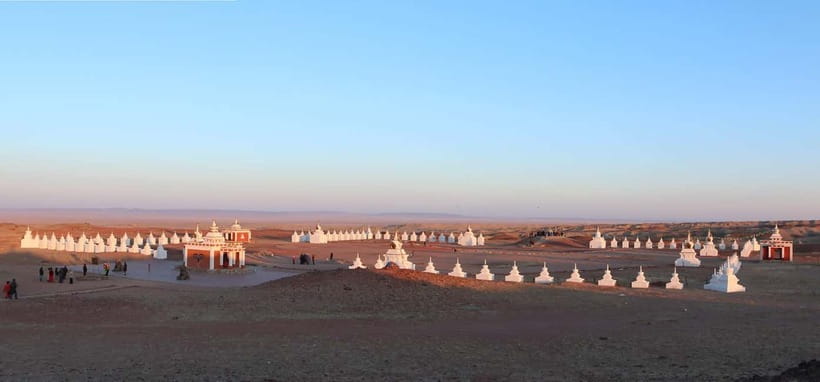
Khamariin Khiid is described as Mongolia’s World Energy Center. Many people believe the area has a special energy that can restore or cover the body’s energy. You do not need to share that belief to appreciate the importance of the place. It offers a look at how spirituality, pilgrimage, nature, and local identity can meet in one setting.
The monastery is linked with Danzanravjaa, also known as Javzandamba Khudagt, a Mongolian teacher and writer who lived from 1803 to 1856. Khamariin Khiid was an important center of the Buddhist red sect, giving the visit more substance than a simple scenic stop.
Your English-speaking guide can help explain these connections as you move around the site. Guide quality matters especially here because the significance may not be obvious from the buildings alone. A strong explanation turns the visit from a collection of religious structures into a window on Mongolian thought and culture.
The setting also gives the tour its strongest sense of distance from Ulaanbaatar. You have crossed into the Gobi region by train, then continued by road to a place with a very different atmosphere. That contrast is one of the trip’s rewards.
Danzanravjaa’s museum adds context
The Danzanravjaa Museum follows the monastery visit and gives you a more focused look at the figure connected with Khamariin Khiid.
A museum stop is useful here because it puts a person’s work and influence alongside the physical religious site. Instead of only seeing where Danzanravjaa was active, you get a chance to learn more about his role as a teacher and writer.
The tour includes museum entrance fees, so you do not need to budget separately for this part. Your guide is also included, which is helpful when objects and written explanations may not be available in your preferred language.
Do not expect a long museum session on this fast itinerary. The value comes from the link between the museum, the monastery, and the broader spiritual character of the area. Taken together, these stops give the Gobi day a clear theme.
Bayanzurkh Mountain and Shambala Stupa
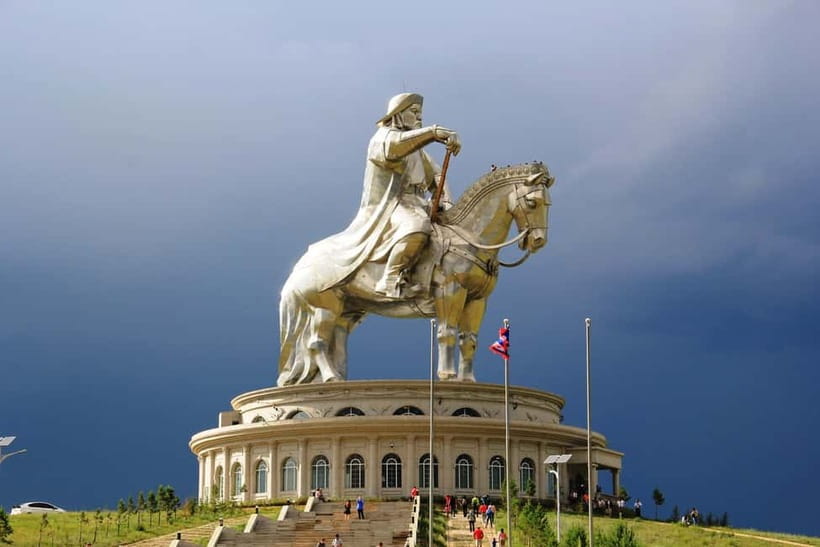
The route continues to Bayanzurkh sacred mountain and Shambala Stupa. These stops broaden the visit beyond the main monastery.
Sacred mountains are important in Mongolian religious and cultural life, and Bayanzurkh gives you another way to see that relationship. The stop is less about ticking off a landmark and more about understanding why certain places carry spiritual weight.
The Shambala Stupa adds another distinctive visual and religious point. Together with Khamariin Khiid and the museum, it makes the day feel connected rather than random. The sites all relate to belief, pilgrimage, and the character of the region.
The supplied plan does not give exact visit lengths or walking distances for these stops. Expect your guide to set the pace based on the train schedule and road conditions. You should be prepared for time outside, changing conditions, and a full day on your feet.
Meals and inclusions make the $430 price easier to judge
The price is $430 per person. That is not a bargain-basement day trip, but the comparison should be made against what is included and how difficult the route would be to arrange alone.
The package includes:
- A driver and vehicle
- Train tickets
- An English-speaking guide
- Meals shown in the schedule
- Bottled water each day
- National park and museum entrance fees
- Pickup from your accommodation
- Visa support and an invitation letter if needed
You are paying for a private group, multiple transport legs, and a route that connects Ulaanbaatar with Terelj and Sainshand. The train ticket and vehicle are especially important because the tour would be awkward to piece together at the last minute.
You still need to pay for international or domestic flights, personal purchases, optional activities, alcoholic drinks, snacks, and travel insurance. Those exclusions are normal, but you should budget for them before deciding the final cost.
For a short private tour with a guide, transport, meals, and entry fees, the value is strongest if you want convenience and a packed route. If you prefer independent train planning, long free periods, or a slower visit to each site, the price may feel less attractive.
The guide can shape the whole experience
The tour is available with English, Japanese, Russian, or Korean guidance. The exact guide depends on your booking, but one guide specifically praised for this route is Mr Taisun Tumenbayar.
His strengths were described as clear explanations, strong care for the group, careful arrangements, a friendly manner, and enthusiasm. Those qualities matter on this trip because the schedule is demanding and several stops, especially Khamariin Khiid, benefit from cultural context.
A good guide also helps with the practical side of the day. You need to move from hotel pickup to the park, back to Ulaanbaatar, onto the train, through Sainshand, and back to the station for the return journey. The two verified bookings for this experience both received a 5 out of 5 rating, with organization and guide service receiving particular praise.
That is encouraging, but you should still ask for the confirmed language and guide details when booking if that affects your decision.
Who should book this 2.5-day route
I would choose this tour if you have limited time in Mongolia and want several major experiences without handling the transport yourself. It suits active visitors who are happy with an overnight train, early starts, a one to two-hour hike, and a full sightseeing day in the Gobi.
It is also a good fit for people who want more than scenery. The route includes a national park and dramatic statue, but its strongest cultural element is the connection between Khamariin Khiid, Danzanravjaa, Buddhist practice, sacred places, and the idea of spiritual energy.
I would be more cautious if you need lots of sleep, dislike fixed schedules, or want to spend a full day in one place. Babies under one year are not considered suitable for this activity, and the hiking requirement makes it a poor match for anyone unable to manage moderate walking.
Pack a camera, comfortable walking shoes, clothing for time outdoors, and only the personal items you need near you on the train. Alcohol and drugs are not allowed. Travel insurance is not included, so arrange it separately.
Should you book it?
Book this tour if you want an efficient, private introduction to Mongolia that combines Terelj’s natural scenery with the cultural and spiritual sites around Sainshand. The overnight train is tiring, but it makes an ambitious route possible in only 2.5 days.
Skip it if you want a relaxed schedule or a longer stay in the Gobi. For the right person, the mix of Chinggis Khaan, Turtle Rock, Aryabal Temple, Khamariin Khiid, and rail travel offers unusually broad coverage for a short trip, with the guide and included transport doing much of the hard work.
FAQ
How long does the experience last?
The tour lasts 2.5 days. It begins with pickup in Ulaanbaatar on day one and finishes after returning to your accommodation on day three.
What destinations are included?
The route includes Zaisan Hill, the Chinggis Khaan Statue Complex, Gorkhi Terelj National Park, Turtle Rock, Aryabal Meditation Temple, Khamariin Khiid Monastery, Danzanravjaa’s Museum, Bayanzurkh sacred mountain, and Shambala Stupa.
Is train travel included?
Yes. The tour includes the train ticket from Ulaanbaatar to Sainshand and the return train from Sainshand to Ulaanbaatar.
What languages are available?
Live guides are available in English, Japanese, Russian, and Korean.
How much hiking is involved?
The tour involves a one to two-hour hike, especially during the visit to Aryabal Meditation Temple in Terelj National Park. A moderate level of fitness is required.
What is included in the $430 price?
The price includes a driver and vehicle, train tickets, an English-speaking guide, meals shown in the schedule, bottled water, national park and museum entrance fees, pickup from your accommodation, and visa support with an invitation letter if needed. International or domestic airfare, personal items, optional activities, alcohol, snacks, and travel insurance are not included.
Just added around the world
- Zurich: Audio Guided City Tour and Train to “Top of Zurich”★ 4.2 · 65 reviews
- Zermatt Village & Gornergrat Railway Tour | From Bern★ 5.0 · 2 reviews
- Zagreb: Private Walking Tour with Funicular Ride & Transfers★ 5.0 · 2 reviews
- Zagreb: Plitvice With Secured Tickets, Boat And Train Ride★ 4.6 · 15 reviews
- York Day Rail Tour from London including Hop-on Hop-off tour★ 5.0 · 3 reviews
- Xi’an: Maiji Grottoes & Fuxi Temple Day Trip by Bullet Train★ 5.0 · 2 reviews
- Zagreb: Group walking tour of Zagreb (funicular included)★ 4.9 · 16 reviews
- Winter Tour Viking Village, Nærøyfjord Cruise & Flåm Railway★ 4.6 · 26 reviews
Train Tours, compared.

Damnoen Saduak Market and Maeklong Railway Market
Read our review →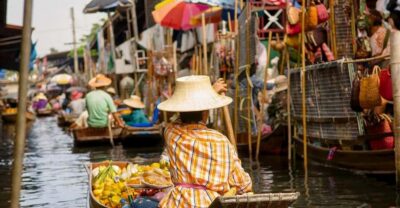
The Old Siam: Damnoen Saduak and Maeklong Railway Market
Read our review →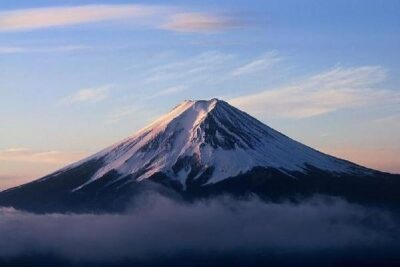
Mt Fuji & Hakone Cruise, Drum Show Bullet Train 1 Day from Tokyo
Read our review →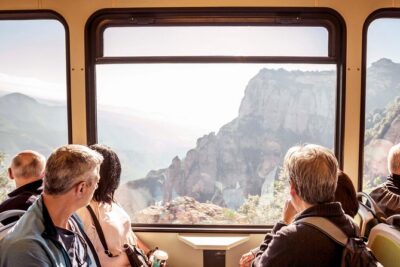
Montserrat & Cogwheel Train, Gourmet Wine Tasting & Tapas/Lunch
Read our review →
Lake Como Cruise, St. Moritz & Bernina Red Train
Read our review →
Dachau Concentration Camp Memorial Site Tour from Munich by Train
Read our review →