
REVIEW · MUNICH
Dachau Small-Group Half-Day Tour from Munich By Train
Dachau is not a sightseeing stop in the usual sense. It is a place for careful attention, difficult questions, and remembrance. This five-hour guided visit takes you from Munich’s Marienplatz to the memorial by train and bus, then explains how the camp system grew from Nazi rule and how Dachau became a model for other camps.
I like the way the tour handles the practical side, with a guide leading the group through Munich’s transit system and the final bus connection. I also like the small-group limit of 20, which makes it easier to hear explanations and ask questions. The main drawback is simple: this is an emotionally heavy outing, and the pace leaves less free time inside the exhibits than some visitors may want.
Key points to know before you book
- A guide handles the train and bus connections: You meet at Marienplatz, travel together, and return there at the end.
- The history begins before Dachau: Expect background on Adolf Hitler, the Nazi Party, the Reichstag fire, and the creation of the camp system.
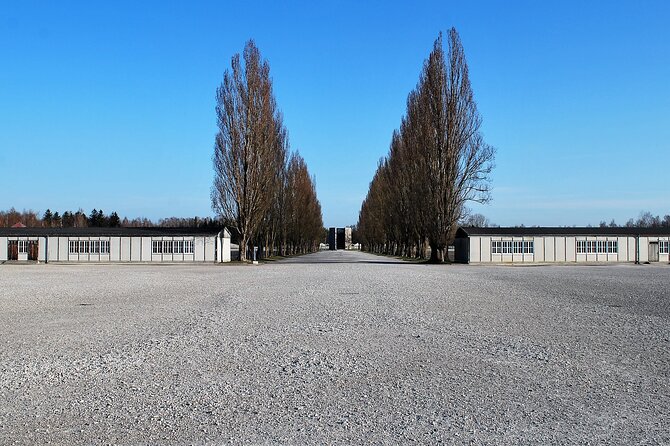
- The memorial visit covers the major public areas: The Jourhaus, the roll-call area, prisoner registration, camp categories, barracks area, liberation, and later memorial history are all part of the explanation.
- James is often praised for logistics and clear teaching: He has been singled out for keeping the group together, choosing efficient platform positions, and adjusting the route around crowds.
- The setting is both indoors and outdoors: Wear comfortable shoes and check the weather, since you will walk on gravel and concrete.
- This is not suitable for children under 14: Students using the youth price must bring valid identification.
Why Dachau deserves a full morning
Dachau was the first regular concentration camp established by the Nazi regime, and it later served as a model for the wider camp system. That makes the memorial important not only for what happened within its boundaries, but also for how its rules, punishments, prisoner categories, and SS training shaped other camps.
A self-guided visit can show you the buildings and exhibits. A good guide adds the links between them. You need the political background to understand why the camp opened in 1933, how terror became organized policy, and why Dachau continued to matter after the war.
The tour begins with that wider setting. You will hear about the Nazi Party’s rise during the 1920s, Hitler’s appointment as Chancellor, the Reichstag fire, and the creation of concentration camps. This is useful preparation because Dachau was not an isolated horror that appeared without warning. The tour traces the steps by which legal rights, political opposition, and human dignity were stripped away.
That approach also gives the visit a firm historical frame. The guide discusses the three major phases of the camp system, the role of Dachau as a training facility for the SS, and the connections between concentration camps, ghettos, and extermination camps. It is a serious amount of material for one morning, but it helps you understand the system rather than seeing Dachau as a collection of separate exhibits.
More Half-Day Trips in Germany:
- Half-Day Railway Market and Floating Market Tour in Thailand
★ 4.5 · 3,924 reviews - From Rome: Ostia Antica Guided Half-Day Trip by Train
★ 4.8 · 486 reviews - Hanoi City Half-Day Private Tour: Train Street And All Highlights
★ 5.0 · 298 reviews
Meeting at Marienplatz at 8:45
The meeting point is Marienplatz 15, in central Munich. The stated start time is 9:00 a.m., but you should arrive by 8:45 for check-in. The group leaves on time and cannot wait for late arrivals.
That warning matters. You are not simply walking into a museum at your own pace. The outing depends on public transport, and missing the group at the start can mean missing the tour altogether. I would give yourself extra time to reach Marienplatz, especially if you are unfamiliar with Munich’s stations or are carrying luggage.
Your guide leads the public transport journey to Dachau. The route includes a train and then a bus, so the value here is not only the ticket itself. It is having someone who knows where the group needs to be and when. James has been especially praised for choosing the best end of train platforms, reducing unnecessary waiting, and keeping the transfer organized.
The transport time also becomes part of the lesson. Guides have used the journey and short waits to explain the Nazi Party’s rise and the history of Dachau. That is a better use of transit time than standing silently at a station, though it means the morning begins with historical material before you reach the memorial.
The Jourhaus and the first step inside
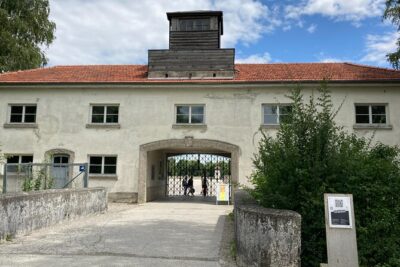
The Jourhaus is the main gatehouse, and it is one of the first important places you study at the memorial. The gate carries the infamous slogan Arbeit Macht Frei. Seeing those words in their original setting is not a theatrical moment, and it should not be treated as one. The power comes from understanding how propaganda and forced labor were used to disguise a system built on imprisonment and abuse.
Your guide helps set the right tone. The strongest descriptions of James and Samuel focus on respect, compassion, and restraint, not showmanship. That matters at Dachau. A good guide gives you facts and context without turning suffering into a performance.
The site can be crowded, particularly around popular points and indoor exhibits. James has been praised for changing the route when an area was congested, while still making sure the group saw the main sections. This is one of the practical advantages of joining a small guided group instead of trying to coordinate the entire visit alone.
The maximum group size is 20 people. That is not private touring, but it is small enough for a guide to keep the group together and answer questions. Several descriptions also note that the guide could be heard clearly, which is important in open areas and when other groups are nearby.
Understanding prisoner registration and camp life
One of the most useful parts of the visit is the explanation of how prisoners were registered and classified. The guide discusses the different prisoner categories and the markings used to identify them, including the colored stars associated with different groups.
This material can seem dry in a book. At the memorial, it shows how the Nazi system turned people into administrative categories. The registration process was not just paperwork. It was part of a system that controlled identity, movement, treatment, labor, and survival.
The tour also explains the first major influx of Jewish prisoners after Kristallnacht, the November 1938 pogrom against Jewish people. Placing that event within Dachau’s timeline helps you see how persecution intensified. The camp existed before Kristallnacht, but the scale and nature of imprisonment changed as Nazi policy became more openly and systematically violent.
You will also hear about daily life and the way prisoners entered and left the camp. The experience is not presented as a single event from the past. It connects political decisions, camp administration, forced labor, punishment, and mass death into one system.
The guide’s pacing is important here. The best balance is enough explanation to make the exhibits meaningful, followed by a few quiet minutes for you to take in what you have seen. This tour generally allows some time to look around independently, though one practical criticism is that you may want more time to read every panel inside the museum.
More Train Tours in Germany:
- Dachau Concentration Camp Memorial Site Tour from Munich by Train
★ 4.5 · 5,637 reviews - Salzburg Sightseeing Day Trip from Munich by Rail
★ 4.5 · 3,125 reviews - Nuremberg: City Tour with the Bimmelbahn Train
★ 4.4 · 2,475 reviews - Würzburg: City Tour with the Bimmelbahn Train
★ 4.4 · 1,322 reviews
The camp system beyond Dachau
Dachau was not an extermination camp, but the tour makes clear that you cannot understand it without understanding the wider Nazi camp network. The guide explains the difference between concentration camps, ghettos, and extermination camps, while showing how these parts of the Nazi system were connected.
That broader context is one of the tour’s strongest features. You are not left with the mistaken idea that Dachau tells the whole story of Nazi persecution. Instead, you learn about its particular function and its place in the larger machinery of terror.
The three major phases of the camp system help organize the story. The camp changed over time, as did the groups imprisoned there and the purpose of the wider network. The discussion of SS training is also important because Dachau helped shape the personnel and practices used elsewhere.
I would pay close attention during this part, even if you already know the basic history. The guide’s job is to connect dates, institutions, and human consequences. That is where a guided visit can add real value beyond walking through the grounds with an audio guide or a map.
Liberation, 1945, and the memorial that followed
The visit does not stop at liberation. You will learn what happened when American forces reached Dachau, then follow the site’s history from 1945 to the opening of the Documentation Center in 1965.
That postwar period matters. Memorials are not created automatically when a war ends. The site had to be understood, preserved, and interpreted over time. The memorial you see today reflects choices about how to present evidence, honor victims, and teach future generations.
This section also gives the tour a needed sense of time. It is easy to walk through a former camp and think only about the years of Nazi rule. Learning what happened afterward reminds you that public memory is shaped by later decisions, too.
The setting is deliberately quiet and respectful. Even visitors with extensive background knowledge can find the physical visit difficult because the events are no longer only photographs and printed accounts. You are walking through the actual grounds, under the same open sky and beside the same town that continued its daily life outside the camp.
That contrast is one reason the experience can feel so powerful. It does not rely on dramatic effects. The ordinary appearance of parts of the site can make the history harder to absorb, not easier.
How the five-hour schedule feels
The total outing lasts about five hours, including the journey from Munich and the return. That gives the guide enough time to establish the political background, explain the camp, cover the memorial site, and discuss liberation and the postwar period.
The schedule is active but not presented as a race. You will walk through a mixture of indoor and outdoor areas, with time at key exhibits and some opportunity to look around on your own. The tour has been praised for maintaining a steady pace without rushing from point to point.
Still, you should set realistic expectations. Five hours is enough for a well-planned introduction and guided study, not enough to read every display in detail. If you are the kind of person who wants to stop at every panel, take notes, or spend long periods alone in the Documentation Center, you may find the group schedule restrictive.
The site can also be physically tiring. Comfortable shoes are important because parts of the route include gravel and concrete. Weather can change the feel of the morning, too. On a cold or rainy day, the guide may keep the group indoors when possible, but you should still dress for time outside.
There are no food or drinks included. Refreshments can be purchased at several places around the meeting area, but you should not expect a meal break during the tour. Bring water and eat beforehand if you need a proper breakfast.
What the guide adds to the experience
The most frequently praised feature of this tour is the guide. James is repeatedly described as an excellent guide who combines historical command with calm group management. His strengths include keeping everyone on the right train and bus, adjusting the route around crowds, answering questions, and filling travel time with useful background.
Samuel has also been praised for connecting the history of Dachau with questions about government, injustice, and society today. That kind of connection can be helpful for teenagers and adults who want more than a list of dates. It should be handled carefully, but the guide’s role is to help you think about why the history still matters.
I would choose this tour for the guidance, not simply for transport. You can reach Dachau by public transit on your own, but the transfer becomes easier when someone is watching the timing and keeping the group together. More important, the guide gives structure to a difficult place.
The strongest guides also know when not to fill every second. Dachau deserves facts, but it also deserves silence. A respectful guide explains enough to help you understand, then gives you room to process.
Is the $60.46 price fair?
At $60.46 per person, the price includes a licensed professional guide, public transport to and from the memorial, and the guided visit. Admission to the memorial site itself is free, so you are mainly paying for the guide’s time, historical instruction, group coordination, and transport arrangements.
I consider that fair value if you want a structured first visit. The price is less compelling if you are already familiar with Dachau and prefer to spend the entire morning reading exhibits at your own speed. In that case, independent travel may give you more control.
The small-group cap of 20 improves the value. It is not a private tour, but it reduces the chance of being lost in a very large crowd. You can also ask questions and hear the guide more easily than you might in a large group.
The tour is offered in English. Students can select the youth price category, but they must show valid identification on the day. The memorial does not allow children under 14 to join guided tours, so this is not a suitable family outing for younger children.
The activity is recommended by 98 percent of participants and has a 4.9 rating from 811 reviews. Those figures do not remove the emotional difficulty of the site, but they do reflect strong satisfaction with the organization and guiding.
Who should book this Dachau tour?
I would recommend it to first-time visitors to Dachau, history-minded adults, older teenagers, and anyone who wants help understanding the Nazi camp system rather than simply looking at buildings. It is especially useful if you are staying in central Munich and want a straightforward morning excursion without working out the train and bus route yourself.
I would also choose it for a family with teenagers who have already learned about the Holocaust and can handle a serious memorial visit. The guide can give that knowledge a human and physical setting, while the group format keeps the morning organized.
I would not book it for children under 14, for anyone seeking a light or entertaining half-day activity, or for visitors who need long stretches of solitary reading. Dachau is emotionally demanding, and the subject deserves honesty from the start.
Free cancellation is available if you cancel at least 24 hours before the local start time. Changes or cancellations inside that window are not refunded, and the tour requires a minimum number of participants.
My verdict on the Dachau half-day tour
Book this tour if you want a serious, well-organized introduction to Dachau and value a guide who can explain both the history and the practical route. James has been particularly effective at combining transport skills with clear, respectful teaching, while Samuel has added thoughtful links between the memorial’s history and present-day questions.
The price is reasonable for the guide, train and bus tickets, and five-hour structure. Go prepared for a somber morning, wear comfortable shoes, arrive at Marienplatz by 8:45, and leave time afterward to process what you have seen. Dachau is not an easy stop, but for many visitors it is one of the most important experiences they can have in Munich.
FAQ
Where does the Dachau tour begin?
The tour begins at Marienplatz 15, 80331 Munich, Germany. You should arrive by 8:45 a.m. for the 9:00 a.m. departure.
How long does the tour last?
The experience lasts about five hours and ends back at the meeting point in Munich.
How do I get to Dachau during the tour?
You travel with the guide by public train from central Munich and then continue by bus to the memorial site. Return transport is included.
Is admission to the Dachau Memorial Site included?
Admission to the memorial site is free. The tour price includes the professional guide and public transport costs.
Is the tour suitable for children?
Children under 14 are not allowed to join guided tours at the memorial site. Students may use the youth price category but must present valid identification.
What should I wear and bring?
The tour includes indoor and outdoor sections, with walking on gravel and concrete. Wear comfortable shoes and check the weather before leaving. Food and drinks are not included, though refreshments can be purchased near the meeting area.
Can I cancel for a full refund?
You can cancel for a full refund up to 24 hours before the experience begins. Cancellations or changes made less than 24 hours before the start time are not refunded.
Just added around Germany
- City tour through Regensburg with the little train★ 4.0 · 67 reviews
- City tour through Nuremberg with the little train – Christmas tour★ 4.0 · 23 reviews
- Nuremberg Private Guided Tour from Munich by Rail★ 4.5 · 23 reviews
- Dachau Concentration Camp Memorial Site Tour from Munich by Train★ 4.5 · 5,637 reviews
- Salzburg History & Food Private Tour with Munich train add-on★ 4.5 · 24 reviews
- Lübeck Day Trip From Hamburg By Train With Private Guide And Lunch★ 5.0 · 16 reviews
- Take the U Train: An Audio Story of Berlin’s Oldest Elevated Railway Line★ 4.0 · 2 reviews
- From Berlin to Sachsenhausen Camp: Private Tour by Car or Train★ 5.0 · 3 reviews
Munich Train Tours, compared.
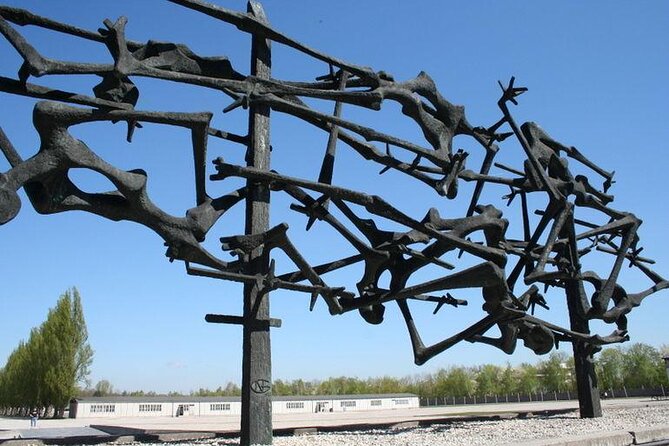
Dachau Concentration Camp Memorial Site Tour from Munich by Train
Read our review →
Salzburg Sightseeing Day Trip from Munich by Rail
Read our review →
Dachau Concentration Camp Memorial Tour with Train from Munich
Read our review →
Guided Dachau Concentration Camp Memorial Site Tour with Train from Munich
Read our review →
Dachau Concentration Camp Private Tour by Train from Munich
Read our review →Browse the lists this tour appears in