
REVIEW · BANGKOK
Floating and Railway Markets and Erawan Waterfall (Group Tour)
The most unusual part of this day is its sheer variety. Before lunch, you ride a boat through Damnoen Saduak Floating Market, watch a train move through Mae Klong’s market, and see coconut nectar and sea salt made by hand. After lunch, the setting changes completely: three hours at Erawan Waterfall means forest paths, emerald pools, and seven levels of falls.
I like the way the tour links real working traditions with outdoor time. I also like that the price includes the boat ride, lunch and drink, Erawan admission, an English-speaking guide, and an air-conditioned vehicle. The catch is the distance: about four of the 11 hours are spent on the road, and the day begins at 6 a.m.
Key points to know before booking
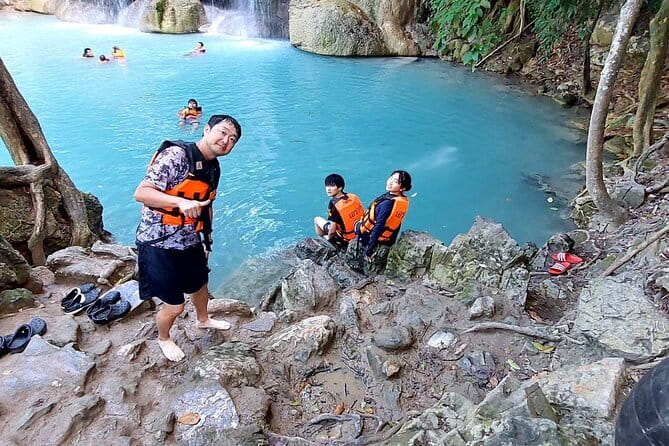
- Seven waterfall levels at Erawan: You get up to three hours for walking, swimming, and testing your legs on the park trails.
- Boat ride included: The motor boat at Damnoen Saduak is part of the price, not an extra charge at the pier.
- Train and market together: Mae Klong offers the odd spectacle of a railway running directly through an active market.
- Small group size: The shared tour is capped at 15 people, which is more manageable than a large coach outing.
- No hotel return: The tour finishes at MBK Center, near BTS National Stadium, rather than at your hotel.
- A very long day: The 6 a.m. start and roughly four hours of driving are central facts, not minor details.
One long day from Bangkok to Western Thailand
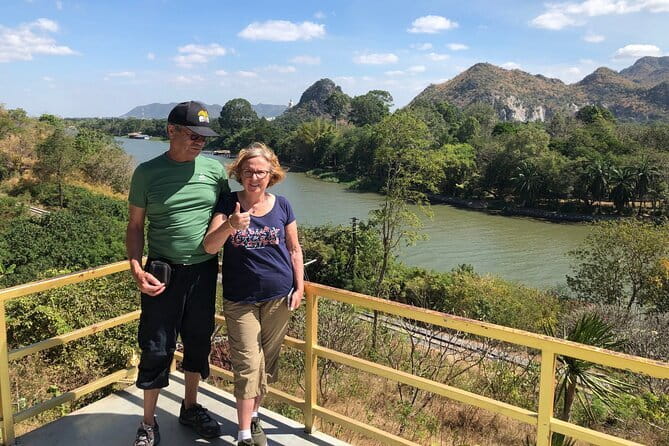
This is not a relaxed half-day outing. It is a full sweep through several parts of Samut Songkhram, Samut Sakhon, Kanchanaburi, and the Erawan area, with the reward of seeing places that do not fit neatly into a quick Bangkok side trip.
You meet at Centerpoint Siam Square at 6 a.m. and travel in a shared, air-conditioned vehicle. The group can contain up to 15 people. That limit matters here because the schedule includes several short stops, a boat transfer, a market visit, and a national park walk. A smaller group should make those movements less unwieldy than they would be on a large bus.
Still, you need the right expectation. This is a sampling tour, not an in-depth stay in any one place. Damnoen Saduak receives about 90 minutes, Mae Klong about 90 minutes, the farms about 20 minutes each, and Erawan about three hours. The road time connects those pieces, but it also makes the day tiring.
The price is $161.31 per person. That is a serious day-trip price, but it covers the vehicle, professional English-speaking guide, shared motor boat, local lunch and drink, Erawan admission, and travel accident insurance. When you add up the distance and the number of separate stops, the price can make sense for someone who wants a guided day without arranging several transfers. It is less appealing if you prefer to travel slowly or spend a full day at one market or one waterfall.
More Railway and Floating Market Tours in Bangkok:
- Bangkok: Damnoen Saduak Market and Maeklong Railway Market
★ 4.5 · 26,723 reviews - The Old Siam: Damnoen Saduak and Maeklong Railway Market
★ 4.5 · 10,992 reviews - Bangkok: Train Market & Floating Market with Boat Ride
★ 4.7 · 9,547 reviews
Morning boats at Damnoen Saduak
The first major stop is Damnoen Saduak Floating Market, one of Thailand’s best-known canal markets. The included motor boat ride gives you the right first look: you approach the market from the water rather than simply walking along a crowded road beside it.
That boat ride is an important part of the value. At some floating markets, a boat trip can become an unclear extra cost once you arrive. Here, it is listed as part of the tour, so you can focus on the canals, boats, stalls, and the movement of the market.
You have about 90 minutes at Damnoen Saduak. That is enough for a taste of the place, some photographs, and a look at how commerce works on the canals. It is not enough for a long, unhurried exploration of every side lane or stall. If you want a quiet market with few other people, this is probably not the setting for you. The market is popular with both Thai and foreign visitors, and its fame is part of the experience.
The guide is especially useful here because a floating market can feel confusing on a first visit. You will be moving between a shared vehicle and a shared boat, so keep your belongings close and pay attention to the meeting instructions. The supplied information does not name the guide, but the tour does provide a licensed English-speaking guide throughout the day.
Mae Klong and the train through the market
The Mae Klong Railway Market, also called Hoop Rom Market, offers the day’s most theatrical moment. Market stalls sit beside the railway line, and the train passes through the middle of the trading area. Awnings and goods are moved back as the train approaches, then the market resumes after it passes.
The experience includes a local train ride toward Mae Klong station. That gives you more than a quick photo stop beside the tracks. You get to see the market from the train as well as from the ground, which helps explain why this place has become known for its unusual layout.
You have around 90 minutes here. Use that time to watch the activity, take in the close quarters, and understand the practical side of the market. The train is not a theme-park ride. It is part of the local transport system, and the market operates around it.
This stop also has a built-in limitation. The train schedule and market activity control the timing, so you should not expect a private, perfectly staged performance. The charm comes from seeing an ordinary railway pass through an extraordinary market arrangement. The tour’s description uses the phrase life-risking market in a humorous way, but you should treat the railway line seriously and follow the guide’s directions.
Coconut nectar and Samut Sakhon salt fields

The next two stops are brief, but they add useful local context to the market visits. At a coconut sugar farm near Damnoen Saduak, you spend about 20 minutes learning how Thai farmers produce coconut nectar.
The demonstration includes cutting the coconut flower and collecting the nectar. That short explanation turns a familiar sweetener into a farming process you can picture. You are not simply being taken from one photo stop to another. You get a glimpse of the work behind a common Thai product.
Later, in Samut Sakhon, the tour pauses at a salt field. The pale surface can look like a rice field at first glance, but it is sea salt made through local farming knowledge. The salt farmer rotates the process, though the supplied details do not specify every stage or tool used.
Allow 20 minutes for this stop. It is a quick look rather than a full agricultural visit, but it breaks up the drive and gives you a different view of rural Thailand. If you are interested in food production and traditional work, these small stops may be more memorable than another standard roadside break.
More Train Tours in Bangkok:
- Half-Day Railway Market and Floating Market Tour in Thailand
★ 4.5 · 3,924 reviews - Bangkok: Damnoen Saduak, Train Market & Mahanakhon Day Trip
★ 4.7 · 2,162 reviews - Damnoen Saduak Floating Market and Maeklong Railway Market Tour
★ 4.5 · 1,588 reviews - Day Trip to Bangkok Floating Market & Maeklong Railway
★ 5.0 · 1,528 reviews
Lunch before the forest trails
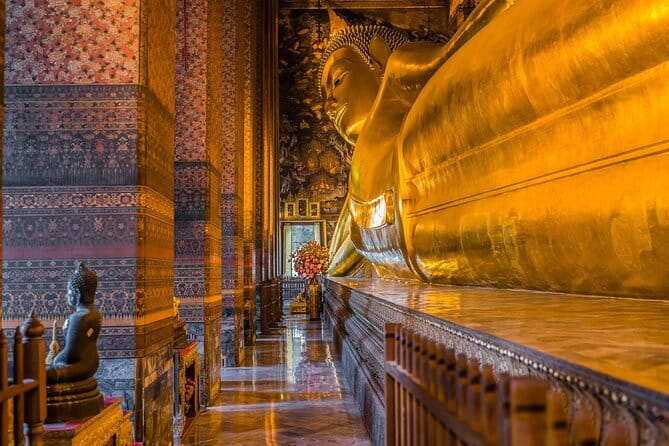
A local lunch and drink are included, which keeps the schedule moving and removes the need to search for a meal during the long transfer to Erawan. The specific restaurant and menu are not provided, so you should not book this day expecting a named dining experience or a choice of dishes.
The practical value is simple: you can eat before the most physical part of the day. Erawan allows about three hours, and that time is better spent on the trails and pools than on arranging lunch after arrival.
Three hours at Erawan’s seven levels
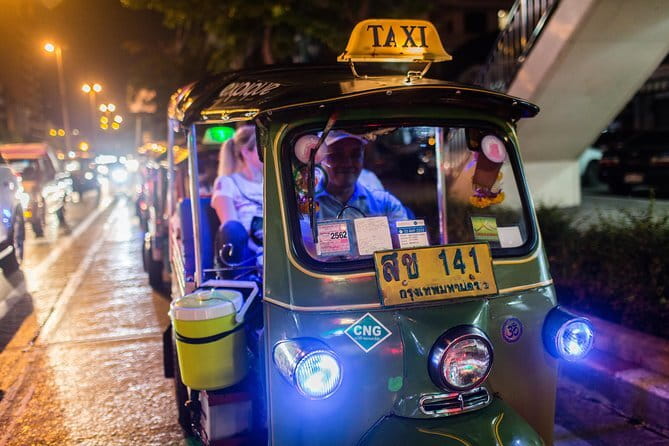
Erawan National Park is the physical centerpiece of the tour. Its main attraction is a seven-tiered waterfall with emerald-green pools. You have around three hours to walk through the rainforest, see the different levels, and swim where conditions allow.
This is where the tour shifts from sightseeing to activity. The lower levels may feel manageable, but reaching all seven tiers will test your legs. The tour description makes that clear: you are invited to test your endurance, not simply step off a vehicle for a quick waterfall photograph.
You should think carefully about what three hours means. It gives you a solid block of time, but it does not guarantee a leisurely visit to every tier with long swimming breaks. Your pace, the trail conditions, and how long you spend in the pools will shape the experience. If you want to reach the highest level, leave enough time for the return walk.
The emerald pools are the main reward. You can swim and cool off, then continue through the rainforest to see how the falls change from one tier to the next. Bring the attitude of a person heading into an active national park, not a person visiting a paved city attraction. The tour includes Erawan admission, but personal items, clothing needs, and any optional purchases are not listed as included.
Erawan is also the point that makes the long drive worthwhile for many people. The markets are distinctive, but the waterfall gives the day its strongest change of pace. After hours in vehicles and market areas, you have time among trees, running water, and natural pools.
Sunset at the River Khwae Bridge
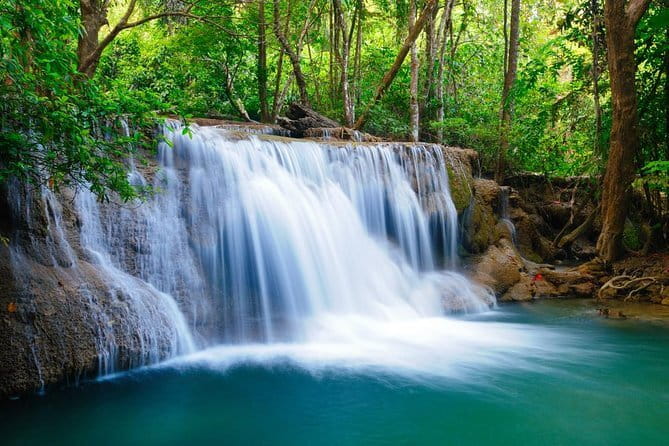
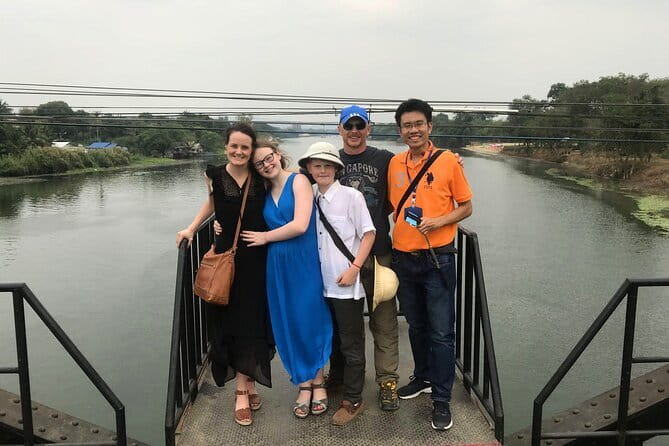
The final major stop is the River Khwae Bridge, reached after the waterfall and the return journey through western Thailand. You have about 20 minutes to walk along the bridge and take photographs.
The bridge is famous because of books and films connected with the Death Railway and the Second World War. The tour does not present this as a long museum visit or a full historical lecture. Instead, you get a short walk and a chance to see the structure in its setting, often with sunset light if the timing works.
That brevity is both useful and limiting. It gives you a final landmark without pushing the day even later, but 20 minutes is not enough for a detailed study of the wider railway story. If the River Kwai history is your main reason for visiting Kanchanaburi, you should consider a separate visit with more time.
As a closing stop, though, it works well. The black iron bridge offers a quiet contrast to the morning markets and the physical effort at Erawan. You can walk along it, take in the river, and mark the end of a very full day.
Returning to Bangkok through MBK Center
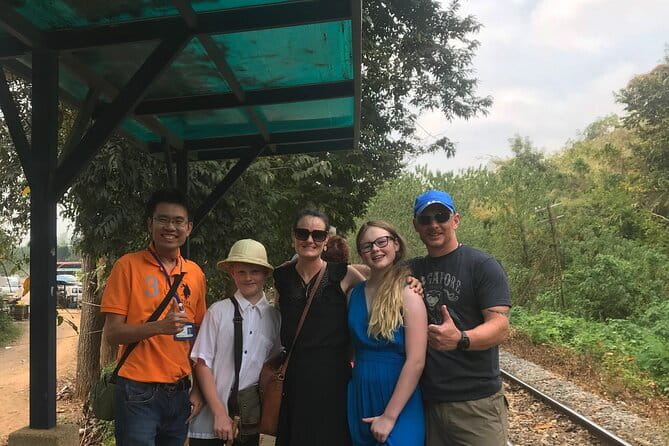
The group tour does not provide hotel drop-off. Instead, it ends at MBK Center, with the stated drop-off near BTS National Stadium. This is an important practical detail, especially if you have luggage, a late dinner plan, or a hotel far from central Bangkok.
The location is useful. MBK is a major shopping center, and the nearby BTS station gives you a straightforward way to continue toward your hotel. It also means you can eat, shop, or arrange a taxi after the tour rather than being left at an isolated roadside point.
Expect to be tired by then. The tour lasts about 11 hours, including roughly four hours on the road. The MBK finish is convenient, but it is not the same as stepping directly into your hotel lobby.
Who should book this day trip?
I would choose this tour if you want maximum variety in one day and accept that the day will involve long transfers. It suits first-time visitors who want to combine famous markets, rural production, a major waterfall, and the River Khwae Bridge without piecing together separate transport.
It also suits active visitors. Erawan is not just a viewpoint, and the seven tiers require walking. The day will be much more satisfying if you are happy to trade a little comfort for time in the pools and on the forest paths.
Families and mixed-age groups should consider the walking demands carefully. The tour says most people can participate, but it does not provide a detailed accessibility description. Since the waterfall section lasts three hours and includes a rising trail, ask the provider if anyone in your party has mobility concerns.
I would skip it if you dislike early starts, shared transport, or long stretches in a vehicle. I would also skip it if you want a slow floating-market morning, a detailed railway history visit, or several hours devoted only to Erawan.
Booking is flexible up to 24 hours before the start time, when you can cancel for a full refund. Changes or cancellations inside that 24-hour window are not accepted for a refund.
Should you book Floating and Railway Markets and Erawan Waterfall?
Book it if you see the day as a sampler of western Thailand rather than a restful excursion. The boat ride, train market, coconut nectar demonstration, salt fields, waterfall, and bridge create a memorable range of experiences, and the included lunch, admission, guide, and transport help justify the $161.31 cost.
The decision comes down to one question: are you willing to spend about four hours on the road to fit all of this into one day? If yes, this is an efficient and active way to leave Bangkok behind. If no, choose a slower trip focused on either the markets or Erawan National Park.
FAQ
What time does the tour start?
The tour starts at 6:00 a.m. at Centerpoint Siam Square on Rama I Road in Bangkok.
Where does the tour end?
The tour ends at MBK Center near BTS National Stadium. Hotel drop-off is not included for the group tour.
How long does the experience last?
The total duration is approximately 11 hours, including about four hours of travel by road.
Is the floating-market boat ride included?
Yes. A shared motor boat ride at Damnoen Saduak Floating Market is included in the tour price.
Is lunch included?
Yes. A local lunch and drink are included.
Is admission to Erawan Waterfall included?
Yes. Admission to Erawan Waterfall is included.
How large is the group?
The tour has a maximum of 15 participants.
Can I cancel for a full refund?
Yes. You can cancel at least 24 hours before the experience start time for a full refund. Cancellations and changes made less than 24 hours before the start time are not accepted for a refund.
Just added around Bangkok
- Floating & Railway Markets and Erawan Waterfall [Optional Luxury]★ 5.0 · 43 reviews
- Small Group: Kanchanaburi Death Railway, Erawan Waterfall and Elephant★ 4.0 · 3 reviews
- Floating Market & Railway Market near Bangkok★ 4.0 · 5 reviews
- Historic Kanchanaburi: Train, Boat & Skywalk + Lunch From Bangkok★ 4.5 · 3 reviews
- Historic Kanchanaburi:Train, Boat, Skywalk from Bangkok(No Lunch)★ 5.0 · 2 reviews
- Railway Market, Floating Market and After the Rain Cafe★ 5.0 · 16 reviews
- Maeklong & Damnoen Saduak Markets: Railway & Floating Market Tour★ 4.0 · 17 reviews
- Private tour : Railway & Floating Market and the Bridge over river Kwae★ 5.0 · 2 reviews
Bangkok Train Tours, compared.
Damnoen Saduak Market and Maeklong Railway Market
Read our review →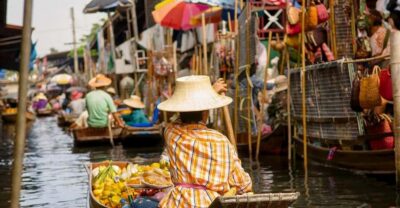
The Old Siam: Damnoen Saduak and Maeklong Railway Market
Read our review →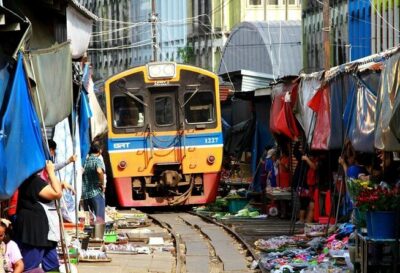
Half-Day Railway Market and Floating Market Tour in Thailand
Read our review →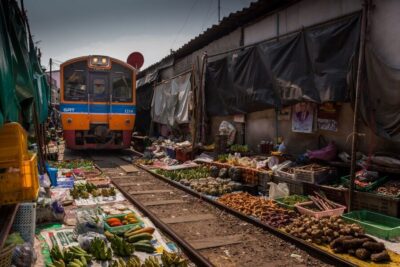
Damnoen Saduak, Train Market & Mahanakhon Day Trip
Read our review →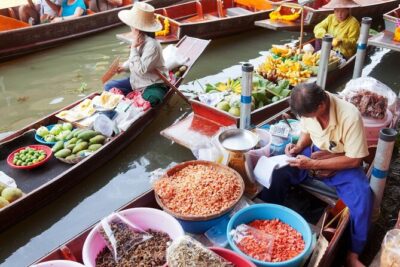
Damnoen Saduak Floating Market and Maeklong Railway Market Tour
Read our review →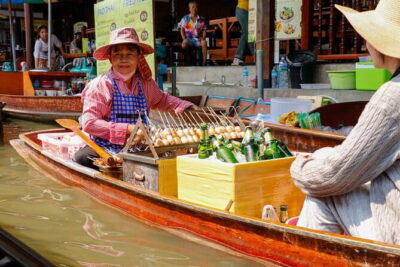
Day Trip to Bangkok Floating Market & Maeklong Railway
Read our review →
Railway and Floating Market Tour with Dragon Temple
Read our review →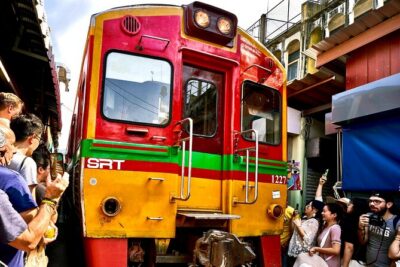
Browse the lists this tour appears in