
REVIEW · CAPE TOWN
Franschhoek wine Tram & Stellenbosch Town Full day tour
Franschhoek’s wine tram is the headline act, but the smart part of this day is the combination: you get Stellenbosch’s Cape Dutch streets, two substantial estate visits, a stop in Franschhoek, and a tram ride without arranging a car or designating a driver. The route also ends with a brief, moving stop at the Nelson Mandela memorial outside Drakenstein Prison.
I like the small group of no more than 12 and the chance to choose tasting fees rather than paying for every pour in advance. Guides such as Peter, Candy, Rodney, and Joseph have been praised for their warmth, local knowledge, and good conversation. The $74.77 price is fair for transport, guide service, and tram tickets, though tastings, lunch, and breakfast are extra.
The day is long, and the schedule can feel crowded if you try to visit every possible farm. A few visitors found the tram portion less impressive than the Stellenbosch estates, while one person felt the guide allowed the timetable to slip. Pace yourself, keep an eye on the return times, and treat the tram as one part of a larger wine-country day.
Key points before you book
- Two wine regions in one day: Visit Stellenbosch and Franschhoek, with distinct styles, scenery, and town stops.
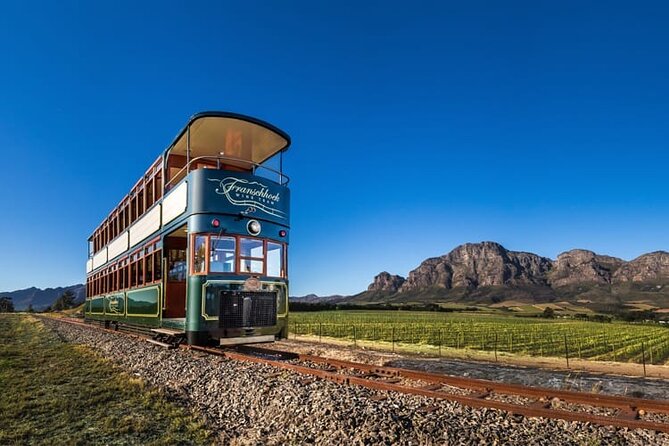
- The tram is included: Your ticket covers the Franschhoek Wine Tram, with the chance to hop off at selected farms.
- Lanzerac and Tokara add contrast: One offers old Cape Dutch character and chocolate pairings, while the other brings modern design, mountain views, and olive oil.
- Small-group transport helps: A maximum of 12 people makes the day more personal than a large coach tour.
- Tasting fees are flexible: Choose a package with tastings included, or pay at the farms for the options you actually want.
- Non-drinkers can still enjoy it: The scenery, towns, food, architecture, and Mandela memorial make this more than a drinking day.
Why this Cape Winelands tour works
Cape Town is close to some of South Africa’s best-known wine country, but the farms are spread across broad valleys and foothills. Driving yourself means navigating unfamiliar roads after several tastings. This tour removes that problem with hotel pickup, an air-conditioned vehicle, bottled water, and a guide who explains what you are passing on the way.
You travel through the Cape Flats and along the N2 toward Stellenbosch. The drive is not just empty transfer time. Your guide points out landmarks and gives context about the region before you reach the vineyards, which helps the day feel like a tour of the Cape rather than a string of tasting rooms.
The format suits you best if you want a broad first look at the Winelands. It does not give you hours at one estate or a slow, specialist wine seminar. Instead, you see several places, compare styles, walk through two towns, ride a historic-looking tram, and finish with a piece of South African history.
The overall rating is 4.9 from 139 reviews, with 99 percent recommending the experience. That is a strong signal, but the small number of lower ratings points to the main issue: time management. With five possible tasting sessions and several transfers, the day needs a firm rhythm.
More Tram and Streetcar Tours in Cape Town:
- From Cape Town: Franschhoek Wine Tram Hop-on Hop-off
★ 4.7 · 1,972 reviews - Full-Day Franschhoek Hop On Hop Off Wine Tram Tour from Cape Town
★ 4.5 · 579 reviews - Cape Town: Full-Day Wine Tasting Tour with Wine Tram
★ 4.7 · 261 reviews
Starting in Stellenbosch after the Cape Town pickup
Stellenbosch is your first proper stop, with about 45 minutes to walk on your own. The town is known for its leafy streets, Cape Dutch buildings, galleries, antique shops, jewelry stores, and old water furrows that still run through parts of the center.
I would use this stop to get your bearings rather than attempt a full town tour. You can stroll the older streets, take photographs of the whitewashed architecture, or stop for coffee before the wine estates begin. Forty-five minutes passes quickly, especially if your group gathers at different points around town.
This is a useful opening to the day because it breaks up the drive and gives you a sense of Stellenbosch as a lived-in town, not just a wine destination. The shops and streets offer a change of pace from tasting rooms.
The drawback is that the stop is short. If your main interest is museums, galleries, or a detailed look at local architecture, you will want more time than this itinerary allows. Think of Stellenbosch as an introduction, not a full town visit.
Lanzerac, old buildings and chocolate pairing
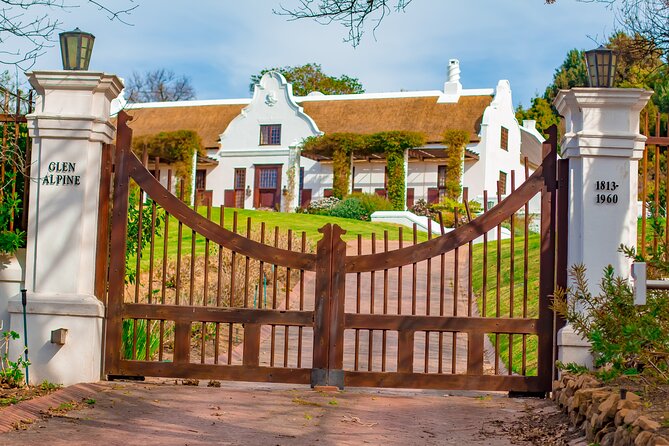
Lanzerac gives you the first proper estate experience, with roughly 50 minutes allocated. The property covers about 200 hectares at the foot of the Jonkershoek Mountains and is known for its Cape Dutch buildings, including a manor house dating from the 1830s.
The estate’s story adds interest to the tasting. Lanzerac is associated with the first bottling of Pinotage, South Africa’s signature grape variety. You are not simply sitting down with a glass of wine. You are tasting in a place connected to an important chapter in the country’s wine industry.
The planned chocolate and wine pairing is a welcome change from a standard flight of wines. It also helps if you are not already confident about tasting wine. Comparing the sweetness and texture of chocolate with the wine gives you something concrete to notice.
Your admission to the estate is not included in the base price, so check the option you select when booking. If you do not want a tasting, the stop can still be worthwhile for the architecture and mountain setting, but the timing is built around the tasting experience.
Tokara for modern design and long views
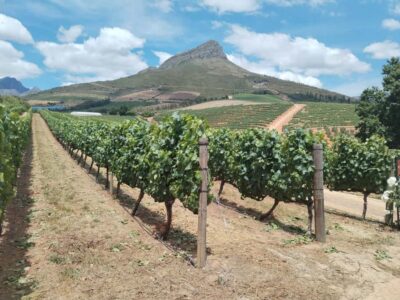
From Lanzerac, the vehicle follows the hilly Hell’s Heights route to Tokara. The drive itself is scenic, and the change in atmosphere is clear. Lanzerac feels historic and traditional, while Tokara is known for modern design, broad views toward Table Mountain, and an olive grove.
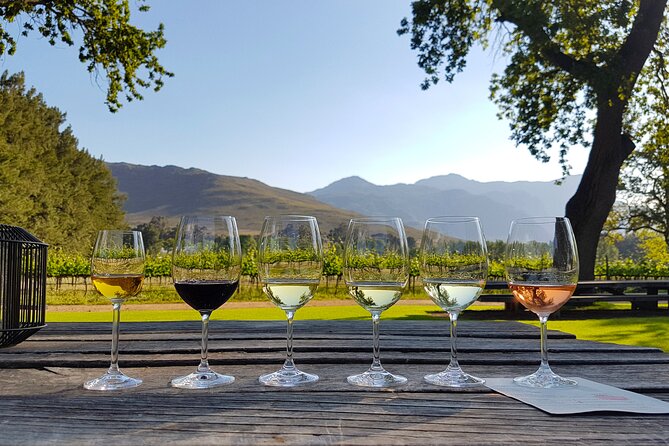
The tasting usually includes five classic wines, including a rosé and a Cabernet Sauvignon. The estate’s soils contain decomposed granite and weathered sandstone, and the wine advisor explains how those conditions affect the grapes and the final blends.
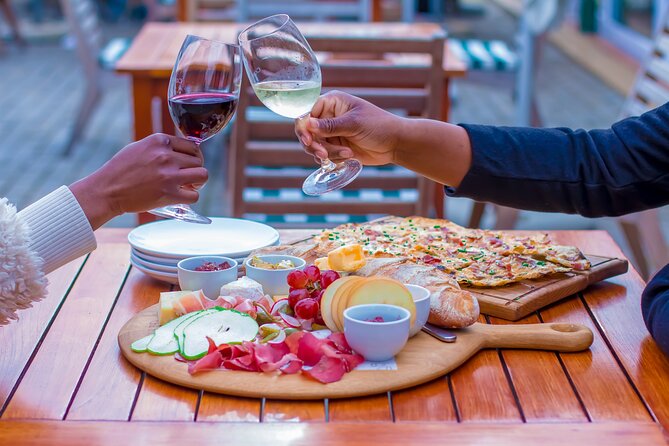
Tokara is a good place to ask questions. You can learn how the estate handles different grape batches, why Cabernet Sauvignon performs well here, and how wine and olive oil production share the property. If time allows, you may also try olive oils or order a cheese platter, though these are additional choices rather than guaranteed inclusions.
Again, you have about 50 minutes. That is enough for a tasting and a short look around, but not enough for a leisurely meal. Some people rate Tokara as the strongest stop of the day, while others find the wines across the route uneven. I would treat the estate itself, the view, and the explanation as equally important parts of the visit.
More Wine Trips in Cape Town:
- Cape Town: Stellenbosch, Franschhoek, Wine Tasting and Tram
★ 4.7 · 190 reviews - Cape Town: Wine Tram & Winelands Tour with Tastings & Pickup
★ 4.2 · 64 reviews - Franschhoek Wine Tram Hop On Hop Off Tour
★ 5.0 · 24 reviews - Franschhoek Wine Tram & Boschendal Wine Farm Experience
★ 5.0 · 22 reviews
Franschhoek town and a practical lunch break
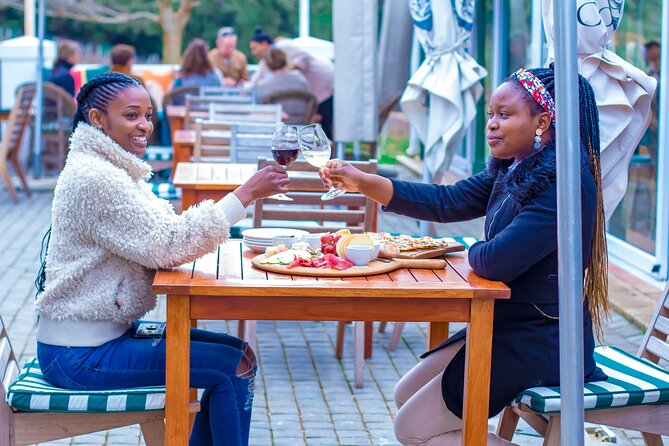
After Tokara, you travel through Pniel toward Franschhoek. The town’s name means French corner, reflecting the arrival of French farmers at the Cape in the 1680s and the vineyards they established here.
You have around 90 minutes for lunch and a look around town. That is more generous than the Stellenbosch stop, but lunch is not included, so budget separately for it. You can choose a restaurant, browse shops, or simply walk beneath the mountains and look across the vineyards.
Franschhoek is an attractive place to pause because it brings together food, wine, galleries, hotels, and carefully maintained historic buildings. The Leeu estate, with its galleries, hotel, and restaurants, is one of the notable properties you may see in the area.
Do not assume the lunch period is a long sit-down meal followed by a full town tour. You still need to reach the tram terminal on time. I would decide early where you want to eat, keep some time for the town, and return to the meeting point with a margin.
How the Franschhoek Wine Tram actually works
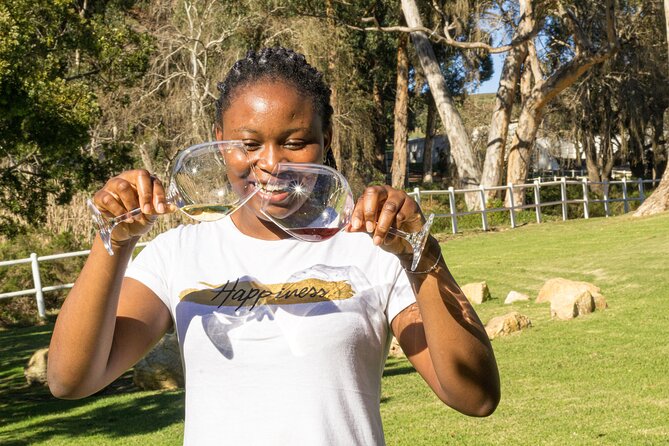
The guide gives you the tram tickets and explains the timetable before you board. The tram takes about eight minutes between farms, and you can hop off at stops on the route. In practice, the schedule usually allows two farm visits, with a third possible only if the timing works.
That limitation matters. The tram is not a free-form sightseeing ride where you can visit every estate in one afternoon. The farms are spread along the route, and each stop requires time to disembark, taste or eat, and return for the next tram.
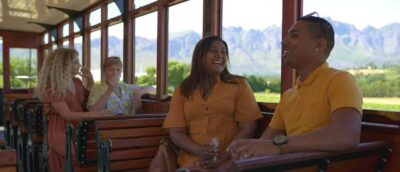
The tram adds a pleasant change from the minibus. You see the vineyards at a slower pace and get the novelty of moving between farms without driving. It also creates some of the day’s best photographs, especially with the mountains and rows of vines around you.
I would not book this tour expecting the tram itself to be the finest wine experience of the day. One person found the wine served through the tram portion disappointing, and another described the ride as mainly a chance to take photographs. That is fair criticism. The tram is valuable for the route, the scenery, and the easy access to several estates, but the quality of each tasting depends on the farm you choose.
Choosing between Rickety Bridge and Franschhoek Cellar
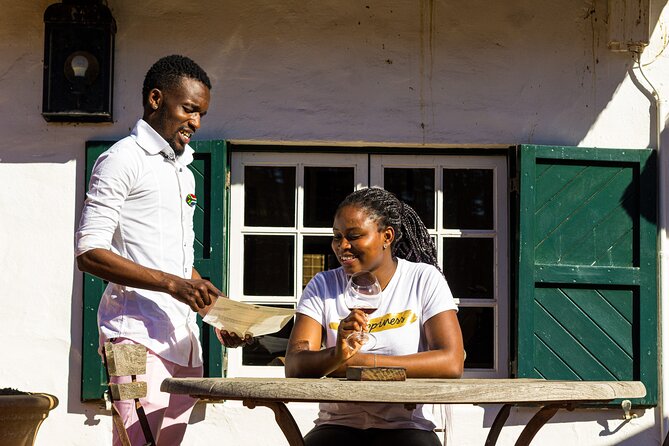
Rickety Bridge is one possible stop. It is described as the first female-owned farm in Franschhoek, and the tram drops you near a terminal where a tractor takes you to the tasting area. That tractor ride is one of the more memorable transport details of the day, especially for children and anyone who enjoys a bit of farm character.
You can select from tasting options at Rickety Bridge, or skip wine and sit at Paulina’s restaurant for coffee, food, or a glass of wine. The views over the valley and mountains make it a reasonable choice for non-drinkers, though service can vary. If you want lunch here, confirm how much time you have before committing to a long meal.
Franschhoek Cellar offers wine and cheese pairings or handmade Belgian chocolates produced nearby. A traditional wine-only tasting is also available. Its location close to the tram terminal makes it practical at the end of a full day, since you can walk back rather than wait for another transfer.
Because the schedule normally allows two farms, you may need to choose rather than attempt every option. Ask your guide how the tram times line up that day. The best choice depends on your priorities: Rickety Bridge offers the tractor transfer and mountain setting, while Franschhoek Cellar offers convenient access and pairing choices.
The Drakenstein Prison memorial
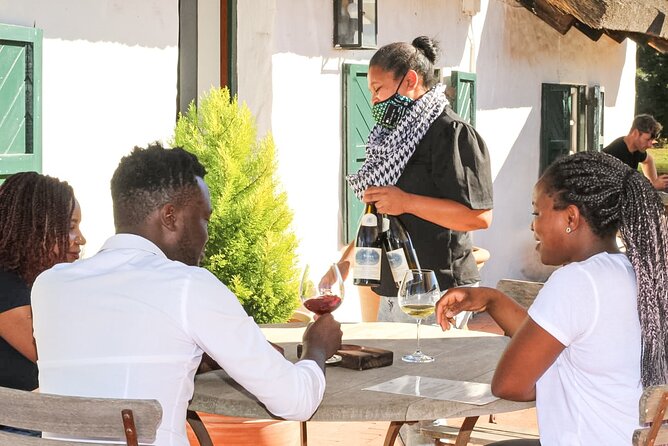
On the return to Cape Town, the group may stop outside Drakenstein Prison, where Nelson Mandela spent the last two years of his 27-year incarceration. A life-size bronze statue stands outside the gates, showing Mandela with a raised fist.
This is a short stop, but it changes the tone of the day. After architecture, food, wine, and scenery, you are reminded of South Africa’s political past and the difficult road to freedom. The guide gives a brief account of the prison, Mandela’s release, and the site’s meaning.
You do not go inside the prison. The value is in the memorial and the explanation, not in a lengthy museum visit. If you are not drinking, this stop is one reason the tour still earns its place in your itinerary. It gives the day a cultural and historical thread beyond the vineyards.
Is $74.77 good value?
At $74.77 per person, the price is reasonable for a full day from Cape Town. You are paying for pickup and drop-off, an air-conditioned vehicle, a qualified guide, bottled water, and the Franschhoek Wine Tram ticket. A private or luxury vehicle upgrade is also available if you prefer a more exclusive setting.
The price does not include breakfast, lunch, gratuity, or wine tasting fees unless you select an option that includes them. That can be an advantage. One useful approach is to leave tastings out of the base booking so you can choose chocolate, cheese, olive oil, non-alcoholic drinks, or wine at each stop according to your appetite.
The main value comes from the transport and the amount of ground covered. Hiring a private car and driver for Stellenbosch and Franschhoek would usually cost more, while self-driving would mean giving up tastings. The trade-off is control. You do not set the exact length of every stop, and your day follows the group schedule.
Group discounts can improve the price for parties booking together. Since the average booking is made 42 days ahead, popular dates may fill early, particularly in good weather. The cancellation terms are flexible up to 24 hours before departure, but changes or cancellations later than that are not refunded. Poor weather can lead to a new date or a full refund.
How to pace a day with five possible tastings
Five tasting sessions sound generous, but they can make for a tiring day. You move from town to estate, from estate to town, and then between tram stops. Add lunch and the return drive, and you can see why several people advised pacing themselves.
You do not need to drink at every stop to enjoy the tour. Ask for smaller pours, take water regularly, and use the food options when available. Non-drinkers can focus on architecture, views, coffee, cheese, chocolate, tea, olive oil, and the guide’s commentary.
The guide makes a real difference. Peter has been praised for making the day fun and informative, while Candy, Rodney, Joseph, and other guides have been singled out for friendliness, patience, and local insight. The quality of guiding matters here because the road time is substantial and the schedule needs managing.
If one member of the group takes too long at a farm, everyone feels it. Keep your own watch on the timetable and return promptly. A guide may adjust the plan, but a late departure can reduce the number of farms you reach.
Who should book this tour?
I would recommend it to a first-time Cape Winelands visitor who wants to see both Stellenbosch and Franschhoek without renting a car. It is also a good fit for solo visitors, couples, and small groups who enjoy meeting people but do not want a large coach.
It suits wine drinkers who like variety more than deep study of one estate. It also works for non-drinkers, provided you are happy to treat wine farms as scenic, architectural, culinary, and cultural stops.
I would choose another format if you want a slow, luxury lunch, a private sommelier-led tasting, or several uninterrupted hours at one vineyard. The itinerary covers a lot, and the schedule is busy by design.
Should you book the Stellenbosch and Franschhoek day?
Book it if you want the easiest way to combine two famous wine towns, several estates, the Franschhoek tram, and a Mandela memorial stop in one day. The small group, hotel transport, and strong guide record make the $74.77 fare good value.
Go in with realistic expectations. The tram is scenic and fun, but not every tasting will be a favorite. Lunch and tasting fees are extra, the day runs 9 to 10 hours, and careful pacing matters. Pick two tram farms, drink selectively, and let the scenery and local stories carry as much weight as the wine.
FAQ
Does the tour include pickup from Cape Town hotels?
Yes. Pickup and drop-off from your accommodation in Cape Town are included.
How long does the tour last?
The full experience takes approximately 9 to 10 hours.
How many people can join the tour?
The maximum group size is 12 travelers.
Is the Franschhoek Wine Tram ticket included?
Yes. The tram ticket is included, and the guide explains how to use the timetable.
How many wine farms can I visit by tram?
The schedule normally allows two farms by tram. A third may be possible if time permits.
Are wine tasting fees included?
They are included only if you select an option that includes tastings. Otherwise, tasting fees are paid separately at the farms.
Is lunch included?
No. Lunch is not included, and you have time to arrange it during the Franschhoek stop.
Can someone who does not drink wine enjoy the tour?
Yes. The tour includes town walks, architecture, mountain views, food options, chocolate, cheese, olive oil, possible non-alcoholic drinks, and the Drakenstein Prison memorial.
Is the tour available as a private experience?
Yes. You can upgrade to a private tour or choose a luxury vehicle option.
What happens if the weather is poor?
The experience requires good weather. If the operator cancels because of poor weather, you can choose a different date or receive a full refund.
More Full-Day Trips in Cape Town
- From Cape Town: Full-Day Cape Winelands Taste Tour + Tram
★ 4.9 · 9 reviews - Bangkok: Ayutthaya, Railway & Floating Markets Full-Day Tour
★ 4.7 · 1,200 reviews - Porto: Douro Valley Full-Day Boat, Train, and Lunch Tour
★ 4.7 · 787 reviews - From Malta: Gozo Full-Day Tour with Guide, Temples, & Train
★ 4.1 · 567 reviews
Just added around Cape Town
- Taste + Tram the Winelands Tour: Franschhoek, Stellenbosch, Paarl★ 5.0 · 60 reviews
- From Cape Town: Franschhoek Wine Tram Hop-on-Hop-off Tour★ 4.0 · 5 reviews
- Franschhoek Wine Tram & Boschendal Wine Farm Experience★ 5.0 · 22 reviews
- Franschhoek Wine Tram Hop-On Hop-Off Tour from Cape Town.★ 5.0 · 11 reviews
- Franschhoek Wine Tram Hop-On Hop-Off Tour with Transfers from Cape Town★ 5.0 · 7 reviews
- Franschhoek Wine Tram Hop On Hop Off Tour★ 5.0 · 24 reviews
- Cape Point Flying Dutchman Funicular Ticket (One way Up)★ 4.5 · 3 reviews
- 3-Nights Tour Robben Island Table Mountain and Wine Tram★ 5.0 · 3 reviews
Cape Town Train Tours, compared.

Full-Day Franschhoek Hop On Hop Off Wine Tram Tour from Cape Town
Read our review →

Stellenbosch, Franschhoek, Wine Tasting and Tram
Read our review →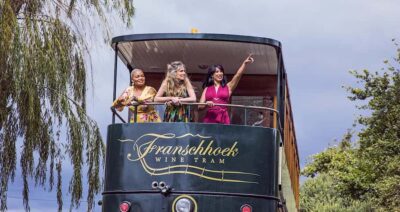
Wine Tram & Winelands Tour with Tastings & Pickup
Read our review →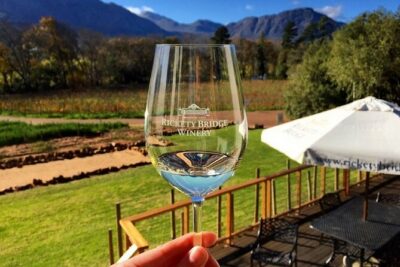
Taste + Tram the Winelands Tour: Franschhoek, Stellenbosch, Paarl
Read our review →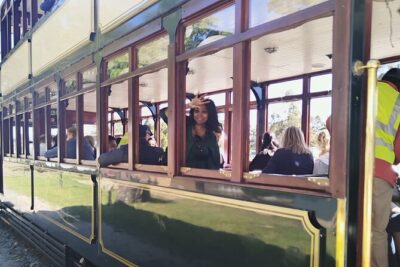
Browse the lists this tour appears in