
REVIEW · THESSALONIKI
Full-Day Meteora Tour from Thessaloniki by Train
Meteora is one of Greece’s great sights: enormous stone pillars rising from a green valley, with monasteries perched on top like they were placed there by giants. This 13-hour trip from Thessaloniki gives you a practical way to see it without arranging trains, a local driver, and monastery visits on your own.
I like the dramatic viewpoints and the chance to visit three active monasteries in one day. I also like the local guiding, especially when guides such as Katerina, Ava, and Demetrios add personal stories to the setting. The main drawback is the long rail journey, with connections at Paleofarsalos and a real possibility of delays.
Key points to know before booking
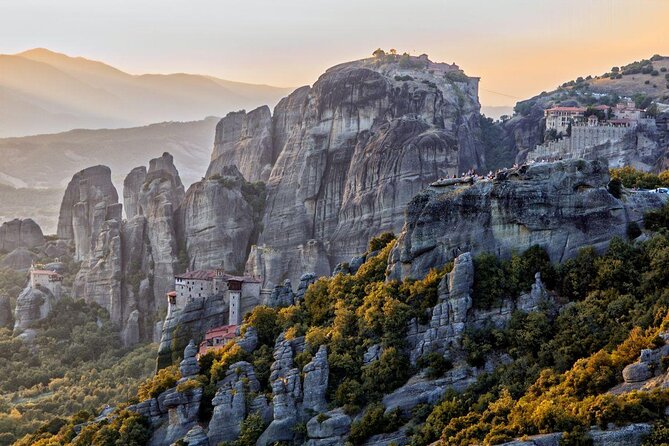
- Three working monasteries: You visit three of Meteora’s monasteries, with time to see several others from the road and viewpoints.
- Train travel from Thessaloniki: Round-trip rail fare is part of the experience, but you must change trains at Paleofarsalos.
- A comfortable final transfer: An air-conditioned Mercedes Sprinter van with Wi-Fi carries you from Kalambaka into the Meteora hills.
- Stairs are part of the day: One monastery may require hundreds of steps, while Agios Stefanos is reached by a small bridge.
- Bring extra cash: Monastery entrance fees are €3 per person at each monastery, and lunch is not included.
- A full day with little spare time: You get about an hour in Kalambaka, but staying overnight would allow a calmer visit.
Why Meteora is worth the long ride from Thessaloniki
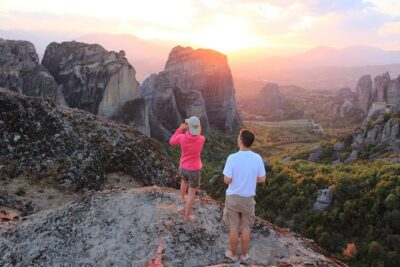
Meteora feels unlike almost anywhere else in Greece. Instead of white villages beside the sea, you find tall rock towers rising from a broad valley, their sides marked by caves and ledges. Monks began seeking solitude in these cliffs centuries ago, first in small hermit shelters and later in monasteries that seem to cling to the stone.
That setting is the real reason to book this excursion. The monasteries are important, but the approach is just as memorable. As your van winds through the area, you will see pale rock formations, wooded slopes, the village of Kastraki, and sanctuaries perched at different heights.
The tour costs $59, which is a reasonable starting price for a day that includes the round-trip train tickets, local transport, a guide, mineral water, and Wi-Fi in the van. You still pay monastery admission and lunch, so budget for those extras. The value is strongest if you are based in Thessaloniki and do not want to plan the rail connections or find your own transport at Kalambaka.
The tradeoff is time. The train ride takes roughly three hours each way, and the full day lasts about 13 hours. You see a great deal, but you do not get the slow pace that Meteora deserves.
More Full-Day Trips in Greece:
- Mount Olympus And Dion Full-Day Tour From Athens By Train
★ 4.5 · 59 reviews - Private Full-Day Trip to Meteora by Train From Athens – Local Agency
★ 5.0 · 28 reviews - Kalavryta, Rack Railway & Cave of Lakes Full Day Private Tour
★ 5.0 · 5 reviews
The early train and the Paleofarsalos connection
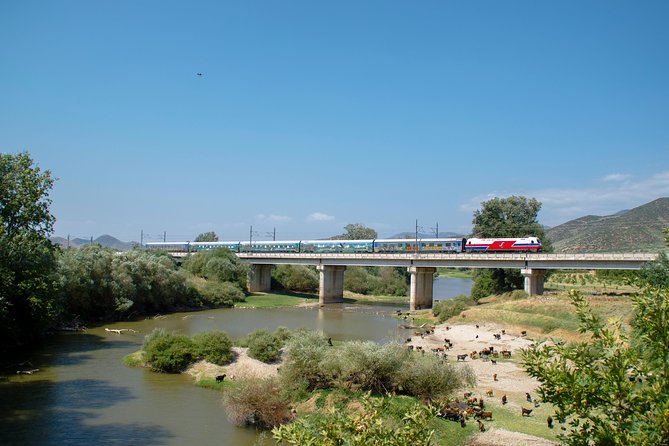
The day begins at Thessaloniki railway station at about 8:15 a.m. You receive your train tickets and settle in for the ride through the Greek countryside. The scenery changes as you move away from the city, and the train gives you a useful rest before the walking begins.
At Paleofarsalos, you change trains for Kalambaka. This connection is an important practical detail. Train signs and tickets may not always be clear in English, so pay close attention to the instructions and stay alert when the train arrives. Allow yourself time to confirm the platform and carriage rather than rushing off on your own.
Rail delays have affected this route. Some departures have arrived late, and a delayed connection on the return can mean a long wait at the station. One person faced a two-hour wait on a dark platform, while another nearly missed a connection by a minute. That does not make the tour a poor choice, but it does mean you should book it with a little patience.
The train is part of the adventure, not merely a transfer. Still, if you dislike uncertain connections or want every hour controlled, a private vehicle from Thessaloniki may suit you better.
Meeting your driver in Kalambaka
At Kalambaka, the town closest to Meteora, an English-speaking driver meets you at the station. The group then boards an air-conditioned Mercedes Sprinter van for the short drive into the hills.
The van is a welcome change after the train. It gives you a good view through the windows, and the Wi-Fi and mineral water are useful on such a long day. Drivers named Dinos and Sotos have been singled out for careful handling of the narrow roads, help with photographs, and enthusiasm for the area.
The group can reach as many as 34 people, although some departures may feel smaller in the van. This matters because the experience can vary. A smaller group makes it easier to hear the guide and move through monastery entrances, while a larger group may feel crowded during a tightly timed visit.
Before reaching the monasteries, you pass through Kastraki. This traditional village has a more local feel than a major Greek resort, with the cliffs rising behind it. The tour allows about 30 minutes in the area, enough to take in the setting and begin photographing the rock towers.
Saint Nicholas of Anapafsas and the first climb
Saint Nicholas of Anapafsas is the first monastery encountered on the route upward. It was founded at the end of the 14th century, and its name is often linked to the idea of rest. Because it comes early on the ascent, it may have served as a resting place for pilgrims before they continued higher.
The stop introduces the character of Meteora well. You are not entering a grand complex spread across a flat courtyard. You are moving through a site shaped by steep rock, limited space, and the need for monks to live apart from ordinary life.
This can be one of the more demanding parts of the visit. The exact amount of walking depends on the day’s route, but you should expect stairs at the monasteries. One person described more than 500 steps in and out at the first stop, so comfortable shoes are essential.
The guide helps turn the climb into something more than an exercise. Katerina, who has led some departures, is especially good at connecting the buildings with local stories and personal links to the monasteries. The quality of the day depends partly on which guide leads your group, but the strongest guiding adds real meaning to the stonework and icons.
More Train Tours in Greece:
- From Athens: Meteora Caves & Monasteries Day Trip by Train
★ 4.8 · 468 reviews - Skip Sky Tram !!! Hassle-Free 5 Hour Tour for Cruise Passengers
★ 4.5 · 280 reviews - Chersonissos: Mini-Train City Highlights Tour
★ 3.8 · 148 reviews - Corinth, Cave of Lakes, Odontotos Railway Private Tour with Greek Lunch Included
★ 5.0 · 141 reviews
Roussanou, a lower and more accessible monastery
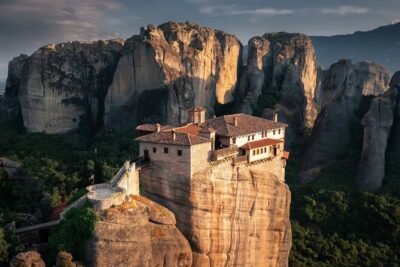
Roussanou sits on a lower rock than several neighboring monasteries, which makes it easier to reach. The monastery takes its name from the first hermit thought to have settled there. Its main church dates to the late 16th century and was decorated about 30 years later.
Roussanou suffered serious damage during World War II and became a convent in 1988. That change gives the site a different character from the larger male monasteries. The building is compact, and its position offers fine views across the cliffs and valley.
The lower elevation does not mean you can skip the physical effort. There are still steps and uneven surfaces, and modest clothing is required. Women should wear long sleeves and avoid short skirts. Men may not wear shorts. Bring a cover-up if your usual sightseeing clothes are too casual.
The tour may include Roussanou among the three monastery interiors, but the exact combination can depend on opening times and the day’s route. You will also see the exteriors of nearby monasteries from the van and viewpoints.
Great Meteoron, the largest monastery
Great Meteoron is the oldest and largest of the Meteora monasteries. Its name comes from meteoro, meaning suspended in the air, a fitting description for a monastery built high above the valley.
Saint Athanasios the Meteorite founded it and organized a more structured monastic community. That development changed Meteora from a collection of isolated hermit sites into an organized center of monastic life.
Allow about 10 minutes in the stated schedule for this stop, though the total time on site can vary. The short listing should not be read as a promise of a full museum visit. This is a day trip with several stops, and the schedule must keep you moving toward the train.
Even from outside, Great Meteoron is impressive. Its size and position make it easy to understand why it became the leading monastery of the group. If it is open for your visit, you will pay the €3 entrance fee yourself.
The views from this height are among the day’s strongest. The valley opens below you, and the other rock towers appear to rise from the trees. This is when the camera should come out, though it is worth looking up from the screen now and then.
Varlaam and the story of monastic building
Varlaam is the second-largest monastery and sits opposite Great Meteoron. The site was founded in the mid-14th century by the hermit Hosios Varlaam, then later rebuilt by the brothers Theophanes and Nectarios Apsarades.
Its main church was built in 1541 and 1542 and decorated in 1548. The wall paintings are linked to the painter Frago Catelano of Thebes. Even if you are not an art specialist, the age and setting make the interior worth careful attention.
The scheduled visit here is about 45 minutes, and entrance costs €3. That is enough time for a focused visit, though not enough to linger over every room. Listen closely to the guide, since the stories help explain why the monasteries were built in such difficult places.
Varlaam is also a good reminder that Meteora is not just a scenic photo stop. These are functioning religious places. Keep your voice low, follow any instructions, and dress with respect.
Holy Trinity and Agios Stefanos
Holy Trinity, or Agia Triada, is one of the most striking monasteries from a distance. It sits on a steep rock near Agios Stefanos, with a panoramic view that rewards the climb.
Reaching it requires a path to the base of the rock and roughly 140 steps. That makes it a poor fit if stairs are difficult for you. The guide can explain the site, but no vehicle can remove the climb itself.
Agios Stefanos offers the opposite experience. A small bridge leads to the entrance, with no long stairway. That makes it the best choice for anyone who cannot manage steep steps but still wants to enter a Meteora monastery.
The monastic tradition here reaches back to the early 12th century. The site has two churches: an older 16th-century chapel damaged during World War II and the Greek Civil War, and an 18th-century main church dedicated to Saint Charalambos.
The stop lasts about 30 minutes, and the entrance fee is €3. It is a compact visit, but the easy approach and broad views make it especially useful for mixed-ability groups.
Hermit caves, viewpoints, and time for photographs
The tour also passes the hermit caves of Badovas. These small shelters help you picture the earliest form of religious life in Meteora, before large monasteries were built on the highest rocks.
The caves are not simply another photo background. They show how demanding life here once was. A monk seeking solitude could live in a hollow in the cliff, separated from the valley below by height, stone, and silence.
Your driver may stop at viewpoints for photographs, and guides such as Dinos have helped with group pictures. This is a small but valuable service on a day when it is easy to end up with many pictures of everyone except yourself.
The scenery changes quickly as the van moves between the sites. Keep your camera ready, but do not expect a relaxed photography tour. The schedule is designed to cover several important places before the return train.
The short Kalambaka break and return journey
After the monastery visits, you return to Kalambaka station and have about an hour of free time in the town center. This is enough for a short walk, a drink, or a quick meal if you have not eaten earlier.
Lunch is not included, despite some general descriptions of the tour suggesting otherwise. Treat the day as self-catered and carry money for food. The excursion does include mineral water, but that is not a substitute for lunch on a 13-hour day.
You then board the train back toward Thessaloniki, changing again at Paleofarsalos. The return journey can be tiring, especially after stairs and walking. Delays are the main risk, and the connection may involve a long wait.
For that reason, I would not schedule an important flight, ferry, or dinner reservation immediately after the expected arrival. The experience finishes back at the Thessaloniki railway station, but the rail timetable should be treated as approximate.
Who should book this Meteora day trip?
This is a good choice if you have limited time in northern Greece, want to avoid renting a car, and are comfortable with a long day. It is also useful if you prefer having a local guide explain the monasteries rather than arriving with only a map.
You will get the most from it if you can manage stairs, respect monastery dress rules, and accept that Greek rail connections may not run like clockwork. The tour suits photographers, history fans, first-time visitors, and anyone who wants to see the essential Meteora setting from Thessaloniki.
I would think twice if you want slow meals, extended time inside every monastery, or a guaranteed timetable. Staying overnight in Kalambaka or Kastraki would give you more time for all six monasteries and a quieter look at the area.
Is the $59 price good value?
Yes, provided you understand what is and is not included. The price covers the major transport framework: the train from Thessaloniki, the train back, the local Mercedes van, the guide, water, and Wi-Fi.
You need to add €3 for each monastery you enter, plus lunch. If you visit three interiors, monastery fees total €9 per person. The real cost is therefore higher than the advertised price, but still fair for a guided day with several forms of transport.
The strongest value comes from convenience. You do not need to arrange the Paleofarsalos connection, find a vehicle in Kalambaka, or work out how to reach the monasteries. The weakest value comes from the amount of time spent on trains compared with the short visits at some sites.
Should you book it?
Book this tour if Meteora is high on your list and Thessaloniki is your base. The monasteries, caves, rock towers, and valley views make the long day worthwhile, and a good guide can give the place a sense of purpose beyond its spectacular appearance.
Choose an overnight stay instead if your schedule allows. You will have more time, less pressure from train connections, and a better chance to see all six monasteries.
For a one-day visit, though, this is a practical and fairly priced option. Pack water and a meal, wear shoes suited to stairs, dress for monastery rules, and leave room in your schedule for a late return.
FAQ
How long is the Meteora tour from Thessaloniki?
The experience lasts about 13 hours, including the train journeys, monastery visits, time in Kalambaka, and the return to Thessaloniki.
What time does the tour begin?
The start time is approximately 8:15 a.m. at Thessaloniki railway station.
Is the train fare included?
Yes. The tour includes round-trip train travel from Thessaloniki, with a train change at Paleofarsalos in each direction.
Is lunch included?
No. Lunch is not included. Mineral water is provided, and you should bring money for food during the day.
How much do the monasteries cost to enter?
Entrance costs €3 per person at each monastery. The fee is not included in the tour price.
How many monasteries will I visit?
The tour visits three active monasteries. The route may include sites such as Great Meteoron, Varlaam, Roussanou, Saint Nicholas of Anapafsas, Holy Trinity, or Agios Stefanos, with exteriors of additional monasteries seen along the way.
Are there many stairs?
Yes. Several monasteries require stair climbing, and Holy Trinity requires about 140 steps. Some parts of the route may involve substantially more walking. Agios Stefanos is the most accessible, reached by a small bridge instead of a long staircase.
What clothing is required?
Women should avoid short skirts and wear long sleeves. Men may not wear shorts. Modest clothing is required to enter the monasteries.
Can I cancel the tour for a refund?
You can cancel at least 24 hours before the start time for a full refund. Cancellations or changes made within 24 hours are not refunded or accepted. If poor weather cancels the experience, you will be offered another date or a full refund.
Just added around Greece
- Meteora: 2-Days Train Tour from Thessaloniki – Local Agency★ 4.7 · 15 reviews
- Two Days Rail Tour to Meteora from Thessaloniki★ 5.0 · 6 reviews
- Rail Tour from Thessaloniki to Meteora 3 Days – 2 Nights★ 5.0 · 5 reviews
- Skip Sky Tram Deluxe Five Hour Santorini Tour★ 5.0 · 14 reviews
- Skip Sky Tram!! 5 Hour Hussle-Free Santorini Tour & Wine Tasting★ 5.0 · 5 reviews
- Bypass Aerial Tram!!! Santorini Tour for Cruise Passengers★ 5.0 · 2 reviews
- Direct Pier Pickup !!! Avoiding Sky Tram Cruise-Friendly Tour★ 4.5 · 3 reviews
- Best Skip Sky Tram Stress-Free Tour for Cruise Passengers★ 5.0 · 9 reviews
Thessaloniki Train Tours, compared.
Local Agency – 1 day by Train Thessaloniki to Meteora in English or Spanish
Read our review →
From Thessaloniki: Train Trip to Meteora & Monastery Tour
Read our review →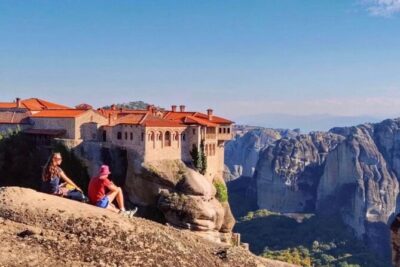
METEORA – 2 Days by Train from Thessaloniki – including 2 Guided Meteora tours – Daily
Read our review →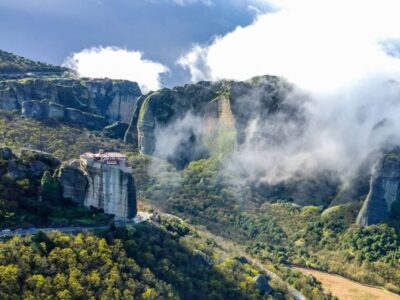
Meteora: 2-Days Train Tour from Thessaloniki – Local Agency
Read our review →
Thessaloniki: Mount Olympus and Dion Day Trip by Train
Read our review →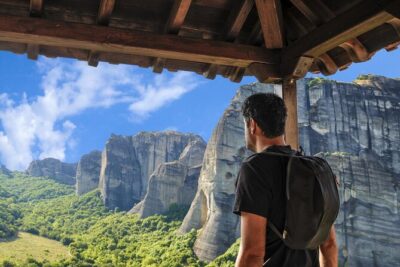
Rail Tour from Thessaloniki to Meteora 3 Days – 2 Nights
Read our review →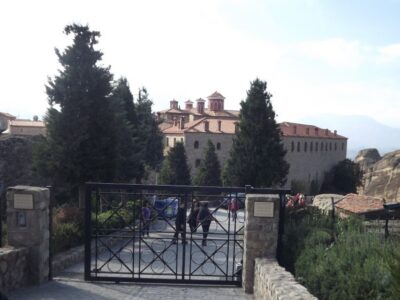
Browse the lists this tour appears in