
REVIEW · SEOUL
Gyeongju UNESCO Sites Tour by KTX train; The Museum Without walls
Gyeongju is Korea’s museum without walls, and this day trip gives you a fast, well-organized way to reach it from Seoul. You’ll walk among royal burial mounds, see the oldest surviving observatory in the Far East, and visit Bulguksa Temple and Seokguram Grotto, all in one packed day.
I like the private format, since your group gets its own guide and car rather than being herded from stop to stop. I also like the KTX connection, which turns a long road trip into a fairly comfortable rail journey, with staff help getting you from your Seoul hotel to the train.
The catch is simple: this is a lot of Gyeongju for one day. The schedule lasts about eight to nine hours, the train ride takes roughly two hours each way, and several sights are outdoors. Rain can take the shine off the experience, and lunch is not included.
Key points to know before booking
- KTX makes the Seoul to Gyeongju trip practical: You avoid a long private-car ride and travel in economic-class seats on the high-speed train.
- The day covers the major Silla highlights: Cheonmachong Tomb, Cheomseongdae, Donggung Palace and Wolji Pond, Bulguksa Temple, Seokguram Grotto, and the National Museum.
- Your group has a private guide: Guides named for this experience include Jay, Andrew, John, and Dylan.
- Hotel pickup and entrance fees are included: A private vehicle handles transfers in the Seoul area and around Gyeongju.
- The itinerary mixes indoor and outdoor sights: The museum offers shelter and context, but much of the day involves walking outside.
- You return to Seoul without hotel drop-off: The package includes pickup, but not a ride back to your hotel at the end.
Why Gyeongju is worth the long day
Seoul gives you palaces, markets, towers, and modern Korean life. Gyeongju gives you something very different: the remains of the Silla kingdom, which ruled much of the Korean Peninsula for centuries. Here, tombs appear as grassy hills, temple stones still carry their original purpose, and royal sites sit in open fields rather than behind dense city blocks.
That setting gives Gyeongju its special appeal. You are not simply moving from one indoor exhibit to another. You are seeing how an ancient capital occupied space, from royal burial grounds to an observatory, palace pond, Buddhist temple, and mountain hermitage.
The tour price is $470 per person. That is a serious amount, but it covers a private English-speaking guide, Seoul-area hotel pickup, private vehicle transfers, round-trip KTX fare, and admission fees. For a small group that values convenience, the price can make sense. Booking a train, arranging local transport, hiring a guide, and paying separate entrance fees would take time and coordination.
For one person or a couple on a tight budget, it is harder to justify. The tour is designed around ease, not low cost. You are paying to make a distant day trip manageable.
More Museum Visits in Seoul:
- Brussels: Train World Museum Entrance Ticket
★ 4.7 · 524 reviews - London: Postal Museum Entry Ticket and Underground Rail Ride
★ 4.6 · 363 reviews - Brussels Train World Museum Entrance Ticket
★ 4.5 · 220 reviews
Starting early with the KTX
The day begins at about 7:00 a.m. with pickup in the Seoul area. The transfer service takes you to the train, and accounts of the experience describe staff helping with the subway connection, waiting during boarding, and walking passengers to their seats. That assistance matters when you are unfamiliar with the station or carrying luggage.
The KTX is the right choice for this outing. A high-speed train is less tiring than spending the full journey in a car, and the roughly two-hour ride gives you a chance to rest before the sightseeing begins. Economic-class fare is included.
The handoff in Gyeongju is another useful feature. Your local guide meets you after the train journey, then takes over the day by private vehicle. Jay, John, and Dylan are among the guides named in guest accounts, with praise directed at their storytelling and care with timing. One practical note: a small number of English-language comments mention difficulty with an accent, so clear communication may vary by guide.
Cheonmachong Tomb and the royal burial grounds
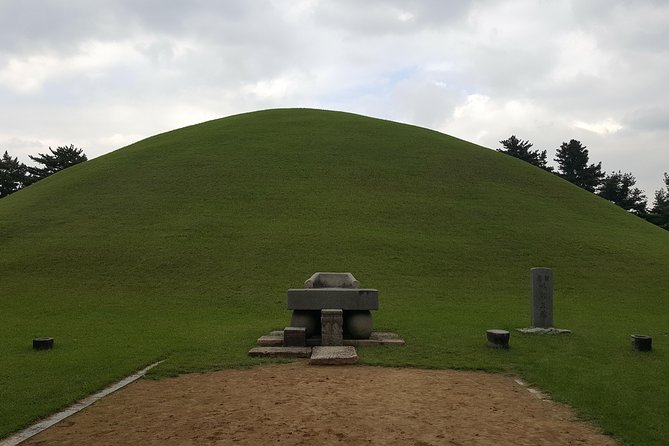
Your first major stop is Cheonmachong Tomb, part of a group of more than 20 large and small Silla-period burial mounds. These rounded earthen tombs are associated with kings and court officials, and their size gives you an immediate sense of the power held by the people buried there.
The most useful part of the stop is that you can enter an excavated mound. That changes the experience from simply admiring grassy hills to seeing how a royal tomb was constructed and studied. The visit lasts about an hour, which is enough time to understand the site without turning the morning into a museum lecture.
The mounds are outdoors, so comfortable shoes and weather protection matter. In rain, the paths and open spaces may be less pleasant. Still, this is an excellent opening stop because it gives you a physical introduction to Silla before you encounter its art and architecture.
Gyeongju National Museum puts the city together
The Gyeongju National Museum is the day’s best place to connect scattered ruins with the wider Silla story. The main archaeological hall contains ceremonial objects, Buddhist art, and other remains from the ancient kingdom. You see the skill and wealth behind the tombs, temples, and royal sites visited elsewhere.
I especially like having the museum in the middle of the itinerary rather than at the end. After seeing the burial grounds, you have a reason to care about the objects on display. A crown, ritual piece, or sculpture becomes evidence of the people and beliefs that shaped the city.
The museum stop lasts about an hour and admission is free. It also provides a welcome indoor break if the weather is poor. The drawback is time. An hour is enough for a guided overview, not a thorough museum visit, so you should not expect to read every display or explore every room.
More Train Tours in Seoul:
- From Seoul: Nami Island, K-drama Garden & Rail Bike Day Tour
★ 4.6 · 724 reviews - Day Trip to Nami Island with Rail bike and The Garden of Morning Calm
★ 4.5 · 459 reviews - Nami+Alpaca+Garden of Morning Calm (+Rail Bike Option)
★ 5.0 · 300 reviews - Seoul: Alpaca, Nami, Morning Calm or Eobi (+Rail Bike)
★ 4.9 · 233 reviews
Cheomseongdae, the ancient star-gazing tower
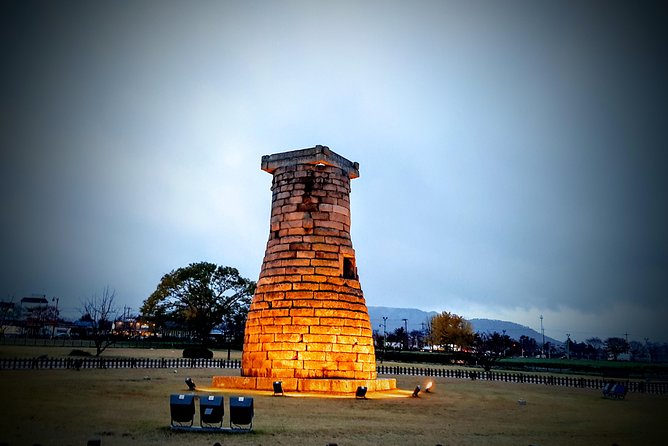
Cheomseongdae means Star Gazing Tower. Built during the reign of Queen Seondeok in 634, it is described as the oldest surviving observatory in the Far East. The structure is made from 27 levels of stone, a detail your guide can use to explain its design and place in Silla society.
This is a quick, visual stop rather than a large monument you enter. You will spend time viewing the tower from outside and walking through the surrounding area. Its modest size can surprise you, especially after seeing the broad burial mounds, but that is part of its charm.
Admission is free, and about an hour is scheduled. The open setting means you are exposed to sun, rain, and wind. The stop works best when your guide explains why this small stone tower mattered to an ancient royal capital.
Donggung Palace and Wolji Pond after dark in history
Donggung Palace and Wolji Pond, formerly called Anapji Pond, was built in 674 after the unification of the Korean Peninsula. The royal grounds included an artificial pond, small mountains, trees, flowers, birds, and other animals. Even in its restored form, the site gives you a clear idea of how Silla rulers used gardens and water to create a ceremonial setting.
This is one of the more atmospheric stops because it combines architecture with open space. The pond helps you picture palace life beyond formal halls and military power. You can walk around the grounds and consider how carefully the royal compound was designed.
The visit lasts about an hour and admission is included. It is another outdoor stop, so weather will affect your enjoyment. The tour schedule also leaves limited room for a slow walk or extended photography. If you love gardens and old palace sites, you may wish the visit were longer.
Bulguksa Temple and Silla stonework
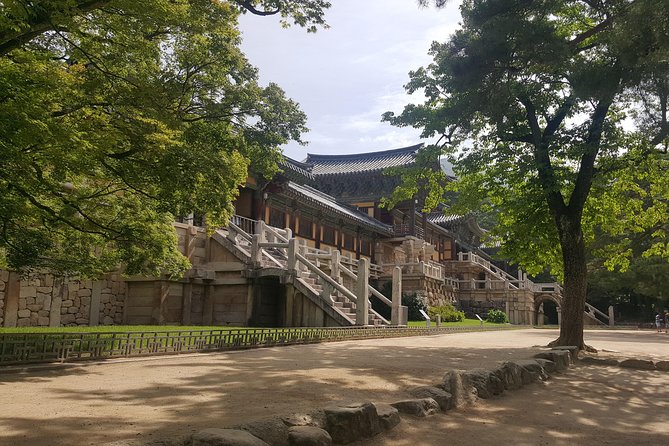
Bulguksa is Korea’s most famous Buddhist temple and one of the tour’s major highlights. Its Silla-era relics include the Dabotap and Seokgatap stone pagodas, which show how much care went into religious architecture and stone carving.
The temple is more than a collection of old buildings. It brings together stairways, courtyards, gates, pagodas, and carved stone details in a setting that still functions as a place of Buddhist worship. Your guide can help you notice the difference between decorative elements and objects with religious purpose.
About an hour is scheduled here, with admission included. That is enough for the main areas, but not enough for a leisurely study of every courtyard. You should expect some walking and steps. The pace is manageable for most people, since the activity information says most travelers can participate, but anyone with mobility concerns should consider the repeated outdoor stops.
Seokguram Grotto, the mountain finale
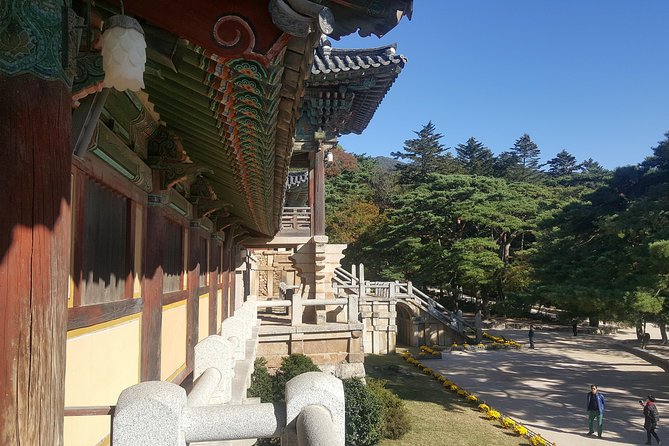
Seokguram Grotto is a hermitage connected with the Bulguksa complex. It sits about 750 meters above sea level and overlooks the East Sea. Inside, the Buddhist sculptures are the focus, with the setting adding a sense of distance from the former capital below.
The grotto is valuable because it shows another side of Silla belief and artistic skill. Bulguksa presents a working temple complex, while Seokguram offers a more secluded religious space in the mountains. Together, the two stops make a stronger pair than either would alone.
The visit lasts about an hour and admission is included. You should expect some walking to reach the grotto, and the mountain setting can make weather more noticeable. The East Sea view is part of the appeal, but cloudy or rainy conditions may limit it.
A private guide changes the pace
The guide is central to the value of this tour. Without one, Gyeongju’s sights can feel like a series of attractive but disconnected stops. With a good English-speaking guide, the tombs, tower, pond, museum objects, and Buddhist sites become parts of one Silla story.
The named guides connected with this experience include Jay, Andrew, John, and Dylan. Andrew is associated with the early pickup and train boarding assistance, while Dylan is described as personable and well informed about Silla history. John is noted for explaining the city’s stories and choosing a local restaurant for lunch. Jay is associated with meeting the group in Gyeongju and guiding the burial mounds and historic areas.
Those details also show the range of help you may receive. The company handles the complicated transitions, while the local guide provides the interpretation. English ability may not feel identical with every guide, and one account specifically noted difficulty with an accent. If history is your main reason for booking, it is worth treating the guide as a major part of the decision.
Lunch, weather, and the real length of the day
Meals are not included. One guide took a group to a small local restaurant where the portions were large and the food was well received, but the exact restaurant is not promised. You should budget for lunch and be ready to follow your guide’s suggestion or choose from the available options.
The timing is the main practical issue. The formal duration is about eight to nine hours, but the trip includes a roughly two-hour train journey from Seoul and another ride back. Six one-hour sightseeing stops leave little spare time. Delays, rain, or a longer lunch can make the day feel compressed.
Weather deserves attention. Much of Gyeongju’s appeal is outside, and one account describes heavy rain making the day less enjoyable. A raincoat, comfortable walking shoes, and a willingness to keep moving will help. The National Museum provides some indoor relief, but it cannot replace the outdoor sites.
Who gets the best value
I would choose this tour if you have limited time in Korea, care about ancient history, and want someone else to handle the rail and local transport. It is especially useful for a private group that wants to travel together without managing several separate bookings.
It also suits first-time visitors who want an organized introduction to Gyeongju. You see the principal Silla sites in one day and get context from a guide instead of relying only on signs.
I would hesitate if you dislike early starts, prefer slow museum visits, or want to explore Gyeongju independently. The schedule moves quickly, and the price is high for a day that still leaves no time for a hotel rest or a relaxed evening meal in the city.
Pickup is offered in Seoul areas, but hotel drop-off is not included. The activity is private, mobile-ticketed, and near public transportation. Free cancellation is available up to 24 hours before the start time, subject to the stated minimum-group condition.
Should you book this Gyeongju day trip?
Book it if you want the simplest serious history day trip from Seoul. The combination of KTX travel, private transfers, entrance fees, and a local English-speaking guide removes most of the friction from reaching Gyeongju.
Skip it if you want a slow, low-cost visit or if outdoor sightseeing in uncertain weather would bother you. For most history-minded visitors with only one free day, I think the convenience and range of sites make the $470 price easier to defend, especially when shared by a private group.
FAQ
How long does the Gyeongju tour from Seoul last?
The experience lasts approximately eight to nine hours.
What time does the tour start?
The listed start time is 7:00 a.m.
Is transportation from Seoul included?
Yes. Seoul-area hotel pickup, private vehicle transfers, and round-trip KTX economic-class fare are included.
Is hotel drop-off in Seoul included?
No. Hotel pickup is included, but hotel drop-off service in Seoul is not.
Is this a private tour?
Yes. Only your group participates in the private activity.
What admission fees are included?
Admission fees to the tourist sites included in the tour are covered. Gyeongju National Museum admission is free.
Which places are visited?
The stops are Cheonmachong Tomb, Gyeongju National Museum, Cheomseongdae Observatory, Donggung Palace and Wolji Pond, Bulguksa Temple, and Seokguram Grotto.
Is lunch included?
No. Meals are not included in the tour price.
Can most people participate?
The activity information says most travelers can participate, and it is near public transportation.
What is the cancellation policy?
You can cancel up to 24 hours before the experience start time for a full refund. Changes or cancellations made less than 24 hours before the start time are not accepted for a refund.
Just added around Seoul
- Seoul Tram Pedal Challenge★ 5.0 · 32 reviews
- Scenic Escape: Nami Island, Garden of Morning Calm, and Rail Bike★ 3.0 · 2 reviews
- Nami Island & Petite France & Italian Village & Gangchon Rail Bike One-Day Tour★ 4.5 · 52 reviews
- Private Tour Rail Bike & Nami Island & (Petite France or Garden of Morning Calm)★ 4.5 · 13 reviews
- Nami Island Trip with Petite France & Italian Village and Gangchon Rail Bike★ 4.5 · 41 reviews
- Eobi+Nami+Hanbok Tour with Rail Bike or Strawberry Option★ 5.0 · 10 reviews
- Special Private Tour Nami Island, Rail Bike, Petite France★ 5.0 · 42 reviews
- Day Tour to Gangchon Rail Bike Nami Island and Petite France★ 5.0 · 7 reviews
Seoul Train Tours, compared.
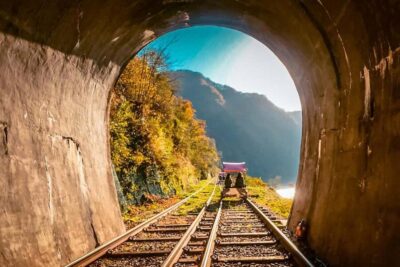
Nami Island, K-drama Garden & Rail Bike Day Tour
Read our review →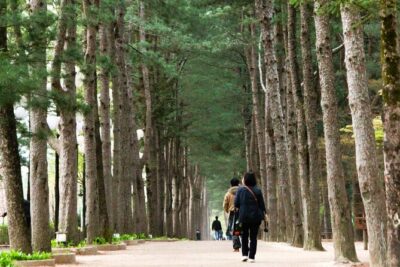
Day Trip to Nami Island with Rail bike and The Garden of Morning Calm
Read our review →
Nami+Alpaca+Garden of Morning Calm (+Rail Bike Option)
Read our review →
Alpaca, Nami, Morning Calm or Eobi (+Rail Bike)
Read our review →
Full-Day Tour in Mt. Seorak & Nami (+Rail Bike Option)
Read our review →
Alpaca World and Nami Island with Gangchon Rail Bike Tour
Read our review →
Nami Island & Petite France & Italian Village & Gangchon Rail Bike One-Day Tour
Read our review →
Special Private Tour Nami Island, Rail Bike, Petite France
Read our review →Browse the lists this tour appears in