
REVIEW · USA
New York City Slavery and Underground Railroad Tour
New York’s financial district was built in part through enslaved labor, and this walking tour makes that uncomfortable fact impossible to miss. Over about two and a half hours, you’ll trace the African-American Freedom Trail from Bowling Green to the African Burial Ground, with stories of escape, abolition, and survival along the way.
I like two things in particular: the tour connects famous places such as Wall Street and Fraunces Tavern to people often left out of the standard New York story, and the guides use photographs and personal details to make the past easier to grasp. Guides including Ludie, Sean, Maia, Maya, and Shawn have earned praise for their clear, passionate teaching.
The main drawback is the format. You’ll spend a lot of time standing at street corners while listening, and there may not be much to look at beyond plaques, buildings, and memorials. Cold, rain, heat, construction, or blocked areas can make the experience harder, so wear good shoes and check the forecast.
Key points to know before booking
- A serious look at Lower Manhattan: Learn how enslaved labor helped shape colonial New York and the city’s financial district.
- The African Burial Ground is the emotional center: The tour ends at this sacred memorial site, with time to consider its symbolism and meaning.
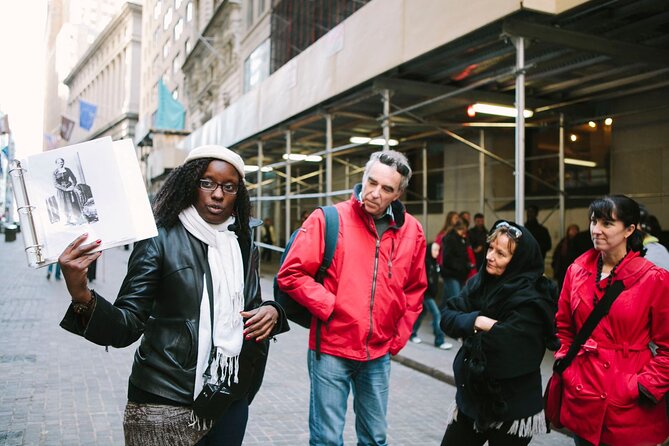
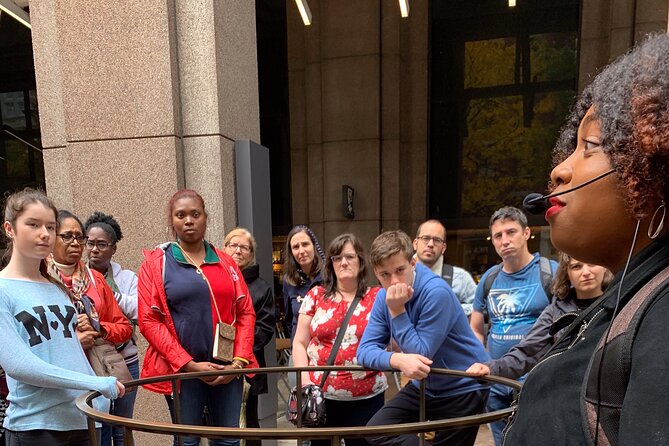
- Strong guide-led storytelling: Guides such as Ludie and Sean use photographs, names, and personal stories to give the history a human scale.
- Mostly an outdoor walking experience: Expect about 2.5 hours of walking and standing, with no hotel pickup or drop-off.
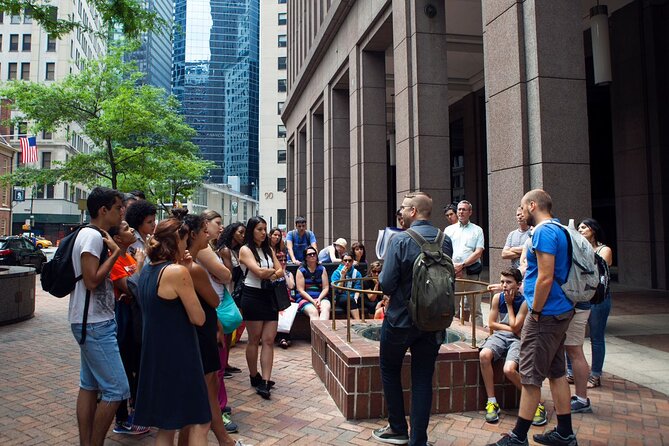
- A small group helps: The maximum group size is 30, though sound can still be an issue if the guide lacks amplification.
- Good value for history lovers: At $49, you’re paying for focused interpretation rather than admission-heavy sightseeing.
Why New York’s slavery story belongs on your itinerary
Many first-time visitors see Lower Manhattan as a parade of colonial landmarks, stock-market symbols, and polished office towers. This tour asks you to look again. Beneath the familiar streets is a story of forced labor, resistance, abolition, faith, and escape.
New York was not an innocent bystander in American slavery. Enslaved Africans helped build parts of colonial Manhattan, and the city’s commercial growth was tied to the trade in human beings and the goods produced through enslaved labor. The tour puts that history into the streets where it happened.
You’ll also learn about the Underground Railroad, the informal network of routes, safe houses, and allies that helped enslaved people seek freedom. New York was both a destination and a passage point. The story includes famous abolitionists such as Frederick Douglass, as well as people whose names are less familiar but whose choices helped others survive.
This is not a sightseeing walk with a little history sprinkled in. It is a history lesson conducted outdoors, using the city itself as the classroom. That makes it especially useful if you want to understand how New York fits into the larger story of slavery in the United States.
More City Tours in the USA:
- Wild West Day Trip to Virginia City from Tahoe with Train Ride
★ 4.0 · 142 reviews - Virginia City Day Tour From Lake Tahoe with Train Ride
★ 4.8 · 19 reviews - Cincinnati: City Highlights and Food Tour by Streetcar
★ 4.9 · 17 reviews
Starting at the Alexander Hamilton Custom House
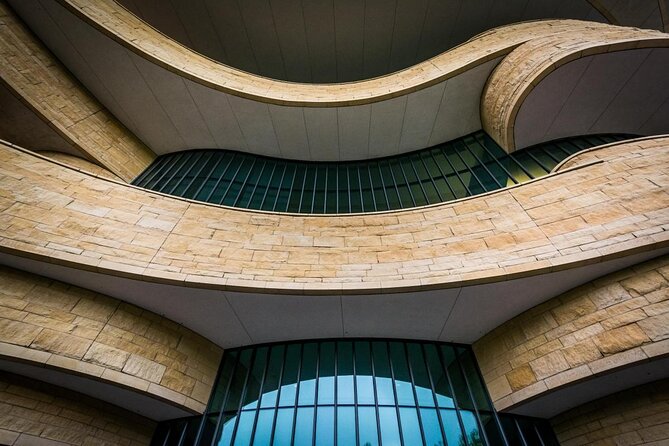
The meeting point is outside the National Museum of the American Indian at 1 Bowling Green. The museum occupies the former Alexander Hamilton Custom House, a Beaux-Arts building completed in 1907 and associated with New York’s growth as a port and center of trade.
The stop is mainly exterior, and admission to the museum is not included. Your guide uses the building and its location to set up a wider discussion about commerce, colonial power, Native peoples, and the labor systems that helped make New York wealthy.
Allow yourself enough time to find Bowling Green. This is a busy part of Lower Manhattan, close to public transportation and surrounded by major sights, so arriving early can spare you a hurried start. Since the tour is conducted in English, you’ll get the most from it if you are comfortable listening to a sustained historical explanation.
Battery Park and the city’s gateway
The walk continues to Battery Park, where the guide places New York’s history in a wider port-city setting. Long before Ellis Island opened and before the Statue of Liberty welcomed arriving ships, newcomers reached Manhattan through this waterfront area.
The stop is brief, about 10 minutes, but it helps explain why New York became such an important point of arrival, trade, migration, and forced movement. The park also gives you a physical sense of the island’s edge, even though the tour’s main subject is not immigration in general.
Do not expect a long break here. Battery Park is a setting for the story rather than a major attraction visit, and the tour continues on foot. If you like to take photographs, you’ll have to keep an eye on the group and listen at the same time.
Fraunces Tavern and the colonial city
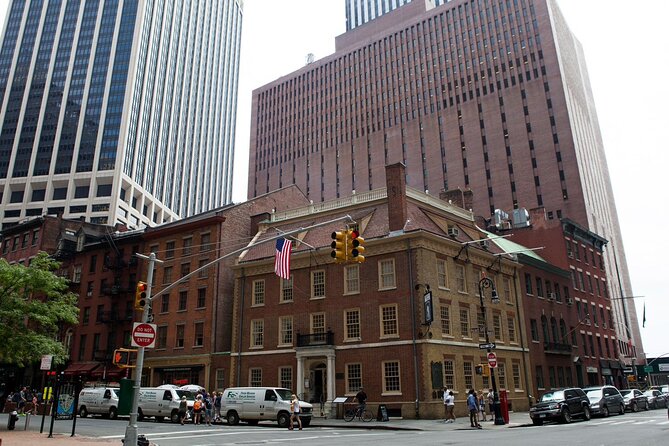
At Fraunces Tavern, the guide discusses a building tied to New York’s colonial and Revolutionary-era past. The stop is exterior and lasts about 15 minutes. Museum admission is not included, so you should not assume that the tour includes an indoor visit.
Fraunces Tavern is useful in this tour because it links the familiar patriotic story of New York with the less familiar story of enslaved labor and Black New Yorkers. American history is often taught in separate chapters, but city streets rarely respect those neat divisions. At this location, the guide can connect the Revolution, commerce, slavery, and the people who lived and worked around them.
You may want to return later for your own meal or drink. One participant used the tour as a springboard for a separate visit to Fraunces Tavern, which makes sense if you want more time inside than the walking schedule allows.
More Train Tours in the USA:
- Verde Canyon Railroad Adventure Package
★ 4.5 · 2,821 reviews - Key West Conch Tour Train
★ 4.5 · 792 reviews - Streetcar Food Tour and Findlay Market with Riverside Food Tours
★ 5.0 · 653 reviews - Jackson Hole: Aerial Tram and Gondolas Sightseeing
★ 4.8 · 632 reviews
Wall Street, where finance meets forced labor
Wall Street receives the longest stop, about 30 minutes, and it is one of the tour’s most important settings. The street took its name from an actual wall built between 1685 and 1699. That wall was part of the defenses of colonial Manhattan, and enslaved people helped build it.
Here the tour links New York’s financial identity with the labor and trading systems that supported early growth. You’ll also hear about places where people escaping slavery could hide while moving toward free states, aided by abolitionists and allies.
This is where the tour challenges the polished version of Lower Manhattan. The New York Stock Exchange and the surrounding financial district can feel abstract, even theatrical, when you visit them as a sightseer. The guide adds a human and moral dimension by showing how wealth, law, labor, and race operated together.
One important point is easy to miss if you explore alone: the evidence is not always displayed on a large sign. Much of the value comes from knowing what to ask and where to look. You are not simply seeing a historic street. You are learning how to read it.
Foley Square and the Triumph of the Human Spirit
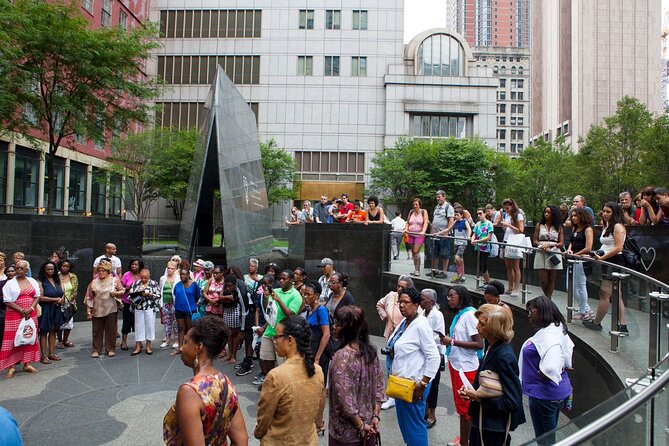
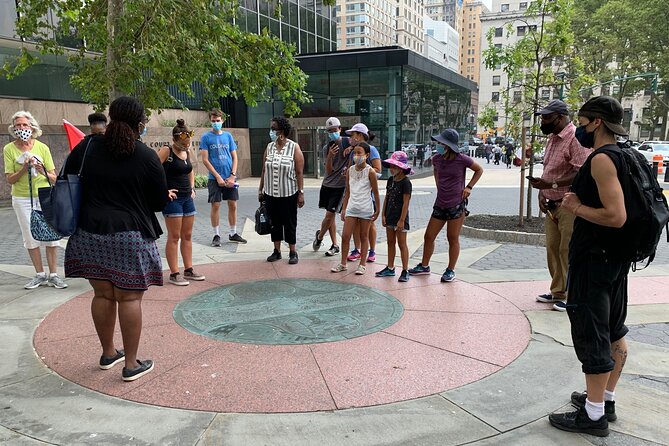
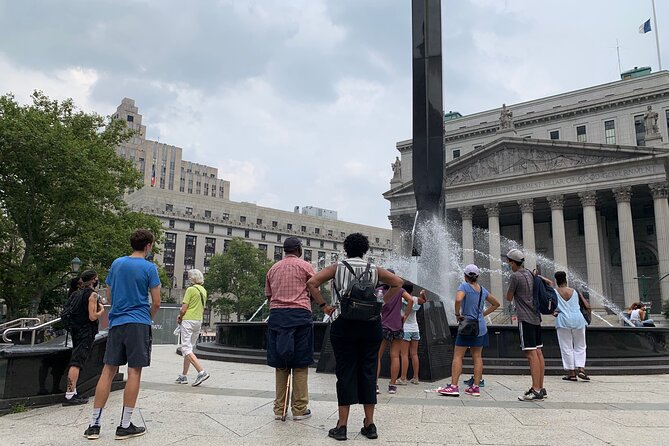
At Foley Square, the group pauses for about 15 minutes to see Triumph of the Human Spirit, a sculpture honoring the presence of enslaved people in New York. Admission is free.
Public art gives this part of the tour a different tone. Instead of focusing only on dates and buildings, the sculpture invites you to consider memory, survival, and the ways a city chooses to mark difficult truths. Your guide may use the work to connect the past with the continuing struggle for justice and recognition.
There is not a major indoor attraction here, so the stop depends heavily on the guide’s explanation. That is a recurring feature of this experience. If you prefer museums, exhibits, and objects behind glass, you may find the street format spare. If you enjoy historical interpretation tied to real places, the setting works well.
The African Burial Ground National Monument
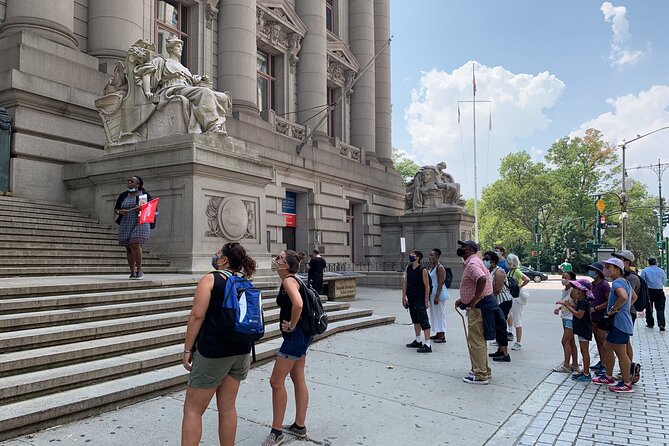
The walk ends at the African Burial Ground National Monument at 290 Broadway. This is the oldest and largest known excavated burial ground in New York documenting the lives of enslaved people in the city.
The site is sacred, quiet, and moving. More than 15,000 people of African descent were buried here during the colonial period, although that broader figure is not part of the supplied tour description and should not be treated as a specific claim made during every visit. What matters for this experience is that the burial ground gives physical presence to people whose work and lives were long pushed out of public memory.
The memorial’s symbols are part of the guide’s interpretation. Sean, for example, has been praised for explaining the meaning behind details carved into the monument. Other guides use photographs and historical figures to help you connect the site with individual lives rather than treating it as an anonymous graveyard.
The itinerary allots about 10 minutes here, but this is the point where many people will want more time. Construction or restricted access can sometimes affect what you see. When the outdoor area has been blocked, the tour has used the African Burial Ground museum instead, but conditions can change. It is sensible to view the site as the destination and emotional conclusion, not as a guaranteed long museum visit.
The church and the Underground Railroad connection
The broader route also includes the former site of New York’s first African-American church, described as one of the Underground Railroad stops. This detail matters because churches were not only places of worship. They could also provide community, information, shelter, and support for people facing an oppressive legal system.
The church site helps widen the story beyond famous white abolitionists. Freedom depended on networks of Black New Yorkers, religious communities, workers, reformers, and people willing to take personal risks. You’ll get a clearer picture of the Underground Railroad as a human network rather than a literal railroad or a single organized institution.
The exact sequencing can vary, and the formal stop list emphasizes the six main locations from the Custom House to the African Burial Ground. Ask your guide if you want to make sure the church site is included in the day’s route.
How the guides shape the experience
This tour succeeds or fails largely on the guide. The strongest guides bring energy without turning painful history into entertainment. Ludie has been singled out for passionate delivery and for using a binder of photographs to show historical figures and places. Sean has a background as a high school history teacher and is praised for explaining both broad events and individual stories.
Maia and Maya are also names associated with especially engaging tours, while Shawn has been praised for openness, strong subject knowledge, and clear explanations. Since the guide is not guaranteed by the supplied information, you should expect the style to vary from one departure to another.
The best guides make room for complexity. They explain slavery without softening it, but they also keep the focus on the humanity and choices of the people involved. That balance matters. You are not asked to feel shame for history you did not create. You are asked to understand what happened, who benefited, who suffered, and how the past still shapes the present.
There has been one practical concern about sound. One earlier departure was difficult to follow because the guide did not use a microphone, and the group had to stand close together. A microphone may be available, but it is not listed as a standard feature. If you have hearing concerns, tell the guide at the start and position yourself near the front.
The walking conditions and group size
This is a moderate physical activity, not a strenuous hike. The route is in Lower Manhattan, but you will be outside for roughly 2.5 hours, moving between stops and standing while the guide speaks.
That distinction is important. The walk itself may be manageable, but standing on hard pavement in bad weather can wear you down. Rain, wind, cold, and heat affect the experience more than the mileage. Wear comfortable shoes, dress for the forecast, and bring water when the weather is warm.
The maximum group size is 30. That is small enough for a personal guide-led experience, but a group of that size can be harder to hear on a city street. Stay close to the guide and avoid drifting behind when the group moves.
There is no hotel pickup or drop-off. You meet at Bowling Green and finish at the African Burial Ground National Monument. That end point is near public transportation, and the one-way route works well if you plan another Lower Manhattan activity afterward.
Is $49 a fair price?
At $49 per person, this is not a bargain if you measure value by admission tickets. Most stops are viewed from outside, and the free African Burial Ground site is the tour’s main destination. You are paying for the guide’s research, storytelling, route planning, and ability to connect scattered sites into one coherent subject.
For a history-focused visitor, that is a fair price. Without a guide, you could walk past Wall Street, Fraunces Tavern, Foley Square, and the burial ground without understanding how they connect. The tour also saves you the work of assembling sources and deciding which sites matter.
The value is lower if you want a fast-moving sightseeing walk or lots of indoor exhibits. It is also lower if you dislike standing and listening. Think of this as a compact outdoor seminar with a Lower Manhattan route, not as a standard highlights tour.
Who should book this walking tour?
I would recommend it most strongly to people who want a fuller account of New York history, especially those interested in slavery, abolition, Black history, the Underground Railroad, or the development of American finance.
It is also a good choice for locals. Familiar streets can look different when you learn who built them and who was denied the benefits of the city they helped create. History teachers, students, and readers of Clint Smith’s How the Word Is Passed may find the tour a useful starting point for further study.
Families can book it, but children need to be ready for serious material and sustained listening. The subject includes enslavement, escape, racial violence, and loss. This is not light entertainment.
I would hesitate if you need frequent sitting breaks, dislike outdoor tours, or are visiting during difficult weather. The company offers free cancellation up to 24 hours before the start time, but weather-related cancellations may occur, with a different date or full refund offered. If the minimum number of participants is not met, the same type of alternative or refund applies.
Should you book the New York Slavery and Underground Railroad Tour?
Book it if you want New York to make more sense, not just look impressive. The route is modest, but the subject is large. Wall Street, Battery Park, Fraunces Tavern, Foley Square, and the African Burial Ground become connected pieces of a story that is often left out of ordinary sightseeing.
Go with comfortable shoes, weather protection, and patience for standing. If possible, ask for a microphone and stay close to the guide. At $49, the tour is worthwhile for anyone who values clear historical context and a serious, human account of the city’s past.
FAQ
Where does the tour start?
The tour starts outside the National Museum of the American Indian at 1 Bowling Green, New York, NY 10004.
Where does the tour finish?
The tour ends at the African Burial Ground National Monument at 290 Broadway, New York, NY 10007.
How long does the tour last?
The tour lasts approximately 2 hours and 30 minutes.
What language is the tour offered in?
The tour is offered in English.
How much does the tour cost?
The listed price is $49 per person.
Is hotel pickup included?
No. Hotel pickup and drop-off are not included.
Is the African Burial Ground included?
Yes. The tour includes the African Burial Ground National Monument and its memorial.
Do I need to buy admission tickets for the stops?
Admission tickets are not included for the exterior visits. Foley Square and the African Burial Ground are listed as free.
Is the tour suitable for people with limited fitness?
The activity requires a moderate physical fitness level. You should expect walking and standing during the approximately 2.5-hour experience.
What happens if bad weather cancels the tour?
If poor weather causes a cancellation, you will be offered a different date or a full refund. You can also cancel up to 24 hours before the start time for a full refund.
Just added around the USA
- Virginia City Day Tour From Lake Tahoe with Train Ride★ 4.8 · 19 reviews
- Ventura: Rail Bike Guided Tour with Farm Stand Stop★ 4.1 · 18 reviews
- Winnipesaukee Scenic Railroad★ 4.5 · 7 reviews
- Walking Tour of Still’s Underground Railroad in Alexandria★ 5.0 · 9 reviews
- Laughton Glacier Hike and White Pass Rail Adventure★ 5.0 · 12 reviews
- Uncorked: Wine Fest at Verde Canyon Railroad★ 5.0 · 8 reviews
- Grand Canyon Excursion from Sedona with First Class Train Ride★ 4.5 · 47 reviews
- Snoqualmie Fall & Railway Museum 3-Hours (Private Tour)★ 5.0 · 4 reviews
USA Train Tours, compared.
Streetcar Food Tour and Findlay Market with Riverside Food Tours
Read our review →
Jackson Hole: Aerial Tram and Gondolas Sightseeing
Read our review →
Washington DC: Arlington Nat. Cemetery Ticket & Tram Tour
Read our review →
Alaska Railroad Anchorage to Seward Round-Trip Same Day Return
Read our review →
Colorado: All Aboard the Royal Gorge Route Railroad!
Read our review →
Browse the lists this tour appears in