
REVIEW · NEW DELHI
Private & Group 5 Days Golden Tringle Tour by Train or Car – All Inclusive
The most appealing part of this five-day Golden Triangle trip is the mix of India’s great monuments and its everyday street life. You move from the grand avenues of New Delhi to the Taj Mahal at sunrise, then on to Jaipur’s forts, stepwells, spice markets, rickshaws, and rooftop tea.
I like the choice between a private tour and a group departure, and I like that the route can use trains as well as an air-conditioned car. Guides such as Gajendra Singh and driver Pappu are named in the arrangements, with particular praise for careful coordination, safe driving, and help at railway platforms. The main caution is that all inclusive does not cover everything: personal expenses are extra, and the accommodation and entrance tickets depend on the option you select.
Key points to know before booking
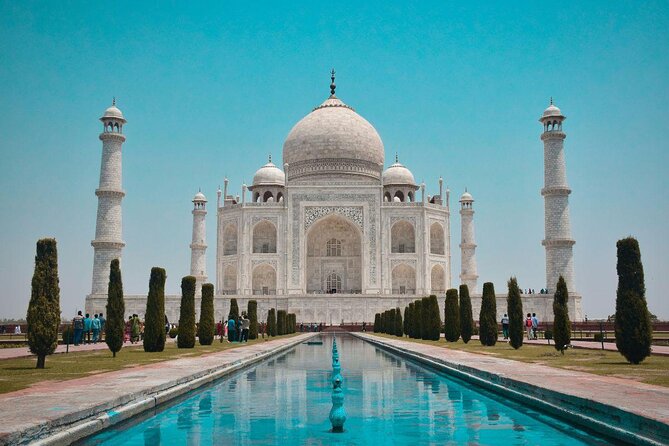
- Sunrise at the Taj Mahal: The early visit gives you the best chance of cooler air and softer light.
- Car or train travel: Train tickets depend on availability, while a private air-conditioned car gives you more control over stops.
- Four very full days of sightseeing: Delhi, Agra, Jaipur, and Old Delhi are packed into a short schedule.
- Historic stepwells: Abhaneri’s Chand Baori and Jaipur’s Panna Meena ka Kund add something unusual beyond the major palaces.
- Strong guide and driver support: Gajendra Singh and Pappu are among the named staff, with careful timing and railway assistance emphasized.
- Check your package carefully: Four nights, breakfast, admissions, and hotel category vary according to the option you book.
Why this Golden Triangle route works
India’s Golden Triangle links New Delhi, Agra, and Jaipur in a compact route. You get Mughal monuments in Delhi and Agra, Rajput palaces and astronomical instruments in Jaipur, plus a close look at modern Indian life along the way.
Five days is enough to see the headline sights, but it is not a slow trip. You will spend long stretches moving between cities, and several days begin early or continue into the evening. That is the tradeoff for fitting the Taj Mahal, Agra Fort, Amber Fort, Jaipur’s City Palace, and Old Delhi into one organized holiday.
The price begins at about $198.72 per person, which can be good value if your chosen option includes four nights of accommodation, breakfast, entrance tickets, transport, and guiding. Read the exact package wording before paying. The description refers to luxury accommodation in one place, but the additional information says accommodation may be in three or four-star hotels or homestays. That difference matters.
The tour can be arranged privately or for a group of up to 100 people. A private departure is the better choice if you want to adjust the pace, spend longer at a favorite monument, or avoid being tied to a large party. A group trip may lower the cost, but a group of that possible size can make transfers and meeting points slower.
More Train Tours with Lunch in India
- Delhi to Agra and Taj Mahal Private Day Trip by Express Train with Lunch
★ 5.0 · 1,389 reviews - All Inclusive Taj Mahal & Agra Tour by Superfast Train From Delhi
★ 5.0 · 918 reviews - Jaipur Day Trip from Delhi by Car or Train – All Inclusive
★ 5.0 · 663 reviews
Day 1: Qutub Minar, Lotus Temple, and New Delhi
Your first day begins with an airport pickup at Indira Gandhi International Airport Terminal 3. The arrival transfer is listed at about two hours, so the schedule allows time to meet the guide, reach the hotel, and settle in before sightseeing.
The first major stop is Qutub Minar, the tall brick minaret built during the early Islamic period in India. You have about an hour here. Look beyond the tower itself for the surrounding ruins and carved stonework. The site works well as a first introduction to Delhi because it combines architecture, religion, and several layers of the city’s past in one place.
Next comes the Lotus Temple, a Bahá’í House of Worship completed in 1986. You get about 45 minutes. The building’s white petal-like form makes it one of Delhi’s most recognizable modern sights, though the visit is more about quiet observation than a long guided tour.
The New Delhi portion continues at India Gate, a war memorial dedicated to soldiers of the British Indian Army who died in the First World War and the Third Anglo-Afghan War. You have about half an hour, usually enough for photographs and a look along the ceremonial avenue.
Across the same broad central district, Rashtrapati Bhavan is the official residence of India’s president. The visit is listed at 30 minutes, so expect an exterior view rather than a full palace tour. It helps you understand the scale of New Delhi’s planned government quarter.
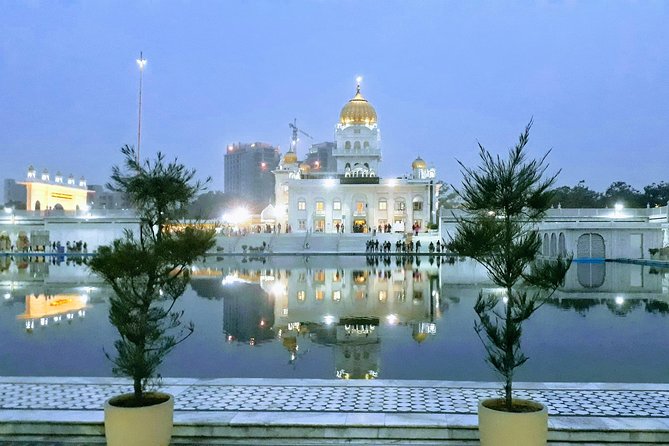
The day ends at Gurudwara Bangla Sahib, one of Delhi’s important Sikh places of worship. Allow an hour here. The complex is known for its sacred pool, or sarovar, and its connection with Guru Har Krishan. Dress respectfully and follow the site’s instructions about footwear and head covering.
This first day covers a lot of ground, and the short stops mean you will not study every site in detail. Still, it gives you a useful spread: ancient tower, modern temple, national memorials, government buildings, and a living place of worship.
Day 2: From Delhi to Agra and the Mughal monuments
After breakfast, you leave for Agra by car or train. The journey is listed at about four hours, although the exact travel time depends on the transport option and traffic. Train travel can be efficient and interesting, but tickets depend on availability. If rail tickets are not available, the car becomes the practical fallback.
If you travel by road, the itinerary includes a short stop at Shiva Dhaba on the Yamuna Expressway for masala tea. It is only 15 minutes, but these brief roadside pauses help break up a long transfer.
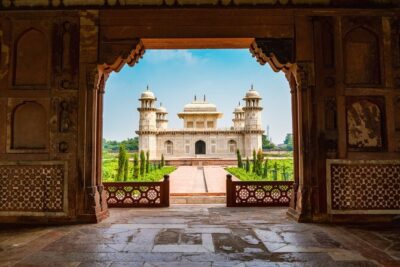
In Agra, you visit the Tomb of I’timad-ud-Daulah, often called the Baby Taj. The small Mughal mausoleum is known for delicate marble inlay and is often described as a possible design forerunner to the Taj Mahal. At 45 minutes, you have time to notice the fine surface work without rushing through the whole compound.
Next is Agra Fort, the large red sandstone complex that served as the main residence of Mughal emperors until the capital moved to Delhi. You have an hour. The fort is not simply a defensive wall. Inside are courtyards, audience spaces, palaces, and views toward the Taj Mahal. Your guide’s explanation is especially useful here because the buildings make more sense when you know how the imperial court used them.
The day ends with a Taj Mahal sunset viewpoint across the Yamuna River. This is a calmer alternative to the main monument area, with a different angle on the marble dome and minarets. The visit lasts about an hour and gives you a chance to see the monument in changing light before the early start the next morning.
Day 3: Taj Mahal at sunrise and the road to Jaipur

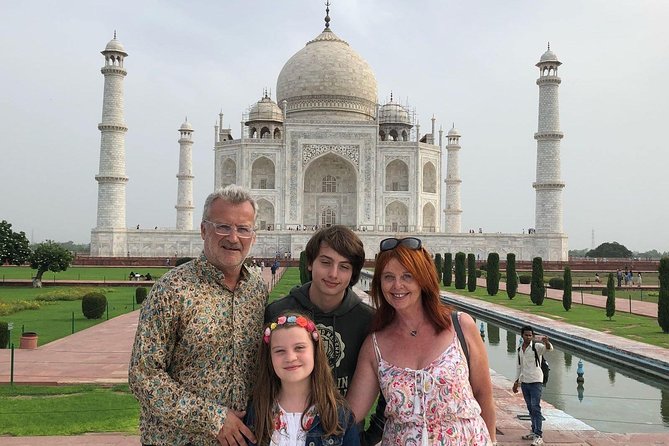
The sunrise Taj Mahal visit is the emotional center of the tour. The monument was commissioned by Mughal emperor Shah Jahan as a tomb for Mumtaz Mahal, and Shah Jahan is also buried inside. You get about three hours for the visit, including time to enter, walk through the gardens, see the mausoleum, and take photographs.
An early start is not optional in practical terms. The sunrise visit requires leaving the hotel before breakfast, then returning afterward for the included morning meal. That routine is worthwhile because the air is generally cooler and the light changes quickly across the marble.
You should expect security procedures and walking, so keep your belongings simple. The tour description does not list every entry rule, so your guide will be the best source for current instructions on bags, cameras, and timing.
After breakfast, you continue toward Jaipur. The route includes Abhaneri, a village in Dausa district known for Chand Baori, one of India’s most striking stepwells, and the Harshat Mata Temple. The visit is listed at about an hour.
Chand Baori is built from repeated flights of symmetrical steps leading down to the water. It is a useful stop because it shows practical water engineering as well as ornate design. It also breaks up the transfer between Agra and Jaipur. You then continue to Jaipur and check into your hotel.
This is one of the longest and most demanding days. You see the country’s most famous monument before breakfast, then spend much of the day transferring cities. If you prefer a relaxed pace, ask about a private arrangement and confirm whether the schedule can be adjusted.
More Train Tours with Lunch in New Delhi
- Private Day Tour of Taj Mahal by India’s Fastest Train or Car – All Inclusive
★ 5.0 · 131 reviews - Taj Mahal Tour with High-Speed Train Experience – All Inclusive
★ 5.0 · 130 reviews - Luxury Taj Mahal by super fast train from Delhi all inclusive
★ 5.0 · 62 reviews - All Inclusive Luxury Taj Mahal Tour from Delhi by Express Train
★ 5.0 · 51 reviews
Day 4: Jaipur’s forts, palace, and astronomical instruments
Jaipur sightseeing begins at Panna Meena ka Kund, a historic stepwell with carefully arranged stairways. The stop is only 20 minutes, so treat it as a quick photo and orientation visit rather than a full exploration.
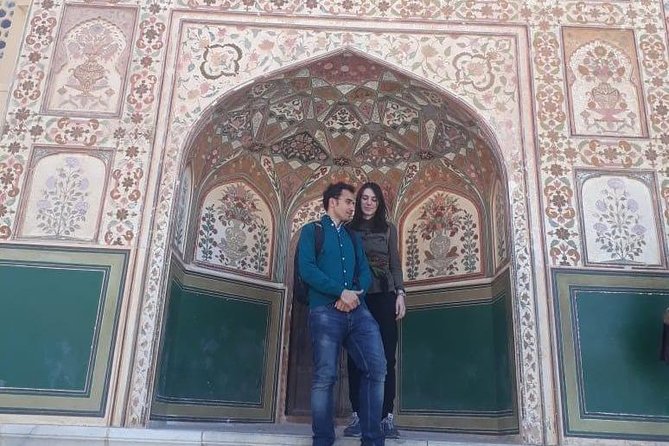
The main event is Amber Palace, also called Amer Fort, located on a hill outside Jaipur. You have two hours, which is appropriate for the courtyards, gateways, palace rooms, and views. The fort is one of the places where a guide can add real value. Without context, the complex can feel like a series of impressive walls and halls. With an explanation of court life and the relationship between Amer and Jaipur, the layout becomes easier to read.
At Jal Mahal, the Water Palace appears in the middle of Man Sagar Lake. The itinerary gives you 15 minutes, so this is a short roadside viewing stop. You will not have a long interior visit, but the palace makes a memorable photograph, especially with the hills behind it.
Jantar Mantar is next, with about an hour. This collection of nineteen large astronomical instruments was completed in 1734 under Maharaja Sawai Jai Singh II. The instruments measure time and track celestial positions using stone and masonry forms. A guide is helpful here, since the purpose of each structure is not always obvious at first glance.
You then visit Jaipur’s City Palace for an hour. The complex was founded when Jai Singh II moved his court from Amer to Jaipur in 1727. The palace combines courtyards, royal buildings, and museum displays. The tour does not specify which sections are included, so confirm the entry package if particular galleries matter to you.
The final stop is Hawa Mahal, the Palace of Wind. You have 15 minutes, likely for an exterior view and photographs. Its small windows and pink sandstone front were designed to let royal women observe street activity without being seen. The short visit is enough for the famous facade, but not for a detailed interior tour.
Jaipur day is packed but well arranged geographically. The main limitation is time. If you want to linger at Amber Palace, Jantar Mantar, or the City Palace, a private tour gives you the best chance of adjusting the order.
Day 5: Old Delhi, rickshaws, and the spice market
After breakfast, you return to Delhi by car or train. A tea break is included during the transfer. Once back in the capital, the final sightseeing shifts from royal monuments to Old Delhi’s crowded lanes and working markets.
Raj Ghat is a memorial to Mahatma Gandhi. The visit takes about 30 minutes and offers a quiet pause before the more active streets nearby.
At Jama Masjid, one of India’s largest mosques, you have about 20 minutes. The short visit is enough to see the broad courtyard and surrounding architecture, though appropriate clothing and site rules apply.
The liveliest part of the day is a walking tour through Chandni Chowk. You also take a rickshaw ride through the narrow lanes. This is where the tour feels most connected to present-day Delhi. Shopfronts, traffic, food, and people moving through tight streets give you a different experience from the carefully maintained monuments.
The final stop is Khari Baoli, an old wholesale spice market often described as Asia’s largest. You visit a historic haveli, go to its rooftop for a bird’s-eye view of the market and Old Delhi, and have a cup of masala tea. That rooftop stop is a particularly good touch because it lets you pause and take in the market’s scale after walking at street level.
The tour ends with a drop-off at the Delhi airport or your hotel. Make sure your departure time leaves enough margin, since the return from Jaipur and the Old Delhi visits create a long final day.
Trains, cars, rooms, and what the price includes

The transport choice changes the character of the trip. A train can make the intercity legs feel more local and avoids some road traffic, but tickets are subject to availability. A private air-conditioned car offers door-to-door movement and makes it easier to stop at places such as Abhaneri or the roadside tea break.
The basic package information includes four breakfasts. Four nights of accommodation and monument entrance fees apply only if you select those options. Personal expenses are not included, so budget separately for drinks beyond the listed tea stops, shopping, tips, and other purchases.
Rooms are generally twin-sharing. Three people normally share a triple room. If three people want two rooms, an extra charge applies. The accommodation description contains an inconsistency, referring in one place to five-star luxury and elsewhere to three or four-star hotels or homestays. Ask for the exact hotel names and category before booking.
Who should book this five-day tour?
I would recommend it to a first-time visitor who wants the main Golden Triangle sights without arranging every transfer, hotel, train ticket, and guide independently. It also suits solo visitors and small groups who value a pickup service and a known route through cities that can feel intense at first.
The tour is less suitable if you want long museum visits, unplanned wandering, or a slow holiday. A group departure can include up to 100 people, so private travel is worth considering if you care about pace and flexibility.
The repeated praise for Gajendra’s personal guidance and Pappu’s careful driving is important. A reliable guide can make the difference at Jantar Mantar, Agra Fort, and the Sikh gurdwara, while a steady driver matters on long road days. Confirm who will lead your departure, especially if you book a group option.
Should you book it?
Book this tour if you want maximum sightseeing in five days, appreciate help with trains and transfers, and are comfortable with early mornings and a brisk schedule. The Taj Mahal sunrise, Agra Fort, Amber Palace, Chand Baori, and Old Delhi market walk give you a strong first visit to northern India.
Before booking, verify three things: the exact hotel standard, whether entrance fees are included in your price, and whether your transport will be by train or car. If those details match your expectations, the combination of major monuments, local markets, stepwells, and personal guide support makes the price attractive. Choose the private version if you want the best control over time.
FAQ
Is this tour private or shared?
It can be organized as either a private tour or a group tour. You should tell the provider which format you want when booking.
Does the tour include train travel?
Travel between Delhi, Agra, Jaipur, and Delhi can be by train or car. Train tickets depend on availability, so rail travel is not guaranteed.
How many hotel nights are included?
The accommodation option includes four nights. Rooms are generally twin-sharing, while a booking of three people normally uses a triple room.
Are monument entrance fees included?
Entrance fees are included only if you choose the option with entrance charges. Check the selected package before booking.
Is breakfast included?
Four breakfasts are included with the tour. Personal expenses are not included.
Can I cancel for a full refund?
You can cancel at least 24 hours before the experience start time for a full refund. Cancellations or changes made less than 24 hours before the start time are not accepted for a refund.
More Five-Day Trips in New Delhi
- 5 Day Golden Triangle with Train Experience-Taj Mahal Sunrise/Set
★ 5.0 · 2 reviews - Scotland in 5 Days Including Jacobite Steam Train from Edinburgh
★ 5.0 · 341 reviews - 5-Day Combo Package of Zhangjiajie With Fenghuang (By Fast Train)
★ 5.0 · 14 reviews - 5 Days Beijing and Xian Tour by bullet train
★ 5.0 · 9 reviews
Just added around New Delhi
- Same day Agra tour from Delhi by express train★ 5.0 · 5 reviews
- Taj Mahal by Superfast Train Gatimaan Express★ 5.0 · 3 reviews
- Private Tour of Taj mahal from Delhi by Train in 90 Min★ 5.0 · 46 reviews
- All Inclusive Luxury Taj Mahal Tour from Delhi by Express Train★ 5.0 · 51 reviews
- Private Tajmahal Day Tour From New Delhi By Gatiman Express Train★ 5.0 · 14 reviews
- Taj Mahal and Agra Fort tour By Superfast Train from Delhi★ 4.5 · 3 reviews
- Taj Mahal same day luxurious Tour by Superfast Train from Delhi★ 5.0 · 27 reviews
- Overnight Taj Mahal and Agra Private Tour by Train from Delhi★ 5.0 · 6 reviews
New Delhi Train Tours, compared.
Taj Mahal Tour from Delhi by Express Train (Viator Award Winner)
Read our review →
Taj Mahal, Agra Fort, Baby Taj Tour from Delhi by Superfast Train
Read our review →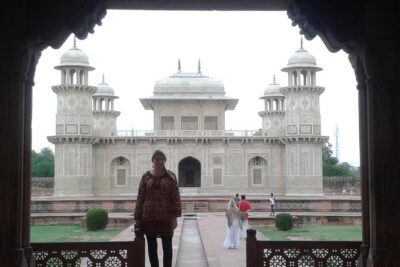
Delhi to Agra and Taj Mahal Private Day Trip by Express Train with Lunch
Read our review →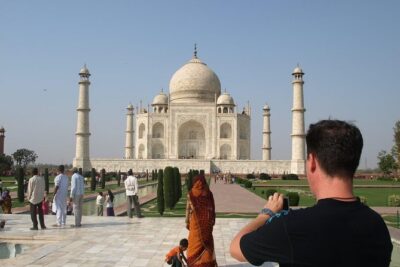
Taj Mahal & Agra Tour by Gatimaan Express Train
Read our review →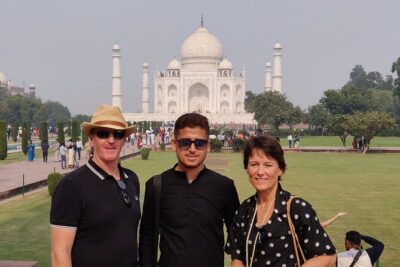
All Inclusive Taj Mahal & Agra Tour by Superfast Train From Delhi
Read our review →
Delhi to Agra Taj Mahal Private Day Trip by Superfast Train
Read our review →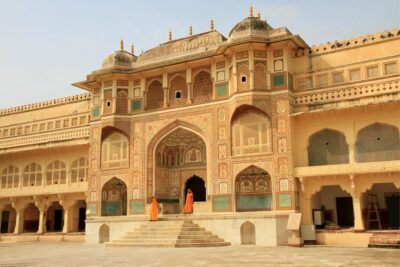
Jaipur Day Trip from Delhi by Car or Train – All Inclusive
Read our review →
Private Taj Mahal & Agra Day Tour by Superfast Train From Delhi
Read our review →Browse the lists this tour appears in