

REVIEW · RIO DE JANEIRO
Rio de Janeiro: Lapa and Santa Teresa with Tram Ride
The Santa Teresa tram is the star here. It rattles from Downtown across the old Lapa Aqueduct, then climbs into Santa Teresa, a hilltop district of cobbled lanes, studios, and old houses. I like the mix of transport and walking, and I like that the route links several of central Rio’s major sights without asking you to plan the connections yourself.
The Ruins Park views and the ornate Confeitaria Colombo are two especially good stops. The main drawback is the price: at $200 per person, this is an expensive four-hour outing, particularly since food and drinks are extra and much of the route is on foot. One booking also noted confusing English from the guide, while another praised a guide as professional and well prepared, so the quality of the guiding may vary.
Key points at a glance
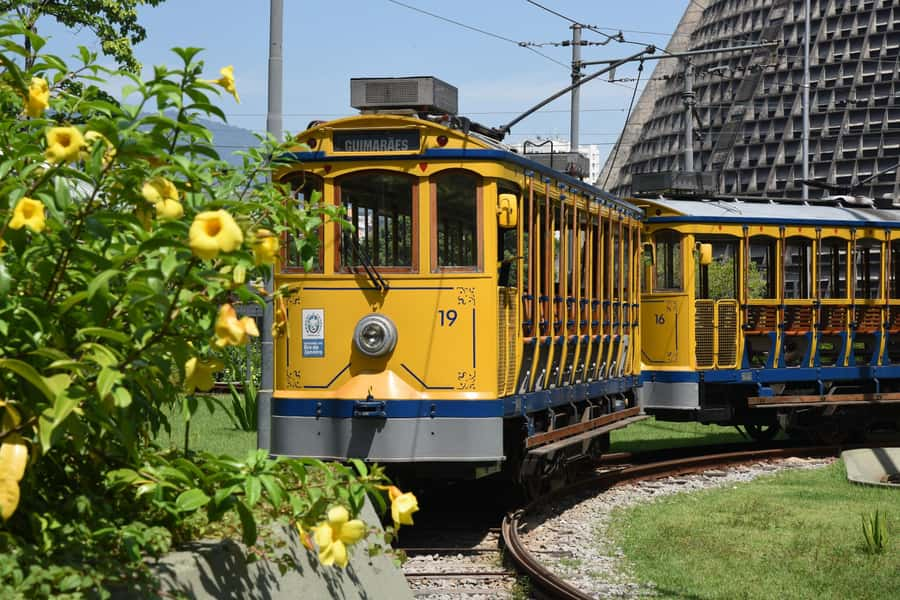
- The tram crosses the Arcos da Lapa: You get Rio’s best-known historic tram ride and a close look at the aqueduct before reaching Santa Teresa.
- Santa Teresa feels different from beachside Rio: Narrow cobblestone streets, art spaces, and a bohemian mood replace the broad avenues of Copacabana.
- Ruins Park brings the best city views: The park occupies the remains of a mansion and looks toward central Rio and Sugarloaf Mountain.
- The Selarón Steps are a hands-on sight: You descend the colorful tiled staircase rather than simply stopping for a quick photograph.
- Cinelândia adds grand public buildings: Theatro Municipal and Biblioteca Nacional give the walking route a strong architectural finish.
- Confeitaria Colombo is a polished finale: Its stained glass, mirrors, and old café setting are worth seeing, but the bill for snacks is not included.
Why the Santa Teresa tram makes this route special
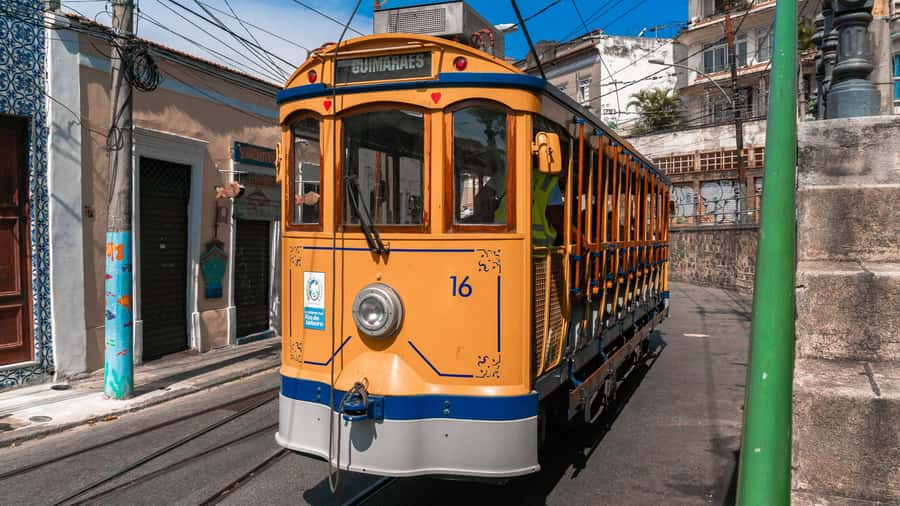
Rio is a city of dramatic contrasts. Its beaches and mountain views get most of the attention, but the center has a different character: old public buildings, street art, steep hills, and reminders of the city’s earlier years. This tour gives you a compact way to connect those parts.
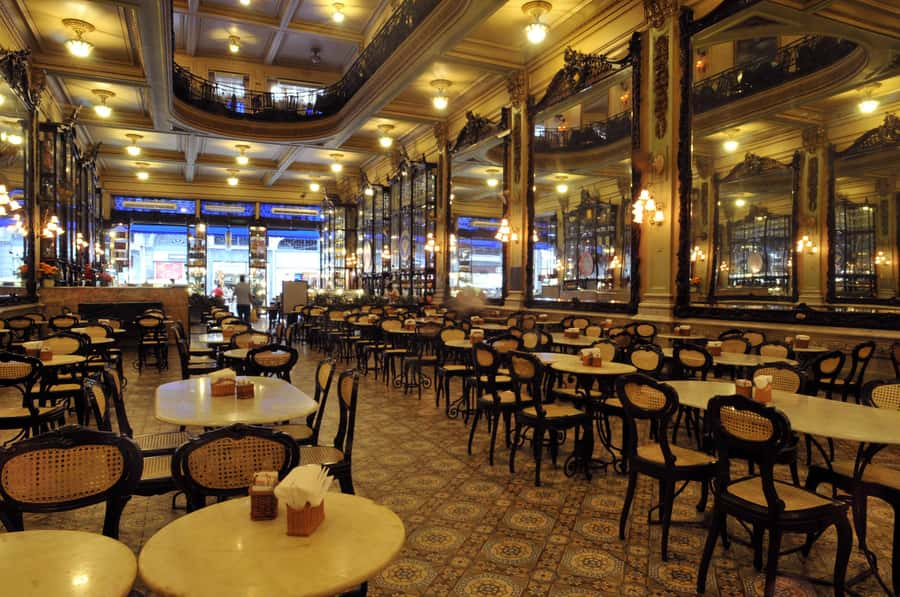
You begin in Centro and board the bondinho, the traditional tram that links Downtown with Santa Teresa. The route passes over the Arcos da Lapa, a broad white aqueduct that has become one of Rio’s most recognizable city symbols. Crossing it by tram is more memorable than viewing it from street level, because you get the odd sensation of rolling over a bridge built for water rather than rail travel.
The tram ride is not a long scenic journey through the whole city. It is one part of a four-hour program, followed by substantial walking. That matters when you set expectations. You are paying for a guided route through several neighborhoods, not for four hours seated on a tram.
The included tram ticket removes one small task from your day. Your guide handles the route and gives context in English, Portuguese, or Spanish. Since one booking described weak English and another praised a professional, well-prepared guide, I would pay close attention to the language offered when you reserve. A good guide makes the old streets and buildings much easier to understand.
More Tram and Streetcar Tours in the world:
- Mallorca: Island Tour with Boat, Tram & Train from the South
★ 4.4 · 3,888 reviews - Lisbon: 72/96-Hour Hop-On Hop-Off Bus, Tram & Boat Ticket
★ 4.4 · 2,170 reviews - From Cape Town: Franschhoek Wine Tram Hop-on Hop-off
★ 4.7 · 1,972 reviews
Santa Teresa and the charm of its steep streets
Santa Teresa has a look and pace unlike the polished waterfront districts. The streets are narrow and cobbled, and the area is known for its artistic character. The setting is often compared with Montmartre in Paris, which is a useful shorthand for its hillside position, creative atmosphere, and old-fashioned feel, though Santa Teresa remains distinctly Brazilian.
The best part is the change in rhythm. After Downtown’s formal squares and traffic, you move into a district where the street itself becomes part of the sight. You can expect uneven paving and inclines, so comfortable shoes are sensible. The supplied details do not specify accessibility arrangements, and the route includes tram boarding, cobblestones, stairs, and walking between several areas.
Do not expect a long stop at every location. Four hours must cover the tram ride, Santa Teresa, Ruins Park, the Selarón Steps, Passeio Público, Cinelândia, and Confeitaria Colombo. The guide will keep the group moving, which is useful for seeing a lot but may leave you wishing for more time in one or two places.
The tour is strongest for a first look at central Rio. You get enough time to understand the shape of these neighborhoods, then you can return later to spend longer at the places that catch your eye.
Ruins Park and the view toward Sugarloaf
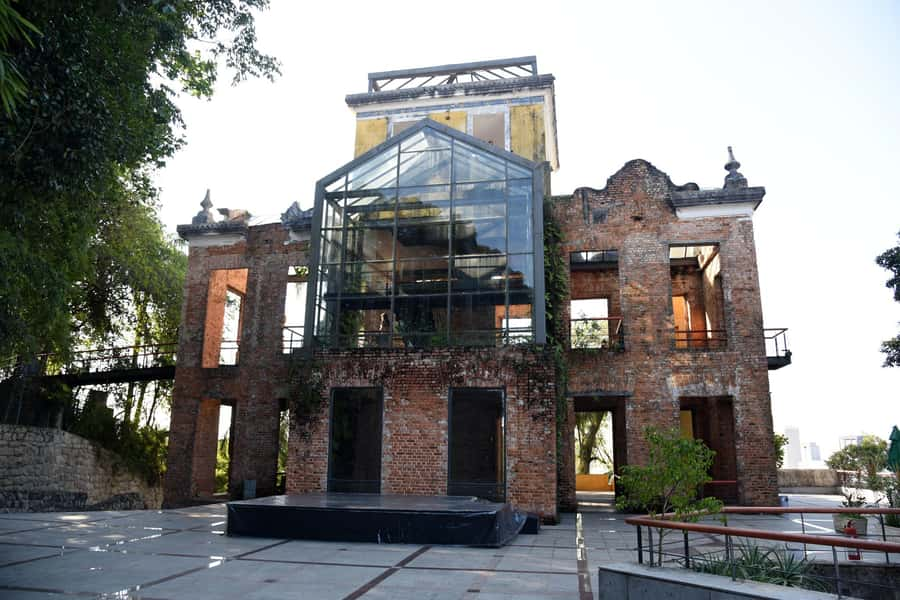
Ruins Park is one of the most unusual stops. It occupies the remains of a historic mansion and includes an art gallery within the old structure. Instead of a restored palace with polished rooms, you see fragments of a former home turned into a public place.
That unfinished quality gives the stop its appeal. Walls, openings, and terraces frame the city below. From here, you can take in central Rio and views toward Sugarloaf Mountain. The view adds something the tram and street walk cannot: a sense of how the old hill districts sit above the city.
I like this stop because it brings together architecture, public art, and geography. It is also a useful pause in a route that otherwise concentrates on streets and buildings. If you enjoy taking photographs, this is likely one of the better places on the itinerary, though the exact amount of time available depends on the guide’s pace and the day’s conditions.
Ruins Park is not presented as a large museum visit. Think of it as a short cultural stop with an open-air setting and a city outlook. The art gallery is part of the location, but the tour information does not specify an exhibition schedule or the length of the gallery visit.
Walking down the Selarón Steps
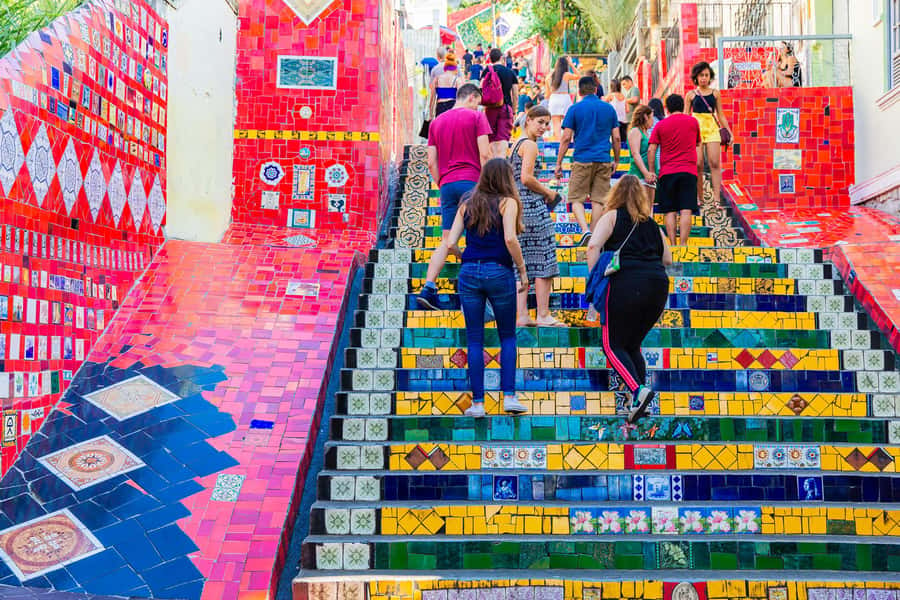
The Selarón Steps are the route’s most colorful sight. The staircase is covered in a mosaic of tiles and is one of the places where Rio’s street art and public life meet. Here, you descend the steps rather than simply viewing them from a nearby corner.
That direction is worth noting. Going down gives you a clear sense of the stairway’s changing patterns as you move through it. The stop is likely to be popular and lively, so your guide’s meeting instructions matter. Stay close enough to hear the explanations and to keep the group together.
The staircase is a strong photo stop, but it is also a working public passage rather than a private attraction. You are seeing a real part of Lapa, with people moving through the area. I prefer that quality to a polished display behind barriers, though it means you should not expect a quiet, carefully controlled visit.
The route then brings you into Lapa, known for nightlife and for the Arcos da Lapa. The neighborhood looks different during the day than it does after dark, but the tour gives you a useful introduction to its streets and public spaces without making nightlife the focus.
More Train Tours in the world:
- Bangkok: Damnoen Saduak Market and Maeklong Railway Market
★ 4.5 · 26,723 reviews - Mt Fuji and Hakone 1-Day Bus Tour Return by Bullet Train
★ 5.0 · 26,383 reviews - The Old Siam: Damnoen Saduak and Maeklong Railway Market
★ 4.5 · 10,992 reviews - Bangkok: Train Market & Floating Market with Boat Ride
★ 4.7 · 9,547 reviews
Passeio Público and the grand center of Cinelândia
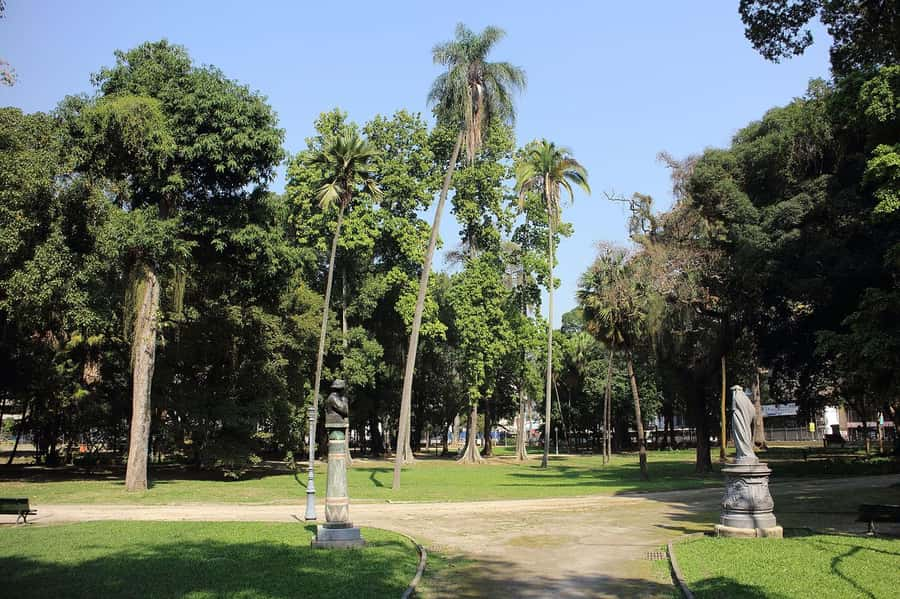
Passeio Público is described as South America’s oldest public park. That gives the stop more weight than a simple green break. It is part of Rio’s early urban story and offers a change from the tiled stairway, old aqueduct, and stone lanes.
You continue toward Cinelândia, one of central Rio’s major public squares. Here, the architecture becomes grander and more formal. Theatro Municipal and Biblioteca Nacional are among the key buildings you will see. Their scale helps explain the civic ambitions of early twentieth-century Rio.
This part of the walk is valuable because it broadens the tour beyond Santa Teresa’s artistic style. You see two versions of the city close together: the informal, creative hill district and the official center built around theaters, libraries, and public institutions.
The itinerary does not include entrance tickets for these buildings, so expect exterior viewing unless your guide says otherwise. That is not a flaw, but it is important if you hoped for an indoor theater or library visit. The tour is designed as a guided city walk, not a series of interior museum admissions.
Confeitaria Colombo, an elegant final stop
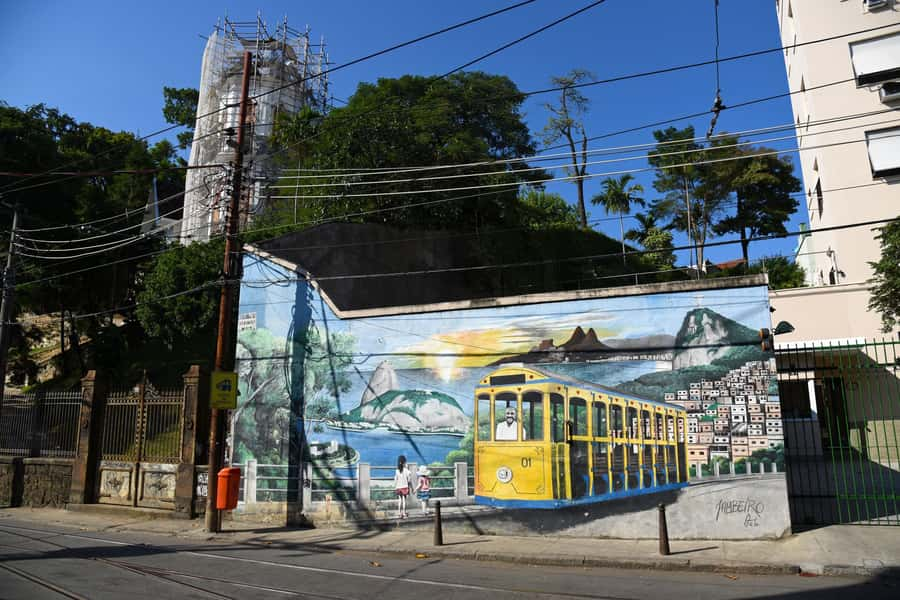
The tour ends at Confeitaria Colombo, one of Rio’s best-known historic cafés. Its interior is the payoff for anyone who enjoys old commercial spaces. The décor includes Art Nouveau details, stained glass, and mirrors from France, Portugal, and Belgium.
The café dates to the early twentieth century and gives the final part of the tour a more refined mood. After the rough paving of Santa Teresa and the open public spaces of Lapa, you finish among polished surfaces and elaborate decoration.
Food and drinks are not included. You can order traditional Brazilian sweets and snacks such as coxinha de frango, a small chicken-filled savory pastry, or brigadeiro, a chocolate confection made in the style of a soft truffle. These are good choices if you want a taste of familiar Brazilian café food, but you should budget separately.
Confeitaria Colombo is closed on Sundays. This is the most important scheduling detail in the whole itinerary. If you book for Sunday, the planned café finale cannot take place as described, so check what replacement arrangement is offered before paying.
The café stop is also a good example of the tour’s value question. Seeing the interior as part of a guided route can be convenient, but you do not need a $200 tour to visit a café on another day. The price makes more sense if you want the café included in a wider, guided tour of Santa Teresa, Lapa, and Cinelândia.
What $200 buys you in four hours

The cost is the weak point. At $200 per person, this is far above the price of exploring central Rio independently. You could arrange local transport, walk around the public sights, and buy a snack at Confeitaria Colombo for much less.
The tour earns part of that premium through convenience. Hotel pickup and drop-off are included from hotels in Copacabana, Leme, Ipanema, Leblon, and Barra da Tijuca. You do not have to work out how to reach Centro, find the tram, connect the neighborhoods, and return to your hotel.
The guide also gives the route structure. That matters in central Rio, where the attractions are spread across different streets and districts. You can spend four hours following a planned path rather than losing time on transport decisions.
Still, the value depends on what you need. If you enjoy researching routes, using public transport, and stopping whenever you wish, the price will feel hard to defend. If you have limited time, want hotel transfers, and prefer a guide who can connect the sights in three languages, the convenience may justify more of the cost.
The $200 price does not include food or drinks. The Santa Teresa tram ticket is included, as is the live guide. The tour lasts four hours, with starting times subject to availability.
Who will get the most from this tour

I would choose this outing if I wanted a guided introduction to Rio’s central neighborhoods rather than another beach or mountain excursion. It is especially useful on a first visit, when the city’s older districts can feel scattered and difficult to organize.
It suits you if you enjoy:
- Historic transport and city architecture
- Short walks with several different stops
- Street art and colorful public spaces
- Views toward Sugarloaf Mountain
- Cafés, old interiors, and Brazilian snacks
- A guide speaking English, Portuguese, or Spanish
It may not suit you if you want a relaxed café morning, a long tram journey, or plenty of free time at each sight. The route packs a lot into four hours, and the walking surfaces are not described as smooth or step-free.
Families with older children may enjoy the tram and Selarón Steps, while younger children may find the amount of walking tiring. Since no age guidance or accessibility details are provided, ask the operator before booking if those points are important for your group.
Practical details before you book
Hotel pickup and drop-off cover the South Zone areas of Copacabana, Leme, Ipanema, and Leblon, plus Barra da Tijuca. If you stay elsewhere, the supplied information does not confirm a transfer option, so check before you reserve.
The tour has free cancellation up to 24 hours before departure for a full refund. You can also reserve and pay later, which helps if your Rio schedule is still changing.
The guide languages are Portuguese, English, and Spanish. Since language quality may differ from one guide to another, select your preferred language carefully and confirm it during booking.
Wear shoes suited to cobblestones and stairs. Keep some money available for food and drinks at Confeitaria Colombo. If your date is Sunday, confirm the final stop, since the café is closed that day.
Should you book the Lapa and Santa Teresa tour?
Book it if you value structure, hotel transfers, and a guide who can connect Rio’s central sights in one half-day. The tram over the Arcos da Lapa, the Ruins Park view, Selarón Steps, Cinelândia, and Confeitaria Colombo make a varied route with plenty to see.
Skip it if $200 feels too high for a guided walking tour, or if you prefer exploring at your own speed. The itinerary is easy to appreciate, but the price is a serious consideration. For the best value, book on a non-Sunday date, confirm your guide language, and treat the tour as a convenient orientation to central Rio rather than a full museum or food tour.
FAQ
How long does the tour last?
The tour lasts four hours.
What languages are available?
Live guides are available in Portuguese, English, and Spanish.
Is hotel pickup included?
Hotel pickup and drop-off are included for hotels in Copacabana, Leme, Ipanema, Leblon, and Barra da Tijuca.
Is the Santa Teresa tram ticket included?
Yes. The ticket for the Santa Teresa tram is included.
Are food and drinks included?
No. Food and beverages are not included. You can order items separately at Confeitaria Colombo.
Is Confeitaria Colombo open every day?
The café is closed on Sundays. Check the arrangements for Sunday bookings before reserving.
Can I cancel for a full refund?
Yes. You can cancel up to 24 hours in advance for a full refund.
Can I reserve now and pay later?
Yes. The tour offers a reserve-now, pay-later option.
Just added around the world
- Zurich: Audio Guided City Tour and Train to “Top of Zurich”★ 4.2 · 65 reviews
- Zermatt Village & Gornergrat Railway Tour | From Bern★ 5.0 · 2 reviews
- Zagreb: Plitvice With Secured Tickets, Boat And Train Ride★ 4.6 · 15 reviews
- Zagreb: Private Walking Tour with Funicular Ride & Transfers★ 5.0 · 2 reviews
- Xi’an: Maiji Grottoes & Fuxi Temple Day Trip by Bullet Train★ 5.0 · 2 reviews
- Zagreb: Group walking tour of Zagreb (funicular included)★ 4.9 · 16 reviews
- York Day Rail Tour from London including Hop-on Hop-off tour★ 5.0 · 3 reviews
- Winter Tour Viking Village, Nærøyfjord Cruise & Flåm Railway★ 4.6 · 26 reviews
Rio De Janeiro Train Tours, compared.

Christ the Redeemer Entry Ticket by Corcovado Train
Read our review →
Santa Teresa, Lapa, and Cinelândia with Tram Ride and Selarón Steps
Read our review →
Rio: Christ Redeemer by Train & City Highlights Morning Tour
Read our review →
Rio: Maracanã Stadium & Christ the Redeemer by Rack Railway
Read our review →
City Tour Full VIP – Corcovado Train + Churrascaria Rodízio
Read our review →

Rio de Janeiro Christ Redeemer by train Sugar Loaf Private
Read our review →
Browse the lists this tour appears in