
REVIEW · AUSTRALIA
Rottnest Island Grand Tour Including Lunch and Historical Train Ride
Rottnest Island’s best feature is its variety. In four hours, you move from a historic train ride and WWII tunnels to salt lakes, white beaches, sea cliffs, and quokka country. I like that the tour gives you a broad look at the island without asking you to cycle its hills in the heat. I also like the guides’ personal touch, with names such as Kevin, Jason, Robbo, and Bob singled out for lively stories and clear explanations.
The main catch is timing. The train can be crowded or occasionally unavailable, and ferry schedules do not always line up neatly with the 11:30 a.m. start. The lunch is useful rather than memorable, and you should not expect long swimming or beach breaks.
Key points to know before you book
- Historic train to Oliver Hill: Ride up to the battery before touring its WWII guns and narrow tunnels.
- Air-conditioned island circuit: Cover beaches, salt lakes, woodlands, lighthouses, and coastal lookouts without cycling.
- Quokka search included: You may see these famous marsupials around the settlement and in the wild, although sightings are not guaranteed.
- Lunch is simple: The included box generally consists of a sandwich or chicken wrap, a cookie, and water may not always be supplied.
- Ferry tickets are separate: You must arrange your own boat to Rottnest Island and allow time to reach the train station.
- Narrow stairs matter: The train and tunnel portion includes steps and is not suitable for people who have difficulty descending narrow stairs.
Why this tour makes sense on a first Rottnest visit
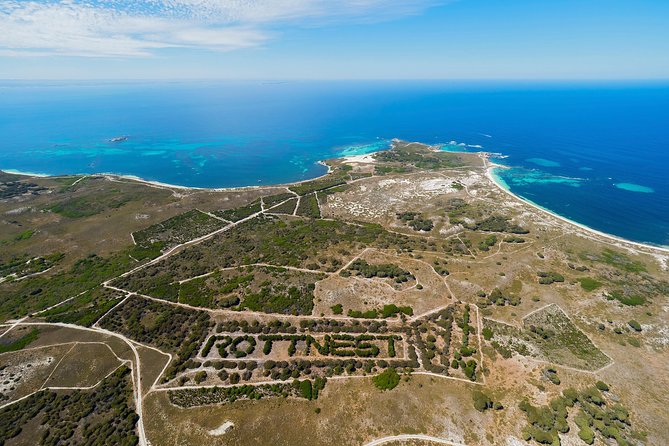
Rottnest Island is easy to underestimate. On a map, it can look like a place you simply reach by ferry, hire a bike, and circle in an afternoon. In practice, the roads rise and fall, the sun can be strong, and the island’s best sights are spread well beyond the main settlement.
This tour solves that problem with a historic train, an air-conditioned bus, and a guide who explains what you are seeing. You still get the famous beaches and quokkas, but you also hear about Aboriginal Noongar culture, military defenses, shipwrecks, salt lakes, and the island’s working lighthouse.
I see it as an introduction rather than a complete day at the beach. You will look at many bays from the coach and stop at key viewpoints, but you will not have time to swim at every attractive cove. If you have only one day on Rottnest, this is a practical way to understand the whole island before deciding where to return.
The group can have up to 34 people. That is small enough for a guide to speak clearly, but it is not a private tour. Expect a shared coach, scheduled stops, and a set route.
More Trips with Lunch in Australia:
- Rottnest Island: Grand Bus and Train Tour with Lunch
★ 4.6 · 106 reviews - Classic Kuranda by Skyrail and Scenic Railway, Rainforestation & lunch. CKB
★ 4.5 · 105 reviews - Montserrat & Cogwheel Train, Gourmet Wine Tasting & Tapas/Lunch
★ 5.0 · 6,290 reviews
Getting from the ferry to the 11:30 start
You make your own way to Rottnest Island, then meet the tour at Rottnest Island Train Station on Brand Way. The tour begins at 11:30 a.m. and ends at the main bus stop in the settlement, where Quokka Coaches operates.
This makes your ferry choice important. Ferry transport is not included, and boat arrival times do not always fit comfortably with the tour departure, particularly during busy periods. Arrange your ferry in advance and allow enough time to walk from the arrival area to the train station.
The meeting point has caused some confusion for people arriving without clear directions. If you are unsure, the island information center can point you toward the station. I would not leave this until the last minute, since a late ferry or a wrong turn can cut into the train portion.
The return boat is also your responsibility. Check the final tour timing against your ferry booking before you commit. The tour returns to the settlement area, not directly to a ferry vessel.
The train ride and Oliver Hill Battery
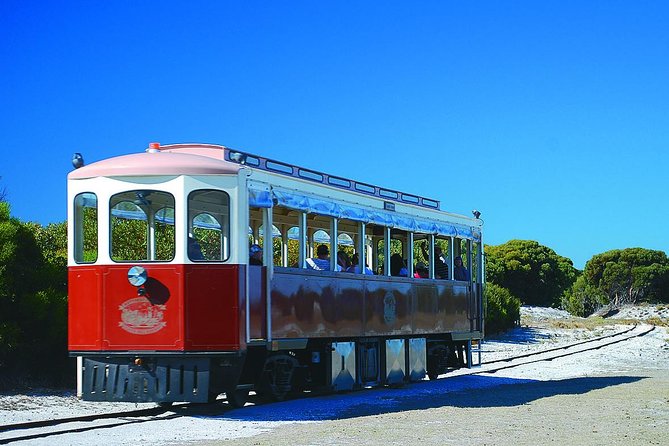
The tour begins with the most distinctive transport of the day: a historic trolley train to Oliver Hill. The train ride gives the outing a sense of occasion and avoids a long uphill walk. Commentary from the driver helps explain the island as you travel.
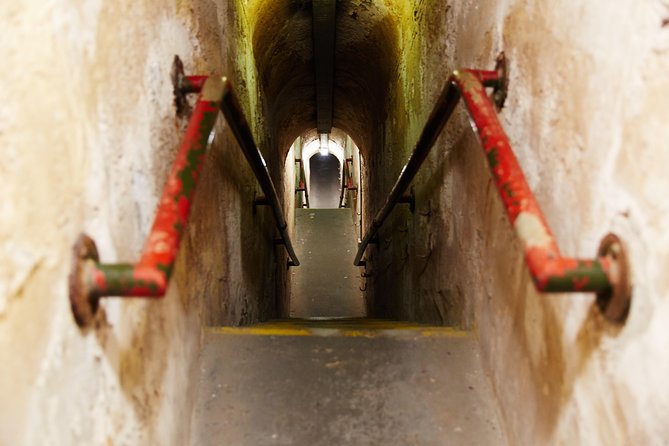
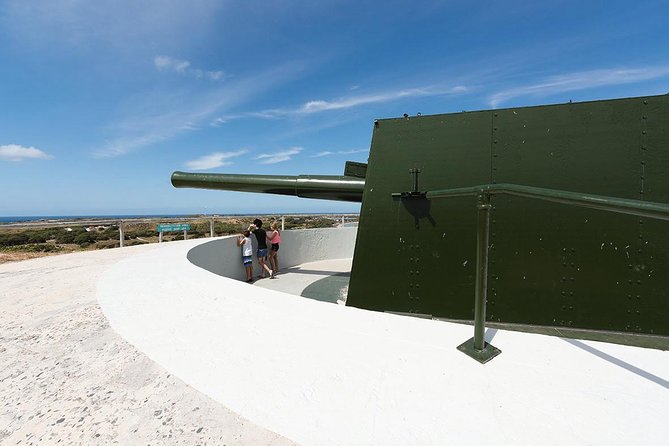
At Oliver Hill, you join a guided visit to the battery, a WWII defense site built to protect Western Australia. The stop lasts about an hour and includes the guns, fortifications, and tunnels. Guides such as Sara and Garry have been praised for making the military story clear and adding useful anecdotes rather than simply pointing at old machinery.
This is the most physically demanding part of the outing. The tunnel section includes a series of steps and narrow stairs. You should be comfortable descending in confined spaces, and the operator does not recommend this part for people with mobility issues or difficulty on stairs.
The site is worthwhile even if military history is not your main interest. The guns and tunnels give Rottnest a different character, showing that the island was not only a holiday setting but also part of Australia’s coastal defense system. Still, the tunnel visit may feel slow if you prefer scenery and wildlife to historical sites.
There is one practical uncertainty: the train may be crowded because additional tickets can be sold to people who are not taking the full grand tour. On some dates, mechanical problems have forced the operator to replace the train ride with a bus transfer. That means the train is a highlight, but not an absolute guarantee.
Salt lakes, woodlands, and the island’s inland side

After Oliver Hill, the coach crosses parts of Rottnest that many casual visitors miss. Salt lakes cover roughly 10 percent of the island, with names such as Lake Baghdad, Lake Vincent, Herschel Lake, Garden Lake, Government House Lake, and Serpentine Lake.
You see these areas from the road as the guide explains the island’s natural features and native plants. The coach route also passes through woodland and other habitats, giving you a sense of how much more there is here than beaches.
This portion is valuable because it connects the island’s scenery with its ecology. It is not a series of long walks, though. If you want to study each lake closely or photograph every shoreline, the fixed schedule will feel too quick.
The guides add much of the value here. Kevin has been praised for combining facts with personal stories from island life, while Jason and Bob have been noted for a good balance of information and humor. Robbo has also been described as friendly and generous with facts. Guide quality can vary by departure, but the tour clearly depends on the driver’s commentary to bring the passing scenery to life.
More History Trips in Australia:
- Puffing Billy Railway: Heritage Steam Train Journey
★ 4.6 · 1,195 reviews - Rottnest Island Historical Train and Tunnel Tour from Hillarys Boat Harbour
★ 4.0 · 20 reviews - Port Douglas: World Heritage Forest by Skyrail & Scenic Rail
★ 4.2 · 10 reviews - Blue Mountains: Zig Zag Railway Heritage Train Ride
★ 4.6 · 7 reviews
Lunch, Jeannies Lookout, and the coastal views
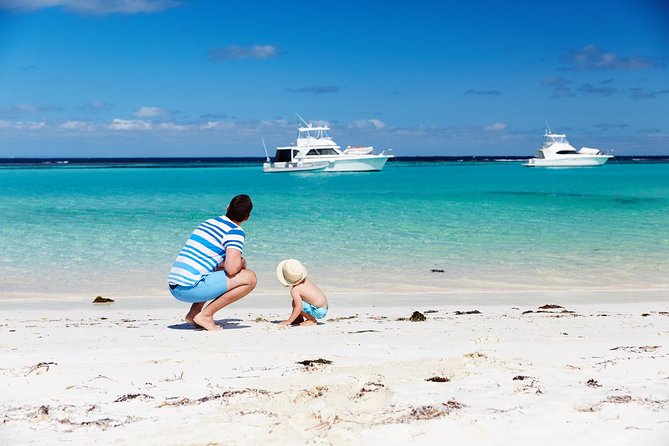
A light lunch is included before the coach continues around the island. The usual meal is a sandwich or chicken wrap, with a cookie and, according to the tour details, bottled water. The food is best understood as fuel between stops, not a destination meal.
The wrap has been inconsistent. Some lunches have been fresh and filling, while others have contained too much lettuce and little chicken. If you have dietary needs, check what can be provided before booking rather than assuming the standard box will suit you.
Rain can also change how lunch works. On one wet outing, people ate on the moving coach, which made handling a wrap and water awkward. In better weather, a proper pause is more comfortable, but you should still bring your expectations down to a simple packed lunch.
After lunch, Jeannies Lookout provides broad ocean views and a look at the fringing reef. This is the kind of stop that makes the bus worthwhile. You get a clear sense of the water around Rottnest without having to ride a bicycle from one headland to the next.
The tour includes regular photo opportunities, but they are generally short. Keep your camera ready, listen carefully when the guide gives the return time, and do not assume every beach stop is long enough for a swim.
Lighthouses, cliffs, and Mabel Cove
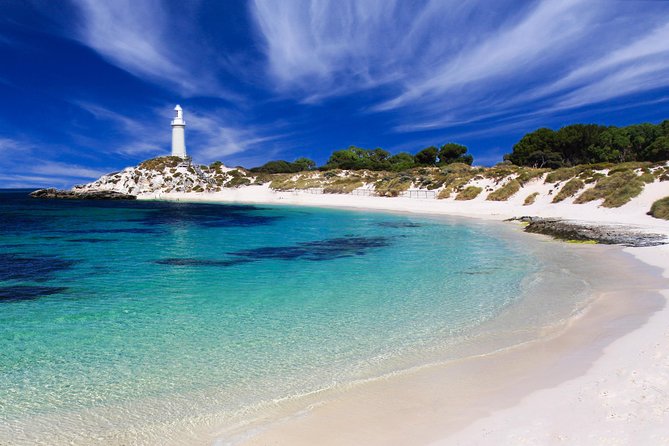
The coach passes the island’s historic lighthouse, built in 1896 and still operating. Its range is listed as 26 nautical miles. You may see it from the bus rather than receive a long visit, so this is more of a scenic and historical pass-by than a full lighthouse tour.
One of the more rewarding stops is the viewpoint at Mabel Cove, where you look toward the cliffs and the formation known as Crocodile Rock. The stop lasts about 15 minutes. That is enough for photographs and a quick look, but not enough for a leisurely coastal walk.
The route also takes in Cathedral Rocks and Cape Vlamingh. These stops bring the tour to the island’s exposed western side, where the views are especially open and dramatic. You can expect commentary on maritime history, coastal features, and the island’s wildlife.
Henrietta Rocks adds another historical layer. The area is associated with the location of the Henrietta shipwreck, linking the scenery to Rottnest’s dangerous and busy maritime past. You will not be spending hours at the site, but the guide helps turn a passing stretch of coast into a story.
One small warning: a beach or lookout stop can be easy to misunderstand. At least one group thought it had time to remain at a beach until 3:30 p.m., only to find that the coach was leaving at 3:17. Treat every stop as a timed photo break unless the guide clearly says otherwise.
Finding quokkas without making promises
The quokka is the island’s star animal, and the tour gives you several chances to look for one. These small marsupials are often seen around the settlement, and you may also spot them in the wild as the bus moves through the island.
Wildlife is never guaranteed. Some people see quokkas, birds of prey, osprey nests, and other native animals, while others find few away from the village. The most reliable area is around the settlement later in the day, where quokkas are often easier to find.
Keep your distance and avoid feeding them. The point is to see them behaving naturally, not to turn the encounter into a photo session at any cost.
The wildlife search works best when you treat it as one part of the day. You are also getting salt lakes, coastal cliffs, beaches, and historical sites. That mix protects the tour from becoming disappointing if the quokkas decide to stay out of sight.
What the price includes, and what it does not
At $78.18 per person, the tour offers reasonable value if you want transport, commentary, the train, the Oliver Hill visit, and lunch in one package. Hiring a bike and riding independently may offer more freedom, but it requires more effort and does not provide the same continuous explanation of the island’s history and habitats.
The air-conditioned coach is a major part of the value on a hot day. Rottnest is not flat, and cycling between distant bays can be tiring. If you are not a confident cyclist, are visiting with mixed fitness levels, or want to avoid planning a route, the coach removes a lot of work.
You are paying for coverage rather than freedom. You will see much of the island, but you cannot choose to stay for an hour at your favorite beach. The lunch is modest, and drinks beyond the supplied water are not included.
The train and tunnel visit add the most unusual value. If the train is running, it gives the tour a memorable start. If it breaks down, the operator may use a bus instead, and some outings have not included compensation for the lost train experience. Consider that before booking if the historic train is your main reason for going.
Who will get the most from this four-hour tour
I would recommend this outing to first-time visitors who want a strong overview without cycling. It also suits families, older visitors who prefer not to ride, and anyone with only one island day who wants to see the main sights in comfort.
It is useful for people interested in both nature and history. The beaches and wildlife keep the day light, while Oliver Hill, Henrietta Rocks, the lighthouse, and Aboriginal heritage give the island more depth.
I would think twice if your priority is swimming, snorkeling, or spending quiet hours at one bay. The schedule is too tight for a relaxed beach day. Cyclists who enjoy setting their own pace may also find the coach restrictive.
Bring sun protection, comfortable shoes, and a water bottle. The tour includes a light lunch, but water availability has not always met expectations. Wear shoes you can manage on narrow stairs and uneven ground around the battery.
Should you book the Rottnest Grand Tour?
Book it if you want to see the island’s main character in one organized half-day: military history, salt lakes, cliffs, beaches, wildlife, and a historic train. The guides can add real value, especially when they share local stories rather than only reciting facts.
Do not book it expecting a full beach holiday or a guaranteed train ride. Confirm your ferry times, arrive early at the train station, and accept that lunch is basic and stops are timed.
For a first visit, especially without a bike, I think the tour is a solid choice. It gives you the island’s broad outline and leaves you better placed to return for a swim, walk, or longer quokka search.
FAQ
How long does the Rottnest Island Grand Tour last?
The tour lasts approximately four hours.
What time does the tour start?
The tour starts at 11:30 a.m.
Where does the tour begin?
You meet at Rottnest Island Train Station on Brand Way, Rottnest Island, Western Australia.
Where does the tour finish?
The tour ends at Quokka Coaches at the Settlement Main Bus Stop on Rottnest Island.
Is ferry transport included?
No. You must book and pay for your own ferry transport to and from Rottnest Island.
Is lunch included?
Yes. A light boxed lunch is included. It generally consists of a sandwich or wrap and a cookie. Drinks beyond what is supplied are not included.
Does the tour include the historic train ride?
Yes. The planned tour includes a historic train ride to Oliver Hill. The train may be crowded or unavailable if mechanical problems occur, in which case a bus transfer may be used.
Is the tour suitable for people with mobility issues?
The tour requires a moderate level of physical fitness. The train and tunnel section includes steps and narrow stairs, so it is not recommended for people who have difficulty descending stairs or managing confined areas.
Can I cancel for a full refund?
Yes, if you cancel at least 24 hours before the local start time. Cancellations or changes made less than 24 hours before departure are not accepted for a refund. If poor weather or an insufficient number of bookings causes the operator to cancel, you will be offered another date, another experience, or a full refund.
Just added around Australia
- Kalgoorlie Heritage Tram City Highlights Tour★ 5.0 · 2 reviews
- Koala & Kangaroos Experience, Waterfalls and Scenic Train Journey★ 5.0 · 67 reviews
- Rottnest Island Oliver Hill Train & Tunnel Tour★ 4.5 · 24 reviews
- Kuranda, Scenic Rail, Skyrail and Hartley’s Crocodile Adventures★ 4.0 · 20 reviews
- Hartley Crocodile Park with Kuranda, Skyrail Cableway and Train★ 5.0 · 6 reviews
- Kuranda Scenic Railway Day Trip from Port Douglas★ 4.5 · 61 reviews
- Melbourne Puffing Billy Train and Penguin Parade Day Tour Escape★ 3.0 · 4 reviews
- Rottnest Island Historical Train and Tunnel Tour from Hillarys Boat Harbour★ 4.0 · 20 reviews
Australia Train Tours, compared.
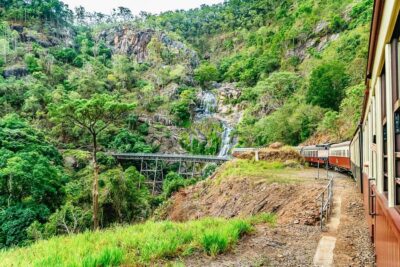
Self-Guided Kuranda Trip with Train and Skyrail
Read our review →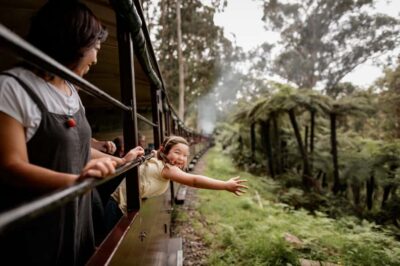
Puffing Billy Railway: Heritage Steam Train Journey
Read our review →
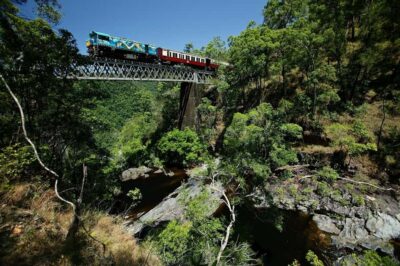
Skyrail, Kuranda, and Rail Tour with Hotel Transfers
Read our review →
Grand Kuranda including Skyrail and Kuranda Scenic Railway
Read our review →
Skip the Line Kuranda Scenic Railway Gold Class and Skyrail Rainforest Cableway
Read our review →Browse the lists this tour appears in