
REVIEW · TOKYO
Train in Samurai Swordsmanship and Defeat the Demon in Tokyo
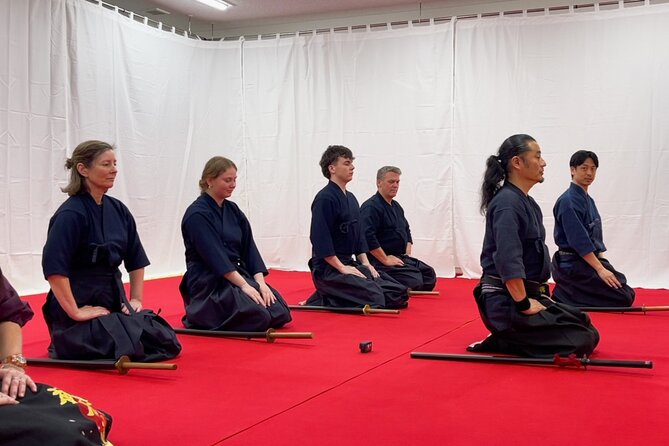
The highlight here is the live samurai training, not a staged sword show. Over about two hours, you learn etiquette, breathing, posture, strikes, blocks, and focus before facing an oni in a theatrical final trial. I like the small group limit of six and the fact that the session is fully in English.
I also like the personal touches: you wear a rented samurai uniform, enjoy matcha and Japanese sweets, take a commemorative photo, and receive a scroll with your name. The main consideration is that this is a symbolic, story-driven activity rather than a full martial arts course, so serious sword students may want more technical depth.
Key points to know before booking
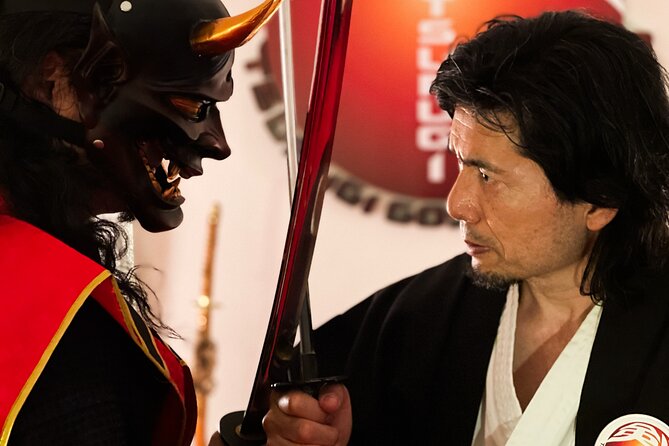
- Train before you battle: The session teaches basic offensive and defensive movements before the final oni scene.
- A small group of six: The size should give the instructor room to guide each participant.
- English-friendly instruction: The lesson covers sword skills, Bushido, and samurai history in English.
- A story with four chapters: The experience moves from Prologue to Training, Battle, and Recognition.
- Useful keepsakes: You receive a personalized scroll and a commemorative samurai photo.
- Good for families and couples: The activity is built around participation, not watching from the sidelines.
A samurai story in the heart of Tokyo
This experience takes place at the International Goshin-Budo Association in Kojimachi, Tokyo. It begins with a simple fantasy setup: an oni, or demon, has returned after being sealed away in ancient times, and the Tsurugi Samurai Squad needs new warriors.
That story gives the activity a clear shape. You are not just handed a sword and asked to repeat movements. You are placed inside a short adventure about fear, courage, and self-control. The demon represents inner weakness as much as an outside enemy, so the final battle is meant to feel symbolic rather than violent.
I think this approach works best for people who want a memorable cultural activity with some theater mixed in. It gives children and first-time participants a reason to pay attention to the lesson. At the same time, the instructors still present actual sword-related basics, including posture, breathing, blocks, and controlled strikes.
The tone is likely more playful than solemn. That is useful to know before you reserve. You are booking a participatory story with martial arts instruction, not a museum lecture or a formal combat qualification.
More Train Tours in Tokyo:
- Mt Fuji and Hakone 1-Day Bus Tour Return by Bullet Train
★ 5.0 · 26,383 reviews - Mt Fuji & Hakone Cruise, Drum Show Bullet Train 1 Day from Tokyo
★ 4.0 · 7,413 reviews - Tokyo Mt Fuji 5th St & Hakone Cruise Bus Tour w/Bullet Train
★ 4.4 · 5,024 reviews
Prologue: yokai, oni, and the Night Parade
The opening chapter introduces the Japanese idea of yokai and oni, supernatural beings that appear in legends and nighttime stories. The experience connects this theme to Hyakki Yakō, the Night Parade of a Hundred Demons, an old image of supernatural creatures moving through the night.
This opening matters because it places the sword lesson inside Japanese folklore. You get a reason for the demon to appear, and the activity gains a clear sense of place without requiring a long history talk.
The story then introduces the Tsurugi Samurai Squad as the guardians who once sealed the oni. You are invited to join their trial and learn the skills needed to face it. That framing should be easy to follow for English speakers, since the activity is conducted in English and the narrative has a direct beginning, middle, and end.
If you prefer a quiet, academic lesson on Japanese sword schools, this opening may feel theatrical. If you like role-playing and want an activity that keeps younger family members engaged, it gives the two-hour session extra energy.
Training: posture, breathing, and controlled sword work
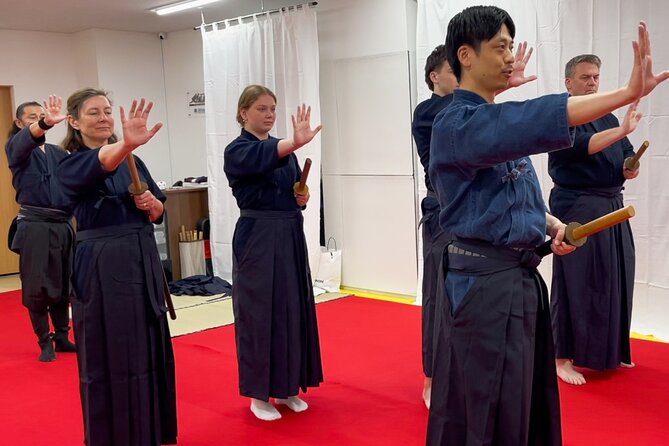
The central lesson covers the foundations of samurai swordsmanship. You learn etiquette, breathing, posture, focus, strikes, and blocks. These are useful elements for a beginner because they show that sword work is not only about swinging a blade.
The emphasis on breathing and posture also gives the class a broader message. You are asked to calm your mind, control your body, and make deliberate movements. That connects to the activity’s presentation of Bushido, or the samurai code of conduct, as a discipline of attention and courage.
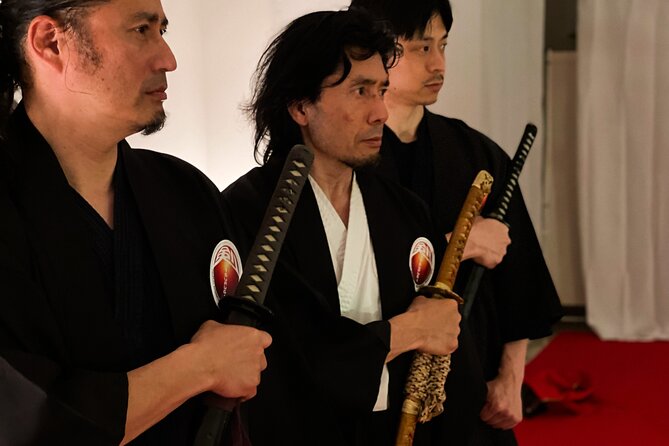
A live sword demonstration by the instructor is included. This gives you a visual reference before attempting the movements yourself. You can see the difference between a demonstration and a casual costume activity, even though the whole event remains accessible to newcomers.
You wear a samurai uniform during the lesson. That adds to the atmosphere and makes the photos more fun, but it also helps mark the change from ordinary sightseeing to the role-play portion of the session. The uniform is rented for the class, so you do not need to bring special clothing.
The group limit is six people. That is one of the strongest practical features. A large class can turn a hands-on lesson into a line of people waiting for a turn, while a group of six gives the instructor a better chance to watch your stance and movements. The available information does not promise private instruction, but the small cap should make the session feel more personal than a large group show.
Building skills before the final trial
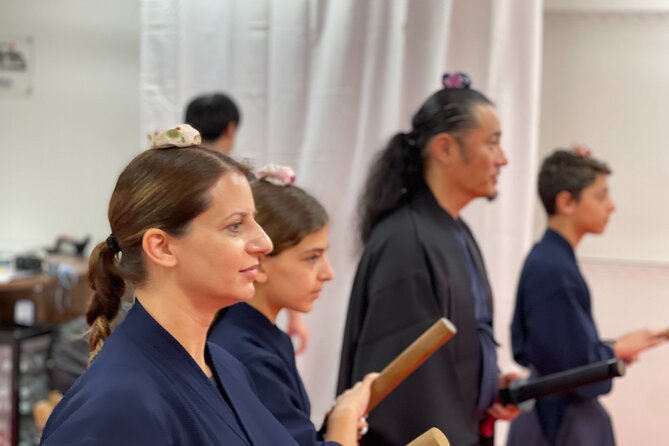
The lesson appears to build toward a sequence rather than present unrelated exercises. You first learn the basic movements, then combine offensive and defensive techniques in the final challenge.
That progression is important for beginners. You do not need previous sword experience to understand what you are meant to do. The activity is designed to let you learn a few clear skills and then use them in a dramatic setting.
The language also helps make the lesson approachable. An English guide explains sword skills, Bushido, and samurai history, so you are not left trying to copy movements without context. English-speaking families and couples can take part together without needing Japanese language ability.
The instructors also stress that the test is about courage rather than raw strength. That can make the class less intimidating for people who have never tried a martial arts activity. One person can enjoy the physical challenge, while another may prefer the breathing, focus, costume, and story.
I would not book this expecting to master authentic combat techniques in two hours. The time is enough for an introduction and a memorable routine, not a deep course in swordsmanship. Think of it as a guided first lesson with a strong theatrical finish.
Same tracks, a very different ride:
- From Tokyo: Mt. Fuji & Hakone Tour w/ Return by Bullet Train
★ 4.2 · 1,278 reviews - From Tokyo 1-Day Kyoto English-guided Tour by Bullet Train
★ 4.0 · 376 reviews - Mt. Fuji and Hakone Day Trip From Tokyo with Bullet Train Option
★ 4.0 · 368 reviews - Tokyo: Kamakura & Enoshima Day Tour with Pickup & Train Ride
★ 4.1 · 61 reviews
Battle: facing the returning oni
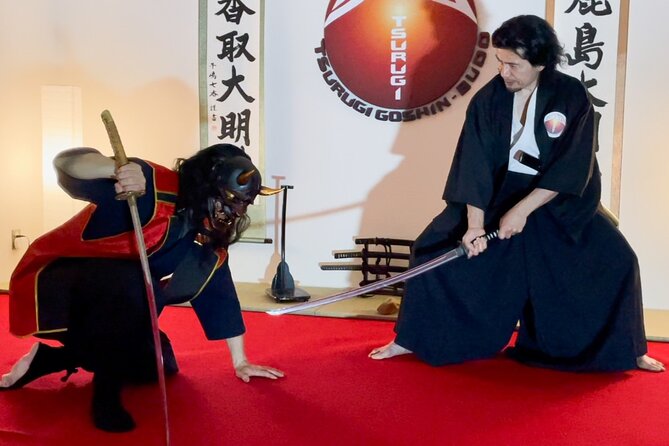
The final battle is the activity’s main payoff. After training, you confront the demon in a symbolic clash of spirit and shadow. You use the skills introduced earlier, bringing together the strikes, blocks, posture, and focus from the lesson.
The wording suggests a staged encounter rather than a dangerous fight. That makes it suitable for a broad range of participants, including families, couples, and people who simply want to try something unusual in Tokyo.
The battle also gives the experience a little more emotional weight. The oni represents fear, doubt, and weakness within, so the point is to remain calm and face the challenge. You are not being judged as a professional swordsman. You are completing a short personal trial.
This is where the activity may work especially well with friends or family. You can encourage one another, take photos in costume, and share the same story. Still, solo visitors are not left out. The format is designed to make each participant the hero of their own chapter, and the small group size should help you take part rather than disappear into a crowd.
The activity information does not spell out the exact choreography or physical intensity. If you have concerns about movement, contact the provider before booking. It does state that most people can participate, but it does not provide a detailed list of mobility accommodations.
Recognition: a scroll with your name
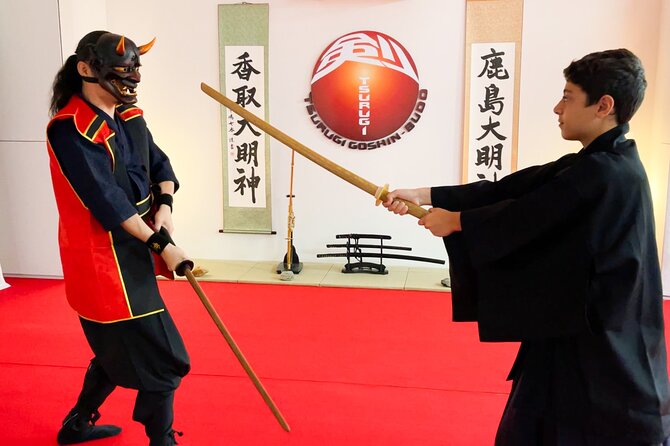
The last chapter is Recognition. At the end, you receive a personalized scroll bearing your name and the techniques you learned. This is more useful than a generic souvenir because it records your participation in a personal way.
The scroll fits the story’s message that you now carry a sword in your heart. That phrase is clearly symbolic, but it gives the experience a satisfying ending. You leave with something connected to the lesson rather than only a few costume photos.
A commemorative photo with a samurai is also included. Since the uniform rental, photo, and scroll are part of the package, you do not have to negotiate separate add-ons during the session. These details make the activity attractive for a birthday, family outing, or couple’s experience.
Matcha tea and Japanese sweets are provided as well. They add a calm, distinctly Japanese pause to an activity that otherwise centers on movement and battle. The tea is not a full meal, so plan other food around it if you will be hungry after two hours.
Is $84.70 a fair price?
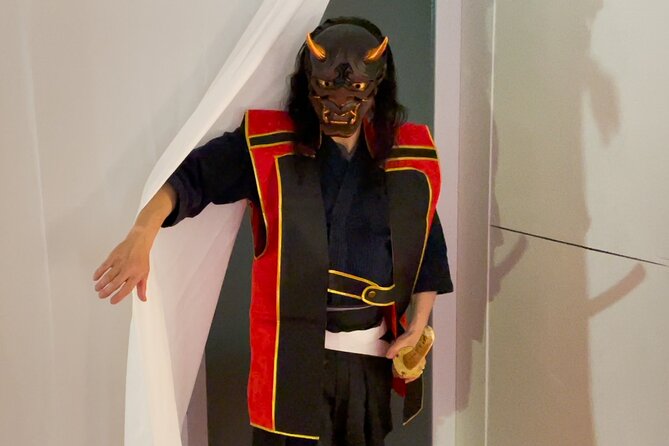
At $84.70 per person, this is not the cheapest short activity in Tokyo. Its value comes from the bundle: an English lesson, instructor demonstration, samurai uniform rental, folklore and Bushido explanation, oni finale, matcha and sweets, a photo, and a named scroll.
I would consider the price reasonable if you want a structured cultural experience that fills about two hours and gives you several tangible memories. The small maximum of six also matters. You are paying for a guided, hands-on session rather than a quick photo stop.
The value is weaker if your only goal is to wear armor or take a samurai picture. Tokyo offers many ways to dress up for photos, and this activity costs more because it includes teaching and a story. Likewise, an experienced martial artist may find the lesson too introductory for the price.
For a birthday gift, family activity, or couple’s outing, the personalized scroll and shared final battle make the cost easier to justify. The fact that the experience is booked an average of 29 days ahead also suggests you should reserve early if your Tokyo dates are fixed, especially since only six places are available per session.
Getting there and planning your visit
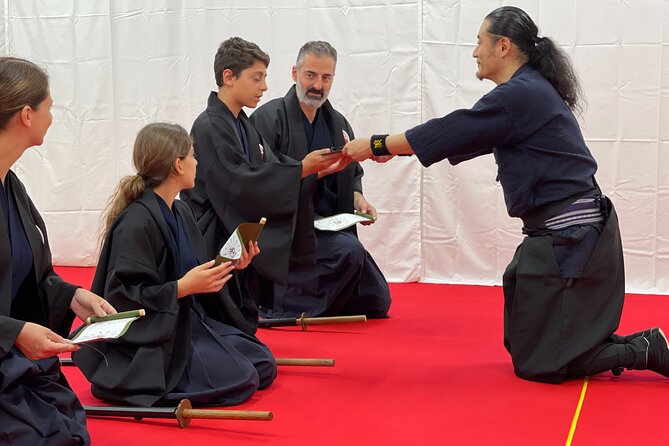
The meeting point is the International Goshin-Budo Association at MK Kojimachi Building, 4-chome 21, Kojimachi, Chiyoda City, Tokyo 102-0083. The activity begins and ends at this same location.
It is near public transportation, but no private transportation is included. You will need to make your own way to the building and allow enough time to find the entrance. Keep your mobile ticket available, since the booking is delivered as a mobile ticket.
The building has toilets. There is no air-conditioned vehicle because transportation is not part of the experience, so the practical concern is the walk to and from the venue, not a transfer during the activity.
The session lasts approximately two hours. That makes it easy to place between other Tokyo plans, though I would avoid scheduling it too tightly against a distant reservation. The exact flow includes changing into the uniform, learning the movements, taking part in the battle, having the tea and sweets, receiving the scroll, and taking the photo.
Free cancellation is available if you cancel at least 24 hours before the start time. Cancellations or changes made inside that window are not accepted for a refund, and the cut-off follows local Tokyo time.
Who will enjoy this most?
I would recommend this for:
- Families looking for a hands-on Tokyo activity
- Couples seeking a memorable shared experience
- Solo visitors who enjoy role-play and cultural workshops
- First-time participants curious about samurai traditions
- People who want photos and a keepsake along with instruction
- English-speaking visitors who prefer a fully English activity
The experience may be less suitable if you want a long, technical martial arts course, a quiet historical lecture, or a large-scale stage performance. It is also worth checking with the provider before booking if you need specific physical accommodations, since the published information only says that most people can participate.
The strongest praise here centers on the fun, welcoming tone and the sense of learning something you will remember. The experience is designed so you are not pressured to perform at a high level. That is a real advantage for families and beginners who might feel nervous about trying sword training.
Should you book the oni battle?
Book it if you want to do more than look at samurai armor. You will learn basic sword movements, hear a short story rooted in Japanese folklore, wear a uniform, face an oni, enjoy matcha and sweets, and leave with a personalized scroll.
I would choose this over a simple photo session because the lesson gives the costume a purpose. I would choose it over a formal martial arts class only if I wanted a lighter, more theatrical experience with a clear beginning and ending.
At $84.70, the activity earns its price through the small group, English instruction, hands-on training, keepsakes, and final battle. Reserve it for a family day, birthday, or unusual Tokyo memory. Skip it if you need advanced sword instruction or prefer your cultural activities without role-play.
FAQ
Where does the samurai sword experience take place?
It takes place at the International Goshin-Budo Association, MK Kojimachi Building, 4-chome 21, Kojimachi, Chiyoda City, Tokyo 102-0083.
How long does the activity last?
The experience lasts approximately two hours.
Is the experience conducted in English?
Yes. An English guide explains sword skills, Bushido, and samurai history.
How many people can join the activity?
The maximum group size is six participants.
What is included in the price?
The price includes samurai uniform rental, a live sword demonstration, English instruction, a personalized scroll with your name and learned techniques, matcha tea and Japanese sweets, and a commemorative photo with a samurai.
Does the activity include transportation?
No. Private transportation and an air-conditioned vehicle are not included. The experience begins and ends at the meeting point.
Can I cancel for a full refund?
Yes, if you cancel at least 24 hours before the experience start time. Cancellations or changes made less than 24 hours before the start time are not accepted for a refund.
Just added around Tokyo
- Private tour with Yasushi and Yoko – by car, train, on foot★ 5.0 · 2 reviews
- Tokyo-Izu: Volcano, Ocean& Capybara Cuddle with Izu Scenic Train★ 3.5 · 3 reviews
- Tokyo Private Guided 1/2-Day Walking Subway Tour English guide★ 5.0 · 7 reviews
- Snow Monkey Park and Miso Production Tour Bullet Train from Tokyo★ 4.5 · 26 reviews
- Private Tour – Thousands of lucky cats! Go by tram, Gotokuji Tour★ 5.0 · 16 reviews
- Bullet Train and Mt. Fuji Famous Food Tour★ 5.0 · 4 reviews
- Kyoto Early Bird Tour Tokyo Round or One Way Shinkansen★ 5.0 · 10 reviews
- Mt Fuji & Hakone Private Tour from Tokyo: Return by Bullet Train★ 5.0 · 22 reviews
Tokyo Train Tours, compared.

Mt Fuji & Hakone Cruise, Drum Show Bullet Train 1 Day from Tokyo
Read our review →
Tokyo Mt Fuji 5th St & Hakone Cruise Bus Tour w/Bullet Train
Read our review →
Mt. Fuji & Hakone Tour w/ Return by Bullet Train
Read our review →
From Tokyo 1-Day Kyoto English-guided Tour by Bullet Train
Read our review →
Mt. Fuji and Hakone Day Trip From Tokyo with Bullet Train Option
Read our review →
Kamakura & Enoshima Day Tour with Pickup & Train Ride
Read our review →
Haneda Layover tour of 5hours with local Japanese guide by car
Read our review →
Snow Monkey Park and Miso Production Tour Bullet Train from Tokyo
Read our review →Browse the lists this tour appears in