
REVIEW · CANADA
Whistler Train Wreck, Suspension Bridge & Hidden Waterfall Adventure
Whistler’s most unusual outdoor sight is not a mountain view. It is a row of mangled railway boxcars, painted with bold graffiti and scattered among towering cedar trees. This two-hour walk pairs that odd bit of local history with the turquoise Cheakamus River, waterfalls, and a suspension bridge.
I like the small maximum group of 10, which gives your guide room to answer questions and keep the walk personal. I also like the central meeting point at the Gondola Transit Exchange, since you can begin without arranging a separate ride to a remote trailhead.
The main consideration is the walking itself. You need sturdy enclosed shoes and enough fitness for undulating ground, so this is not a gentle pavement stroll. Weather can also affect the departure, and the tour may be canceled if conditions are poor or if the minimum number of participants is not reached.
Key points to know before booking
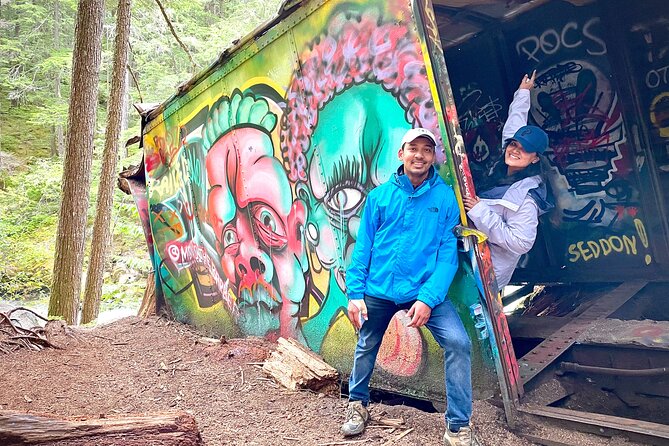
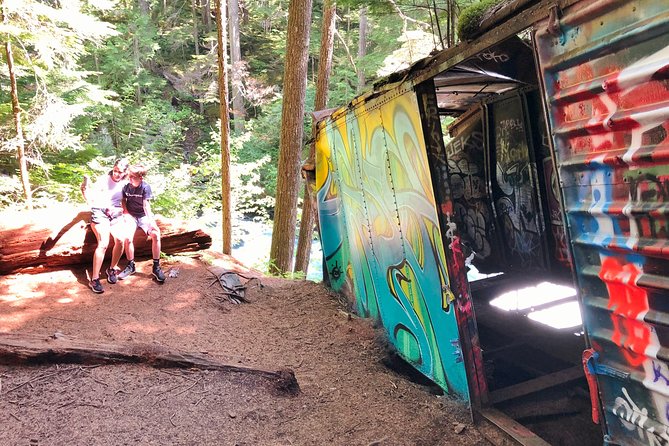
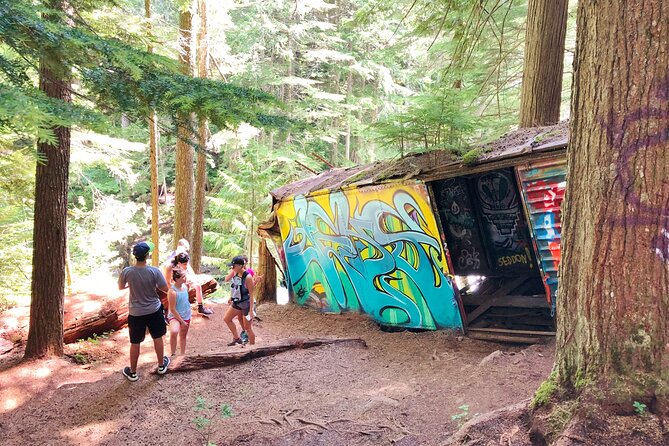
- The boxcars date from a 1950s train crash, then gained a second life as an outdoor canvas for local graffiti artists.
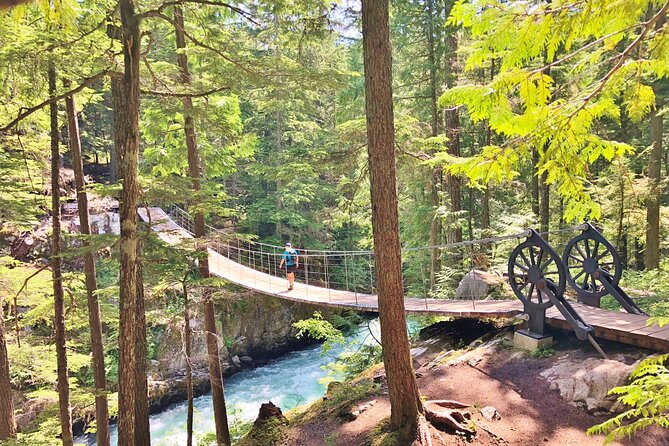
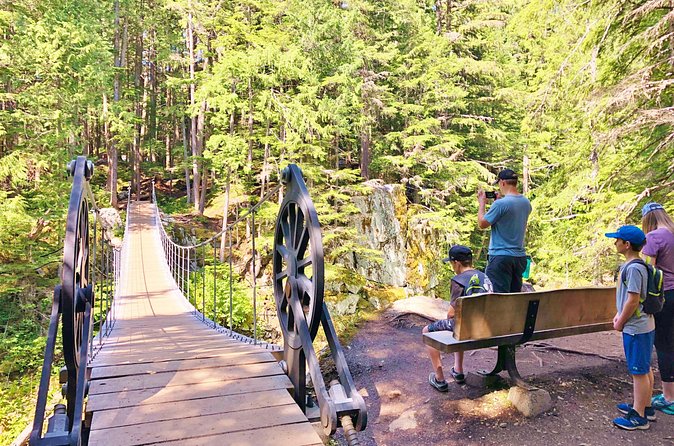
- The Cheakamus Suspension Bridge gives you an overhead view of glacial water moving through narrow canyons and past waterfalls.
- The two-hour schedule divides neatly between two stops, with about one hour at the Train Wreck Trail and one hour around the river.
- The group is capped at 10 people, a useful size if you want direct attention from the guide.
- Ryan is one guide you may meet, and his explanations about the area were a major part of the experience for some participants.
- Sturdy enclosed footwear is required, and you should be comfortable walking on uneven, rolling terrain.
Why the Whistler Train Wreck is worth your morning
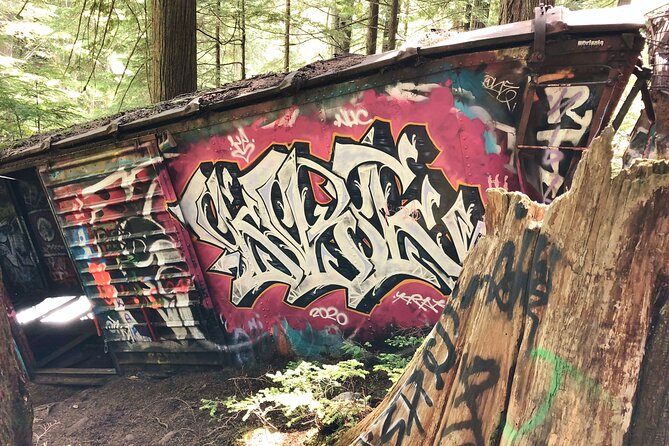
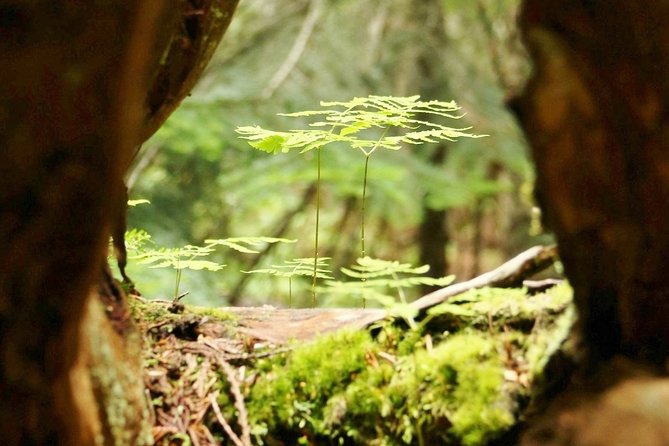
The Train Wreck Trail works because it is so unexpected. You walk through a temperate rain forest, then come upon old boxcars sitting among the trees. The contrast is the point: weathered railway metal and painted walls below tall cedars, with glacial water nearby.
The cars were left after a crash in the 1950s. Time and local creativity transformed them into something far more interesting than a simple abandoned train display. Artists have painted the boxcars in strong, colorful designs, giving each one its own character while the forest slowly reclaims the surrounding space.
I would not book this walk expecting a formal museum experience. There are no display halls or glass cases. Instead, the setting does the explaining. The old cars, forest, river, and steep terrain create a place that feels tied to Whistler’s past and present at the same time.
That combination is especially useful if you have already seen the major mountain sights and want something different. The experience is not only about taking photographs of graffiti. It is about seeing how an industrial accident became part of the area’s outdoor culture.
More Train Tours in Canada:
- Old Quebec Classique Walking Tour with Funicular
★ 5.0 · 1,317 reviews - Quebec City: Old Quebec Classic Walking Tour with Funicular
★ 4.9 · 695 reviews - Private Walking Tour of Old Quebec with Funicular
★ 5.0 · 238 reviews
Walking the Train Wreck Trail through cedar forest
The first hour is devoted to the Whistler Train Wreck Trail. The path crosses temperate rain forest, so the surroundings matter as much as the destination. Towering cedar trees provide a strong natural frame for the boxcars, while the glacial waters below add another layer to the scene.
You should expect to walk over undulating terrain rather than a flat, prepared promenade. That wording matters. The route is suitable for people with a moderate level of fitness, but it still asks you to pay attention to your footing and wear proper shoes.
A guide adds real value here. Without context, you might see graffiti-covered boxcars and move on after a few photographs. With someone explaining the crash and the local setting, the stop becomes easier to understand. Ryan has been singled out for his helpful explanations and his ability to make the area more meaningful, so he is a particularly useful guide if he is leading your departure.
The small group setup also helps on a trail like this. With up to 10 people, you are less likely to feel lost in a crowd, and there is more opportunity to ask about the railway story, the forest, or the painted cars. One participant even had the good fortune of being the only person on a departure, though you should treat that as a possibility rather than an expectation.
Graffiti, railway history, and the forest contrast
The boxcars are the visual center of the outing, but the contrast around them is what makes the stop memorable. The railway wreck is rough, artificial, and marked by human hands. The cedar forest is tall and quiet. Below, the cold glacial water gives the setting a sense of movement.
Local artists have painted across the wrecks over the years. The artwork changes the mood of the site, making it less like a preserved accident scene and more like an outdoor meeting point between railway history and modern art.
This is also where the tour’s guided format earns its price. You are not simply paying for access to a path. You are paying for a guide who can connect separate details into a clearer picture. At $116.44 per person, that matters. For a self-guided walk, the cost would feel high. For a small group with interpretation, a central start, and a second scenic stop, the price is easier to justify.
The tradeoff is that this is a short experience. You get roughly one hour around the Train Wreck Trail, not an entire day devoted to railway history or forest walking. If you prefer long hikes and a slower pace, you may find the two-hour format limited. If you want a compact outing that fits around other Whistler plans, the length is one of its strengths.
Crossing the Cheakamus Suspension Bridge
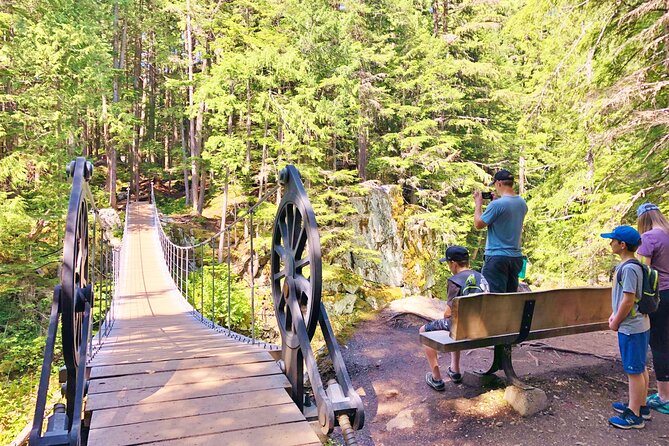
The second hour moves to the Cheakamus River, where the focus shifts from old railway cars to water and height. The river is described as a glacial stream that runs through narrow canyons and past waterfalls. The suspension bridge gives you a view from above, letting you see the turquoise water rather than experiencing it only from the riverbank.
A bridge crossing changes the pace of the outing. After walking among boxcars and trees, you get a more open viewpoint and a chance to look down into the river corridor. The water, canyons, and waterfalls make this part feel more scenic in the traditional sense, while the Train Wreck stop supplies the unusual story.
You should not expect a long bridge adventure. The appeal is the viewpoint and the setting, not a high-adrenaline attraction. The bridge is one part of a guided walk, and the surrounding river views are the reason to pause.
The Cheakamus stop also gives the experience better variety. A tour made up only of graffiti and railway wreckage could feel narrow. A tour made up only of river scenery might resemble many other forest walks around Whistler. Together, the two stops make a more balanced morning.
Same tracks, a very different ride:
- Niagara Parks: Power Pass + Falls Incline Railway
★ 4.7 · 164 reviews - Bicyle Tour on Historical Kettle Valley Railway from Myra Canyon to Penticton
★ 5.0 · 62 reviews - Shore Excursion: Private Walking Tour with Funicular
★ 5.0 · 31 reviews - Guided Bike Tour on Historical Kettle Valley Railway at Myra Canyon & Wine Tour
★ 5.0 · 19 reviews
What the two-hour schedule means for you
The 9:30 am start creates a useful morning plan. You meet at the Gondola Transit Exchange in Whistler, then return to that same point when the activity ends. That makes the outing simple to fit into a day of sightseeing, dining, or other scheduled plans.
The central meeting point is a practical advantage, especially if you are staying near Whistler’s main activity area or using public transportation. You do not need to find a separate trailhead from the information provided. Still, you should arrive ready to walk, since sturdy enclosed footwear is required from the start.
The tour is offered in English. That is important if you want the guide’s explanation of the railway accident, the forest, and the river to be a central part of the morning.
Because the total duration is about two hours, you should think of this as a focused excursion rather than a full-day nature trip. It works well before lunch and leaves much of the day open. The short format also reduces the commitment for anyone who wants to see the Train Wreck but does not want a demanding all-day hike.
Is $116.44 a fair price?
At $116.44 per person, this is not a budget walk. The value depends on what you want from it.
I see three things included in the price that can make it worthwhile: a guide, a small group, and two different sites in one organized outing. A guide can give the boxcars context that you would miss on your own. A capped group of 10 allows for more personal attention than a large coach-style excursion. The river and suspension bridge add variety without requiring you to organize a second trip.
The price is harder to defend if you mainly want to photograph the graffiti and leave. The duration is only about two hours, and the walking conditions mean you are paying for an experience that is compact rather than extensive.
The strongest value comes for people who want interpretation and convenience. Ryan has been praised for being helpful and well informed, and that kind of guide can make a short visit feel more complete. If your schedule is tight, the central meeting point and return to the same location also save planning time.
The experience is offered with a mobile ticket, and confirmation is provided when you book. Those are small details, but they keep the morning straightforward.
Fitness, footwear, and weather
Take the footwear rule seriously. You must wear sturdy enclosed shoes, not sandals or loose casual footwear. The route includes undulating terrain, so shoes with secure footing are a sensible choice.
A moderate level of physical fitness is expected. You do not need to approach the outing as an extreme hike, but you should be comfortable walking on uneven ground for the duration of the activity. If hills, rough paths, or changing surfaces are difficult for you, ask before booking.
The experience requires good weather. If poor conditions force a cancellation, you are offered another date or a full refund. The same applies if the minimum number of participants is not reached. You can also cancel for a full refund if you do so at least 24 hours before the start time.
That 24-hour deadline is worth noting. Cancellations or changes made less than 24 hours before the 9:30 am departure are not accepted for a refund. Weather protection is helpful, but it does not remove the need to plan carefully.
Service animals are allowed, and the meeting point is near public transportation. The group maximum is 10 people, which helps keep the walk personal but does not guarantee that every departure will be full or nearly private.
Who will enjoy this Whistler walk most
I would recommend this experience to you if you enjoy unusual local sights, short guided walks, and a mix of art, history, forest, and river scenery. It is a good fit for someone who wants more than a standard viewpoint but less than a full-day backcountry outing.
Photography-minded visitors should have plenty to work with: graffiti-covered boxcars, cedar forest, the suspension bridge, turquoise water, narrow canyons, and waterfalls. The light and weather will affect the mood, so the scene may look very different from one departure to another.
It also suits people who value a guide’s local explanation. Ryan’s presence has been a strong part of the experience for some departures, particularly for people who wanted to understand the area rather than simply pass through it.
I would hesitate to recommend it if you want a flat walk, a fully accessible route, or a long wilderness trek. The tour requires moderate fitness and uneven-ground walking. It is also not the best use of $116.44 if you plan to spend only a few minutes at the boxcars and do not care about the river stop or guided context.
Final call: should you book it?
Book this tour if the idea of graffiti-covered railway boxcars in a cedar forest sounds more appealing than another standard Whistler viewpoint. The two stops complement each other well, and the small group format gives the guide space to make the unusual details matter.
The best reasons to choose it are the 10-person maximum, the chance to learn from a guide such as Ryan, and the efficient pairing of the Train Wreck Trail with the Cheakamus Suspension Bridge. Wear proper shoes, allow for uneven ground, and keep the weather policy in mind.
Skip it if you need an easy, flat route or want a longer hiking day. For the right kind of visitor, though, this is a compact and distinctive way to see a less predictable side of Whistler.
FAQ
Where does the tour start?
The tour starts at the Gondola Transit Exchange in Whistler, British Columbia.
What time does the activity begin?
The scheduled start time is 9:30 am.
Where does the tour end?
The activity ends back at the meeting point at the Gondola Transit Exchange.
How long does the experience last?
The experience lasts approximately two hours.
How is the time divided between the stops?
About one hour is spent at the Whistler Train Wreck Trail, followed by about one hour at the Cheakamus River.
What will I see at the Whistler Train Wreck Trail?
You will see railway boxcars left from a crash in the 1950s, with graffiti painted across them. The site is surrounded by temperate rain forest, cedar trees, and nearby glacial water.
What will I see at the Cheakamus River?
You will see turquoise glacial water moving through narrow canyons and past waterfalls. You will also cross the Cheakamus Suspension Bridge for views from above.
How large is the group?
The activity has a maximum of 10 participants.
What should I wear?
You must wear sturdy enclosed footwear. You should also be comfortable walking or hiking over undulating terrain.
Is cancellation free?
You can cancel for a full refund if you cancel at least 24 hours before the experience start time. Poor weather or failure to meet the minimum number of participants may result in another date or a full refund.
Just added around Canada
- Private Vancouver Airport YVR or Train Stn Transfer to Vancouver★ 5.0 · 5 reviews
- 6-Day Rocky Mountaineer Train Tour, From Vancouver to Rockies★ 4.5 · 10 reviews
- 5-Day Rocky Mountaineer Train Tour, From Vancouver to Rockies★ 4.5 · 8 reviews
- Quebec City Scenic Walking Tour with 1 Funicular Ride★ 4.5 · 7 reviews
- Shore Excursion: Private Walking Tour with Funicular★ 5.0 · 31 reviews
- Guided Bike Tour on Historical Kettle Valley Railway at Myra Canyon & Wine Tour★ 5.0 · 19 reviews
- Bicyle Tour on Historical Kettle Valley Railway from Myra Canyon to Penticton★ 5.0 · 62 reviews
- Quebec City Private Walking Tour with Funicular Ride★ 4.8 · 10 reviews
Canada Train Tours, compared.
Old Quebec Classique Walking Tour with Funicular
Read our review →
Quebec City: Old Quebec Classic Walking Tour with Funicular
Read our review →
Private Walking Tour of Old Quebec with Funicular
Read our review →
Niagara Parks: Power Pass + Falls Incline Railway
Read our review →
Bicyle Tour on Historical Kettle Valley Railway from Myra Canyon to Penticton
Read our review →
Shore Excursion: Private Walking Tour with Funicular
Read our review →
Guided Bike Tour on Historical Kettle Valley Railway at Myra Canyon & Wine Tour
Read our review →
Browse the lists this tour appears in