
REVIEW · CANADA
Niagara Parks: Power Pass + Falls Incline Railway
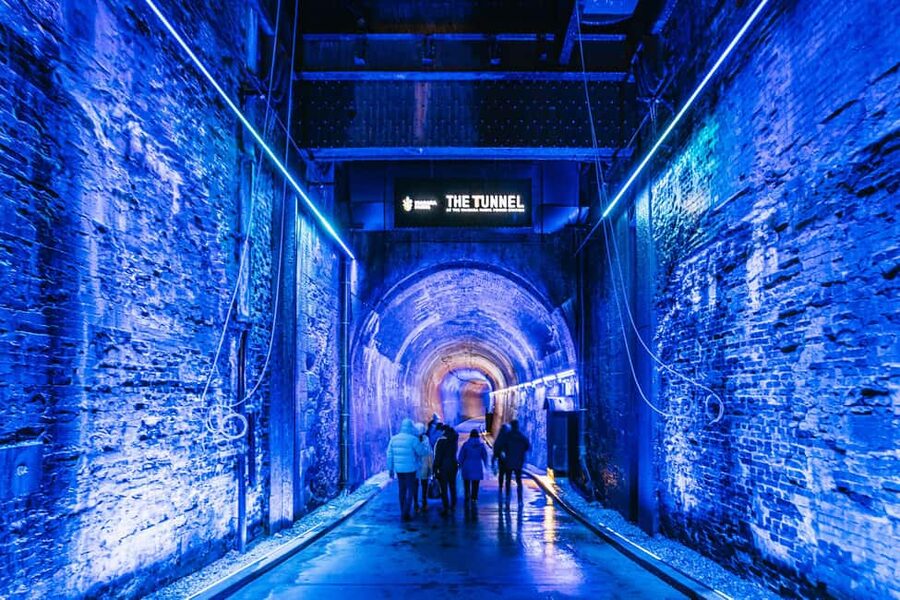
Niagara’s most unusual falls view comes at the end of a 2,200-foot tunnel, where you look up at Horseshoe Falls from the river’s edge. The route begins inside a former power station, drops 180 feet in a glass elevator, and ends on an observation deck with a very different angle on the falls.
I like the freedom to visit the power station by day and return at night. I also like the excellent Falls Incline Railway, which links the Fallsview area with Table Rock Centre. The main drawback is that this is self-guided, so the $26 price may feel high if you prefer a live guide explaining each stop.
Key points to know
- The tunnel ends at the river’s edge: Allow 10 to 15 minutes for the walk from the tunnel entrance to the observation deck.
- The nighttime visit is a separate experience: Return after dark for illuminated falls, lighting in the tunnel, and the Currents show.
- The power station explains the machinery: Restored equipment and interactive displays show how Niagara’s water became electricity.
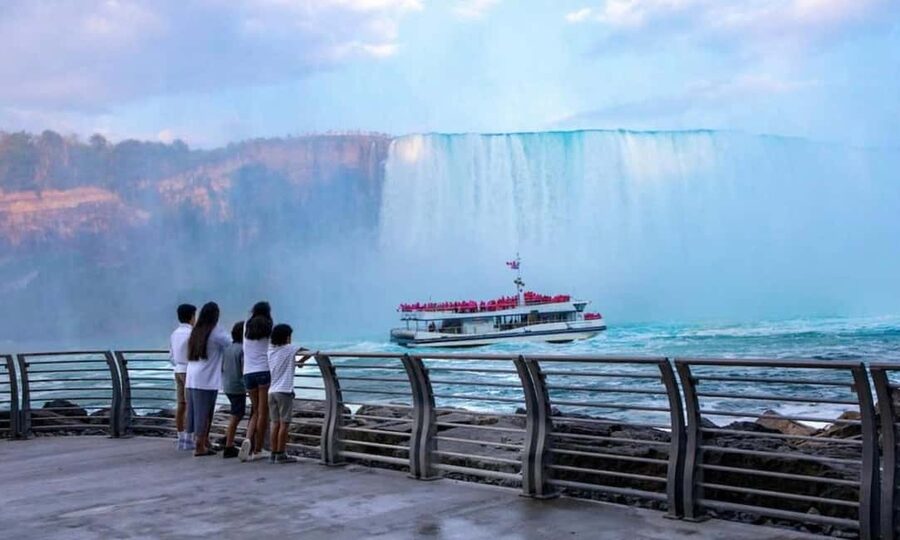
- The view is close and unusual: You look upward toward Horseshoe Falls from below the level of the main tourist areas.
- The railway adds useful transport: The climate-controlled Falls Incline Railway is included and runs between the Fallsview Tourist area and Table Rock Centre.
- Plan at least two hours: You can stay as long or as briefly as you wish, but rushing the tunnel would be a mistake.
Start with Niagara’s working power station
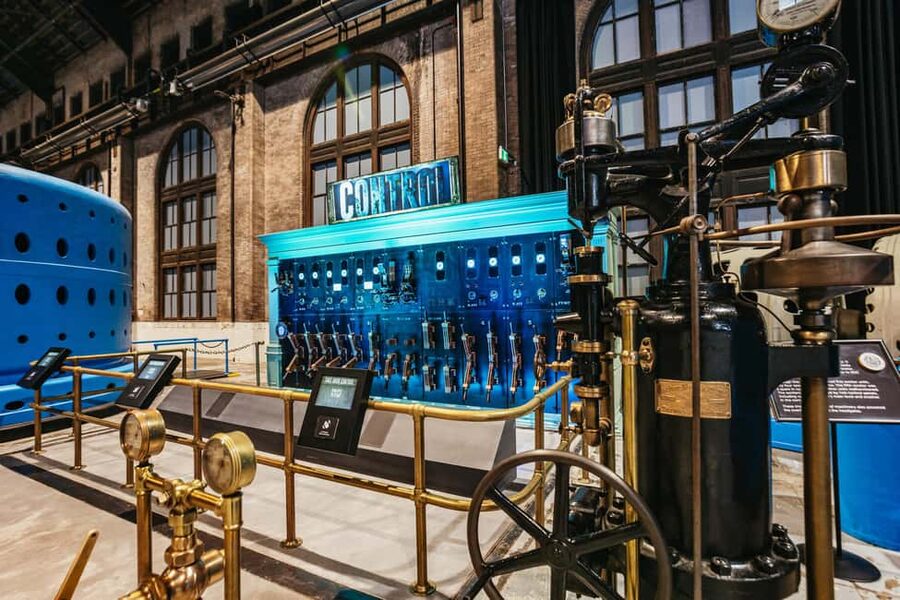
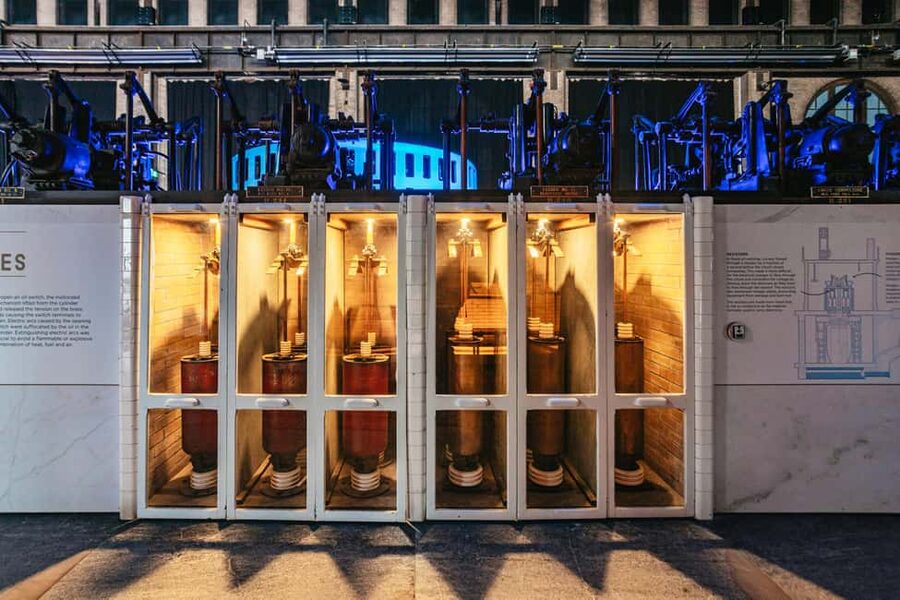
The Niagara Parks Power Station is not simply another lookout with a few plaques attached. It takes you into the machinery behind the famous view. The plant was the first major power station on the Canadian side of the Niagara River, and its huge generator hall gives the visit a clear purpose: you are learning how falling water became usable power.
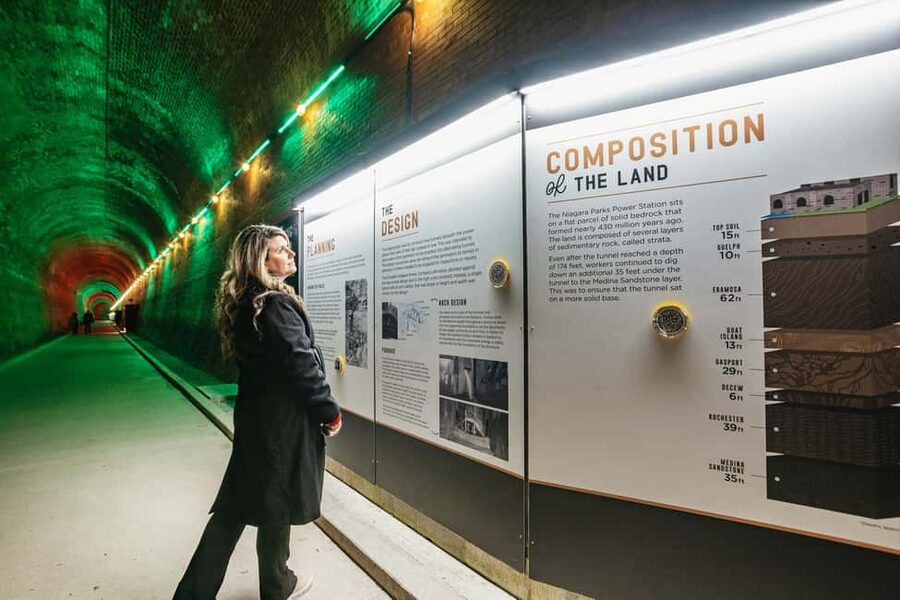
The scale changes as you move through the building. Massive turbines and restored artifacts show the industrial side of Niagara, while smaller displays explain the engineering and daily operation. Interactive exhibits and self-guided audio content help fill in the gaps without requiring you to follow a group.
I like this part because it gives the falls a practical context. You are not only looking at water crashing over a cliff. You are also seeing why this stretch of the river mattered to engineers, workers, and the growth of electricity.
The free audio guide is useful if you want more explanation than the display panels provide. It also lets you move at your own pace. You can pause, replay information, or skip material that does not hold your attention. The tradeoff is that the experience depends on you choosing to listen. There is no guide moving through the room to point out what you might otherwise miss.
More Train Tours in Canada:
- Old Quebec Classique Walking Tour with Funicular
★ 5.0 · 1,317 reviews - Quebec City: Old Quebec Classic Walking Tour with Funicular
★ 4.9 · 695 reviews - Private Walking Tour of Old Quebec with Funicular
★ 5.0 · 238 reviews
The glass elevator drops 180 feet
After the power station, you enter the section that makes this ticket different from a standard power station visit. A glass-paneled elevator carries you 180 feet down toward the Tailrace Tunnel.
That descent helps explain the tunnel’s purpose. This was not built as a scenic passage for tourists. It carried water away from the generating station after the water had passed through the turbines. The engineering story becomes much easier to understand once you are standing below the main building and heading toward the river.
The glass elevator also gives you a quick sense of the height difference. It is not a long ride, but it adds drama to the change from the bright generator hall to the underground route.
At this point, expect a self-guided visit rather than a live tour. English is the listed language, and the audio material is included. If you want a detailed explanation at every stage, take your time with the displays and audio stops instead of treating the elevator as a quick transition.
Walk the 2,200-foot Tailrace Tunnel
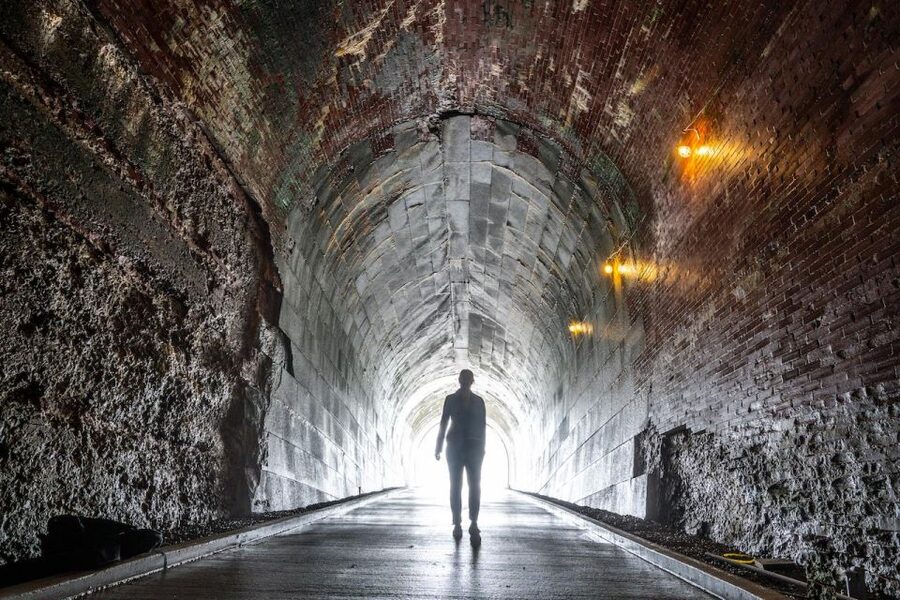
The tunnel is the heart of the experience. It stretches about 2,200 feet and leads from the power station toward the Niagara River. The path takes roughly 10 to 15 minutes to reach the observation deck, though your total time will depend on how much you stop to study the displays and listen to the audio.
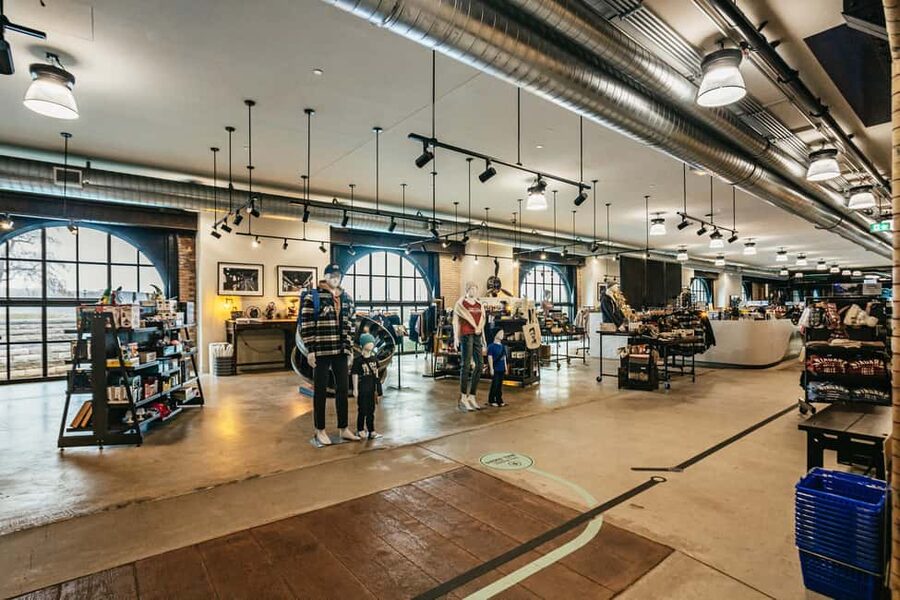
The construction story adds weight to the walk. The tunnel was excavated with lanterns, pickaxes, shovels, and limited dynamite. That detail matters because the passage feels less like a modern attraction and more like a piece of difficult industrial work that has been opened to the public.
The route is self-guided, so you control the pace. I would not rush this section. The point is not simply to reach the end. Listen to how the tunnel was made, notice the scale of the passage, and consider the effort required to cut through the rock beneath a major river and waterfall.
You receive a poncho for the observation deck. That is a practical touch, since spray can be part of the experience at the river’s edge. Still, a poncho does not make the area dry or warm. Dress for changing conditions, particularly outside the warmer months.
Look up at Horseshoe Falls from the river’s edge
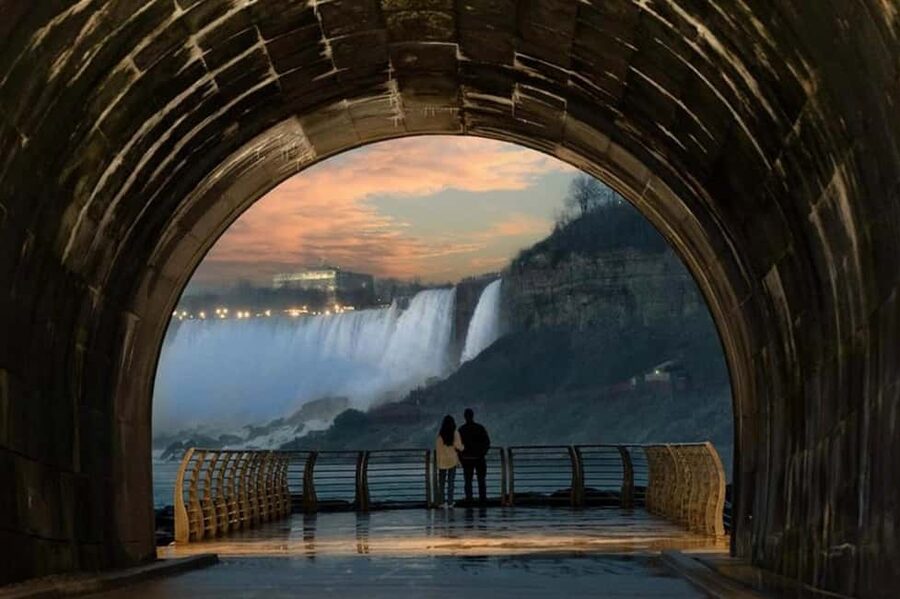
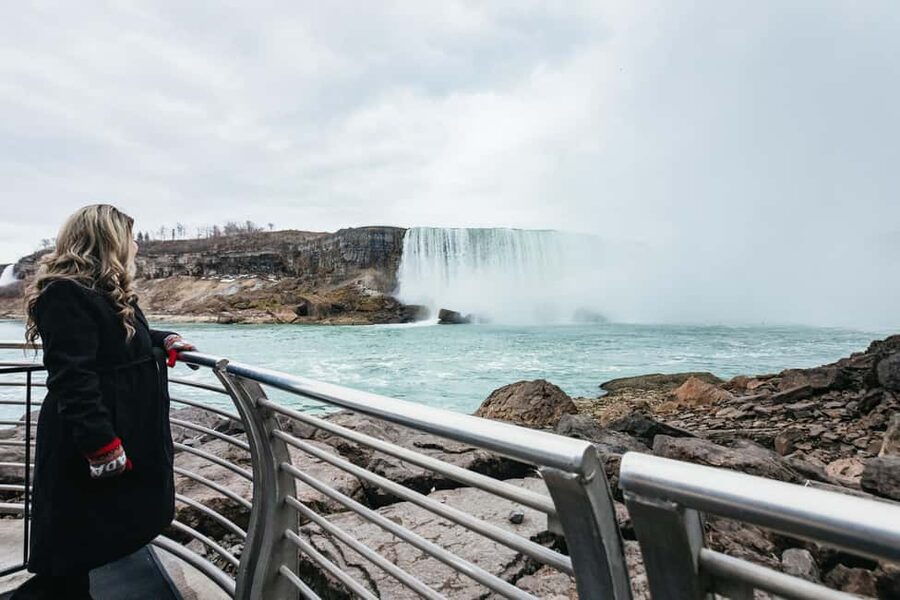
The observation deck is the payoff. Instead of viewing Horseshoe Falls from the usual upper paths, you stand near the edge of the Niagara River and look up toward the falling water.
The angle is the key attraction. It gives you a sense of the force and height of the falls that standard viewpoints can soften. You are close enough to notice the spray and the movement of the water, but the experience is still structured and accessible rather than an adventure activity.
Many visitors spend only a few minutes here, but I would allow time to take in the view. The deck is not just a photo stop. It completes the story of the power station and tunnel by showing you the river after the water has done its work.
The walk to the deck is worth keeping in mind when planning your day. The pass is advertised as a one-day experience, but the power station and tunnel alone deserve about two hours. One visitor who enjoyed the attraction suggested allowing two or even three hours, which is sensible if you listen to the audio and want time at the falls.
Same tracks, a very different ride:
- Bicyle Tour on Historical Kettle Valley Railway from Myra Canyon to Penticton
★ 5.0 · 62 reviews - Shore Excursion: Private Walking Tour with Funicular
★ 5.0 · 31 reviews - Whistler Train Wreck, Suspension Bridge & Hidden Waterfall Adventure
★ 5.0 · 24 reviews - Guided Bike Tour on Historical Kettle Valley Railway at Myra Canyon & Wine Tour
★ 5.0 · 19 reviews
Return after dark for a different Niagara
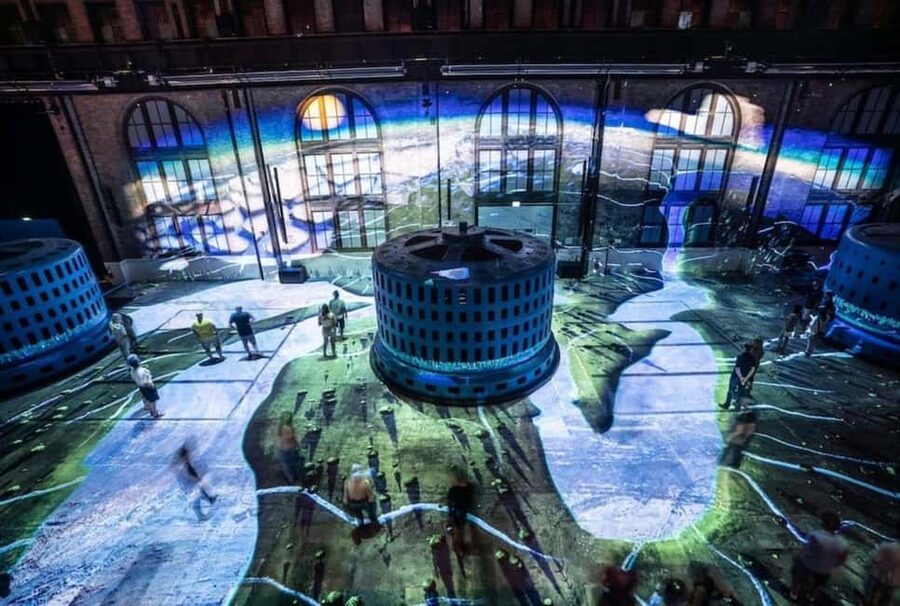
The Power Pass includes both daytime and nighttime admission. That flexibility is a major reason the $26 price can work well. You can explore the machinery and tunnel in daylight, take a break, then return after dark without buying a second ticket.
The nighttime visit changes the mood. The tunnel is lit, the falls are illuminated, and the observation deck presents Horseshoe Falls in a more dramatic setting. The same route feels different because the focus shifts from engineering and construction to light, water, and sound.
This is especially useful if you have limited time in Niagara Falls and want one attraction that covers both day and night. You do not have to choose between seeing the power station clearly and seeing the falls after dark.
The ticket allows you to stay as long or as briefly as you wish during the included access. Check the available starting times when booking, since the pass has a one-day duration rather than an open-ended admission period.
See the Currents light and sound show
The Currents show takes place in the generator hall. It combines sound, light, and the industrial setting of the power station.
The current format gives you flexibility. Rather than being tied to one fixed performance, you can choose when to watch Currents while also exploring lighting installations in the generator hall and tunnel. That makes the evening easier to fit around dinner or other plans.
The show works best as a final layer on top of the daytime visit. If you arrive without first understanding the generators and power station, the lights may feel like a separate spectacle. If you have already explored the building, the multimedia presentation connects the industrial space with the story of Niagara’s power.
I would not book this pass only for the sound and light show. Its value comes from the combination of the power station, tunnel, river-level deck, and nighttime access. Currents is a strong bonus, not the whole reason to go.
Use the Falls Incline Railway
The included Falls Incline Railway is more useful than a minor add-on. It connects the Fallsview Tourist area with Table Rock Centre, making it easier to move between two important parts of the Canadian falls area.
The railway is climate-controlled, open year-round, and fully accessible. As it rises and descends along the inclined track, you get a different view of Horseshoe Falls than you would from a street or walking path.
I would use it to save energy, particularly if you are visiting the power station, walking the tunnel, and returning after dark. The railway does not replace walking around Niagara Falls, but it can reduce an unnecessary uphill or downhill stretch.
Because it is included in the pass, it also strengthens the overall value. A self-guided attraction priced at $26 can feel expensive if judged only by the audio exhibits. Add the tunnel, the nighttime admission, the light show, and the railway, and the cost becomes easier to justify.
Is $26 good value?
At $26 per person, this is not the cheapest way to see Niagara Falls. You can view the falls from several public areas without paying an admission fee. The question is what you want from your visit.
I think the price is fair if you value access and context. You are paying for entry into a historic power station, the elevator descent, a 2,200-foot underground route, the river-edge observation deck, a nighttime return, Currents, and the incline railway.
The pass is less convincing if you want a guided tour or a quick photo stop. There is no live guide, and the tunnel is self-guided. One practical criticism is that the ticket can feel costly for visitors who expect a guide to explain the engineering in person.
The flexible day and night access helps solve that concern. Use the daytime visit for the displays and audio. Return after dark for the illuminated tunnel, falls, and generator hall. If you use both sessions, you get much more from the ticket than a single short visit.
Who should book this experience?
I would recommend it to anyone interested in engineering, industrial history, or unusual views of Niagara Falls. It also suits families and mixed groups because you can move at your own pace and choose how much audio and display material to take in.
It is a good choice if you have already seen the main falls viewpoints and want something more specific. The river-edge view is not just another upper overlook, and the tunnel gives the visit a clear beginning, middle, and end.
The experience also works well for visitors who want a flexible schedule. You can visit during the day, leave, and return for the nighttime program. That is easier than trying to fit every part into one continuous block.
I would think twice if you dislike enclosed spaces, long underground walks, or self-guided attractions. The tunnel is a central part of the ticket, not an optional extra. You should also allow enough time to walk it comfortably and reach the deck.
The attraction is wheelchair accessible, and children age two and under enter free with an accompanying adult. Parking is available beside the power station in the Falls Parking Lot, and Niagara Parks also sells daily parking passes that cover several Niagara Parks lots.
Practical plan for your visit
Redeem your voucher at Niagara Parks Power Station, located at 7005 Niagara Parkway between Table Rock Welcome Centre and the Floral Showhouse. The location makes it easy to combine the visit with other sights around the Canadian side of the falls.
For the best use of your day, start with the power station and tunnel in daylight. Set aside at least two hours, and three hours if you enjoy stopping for audio and exhibits. Then use the Falls Incline Railway to move around the falls area or return to the station later.
Come back after dark for Currents and the illuminated tunnel and falls. Bring or wear practical clothing, since the observation deck can be damp and the tunnel experience may feel cooler than the outdoor temperature.
Cancellations are allowed up to 24 hours in advance for a full refund, and you can reserve now and pay later. Those terms are useful when your Niagara schedule depends on weather or other timed attractions.
Should you book the Power Pass?
Book it if you want more than a standard falls overlook. The best parts are the underground tunnel and the observation deck, followed by the chance to see the same setting illuminated at night.
I especially like the way the experience connects the machinery, the water, and the final view. You begin with turbines and engineering, walk through the route that carried water away from the plant, and finish beside the river where Niagara’s power is most obvious.
Skip it if you want a live guide, a short visit, or the lowest possible cost. For everyone else, $26 buys a substantial two-part attraction, and the included railway makes the ticket more useful across the wider falls area.
FAQ
Where is Niagara Parks Power Station?
It is at 7005 Niagara Parkway in Niagara Falls, Ontario, between Table Rock Welcome Centre and the Floral Showhouse.
Does the pass include both daytime and nighttime admission?
Yes. The pass includes general admission to the Niagara Parks Power Station during the day and at night.
How long should I plan for the Power Station and Tunnel?
Plan for about two hours. You may want two to three hours if you prefer to listen to the audio guide, study the exhibits, and spend time at the observation deck.
Is the tunnel guided?
No. The tunnel is a self-guided experience with complimentary audio guides available.
How long is the tunnel?
The tunnel is approximately 2,200 feet long. It takes roughly 10 to 15 minutes to walk to the observation deck at the river’s edge, not counting stops.
Can I see Horseshoe Falls from the tunnel experience?
Yes. The tunnel leads to an observation deck at the river’s edge with a view looking up toward Horseshoe Falls.
Is the Falls Incline Railway included?
Yes. The pass includes the climate-controlled Falls Incline Railway, which connects the Fallsview Tourist area with Table Rock Centre.
Is the experience wheelchair accessible?
Yes. The activity is listed as wheelchair accessible.
Are food and drinks included?
No. Food and drinks are not included.
Just added around Canada
- Whistler Train Wreck, Suspension Bridge & Hidden Waterfall Adventure★ 5.0 · 24 reviews
- Private Vancouver Airport YVR or Train Stn Transfer to Vancouver★ 5.0 · 5 reviews
- 6-Day Rocky Mountaineer Train Tour, From Vancouver to Rockies★ 4.5 · 10 reviews
- 5-Day Rocky Mountaineer Train Tour, From Vancouver to Rockies★ 4.5 · 8 reviews
- Quebec City Scenic Walking Tour with 1 Funicular Ride★ 4.5 · 7 reviews
- Shore Excursion: Private Walking Tour with Funicular★ 5.0 · 31 reviews
- Guided Bike Tour on Historical Kettle Valley Railway at Myra Canyon & Wine Tour★ 5.0 · 19 reviews
- Bicyle Tour on Historical Kettle Valley Railway from Myra Canyon to Penticton★ 5.0 · 62 reviews
Canada Train Tours, compared.
Old Quebec Classique Walking Tour with Funicular
Read our review →
Quebec City: Old Quebec Classic Walking Tour with Funicular
Read our review →
Private Walking Tour of Old Quebec with Funicular
Read our review →
Bicyle Tour on Historical Kettle Valley Railway from Myra Canyon to Penticton
Read our review →
Shore Excursion: Private Walking Tour with Funicular
Read our review →
Whistler Train Wreck, Suspension Bridge & Hidden Waterfall Adventure
Read our review →
Guided Bike Tour on Historical Kettle Valley Railway at Myra Canyon & Wine Tour
Read our review →
Browse the lists this tour appears in