

REVIEW · GERMANY
City tour on foot, by S-Bahn and tram
Leipzig’s story makes the most sense when you move through the city the way local life does: on foot in the old center, then by rail and tram to the grander districts beyond it. This tour links trade-fair arcades, church history, old railway architecture, and the events of 1989 in one compact outing. I especially like the Mädlerpassage and Nikolaikirche early on, followed by the change of scene at Bayrischer Bahnhof and the Musikviertel.
I also like that your transport ticket is included, so the tram and regional train are part of the tour rather than a puzzle you must solve yourself. The guides are praised for clear storytelling and for taking questions seriously, with one small-group tour described as especially easygoing and well adapted to individual interests. The main drawback is that the route depends partly on public transport. A strike once forced the group to complete the outing on foot, so flexibility is wise.
- A city tour with three modes of movement: Walk through the center, then use Leipzig’s regional train and tram network.
- The old Leipzig trade-fair core: See Mädlerpassage, Nikolaikirche, and the arcade system that shaped the city center.
- Bayrischer Bahnhof by public transport: Visit one of Germany’s oldest railway stations without arranging transport yourself.
- The Musikviertel’s grand architecture: Pass the old university library and former Reich’s Supreme Court building.
- A useful first-day orientation: Your guide adds practical tips for the rest of your stay.
- German-language guiding: A live German guide and German audio guide are included.
Why this Leipzig tour works as an introduction
At $25 per person for two and a half hours, this is priced as a short orientation rather than a full-day historical program. That is its strength. You get a guided look at several parts of Leipzig without committing most of your day, and the included public transport ticket adds real value.
The route also avoids the usual mistake of treating Leipzig as only an old-town destination. The center is important, but Bayrischer Bahnhof and the Musikviertel show how the city expanded, built, traveled, and presented itself during the nineteenth and early twentieth centuries.
You should think of this as a moving overview. It gives you a framework for Leipzig, with enough detail to help you decide where to return later. If you want long interior visits or extended time at each monument, this will feel brief. If you want context before exploring independently, it is a smart use of a morning or afternoon.
Starting beneath the Old Town Hall tower
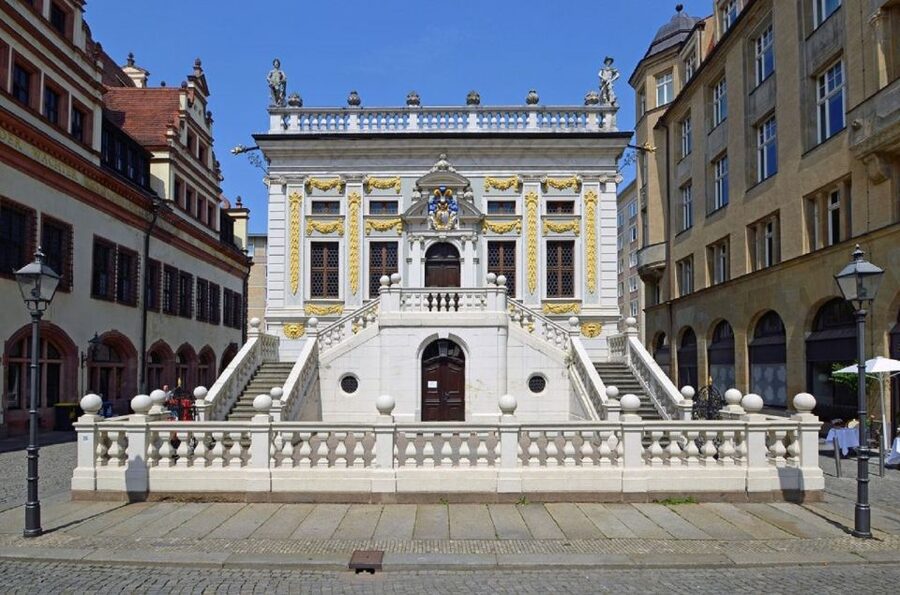
Meet at the passage beneath the tower of the Altes Rathaus at Markt 1. This is a practical starting point because it places you in the middle of Leipzig’s historic center, close to the city’s main commercial and civic sights.
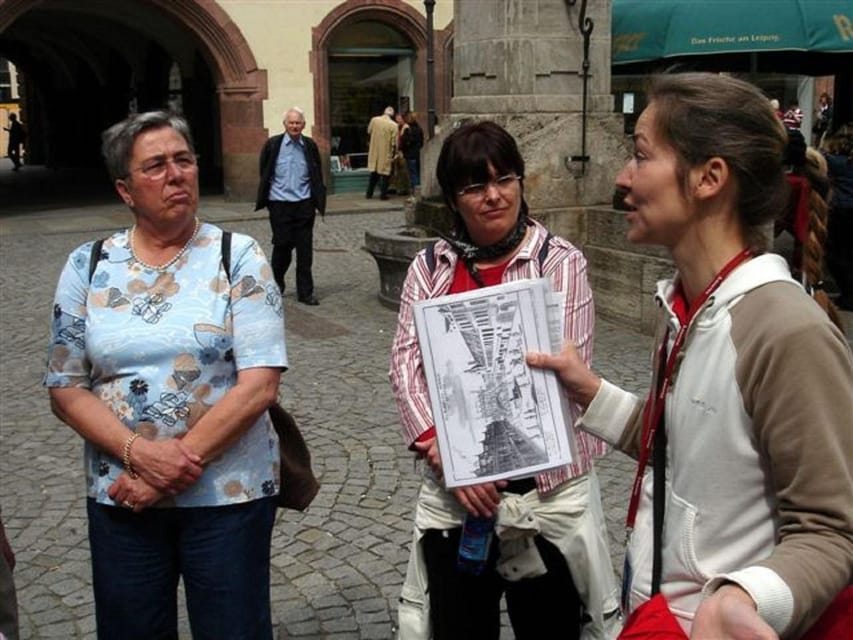
The first section is on foot. Your guide introduces Leipzig’s role as a trade-fair city and explains the unusual arcade system that runs through the old center. These passages are more than attractive shopping routes. They reflect the way merchants, buyers, and goods moved through Leipzig when trade fairs shaped the city’s fortunes.
You will also hear about the events surrounding autumn 1989. Leipzig played an important role in the peaceful protest movement that helped bring change to East Germany, and Nikolaikirche is central to that story. The tour gives you a chance to connect a major political moment with the actual streets and buildings where people gathered.
Because the center is compact, this opening walk should be easy for most people with comfortable shoes. Still, the tour is not a sit-down presentation. You are moving from place to place, so wear footwear that can handle several hours of walking and standing.
More Tram and Streetcar Tours in Germany:
- Erfurt Tour – City tour with the historic tram
★ 4.8 · 503 reviews - Mannheim: City tour with the historic tram
★ 4.5 · 2 reviews - Mallorca: Island Tour with Boat, Tram & Train from the South
★ 4.4 · 3,888 reviews
Mädlerpassage and Nikolaikirche
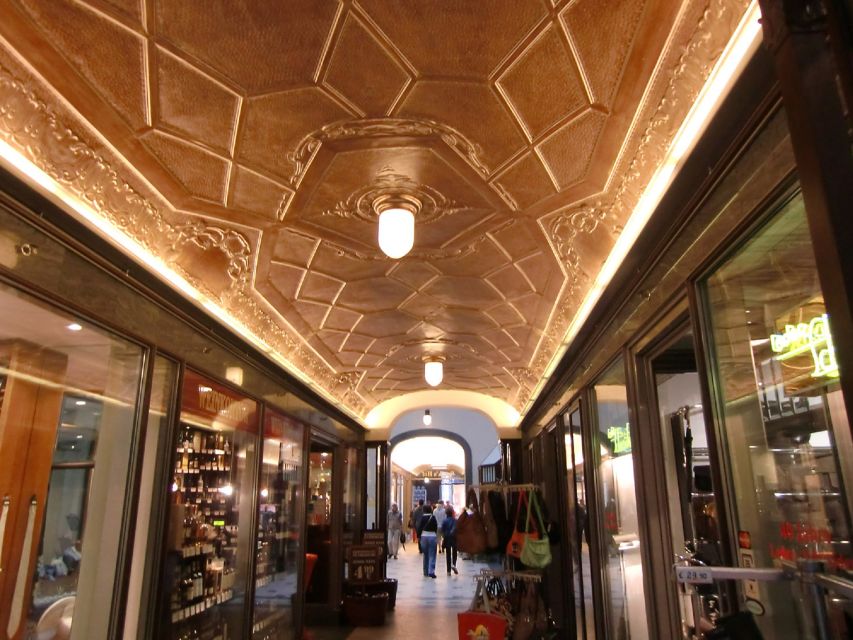
Mädlerpassage is one of the most memorable stops in the old town. Its covered arcade gives Leipzig a distinct character, and it helps explain why the city center feels different from a simple square-and-street plan. The passage is also a good example of how commercial life and architecture overlap in Leipzig.
Nikolaikirche brings a different kind of importance. The church is tied to Leipzig’s recent political past, especially the gatherings and prayers connected with the peaceful demonstrations of 1989. A guide can make this connection clearer than a quick look at the building from outside.
I like this pairing because it gives you two sides of the city in a short distance. Mädlerpassage points to trade, commerce, and urban design. Nikolaikirche points to civic courage and modern German history. You are not just checking off buildings. You are seeing how Leipzig’s public life changed over time.
The exact amount of time at each point can vary, since this is a guided route rather than a fixed museum visit. If one subject catches your attention, ask about it. The guides are used to answering individual questions, and the small-group format described for one outing allowed the guide to respond without losing the flow of the tour.
Riding the Bimmel to Bayrischer Bahnhof

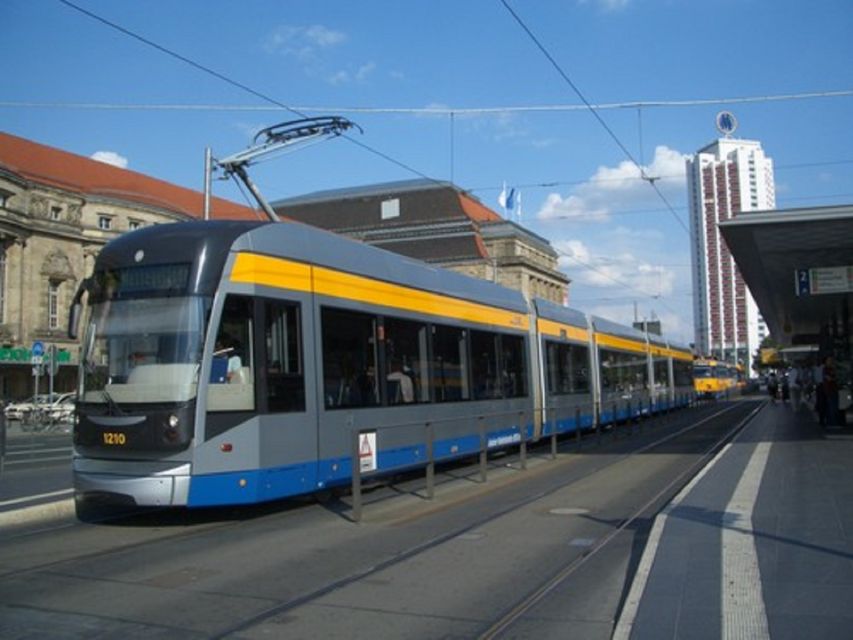
After the central walking section, the group uses the Bimmel, the local term used here for the regional train and tram ride. Your public transport ticket is included, which removes one minor but common travel nuisance: figuring out the correct ticket while trying to stay with a group.
The ride changes the rhythm of the tour. Instead of moving only through the pedestrian center, you see how Leipzig’s public transport connects central sights with other districts. The destination is Bayrischer Bahnhof, described as one of Germany’s oldest railway stations.
The station gives the tour a useful transport angle. Leipzig’s development was tied to rail travel, and a former station is a fitting place to consider how people and commerce moved into and out of the city. The stop also breaks up the walking, which matters if you prefer a tour with regular changes of pace.
There is one practical warning here: the rail and tram portion is not fully under the guide’s control. A public transport strike once meant that a group could not take the tram and completed the route on foot instead. That group still received an informative tour, but you should book this experience for its stories and route, not because you require a guaranteed tram ride.
The Musikviertel and its Wilhelminian streets

From Bayrischer Bahnhof, the route continues by tram toward the Musikviertel. This district is presented as Leipzig’s largest Wilhelminian-style area, giving you a strong contrast with the older trading center.
The architecture here reflects a period of expansion and confidence. Broad streets and large buildings create a different visual scale from the narrow passages and historic market area. Even if you are not an architecture specialist, the change should be easy to notice.
The Musikviertel is particularly useful for anyone who wants to understand Leipzig beyond its best-known central sights. You see a district shaped by institutions, education, culture, and civic ambition. The name also points to Leipzig’s long association with music, though the tour’s emphasis is on the district and its major buildings rather than a concert performance.
One benefit of seeing this area with a guide is that you do not have to identify every building on your own. The tour points out the old university library and other significant structures as you move through the district. Since the route is shared with a group, you should expect an overview rather than a detailed architectural lecture at every façade.
More City Tours in Germany:
- Nuremberg: City Tour with the Bimmelbahn Train
★ 4.4 · 2,475 reviews - Würzburg: City Tour with the Bimmelbahn Train
★ 4.4 · 1,322 reviews - Regensburg: City Tour with the Bimmelbahn Train
★ 4.3 · 1,010 reviews - City tour through Regensburg with the little train
★ 4.0 · 67 reviews
The old university library and Reichsgericht
The old university library is one of the notable stops in the Musikviertel. It adds an academic layer to the tour, after the commercial story of the old center and the transport story of Bayrischer Bahnhof.
The former Reich’s Supreme Court building, now commonly associated with the Reichsgericht, is another major sight. Its scale and formal design fit the district’s grand Wilhelminian character. The building helps show how Leipzig served not only as a trading center but also as a place of national legal and civic importance.
For many people, this is one of the strongest parts of the route. You get to see a monumental public building in context, rather than encountering it as an isolated photo stop. The guide can connect the building to Leipzig’s place in Germany’s legal and political story, while also pointing out how it fits the wider Musikviertel.
The tour information calls this the former Reich’s Supreme Court building, so you should not expect a court visit or an interior tour unless the guide specifically says otherwise. Its value here is the exterior, setting, and explanation.
New Town Hall and Augustusplatz on the way back
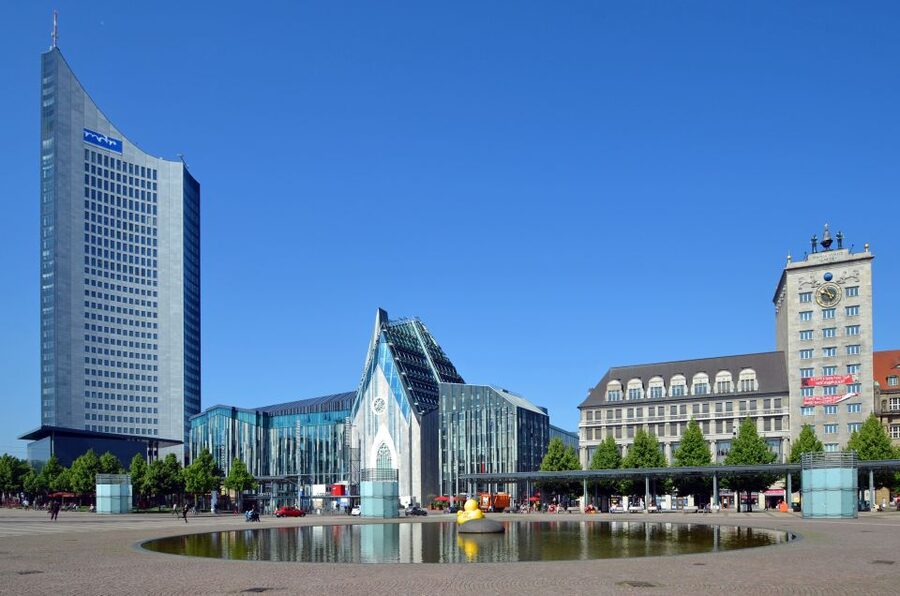
The route continues past the New Town Hall and Augustusplatz before returning to the city center. This final section brings together several themes introduced earlier: municipal power, public space, transport, and Leipzig’s changing urban form.
Augustusplatz is an especially useful closing point because it gives the tour a broad urban setting after the tighter old-town passages. You can compare the scale of the central market area, the railway stop, and the grander civic district. The route ends back in the center, making it easy to continue sightseeing, find a meal, or return to your hotel.
I appreciate this loop shape. You begin at the Old Town Hall, leave the center to see districts many short city tours skip, and finish where you started. That makes the experience practical on a first visit. You are not left at an unfamiliar tram stop with directions to work out on your own.
The ending also gives you a chance to ask for tips about the rest of your stay. The guides are described as offering further suggestions, so arrive with a few questions if you want help choosing what to see next.
Guide quality and group atmosphere

The guide is the heart of this experience. The available tour language is German, and a German audio guide is also included. If you do not understand German well, this is not the right tour for you unless the booking arrangement specifically confirms another language.
The strongest praise centers on the guides’ manner. The tour has been described as interesting, friendly, and easy to follow, with particular appreciation for a guide who listened carefully to questions and addressed both older and more recent parts of Leipzig’s story. Another outing was described as a small-group experience that stayed lively while still making room for individual interests.
That balance matters. A guide who simply recites dates can make even a fine city feel flat. Here, you can expect the emphasis to be on explanation, questions, and connections between places.
The group size is not stated as a fixed limit, so do not assume a private tour. One experience took place in a small group, but the format can vary. If you value quiet access or a highly personal schedule, ask about the group arrangement before booking.
Price, timing, and practical comfort
The $25 price is reasonable for a 2.5-hour guided tour that includes public transport. You are paying not only for the walk but also for a local route that links several districts without making you plan the transfers yourself.
The value is best for a first visit or a short stay. You cover the old center, a historic station, the Musikviertel, the Reichsgericht, the New Town Hall, and Augustusplatz in one outing. Doing this independently would cost less if you already know the city and its transport system, but you would lose the guide’s historical links and local pointers.
Bring comfortable shoes. Food and drinks are not included, and umbrellas are specifically not provided, so check the weather and bring your own rain protection if needed. The tour is listed as wheelchair accessible, but the route includes walking and public transport, so it is sensible to confirm any specific mobility needs before booking.
Free cancellation is available up to 24 hours before the start, and you can reserve now and pay later. Those terms are helpful if your Leipzig plans are still shifting, but the main decision is still the route and German-language format.
Who should book this Leipzig route?
I would choose this tour if you want a quick but substantial introduction to Leipzig’s central sights and surrounding districts. It suits first-time visitors, short-break visitors, and anyone who prefers a guide to explain the city while public transport handles the longer connections.
It is also a good fit if you want more than the standard old-town walk. The inclusion of Bayrischer Bahnhof and the Musikviertel gives the outing a wider reach, while the stories of the trade fairs and 1989 give the buildings human meaning.
You may want another option if you need an English-language tour, want lengthy interior visits, or dislike schedules affected by public transport. The experience is also less suitable for anyone seeking a food tour, a museum visit, or a specialist music lecture.
Should you book this tour?
Book it if you want a well-priced Leipzig orientation with a mix of walking, tram travel, architecture, trade-fair history, and the events of 1989. The route is varied, the transport ticket is included, and the guides focus on answering questions rather than rushing through a script.
Skip it if your German is limited or if you need every transport segment to run exactly as planned. For everyone else, this is a practical way to see how Leipzig’s old center connects to its railway and Musikviertel districts, all in a manageable two and a half hours.
FAQ
Where does the Leipzig city tour begin?
It begins at the Altes Rathaus, at the passage beneath the tower, Markt 1.
How long does the tour last?
The tour lasts 2.5 hours.
What languages are available?
The live tour guide and audio guide are available in German.
Is public transport included?
Yes. A public transport ticket is included, and the route uses regional train and tram services.
Which main sights are included?
The route includes Leipzig’s old town, Mädlerpassage, Nikolaikirche, Bayrischer Bahnhof, the Musikviertel, the old university library, the former Reich’s Supreme Court building, the New Town Hall, and Augustusplatz.
Is the tour wheelchair accessible?
Yes, the activity is listed as wheelchair accessible.
Can I cancel or pay later?
You can cancel up to 24 hours in advance for a full refund. Reserve now and pay later is also available.
Just added around Germany
- City tour through Regensburg with the little train★ 4.0 · 67 reviews
- City tour through Nuremberg with the little train – Christmas tour★ 4.0 · 23 reviews
- Nuremberg Private Guided Tour from Munich by Rail★ 4.5 · 23 reviews
- Dachau Concentration Camp Memorial Site Tour from Munich by Train★ 4.5 · 5,637 reviews
- Dachau Small-Group Half-Day Tour from Munich By Train★ 5.0 · 811 reviews
- Salzburg History & Food Private Tour with Munich train add-on★ 4.5 · 24 reviews
- Lübeck Day Trip From Hamburg By Train With Private Guide And Lunch★ 5.0 · 16 reviews
- Private Day Trip to Potsdam from Berlin by Train★ 4.5 · 27 reviews
Germany Train Tours, compared.
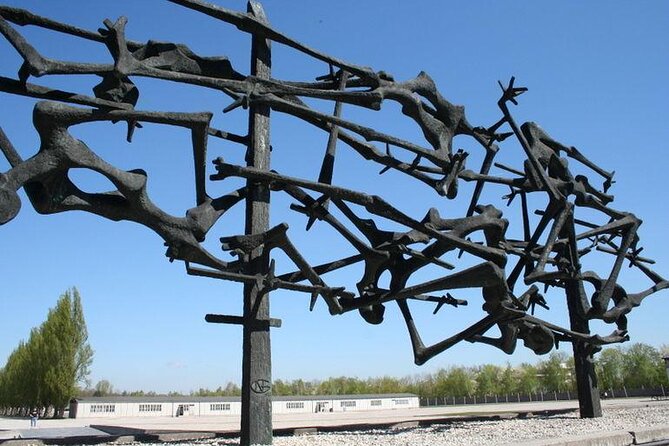
Dachau Concentration Camp Memorial Site Tour from Munich by Train
Read our review →
Salzburg Sightseeing Day Trip from Munich by Rail
Read our review →

Würzburg: City Tour with the Bimmelbahn Train
Read our review →
Regensburg: City Tour with the Bimmelbahn Train
Read our review →
Dachau Concentration Camp Memorial Tour with Train from Munich
Read our review →
Guided Dachau Concentration Camp Memorial Site Tour with Train from Munich
Read our review →
Dachau Small-Group Half-Day Tour from Munich By Train
Read our review →Browse the lists this tour appears in