
REVIEW · CANADA
Private Walking Tour of Old Quebec with Funicular
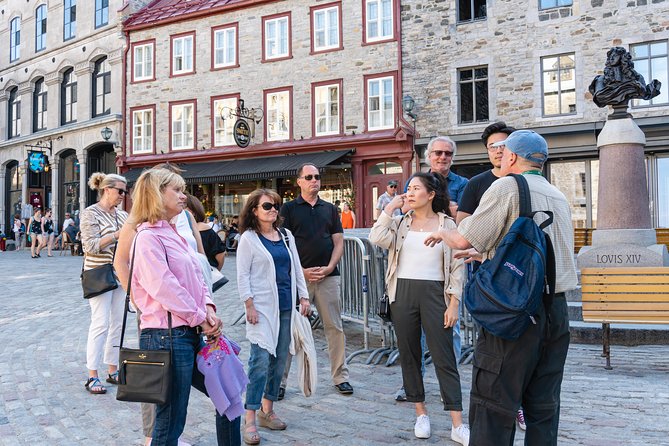
Quebec City reveals itself best on foot, where grand stone buildings give way to steep lanes, old fortifications, and views over the St. Lawrence River. This private tour links Upper Town and Lower Town in two to three hours, then uses the funicular to spare you one demanding climb while giving you a fresh view of the city.
I like the personal format and the chance to shape the walk around your interests. Guides such as Veronica, Luis, Lynn, Sam, Muriel, and Pierre have adjusted pace, answered family questions, suggested restaurants, and pointed out local treats such as Coffee Crisp and maple candy. I also like that hotel pickup is available in Old Quebec and that the tour ends at Place Royale, a useful spot for continuing your day.
The main caution is physical. You will walk over hills, cobblestones, and stairs, including the area around Breakneck Steps. One visitor found the commentary hard to hear and felt the pace allowed too little time for photos, so tell your guide at the start if you need breaks, a slower walk, or more conversation.
Key points to know before booking
- The funicular saves your legs: One ticket per person is included, linking the upper and lower parts of Old Quebec.
- You get a private guide: Only your group participates, with a maximum of eight people per booking.
- The route covers the city’s main core: Expect Parliament, the Plains of Abraham, Dufferin Terrace, Old Quebec’s walls, Place Royale, the Old Port, and more.
- The guide can adjust the tour: The strongest experiences have included changes for mobility needs, children, food interests, politics, art, and local customs.
- The walk is active: Comfortable shoes are essential, and you should dress for the weather because the tour operates outdoors in all conditions.
- The finish is well placed: The standard end point is Place Royale, close to the Lower Town and Old Port.
Why a private walk works well in Quebec City
Old Quebec is compact enough to explore on foot, but it is not flat or simple. A map can show you the route, yet it cannot explain why the city is divided into Upper Town and Lower Town, how the fortifications shaped its growth, or which details deserve a closer look.
A private guide gives you room to ask questions as they arise. If you care about politics, ask for more time around Parliament. If you want local customs and food tips, say so early. If your children are with you, guides such as Sam have shown they can keep adults and children involved without turning the walk into a school lecture.
This format also helps if you have only one day in Quebec City. You see a wide sweep of the historic center without spending time figuring out the best route. The guide handles the order of the stops, while you can focus on the views and the stories.
The tour has earned a 5/5 rating from 238 reviews and a 100 percent recommendation rate. That is a strong record, though your experience will depend partly on the guide assigned to your date and how clearly you explain what you want from the walk.
More Funicular and Mountain Railway Rides in Canada:
- Old Quebec Classique Walking Tour with Funicular
★ 5.0 · 1,317 reviews - Quebec City: Old Quebec Classic Walking Tour with Funicular
★ 4.9 · 695 reviews - Shore Excursion: Private Walking Tour with Funicular
★ 5.0 · 31 reviews
Starting in Upper Town near Parliament
The route includes Parliament of Quebec, Tourny Fountain, and the Plains of Abraham. These sites give you a useful introduction to Quebec City beyond the postcard streets of the old center.
Parliament is the natural place to discuss Quebec’s political identity and the role of the province within Canada. Tourny Fountain adds a decorative pause, while the Plains of Abraham open up the story of the city’s military past and provide more breathing room than the tight lanes of Old Quebec.
This opening section is also practical. It helps you get your bearings before heading into the denser historic streets. If you are staying several days, listen for suggestions about places to return to later. Several guides have offered restaurant and sightseeing advice that made the rest of a Quebec City stay easier to plan.
The first section is listed as about one hour, though the full tour lasts two to three hours. Treat those times as a rough outline rather than a strict schedule. A private walk works best when you and the guide agree on where to spend more time.
Passing through the old walls and gates
The walls and gates of Old Quebec are among the city’s most important features. They make the historic center feel distinct from an ordinary downtown and help explain why the Upper Town developed as a fortified city.
Your guide can put the stonework into context as you move between the main landmarks. You will see how the gates control movement into the old district and how the city’s defensive past still shapes the streets you walk today.
This is an area where a guide adds real value. On your own, you may see an attractive gate and move on. With someone who knows the city, you can connect the walls with Parliament, the Plains of Abraham, the Upper Town, and the Lower Town. That connection is more useful than a long list of dates.
The walk is not built around admission tickets. The listed sites are viewed from outside and admission is free, so the price mainly pays for the guide’s time, local interpretation, planning, and the funicular ticket.
Notre Dame de Quebec and the Upper Town streets
Notre Dame de Quebec is another key stop in the Upper Town. It gives the tour a religious and cultural dimension, balancing the political focus of Parliament and the military story of the Plains of Abraham.
You should expect the guide to explain the importance of the church and the surrounding district, though the exact amount of time can vary. If religious art, architecture, or Quebec’s French heritage matters to you, say so before the walk begins. The private format makes that request practical.
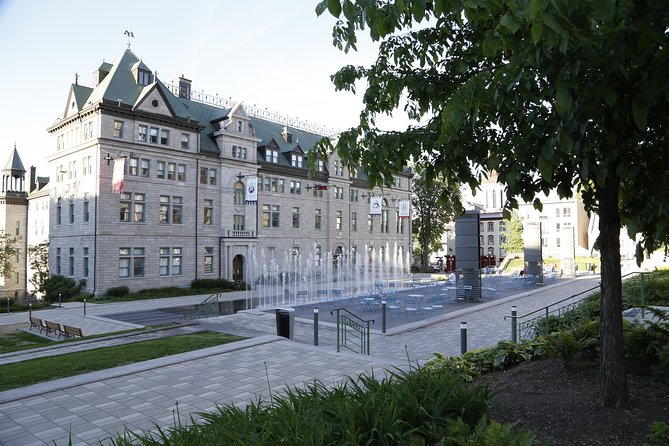
The Upper Town portion also includes Quebec City Hall. Here the route shifts back toward civic life and the way the city functions today. This combination of church, government, defensive walls, and public squares helps you see Old Quebec as a living city rather than a museum set.
Guides have been praised for being warm, patient, and proud of Quebec. Lynn, Jocelyn, Etienne, Serge, and Yves Trudeau are among the guides singled out for making the city’s past easier to understand. The exact guide is not guaranteed, but the range of names gives you an idea of the local character built into this experience.
More Walking Tours in Canada:
- Quebec City Private Walking Tour with Funicular Ride
★ 4.8 · 10 reviews - Quebec City Scenic Walking Tour with 1 Funicular Ride
★ 4.5 · 7 reviews - Plitvice Lakes: Guided Walking Tour with Train and Boat Ride
★ 4.4 · 1,093 reviews - Hanoi Walking Street Food Tour with Train-Street Visit
★ 5.0 · 857 reviews
Dufferin Terrace and the best broad views
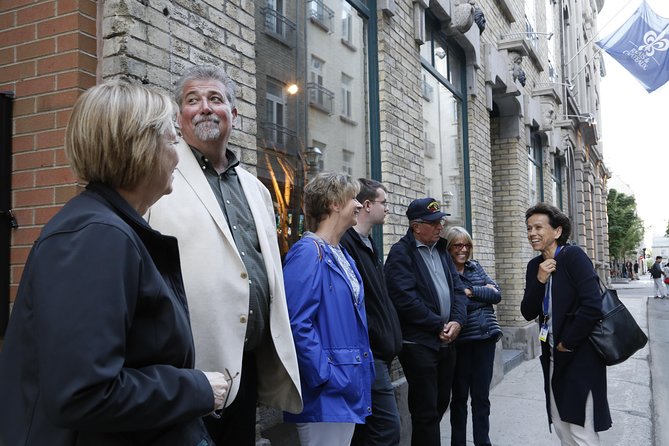
Dufferin Terrace is one of the tour’s visual highlights. The promenade gives you a wider view after the close quarters of Old Quebec’s lanes, and it is an ideal place to pause for photographs.
You can look out toward the river and take in the relationship between the upper city and the lower districts. The guide can also help you understand why the terrace is more than a scenic walkway. It sits beside some of Quebec City’s most important historic buildings and offers a clear sense of how the city occupies its hilltop position.
This is one place where I would speak up about timing. A private tour should allow some space for photographs, but the guide may continue if the group does not ask to stop. One less positive experience came from a walk that felt heavy on information and light on pauses. You can avoid much of that by saying, I would like five minutes for pictures here, or I need a moment to catch my breath.
The funicular ride between the two levels
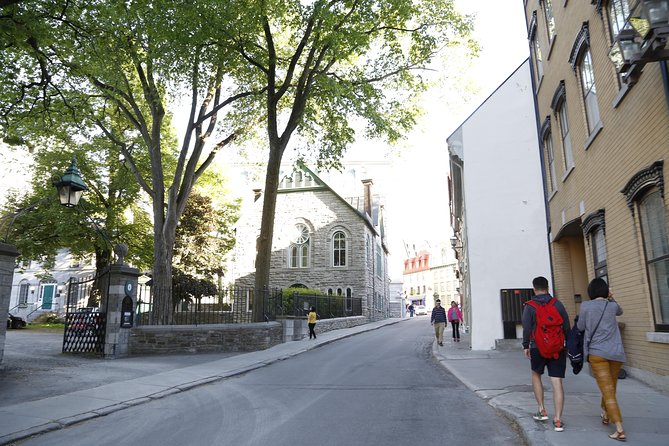
The included funicular ticket is a small feature with a big practical benefit. Instead of walking every steep connection between Upper Town and Lower Town, you ride between the two levels and see the city from a different angle.
The ride also breaks up the walking. That matters if you are traveling with children, managing mobility issues, or simply want to save energy for the rest of your day. One ticket per person is included, so there is no separate fare to arrange during the tour.
The funicular is not a substitute for all hills and stairs. You still need to walk through both districts, and Breakneck Steps remains part of the route. A guide has adapted the walk for a participant with mobility concerns, but you should explain your needs at the beginning rather than assume the standard route will suit you.
Breakneck Steps and the Lower Town
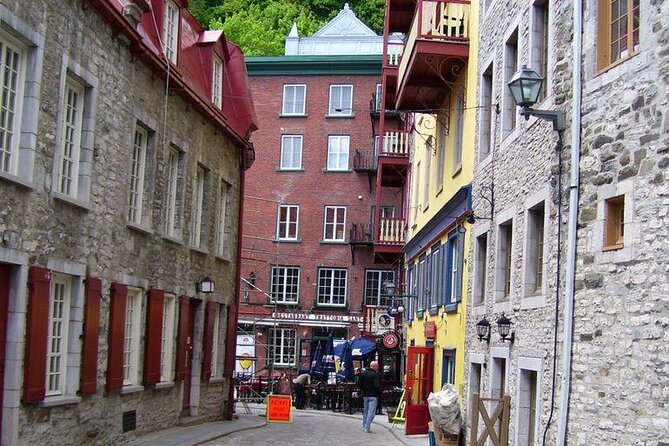
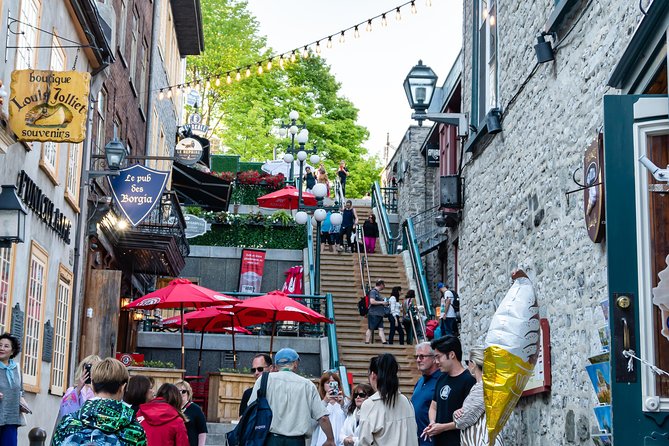
Breakneck Steps connect the upper and lower parts of Old Quebec and are one of the city’s most recognizable pedestrian routes. The name gives you a fair warning: this is not a flat stroll.
The steps are interesting because they show how sharply Quebec City changes level within a small area. They also lead you toward the character of Lower Town, where the streets feel different from the formal public spaces above.
If stairs are difficult for you, ask whether the guide can modify this section. The tour description calls for a moderate amount of walking, and the route includes gentle hills and stairs. Comfortable shoes are not optional here. Cobblestones and uneven surfaces can make a short route feel much longer in poor footwear.
This is also the part of the tour where pace matters most. Guides praised for walking at a leisurely pace, such as Etienne, made the experience easier to follow. If you prefer a brisk route to cover more ground, say that too.
Place Royale and the Quebec City Mural
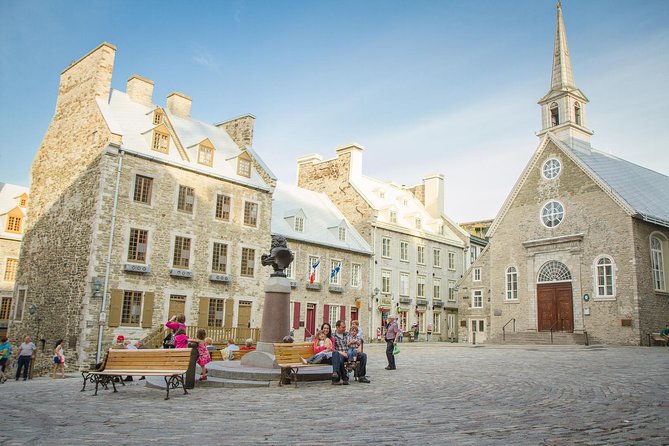
Place Royale is the standard end point, and it is a satisfying one. The square sits in the Lower Town and brings together architecture, public space, and the city’s French character in a compact area.
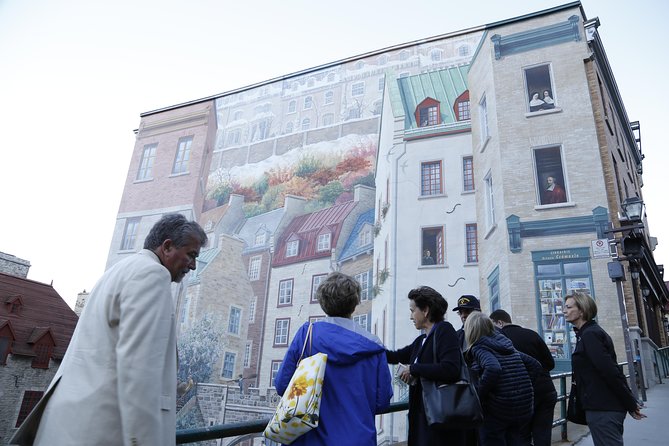
The Quebec City Mural adds another visual stop. Murals can be easy to pass without understanding, but a local guide can point out the figures, events, and details represented in the scene. Ask questions if you enjoy art or city symbolism, since this is an area where your own interests can shape the conversation.
Ending at Place Royale also gives you options. You can continue toward the Old Port, stay in the Lower Town, or ask to finish elsewhere. The standard end point is not mandatory, so mention your preferred finish to the guide during the walk.
Old Port and the final stretch
The Old Port extends the walk beyond the most photographed squares and gives you a sense of Quebec City’s working connection to the river. It is a useful final stop because it changes the mood again, from old churches and fortifications to a more open waterfront district.
The route also includes La Promenade des Gouverneurs, another place for views and a better feel for the city’s layered geography. Together, the promenade and Old Port help connect the scenic, historic, and everyday sides of Quebec City.
The advertised duration is two to three hours. That is enough time for a strong orientation, but not enough for long interior visits or a full study of every stop. Think of this as a guided introduction that helps you decide where to return on your own.
Price, group size, and what you receive
At $119.01 per person, this is not the cheapest way to walk around Old Quebec. The value depends on your group size and how much you want personal attention.
For one or two people, the cost is easier to justify if you value a private guide, hotel pickup in Old Quebec, and a route shaped around your interests. A family or group of friends can spread the cost across as many as eight people, making the private format more attractive than it first appears.
The price includes:
- A licensed private local guide
- Two to three hours of walking
- Hotel or Airbnb pickup within Old Quebec
- One funicular ticket per person
The tour does not include a meal or a long list of paid attractions. That keeps the experience simple, but it also means you are paying mainly for the guide. Choose it if you want context, questions answered, and a flexible route. Skip it if you prefer to wander alone and read about each stop at your own pace.
The tour is offered in English, and the guides may have additional language skills. Luis, for example, led a Spanish-language walk and spoke several languages. If language matters to your group, confirm it when booking rather than relying on availability.
Practical advice for a smoother walk
Meet in the Old Quebec area, either in your hotel lobby or Airbnb if pickup is available, or at an agreed meeting point nearby. The general ending is Place Royale, but you can request another finish.
Wear walking shoes with good support. You will encounter hills, steps, and outdoor surfaces. Bring clothing suitable for the forecast because the experience runs in all weather unless conditions force cancellation.
The tour is private, but that does not mean the guide can read every need without being told. At the start, explain:
- How much walking your group can comfortably manage
- Whether you want more history, food, architecture, politics, or local life
- How often you would like photo stops
- Whether children need shorter explanations or extra breaks
- If anyone has hearing or mobility concerns
One participant found a soft-spoken guide difficult to hear. Stand close enough to follow the commentary, and speak up promptly if you are missing words. A private group of up to eight should make that adjustment easier.
Free cancellation is available up to 24 hours before the start time for a full refund. Changes or cancellations within 24 hours are not refunded. If poor weather forces the company to cancel, you can choose another date or receive a full refund.
Who will get the most from this tour
I would choose this walk for a first visit to Quebec City, especially if I had only one day or wanted a clear introduction before exploring alone. It is also a good fit for families, couples, cruise passengers, and small groups who want to avoid a large scheduled tour.
It suits people who enjoy asking questions and changing the emphasis as they go. Muriel has tailored walks around history, politics, culture, and art, while other guides have offered food tips and practical ideas for the rest of a stay.
The tour is less suitable if you dislike hills, stairs, or outdoor walking. It may also disappoint you if you expect a long stop at every landmark. With only two to three hours, the goal is broad coverage and useful context, not a slow visit inside every church or public building.
Should you book the Old Quebec private walking tour?
Book it if you want to understand how Upper Town, Lower Town, the walls, riverfront, churches, and public squares fit together. The private setup, local guide, funicular ride, and Place Royale finish make it a strong orientation tour with room for personal questions.
Before you go, make your priorities clear. Ask for photo pauses, mention mobility needs, and request a slower or faster pace as needed. If you do that, the tour is likely to feel much more personal than a standard route through the old city.
Skip it if you are happy exploring with a map and do not need interpretation. For most first-time visitors who want history, local advice, and a manageable way to see both levels of Quebec City, the $119.01 price can be fair value, particularly for a small group.
FAQ
How long does the private walking tour last?
The tour lasts approximately two to three hours.
What is included in the price?
The price includes a licensed private local guide, two to three hours of walking, hotel pickup within Old Quebec, and one funicular ticket per person.
Where does the tour start and end?
The start is arranged in Old Quebec City. Pickup may be available at your hotel lobby or Airbnb in the Old Quebec area. The standard ending is Place Royale, though you can ask your guide to finish elsewhere.
How many people can join the private tour?
A booking can include a maximum of eight people. Only your group participates.
Is the tour suitable for people with mobility concerns?
A moderate amount of walking is involved, including hills and stairs, and comfortable walking shoes are recommended. Guides can adjust the route for individual needs, but you should discuss mobility concerns at the start.
What happens if the weather is poor?
The experience operates in all weather, so you should dress appropriately. If the tour is canceled because of poor weather, you will be offered another date or a full refund.
Just added around Canada
- Whistler Train Wreck, Suspension Bridge & Hidden Waterfall Adventure★ 5.0 · 24 reviews
- Private Vancouver Airport YVR or Train Stn Transfer to Vancouver★ 5.0 · 5 reviews
- 6-Day Rocky Mountaineer Train Tour, From Vancouver to Rockies★ 4.5 · 10 reviews
- 5-Day Rocky Mountaineer Train Tour, From Vancouver to Rockies★ 4.5 · 8 reviews
- Quebec City Scenic Walking Tour with 1 Funicular Ride★ 4.5 · 7 reviews
- Shore Excursion: Private Walking Tour with Funicular★ 5.0 · 31 reviews
- Guided Bike Tour on Historical Kettle Valley Railway at Myra Canyon & Wine Tour★ 5.0 · 19 reviews
- Bicyle Tour on Historical Kettle Valley Railway from Myra Canyon to Penticton★ 5.0 · 62 reviews
Canada Train Tours, compared.
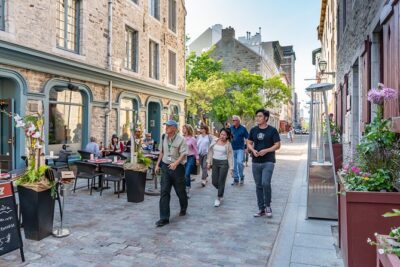
Old Quebec Classique Walking Tour with Funicular
Read our review →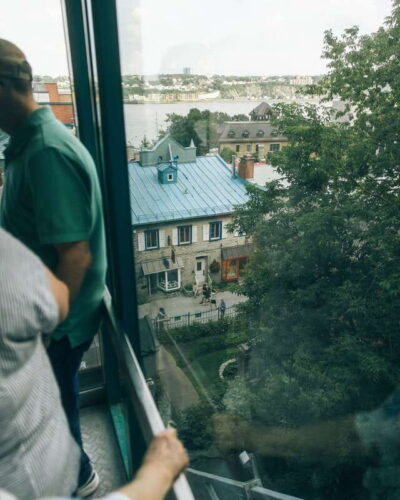
Quebec City: Old Quebec Classic Walking Tour with Funicular
Read our review →
Niagara Parks: Power Pass + Falls Incline Railway
Read our review →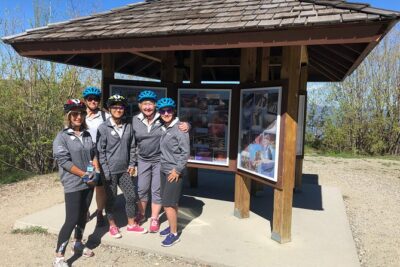
Bicyle Tour on Historical Kettle Valley Railway from Myra Canyon to Penticton
Read our review →
Shore Excursion: Private Walking Tour with Funicular
Read our review →
Whistler Train Wreck, Suspension Bridge & Hidden Waterfall Adventure
Read our review →
Guided Bike Tour on Historical Kettle Valley Railway at Myra Canyon & Wine Tour
Read our review →
Browse the lists this tour appears in