
REVIEW · WALKING
Sofia Hidden Gems: Small-Group Walking Tour with Tram Ride
Sofia’s best introduction may be found on foot, then finished with a short ride on the city’s tram or metro. This small-group tour links Roman ruins, Orthodox churches, Ottoman landmarks, grand public buildings, and a local market in about three hours.
I like the unusual access to the National Library and Sofia University, both of which you visit inside. I also like the route’s wide historical range, from the fourth-century Rotunda of St. George to the 1950s Socialist Classicist Largo.
The main consideration is pace. With many stops packed into two to three hours, some visits are brief, and several landmarks are viewed from outside. The route also includes outdoor walking, so bring comfortable shoes, water, and sun protection.
Key points to know before booking
- Peter leads a personal small-group walk: The group is capped at 10, giving you a better chance to ask questions and keep the tour moving at a comfortable pace.
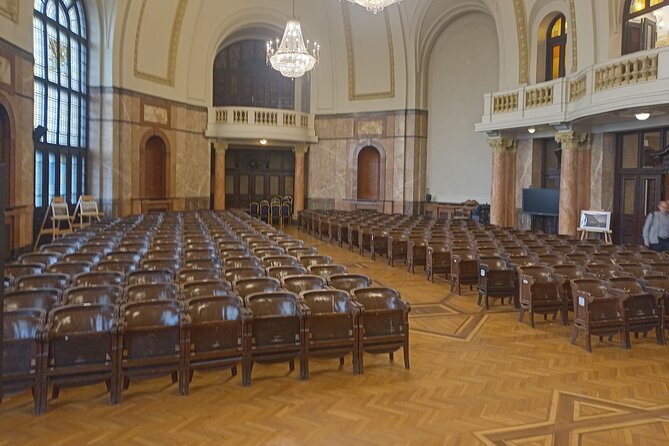
- You enter Sofia University and the National Library: These are not just exterior photo stops. The interiors add a useful look at Bulgaria’s cultural life.
- The route covers several eras in one morning or afternoon: Roman Serdica, medieval and Orthodox Sofia, Ottoman rule, modern Bulgaria, and the Socialist period all appear.
- A tram or metro ride is included: Your city transport card and short ride add a practical taste of local transport without requiring you to work out the system yourself.
- The finish is near Sofia’s Central Market Hall: You can continue exploring, eat nearby, or reach a bus station after the walk.
- The price is reasonable for the scope: At $45.66 per person, the cost reflects a private-feeling group size, a guide, inside visits, and public transport.
Why this Sofia walk works so well
The strength of this tour is its range. Sofia can look like a collection of unrelated buildings until someone explains the layers beneath your feet. Here, you move from the ancient city of Serdica to Orthodox Bulgaria, the Ottoman period, the modern state, and the Socialist capital center.
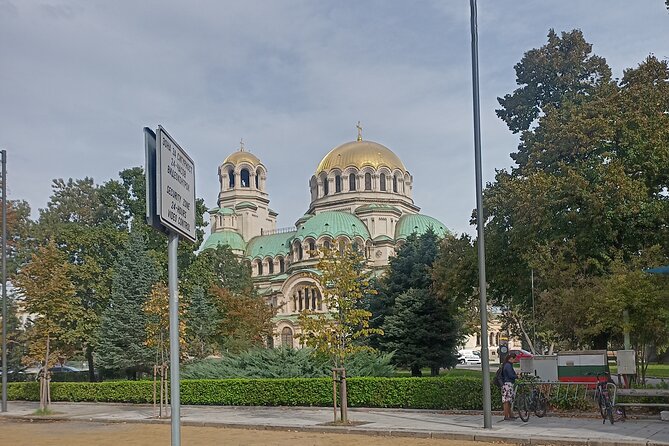
You begin at Saint Sofia Church, a fourth-century building that gave the city its current name. You then pass the Alexander Nevski Cathedral, one of the largest Christian church buildings in the world by volume, before reaching civic and cultural buildings that many independent walkers might skip.
I especially like the balance between famous sights and less obvious stops. The cathedral is an essential first visit, but the National Library and Sofia University give the tour more substance. These places show how Bulgaria preserved and developed its language, education, and national identity.
The group limit matters here. Ten people is small enough for a guide to answer questions and manage short interior visits without the feel of a large procession. Peter is described as patient and energetic, and his approach includes extra locations when time and interest allow. He also helped participants with souvenirs and offered water, small touches that can make a long walking tour feel more personal.
More Tram and Streetcar Tours in the world:
- Mallorca: Island Tour with Boat, Tram & Train from the South
★ 4.4 · 3,888 reviews - Lisbon: 72/96-Hour Hop-On Hop-Off Bus, Tram & Boat Ticket
★ 4.4 · 2,170 reviews - From Cape Town: Franschhoek Wine Tram Hop-on Hop-off
★ 4.7 · 1,972 reviews
Saint Sofia Church and the cathedral district
Saint Sofia Church is a smart starting point because its age sets the tone immediately. The present church dates to the fourth century, and an earlier building hosted the Council of Serdica, probably in 343, with 316 bishops attending.
You receive about 10 minutes here, with no admission charge. That is enough for an introduction and a look around, though not enough for a slow architectural study. The important point is the church’s connection to the city’s name. Sofia was previously known as Serdika, and the church eventually gave the capital its modern name.
The nearby St. Alexander Nevski Cathedral provides a sharp contrast. Its Neo-Byzantine design and immense scale make it one of Sofia’s most recognizable buildings. The tour allows about 10 minutes, again with free entry listed.
Do not expect a long, quiet cathedral visit on this schedule. Instead, use the stop to understand the building’s national role and admire its size, exterior form, and Orthodox setting. If you want extended time inside, you may need to return independently.
Art, books, and education around central Sofia
Kvadrat 500 is the newest and largest building of Bulgaria’s National Gallery. It opened in 2015 and displays about 1,700 works in 28 halls across four levels. The collection covers Bulgarian art from the mid-19th century onward, European art from the 15th to 19th centuries, and works from Asia, Africa, and America.
The tour does not specify an extended museum visit, so treat this as a cultural landmark and possible extra stop rather than a full gallery outing. If art is a major reason for your visit, you will want separate time for the interior.
The National Library is more directly built into the walk. Its collection holds nearly 8.5 million documents, and the library receives about 70,000 publications each year. You visit inside for around 10 minutes.
That short visit still matters. A library can tell you more about a country than another grand facade. Bulgaria’s national library reflects the importance of books, language, and education in the country’s cultural story. You will not see all eight million documents, of course, but you get a sense of the institution’s scale and purpose.
Sofia University St. Kliment Ohridski is another interior visit, also listed at about 10 minutes. Founded as Bulgaria’s first higher educational institution, it continues a teaching tradition that reaches back to public educational activity in the ninth century.
I like these two stops because they add living institutions to the usual sightseeing circuit. You are not only looking at old monuments. You are seeing places tied to Bulgaria’s intellectual life.
The city’s grand public buildings and performing arts
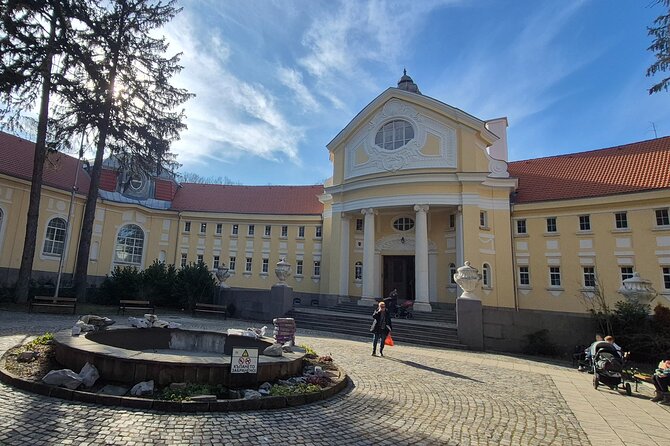
The route continues through Sofia’s civic center, including a Neo-Renaissance building designed by Constantin Yovanovic between 1884 and 1886. Yovanovic also designed the Serbian Assembly. The architecture reflects Sofia’s effort to present itself as a modern European capital after Bulgaria’s liberation in 1878.
The opera story adds another layer. In 1890, Dragomir Kazakov, Ivan Slavkov, and Angel Bukoreshtliev organized Bulgaria’s first opera troupe. Its performances included full operas and excerpts, with Bulgarian, Czech, and Italian participants.
The National Theatre is another highlight. Finished in 1906 and opened in January 1907, it was designed by Ferdinand Fellner and Hermann Helmer, architects whose work was popular across Europe in the early 20th century. Its Art Nouveau style and auditorium, seating 848, made it one of Sofia’s major public buildings.
These stops are brief, so listen for the story rather than expecting a full architectural inspection. The value comes from seeing how Bulgaria expressed its new national identity through opera, theatre, education, and public construction.
More Walking Tours in the world:
- Old Quebec Classique Walking Tour with Funicular
★ 5.0 · 1,317 reviews - Plitvice Lakes: Guided Walking Tour with Train and Boat Ride
★ 4.4 · 1,093 reviews - Hanoi Walking Street Food Tour with Train-Street Visit
★ 5.0 · 857 reviews - Lyon Highlights & Secrets Walking Guided Tour (small group) including Funicular
★ 5.0 · 831 reviews
The Largo, Roman Serdica, and the Rotunda
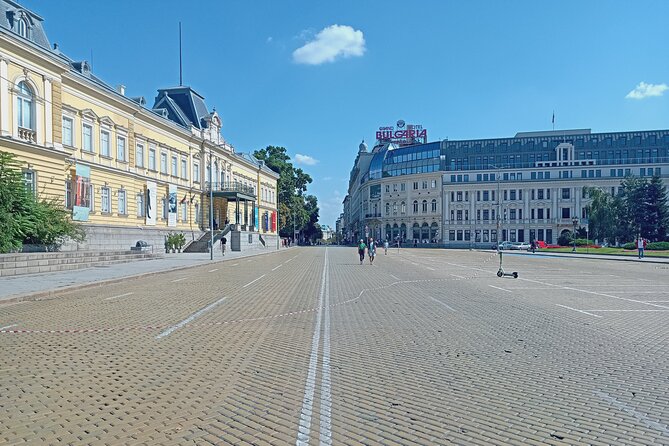
The Largo is Sofia’s grand Socialist Classicist center. Three large buildings, designed and built in the 1950s, form an ensemble around the representative heart of the city. It is a useful reminder that Sofia’s story did not stop with Roman ruins or Orthodox churches.
Beneath the Largo, the Ancient Serdica Archaeological Complex reveals the Roman city. You spend about 15 minutes here, the longest timed stop on the route. Remains include part of the decumanus maximus, the main east-west street, along with a large residential building, shops, and a lapidarium.
This is one of the tour’s most useful history lessons because the ruins sit directly below the modern center. You can see how Roman urban life was organized, with streets, homes, commercial spaces, and movement through the city. The remains are free to visit, and the open setting makes them easy to understand even if you are not an archaeology specialist.
The Rotunda Church of St. George is even older in feel. This red-brick Late Antique building was first constructed in the early fourth century as Roman baths and later became a church within the walls of Serdica. It is considered the oldest building in modern Sofia.
The stop lasts about five minutes, so expect a quick explanation and look rather than a lengthy church visit. Its plain brick exterior and compact shape contrast with the scale of Alexander Nevski Cathedral. That contrast is part of the pleasure: Sofia’s oldest surviving building can be easy to miss among later structures.
Mineral baths, the synagogue, and Ottoman Sofia
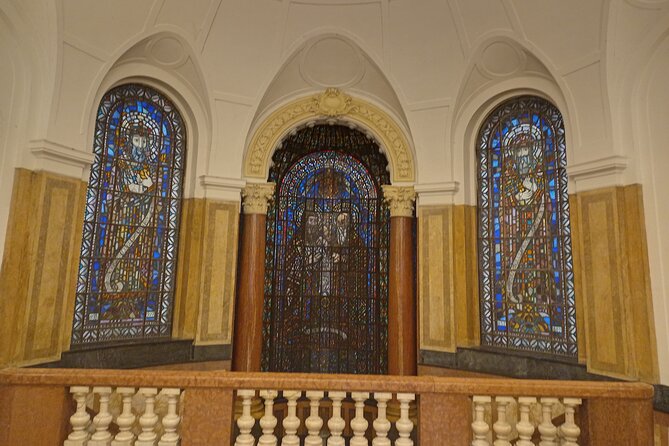
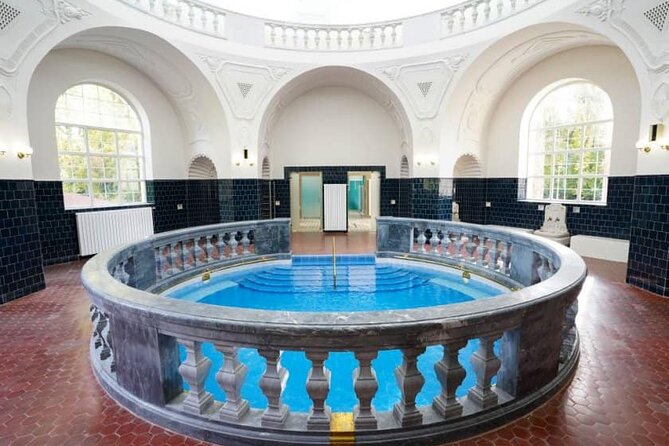
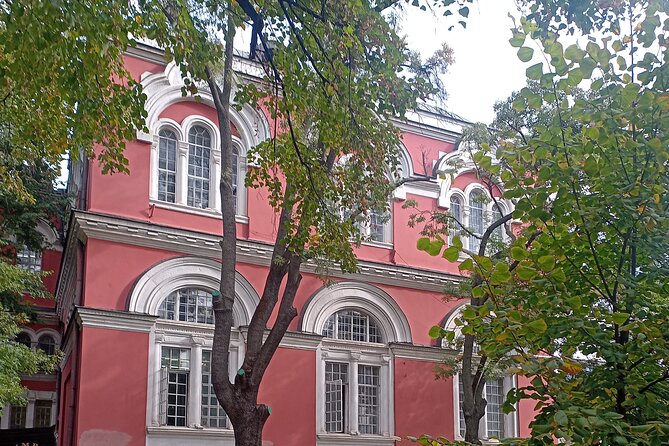
The Central Mineral Baths are among the city’s most attractive civic buildings. Designed in 1904 and 1905 by Petko Momchilov and Friedrich Grünanger, the building combines Vienna Secession design with Bulgarian, Byzantine, and Eastern Orthodox decorative elements.
The building’s setting near Sofia’s hot mineral springs explains its purpose and location. Even with only about 10 minutes, you can appreciate the patterned facade and the way local motifs were worked into an international style.
The route also passes the Central Sofia Synagogue. Its construction was organized by Sofia’s Jewish community, led by Rabbi Dr. Ehrenpreis and community president Ezra Sol. The Viennese architect Friedrich Grünanger completed the building in four years.
One unusual detail is that tombstones from an old Jewish cemetery were used in the synagogue’s base. The names of the 10 leading contributors can be seen on the wall after entering. These details give the building a human and local context that a quick exterior photograph would miss.
Banya Bashi Mosque brings the Ottoman period into the same compact route. Built in 1576, it was designed by Mimar Sinan, one of the best-known Ottoman architects. Its name means many baths, a reference to Sofia’s mineral springs.
The route does not list a timed interior visit here, so plan on an exterior explanation unless your guide’s schedule allows more. The mosque’s location near the baths makes the city’s Roman, Ottoman, and modern use of mineral water easier to connect.
The West Gate and Women’s Market
The West Gate of Serdica is a short five-minute stop. A preserved section of the fortress wall includes a pentagonal tower beside the gate and a triangular tower nearby. The site lies between St. Joseph Catholic Cathedral, Todor Alexandrov Boulevard, and the monument that symbolizes Sofia.
This is a small archaeological stop, but it helps you picture the limits of the Roman city. It also shows how many religious traditions and historical periods share the same central streets.
The final major stop is Zhenski Pazar, or the Women’s Market. Established more than 140 years ago, it remains one of Sofia’s oldest trading centers. The scheduled visit is about 10 minutes.
Do not expect a long market meal or shopping session during the tour. Think of this as a quick introduction to everyday Sofia, after the formal churches, libraries, and government buildings. If the market interests you, return after the tour with more time and a little cash for browsing.
The tram ride and practical value at $45.66
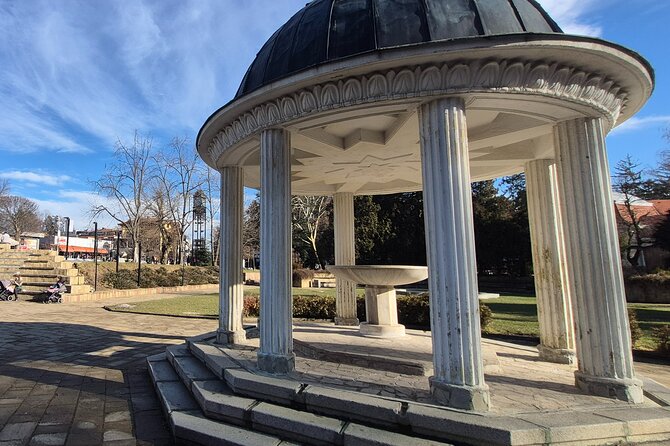
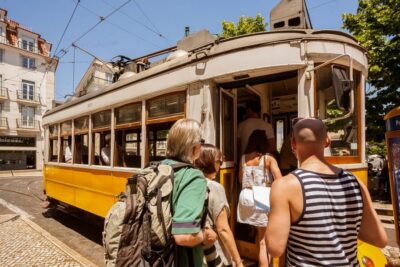
A city transport card and a short tram or metro ride are included. The ride is not a major sightseeing segment, but it adds a useful local detail and gives your feet a break between walking sections.
The tour costs $45.66 per person. For two to three hours, that is not the cheapest way to walk around Sofia, since many of the landmarks have no admission charge. You are paying for the guide’s interpretation, route planning, the small group, inside access at the library and university, and the transport card.
I consider the value good if you want a structured first look at Sofia and prefer to ask questions as you go. It is less compelling if you already know the center well or want to spend long periods inside museums and churches. The tour’s purpose is breadth and context, not slow, specialist visits.
With a maximum of 10 people, it has a more personal feel than a large city walk. The average booking lead time is about 25 days, so reserve ahead if your schedule is fixed.
Timing, meeting point, and who should book
Meet at Saint Sofia Church, Old City Center, ul. Paris 2. The tour ends at Sofia’s Central Market Hall, on the lower level of the Central Sofia Market Hall at 25 Knyaginya Maria Luiza Boulevard. The ending point is near a bus station, which makes it practical for continuing across the city.
The walk includes travel time between stops. Wear shoes suited to city pavement, carry water, and use sunscreen, as much of the experience takes place outdoors. Most people can participate, and public transport is nearby.
The tour works best early in your Sofia stay. It gives you a map in your head, introduces several neighborhoods and landmarks, and helps you decide where to return for a longer visit. It suits first-time visitors, history-minded walkers, and anyone who wants a guide to connect Roman, Bulgarian Orthodox, Ottoman, Jewish, and Socialist sites.
Should you book Peter’s Sofia walk?
Book it if you want a compact, well-rounded introduction with a guide who can answer questions and add extra stops when possible. Peter’s patience, energy, and willingness to help with practical needs are important advantages, especially for people who want more than a rehearsed list of dates.
Skip it if your main goal is museum time, extended cathedral visits, or a relaxed market afternoon. The route covers a lot, and several stops last only five to 10 minutes.
For most first visits, I would book it near the start of a Sofia stay. The combination of Roman ruins, major churches, cultural institutions, public buildings, a market, and a short tram or metro ride gives you a useful framework for exploring the capital on your own.
FAQ
How long does the Sofia walking tour last?
The experience lasts approximately two to three hours, including travel time between stops.
What language is the tour offered in?
The tour is offered in English.
How many people can join the tour?
The group has a maximum of 10 travelers.
Is public transportation included?
Yes. The tour includes a city transport card and a short tram or metro ride.
Where does the tour start?
It starts at Saint Sofia Church, Old City Center, ul. Paris 2, 1000 Sofia, Bulgaria.
Where does the tour finish?
It finishes at Sofia’s Central Market Hall, 25 Knyaginya Maria Luiza Boulevard, on level minus one. The end point is close to a bus station.
Are admission tickets included?
The listed stops have free admission. The tour also includes an inside visit to the National Library and Sofia University.
Can I cancel for a full refund?
Yes. You can cancel at least 24 hours before the local start time for a full refund. Cancellations or changes made less than 24 hours before the start are not accepted for a refund.
Just added around the world
- Zurich: Audio Guided City Tour and Train to “Top of Zurich”★ 4.2 · 65 reviews
- Zermatt Village & Gornergrat Railway Tour | From Bern★ 5.0 · 2 reviews
- Zagreb: Plitvice With Secured Tickets, Boat And Train Ride★ 4.6 · 15 reviews
- Zagreb: Private Walking Tour with Funicular Ride & Transfers★ 5.0 · 2 reviews
- York Day Rail Tour from London including Hop-on Hop-off tour★ 5.0 · 3 reviews
- Xi’an: Maiji Grottoes & Fuxi Temple Day Trip by Bullet Train★ 5.0 · 2 reviews
- Zagreb: Group walking tour of Zagreb (funicular included)★ 4.9 · 16 reviews
- Winter Tour Viking Village, Nærøyfjord Cruise & Flåm Railway★ 4.6 · 26 reviews
Walking Tours, compared.
Old Quebec Classique Walking Tour with Funicular
Read our review →
Plitvice Lakes: Guided Walking Tour with Train and Boat Ride
Read our review →
Hanoi Walking Street Food Tour with Train-Street Visit
Read our review →
Lyon Highlights & Secrets Walking Guided Tour (small group) including Funicular
Read our review →
Versailles Château and Gardens Walking Tour from Paris by Train
Read our review →
Quebec City: Old Quebec Classic Walking Tour with Funicular
Read our review →Browse the lists this tour appears in