

REVIEW · LISBON
Lisbon Tram No. 28 Ride & Walking Tour
Lisbon’s famous Tram 28 is more than a photo stop. It is a rattling public tram that squeezes through the Old Town, climbs steep hills, and opens views toward the city and river. I like that this tour combines the tram ride with a proper walk through Alfama, where the best discoveries are often beyond the tracks.
I also like the small group, limited to 10 people, and the strong local storytelling from guides such as Nuno, who often adds extra historical, political, and practical detail. The main drawback is that Tram 28 is public transport, not a private sightseeing vehicle, so traffic, breakdowns, and route changes can affect the plan. You should also expect steep streets and uneven paving.
Key points to know before booking

- The tram ride is part of everyday Lisbon: You ride a working public tram, so the experience feels authentic but cannot be fully controlled.
- Alfama is the real heart of the walk: Expect narrow lanes, steep climbs, small squares, and old buildings rather than a flat city stroll.
- Guides add far more than transport commentary: Nuno and other guides explain Lisbon, Portugal, Fado, politics, religion, and local life.
- The route includes major landmarks: You see Sé de Lisboa, São Vicente de Fora, the National Pantheon, and several city viewpoints.
- Tuesday and Saturday add the flea market: Feira da Ladra brings another layer to the Old Town route on those days.
- Comfortable shoes matter: The three-hour outing includes walking on uneven surfaces and sloping streets.
Why Tram 28 is a smart way to start in Lisbon

The most famous Lisbon tram route gives you a quick lesson in the city’s shape. Lisbon is built over hills, and Tram 28 climbs and dips through the older districts in a way that makes the city’s layout easy to understand.
You pass close to old walls, churches, tiled façades, and tightly packed homes. The tram’s small size is part of its charm. It can work its way through streets that would feel impossibly narrow for a modern vehicle. From the windows, you get glimpses of rooftops, the river, and Lisbon’s hills.
I like this tour because it does not stop with the standard tram ride. A ride on Tram 28 alone can leave you with photographs but little sense of what you are seeing. Here, the guide connects the route to Lisbon’s past and then takes you on foot into Alfama, where the city feels more personal and less staged.
The $23 price is reasonable for three hours, especially with a live guide and a group capped at 10 people. You are paying for interpretation and orientation as much as transport. If you already know Lisbon well and only want a ride, you can use the tram on your own for less. If this is your first visit, the added context gives the tour better value.
More Tram and Streetcar Tours in Portugal
- Lisbon: 72/96-Hour Hop-On Hop-Off Bus, Tram & Boat Ticket
★ 4.4 · 2,170 reviews - Lisbon: 3-in-1 Hop-On Hop-Off Bus and Tram Tours
★ 4.3 · 1,537 reviews - Lisbon: Tram 28 Entry Ticket & Audio Guide with 24-Hour Pass
★ 4.0 · 930 reviews
Meeting near Praça Luís de Camões
The tour begins at Praça Luís de Camões, near the statue. This is a useful central meeting point, but you should allow time to find the guide rather than arrive at the last second. Look for the person carrying a black backpack with the Lisbon Spirit logo.
The tour does not include hotel pickup or drop-off. That keeps the price down, but you need to arrange your own way to the starting point and your return afterward. One practical point is easy to overlook: the walk may finish away from the original meeting place, so ask the guide where the tour ends and how best to continue from there.
This is an English-language tour. The small group format matters here because Lisbon’s narrow lanes make a large group awkward. With no more than 10 people, it is easier to hear the guide, ask questions, and stay together when the route turns into a maze of side streets.
Riding Tram 28 through Lisbon’s Old Town
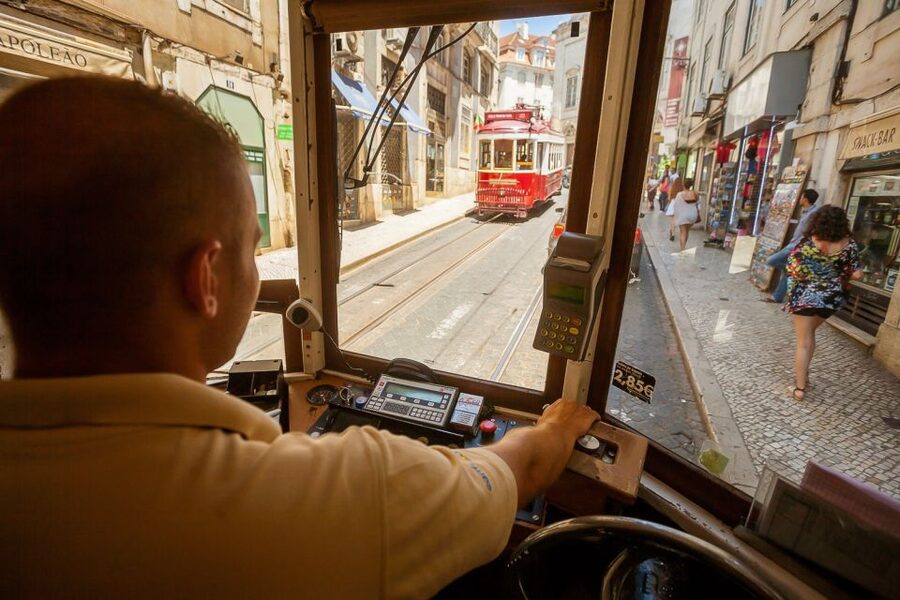
The ride is the opening act, and it delivers the classic Lisbon experience. Tram 28 moves across the Old Town, climbing one of the city’s many hills and passing through tight streets where balconies and walls seem close enough to touch.
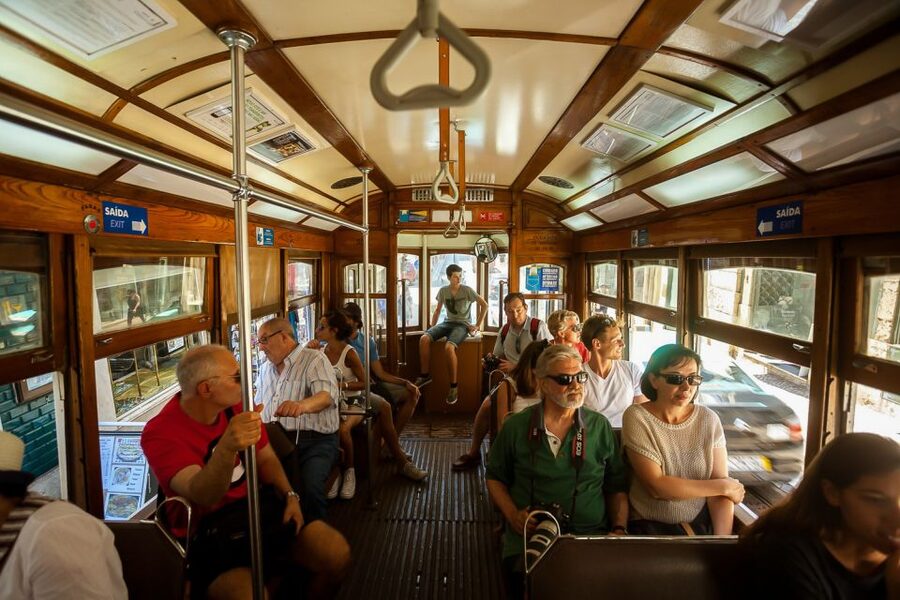
You should not think of this as a private tram charter. Tram 28 is regular public transport, so the guide cannot control delays, traffic, crowded vehicles, or an unexpected obstruction. A broken-down car has forced route changes before, and rush-hour conditions have sometimes led guides to adjust the order of transport used.
That uncertainty is a drawback, but it is also part of the point. You are riding the same public system used by people who live in Lisbon. In some cases, the guide may use another tram, a bus, or a funicular to keep the tour moving. The exact sequence can change, but the guide can still explain the districts and viewpoints along the way.
The tram portion may feel shorter than you expect if your main goal is a long, uninterrupted ride. One useful approach is to treat it as an introduction rather than the entire attraction. If you want more time on Tram 28, you can ride it separately after the tour.
Sé de Lisboa and the city’s oldest hill

The route takes you toward Sé de Lisboa, Lisbon’s medieval cathedral. Its walls hold almost 1,000 years of history, and the guide uses the building to explain how Lisbon grew around this hill.
This stop works well because it gives the walk a clear anchor. Instead of hearing a string of disconnected dates, you can connect the cathedral to the surrounding streets and the hilltop setting. The guide may also explain how religion, politics, and city development shaped Lisbon, subjects that have been a strong part of the tour commentary.
Do not expect a long, formal cathedral visit unless the guide specifically includes one. The value here is the setting and the explanation. You get a closer look at one of Lisbon’s key buildings while learning how the old city developed around it.
More Tram and Streetcar Tours in Lisbon:
- Lisbon: Hills Red Tram Tour by Tram 28 Route 24-Hour Ticket
★ 4.1 · 874 reviews - Lisbon: Guided Tuk-Tuk Tour Along the Historic Tram Line 28
★ 4.8 · 475 reviews - Lisbon Hop-On Hop-Off Bus, Tram Tour, River Cruise for 72/96Hour
★ 3.5 · 426 reviews - Lisbon: Hop-On Hop-Off Tour Bus with Three Routes Including Tram
★ 3.5 · 393 reviews
São Vicente de Fora and the National Pantheon

The walk continues toward Mosteiro de São Vicente de Fora, or Saint Vincent Monastery. This is one of the more imposing historical buildings on the route, and it helps show the scale and importance of Lisbon’s religious institutions.
Nearby, the National Pantheon adds a different kind of story. Its large dome is easy to spot from across the city, and the tour explains the legend connected with the building. The Pantheon is not simply another grand façade. It is part of Lisbon’s skyline and a useful point for understanding how the city’s landmarks relate to one another from the hills.
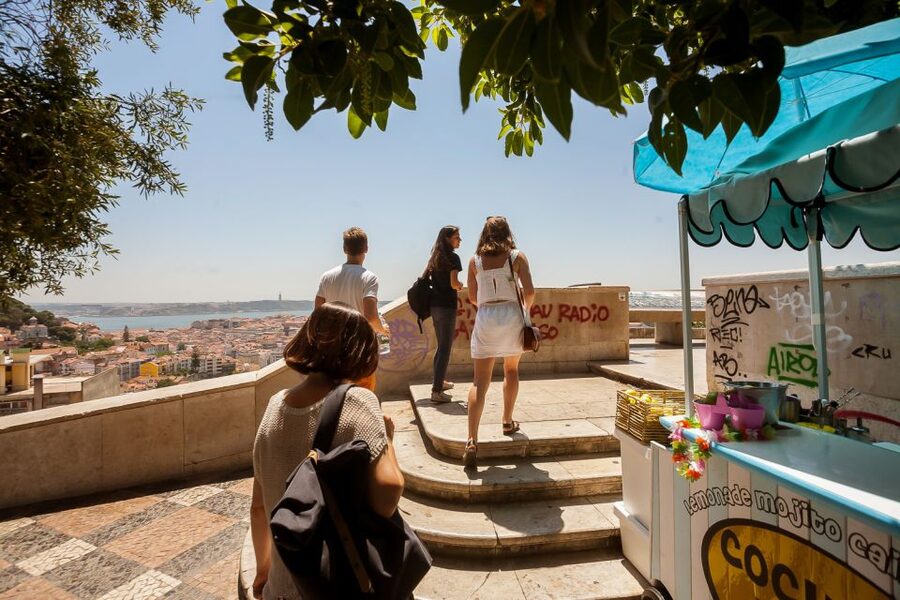
The route is strongest when you pause to look outward as well as inward. From this part of the city, you can take in broad views across rooftops toward the river. Bring a phone or camera, but do not let the views distract you from your footing. The pavement can be uneven, and some streets are steep.
Feira da Ladra on Tuesdays and Saturdays
If your tour runs on a Tuesday or Saturday, the route includes Lisbon’s oldest flea market, Feira da Ladra. This adds a lively local scene to the historical walk, with stalls and everyday activity alongside the old churches and lanes.
The market is not guaranteed on other days, so do not book this tour solely for Feira da Ladra unless your schedule matches. On Tuesday and Saturday departures, it gives you a useful contrast: Lisbon is not only grand buildings and famous viewpoints, but also secondhand goods, local browsing, and ordinary city life.
The market can also make the walk feel busier and less predictable. That is part of its appeal, but it may slow the group and make it harder to stay close to the guide. Keep your belongings secure and listen for meeting instructions.
Walking Alfama beyond the tram tracks

Alfama is where the tour earns its walking shoes. The neighborhood is a maze of narrow streets, steep lanes, and little squares that Tram 28 cannot show you properly.
I like this section because the guide can point out the details you might pass without noticing: the way homes fit into the hillside, the changing views between buildings, and the small public spaces where local life continues. You get a better sense of how people live in the oldest part of Lisbon rather than simply checking off monuments.
The pace is generally leisurely, which helps when the group includes different ages and walking speeds. One group ranged from 17 to 83, and the relaxed pace suited everyone. Still, leisurely does not mean flat. You should be ready for slopes, steps, cobblestones, and uneven surfaces. Comfortable shoes are not optional advice here.
Alfama can be confusing on your own, especially on a first visit. A guide helps you keep moving without spending half the morning checking a map. The tradeoff is that you follow the group’s route rather than choosing every lane yourself.
Fado, cafés, and Lisbon after dark
The tour introduces you to traditional Portuguese Fado, the music closely associated with Lisbon. The guide explains its place in the city and points to tiny bars and cafés connected with the tradition.
This is an introduction, not a full evening Fado performance. You should not expect a reserved table, a concert, or dinner to be included. Instead, you get enough background to recognize the importance of Fado and decide if you want to return later for a dedicated evening.
That is useful planning. A short explanation during the walk can make a later Fado visit more meaningful, since you will understand that the music is tied to Lisbon’s neighborhoods and local identity rather than being just another show for visitors.
The guides make the difference

The strongest part of this experience is the human element. Guides named Nuno, Nono, or Nunu appear in the tour feedback, likely reflecting different spellings of the same or similar guide names. Nuno is repeatedly described as warm, funny, generous with his time, and full of information about Lisbon and Portugal.
That matters because this route covers a lot in three hours. You move from public transport to cathedrals, monasteries, viewpoints, markets, and Fado. Without a good guide, it could feel like a hurried collection of names. A strong guide turns the route into a connected story.
The commentary can sometimes go deep into politics, religion, real estate, and Portuguese history. I see that as a plus if you enjoy context, but it may feel like a lot if you want only quick facts and photographs. The small group lets you ask the guide to clarify or move on.
Several guides have also adjusted the plan when traffic or a blocked street affected Tram 28. That flexibility is important. You are not buying a rigid sightseeing script. You are buying a guided morning in a working city.
Who will enjoy this three-hour tour
This tour suits a first-time visitor who wants to get oriented quickly. In three hours, you see the older districts, learn how the hills fit together, and receive practical advice that can help with the rest of your stay.
It is also a good choice if you prefer a small group to a large walking tour. A limit of 10 people gives the guide room to answer questions and look after the group at crossings, corners, and crowded areas.
You should book it if you enjoy stories, local details, and a moderate amount of walking. It suits adults, families with older children, and mixed-age groups that can manage hills and uneven paving.
You may want something else if you need a fully predictable itinerary, a private vehicle, or a long continuous tram ride. You may also prefer a shorter tour if three hours of walking and transport sounds tiring.
Practical value, timing, and flexibility
The tour lasts three hours and costs $23 per person. That is a fair price for a live English-speaking guide, the Tram 28 ride, and a guided Alfama walk. The value improves if you use the tour as a first-day introduction and then return to the places that interest you most.
The tour includes the Tram 28 ride and the walking tour of Alfama. It does not include pickup or drop-off. Comfortable shoes are essential, and you should allow for the possibility that public transport conditions will change the order or method of travel.
You can cancel up to 24 hours in advance for a full refund. The reserve now and pay later option also helps if your Lisbon plans are not fixed yet.
Should you book the Lisbon Tram 28 tour?
Book it if you want more than a tram photograph. The combination of Tram 28, Alfama’s steep lanes, the cathedral, the National Pantheon, São Vicente de Fora, viewpoints, and Fado background gives you a solid introduction to Lisbon’s oldest quarters.
I would especially choose it early in a Lisbon stay, when a guide can help you understand the city’s hills and point you toward places to revisit. Just arrive ready for public transport delays, route changes, and a fair amount of walking.
If you want a private, polished sightseeing vehicle or a guaranteed long ride on Tram 28, this is not the right product. If you want an affordable small-group outing with strong local storytelling and a genuine look at Lisbon’s old neighborhoods, it is a worthwhile choice.
FAQ
How much does the Lisbon Tram 28 Ride and Walking Tour cost?
The tour costs $23 per person.
How long does the tour last?
The experience lasts three hours.
What language is the tour conducted in?
The tour is guided in English.
Where does the tour meet?
Meet at Praça Luís de Camões, near the statue. The guide will carry a black backpack with the Lisbon Spirit logo.
Is hotel pickup or drop-off included?
No. Pickup and drop-off are not included.
What does the tour include?
The tour includes a ride on Tram 28 and a guided walking tour of Alfama.
Should I wear special footwear?
Wear comfortable shoes. The route includes narrow, steep streets and uneven surfaces.
Is Tram 28 a private sightseeing tram?
No. Tram 28 is public transport, so traffic and other unpredictable situations can affect the route and timing.
Can I cancel the tour for a refund?
Yes. You can cancel up to 24 hours in advance for a full refund. You can also reserve now and pay later.
More Walking Tours in Lisbon
- Lisbon: Private Boat Trip, Guided Walking Tour, Bike & Tram
★ 4.8 · 116 reviews - Lisbon: Walking Tour, Belém Neighborhood, Tram and Boat Ride
★ 4.8 · 55 reviews - Lisbon Walking Tour: Belém Neighborhood, Tram & Boat Ride
★ 5.0 · 27 reviews - Old Quebec Classique Walking Tour with Funicular
★ 5.0 · 1,317 reviews
Just added around Lisbon
- Lisbon Walking Tour: Belém Neighborhood, Tram & Boat Ride★ 5.0 · 27 reviews
- Private Belem tour with tram and the new Quake Museum★ 5.0 · 3 reviews
- Lisbon: Walking Tour, Belém Neighborhood, Tram and Boat Ride★ 4.8 · 55 reviews
- Tuk Tuk Lisbon: 3H00 Following the route of Tram 28★ 4.8 · 6 reviews
- Lisbon Tram 28 Route : Electric Tuk Tuk | Professional Guide★ 4.3 · 3 reviews
- Lisbon: Sintra, Regaleira with ticket guided tour by train★ 4.7 · 20 reviews
- Lisbon: Famous 28 Tram Line Guided Private Tour by Tuk-Tuk★ 5.0 · 5 reviews
- Lisbon 24 Hours Pass with Tram 28 Riding Ticket★ 4.0 · 94 reviews
Lisbon Train Tours, compared.


Tram 28 Entry Ticket & Audio Guide with 24-Hour Pass
Read our review →
Hills Red Tram Tour by Tram 28 Route 24-Hour Ticket
Read our review →
Guided Tuk-Tuk Tour Along the Historic Tram Line 28
Read our review →
Lisbon Hop-On Hop-Off Bus, Tram Tour, River Cruise for 72/96Hour
Read our review →
Hop-On Hop-Off Tour Bus with Three Routes Including Tram
Read our review →

Browse the lists this tour appears in