
REVIEW · TOKYO
Tokyo Private Guided 1/2-Day Walking Subway Tour English guide
Tokyo can feel like several cities at once, and this private half-day tour gives you a quick way to connect its modern and traditional sides. You move from the quiet grounds of Meiji Jingu to Shibuya Crossing, then across town to Asakusa and Senso-ji before finishing at Tsukiji Outer Market.
I like the one-day Metro Pass, since learning Tokyo’s trains with a local guide can save you time long after the tour ends. I also like the private format, which lets your guide adjust the pace and answer questions about Japanese culture, history, and daily life.
The tradeoff is simple: this is a busy 4.5-hour outing with a good deal of walking, outdoor time, and subway transfers. You will see many important places, but you will not have hours at any one of them. Comfortable shoes and a rested start matter.
Key points at a glance
- A private route through five major sights: Meiji Jingu, Shibuya Crossing, Asakusa, Senso-ji, and Tsukiji Outer Market.
- A practical subway lesson: Your guide handles the route while showing you how Tokyo’s rail system works.
- Hotel pickup included: The tour begins from your hotel when it falls within the designated pickup range.
- A useful modern-to-traditional contrast: You move from imperial-era shrine grounds and neon-heavy Shibuya to old Tokyo temple streets.
- A fast orientation for a first Tokyo visit: The tour can help you understand the city before exploring on your own.
- A walking-heavy morning or early afternoon: Plan for outdoor walking, station movement, and changing weather.
Why this private Tokyo tour works as an introduction
The clever idea here is not simply checking off five famous places. It is using Tokyo’s subway to link areas that feel very different from one another. You begin at Meiji Jingu, see the enormous pedestrian flow at Shibuya, then shift to the older streets of Asakusa and the food stalls of Tsukiji.
That range is useful on a first visit. Tokyo does not have one compact historic center containing all the main sights. Its attractions are spread across a huge urban area, and moving between them can take time. A private guide who knows the train system can make the day more efficient.
The tour lasts about four and a half hours. That includes pickup, subway travel, walking between stations and sights, and time at each stop. The listed sightseeing times add up to about 160 minutes, so you should think of this as a brisk orientation rather than a slow, detailed tour of every neighborhood.
The private setup is important. You are not tied to the pace of a large group, and your guide can respond to your interests. The guides praised most warmly by name were Yoshi, Hiromi, and Izumi. Their strengths included subway navigation, patience with slower walkers, clear explanations, and flexibility when visitors wanted to spend more time on particular interests.
More Walking Tours in Tokyo:
- Private Full-day Tokyo Walking Subway Tour by Japan Gray Line
★ 5.0 · 19 reviews - Old Quebec Classique Walking Tour with Funicular
★ 5.0 · 1,317 reviews - Plitvice Lakes: Guided Walking Tour with Train and Boat Ride
★ 4.4 · 1,093 reviews
Meiji Jingu: a calm opening in central Tokyo
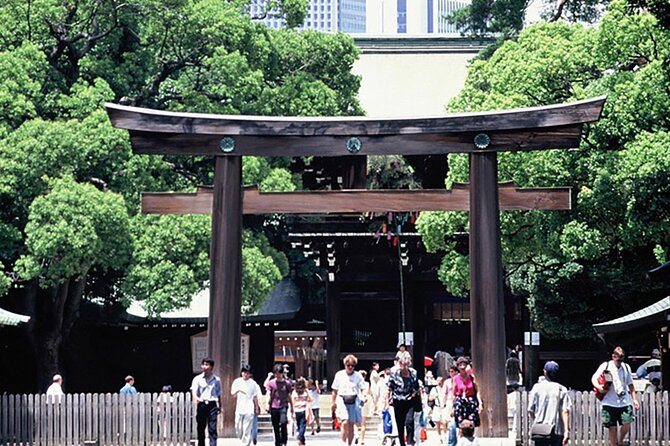
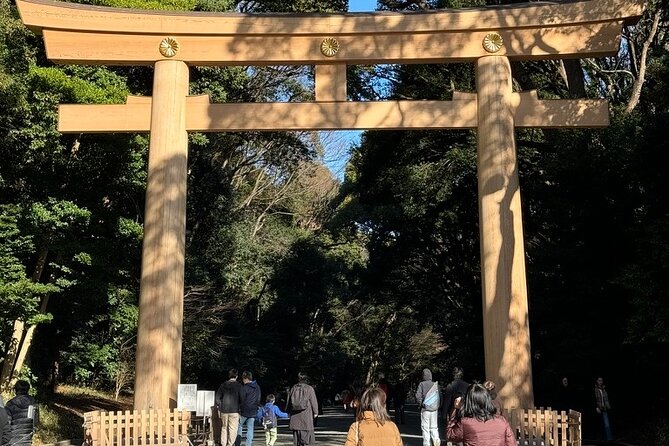
The tour begins at Meiji Jingu, reached by subway from the station nearest your hotel. The shrine was completed in 1920 and honors Emperor Meiji, an important figure in Japan’s move into the modern era during the nineteenth century.
This is a good first stop because it gives you a quiet contrast to the dense city around it. You pass through shrine grounds with a different pace and visual feel from the commercial streets that come later. Your guide can explain the role of Shinto customs and the shrine’s connection to Japan’s modern imperial story.
You have about 50 minutes here, the longest scheduled stop. Admission is free. That time should let you see the main approach and shrine area without feeling rushed, though it is not a full exploration of every path.
You should dress for outdoor walking. The tour information specifically advises carrying rain gear, such as an umbrella or raincoat, since the outing can continue in poor weather unless the operator cancels it. The exact experience may also change if weather or operating conditions require a different plan.
Shibuya Crossing: Tokyo at full speed
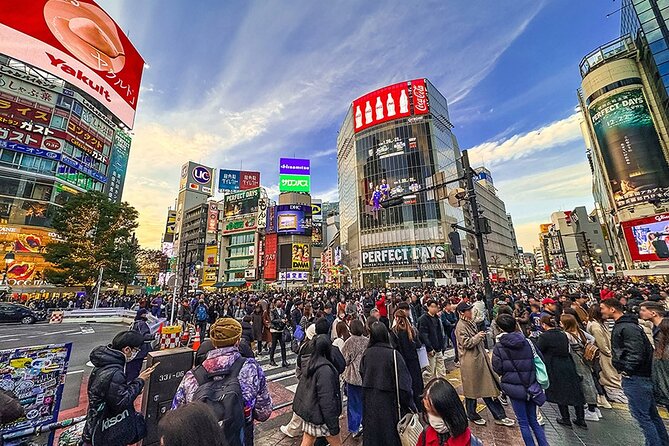
From Meiji Shrine, the ride to Shibuya Station takes only a few minutes. The stop at Shibuya Crossing lasts about 20 minutes, so this is a photo and orientation stop rather than a full visit to the district.
Shibuya shows you the city’s modern face. Large crowds move in several directions at once, surrounded by shops, signs, and major transport links. A guide is useful here because the crossing can feel confusing on your first attempt, especially when you are also trying to understand the station and surrounding streets.
The short time has a benefit and a limit. You get a memorable look at one of Tokyo’s best-known urban scenes without spending half the day in a shopping district. But if you want department stores, cafés, fashion shops, or a long look at the neighborhood, you will need to return on your own.
This stop also helps connect the subway lesson to real life. Tokyo’s rail system is not just a way to reach sights. Stations are often the center of each district, and understanding how to enter, exit, and transfer can make the rest of your trip much easier.
Asakusa and Senso-ji: old Tokyo in two linked stops
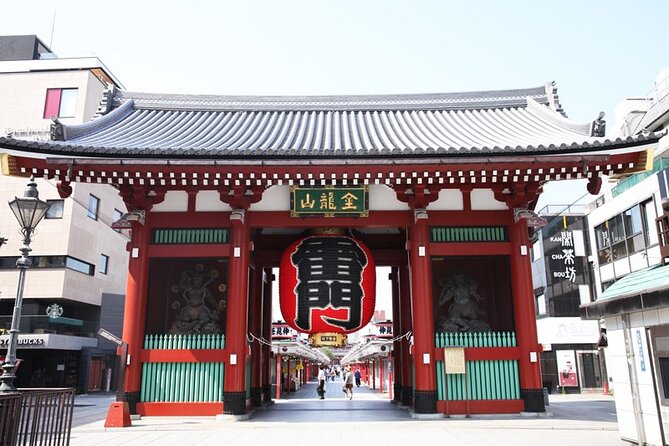
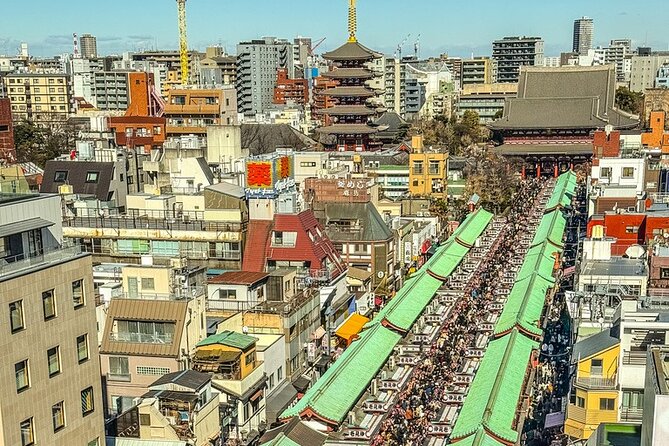
The tour then heads to Asakusa, where the mood changes sharply. This district is known for traditional crafts, souvenirs, street food, and shops aimed at visitors looking for a taste of older Tokyo.
You have about 20 minutes in Asakusa before spending another 40 minutes at Senso-ji Temple. The two stops work together, but do not confuse them. Asakusa is the surrounding district, while Senso-ji is the major Buddhist temple at its center.
Senso-ji dates to 645 and is one of Tokyo’s oldest and largest Buddhist temples. Its long history gives your guide plenty to explain, from the temple’s place in local religious life to the way the surrounding streets serve modern visitors.
This is likely the most traditional-feeling section of the tour, but it is not a quiet museum visit. The streets can be crowded, and the temple approach includes shops, food, and souvenir stalls. That makes the area enjoyable and easy to explore, but it can also slow your progress.
The scheduled hour in Asakusa and Senso-ji is enough for a first look. You can see the key temple area, hear the main cultural background, and sample the atmosphere of the neighborhood. It is not enough for careful shopping, a long meal, or a detailed look at every building.
If traditional Japan is your main interest, pay close attention during this section and tell your guide what you want to see. A private tour gives you more room to ask questions than a large shared group. Still, the total schedule remains fixed enough that you should not expect an extended food tour or temple study.
More Two-Day Trips in Tokyo:
- Granada City Train 1 or 2-Day Hop-On Hop-Off Ticket
★ 3.5 · 3,128 reviews - Cusco: Machu Picchu 2-Day Inca Trail with Panoramic Train
★ 4.9 · 260 reviews - From Hanoi: 2-Day 2-Night Sapa Tour by Overnight Train
★ 4.4 · 96 reviews - From Delhi: 2 Days Taj Mahal & Agra City Tour With Fatehpur Sikri
★ 5.0 · 90 reviews
Tsukiji Outer Market: a practical finish
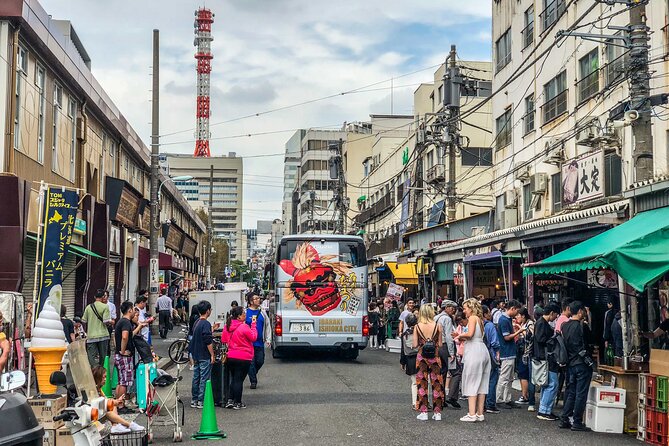
The tour concludes at Tsukiji Fish Market around 2:00 pm. The wholesale fish market moved to Toyosu in 2018, but Tsukiji’s Outer Market remains in place. That distinction matters: you are visiting a market district with food shops and stalls, not the former wholesale auction operation.
You have about 30 minutes here. It is a useful place to finish because you can continue exploring or arrange lunch after the guided portion ends. Lunch is not included, so your food purchases or meal will be your own expense.
Tsukiji is best treated as a first look rather than a complete market visit. Thirty minutes allows you to get oriented and see what catches your eye, but you may want to stay longer if food is a major reason for your Tokyo trip. The tour ends here, giving you the option to keep exploring independently.
The stop also makes practical sense. After a morning of shrines, streets, temples, and subway rides, you finish in an area connected to one of Tokyo’s best-known food traditions. Ask your guide for help understanding the market layout and local foods, then decide if you want to remain after the official tour ends.
The subway lesson may be the real value
Tokyo’s subway system can look intimidating at first. There are multiple lines, large stations, many exits, and transfers that are not always obvious to a new visitor. You may eventually learn it on your own, but a local guide can shorten the learning curve.
The included one-day Metro Pass adds practical value. The tour covers the transportation fee, and your guide demonstrates how the system works while taking you to the sights. You are not only being transported from one attraction to another. You are watching how a Tokyo day is built around rail travel.
Yoshi was specifically praised for knowing how to move through the subway quickly and for saving valuable time. Izumi was also credited with making the system easier to manage, while another guide helped a slower group keep up without pressure. These details matter because train navigation can become the most tiring part of a first Tokyo day.
There is one point to check before booking. If your hotel is outside the designated pickup area and reaching the starting point by subway is not practical, you may have to pay the guide’s transportation costs to your hotel and back from the final destination. Ask about your hotel location if you are staying far from central Tokyo.
Walking, pace, and weather
This tour requires a moderate level of fitness. You will walk outdoors, move through stations, stand or walk between sights, and deal with city crowds. The total walking load may feel greater than the listed sightseeing times suggest because pickup and subway connections take up much of the morning.
Wear sneakers or another pair of comfortable walking shoes. This is not the day for shoes that look good but become painful after several hours. Rest before the tour if you have just arrived in Tokyo or are dealing with jet lag.
The pace can be adjusted to some degree because the tour is private. A guide can be patient with slower walkers and accommodate different interests, as one guide did for a mixed-pace group. That does not remove the need to keep moving. You still have five stops across different parts of Tokyo.
Bring rain gear. The operator notes that weather or other operating conditions may cause the route to change, with some visits omitted or replaced. A change does not automatically mean cancellation or a refund, so you should book this with some flexibility.
If poor weather causes the entire experience to be canceled, you can be offered a different date or a full refund. For your own cancellation, you can receive a full refund if you cancel at least 24 hours before the start time. Changes or cancellations inside that window are not accepted for a refund.
Is $136.82 a fair price?
At $136.82 per person, this is not the cheapest way to see Tokyo. You are paying for a private English-speaking guide, hotel pickup, route planning, subway support, and a carefully connected set of major sights.
The value depends heavily on your group size and your confidence in Tokyo. If you are traveling alone or as a couple, the price is a larger expense. If several people share the private tour, the per-person cost may feel more reasonable because you are buying personal guidance rather than a seat on a large coach.
I would also compare the price with what you would spend in time and effort. The sights themselves have no admission charge, and you could visit them independently. The paid benefit is the guide’s knowledge of the subway, the pickup convenience, the cultural explanations, and the ability to adjust the experience to your group.
This is especially useful early in a Tokyo stay. After the tour, you may feel more comfortable planning your own rides, choosing station exits, and judging how long cross-city journeys take. If you already know Tokyo well and are happy navigating trains alone, the price may be harder to justify.
The tour is booked an average of 22 days ahead, so planning early is sensible if your schedule is fixed. The private format also means you should pay attention to the date and pickup details before confirming.
Who should book this experience?
I would recommend it most strongly to first-time Tokyo visitors who want an efficient introduction without spending their first day studying maps. It also suits families or mixed-pace groups that value a private guide and may need a little flexibility.
It can work well for visitors with only a short stay. In one morning and early afternoon, you see a shrine, an iconic crossing, a historic temple district, and a major food market. That is a lot of variety in a limited time.
It is also a good choice if the subway makes you nervous. You learn by doing, with a guide handling the route and explaining the system as you go.
I would think twice if you want a slow food experience, long shopping sessions, or detailed time inside each attraction. The schedule is ambitious. You will see a lot, but each stop is tightly timed.
My call: book it for orientation, not depth
Book this tour if you want a private, well-organized introduction to Tokyo’s main contrasts and you value learning the subway as much as seeing the sights. The combination of Meiji Jingu, Shibuya, Asakusa, Senso-ji, and Tsukiji gives you a strong first picture of the city.
Skip it if you already navigate Tokyo confidently or prefer to spend a full morning in one neighborhood. For everyone else, especially first-time visitors, this is a useful way to get your bearings fast, save planning time, and leave the tour ready to explore more on your own.
FAQ
How long does the Tokyo private walking and subway tour last?
The tour lasts approximately 4 hours and 30 minutes. The remaining time beyond the scheduled stops is used for hotel pickup and travel between attractions.
Which places are included?
The route includes Meiji Jingu Shrine, Shibuya Crossing, Asakusa, Senso-ji Temple, and Tsukiji Outer Market.
Is hotel pickup included?
Yes. Hotel pickup is included when your accommodation is within the designated pickup range. If your hotel is outside that range and subway travel is not practical, you may be responsible for the guide’s transportation costs.
Is transportation included in the price?
Yes. The tour includes transportation fees through a one-day Metro Pass.
Is the tour private?
Yes. Only your group participates in the private activity.
Is lunch included?
No. Lunch is not included. The tour finishes at Tsukiji Outer Market, where you can continue exploring and arrange food independently.
How much walking is involved?
The tour involves a good amount of outdoor walking and subway station movement. A moderate level of physical fitness is recommended, and comfortable shoes are advised.
What happens if the weather is poor?
You should bring rain gear, such as an umbrella or raincoat. Weather or other operating conditions may lead to changes, omitted stops, or substitutions. If the experience is canceled because of poor weather, you can be offered another date or a full refund.
Just added around Tokyo
- Train in Samurai Swordsmanship and Defeat the Demon in Tokyo★ 5.0 · 5 reviews
- Private tour with Yasushi and Yoko – by car, train, on foot★ 5.0 · 2 reviews
- Tokyo-Izu: Volcano, Ocean& Capybara Cuddle with Izu Scenic Train★ 3.5 · 3 reviews
- Snow Monkey Park and Miso Production Tour Bullet Train from Tokyo★ 4.5 · 26 reviews
- Private Tour – Thousands of lucky cats! Go by tram, Gotokuji Tour★ 5.0 · 16 reviews
- Bullet Train and Mt. Fuji Famous Food Tour★ 5.0 · 4 reviews
- Kyoto Early Bird Tour Tokyo Round or One Way Shinkansen★ 5.0 · 10 reviews
- Mt Fuji & Hakone Private Tour from Tokyo: Return by Bullet Train★ 5.0 · 22 reviews
Tokyo Train Tours, compared.

Mt Fuji & Hakone Cruise, Drum Show Bullet Train 1 Day from Tokyo
Read our review →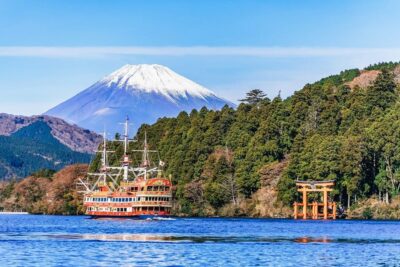
Tokyo Mt Fuji 5th St & Hakone Cruise Bus Tour w/Bullet Train
Read our review →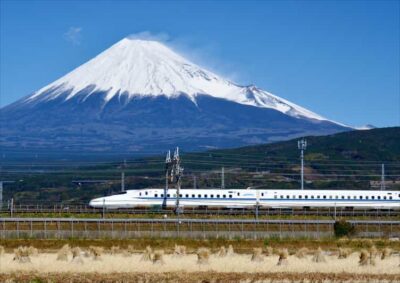
Mt. Fuji & Hakone Tour w/ Return by Bullet Train
Read our review →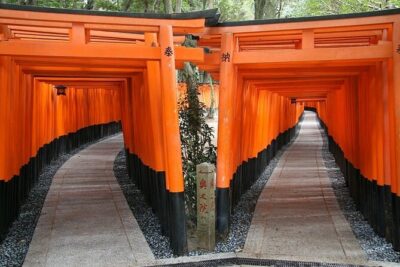
From Tokyo 1-Day Kyoto English-guided Tour by Bullet Train
Read our review →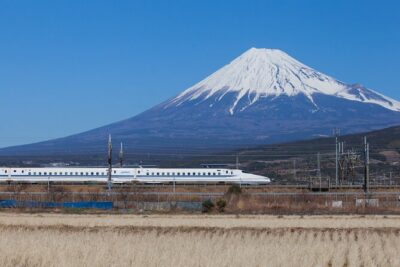
Mt. Fuji and Hakone Day Trip From Tokyo with Bullet Train Option
Read our review →
Kamakura & Enoshima Day Tour with Pickup & Train Ride
Read our review →
Haneda Layover tour of 5hours with local Japanese guide by car
Read our review →
Snow Monkey Park and Miso Production Tour Bullet Train from Tokyo
Read our review →Browse the lists this tour appears in