
REVIEW · ITALY
Sorrento: Herculaneum Skip-the-Line Tour by Express Train
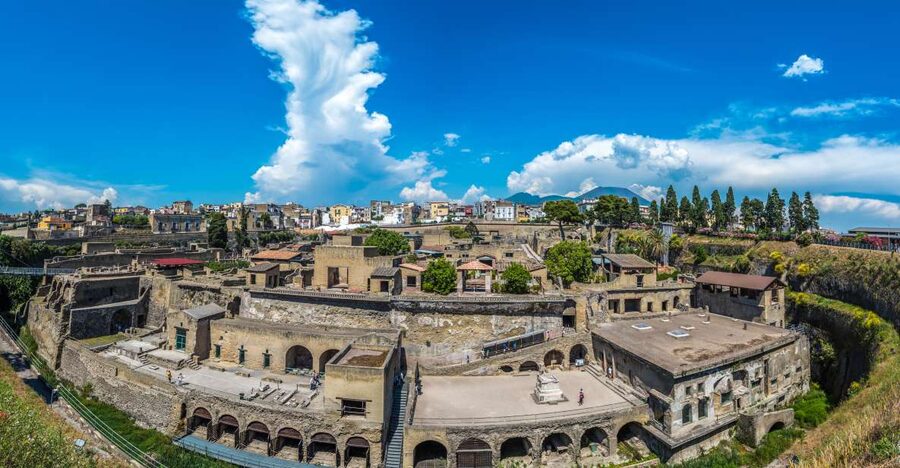
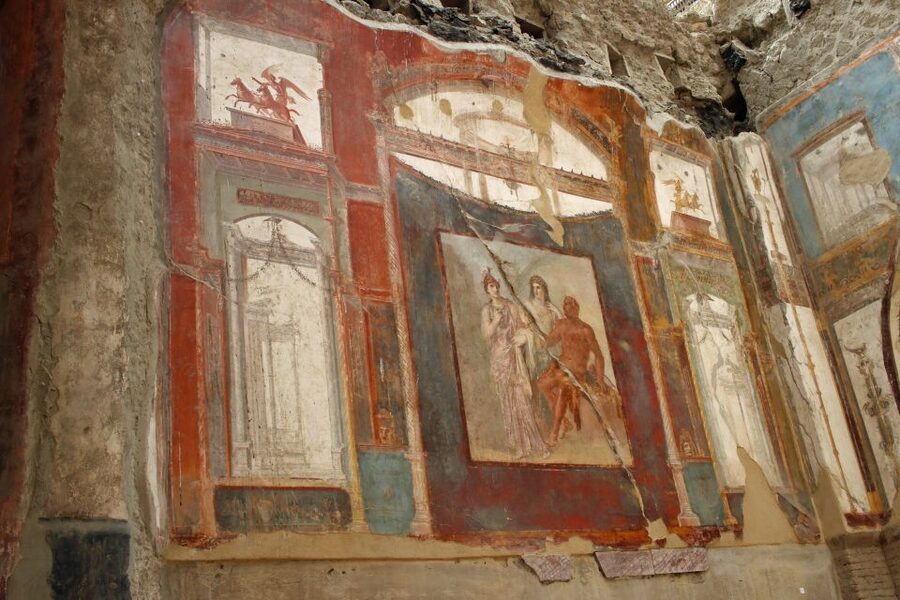
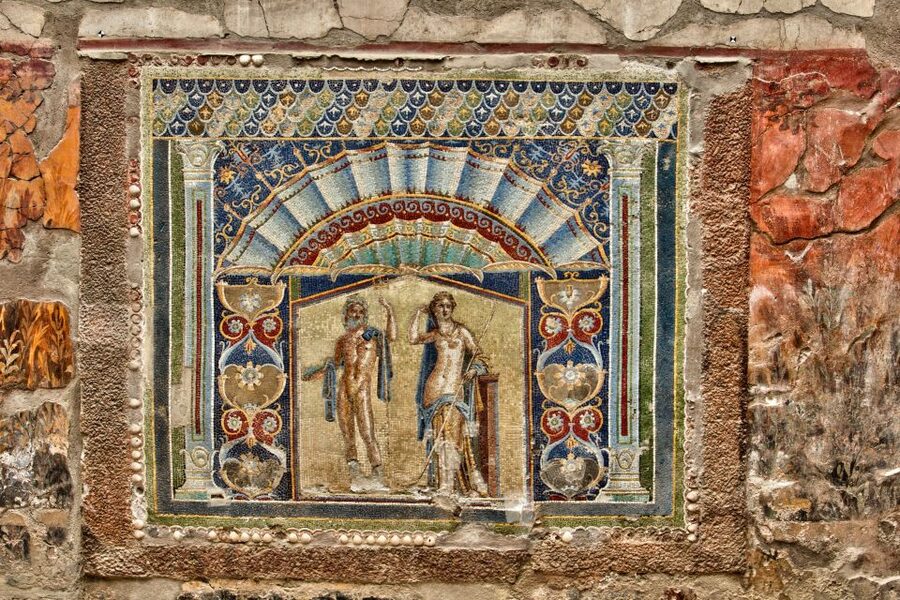
Herculaneum gives you something Pompeii often cannot: a closer look at ordinary Roman homes, rooms, decorations, and objects left in place by the eruption of Mount Vesuvius. The preserved buildings are the star, and a guide such as Giovanni or Fabio helps turn walls and mosaics into a picture of daily life. I like the round-trip train from Sorrento and the skip-the-line entry, which remove two common headaches from a day trip.
I also like the two-hour walking tour, which gives you a clear introduction before you explore on your own. The main caution is the transport: finding the right carriage, platform, or return train can be confusing, and the route includes slopes, uneven paving, and stairs. Allow extra energy and pay close attention at the station.
Key points to know before you book
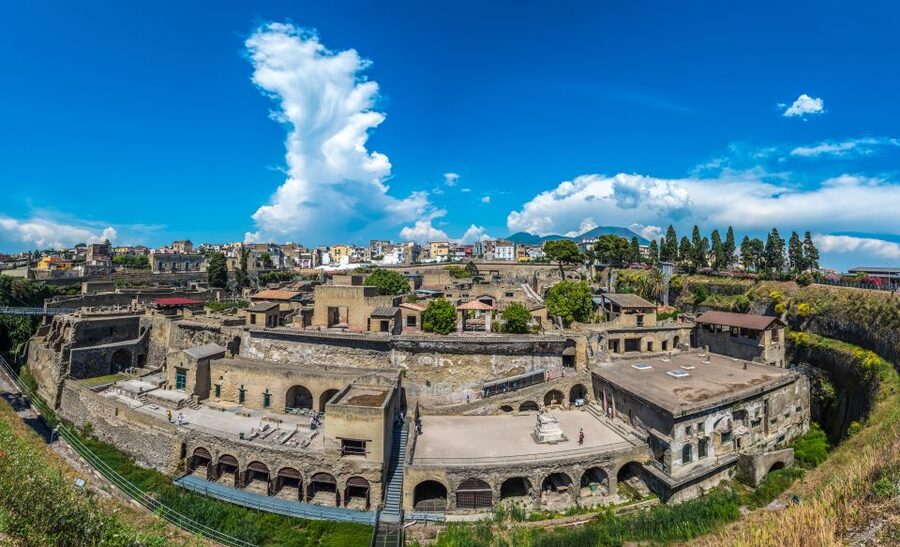
- Herculaneum is smaller than Pompeii but often feels more complete, with remarkably intact houses and artifacts.
- Giovanni receives especially strong praise, along with guides including Fabio, Marili, Claudia, Nello, Alessia, Imma, and Marilo.
- The express train ride takes about an hour each way, followed by a walk of roughly 10 minutes to the archaeological site.
- Skip-the-line entry saves time, especially when the entrance is busy.
- The return journey needs your attention, since station signs and train carriage markings may be unclear.
- The optional Pompeii and Herculaneum version lasts longer, with total tour times listed between four and eight hours.
Why Herculaneum can beat Pompeii for a first visit
Pompeii is vast and famous. Herculaneum is more compact, and that makes it easier to grasp during a guided visit. You are not simply walking past endless walls. You can pause inside houses, look at surviving details, and picture how the rooms worked.
The ancient town was buried by the eruption of Mount Vesuvius in AD 79. Unlike Pompeii, which was covered mainly by ash and pumice, Herculaneum was sealed under hot volcanic material. That helped preserve wooden features, upper sections of buildings, furnishings, and other fragile remains.
The result is a site with a strong human scale. A guide can point out the difference between a grand home and a more modest one, explain how Roman buildings were arranged, and show what the remains reveal about everyday life. That context matters. Without it, you may see attractive mosaics and broken walls but miss the clues that make the town meaningful.
The site is not large enough to feel overwhelming, but two hours is still only an introduction. You will see the main highlights with your guide, then may have a little time to look around independently, depending on the return train. Some tours leave only 20 to 30 minutes for extra exploring. If you want to inspect every room and artifact at a slow pace, the fixed train schedule may feel tight.
More Skip-the-Line Tickets in Italy:
- Sorrento: Skip-the-Line Pompeii Express Tour by Train
★ 4.8 · 2,038 reviews - From Naples: Guided tour of Pompeii skip-the-line and round-trip train
★ 4.5 · 811 reviews - The Last Supper Skip-the-Line Ticket & Milan Tram Tour
★ 4.8 · 34 reviews
Meeting in Sorrento and boarding the train
The day begins at or near Tempio Travel Sorrento, with the exact meeting point depending on the option you book. You meet the local staff at Sorrento’s Circumvesuviana station and receive directions, maps, and your train arrangements.
The Campania Express or other designated express service is intended to give you reserved seating and a more direct ride toward Herculaneum. The train journey takes about an hour. It is not the most scenic or polished part of the excursion, but it lets you leave the transport planning to the operator instead of buying separate tickets and working out the route yourself.
This is also where you need to stay alert. The carriages may not be clearly labeled, and seat numbers can be hard to spot because they sit low behind passengers or luggage. At times, the train staff direct people to different carriages, which can create a brief scramble.
I recommend arriving ready to listen for the staff instructions rather than assuming the train will be self-explanatory. Keep your ID or passport with you, as required, and hold on to your ticket information. A tour representative assists with the departure, but the process may still feel less orderly than a train ride in northern Italy.
Train delays have occurred, and service disruptions are possible. When a strike affected one departure, the operator arranged a bus instead and kept the group informed. That kind of backup is useful, but a replacement bus can make the day longer than planned. Do not schedule a tight dinner reservation or airport transfer afterward.
The walk from Ercolano station to the ruins
After leaving the train, you walk for about 10 minutes to the archaeological site. The route includes a slope, and the walk back to the station is uphill. The distance is manageable for many people, but it can feel harder after two hours on ancient paving.
You should expect uneven ground, changing levels, cobbled surfaces, and some steps inside the ruins. This is not a smooth museum visit. If knees, feet, or balance are a concern, wear supportive shoes and discuss mobility needs before booking. One guide, Giovanni, was praised for taking care with people who had mobility issues, but the physical character of the site cannot be removed.
The walk is one reason I would not treat this as a casual add-on between other major activities. It is a proper half-day outing, and the combined train rides, slopes, and walking require stamina.
Entering Herculaneum without the main ticket queue
The tour includes a skip-the-line entrance ticket. That means you do not spend your valuable visiting time waiting at the regular ticket line. Your guide meets you at or near the entry point and leads the group inside.
The phrase skip-the-line does not mean every part of the visit is instant. You still need to gather with the guide, pass through the entrance process, and stay with the group at the start. Still, having admission arranged is a real benefit, especially if you are visiting during a busy period.
Some guided groups use audio equipment, allowing you to hear explanations while standing a little apart from the guide. The equipment has not always been easy to wear or hear clearly, and reception can vary depending on where you stand. Stay reasonably close to the guide and speak up if the sound cuts out.
More Train Tours in Italy:
- From Milan: Lake Como Cruise, St. Moritz & Bernina Red Train
★ 4.6 · 5,648 reviews - From Milan: Bernina Train and St. Moritz Day Trip
★ 4.5 · 4,495 reviews - Bernina Red Train, Swiss Alps & St Moritz From Milan
★ 5.0 · 2,954 reviews - Swiss Alps Bernina Red Train and St.Moritz Tour from Milan
★ 4.5 · 2,369 reviews
What the two-hour guided walk adds
The guide is the main reason to choose this organized trip instead of simply taking the train and buying entry on your own. Recent guides include Giovanni, Fabio, Marili, Claudia, Nello, Alessia, Imma, and Marilo. Giovanni is especially praised for his warmth, humor, patience, and ability to explain how people lived before the eruption.
A strong guide helps you read the town. You learn about building types, room use, construction, social differences, and the events that destroyed the city. The best guides do not rush from one stop to another. They invite questions and adjust their pace for families and older visitors.
The archaeological site also includes a museum area with artifacts found during excavation. Several tours include time there, which adds useful detail to what you see outdoors. Objects in cases can make the ruined rooms feel less abstract.
The boathouses are another powerful part of the visit. Reaching the lower buildings is not guaranteed on every tour, since time, route, and access can vary. If your guide takes you there, expect a more emotional look at the final moments of the town. Ask early in the tour whether the route includes that area.
The guide-led portion lasts about two hours. That is enough for an overview and the main highlights, but not enough to study every house. I would listen carefully, ask questions, and save mental notes about the rooms you want to revisit afterward.
Free time, lunch, and the fixed return train
Once the guided walk ends, you may be able to remain inside and explore independently. The amount of free time depends on the train schedule. Some groups have roughly 20 to 30 minutes, while others feel they have little time before needing to leave.
That limitation is the biggest tradeoff in the package. The express train makes the day simpler, but its limited departures can force you to leave before you are ready. A slower public train might give you more flexibility, though it would also require more independent planning.
There is no full cafe inside the archaeological area. Food and drink are available from vending machines, while cafes and restaurants can be found outside the entrance. Bring water and plan lunch rather than assuming you can buy a proper meal once inside.
Before leaving the site, confirm exactly where you will meet, especially if you store a bag or separate from the group. Noise around the entrance can make phone calls hard to hear. The operator supplies maps, but a clear meeting time and place are still worth confirming in person.
Getting back to Sorrento without a station mix-up
The return trip is the part that requires the most care. The station may have limited platform information, and electronic boards are not always available or easy to read. Some trains run close together, and the front of a train may not clearly show its destination.
At Ercolano, ask which platform serves Sorrento and verify the train before boarding. Do not rely only on the time printed on your ticket. If a conductor or station worker is nearby, show your ticket and confirm the destination. Keep the group contact number available in case you are delayed.
There have also been problems with QR codes at the automatic station gates. You may need assistance to reach the platform. This is not a reason to reject the tour, but it is a reason to avoid wandering off after the guided visit without first understanding the return plan.
The ride back is scheduled for about an hour. Delays, missed trains, or a wrong train can turn that into a much longer journey. The operator has handled disruptions with buses in the past, but communication about a changed finish time may not always be perfect.
Is $89 a fair price?
At $89 per person, the tour is not the cheapest way to reach Herculaneum. You are paying for more than admission. The price covers the round-trip express train from Sorrento, skip-the-line entry, a two-hour English guided tour, maps, and assistance at the departure point.
I see the value if you want a history-focused visit without having to arrange each part yourself. The guide can explain details you would likely miss, and the prearranged transport is useful from Sorrento, where a first-time visitor may not want to sort out regional train tickets and station changes.
The value is weaker if you are comfortable using public transport, already have detailed archaeological knowledge, or want several hours to wander alone. The limited return schedule is part of the price calculation. You gain structure and guidance but give up some freedom.
The Pompeii and Herculaneum option may suit you if both sites are high on your list and you want to combine them in one longer day. The listed duration can range from four to eight hours, so check the exact option and starting time before booking.
Who will enjoy this tour most?
I would choose this for a first visit to Herculaneum, especially from Sorrento. It suits you if you want the ancient town explained in clear English, prefer a planned train connection, and value entering without the standard ticket queue.
Families can also do well here. One guide made a point of involving children with questions, which helps keep a two-hour archaeology walk lively. The site is compact enough to be less tiring than Pompeii, though the uneven ground still calls for sensible footwear.
This may not suit you if you need fully step-free access, dislike group schedules, or want a long, unhurried afternoon at the ruins. The site itself has slopes, cobbles, and different levels, and the return train sets the pace.
Rain does not necessarily ruin the visit, but the walk and open archaeological areas are less comfortable in wet weather. Bring suitable clothing and allow some flexibility if transport is affected.
My booking advice
I would book this tour if you are staying in Sorrento and want Herculaneum explained by a local guide rather than seen as a collection of ruins. The archaeological site is superb, and the strongest guides, including Giovanni, Fabio, and Marili, add real value through stories about homes, work, family life, and the eruption.
I would not book it expecting a perfectly effortless rail experience or several hours of free time. Arrive early, watch the carriage instructions, confirm the return platform, and leave extra time in your day.
For most people, the combination of preserved buildings, organized admission, and a two-hour guided walk makes the $89 reasonable. Choose it for structure and interpretation. Choose an independent visit instead if flexibility matters more than convenience.
FAQ
How long does the Herculaneum tour take?
The standard experience is listed as four to eight hours, depending on the selected option. The basic route includes about one hour by train each way, a 10-minute walk each way, and a two-hour guided visit.
Is the train ride included?
Yes. The tour includes a round-trip express train ticket from Sorrento to Herculaneum and back.
Is skip-the-line entry included?
Yes. The Herculaneum entrance ticket is included, with access through the skip-the-line arrangement.
What language is the guided tour in?
The live tour guide provides the tour in English.
Can I visit Pompeii on the same day?
A Herculaneum and Pompeii option is available when selected. That version takes longer, with total durations listed between four and eight hours.
What should I bring?
Bring a passport or ID card. Supportive shoes are also sensible because the visit includes slopes, uneven paving, cobbled streets, and changing levels.
Just added around Italy
- From Milan: Villa del Balbianello and Varenna by Train★ 4.2 · 27 reviews
- From Milan: Valmalenco 1-day Ski Pass with Train and Shuttle★ 5.0 · 2 reviews
- Verona Private City Tour including Arena and Funicular for Kids and Families★ 5.0 · 6 reviews
- Venice Tour by High-Speed train from Florence★ 5.0 · 6 reviews
- Verona Guided Tour from Venice by Train★ 4.5 · 12 reviews
- Florence & Uffizi Gallery Ticket: Day-Trip from Venice by Train★ 4.5 · 2 reviews
- Venice Beginner’s Kayak Tour: train & visit the Medieval Arsenal★ 5.0 · 5 reviews
- Private Full Day Tour from Milan to Venice with local tour guide and fast train★ 4.5 · 3 reviews
Italy Train Tours, compared.
Lake Como Cruise, St. Moritz & Bernina Red Train
Read our review →
Bernina Red Train, Swiss Alps & St Moritz From Milan
Read our review →
Swiss Alps Bernina Red Train and St.Moritz Tour from Milan
Read our review →
Rome to Pompeii Guided Tour with Wine & Lunch by High Speed Train
Read our review →
Small-Group Lake Como & Lugano by Swiss Train + Boat Cruise
Read our review →
From La Spezia: Shore Excursion to Cinque Terre by Train
Read our review →
Browse the lists this tour appears in