
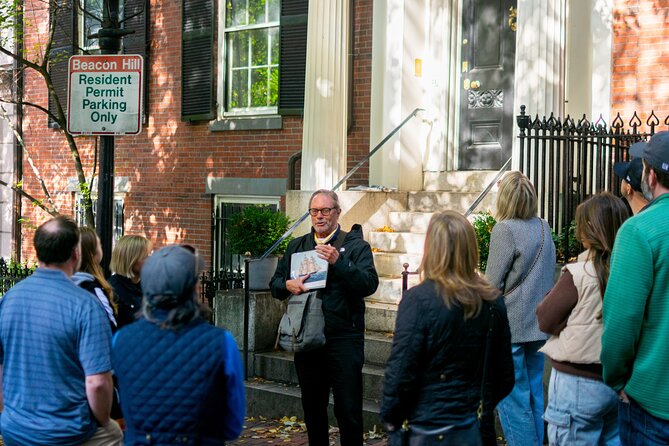
REVIEW · USA
Boston: Underground Railroad History Tour of Beacon Hill
Boston’s Beacon Hill is more than brick sidewalks and handsome Federal homes. This walking tour shows you how the neighborhood became a center of Black civic life, abolition, and resistance to slavery. You’ll visit the former Hayden safe house, the African Meeting House, the Phillips School, and the memorial to the Black soldiers of the 54th Massachusetts Regiment.
I like the small group of no more than 16, which gives guides such as Dana, Will, Lin, and Meghan room to explain difficult subjects and answer questions. I also like the way the tour connects grand Boston landmarks with the people who lived in modest homes nearby. The drawback is clear: this is 2.5 hours of walking and standing on steep, uneven streets, so comfortable shoes and reasonable fitness are essential.
Key points to know before you book

- Beacon Hill’s Black Heritage Trail: The route covers 10 major landmarks tied to Boston’s African American community and the fight against slavery.
- A real walking tour: Expect hills, cobblestones, uneven pavement, and frequent stops rather than a gentle sightseeing stroll.
- Strong historical storytelling: Guides including Dana, Will, Lin, Meghan, Joe, Drew, and Dave bring in the Civil War, abolition, Black education, and Boston Brahmin society.
- The African Meeting House: You receive admission to this 1806 building, the oldest surviving Black church building in the United States.
- Small-group format: With a maximum of 16 people, you can hear the guide and ask questions without shouting across a crowd.
- Good value at $35: The price includes the guided walk and African Meeting House admission, but not gratuity or entry to other museums.
Why Beacon Hill tells a different Boston story
Many first-time visitors picture Boston through the Revolution, the Freedom Trail, and the harbor. Those stories matter, but Beacon Hill adds another chapter: the long struggle over slavery, citizenship, education, and freedom.
This tour focuses on Boston before and during the Civil War. You’ll hear about abolitionists, formerly enslaved people, African American business owners, reformers, legislators, teachers, and soldiers. The route also explains how the mostly white Boston Brahmin elite shaped the neighborhood and the city around them.
That contrast gives the walk its force. One block may show a polished 19th-century residence associated with a powerful white family. The next may bring you to a Black meeting place or the home of an abolitionist who risked everything to help freedom seekers.
The subject matter is serious. Slavery, racial violence, segregation, and the dangers faced by people escaping enslavement are not softened. Still, the tour is designed as a guided historical conversation, not a lecture. The strongest guides use stories and questions to connect individual lives with larger events.
Dana is praised for making complex material clear and involving. Will brings the instincts of a historian and storyteller, while Lin is especially good at putting lesser-known figures, including women, into the story. Meghan is noted for a steady pace and clear explanations. Your guide will vary, but the tour is built around informed interpretation rather than a memorized list of dates.
More History Trips in the USA:
- Fairbanks: Gold Dredge 8 Historic Train Tour
★ 4.7 · 219 reviews - Sedona, AZ: Grand Canyon Guided Tour and Historic Railway
★ 4.6 · 122 reviews - Cincy Brunch History and Streetcar Tour with Riverside Food Tours
★ 5.0 · 108 reviews
Starting at Boston Common’s Soldiers and Sailors Monument
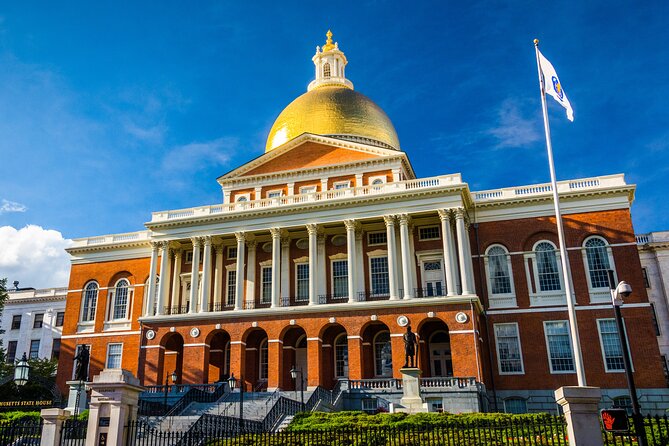
Meet at the Soldiers and Sailors Monument in the center of Boston Common, near the Boston Common Visitors Center at 139 Tremont Street. The monument is easy to identify: a tall white granite column topped by a woman holding a flag, with four bronze figures around its base.
The opening stop places you on Boston’s oldest public land and former communal grazing pasture, established in 1634. That is useful context before the tour turns toward Beacon Hill. Boston Common is often treated as a pleasant green shortcut between sights, but its long public history helps frame the city’s changing social order.
Allow a few minutes to find the exact meeting spot. The monument is in the center of the Common, not directly at the visitor center door. A mobile ticket is provided, and the tour is offered in English.
Acorn Street and the world of Boston Brahmins
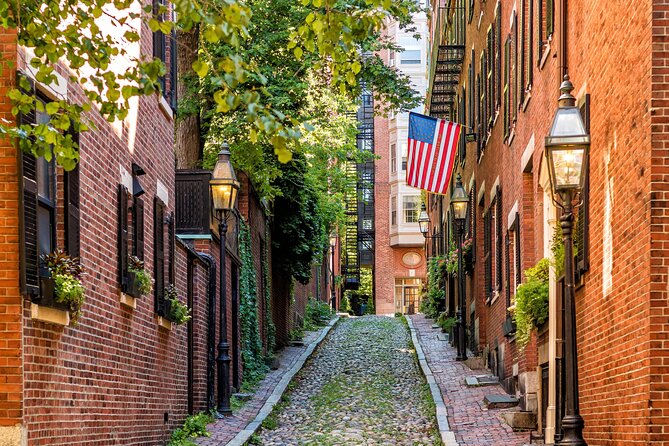
From Boston Common, the walk moves into Beacon Hill, where Acorn Street provides the classic visual introduction. Its narrow cobblestones and old houses make it one of the neighborhood’s most photographed corners.
The tour does not treat Acorn Street as mere scenery. Here you begin to see the world of the 19th-century Boston Brahmins, the city’s wealthy Protestant elite. Their homes, social connections, and political influence shaped Beacon Hill and helped define Boston’s public life.
This is one of the tour’s most useful qualities. You are not asked to admire old architecture without context. The buildings become evidence of who had power, who had money, and who had to fight for a place in public institutions.
Acorn Street is also one of the first reminders that this is not an easy pavement walk. Cobblestones can be awkward, and Beacon Hill rises quickly. Stay close to the guide and expect the group to pause often.
The Phillips School and the fight over education
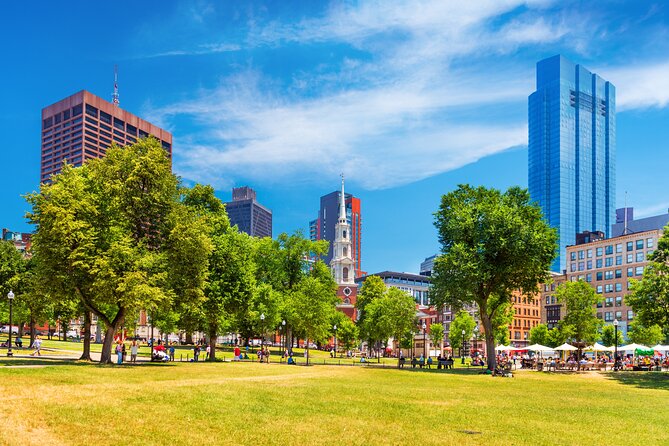
The Phillips School, built in 1824 as a whites-only school, became one of Boston’s first schools to integrate by 1855. This stop shows how the struggle for equal education was part of the city’s abolitionist story.
The school’s significance goes beyond the building itself. Education was a central battleground in the fight against racial inequality. Black Bostonians challenged separate schooling and pushed the city to recognize the rights of African American children.
You’ll also hear about a separate school founded in 1835 for Boston’s African American children. Together, these sites help explain the contradiction at the heart of Boston’s self-image. The city could present itself as a center of reform while still maintaining segregation and unequal treatment.
If you are visiting with older children or teenagers, this section can be especially useful. It turns an abstract discussion about civil rights into a street-level story tied to a real school building.
More Train Tours in the USA:
- Verde Canyon Railroad Adventure Package
★ 4.5 · 2,821 reviews - Key West Conch Tour Train
★ 4.5 · 792 reviews - Streetcar Food Tour and Findlay Market with Riverside Food Tours
★ 5.0 · 653 reviews - Jackson Hole: Aerial Tram and Gondolas Sightseeing
★ 4.8 · 632 reviews
Abolitionists’ homes on Phillips Street
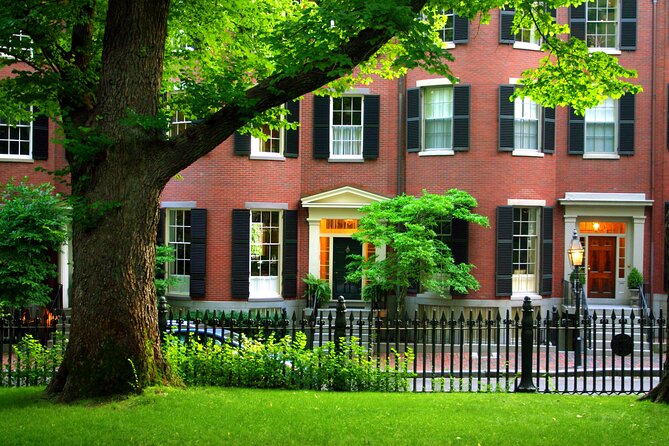
The route continues to the John J. Smith House, once home to a leading abolitionist, state legislator, and former barber. Stops like this are where the tour becomes personal. Political change did not come only from famous national figures. It also came from local residents who organized, spoke publicly, ran businesses, and entered government.
At 66 Phillips Street, you reach one of the most important addresses on the route. The Haydens, both formerly enslaved and committed abolitionists, owned this house and used it as an Underground Railroad safe house.
The term Underground Railroad can sound like a single organized system. In practice, it depended on people, trust, secrecy, money, and dangerous decisions. A private home such as 66 Phillips Street could become a place of shelter for someone fleeing slavery, even though everyone involved faced serious consequences.
This is also where good guiding matters most. The story is not just about a secret room or a dramatic escape. It is about the courage of the people who offered aid and the risks faced by those seeking freedom. Some families enjoy the tour for its stories of hidden passages and safe houses, but the deeper value is understanding the human network behind them.
The Charles Street Meeting House and public debate
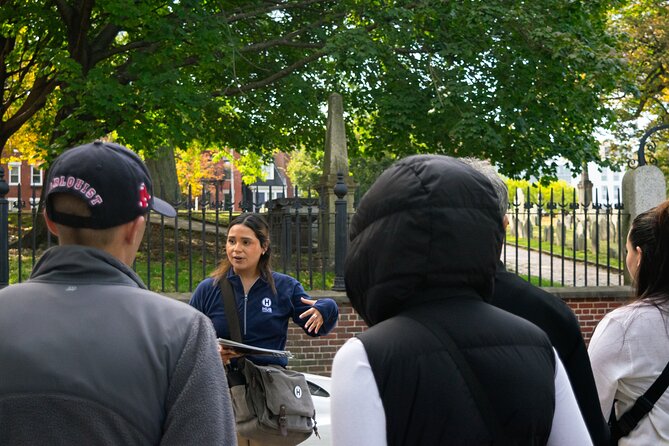
The Charles Street Meeting House dates to 1807 and became a site of heated debate over racial integration. It is a striking reminder that churches were not only places of worship. They were also centers of political argument and community organization.
The building connects Beacon Hill’s religious life with the abolition movement. Here, the tour examines how Boston’s residents argued over who could sit where, who could speak, and what equality meant in public life.
You will also pass the home of an African American community activist and abolitionist, as well as the home of an outspoken abolitionist and United States senator who was beaten unconscious in the Capitol in 1856 over the issue of slavery. That incident helps show that the conflict was not distant or polite. Political disagreement over slavery had become physically violent, even inside the nation’s government.
Other stops point out homes associated with African American abolitionists, including historian William Cooper Nell. These addresses are easy to miss if you walk Beacon Hill alone. The tour gives you a reason to look beyond the polished facades.
Otis House and the city’s unequal neighborhoods
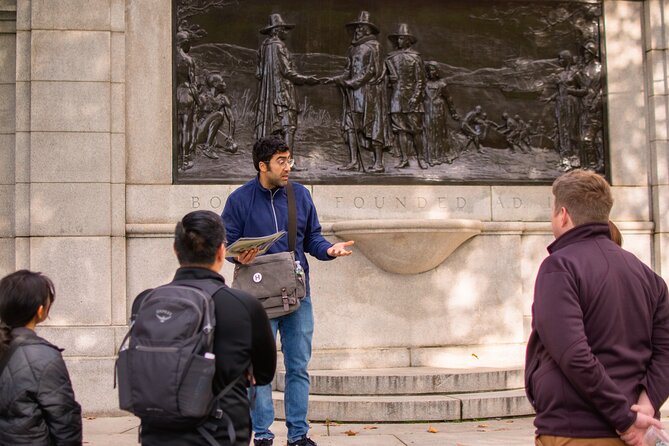
Otis House, built in 1796 for Harrison Gray Otis, offers a sharp change of viewpoint. Otis was a Boston mayor and nephew of Revolutionary figure James Otis, Jr. His home represents the established white leadership that helped shape the city’s institutions.
The stop works because it puts two histories side by side. The same neighborhood contained grand homes linked to political power and smaller homes linked to Black activism and abolition. Beacon Hill was not one unified community with one shared experience.
You’ll also pass an 1806 church designed by architect Asher Benjamin and see homes connected with several important residents. The architecture is attractive, but the guide keeps bringing you back to the people who lived, worked, worshiped, and organized here.
The tour’s route is compact enough to feel coherent, yet it covers a lot of ground. If the guide is especially detailed, the walk can run beyond the advertised two and a half hours. Most of the feedback is strongly positive about the storytelling, but the schedule is worth keeping in mind if you have a dinner reservation immediately afterward.
Inside the African Meeting House
The African Meeting House is the central indoor stop and the only listed landmark with admission included. Built in 1806, it served as a cultural center for Boston’s African American community and is the oldest surviving Black church building in the United States.
This visit gives the walking tour a needed pause. After seeing houses and street corners, you enter a place built for community life. The building helps you think about how churches supported education, political discussion, mutual aid, abolition, and cultural identity.
You should not expect a long museum visit separate from the walking tour. The stop is scheduled for about 25 minutes, so the emphasis remains on the guide’s interpretation and the building’s place in the larger story. Entry to other museums is not included.
For many people, this is the emotional center of the experience. The meeting house makes clear that Black Bostonians were not simply subjects of abolitionist history. They were organizers, speakers, educators, worshipers, and leaders who shaped the movement themselves.
5 Pinckney Street and the route toward the State House
At 5 Pinckney Street, you’ll see the oldest surviving house in Beacon Hill, dating to 1787. It was home to an African American Revolutionary War veteran, which adds another layer to the familiar story of America’s founding.
That detail matters. African Americans participated in the Revolutionary era, yet their service and claims to citizenship were often ignored or minimized. The stop connects the fight against slavery in the 19th century with earlier questions about freedom and belonging.
The route then moves toward the Massachusetts State House, built in 1798 and sometimes called the Hub of the Solar System. The nickname reflects Boston’s old habit of seeing itself as the center of the universe. Here, the tour places local events in a wider political setting.
You may appreciate the way the walk keeps shifting between street-level stories and national history. A home, school, church, or meeting place becomes connected to debates in the state legislature, Congress, and the Civil War.
Ending at the 54th Regiment Memorial
The tour ends at the Robert Gould Shaw and the 54th Regiment Memorial, opposite the State House at 26 Beacon Street. The memorial honors the Black soldiers of the 54th Massachusetts Regiment, one of the best-known African American units of the Civil War.
It is a fitting final stop. The tour begins with Boston Common and the city’s public life, then moves through the people and institutions that challenged slavery and racial exclusion. It ends with Black military service and the cost of the struggle.
The finish is also convenient. You are within roughly 0.2 miles of the starting area, with the route ending across from the State House. You can continue sightseeing in central Boston without arranging a ride back.
Is $35 a fair price?
At $35 per person, I consider this a good value for a 2.5-hour guided walk, especially because admission to the African Meeting House is included. You are paying for a focused route, a small group, and a guide who can connect more than 10 locations into one clear story.
The value depends on your interests. If you want only famous landmarks and quick photo stops, the tour may feel too slow and serious. If you want to understand Boston’s role in abolition and the Civil War, the price is modest compared with the time and detail involved.
Gratuity is optional. Admission inside other museums is not included, and guides do not wear period costumes. That last point is worth noting if you prefer a straightforward history walk rather than theatrical interpretation.
Who should book this Beacon Hill walk?
I would choose this tour if you want to see Boston through Black history and the abolition movement, not just through the Revolution. It also suits repeat visitors and Boston residents. Several stops are easy to miss on your own, and the connections between them are the main reason to have a guide.
Families with teenagers can do well here, especially if they have some interest in American history. Younger children may struggle with the length, standing, hills, and heavy subject matter. One family found that children aged 10 and 13 stayed engaged, but another found the full walk tiring for younger children.
Wear supportive shoes and bring water. You will walk on cobblestones, climb Beacon Hill, and stand during repeated explanations. Service animals are allowed, and the tour is near public transportation, but it is not recommended if you have difficulty standing for long periods.
The tour requires good weather and a minimum number of participants. You can cancel for a full refund up to 24 hours before the start time. If poor weather or low enrollment cancels the experience, you are offered another date or a full refund.
Should you book it?
Book this tour if you want serious local history, strong storytelling, and a manageable small group. The best guides, especially Dana, Will, Lin, and Meghan, make the subject clear without flattening its complexity. You will leave with a better sense of how Black Bostonians shaped abolition, education, politics, and the Civil War.
Skip it if steep streets, uneven surfaces, or two and a half hours on foot would make the day uncomfortable. For everyone else, this is one of the better ways to understand why Beacon Hill matters beyond its beautiful houses.
FAQ
Where does the tour begin?
It begins at the Soldiers and Sailors Monument in Boston Common, near the Boston Common Visitors Center at 139 Tremont Street.
Where does the tour end?
It ends at the Robert Gould Shaw and the 54th Regiment Memorial at 26 Beacon Street, across from the Massachusetts State House.
How long does the tour last?
The tour lasts approximately 2 hours and 30 minutes.
How many people can join the tour?
The group has a maximum of 16 travelers.
Is admission to the African Meeting House included?
Yes. Admission to the African Meeting House is included. Admission to other museums is not included.
Is the tour suitable for people with limited mobility?
The tour requires a moderate level of physical fitness and includes hills, uneven surfaces, walking, and extended standing. It is not recommended for people who have difficulty standing for long periods.
Can I cancel for a full refund?
Yes. You can cancel at least 24 hours before the start time for a full refund. Cancellations or changes made less than 24 hours before the start time are not accepted.
Just added around the USA
- Virginia City Day Tour From Lake Tahoe with Train Ride★ 4.8 · 19 reviews
- Ventura: Rail Bike Guided Tour with Farm Stand Stop★ 4.1 · 18 reviews
- Winnipesaukee Scenic Railroad★ 4.5 · 7 reviews
- Walking Tour of Still’s Underground Railroad in Alexandria★ 5.0 · 9 reviews
- Laughton Glacier Hike and White Pass Rail Adventure★ 5.0 · 12 reviews
- Uncorked: Wine Fest at Verde Canyon Railroad★ 5.0 · 8 reviews
- Grand Canyon Excursion from Sedona with First Class Train Ride★ 4.5 · 47 reviews
- Snoqualmie Fall & Railway Museum 3-Hours (Private Tour)★ 5.0 · 4 reviews
USA Train Tours, compared.

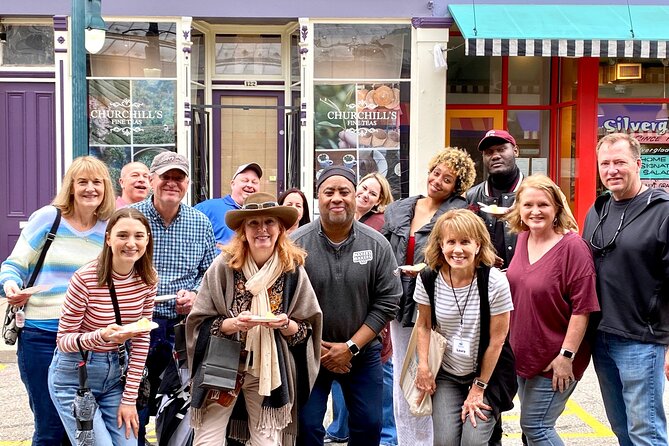
Streetcar Food Tour and Findlay Market with Riverside Food Tours
Read our review →
Jackson Hole: Aerial Tram and Gondolas Sightseeing
Read our review →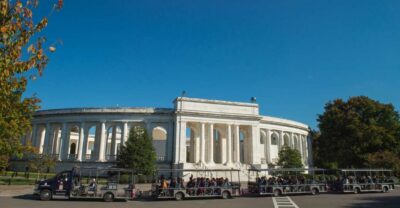
Washington DC: Arlington Nat. Cemetery Ticket & Tram Tour
Read our review →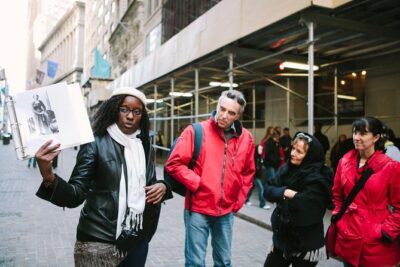
New York City Slavery and Underground Railroad Tour
Read our review →
Alaska Railroad Anchorage to Seward Round-Trip Same Day Return
Read our review →
Colorado: All Aboard the Royal Gorge Route Railroad!
Read our review →Browse the lists this tour appears in