
REVIEW · BANGKOK
Bridge on the River Kwai and Thailand-Burma Railway Tour
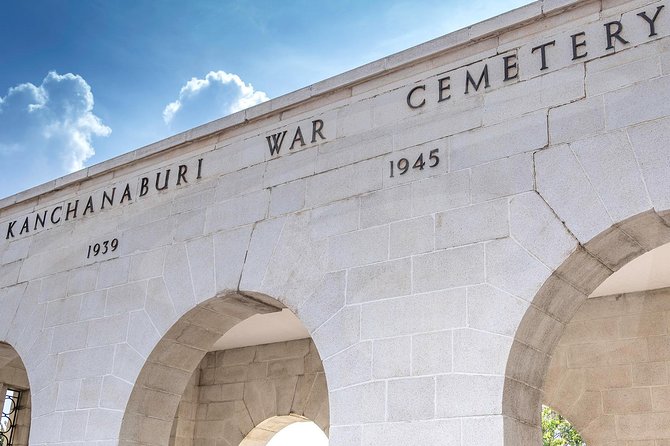
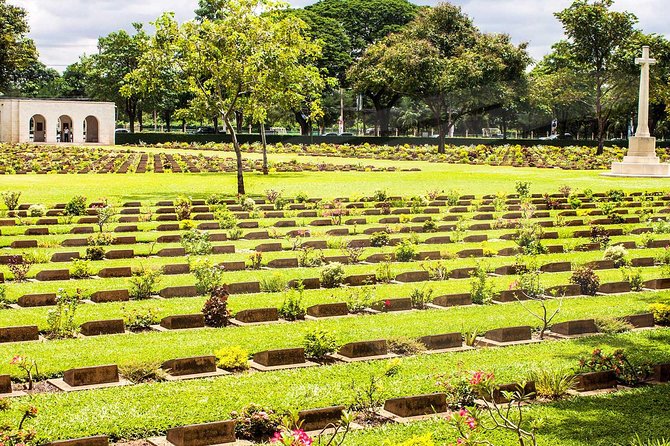
The most powerful part of this day is not the famous bridge itself. It is the quiet row of Allied graves, followed by the realization that the railway ride ahead runs along a route built by prisoners of war and forced laborers during World War II. I especially like the Kanchanaburi War Cemetery and the way the boat approaches the bridge from the river, rather than simply dropping you beside it by road.
I also like the mix of serious history and simple travel pleasures: a long-tail boat ride, a train journey through rural Thailand, and lunch included in the price. Guides named Betty, Luck, Peter, Jenny, Suki, and Tiny have been praised for clear explanations and personal care. The main drawback is the length of the day. You leave around 6:30 am, travel about 130 kilometers each way, and may spend more time on the road than beside the sights.
Key points to know before booking
- The cemetery gives the day its emotional center: Allow yourself quiet time among the graves before moving on.
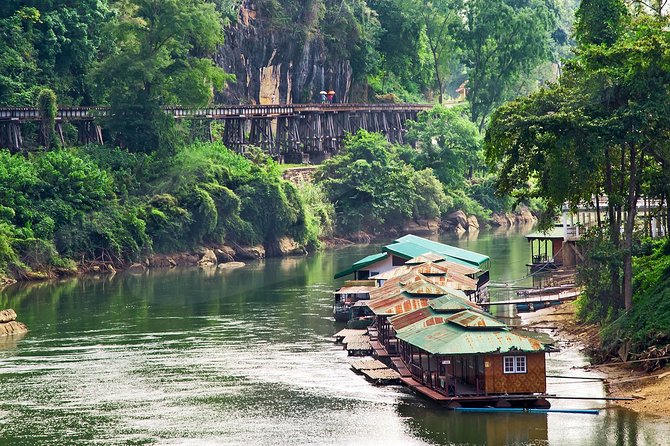
- The boat ride adds a memorable approach: You cruise along the Kwai River and pass beneath the bridge by long-tail speedboat.
- The train ride lasts about 90 minutes: It offers rural views and a direct feel for the railway route.
- The museum is modest: It provides useful context, but the displays may feel basic if you want a polished, detailed museum.
- The day is long but good value: Transport, guide, boat, train, lunch, and entry fees are included for about $108.17.
- Seat upgrades cost extra: About 200 baht includes a guaranteed seat, water, and a cold towel; about 300 baht adds tea or coffee and a certificate.
Why this Bangkok day trip carries real weight
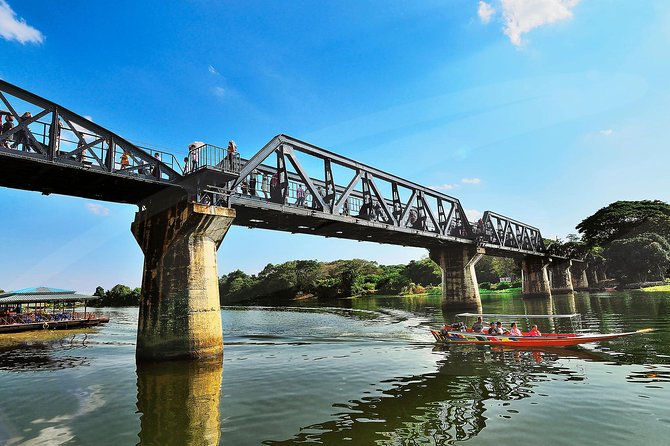
The Bridge on the River Kwai is often treated as a film location or a railway photo stop. That misses the heart of the place. The bridge and railway are reminders of a brutal Japanese wartime project, built to create a supply route from Bangkok toward Rangoon, now Yangon, in Burma, now Myanmar.
The route became known as the Death Railway because so many prisoners of war and forced laborers died during its construction. You do not need to be a military historian to feel the importance of the visit. The sequence of stops does much of the work: cemetery first, museum next, bridge after that, then the railway itself.
I like that order. It prevents the day from becoming a quick photo hunt. You first see the human cost, then learn more about the construction, then see the engineering project in place. By the time you board the train, the ride has meaning beyond its scenery.
The experience earns a rating of 4.3 from 658 ratings, which fits its character. It is a strong day for history, scenery, and variety, but it is not a relaxed short outing. Some departures have had excellent guides and smooth timing. Others have felt less informative during the long drives, and the vehicle may not always be as comfortable as you hope.
More Death Railway and River Kwai Tours in Bangkok:
- From Bangkok: Death Railway & Hellfire Pass Tour with Lunch
★ 4.6 · 931 reviews - Bridge on the River Kwai and Thailand-Burma Railway Guided Tour
★ 4.5 · 353 reviews - Bridge over River Kwai and Hellfire Pass Tour with Train Ride
★ 5.0 · 199 reviews
Leaving Bangkok at 6:30 am
Pickup is offered from selected Bangkok hotels, with the exact arrangements dependent on the hotel details you provide when booking. The early departure is practical. Kanchanaburi is about 130 kilometers west of Bangkok, and the tour needs to fit in several major stops before returning to the city.
You travel in an air-conditioned vehicle through rural Thailand. Sugarcane, rice paddies, and pineapple plantations fill much of the countryside outside Bangkok. The drive gives you a useful change of scene, though it is still a long road day. If you dislike early starts or extended coach rides, think carefully before booking.
The group can reach as many as 99 people, though some departures have been smaller. A large group can make boarding and gathering slower, while a smaller group gives the guide more room to help with photos, questions, and meal needs. The strongest guide comments describe people such as Luck, Peter, Jenny, Suki, Betty, and Tiny as friendly, careful, and clear.
That personal attention matters here. This is not simply a transfer between attractions. You need someone to explain what you are seeing, keep the group on time, and help you understand why each location matters.
Kanchanaburi War Cemetery: the quietest stop
The Kanchanaburi War Cemetery is the main Allied cemetery for prisoners of war who died while working on the Burma Railway during World War II. The stop lasts about 30 minutes, with entry included.
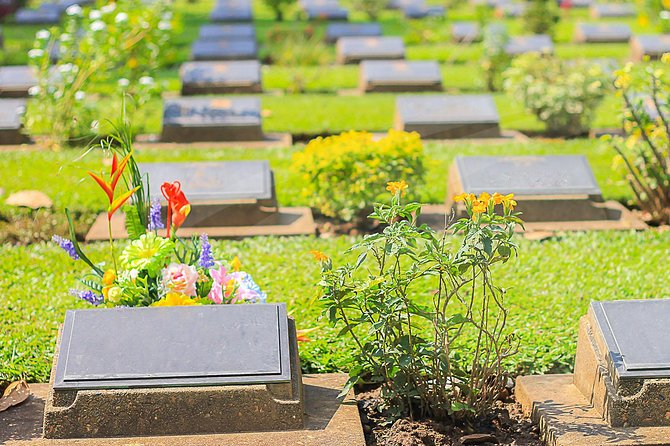
This is likely to be the most moving part of the day. The neat rows of graves create a sharp contrast with the suffering behind them. You may find the site more affecting than the bridge because it turns a huge wartime project into individual lives cut short.
Thirty minutes is enough for a respectful visit, but not enough for an unhurried study of every grave. I would use the time carefully. Read some names, take in the setting, and listen closely to the guide’s explanation. This is not a place for loud conversation or rushed group photos.
The cemetery also gives you a better frame for the later train ride. Without it, the railway might feel like a pleasant scenic journey. After this stop, the tracks carry a much heavier meaning.
JEATH War Museum and its simple displays
The JEATH War Museum follows the cemetery, with about 20 minutes allotted and admission included. It covers the construction of the Death Railway and the work forced upon prisoners of war during the conflict.
The displays include historical photographs and paintings. The museum is useful for setting the basic story, but you should not expect a large, modern institution with extensive interpretation. Some people find it disappointing because the presentation is fairly basic. Others value the direct, unpolished feel.
I would treat this as a short introduction rather than the sole reason for the trip. Listen to the guide, look closely at the images, and use the stop to connect the cemetery with the railway ahead. The quality of the explanation may shape your experience more than the displays themselves.
This is one area where guide quality matters most. A strong guide can provide the missing links, explain the railway’s intended purpose, and place the bridge within the Japanese occupation of Burma. If the commentary is brief, the museum may feel thin.
More Train Tours in Bangkok:
- Bangkok: Damnoen Saduak Market and Maeklong Railway Market
★ 4.5 · 26,723 reviews - The Old Siam: Damnoen Saduak and Maeklong Railway Market
★ 4.5 · 10,992 reviews - Bangkok: Train Market & Floating Market with Boat Ride
★ 4.7 · 9,547 reviews - Half-Day Railway Market and Floating Market Tour in Thailand
★ 4.5 · 3,924 reviews
Approaching the bridge by long-tail boat
The long-tail boat ride lasts about 20 minutes. You cruise along the Kwai River, pass beneath the bridge, and approach the famous structure from the water.
This is one of the tour’s most enjoyable touches. Seeing the bridge from the river gives you a better sense of its setting than arriving by road. The boat adds movement and a little excitement without turning the day into a theme-park ride. One past departure compared the experience to a James Bond-style boat trip, which captures the speed and open-air feel without overstating it.
You will have time to look at the bridge and explore on your own. The boat ride itself is short, so do not expect a long river cruise. It works as a lively transition between the museum and the railway, and it provides strong photo opportunities.
The river crossing can also make the bridge feel less like a standalone monument. You see how it sits within the surrounding countryside and understand why the railway route needed such a crossing. For me, this is more memorable than simply walking up to the bridge from a parking area.
Walking across the River Khwae Bridge
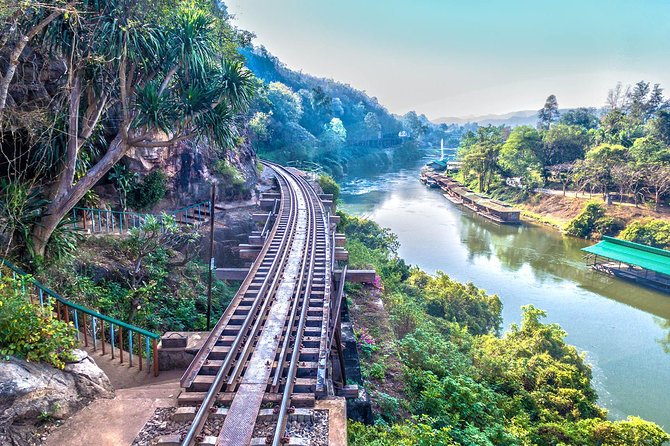
At the bridge, you can explore independently for about 20 minutes. The structure is famous because of its wartime role and its later place in popular culture, but the real value comes from remembering what its construction required.
The bridge is not a huge sight in the way a grand European landmark might be. Its importance comes from the story attached to it. The boat approach and the chance to walk across give you two different views, though the stop remains fairly brief.
Some departures reach the bridge early enough for a quieter walk before the train ride. That timing can make a big difference. You have a chance to take photos, look along the railway line, and reflect before the platform becomes busy with the rest of the day’s movements.
Keep your expectations sensible. You are not getting a long guided tour of the bridge or an extended historical lecture at the structure itself. The meaning comes from the earlier cemetery and museum, plus the guide’s explanation.
The Death Railway train ride through rural Thailand
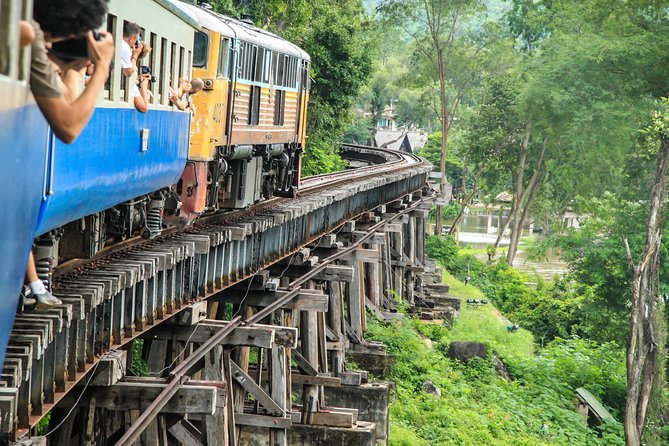
The main ride lasts about 1 hour and 30 minutes. You board the Death Railway and travel through the countryside, seeing a section of the route that passes through jungle and along areas where the railway had to be cut through difficult ground.
This is the part railway enthusiasts will anticipate most. It is also the point when the history becomes physical. You are not only hearing about the route. You are riding on it, looking out at the countryside, and sensing the effort involved in laying tracks through rough terrain.
The views are scenic rather than packed with attractions. You might see rural fields, vegetation, and sections of railway that curve through the region. The train is not a luxury rail experience. It is a working historical route, and the charm comes from the setting and the meaning behind it.
Seats may be first come, first served unless you pay for an upgrade. An upgrade of about 200 baht includes a guaranteed seat, drinking water, and a cold towel. For about 300 baht, you can add tea or coffee and receive a certificate. These extras are optional, but a reserved seat can be worthwhile after a full morning of walking and coach travel.
The train ride is also where dust and heat may become noticeable. One guide provided masks for dust, which was a thoughtful touch. Bring water money, keep your camera ready, and pay attention to the guide’s timing so you know where you are getting off.
Lunch and the value of the $108 price
Lunch is included, along with admission fees, the air-conditioned vehicle, guide, boat ride, and train ticket. Beverages are not included, so carry Thai baht for drinks and any train upgrade.
At about $108.17 per person, the price is fair if you want a full day arranged from Bangkok. Booking separate transport to Kanchanaburi, arranging a boat, paying museum and cemetery-related entry costs, and managing the train connection would take more effort. The tour bundles the difficult logistics into one day.
The value depends on how much you want included. If you only want to see the bridge, the price and long travel time may feel excessive. If you want the cemetery, museum, boat, railway, lunch, and a guide to connect the pieces, the package makes better sense.
Lunch has been a high point for some departures, with a delicious meal served in an attractive restaurant. Dietary needs have also been handled with an alternate meal on at least one departure. Still, beverages are extra, and the supplied information does not specify the menu, so do not book expecting a particular dish.
What the long day feels like in practice
This is a nine to ten hour experience, but the day can feel longer because of the early start and road time. You need a moderate level of physical fitness. Expect time getting in and out of the vehicle, walking around the cemetery and bridge, boarding the boat, and managing the train station.
The air-conditioned vehicle is a welcome part of the package, though comfort can vary. One departure found the car less comfortable than expected. That is worth remembering if you have back problems or do not handle long road journeys well.
Timing is another variable. Strong guides have kept the day moving, placed the group in the right location, and helped with photos. Less effective commentary can leave you wondering what you are passing during the coach journey. If you want constant explanation of the countryside, make that clear to your guide.
The experience suits people who prefer a full program to a slow day. It also works well for first-time visitors to Kanchanaburi who want the main sites without arranging several separate bookings. Families with younger children may find the history heavy and the journey tiring, though the boat and train add variety.
Who should book this experience
I would choose this tour if you want the main Kanchanaburi sights in one organized day and care about the story behind them. It is especially suitable for military history enthusiasts, railway fans, and anyone who wants a meaningful excursion beyond Bangkok.
I would also recommend it if you value a guide who can connect the stops. The strongest guide experiences have come from clear explanations, thoughtful timing, help with photos, and attention to food or comfort needs.
I would hesitate if you want an intimate, slow-paced outing, a detailed museum visit, or a short trip with little time in traffic. You may prefer an independently arranged overnight stay in Kanchanaburi if you want more time at the cemetery, bridge, and railway.
Free cancellation is available until 24 hours before the start time. The tour requires a minimum number of participants, so a cancellation for low demand can result in an alternative date or a full refund. Provide your hotel details when booking, since missing information can cause cancellation.
Should you book the Bridge on the River Kwai tour?
Book it if the day’s full mix appeals to you: a serious cemetery visit, a modest museum, a fast river approach, a famous bridge, and a 90-minute railway ride through rural Thailand. The tour gives you strong variety and removes the stress of arranging transport from Bangkok.
Skip it if you want a short, polished museum experience or dislike long coach journeys. The bridge alone does not justify the day for everyone. But if you want to understand the Death Railway rather than simply photograph it, this is a worthwhile and well-priced way to make the trip.
FAQ
Where does the tour start?
Pickup begins around 6:30 am from selected hotels in Bangkok. You must provide your hotel details when booking.
How long does the experience last?
The tour lasts approximately nine to ten hours, including travel from Bangkok to Kanchanaburi and back.
Is hotel pickup included?
Yes, hotel pickup and drop-off are included for selected Bangkok hotels.
What is included in the price?
The price includes an air-conditioned vehicle, local guide, long-tail boat ride, Death Railway train ride, lunch, and admission fees.
Are drinks included with lunch?
No. Beverages are not included, so you should plan to pay separately for drinks.
How long is the Death Railway train ride?
The train journey lasts about one hour and 30 minutes.
Can I reserve a train seat?
A seat upgrade costs about 200 baht and includes a guaranteed seat, drinking water, and a cold towel. An upgrade of about 300 baht also includes tea or coffee and a certificate.
Is the tour physically demanding?
A moderate level of physical fitness is recommended. The day includes walking, boarding a boat and train, and spending considerable time on the road.
Can I cancel for a refund?
You can cancel at least 24 hours before the start time for a full refund. Cancellations or changes made less than 24 hours before the start time are not accepted for a refund.
Just added around Bangkok
- Floating & Railway Markets and Erawan Waterfall [Optional Luxury]★ 5.0 · 43 reviews
- Small Group: Kanchanaburi Death Railway, Erawan Waterfall and Elephant★ 4.0 · 3 reviews
- Floating Market & Railway Market near Bangkok★ 4.0 · 5 reviews
- Historic Kanchanaburi: Train, Boat & Skywalk + Lunch From Bangkok★ 4.5 · 3 reviews
- Railway Market, Floating Market and After the Rain Cafe★ 5.0 · 16 reviews
- Maeklong & Damnoen Saduak Markets: Railway & Floating Market Tour★ 4.0 · 17 reviews
- Historic Kanchanaburi:Train, Boat, Skywalk from Bangkok(No Lunch)★ 5.0 · 2 reviews
- Private tour : Railway & Floating Market and the Bridge over river Kwae★ 5.0 · 2 reviews
Bangkok Train Tours, compared.
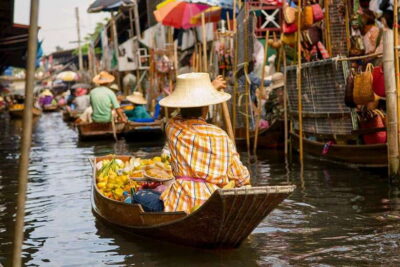
Damnoen Saduak Market and Maeklong Railway Market
Read our review →
The Old Siam: Damnoen Saduak and Maeklong Railway Market
Read our review →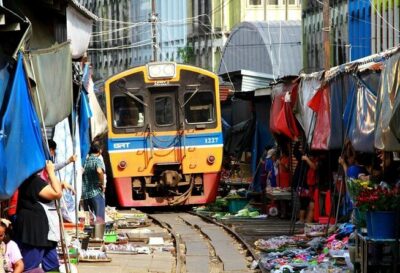
Half-Day Railway Market and Floating Market Tour in Thailand
Read our review →
Damnoen Saduak, Train Market & Mahanakhon Day Trip
Read our review →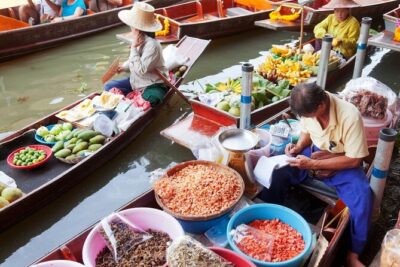
Damnoen Saduak Floating Market and Maeklong Railway Market Tour
Read our review →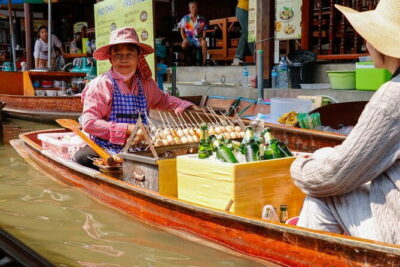
Day Trip to Bangkok Floating Market & Maeklong Railway
Read our review →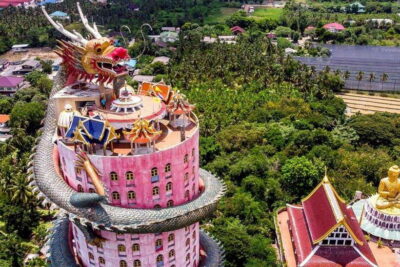
Railway and Floating Market Tour with Dragon Temple
Read our review →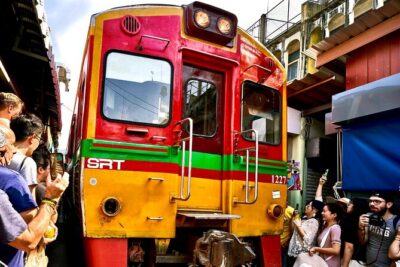
Browse the lists this tour appears in