
REVIEW · ROME
From Rome: Pompeii and Herculaneum by High-Speed Train
Pompeii and Herculaneum tell the same disaster in two very different ways. Pompeii feels like a whole Roman city, with broad streets, a forum, shops, public buildings, a brothel, and plaster casts of people and animals caught by Mount Vesuvius. Herculaneum is smaller and more intimate, with unusually well-preserved houses and a beach where hundreds of skeletons remain.
I like the 70-minute high-speed train from Rome and the fact that an archaeologist leads both visits. Guides such as Michele, Raphael, Julia, Diego, and Paolo have been praised for making complicated archaeology easy to follow. The main drawback is the pace: this is a long day with plenty of walking, and Pompeii can feel rushed if lunch takes too much of your free time.
Key points to know before booking
- Two famous sites in one day: Compare Pompeii’s broad urban scale with Herculaneum’s better-preserved homes.
- Archaeologist-led visits: Guides including Michele, Raphael, Julia, and Diego bring archaeology, theories, and daily Roman life into the story.
- Fast transport from Rome: The train reaches Naples in about 70 minutes, avoiding the much longer road journey.
- Plaster casts and preserved remains: Pompeii includes casts of people and animals, while Herculaneum includes skeletons on the ancient beach.
- A full walking day: Plan on about one mile at Pompeii and half a mile at Herculaneum over uneven stone streets.
- Good value for a busy day: The $222.77 price includes trains, minibus transfers, both entry tickets, headsets, and guided visits.
Why seeing both cities changes the story
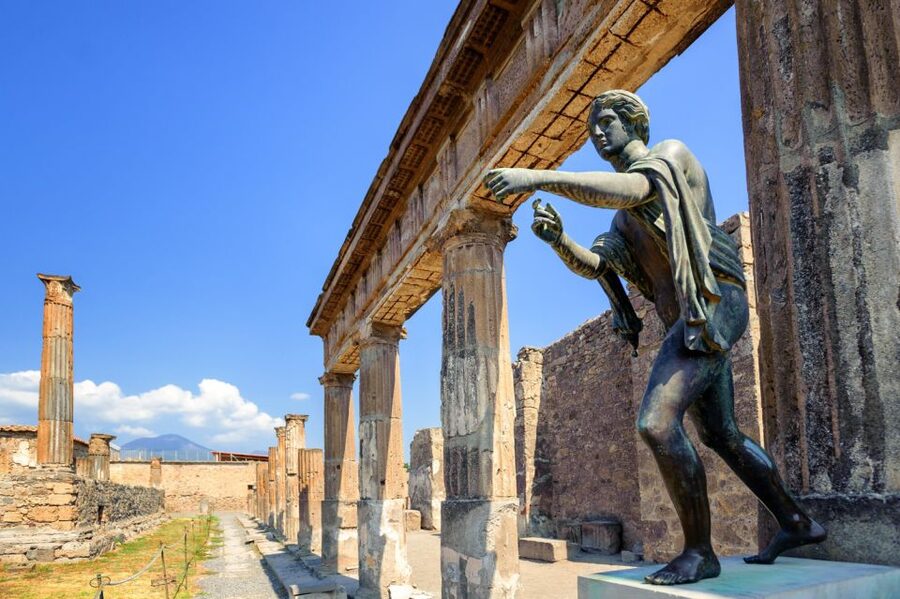
If you visit only Pompeii, you see the scale of the Roman settlement. If you visit only Herculaneum, you see a tighter, more domestic picture of life before the eruption. Seeing both in one day gives you a useful comparison.
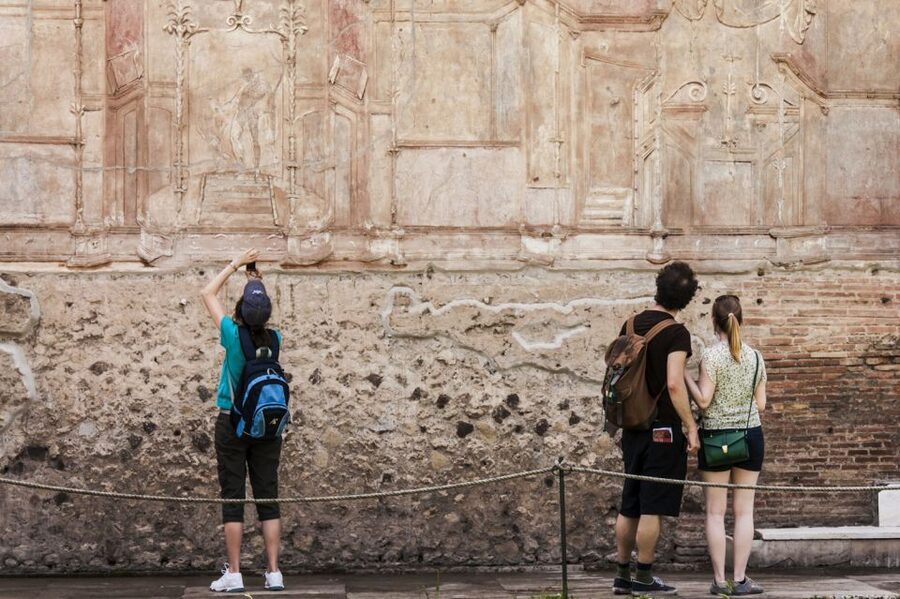
Pompeii spreads across a large archaeological site. Its streets, public spaces, homes, shops, and entertainment buildings show how a Roman town worked. Herculaneum is smaller, but its surviving walls, rooms, and decorative details can make daily life feel closer at hand.
The contrast also helps explain why the disaster affected each city differently. Your archaeologist guide can discuss the earthquakes, the eruption, the hot wind, and the ash that covered the settlements. Guides such as Michele and Mikel have been praised for explaining both established facts and the theories surrounding the disaster.
This is not a tour built around quick photo stops. You will spend much of the day listening, walking, looking closely, and trying to picture ordinary people living in these streets before everything changed.
More Bullet Train Tours in Italy
- Rome to Pompeii Guided Tour with Wine & Lunch by High Speed Train
★ 5.0 · 1,379 reviews - Rome: Pompeii Tour with Wine and Lunch by High Speed Train
★ 4.8 · 485 reviews - Venice Day Trip from Rome by High-Speed Train with Happy Hour
★ 4.5 · 445 reviews
Roma Termini to Naples in 70 minutes
The day begins at Roma Termini, where you use the pre-booked high-speed train tickets provided for the tour. You travel independently from Rome to Naples, so you need to find the correct platform and board the train yourself. Arriving early is sensible because Termini is a large and sometimes confusing station.
The train ride is one of the strongest parts of the plan. At about 70 minutes, it is far quicker than making the same journey by road. The trains are described as comfortable, and using rail gives you a chance to rest before the walking begins.
At Naples Central Station, meet the guide in front of the STARHOTEL TERMINUS entrance, opposite the station. Look for the ASKOS TOURS sign. The meeting point is specific, but a larger sign would make the guide easier to spot in the station area, so keep the hotel name and meeting instructions ready on your phone.
You then board a shared van or minibus for the trip to Pompeii. The drive takes about 30 minutes. After the archaeological visits, the same general transport arrangement takes you to Herculaneum and then back to Naples for the return train to Rome.
Pompeii: a city you can walk through
The Pompeii visit lasts about two hours with the archaeologist, followed by around 30 minutes of free time. That is enough to see major highlights, but not enough to inspect every street or building at leisure.
The guide takes you to key parts of the site, including newly opened houses, the forum, the brothel, and areas connected with everyday Roman life. The value here is not just seeing old walls. It is understanding how the streets connected homes, shops, public buildings, and places of entertainment.
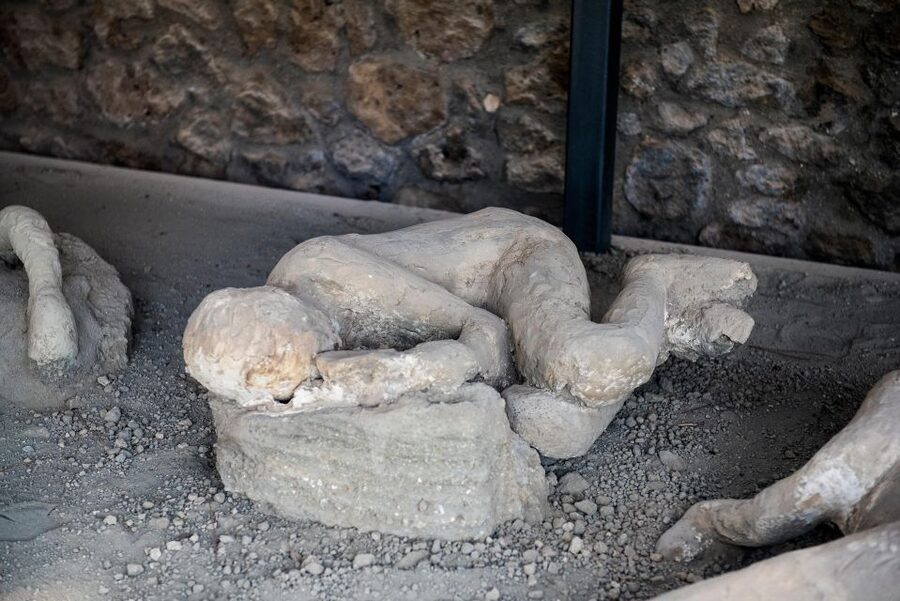
The plaster casts are among Pompeii’s most powerful sights. They show the shapes of people and animals caught in the eruption. Your guide can place these remains in context, explaining what the casts represent and how the city’s final moments have been studied.
Expect uneven paving stones and a substantial amount of walking. The tour information estimates about one mile at Pompeii, but the rough surfaces and frequent stops can make that distance feel longer. Comfortable walking shoes matter. Sandals, flip-flops, and high heels are not allowed, and large bags or luggage are also prohibited.
The free time is useful, but it needs careful handling. You can shop or get lunch, yet the available time is limited. Some people have found that a slow restaurant meal leaves too little time for photographs or extra exploration. I would choose food quickly and keep an eye on the meeting time.
This is one place where the tour’s organization matters. A guide such as Diego can help the group focus on the best areas and maintain a good pace. Still, you should not expect long, quiet periods at every major building. Pompeii is vast, and a two-hour guided visit can only cover a selection.
Herculaneum: smaller, closer, and better preserved
After Pompeii, the minibus takes you to Herculaneum for a two-hour guided visit. The site requires about half a mile of walking, less than Pompeii, but you still cross uneven ancient streets and should remain prepared for a full day on your feet.
Herculaneum offers a different kind of experience. Pompeii gives you the sense of a complete city, while Herculaneum lets you spend more time looking at houses and their surviving details. The House of Neptune and Amphitrite is one of the named stops, with its decorative features and preserved domestic setting.
The ancient beach is another striking point. Hundreds of skeletons are preserved there, creating a direct and sobering link to the people who tried to escape the eruption. This is not a light sightseeing stop, but the guide’s explanation helps connect the remains with the wider story of the city.
Herculaneum can be especially rewarding after Pompeii because you already understand the broad setting. Here, the guide can focus on what survives inside and around the homes, how the two settlements differed, and what archaeologists can learn from the remains.
Guides including Paolo, Julia, Michele, and Raphael have been singled out for combining archaeological detail with a clear, friendly style. That matters at Herculaneum, where the remains can be less immediately obvious than Pompeii’s famous streets and casts. A good explanation helps you notice why a wall, room, or preserved decoration is important.
More Bullet Train Tours in Rome
- From Rome: Day Trip to Venice by High-Speed Train
★ 4.6 · 352 reviews - Rome to Florence: High-Speed Train Day Trip with Guided City Tour
★ 4.0 · 235 reviews - From Rome: Pompeii and Naples Day Trip by High-Speed Train
★ 4.7 · 234 reviews - Amalfi Coast Day Trip from Rome by High-Speed Train
★ 4.5 · 162 reviews
What an archaeologist guide adds
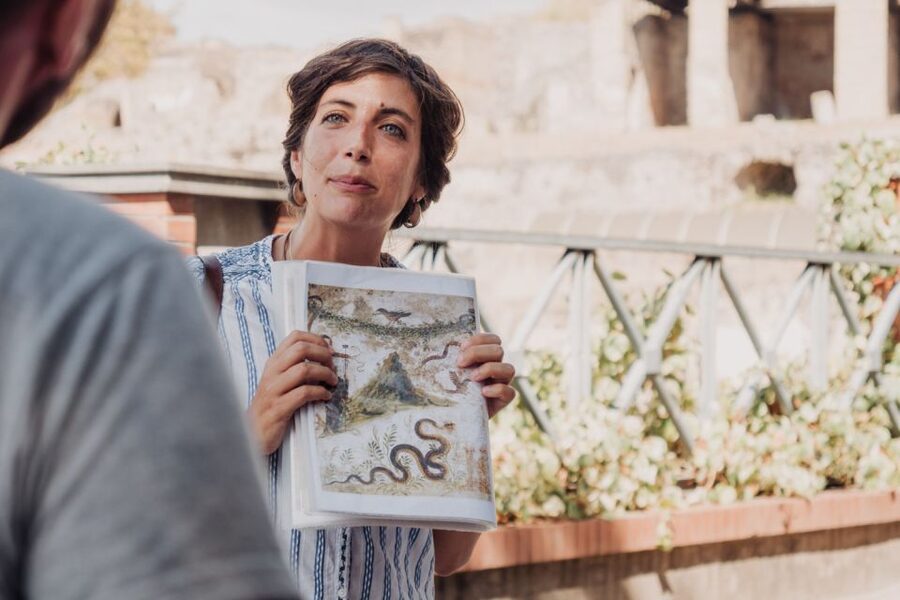
A guide with archaeological training changes the visit from a walk through ruins into a lesson in how evidence is read. You will hear about buildings, but also about the limits of what researchers know and the theories surrounding the eruption.
Michele has been praised for explaining ordinary Roman life as well as the archaeology. That approach is useful because Pompeii and Herculaneum are not only disaster sites. They were functioning communities, and their streets reveal how people lived, worked, worshipped, ate, and spent free time.
Mikel has been noted for discussing both facts and theories about the earthquakes and eruption. Julia has been praised for pairing archaeological expertise with humor and an easy manner. Raphael and Diego have been recognized for clear explanations and sensible pacing.
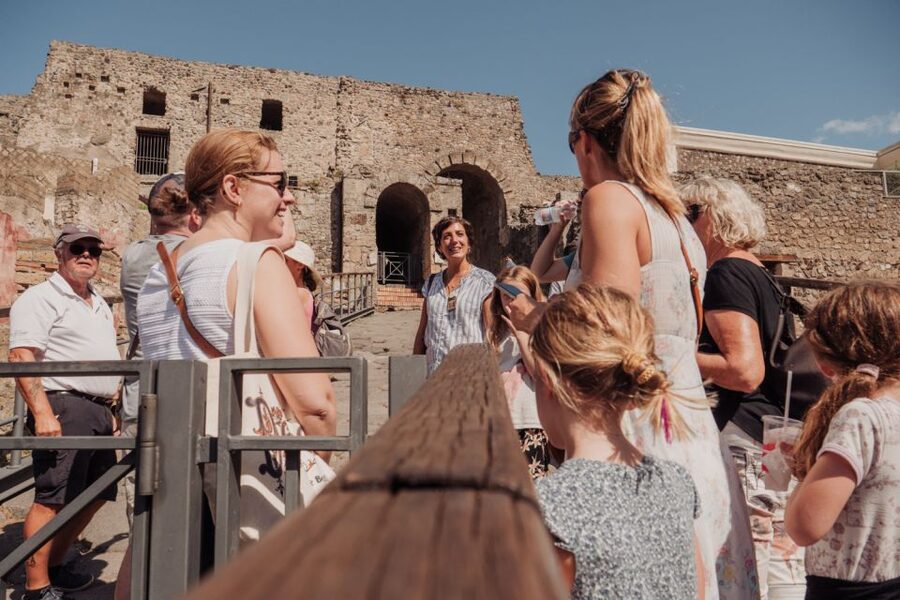
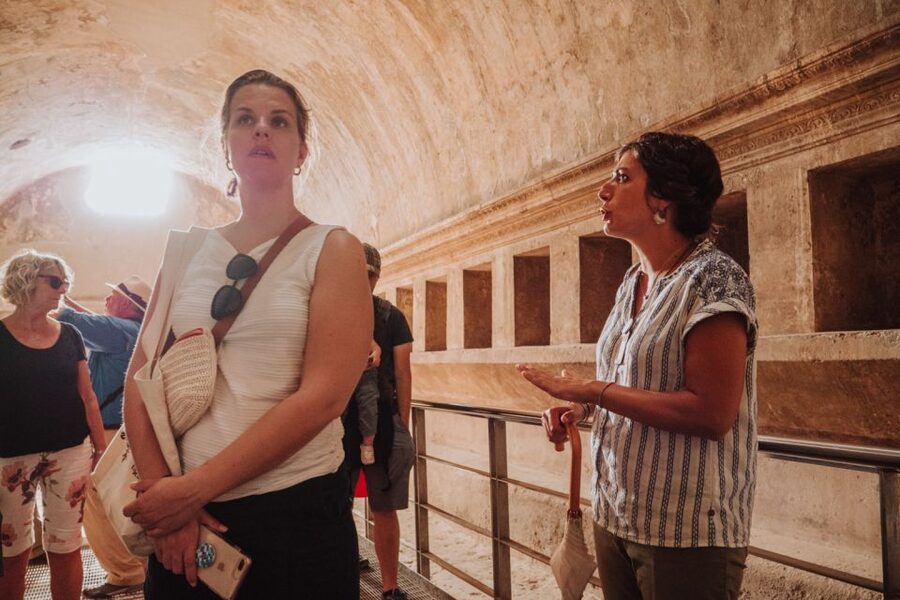
The guides use headsets for all participants. This is important in an open archaeological site, where wind, nearby groups, and large spaces can make a normal speaking voice hard to hear. You can keep moving without losing the explanation.
The tour is conducted in English. If you want only a quick introduction and time for independent photography, a guided archaeological tour may feel too information-heavy. If you want to understand what you are looking at, the guide is one of the main reasons to choose this experience.
The long day is worth planning carefully
The full activity lasts about 8.5 hours, not counting your travel to and from Roma Termini. The schedule includes the train to Naples, two minibus transfers, two guided visits, free time, and the return train.
The timetable is efficient, but it leaves little room for delays. You are responsible for getting to the departure point in Rome and following the train instructions. The train information may arrive close to the activity date, which can make it harder to arrange an earlier connection into Rome Termini. Build in a safe margin.
The return transfer takes you from Herculaneum to Naples Central Station, where you catch the high-speed train back to Rome. Some time is kept in reserve before departure, so you may have a wait at the station rather than a frantic dash to the platform. That is safer, though it can feel like unused time after a packed day.
Bring a passport or ID card, as requested for the activity. The tour runs in rain or shine, so a raincoat is sensible. There is no hotel pickup or drop-off, and meals are not included.
Mobility is an important consideration. The tour is not suitable for wheelchair users or people with limited mobility. The ancient paving, walking distances, station transfers, and repeated boarding of transport make this a demanding day for anyone who struggles with uneven ground.
Is $222.77 a fair price?
The price is $222.77 per person. That is not a budget day trip, but the package includes several costs that add up quickly: round-trip high-speed train tickets between Rome and Naples, minibus transport in Campania, Pompeii entry, Herculaneum entry, two guided visits with an archaeologist, and headsets.
Herculaneum admission alone is listed at 16 euros per person. You also avoid arranging separate train tickets, figuring out the Naples connections, and buying entry at two busy archaeological sites. The price makes more sense if you value a structured day and expert interpretation.
It is less attractive if you want long periods alone at each site or prefer to control your own lunch and departure times. You are paying for coordination as much as admission. The main value is the ability to see both sites from Rome without spending hours on a bus or handling every transfer yourself.
The small-group format helps keep the day manageable, though no specific maximum group size is provided. Headsets and a guide who can control the route are particularly useful at Pompeii.
Who will enjoy this Pompeii and Herculaneum day trip?
I would choose this tour if you are staying in Rome and want to see both archaeological sites without changing hotels. It suits people who prefer trains to long road journeys and who want an expert to explain the ruins rather than simply walk through them.
It is also a strong choice if one person in your group already knows a little about Pompeii and another is starting from scratch. The guides can explain the basics clearly while adding archaeological detail for anyone who wants more.
The experience is less suitable if you dislike fixed schedules, need a long relaxed lunch, or want to explore every corner independently. Pompeii alone can fill a day. Combining it with Herculaneum means you accept a brisk pace and selective touring.
Wear sturdy walking shoes, carry a small bag, take water, and keep lunch simple. Do not bring a suitcase or large backpack. A raincoat belongs in your day bag even if the morning looks clear.
Should you book it?
Book this day trip if your priority is seeing both Pompeii and Herculaneum with an archaeologist and returning to Rome the same evening. The fast train is a major advantage, and the included transport removes much of the day’s complicated planning.
I would hesitate only if you need a slow pace or extended free time. For most history-minded visitors with good walking stamina, the combination is hard to beat: Pompeii for the city, Herculaneum for the homes and human remains, and an archaeologist to connect the evidence.
FAQ
How long is the tour from Rome?
The activity lasts about 8.5 hours. This includes the high-speed train journeys, minibus transfers, guided visits, free time at Pompeii, and the return to Roma Termini.
Where does the tour begin?
The tour begins at Roma Termini station. You travel independently to Naples using the pre-booked high-speed train tickets provided for the activity.
Where do I meet the guide in Naples?
Meet the guide in front of the STARHOTEL TERMINUS entrance, opposite Naples Central Station. Look for the guide holding an ASKOS TOURS sign.
How long does the train take from Rome to Naples?
The high-speed train takes about 70 minutes each way.
How much time do I spend at Pompeii?
The guided Pompeii visit lasts about two hours, followed by around 30 minutes of free time for lunch or shopping.
How much time do I spend at Herculaneum?
The guided visit to Herculaneum lasts about two hours.
Are meals included?
No. Meals are not included, so you need to arrange lunch during the free time at Pompeii.
What should I wear and bring?
Bring a passport or ID card, sturdy walking shoes, and a raincoat if rain is possible. Sandals, flip-flops, high heels, luggage, and large bags are not allowed.
Is the tour suitable for wheelchair users?
No. The tour is not suitable for wheelchair users or people with limited mobility because it includes walking on uneven ancient streets at both sites.
Just added around Rome
- Rome: Castelli Romani Day Trip by Train and E-Bike★ 5.0 · 4 reviews
- Florence and Venice from Rome: 2-Day Semi-Private Tour by Train★ 5.0 · 2 reviews
- Villa Adriana Private Day Trip from Rome By Train★ 5.0 · 9 reviews
- Venice from Rome: Full Day Small Group Tour by Fast Train★ 4.5 · 14 reviews
- Florence from Rome by High Speed Train at your pace★ 4.5 · 11 reviews
- Capri Island Small Group Boat Tour from Rome by Train★ 4.5 · 69 reviews
- Venice from Rome: Private Day Trip by train with Islands Tour★ 5.0 · 25 reviews
- Transfer from Civitavecchia by train with Rome HopOnHopOff Option★ 3.5 · 4 reviews
Rome Train Tours, compared.

Rome to Pompeii Guided Tour with Wine & Lunch by High Speed Train
Read our review →
Ancient Ostia Antica Semi-Private Day Trip from Rome by Train with Guide
Read our review →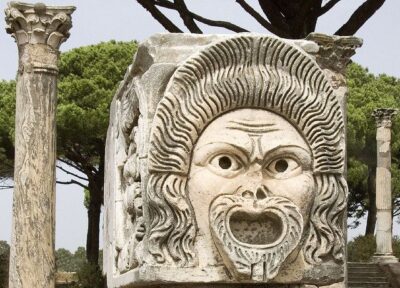
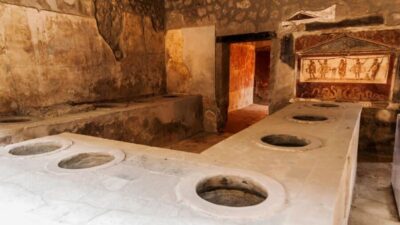
Pompeii Tour with Wine and Lunch by High Speed Train
Read our review →
Venice Day Trip from Rome by High-Speed Train with Happy Hour
Read our review →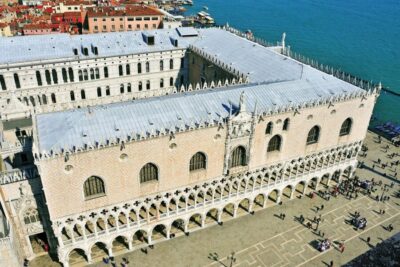

Tuscany Comfort Day Tour from Rome with Wine & Lunch
Read our review →
Rome to Florence: High-Speed Train Day Trip with Guided City Tour
Read our review →Browse the lists this tour appears in