
REVIEW · BATTAMBANG
Full Day-Tour: Handicraft, Bamboo train, Killing cave. Bat cave
The day ends with one of Cambodia’s best natural spectacles: thousands of bats pouring from Phnom Sampeau as dusk arrives. Before that, you ride Battambang’s old bamboo train, visit village workshops, and climb to the Killing Caves, where Cambodia’s recent past is impossible to ignore.
I like the private tuk-tuk format and the chance to meet people who make rice paper, fish paste, dried bananas, rice wine, and other local products. I also like that guides such as Mr Lychee and Mr Polo are praised for clear English, local knowledge, flexible pacing, and smooth driving. The drawback is the long day, often 10 to 12 hours, with heat, dust, walking, stairs, and a separate $5 bamboo-train charge.
Key points to know before booking
- The Bat Caves are the grand finale: Arrive before sunset to watch thousands of bats stream from the mountain.
- This is a private tuk-tuk day: Your group has its own vehicle, guide, pickup, and hotel drop-off.
- Village visits are the heart of the tour: You see how rice paper, fish paste, sticky rice bamboo, dried bananas, and rice wine are produced.
- The bamboo train costs extra: The ride is not included in the $18 tour price and costs $5 per person.
- The day mixes pleasure with painful history: Wat Samrong Knong and the Killing Caves explain what happened during the Khmer Rouge period.
- Bring patience and a strong stomach: Fish paste production can smell powerful, and the full route covers a lot of ground.
Why this full-day route works
Battambang is easiest to understand outside the city center. This tour links the city’s old buildings with farming villages, temples, food production, wartime memorials, and the countryside around Phnom Sampeau.
At $18, the price is low for a private 10 to 12-hour outing with tuk-tuk transport, hotel pickup and return, an English-speaking local guide, and cold water. You still need to pay for the bamboo train, and personal expenses, tips, and some food are not covered. Even with the extra train fare, it offers strong value if you want to see many parts of the Battambang area in one day.
The route is busy. You are not spending a lazy morning at one temple. You are moving from village to village, then returning to the city, heading out again toward the river, and finishing near the mountain. That variety is the main appeal, but it also means a long time in a tuk-tuk and little room for a slow, unplanned stop.
More Bamboo Train Rides in Battambang:
- Battambang: Tuk-Tuk, Bamboo Train, Killing/Bat Caves, Sunset
★ 4.9 · 1,436 reviews - Afternoon tour by tuk tuk to bamboo train,bat cave,killing cave,countryside.
★ 5.0 · 344 reviews - Battambang: Bamboo Train, Bat Cave, Killing Cave by Tuk Tuk
★ 5.0 · 182 reviews
Village workshops and the smell of fish paste
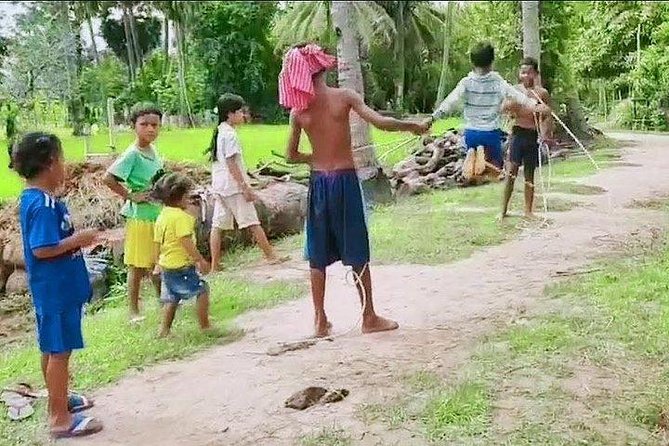
The day begins on the north side of Battambang with visits to village producers. This is the part I find most useful for understanding daily life in Cambodia because the focus is on work rather than display.
You may see rice paper being made for spring rolls, along with dried bananas, rice wine, sticky rice bamboo, and fish paste. The guide explains how these products fit into local food traditions and household income. You can also taste local snacks if you choose.
The fish paste stop deserves a practical warning. The smell is strong, and one couple jokingly advised bringing a peg for your nose. That is not a reason to skip it. It is a real working food business, not a polished tasting room, and that rough edge is part of its value. If you are sensitive to odors, stand upwind and keep the visit brief.
The village section takes about three hours, making it one of the longest parts of the morning. You will have time to ask questions, watch the work, and speak with farmers or artisans through the guide. This is where Mr Lychee’s English and local knowledge matter most. The tour is better when you ask how a product is made, who buys it, and how the work changes through the year.
Wat Samrong Knong and the Well of Shadows
Wat Samrong Knong offers a quieter and more serious stop. The pagoda contains the Well of Shadows, a memorial connected to people killed during the Khmer Rouge period.
Plan for about 40 minutes here. This is not a cheerful sightseeing stop, and it should not be treated as one. Your guide can provide context about the site and Cambodia’s recent past, giving meaning to the memorial rather than leaving you to guess what you are seeing.
The visit also shows how religious sites can carry several layers of Cambodian life at once. A pagoda can be a place of worship, a community gathering point, and a memorial to national trauma. You will want respectful clothing and a respectful attitude, particularly around the memorial area.
Wat Ek Phnom, an old temple in open countryside
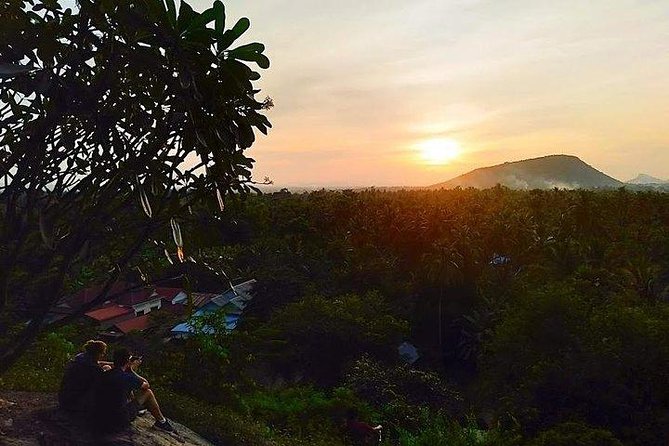
Wat Ek Phnom is the final major stop on the north side. The tour allows about an hour to see the temple and its surroundings before returning toward Battambang.
The temple visit adds an older historical layer to the day. Instead of only seeing modern village production and twentieth-century memorials, you also encounter an important religious site with countryside views. The peaceful setting is one of the pleasures of the stop, especially after the harder subject matter at Wat Samrong Knong.
You should expect some walking and outdoor exposure. The tour information does not promise extensive shade, so carry water even though cool water is supplied. Comfortable shoes will help throughout the day, not just here.
More Full-Day Trips in Battambang:
- Full Day tour .City tour.Countryside.Bamboo Train.Secret Bat Cave
★ 5.0 · 178 reviews - Full day tour by bicycle & tuk tuk,bamboo train,bat cave,villages
★ 5.0 · 27 reviews - Full-day: Wat Banan. Old bamboo train. Bat Cave. Killing cave
★ 5.0 · 13 reviews - Full-day: Handicraft, Bamboo train, Killing cave, Bat Cave
★ 5.0 · 5 reviews
Battambang’s colonial center and Ta Dambong Kro Aung
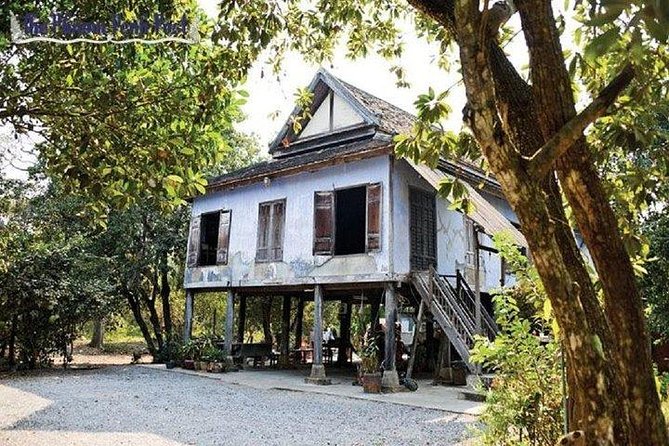
After the northern villages and Wat Ek Phnom, the route returns to Battambang for city sightseeing. You see colonial structures around the provincial hall and stop at the Ta Dambong Kro Aung statue.
This part takes about an hour and gives you a quick sense of the city itself. The countryside stops are more unusual, but the city section helps connect them to Battambang’s role as a regional center.
The timing may feel brisk if you want a long architectural walk. It is better understood as an introduction. Your guide can point out the important buildings and explain the local story, while the main focus remains the wider area beyond the center.
Kampong Pil, river crossings, and village life
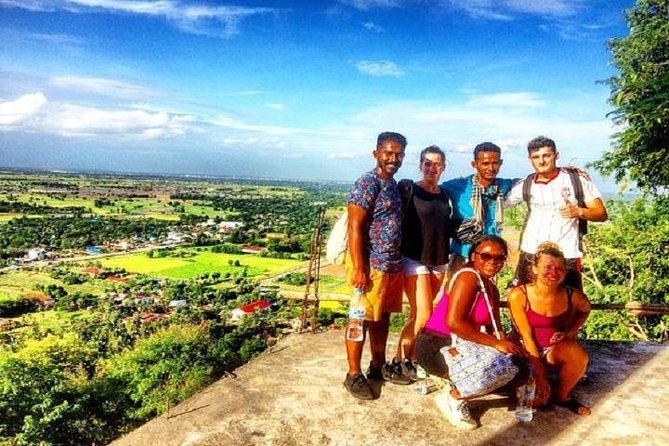
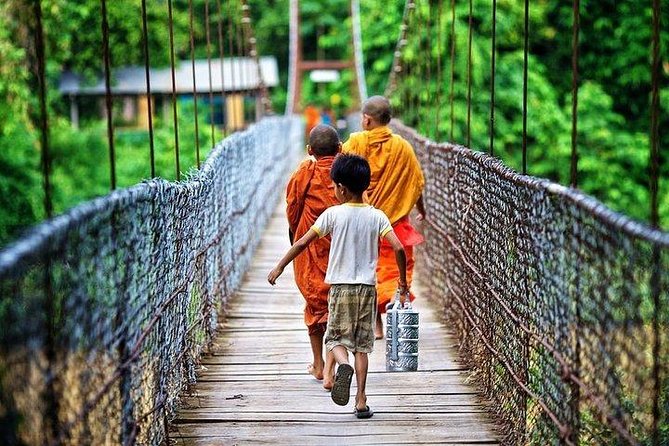
Kampong Pil brings you back into the countryside. The route includes villages, suspension bridges over the Sangke River, a pagoda, and time to talk with farmers.
The suspension bridges are a simple but memorable feature. They show how people move around the river communities and add a little adventure to an otherwise educational stop. The pace is described as flexible, so tell your guide if you want more time to walk, take photos, or speak with people.
The pagoda visit gives you a chance to learn about Cambodian religious practice. This is not a formal lecture, and the quality depends partly on the questions you ask. I would ask your guide about the role of the pagoda in village life rather than rushing through for a few pictures.
This stop lasts about an hour. It is also a useful break before the bamboo train, since the day involves repeated periods of riding and walking.
The original bamboo train at Ou Srauo Laou
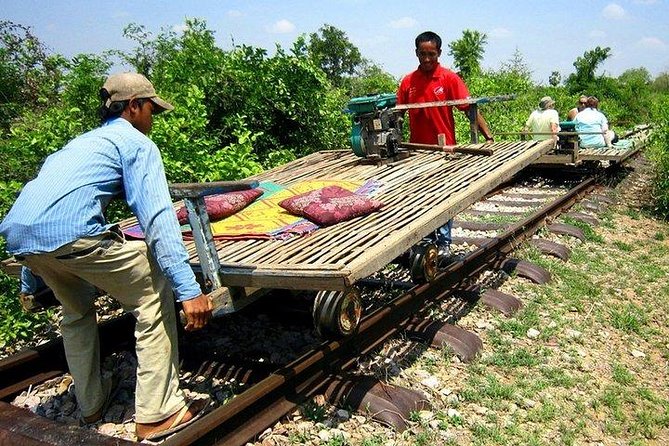
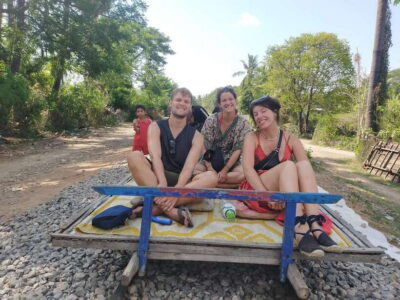
The bamboo train is the tour’s most playful stop. At Ou Srauo Laou village, you ride the original style of bamboo train for about an hour and a half, covering a route of roughly 7 kilometers.
The vehicle is a simple bamboo platform fitted over a small rail carriage. The experience is less about speed or comfort than about the novelty of the ride and the countryside passing close by. It is a memorable contrast to the temples and memorials earlier in the day.
The original bamboo train may not remain in operation indefinitely, as the government plans to close it. That makes the stop especially relevant for anyone who wants to see this older form of local transport while it is still available.
The $5 per-person fare is not included in the tour price. Bring cash or confirm payment arrangements with the operator before setting out. The ride is outdoors, and you should expect sun, dust, and a basic setup rather than a smooth amusement-park attraction.
The train stop can also affect the day’s timing. If you want a relaxed ride and time for photos, the full itinerary may run closer to 12 hours. A private tour helps because the guide can adjust the pace to your group, but the evening bat flight still needs to be reached before dusk.
Phnom Sampeau and the Killing Caves
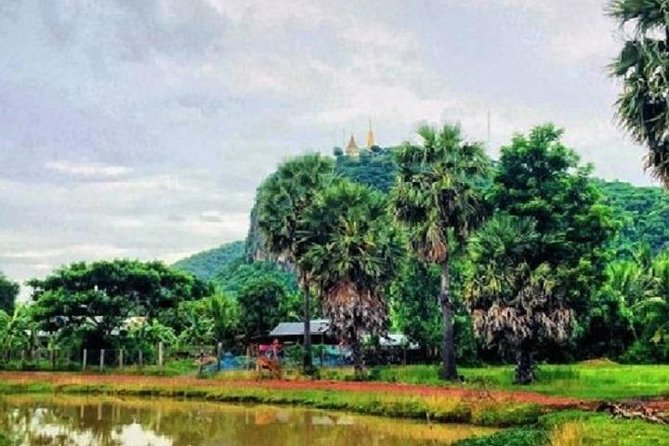
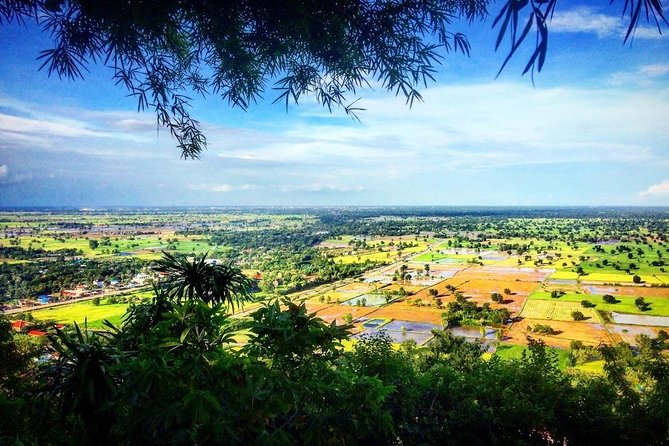
In the afternoon, the route heads toward Phnom Sampeau through villages, orchards, vegetable farms, and rice fields. The changing scenery is part of the appeal. You see cultivated countryside before reaching the mountain and its shrines.
Phnom Sampeau is also one of the day’s most difficult stops. The Killing Caves were used during the Khmer Rouge period, and the site contains shrines connected with the people who died there. The visit takes about two hours, giving you time to hear the history and see the mountain area.
This is a place for quiet attention. The setting can look beautiful, but the subject is painful. A good guide will help you understand the events without reducing them to a quick photo stop. Mr Lychee is praised for explaining Cambodia’s history and customs clearly, which is particularly important here.
The climb and walking may be tiring. The tour data says most people can participate, but it also notes that children aged 12 and under must be accompanied by an adult, with a minimum age of five. If anyone in your group has difficulty with stairs or extended walking, ask the guide about the route before booking.
The Bat Caves at sunset
The final stop is the Battambang Bat Caves, where the day ends with the famous evening flight of bats. Thousands of bats leave the cave in a steady stream at dusk, creating a long dark ribbon across the sky.
This is a strong finale because it requires no complicated explanation. You simply wait, watch, and let the spectacle unfold. The surrounding mountain scenery adds to the moment, but the bats are the main event.
Timing matters. The group needs to reach the site before sunset, so earlier stops cannot stretch without limit. A private vehicle helps the guide keep the day moving, but do not expect a leisurely dinner stop before the bats. Bring water and be ready for a late return to Battambang.
The bat viewing is also a good reason to choose the full-day format instead of trying to fit the mountain into a short morning trip. You see the farms, temples, and historical sites first, then finish when the caves are at their best.
Guide style, transport, and comfort
The experience is led by an English-speaking local guide. Mr Lychee is the named provider, while Mr Polo has also driven the route for him. The strongest praise centers on clear English, local history, culture, food, plants, animals, and a friendly manner.
That matters because many stops are not self-explanatory. A rice-paper workshop, memorial, village pagoda, or old temple becomes much more useful when someone explains what you are seeing. The guide also appears willing to adjust the pace to individual needs, which is a real advantage on a route this long.
Transport is by private tuk-tuk, with hotel pickup and drop-off included. You are not sharing the vehicle with a large group, so you can ask to pause, spend more time at a site, or move along when you have seen enough. The tradeoff is that a tuk-tuk is open to road noise, heat, and dust. Dress lightly, protect yourself from the sun, and keep valuables secure.
Cool water is included. Local snacks may be available as an option, but the tour does not include every personal expense or meal. An authentic Cambodian lunch is part of the experience description, yet the inclusion details do not clearly state that lunch is covered in the $18 price. Confirm this before departure so you know what to budget.
Who should book this day
I would choose this tour if you want a broad introduction to Battambang and prefer local contact over a polished sightseeing package. It suits couples, families with older children, and small groups who like temples, food production, countryside rides, history, and unusual transport.
It is less suitable if you want a slow cultural visit with long breaks. The day covers a lot, and the combination of heat, walking, stairs, tuk-tuk travel, and solemn historical sites can be tiring.
The private format makes it easier for a group to manage the pace. Children are allowed from age five, but anyone under 13 must have an adult with them. The Killing Caves and memorial sites also require enough maturity to handle difficult history respectfully.
Book at least 24 hours ahead if you want the option of a full refund after cancellation. Cancellations made less than 24 hours before the start time are not refunded, and late changes are not accepted.
Should you book it?
Book this tour if you want to see the real range of Battambong in one long day: village production, temples, colonial sights, river communities, the original bamboo train, Khmer Rouge memorials, and the Bat Caves.
The $18 price is excellent for private transport, a guide, hotel pickup, water, and such a full route, though you should add the $5 bamboo-train fare and allow for personal costs. The main question is not value. It is stamina. If you can handle a packed day and want an informed local guide, Mr Lychee’s tour gives you a strong, memorable introduction to the area.
FAQ
How long does the Battambang tour last?
The tour lasts approximately 10 to 12 hours. The exact length can depend on the pace of your private group and the timing needed to reach the Bat Caves before dusk.
Is the tour private?
Yes. The experience is private, so only your group participates. Private tuk-tuk transport, hotel pickup, and hotel drop-off are included.
Is the bamboo train ride included in the price?
No. The bamboo train costs an additional $5 per person. The ride lasts about 1 hour and 30 minutes.
What is included in the $18 tour?
The tour includes private transportation, an English-speaking local guide, hotel pickup and drop-off, cool water, and some local snack tasting as an option. Tips, personal expenses, and the bamboo-train fare are not included.
What is the minimum age for the tour?
The minimum age is five. Children aged 12 and under must be accompanied by an adult.
Can I cancel for a full refund?
Yes, if you cancel at least 24 hours before the experience start time. Cancellations or changes made less than 24 hours before the start time are not accepted for a refund.
Just added around Battambang
- Bamboo Train, Banann Temple, Fruit Bat, Bat Cave, Sunset★ 4.2 · 3 reviews
- Full-day: Wat Banan. Old bamboo train. Bat Cave. Killing cave★ 5.0 · 13 reviews
- Afternoon tour to Original Bamboo train. Bat cave. Killing cave★ 5.0 · 25 reviews
- Morning Tour Bamboo Train, Ancient House, Local, Countryside★ 5.0 · 3 reviews
- Battambang Private afternoon tour bamboo train bat cave & village★ 5.0 · 3 reviews
- Full day tour by bicycle & tuk tuk,bamboo train,bat cave,villages★ 5.0 · 27 reviews
- AfternoonTour.Bamboo train.killing cave with Secret bat cave★ 5.0 · 41 reviews
- Grand Tour-Ek Phnom. Baset. Bamboo Train. Wat Banan. Phnom Sampov★ 5.0 · 20 reviews
Battambang Train Tours, compared.
Tuk-Tuk, Bamboo Train, Killing/Bat Caves, Sunset
Read our review →
Full Day tour .City tour.Countryside.Bamboo Train.Secret Bat Cave
Read our review →
AfternoonTour.Bamboo train.killing cave with Secret bat cave
Read our review →
Full day tour by bicycle & tuk tuk,bamboo train,bat cave,villages
Read our review →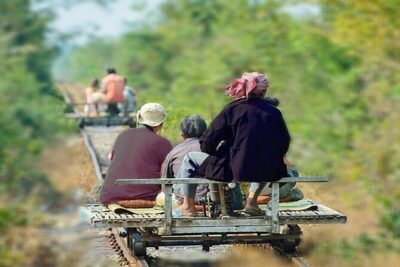
Afternoon tour to Original Bamboo train. Bat cave. Killing cave
Read our review →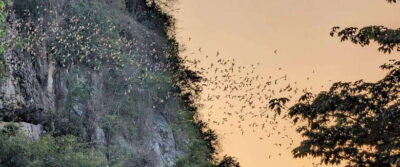
Half-day swing bridge, bamboo train, batcave & Killing cave
Read our review →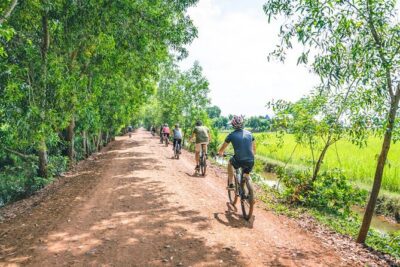
Grand Tour-Ek Phnom. Baset. Bamboo Train. Wat Banan. Phnom Sampov
Read our review →Browse the lists this tour appears in