
REVIEW · THAILAND
Guided Chiang Mai City Night Tour by EV Tram
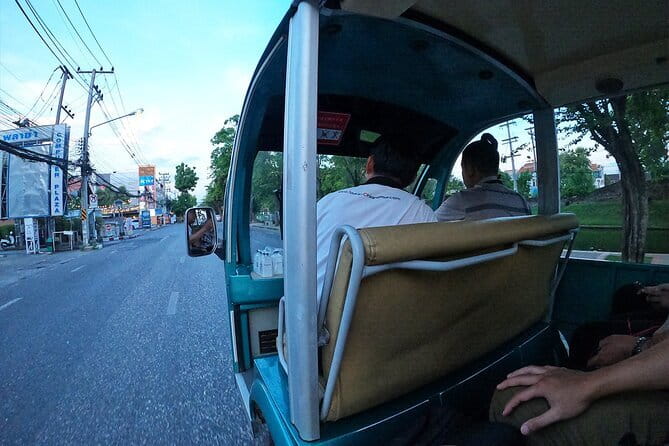
Chiang Mai feels calmer after sunset, and this small-group EV tram tour uses that quiet hour well. You ride between old gates, temples, markets, and neighborhood streets while a local guide explains how the city’s past and beliefs still shape daily life.
I like the low-noise electric tram and the useful mix of stops. You get history at Three Kings Monument and Wat Chedi Luang, local life at Warorot Market, and a taste of street food at Chiang Mai Gate Night Market. The main consideration is pace: two hours is enough for orientation, but not enough for long visits at every temple.
- Six historic and local areas in about two hours, including Wat Chiang Man, Wat Lok Molee, Warorot Market, and Tha Phae Gate
- Electric transport keeps the ride quiet, making it easier to hear the guide and observe the old city after dark
- A food stop is built in, with snacks and drinks included at Chiang Mai Gate Night Market
- Small groups are capped at 12 people, a useful size for questions and short walks
- The tour begins and ends at Three Kings Monument at 6pm, with no standard hotel transfer included
Why an evening tram is a smart way to see Chiang Mai
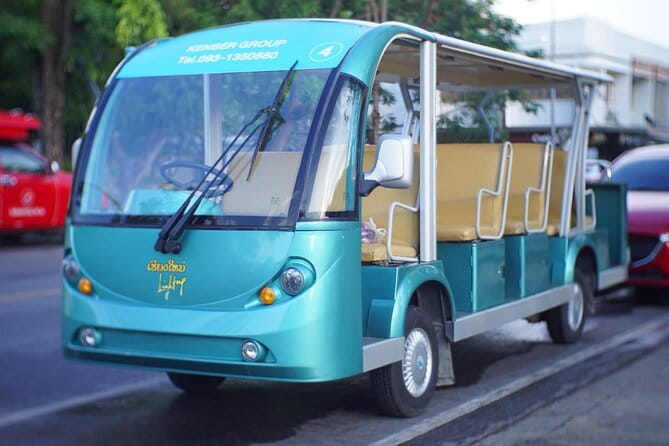
This experience is best thought of as a city introduction rather than a temple marathon. The EV tram saves your feet from a long evening walk and gives you a simple route through the old city and nearby market areas.
The electric vehicle also suits Chiang Mai’s evening mood. It reduces engine noise and avoids the feel of a large sightseeing bus. You still see the city at street level, but the ride is less tiring and more considerate of the neighborhoods along the route.
The group limit of 12 matters. You will not have the intimacy of a private tour, but the guide should be able to answer questions and gather the group at each stop. The walking portions are short, although the schedule moves quickly.
The published rating is 4.9 from eight ratings. One detailed French-language account gave four out of five and described the evening as calm and pleasant, with attractive night photographs and clear explanations at each place. It also noted that roughly two and a half hours passed quickly. That fits the nature of this tour: it is easygoing in tone, but full of short stops.
Begin at Three Kings Monument at 6pm
Meet at Three Kings Monument on Prapokklao Road. This is a practical starting point in the old city and an important place to hear the basic story of Chiang Mai.
The first explanation includes the nearby Wat Inthakin Sadeu Muang. According to local tradition, this was connected with the city pillar called Inthakin, placed here in 1296 by King Mangrai. You get a useful starting point before boarding the tram.
This opening walk is scheduled for about 15 minutes. It is not a full historical lecture, but it gives you enough context to recognize why the old city is laid out as it is. If this is your first evening in Chiang Mai, pay attention here. The information will make the later temple visits easier to place.
After this introduction, you board the EV tram. The activity returns to the same meeting point at the end, so you do not need to arrange a second pickup location.
More Tram and Streetcar Tours in Thailand:
- Chiang Mai: Nighttime City Highlights by EV Tram
★ 4.8 · 40 reviews - Chiang Mai Night Safari: Entry Ticket with Tram Ride
★ 3.8 · 15 reviews - Mallorca: Island Tour with Boat, Tram & Train from the South
★ 4.4 · 3,888 reviews
Wat Chiang Man and Chiang Mai’s earliest temple traditions
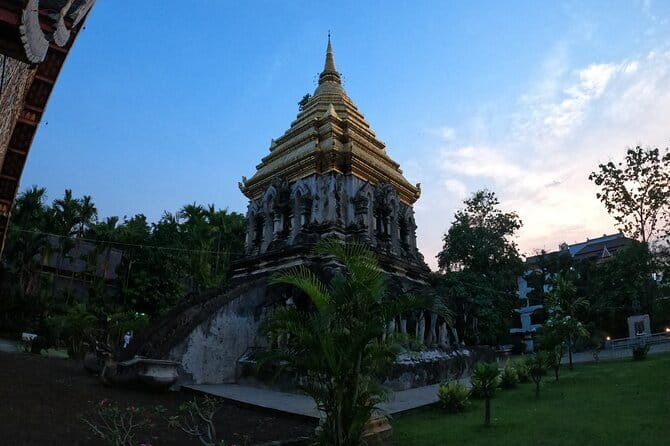
Wat Chiang Man is one of the first temple stops. It is described through its Lanna-style chedi, supported by rows of elephant-shaped buttresses.
The visit is listed as five minutes, so expect a brief look rather than a long temple visit. That short timing is both a strength and a limitation. You can see an important architectural detail without spending the whole evening at one site, but you will need to stay close to the guide and be ready to move on.
For a first visit to Chiang Mai, this stop helps you notice the regional style. Lanna design is not simply a generic northern version of Thai temple architecture. The chedi, ornament, and use of elephant forms give you details to watch for at later stops.
Wat Lok Molee brings a different mood
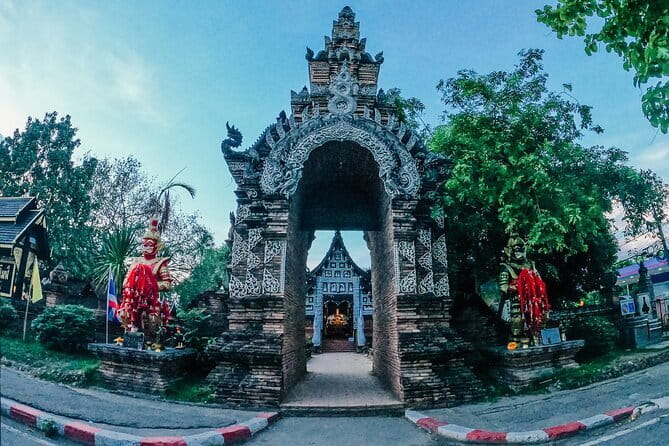
The tram continues to Wat Lok Molee, scheduled for about 20 minutes. This temple is described as a handsome wooden complex with terracotta sculptures and is thought to date from the 14th century.
Its location outside the old city walls gives the stop a slightly different setting from the monuments within the central square. You may find the wooden buildings and terracotta work more approachable than a grand, heavily gilded temple. The stop is long enough for a proper look and some photographs.
A temple visit after dark also changes what you notice. Lighting can draw attention to carved surfaces and roof lines, while the cooler air makes the visit more comfortable than a midday stop. Still, remember that temple grounds are places of worship, not just photo stops. Smart-casual clothing is required, and respectful behavior matters.
Chang Puek Gate and the northern food scene
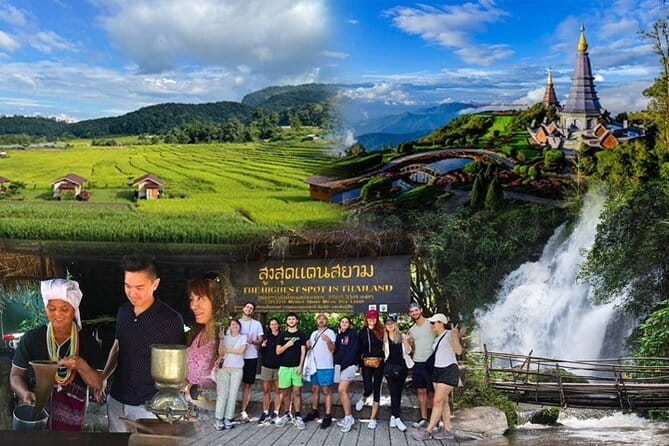
Chang Puek Gate marks the northern entrance to the old city. The area includes remnants of the city wall and a popular night market known for street food.
This is one of the useful transitions in the tour. You move from royal and religious history into ordinary evening activity. The gate helps explain the old city’s boundaries, while the market shows how those historic spaces function today.
The schedule does not assign a fixed duration here, so the guide may use it as a passing orientation point rather than a full food stop. If you want to eat at the market, ask how much time is available before buying anything. The main food-focused stop comes later at Chiang Mai Gate Night Market.
More Evening Trips in Thailand:
- Night life in Bangkok – Jodd Fairs Train Night Market(Joint)
★ 4.0 · 11 reviews - Battambang: Tuk-Tuk, Bamboo Train, Killing/Bat Caves, Sunset
★ 4.9 · 1,436 reviews - Singapore: Night Safari Entry Ticket with Tram Ride
★ 4.1 · 952 reviews - Singapore: Night Safari Ticket, Tram Ride, & Return Transfer
★ 3.9 · 611 reviews
Tai Yai and Burmese-Shan traditions at Wat Pa Pao
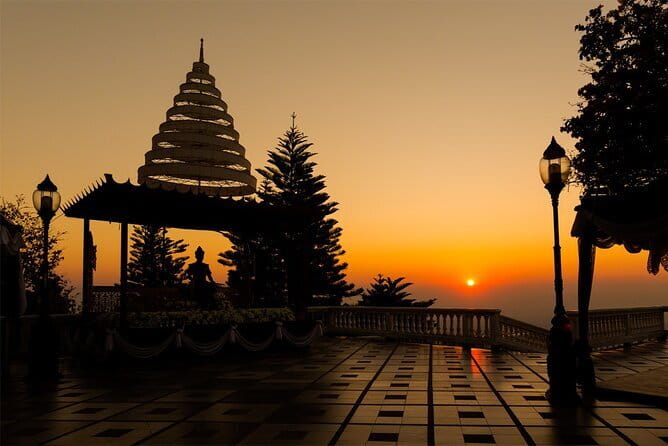
Wat Pa Pao receives about 15 minutes. It is identified as Chiang Mai’s first temple connected with the Ngiaw, or Tai Yai, community.
This is an important addition to a standard old-city route. Chiang Mai is often presented through a single Lanna story, but its religious and cultural life includes strong links with neighboring peoples and regions. Wat Pa Pao gives the guide a chance to explain that wider setting.
You may also hear about Wat Nong Kham, another temple with Burmese-Shan architectural features. The route includes it as a point of interest, although no separate visit time is specified. That means you should not assume you will have a long walk or detailed exploration there.
Warorot Market shows everyday Chiang Mai
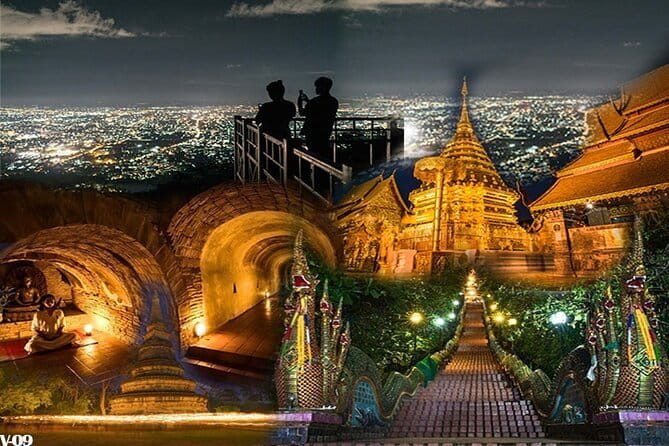
Warorot Market is described as the city’s largest local fresh market. It is a useful counterpoint to the temples because it is built around daily shopping rather than ceremony.
You can look for fresh food and other products sold to local residents. The value here is not simply seeing a market. It is seeing where the city shops, what kinds of goods fill the stalls, and how commercial life continues after the old monuments close for the day.
Market conditions can feel crowded and visually busy, even though the tram itself is quiet. Keep track of the group and your belongings during the walk. The information provided does not promise a tasting at Warorot Market, so treat this as an observation stop. The included food portion comes at Chiang Mai Gate Night Market.
Tha Phae Gate connects history with public life
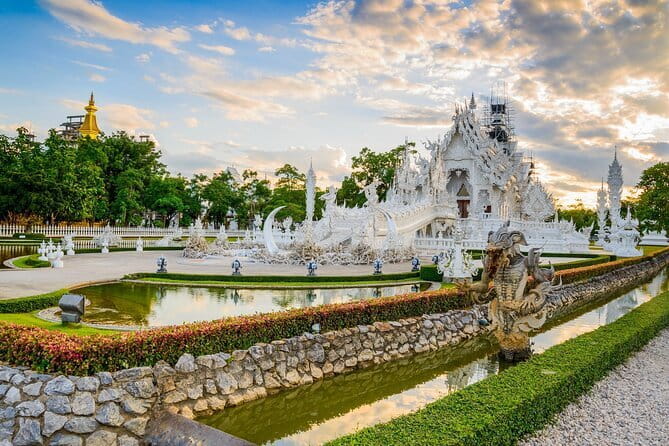
Tha Phae Gate is described as a main center for public activities and festivals in Chiang Mai. It is one of the route’s most useful orientation points because it connects the old city with the wider rhythm of present-day life.
The gate and surviving city defenses help you understand how Chiang Mai’s historic center was defined. At the same time, its role in festivals gives the place a current purpose. It is not presented as a frozen monument.
The tour does not list a separate admission charge or a fixed stop length here. Expect a guide-led explanation as part of the tram route, followed by the next major food and temple visits.
Chiang Mai Gate Night Market is the evening’s food stop
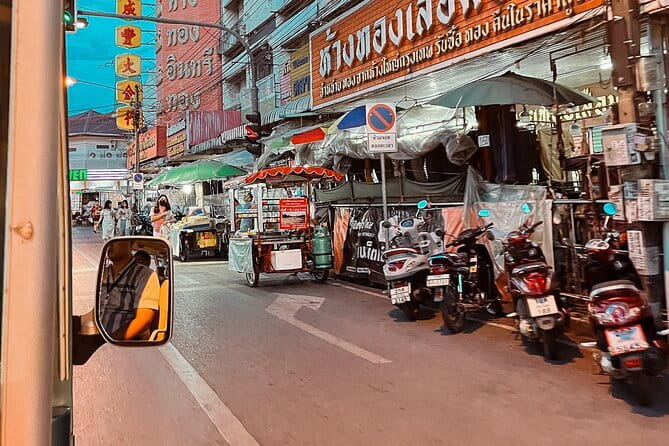
The tour sets aside about 25 minutes at Chiang Mai Gate Night Market. This is the clearest chance to sample local street food with the guide’s help.
Some snacks and drinks are included, along with bottled water. Extra food and drinks cost more, and alcohol is not included. The wording allows for a small taste rather than a full dinner, so you should not book this as your only meal of the evening unless you are comfortable eating lightly.
Twenty-five minutes is enough to get a feel for the market and try the included items, but it is not a leisurely food crawl. If you have dietary restrictions, ask the provider before booking because no specific dietary arrangements are provided.
This stop also gives the tour a welcome change of pace. After several historic sites, you get to focus on smell, taste, and local evening routines. It is a simple but useful way to connect the city’s heritage with how people spend time now.
Wat Chedi Luang closes the historical loop
Wat Chedi Luang is scheduled for about 10 minutes and includes admission. The temple is known here for its large stupa and for its connection with the city pillar and Buddhist scriptures.
Even with only ten minutes, this is a strong closing temple stop. The scale of the stupa gives you a clear sense of Chiang Mai’s older religious center, while the guide can connect the building to the city’s spiritual identity.
Do not expect time for a detailed architectural study. The tour is designed to show you the major idea and key features, then move on. If Wat Chedi Luang becomes your favorite stop, you may want to return independently in daylight or allow more time on another visit.
The route also includes Wat Phra Singh, noted for its northern-style chapel architecture. The information does not give a separate visit duration, so this may be a final viewing or explanation rather than a full temple visit.
What the $27.43 price really covers
At $27.43 per person, the cost is reasonable if you want transport, a guide, several admission fees, and a small food stop in one compact outing. The price includes the EV tram, an English-speaking professional guide, listed entrance fees, snacks and drinks during the food portion, bottled water, and travel accident insurance.
The strongest value is the combination of orientation and transport. You are not paying only to be driven past buildings. You are paying for a route that links temples, gates, a fresh market, and a night market, with explanations tying them together.
The value is weaker if you already know Chiang Mai well or prefer to spend an hour or more inside each temple. This tour gives you breadth, not depth. It is also not a full dinner, and extra food, drinks, souvenirs, and personal purchases are your responsibility.
Hotel pickup is optional and costs THB 500 per way per group for locations within five kilometers of the city center. Since the tour starts and ends at Three Kings Monument, walking or arranging your own transport may be cheaper if you are already nearby.
Timing, clothing, and group details
The tour starts at 6pm and lasts about two hours, although the detailed account of the evening suggests it can run closer to two and a half hours. Allow some flexibility rather than scheduling a tight appointment immediately afterward.
A minimum of two adults is required per booking. A child rate applies only when the child shares with two paying adults. The maximum group size is 12 people.
Wear smart-casual clothing suitable for temple visits. The schedule includes walking at several stops, but no special fitness requirement is stated. Most people can participate, though the quick transitions may be less comfortable if you need a slow pace or long rest periods.
Free cancellation is available until 24 hours before the start time. Changes or cancellations made less than 24 hours before departure are not accepted for a refund. Cutoff times follow local Chiang Mai time.
Who should book this EV tram tour?
I would choose this tour for a first evening in Chiang Mai, especially if you want a clear introduction before exploring on your own. It suits you if you like short temple visits, local markets, simple historical explanations, and a little street food without organizing every detail yourself.
It is also a good match if you prefer quieter transport and a small group. The EV tram is more pleasant than a noisy vehicle for an evening route, and 12 people is a manageable maximum.
I would look elsewhere if your priority is a serious food tour, extended temple photography, or private guiding. The route covers many places quickly, and several stops have only a few minutes assigned. You will leave with a better map of Chiang Mai and a list of places worth revisiting, not with an exhaustive study of every monument.
FAQ
Where does the tour start and finish?
It starts at Three Kings Monument, QXRP+3WX, Prapokklao Road, Chiang Mai, at 6pm. The activity ends back at the same meeting point.
How long does the EV tram tour last?
The tour is scheduled for approximately two hours. The detailed timing can make the evening feel closer to two and a half hours, so allow a little extra time.
Is hotel pickup included?
No. Pickup and drop-off are optional and cost THB 500 per way per group for locations within five kilometers of the city center.
What is included in the price?
The price includes the EV tram, an English-speaking guide, listed admission fees, some snacks and drinks during the food stop, bottled water, and travel accident insurance.
Is the tour suitable for children?
Most people can participate. A child rate applies only when sharing with two paying adults, and a minimum of two adults per booking is required.
Can I cancel for a full refund?
Yes, if you cancel at least 24 hours before the local start time. Cancellations or changes made less than 24 hours before the tour are not accepted for a refund.
My booking recommendation
Book this tour if you want a gentle, useful first look at Chiang Mai after dark. The quiet tram, small group, clear route, and mix of temples and markets give you a strong introduction for the price.
Just keep your expectations in line with the schedule. You will sample many places rather than linger at one. For most first-time visitors, that tradeoff works well: let the guide explain the city tonight, then return on your own to the temples and markets that catch your eye.
Just added around Thailand
- Kanchanaburi Tour: Erawan Waterfall and Death Railway★ 5.0 · 13 reviews
- Erawan Waterfall & Train Tour from Kanchanaburi – Full Day★ 4.0 · 16 reviews
- Amphawa Floating Market and Maeklong Railway Private Afternoon Tour from Hua Hin★ 4.5 · 9 reviews
- Amphawa Floating Market and Maeklong Train Market Tour★ 4.0 · 5 reviews
- Amazing 1 day Private Tour to visit Lampang Province by train★ 5.0 · 7 reviews
- Floating & Railway Markets and Erawan Waterfall [Optional Luxury]★ 5.0 · 43 reviews
- Small Group: Kanchanaburi Death Railway, Erawan Waterfall and Elephant★ 4.0 · 3 reviews
- Floating Market & Railway Market near Bangkok★ 4.0 · 5 reviews
Thailand Train Tours, compared.
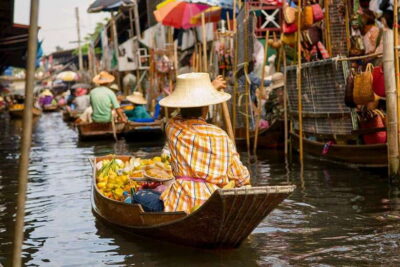
Damnoen Saduak Market and Maeklong Railway Market
Read our review →
The Old Siam: Damnoen Saduak and Maeklong Railway Market
Read our review →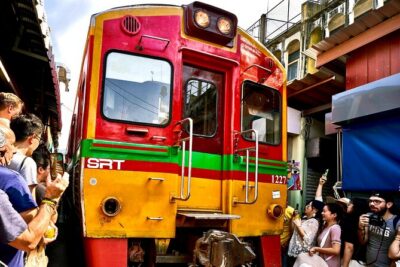
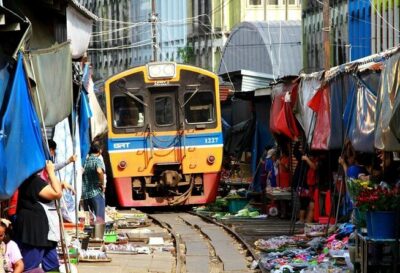
Half-Day Railway Market and Floating Market Tour in Thailand
Read our review →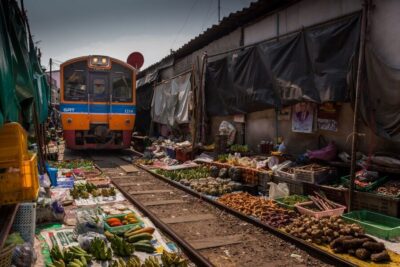
Damnoen Saduak, Train Market & Mahanakhon Day Trip
Read our review →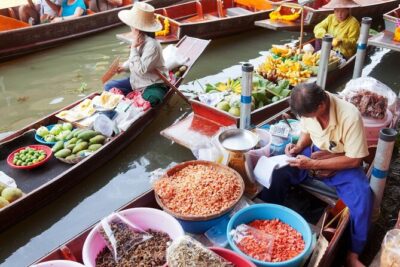
Damnoen Saduak Floating Market and Maeklong Railway Market Tour
Read our review →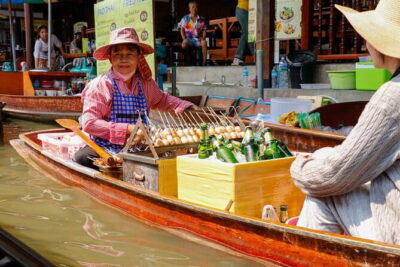
Day Trip to Bangkok Floating Market & Maeklong Railway
Read our review →
Railway and Floating Market Tour with Dragon Temple
Read our review →Browse the lists this tour appears in