
REVIEW · THAILAND
Erawan Waterfall & Train Tour from Kanchanaburi – Full Day
The best part of this day is the sharp change of mood: you go from forest waterfalls and swimming pools at Erawan National Park to the sobering railway sites around the River Kwai. It is a useful way to see Kanchanaburi’s natural and wartime landmarks without arranging several separate rides.
I like the hotel pickup and private format, since you can travel with only your own group. I also like that the Erawan entrance fee and train ride are included, and that guide Nan has been praised for being patient and helpful. The main drawback is price: at $110 per person, this is a costly day unless you value private transport and a guide.
Key points to know before booking
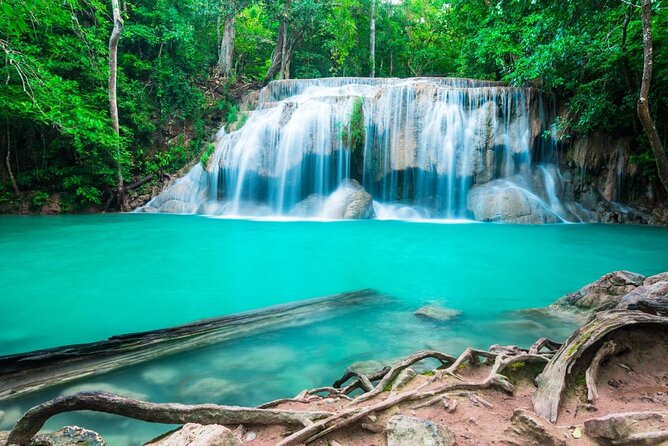
- Seven waterfall levels: Erawan is the day’s main outdoor stop, with roughly two hours set aside for the park.
- Private group format: Only your group participates, with hotel pickup and drop-off in an air-conditioned vehicle.
- A real train ride: The railway portion includes the Death Railway area around Tham Krasae and the River Kwai.
- A full, tiring schedule: The waterfall walk and hot train ride can make this an exhausting eight-hour outing.
- No meal included: Bring money for food and personal expenses, since meals are not part of the tour.
- Weather matters: Poor weather can lead to a new date or a full refund.
Why this Kanchanaburi day works
Kanchanaburi is best understood through two very different places. Erawan National Park gives you green forest, water, and a chance to move at your own pace. The railway stops bring you back to the painful story of the Death Railway and the Bridge on the River Kwai.
This tour puts both sides into one day. That saves you the trouble of finding transport between the park and the historic sites. You also have an English-speaking guide to connect the places, rather than simply being dropped at a waterfall and a bridge.
The day lasts about eight hours and begins at 7:30 am. That early start matters. Erawan is the part that asks the most from your legs, so reaching it early gives you a better chance to enjoy the park before the day feels too long.
Because this is a private activity, you are not sharing the vehicle with a large group. That can be a real benefit in Kanchanaburi, where the stops are spread out and the day includes both outdoor walking and scheduled sightseeing.
More Death Railway and River Kwai Tours in Thailand:
- From Bangkok: Death Railway & Hellfire Pass Tour with Lunch
★ 4.6 · 931 reviews - Bridge on the River Kwai and Thailand-Burma Railway Tour
★ 4.5 · 658 reviews - Bridge on the River Kwai and Thailand-Burma Railway Guided Tour
★ 4.5 · 353 reviews
Srinakarin Dam: a quiet opening stop
The first stop is Srinakarin Dam, with about two hours set aside and no separate admission charge listed. This gives the day a calm beginning before the waterfall walk and railway history.
The dam is also useful as a first look at the wider Kanchanaburi area. You get open views and a sense of the region’s waterways before moving into the forest at Erawan. Do not expect this stop to carry the same visual drama as the waterfall. Its value is in the setting and the slower pace.
The available details do not specify exactly which viewpoints or facilities you will use at the dam. I would treat it as a scenic pause, not the main reason to book the tour. If you prefer a packed schedule with one famous sight after another, this two-hour stop may feel long.
Erawan Waterfall and the seven-level walk
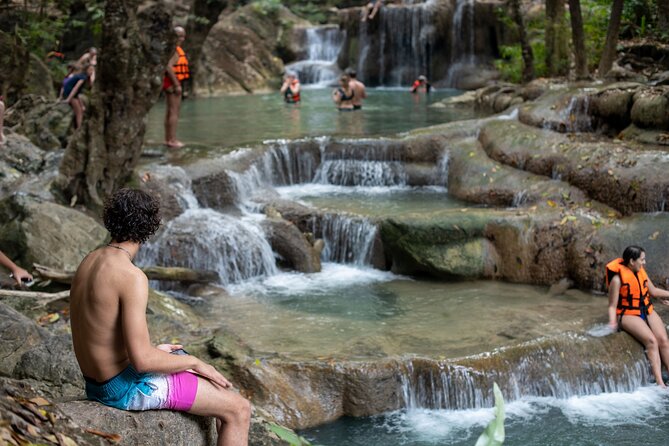
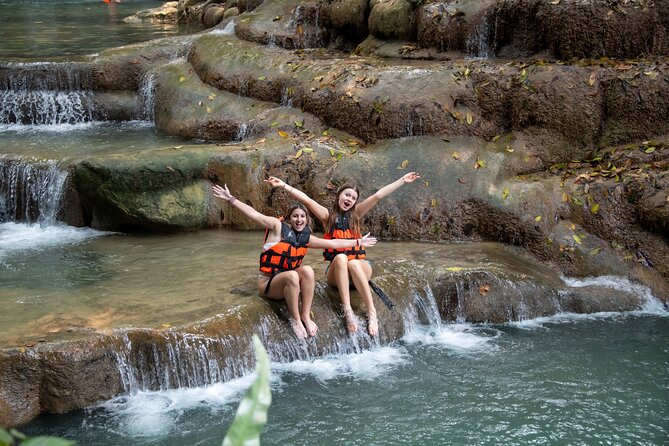
Erawan Waterfall is the heart of the outing. It is named for the three-headed white elephant from Hindu mythology, and the falls run through seven tiers inside Erawan National Park.
You have about two hours here, with the park entrance included. That removes one small hassle at the gate, but it does not turn the visit into an easy stroll. The upper levels require more effort, and the walk becomes tiring as you continue.
A useful way to think about the seven levels is to choose your own finish line. One person can enjoy the lower sections, while a stronger walker can keep going. You do not need to reach level seven for the stop to be worthwhile.
One detailed account of the day found level seven too tiring, while level four was a good stopping point. That is practical advice. The upper falls may reward the effort, but the whole tour continues afterward, so saving some energy matters.
The waterfall section is also where sensible packing pays off. Wear shoes suited to a wet outdoor path, carry drinking water, and bring a way to manage wet clothes. Drinking water is supplied, but meals are not.
The tour does not promise a long swim stop, so plan around the walk rather than assuming you will spend the whole two hours in the pools. The park is the place for water, trees, and a physical break from sightseeing, but your exact amount of time in the water will depend on the guide, conditions, and your pace.
I like that this stop offers choice. You can enjoy the scenery without treating the highest tier as a personal challenge. If you have limited mobility or dislike uneven outdoor walks, ask before booking about the route that will work for you. The information provided says most people can participate, but it does not give detailed access information for every level.
Tham Krasae and the Death Railway

The railway portion brings a different kind of interest. The itinerary connects the Death Railway Museum and Research Centre with Tham Krasae Bridge and the River Kwai area, with about two hours assigned to this part of the day.
The included train ride is a major reason to consider this tour. Riding the railway gives you more than a photo stop beside the tracks. You experience a working route associated with one of Kanchanaburi’s most important historical stories.
One practical warning comes from the heat. The train was described as feeling like an oven, but still worth seeing. That is a fair expectation to carry into this part of the day. It may be hot and basic rather than polished or comfortable.
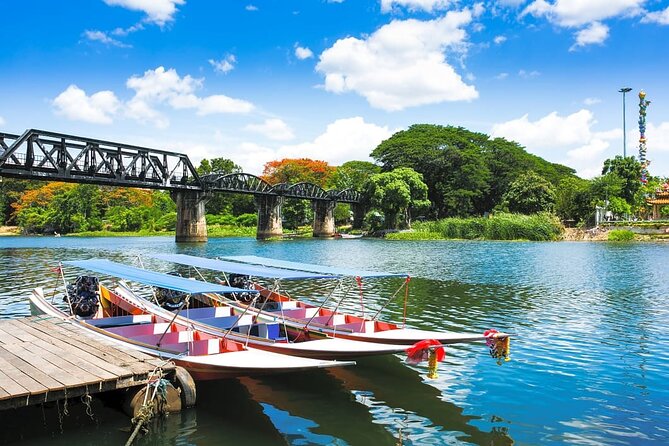
The Tham Krasae area adds a strong visual element. The bridge and River Kwai setting make the railway story easier to grasp because you are seeing the route itself, not only reading about it indoors. The museum and research centre add context, while the train ride gives the stop a physical sense of place.
The supplied itinerary does not clearly separate the time spent at the museum, bridge, and train. Your guide will determine how the two-hour block is divided. If the railway is your main interest, tell the guide early that you want enough time to understand this section rather than rushing through it for photographs.
More Full-Day Trips in Thailand:
- Bangkok: Ayutthaya, Railway & Floating Markets Full-Day Tour
★ 4.7 · 1,200 reviews - Kanchanaburi: Erawan Waterfall & Train Full-Day Tour
★ 4.8 · 57 reviews - Full-Day Kanchanaburi River Kwai & Death Railway Private Tour
★ 4.5 · 35 reviews - Full-Day Floating Market and Maeklong Railway Market Private Tour from Bangkok
★ 5.0 · 9 reviews
The Bridge on the River Kwai
The final stop is the Bridge on the River Kwai, where you have time to look at the structure, the river, and its place in local history. The stop is free of a separate admission charge in the tour details.
The bridge can feel familiar before you arrive, thanks to its place in popular culture. The useful part of seeing it in person is the connection between the famous name and the wider railway route you have just visited. It is not an isolated monument. It belongs to a larger story that includes the museum, Tham Krasae, and the train journey.
You will likely want photographs here, but give yourself time to look beyond the bridge itself. The river views provide a calmer ending after the waterfall hike and hot train ride.
This stop may feel less personal than the museum or the train if you already know the story well. Its value is strongest when combined with the other railway locations. On its own, the bridge would not justify the tour price. As the closing piece of a connected day, it makes more sense.
Guide, driver, and private transport

The tour includes an English-speaking guide, a driver, and an air-conditioned vehicle. Hotel pickup and drop-off are also included, which is important because the day links several places that are not best handled on foot or by casual local transport.
Guide Nan has been singled out for patience and helpfulness. That matters most at Erawan, where people in the same private group may want different levels of walking. A patient guide can help the group avoid turning the waterfall into a race.
The private setup also gives you more control than a standard large-group outing. You can ask questions about the railway, spend less time at a stop that does not interest you, or pause when the waterfall walk catches up with you. The amount of flexibility in practice will depend on the day’s schedule, but the format gives you a better chance of having that conversation.
There is one service concern you should not ignore. One booking reportedly suffered from a missed pickup and poor confirmation the night before. The stated policy says confirmation is received at booking, but I would still confirm the 7:30 am pickup time directly before the day. That is a simple step when an entire private excursion depends on one morning departure.
Is $110 per person good value?
The listed price is $110 per person. That is not a budget day in Kanchanaburi, especially since meals and personal expenses are extra.
The price makes more sense if you are paying for convenience. You receive hotel transport, a private vehicle, an English-speaking guide, drinking water, the national park entrance fee, and the train ride. Organizing all of that independently would take time, and the private format can be useful for couples, families, or a small group with different interests.
The value is weaker if you are comfortable arranging local transport and only want to visit Erawan. The waterfall itself is the main outdoor draw, while the bridge and railway sites can be visited in other ways. You are paying for a joined-up day, not simply for entrance to a park.
Some pricing confusion appears in the booking history, with comments referring to amounts around 7,000 Thai baht or $200. Since prices can change by date, group size, and booking channel, check the total shown at the time you reserve. At the stated $110, I would compare it with the cost of a private car, park entrance, guide, and train tickets before deciding.
Group discounts are listed, so the per-person value may improve when several people book together. For a solo visitor, the same fixed private transport costs can feel harder to justify.
What to bring and how to pace the day
This is not a day for packing light in the narrow sense. You need practical items for both a wet park and a warm railway ride.
Bring:
- Comfortable shoes for the Erawan walk
- Drinking water, even though some water is supplied
- A change of clothes or a way to handle wet conditions
- Sun protection
- Money for meals and personal purchases
- A phone or camera for the waterfall, railway, and bridge
The biggest pacing mistake would be treating level seven as mandatory. Enjoy the lower falls, continue while the path feels pleasant, and stop when the effort no longer matches the reward. You still have the train and bridge ahead.
The day’s order also means you should eat before departure or plan to buy food along the way. No meal is included, and the schedule is long enough that hunger can affect your patience by the afternoon.
Who should book this experience?
I would recommend this tour to you if you want the main Kanchanaburi sights in one private day and do not want to manage the transport yourself. It suits people who value a guide, air-conditioning between stops, and a mix of nature and history.
It is also a good match for a small group with different energy levels. One person can stop before the top waterfall tier while another continues, then everyone can regroup for the railway portion.
I would be more cautious if your main goal is a slow day at Erawan. Two hours is enough to see the park, but the full schedule adds a dam, train ride, museum area, and bridge. It is an outing with several chapters, not a relaxed resort-style day.
The same caution applies if price is your main concern. At $110 per person, you are paying for private convenience. If you are willing to arrange transport yourself, you may find better value elsewhere.
Should you book the Erawan and train tour?
Book it if you want one organized day that joins Erawan’s seven waterfall levels with the Death Railway and Bridge on the River Kwai. The private vehicle, included train ride, park admission, and hotel pickup make the logistics simple.
Skip it if you want to spend most of the day swimming, dislike long outings, or expect a low-cost excursion. Confirm the morning pickup, prepare for heat on the train, and do not feel pressured to reach level seven.
For the right buyer, this is a useful Kanchanaburi overview: active in the morning, reflective in the afternoon, and easy to manage. Its weak point is not the selection of sights. It is the price and the demanding pace.
FAQ
How long does the Erawan Waterfall and Train Tour last?
The tour lasts about eight hours, with a listed start time of 7:30 am.
Where does the tour start?
The tour starts with hotel pickup in Kanchanaburi. Hotel drop-off is also included.
Is this a private tour?
Yes. Only your group participates in the activity.
Is the Erawan National Park entrance fee included?
Yes. The Erawan National Park entrance fee is included in the tour price.
Is the train ride included?
Yes. The included services list a train ride, connected with the Death Railway and Tham Krasae area.
Are meals included?
No. Meals are not included, so you need to budget for food during the day.
Can most people participate?
The tour information says most people can participate. The Erawan route can be tiring, especially if you try to reach the seventh level.
What happens if bad weather cancels the tour?
If poor weather causes the experience to be canceled, you will be offered a different date or a full refund. You can also cancel for a full refund if you cancel at least 24 hours before the start time.
Just added around Thailand
- Kanchanaburi Tour: Erawan Waterfall and Death Railway★ 5.0 · 13 reviews
- Amphawa Floating Market and Maeklong Railway Private Afternoon Tour from Hua Hin★ 4.5 · 9 reviews
- Amphawa Floating Market and Maeklong Train Market Tour★ 4.0 · 5 reviews
- Guided Chiang Mai City Night Tour by EV Tram★ 5.0 · 8 reviews
- Amazing 1 day Private Tour to visit Lampang Province by train★ 5.0 · 7 reviews
- Floating & Railway Markets and Erawan Waterfall [Optional Luxury]★ 5.0 · 43 reviews
- Floating Market & Railway Market near Bangkok★ 4.0 · 5 reviews
- Small Group: Kanchanaburi Death Railway, Erawan Waterfall and Elephant★ 4.0 · 3 reviews
Thailand Train Tours, compared.
Damnoen Saduak Market and Maeklong Railway Market
Read our review →
The Old Siam: Damnoen Saduak and Maeklong Railway Market
Read our review →
Half-Day Railway Market and Floating Market Tour in Thailand
Read our review →
Damnoen Saduak, Train Market & Mahanakhon Day Trip
Read our review →
Damnoen Saduak Floating Market and Maeklong Railway Market Tour
Read our review →
Day Trip to Bangkok Floating Market & Maeklong Railway
Read our review →
Railway and Floating Market Tour with Dragon Temple
Read our review →Browse the lists this tour appears in