

REVIEW · LISBON
Lisbon Hills Red Tram by Tram 28 route
Lisbon’s steepest old quarters are much easier to understand from a tram window. This one-hour Red Tram ride follows the famous Tram 28 route through Baixa, Chiado, Bairro Alto, and Alfama, giving you a quick look at the city’s hills, viewpoints, tiled streets, and historic monuments without making you climb them all.
I like the recorded audio guide, which adds useful context as the tram moves through the city. I also like the included access to public trams, funiculars, and the Santa Justa Lift for 24 hours after you redeem the voucher. The main drawback is practical: boarding instructions and service changes can be confusing, so you should confirm the exact departure point before setting out.
Key points to know before you go
- Praça do Comércio starting point: Look for the meeting point near the arch facing the Tagus River.
- Tram 28 route without the public-tram crush: You get a seat and an audio guide, rather than standing in a crowded local tram.
- The route lasts about one hour: It is mainly a scenic circuit, not a full day of hop-on, hop-off sightseeing.
- Included transport access: After redeeming the voucher onboard, you can use public trams, funiculars, and Santa Justa Lift during the ticket’s validity.
- Narrow streets and steep hills: The tram reaches Alfama, Chiado, Bairro Alto, and other areas that are tiring to cover on foot.
- Check conditions on the day: Road works, blocked tracks, broken-down vehicles, and special events have caused delays or suspended service.
A practical look at Lisbon’s Red Tram 28 experience

This tour is designed as a quick orientation ride through old Lisbon. You begin at Praça do Comércio, the grand riverside square rebuilt after the 1755 earthquake. The square is easy to recognize, but the exact boarding point matters. The meeting instructions place it near the arch, and the voucher must be redeemed on the tram.
Departures are listed every 30 minutes from 10:00 in the morning until 6:00 in the evening. That schedule gives you some flexibility, but I would not plan the ride as a timed connection to a museum or restaurant. Lisbon’s tram tracks can be blocked by traffic, badly parked cars, road work, or a stalled vehicle.
The tram holds a maximum of 24 people. That is a much calmer setup than the regular public 28E tram, where standing room and crowded boarding can be part of the experience. You are paying for comfort, a set route, and narration as much as for transportation.
More Tram and Streetcar Tours in Portugal
- Lisbon: 72/96-Hour Hop-On Hop-Off Bus, Tram & Boat Ticket
★ 4.4 · 2,170 reviews - Lisbon: 3-in-1 Hop-On Hop-Off Bus and Tram Tours
★ 4.3 · 1,537 reviews - Lisbon: Tram 28 Entry Ticket & Audio Guide with 24-Hour Pass
★ 4.0 · 930 reviews
Starting beside the Tagus at Praça do Comércio
Praça do Comércio is one of Lisbon’s best starting points. Its broad open space faces the Tagus River, with arcaded buildings on three sides and the Rua Augusta Arch marking the inland entrance.
This first stop gives you a useful contrast. The square is wide and formal, while the tram route soon turns into a maze of hills and narrow streets. You move from the rebuilt downtown grid into older quarters where the streets bend, rise, and squeeze between buildings.
The area has restaurants and bars, so it is easy to find a drink or meal before or after the ride. Still, do not wander too far from the arch if you are trying to catch a particular departure. Some people have had trouble locating the correct redemption or boarding spot, and the confusion can cost you time.
The safest approach is simple: arrive early, have your voucher ready, and ask the Yellow Bus staff to confirm the tram before joining a queue. The service has been associated with both red tourist trams and ordinary yellow public trams, which has caused understandable confusion.
Baixa and the city rebuilt after 1755

From the square, the route enters Baixa, Lisbon’s 18th-century downtown district. This part of the city was planned and rebuilt after the devastating 1755 earthquake, giving it straighter streets and larger squares than the older neighborhoods on the hills.
The audio commentary is useful here because the view alone does not explain why the streets look so different. You can listen through the included earphones while watching the city pass outside.
Baixa is a good place to notice the practical difference between a sightseeing tram and a local tram. You are not simply trying to get from one stop to another. The circuit lets you sit back and get a first sense of how Lisbon’s central districts connect.
The drawback is that recorded narration may not play continuously. Some portions of the ride have little or no commentary, and the route can repeat part of the journey in the opposite direction. Think of the audio as a helpful layer, not a live guide speaking every minute.
Chiado and Bairro Alto from the tram window
The tram then climbs toward Chiado and Bairro Alto. These districts are known for cafes, museums, shops, and their long connection with Lisbon’s artists, journalists, and poets.
Chiado has a more polished, central feel, while Bairro Alto is famous for its compact streets and nightlife. From the tram, you get a quick sense of both areas, but not enough time to explore them properly. If one of the neighborhoods catches your attention, mark it on your map and return later on foot.
The hills are the real reason to consider this ride. Lisbon looks charming from street level, but repeated climbs on cobbled pavement can wear you out. The tram lets you cover ground while seated, and the views open up as the car rises.
For the best sightline, sit on the left side when boarding if the tram’s direction permits. One rider specifically recommended that side for better views. Seating is not described as assigned, so arrive early if you care about where you sit.
More Tram and Streetcar Tours in Lisbon:
- Lisbon: Hills Red Tram Tour by Tram 28 Route 24-Hour Ticket
★ 4.1 · 874 reviews - Lisbon Tram No. 28 Ride & Walking Tour
★ 4.1 · 766 reviews - Lisbon: Guided Tuk-Tuk Tour Along the Historic Tram Line 28
★ 4.8 · 475 reviews - Lisbon Hop-On Hop-Off Bus, Tram Tour, River Cruise for 72/96Hour
★ 3.5 · 426 reviews
Viewpoints, squares, and the XII Cent Monument
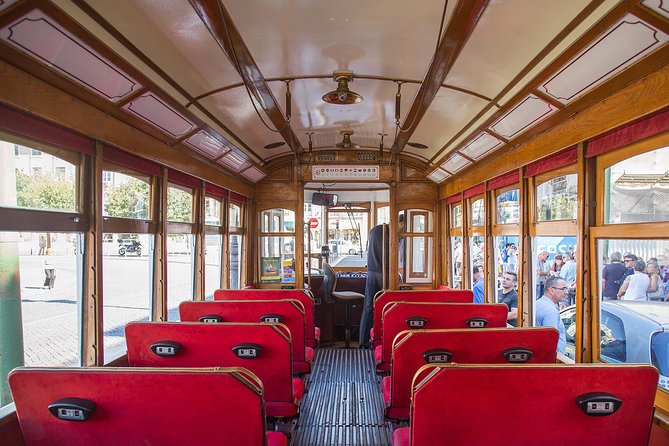
The route includes several broad views over Lisbon and the Tagus. These moments are brief, but they help you see how the city is arranged. The older quarters climb away from the river, with viewpoints appearing between tight lanes and built-up blocks.
The itinerary also includes a stop identified as the XII Cent Monument, along with a multicultural square and shopping area. The supplied details do not give a full stop-by-stop commentary script, so you should treat these as sights passed on the circuit rather than guaranteed opportunities for a long stop.
That distinction matters. This is not a walking tour with time to inspect every monument. You remain aboard for the one-hour circuit, and the value comes from seeing many areas in one sitting.
I would use this part of the ride to get your bearings. Note which squares look worth revisiting, where the streets begin to steepen, and which viewpoints might make good photo stops later.
Alfama, Lisbon’s oldest quarter
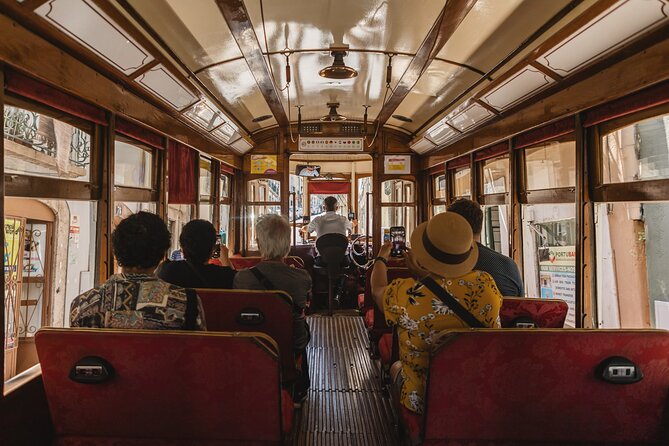
The most memorable part of the journey is usually Alfama. This is Lisbon’s oldest quarter, and its streets still show Roman remnants and Arab influence. The route winds through narrow, steep lanes where the tram feels almost too large for the road.
You pass near Lisbon Cathedral, a 12th-century landmark, and St. George’s Castle. The neighborhood is also closely tied to fado, Lisbon’s traditional song form. The audio guide helps connect the streets with that cultural story, though the ride does not replace a proper visit to the cathedral, castle, or a fado venue.
Alfama is where the tram earns its keep. Walking gives you a closer look at doorways, tiled facades, and small lanes, but reaching the quarter from the river involves serious uphill work. The tram offers a comfortable first pass, then you can return to explore at your own pace.
The narrow route can also create delays. A badly parked car, an ambulance, or a broken-down public tram has stopped service in the past. You should allow extra time if you have a flight, train, or fixed reservation afterward.
What the audio guide adds

Earphones are included, and the recorded commentary is offered in English. The strongest part of the narration is its ability to explain the changing character of the neighborhoods as you move from the rebuilt downtown to the older hills.
You will hear historical and cultural information while passing the main sights. Several riders found the commentary clear and useful, especially for a first look at Lisbon. One benefit is that you can listen without trying to hear a guide over traffic noise.
The format has limits. There is no named live guide, and some stretches may be quiet. If you want to ask questions or tailor the route to your interests, this is not the right format.
Bring your own earphones only if you prefer them, but the experience includes a set. You also receive a Lisbon map, which is handy for marking places to revisit.
The 24-hour transport benefit

The ticket is advertised as valid for 24 hours and includes access to public trams, funiculars, and the Santa Justa Lift. This can improve the value considerably, but only after you redeem the voucher on the tourist tram.
That redemption step is important. Do not assume the mobile voucher can be shown directly to every yellow public-tram driver. The supplied instructions say it must first be redeemed onboard the Red Tram. After that, the additional transport access applies.
This is also the source of a major misunderstanding. The regular yellow 28E tram is public transportation and does not provide the same audio-guided sightseeing service. The Red Tram is the tourist operation, even though the company is known as Yellow Bus.
If you plan to use the funiculars or Santa Justa Lift, ask the staff to explain exactly how the 24-hour validity works before leaving the first tram. One reported problem involved having to pay again at those attractions, so clear confirmation is worth a few minutes.
Is $30.10 a fair price?
At $30.10 per person, this is not the cheapest way to ride Lisbon’s trams. A public tram ticket costs far less, but it does not offer a reserved tourist experience, recorded commentary, map, or the same bundled access.
The price makes the most sense if you value three things:
- A seat on a scenic route
- An English audio guide
- The added use of public trams, funiculars, and Santa Justa Lift after voucher redemption
The value drops if you only want a one-hour ride and do not plan to use the extra transport benefits. A few people found the cost high for a short circuit, especially when service interruptions shortened the ride or forced them to walk back.
I would compare this with your daily plans. If you are new to Lisbon, tired from walking, or short on time, the tour can serve as an efficient orientation. If you enjoy figuring out public transportation and exploring slowly, buy a regular transit ticket and put the savings toward a museum or meal.
Crowds, comfort, and boarding
The smaller tourist tram can be more comfortable than the public 28E service. You are not expected to stand, and the group size is capped at 24 people. A seat also protects your view from people standing in the aisle.
Prebooking does not necessarily give you priority boarding or a guaranteed preferred seat. Arrive early if you want to sit on a particular side. The service is described as running every 30 minutes, though delays of 20 to 30 minutes have occurred.
The tour is suitable for most people, and service animals are allowed. Pets are permitted inside carriers. The tram is near public transportation, but the hills, cobbles, and narrow streets remain part of Lisbon’s setting once you get off.
Most importantly, check for road closures before you go. Road works, marathons, blocked tracks, and other city events have caused partial routes or cancellations. The operator advises checking updates with the Yellow team.
Who should book this tram ride?
I would recommend it to a first-time Lisbon visitor who wants a broad look at the old city before choosing where to return. It also suits you if steep hills are a concern, or if you want the famous Tram 28 route without the uncertainty of a packed public car.
It is particularly useful on a clear day, when the open views and changing neighborhoods are easy to appreciate. It can also be a sensible rainy-day option because the covered tram lets you see parts of the city without walking uphill in wet weather.
I would be cautious if your Lisbon schedule is very tight. Delays are possible, and the one-hour estimate does not guarantee a perfectly timed finish. I would also avoid relying on it as your only transport to a reservation.
Should you book the Red Tram 28 route?
Book it if you want a comfortable overview of Lisbon’s historic hills, an English audio guide, and the chance to use the included transport benefits afterward. Stay aboard for the full circuit if your main goal is sightseeing.
Before paying, decide if the extra cost over a public tram ticket is worthwhile for you. Confirm the Praça do Comércio boarding details, redeem the voucher onboard, and check for road works or special closures on the day.
This is a useful orientation ride, not a flawless hop-on, hop-off system. If you approach it as a one-hour scenic circuit with added transit access, it can be good value. If you expect frequent departures, guaranteed boarding after getting off, or a live guide, choose another option.
FAQ
Where does the Red Tram tour start?
The tour starts at Praça do Comércio, near the arch, in Lisbon.
Where does the tour finish?
The activity ends back at the meeting point at Praça do Comércio.
How long does the tram ride last?
The Red Tram route lasts approximately one hour.
What time does the tram operate?
Departures are scheduled every 30 minutes from 10:00 in the morning until 6:00 in the evening.
Is the audio guide included?
Yes. Earphones are included for the English audio guide.
Which Lisbon neighborhoods does the route visit?
The route includes Baixa, Alfama, Chiado, and Bairro Alto, along with historic squares, viewpoints, and monuments.
Does the ticket include regular public trams?
Yes. After the voucher is redeemed onboard the Red Tram, the ticket includes access to public trams during its validity.
Are the funiculars and Santa Justa Lift included?
Yes. Access to Lisbon’s funiculars and Santa Justa Lift is included during the ticket’s validity after voucher redemption.
Can I use the voucher directly on a public yellow tram?
The voucher must be redeemed onboard the Red Tram first. Do not assume a public yellow-tram driver can redeem it.
Can I cancel for a full refund?
Yes, if you cancel at least 24 hours before the experience start time. Cancellations made within 24 hours are not refunded, and late changes are not accepted.
Just added around Lisbon
- Lisbon Walking Tour: Belém Neighborhood, Tram & Boat Ride★ 5.0 · 27 reviews
- Private Belem tour with tram and the new Quake Museum★ 5.0 · 3 reviews
- Lisbon: Walking Tour, Belém Neighborhood, Tram and Boat Ride★ 4.8 · 55 reviews
- Tuk Tuk Lisbon: 3H00 Following the route of Tram 28★ 4.8 · 6 reviews
- Lisbon Tram 28 Route : Electric Tuk Tuk | Professional Guide★ 4.3 · 3 reviews
- Lisbon: Sintra, Regaleira with ticket guided tour by train★ 4.7 · 20 reviews
- Lisbon: Famous 28 Tram Line Guided Private Tour by Tuk-Tuk★ 5.0 · 5 reviews
- Lisbon 24 Hours Pass with Tram 28 Riding Ticket★ 4.0 · 94 reviews
Lisbon Train Tours, compared.


Tram 28 Entry Ticket & Audio Guide with 24-Hour Pass
Read our review →
Hills Red Tram Tour by Tram 28 Route 24-Hour Ticket
Read our review →

Guided Tuk-Tuk Tour Along the Historic Tram Line 28
Read our review →
Lisbon Hop-On Hop-Off Bus, Tram Tour, River Cruise for 72/96Hour
Read our review →
Hop-On Hop-Off Tour Bus with Three Routes Including Tram
Read our review →
Browse the lists this tour appears in