
REVIEW · JAPAN
Osaka: Private Samurai Experience – Train with Sword Master
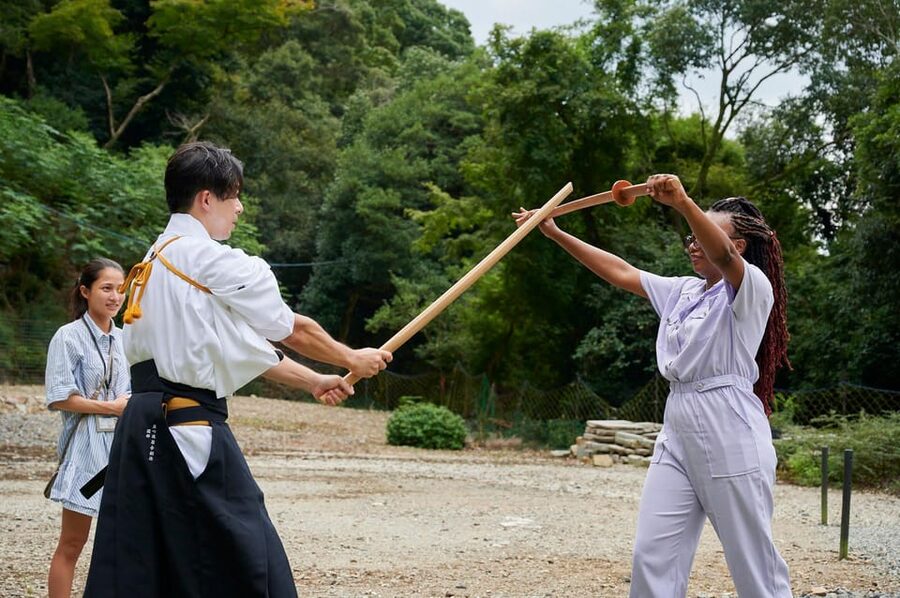
The unusual part comes first: you train with Tatsuya Watanabe, a former grandmaster and headmaster of Suishin-ryu, inside a private area of Ryuan-ji or Saiko-ji Temple near Minoh. This is not a costumed photo stop. You learn basic movements, posture, strikes, and the calm discipline behind classical Japanese swordsmanship.
I like the quiet temple setting and the fact that the training grounds are normally closed to the public. I also like the cultural balance: you get a temple visit, stories about the area, a sword performance, and hands-on practice rather than one quick demonstration. The main consideration is time. Three hours goes quickly, and the session is best for people who want instruction and tradition, not an action-packed samurai show.
Key points to know before booking
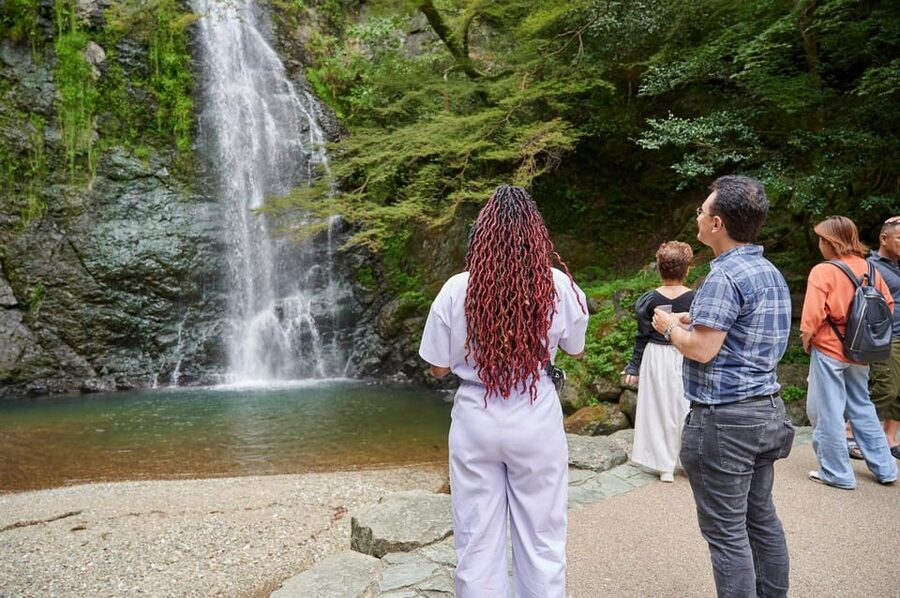
- Private temple access: Train in a restricted part of Ryuan-ji or Saiko-ji, away from the usual public route.
- Headmaster-led instruction: Tatsuya Watanabe teaches techniques connected with classical Japanese sword schools.
- About 90 minutes of training: The hands-on lesson forms the main part of the visit, supported by temple history and demonstrations.
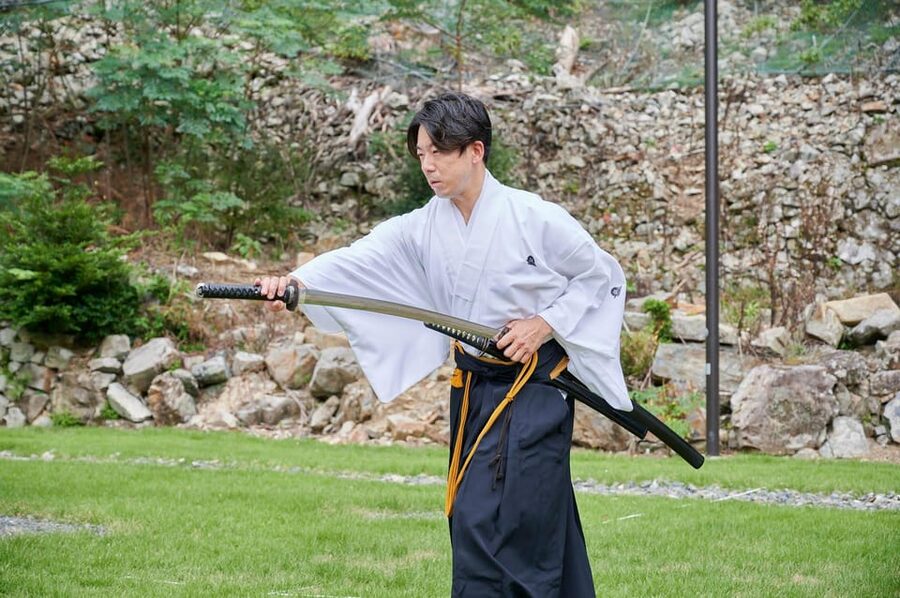
- Special sword performance: Watch Watanabe perform with control, precision, and a strong focus on the mental side of the art.
- Language support: Guides and interpreters are available in English, Japanese, and French. Benoit has provided English interpretation on many sessions.
- Minoh meeting point: Meet in front of Minoh Station, where the guide carries a yellow DeepExperience sign.
Why this Osaka sword experience feels different
Many samurai-themed activities in Japan are built around costumes, staged combat, or a quick photograph. This one takes a quieter route. You travel to Minoh, meet at the station, and enter a temple setting where the sword is treated as a traditional discipline rather than a prop.
That difference matters. Watanabe’s training comes from kendo and classical kenjutsu. He began studying the sword as a teenager, later entered Yagyū Shinkage-ryu during university, and continued his work through other lineages. He became soke, or headmaster, of Suishin-ryu in his twenties. You are not simply being shown how to swing a katana. You are being introduced to a practice that connects movement, focus, body control, and spiritual discipline.
The setting does much of the work. Minoh is outside central Osaka, and the temple visit gives the activity a sense of place. Instead of spending your whole session in a modern studio, you train in an area usually closed to the public. That private access is one of the strongest reasons to consider the price.
More Private Train Tours in Japan:
- Mt Fuji & Hakone Private Tour from Tokyo: Return by Bullet Train
★ 5.0 · 22 reviews - Private Full-day Tokyo Walking Subway Tour by Japan Gray Line
★ 5.0 · 19 reviews - Private Tour – Thousands of lucky cats! Go by tram, Gotokuji Tour
★ 5.0 · 16 reviews
Meeting at Minoh Station
Your starting point is Minoh Station. Meet the guide in front of the station and look for the yellow sign with the DeepExperience logo. This is a useful arrangement because you do not need to find a temple entrance or guess which path to take.
The guide leads you toward the temple area and provides background on Minoh and the religious sites along the way. The exact walk time is not provided, so allow enough flexibility before the scheduled start. Arriving at the station early is sensible, especially if you are unfamiliar with Osaka’s train system.
Language help can shape the whole experience. Watanabe speaks Japanese, and the guide or interpreter explains the instruction in English, Japanese, or French. Benoit has served as the English interpreter on several sessions, translating both the formal explanations and the small corrections during practice. That second part is important. Sword training depends on details such as hand position, stance, timing, and the path of the blade. A short translation can make the difference between simply copying a movement and understanding its purpose.
Entering the restricted temple grounds
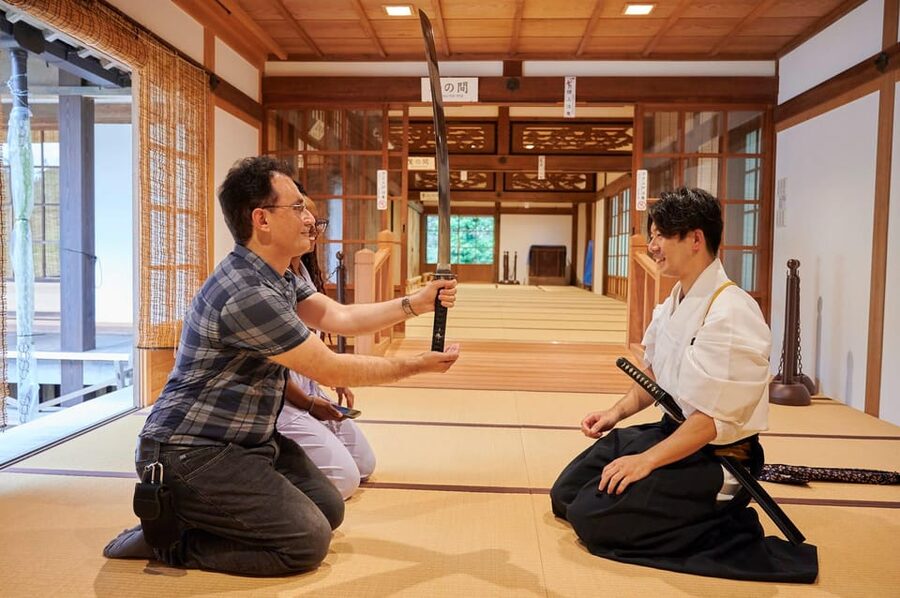
Ryuan-ji Temple, and on some occasions Saiko-ji Temple, provides the setting for the session. These are not presented as ordinary sightseeing stops. The special appeal is access to a secluded training area that is normally closed to the public.
You first get an introduction to the temple and its background. The site’s spiritual character gives context to the sword work. Classical Japanese sword traditions were not only about fighting. The teaching also involved discipline, restraint, posture, and the ability to keep the mind steady. Practicing in a temple makes those themes easier to grasp than a lesson held in a generic room.
You may also see weapons connected with the tradition. One session included a personal sword collection and a sword dating from 1370. That kind of viewing is a rare part of the experience, though the exact objects shown can vary. The information provided does not promise a particular antique sword on every date, so think of it as a possible highlight rather than a guaranteed display.
The temple visit is also a good reason to choose this experience even if you are unsure about martial arts. You are not required to arrive as a sword enthusiast. The combination of a sacred site, local stories, historical objects, and instruction gives you several ways to connect with the morning or afternoon.
Watching Watanabe’s sword performance
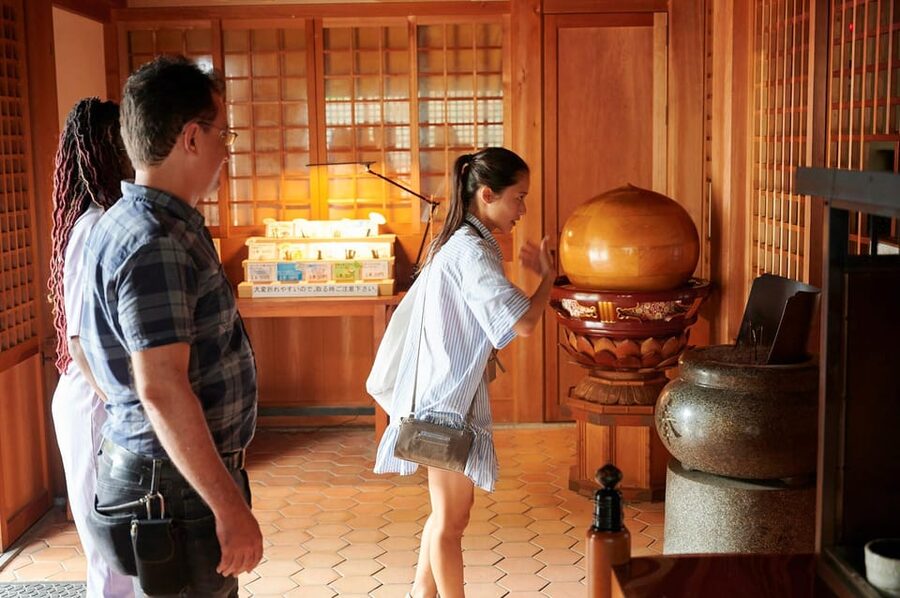
Before you begin the practice, Watanabe gives a special sword performance. This is the moment when the gap between a beginner’s movement and a master’s control becomes clear.
Expect the emphasis to be on precision, economy, and presence rather than theatrical speed. The performance shows how a trained swordsman manages the body and blade as one coordinated system. It also gives you a visual reference for the techniques you will later attempt with a wooden sword.
I would pay close attention to his posture and preparation, not only the strike itself. The lesson is built around fluid movement and a meditative quality. The sword is not treated as a blunt instrument to swing hard. The demonstration helps explain why the tradition values calm attention and repeated practice.
This performance is also a strong choice for family members who may not want to train for the full session. It provides a memorable cultural element before the hands-on work begins, though the experience is designed as a private group rather than a large public show.
More Train Tours in Japan:
- Mt Fuji and Hakone 1-Day Bus Tour Return by Bullet Train
★ 5.0 · 26,383 reviews - Mt Fuji & Hakone Cruise, Drum Show Bullet Train 1 Day from Tokyo
★ 4.0 · 7,413 reviews - Tokyo Mt Fuji 5th St & Hakone Cruise Bus Tour w/Bullet Train
★ 4.4 · 5,024 reviews - From Tokyo: Mt. Fuji & Hakone Tour w/ Return by Bullet Train
★ 4.2 · 1,278 reviews
The 90-minute hands-on sword lesson
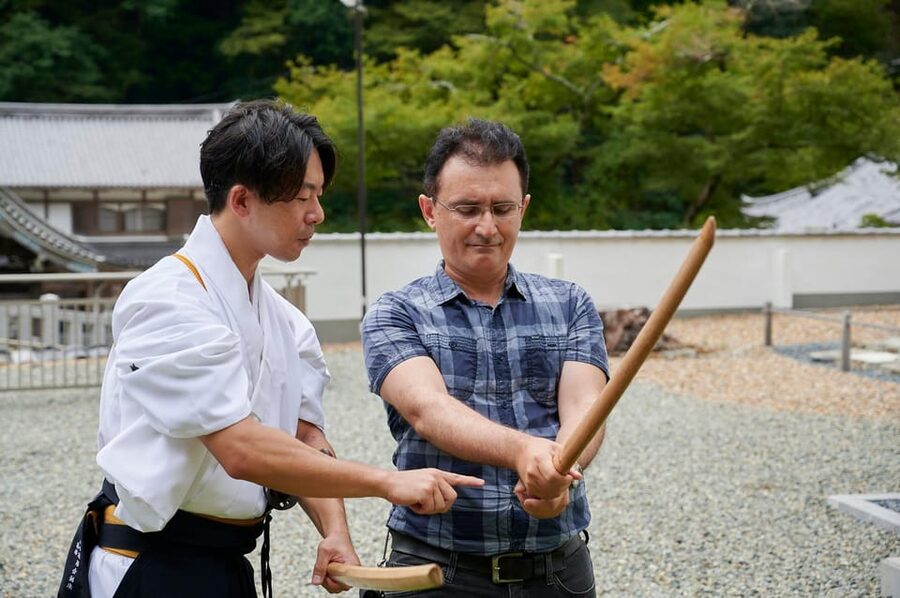
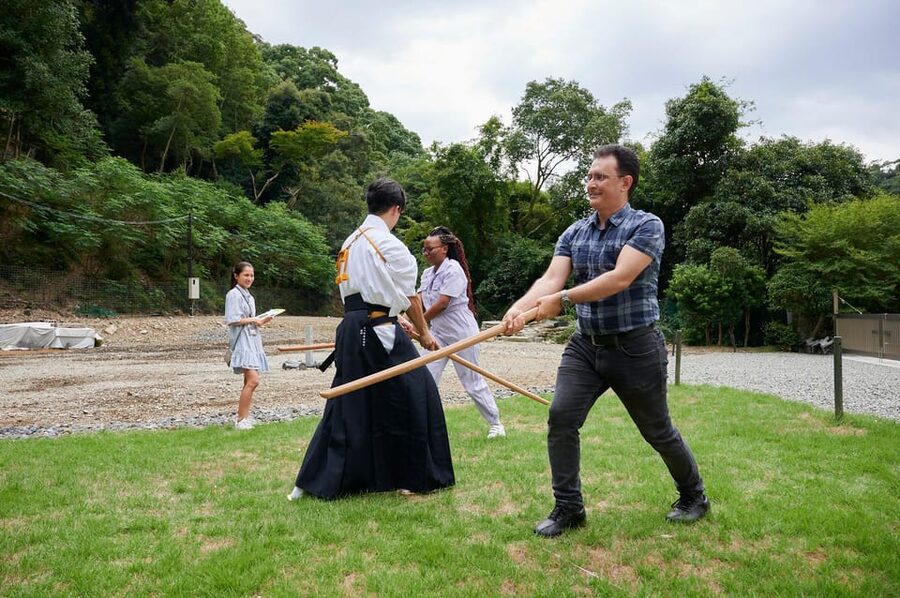
The training portion lasts about 1.5 hours. You begin with a wooden sword and learn basic techniques under direct instruction. Expect to work on how to hold the sword, how to stand, how to strike, and how to make the movement controlled rather than forced.
The instruction is practical but not rushed. Since this is a short introduction, you will not become an expert in kenjutsu in one visit. The value comes from learning the building blocks and seeing how Watanabe corrects each person. The group format is private, so the session can feel more personal than a large class.
Your guide translates the explanations and individual advice. This is particularly helpful when Watanabe demonstrates a movement and then adjusts your technique. You may receive different tips from the person beside you because small changes in posture or timing can affect the result.
Several parts of the lesson have included moving from wooden swords to real swords for supervised practice, including cutting paper. That is an unusual opportunity, but the exact progression should be confirmed on the day. The core experience is wooden-sword training, while actual sword handling and paper cutting have been included in some sessions.
The lesson is likely to suit you if you enjoy learning through repetition. It is less suitable if you expect free sparring, a theatrical battle, or advanced combat instruction. The focus is on traditional form, control, and understanding the meaning behind the movement.
What Watanabe’s background adds
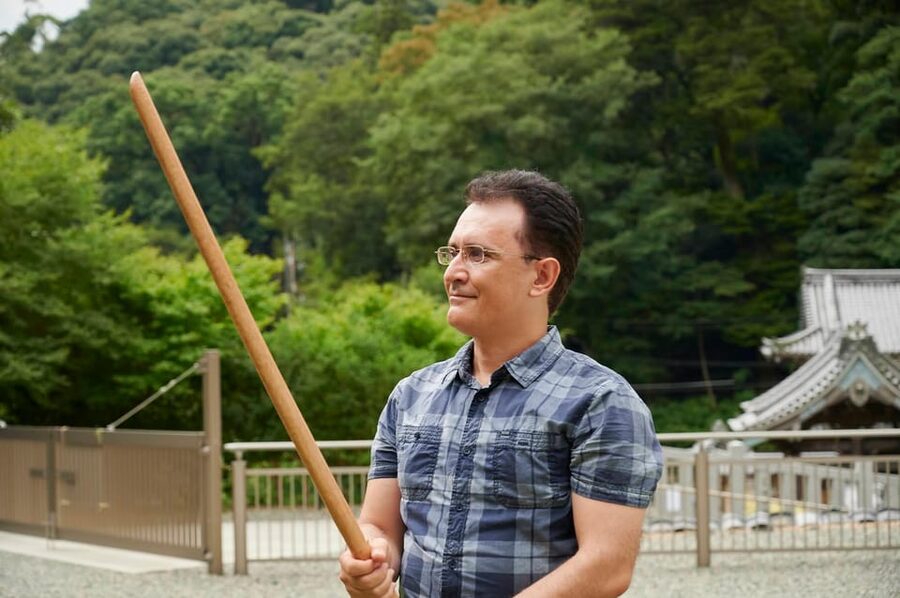
A good instructor can make a short class memorable. Watanabe’s background gives this session more substance than a generic martial arts demonstration.
He first studied kendo, one of Japan’s most widely practiced martial arts. Later, he sought the older techniques of kenjutsu through Yagyū Shinkage-ryu, a famous classical school. His work with Suishin-ryu led to his appointment as soke at a young age, placing him in charge of preserving the school’s methods and teachings.
That title does not mean you should expect a lecture packed with technical terms. The strength of the session is that Watanabe connects the physical work with ideas about purpose, discipline, and daily practice. You can see that commitment in the opening demonstration and in the way he watches your stance.
His work also extends beyond regular training. He presents sword traditions through cultural programs and performances, aiming to keep the art meaningful in modern life. For you, that means the lesson is framed as a living tradition, not a museum piece.
The guide and translation make a real difference
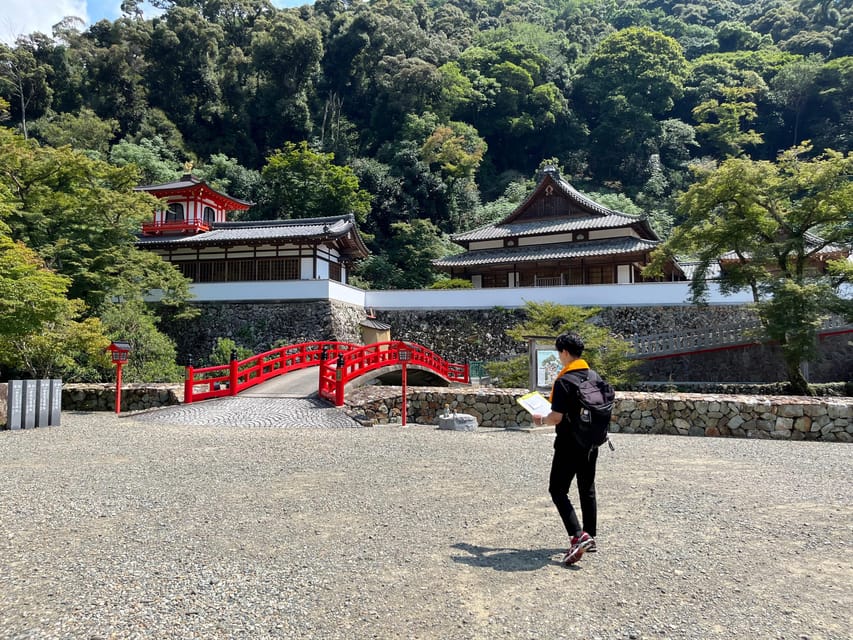
The guide is not just there to lead you from the station. The interpreter adds local context, explains the temple, and keeps the conversation moving between Watanabe and the group.
Benoit has been especially involved in English-language sessions, and his translation has covered both the history and the fine points of the lesson. Other guides have included Aimu and Claire. The available languages are English, Japanese, and French, but the individual guide for your date may differ.
This matters because sword terminology can be difficult to follow through gestures alone. You want to understand why a movement is performed in a certain way, not simply imitate the shape. Good translation also helps you ask questions about Watanabe’s routine, training, family connection to the tradition, and the temple itself.
If you arrive late, the staff may be able to accommodate you, but do not plan on it. Some groups have still received the full experience after a late arrival, yet meeting at Minoh Station on time is the safer plan. The session has several parts, and missing the temple introduction or performance would reduce its value.
Is $158 a fair price?

At $158 per person, this is not a bargain activity in the usual Osaka sense. You are paying more than you would for a large-group museum visit or a basic martial arts class.
The price makes more sense when you count what is included: a private group, a guide, temple access in an area normally closed to the public, interpretation, a master-led lesson, and a special performance. You are also paying for a rare setting and for access to an instructor whose role is tied to preserving a classical school.
The value is strongest for someone who wants a personal cultural experience. If your main goal is to handle a katana for a few minutes and take photographs, this may feel expensive. If you want to understand how swordsmanship relates to Japanese history, religion, discipline, and daily practice, the cost is easier to justify.
The private format also changes the comparison. You are not joining a crowd of tourists moving through a fixed demonstration. You have time for instruction and questions, and the guide can translate corrections for your group.
Who should book this experience?
I would recommend it to several kinds of visitors:
- You want an unusual Osaka activity outside the standard city-center route.
- You care more about cultural context than theatrical effects.
- You are interested in Japanese martial arts, history, or traditional crafts.
- You are traveling with a teenager or family member who enjoys hands-on learning.
- You want a private activity where the guide can explain each step.
- You are open to slow, careful practice instead of fast action.
It also suits a first-time visitor who wants a stronger connection with Japan than a typical sightseeing stop provides. The temple, the interpreter, and the sword lesson work together.
I would think twice if you dislike structured instruction or have very little time in Osaka. The experience lasts about three hours, and it includes travel from Minoh Station, temple orientation, performance, and practice. It is not a quick activity you can squeeze between several central Osaka attractions.
Practical details for planning your day
The activity is listed at three hours, although the duration field also says 270 minutes. Since the program includes a 1.5-hour class plus the station meeting, temple visit, explanations, and performance, plan for a substantial half-day block rather than a short appointment.
Starting times vary, so check availability for your chosen date. Meet at Minoh Station in front of the station, with the guide holding the yellow DeepExperience sign.
The experience is offered as a private group. The included services are the sword experience fee and guide fee. Clothing guidance is not provided in the supplied information, so follow the operator’s instructions after booking rather than assuming a particular outfit is required.
Cancellation is free up to 24 hours before the start time, with a full refund. You can also reserve now and pay later, which helps if you are still arranging your Osaka schedule.
My verdict on the Minoh samurai session
I like this experience because it treats samurai culture as a discipline with history and meaning, not as a costume theme. The private temple grounds, Watanabe’s serious training background, the special performance, and the hands-on lesson create a rare combination.
The main limit is the short time. You will learn the foundations, not master the sword. The price is also a serious one, and the experience rewards curiosity more than casual entertainment.
You should book it if you want a memorable day outside central Osaka and are willing to pay for private access, expert instruction, and interpretation. Skip it if you only want a quick sword photo or a staged fight. For the right person, this is one of the more distinctive cultural activities available near Osaka.
FAQ
Where does the sword experience begin?
You meet the guide in front of Minoh Station. The guide carries a yellow sign with the DeepExperience logo.
How long does the activity last?
The experience is listed as three hours, with the duration information also showing 270 minutes. The hands-on training portion lasts about 1.5 hours.
Which temple will I visit?
The experience takes place in a secluded area of Ryuan-ji or Saiko-ji Temple. The specific temple can depend on the session.
Who teaches the sword lesson?
Tatsuya Watanabe leads the sword instruction. He is the headmaster of Suishin-ryu and has studied kendo, Yagyū Shinkage-ryu, and other classical sword traditions.
Is the experience available in English?
Yes. Live guidance is available in English, Japanese, and French. An interpreter supports the explanations and training instruction.
Is this a private activity?
Yes. The experience is offered for a private group.
What is included in the price?
The price includes the sword experience fee and the guide fee. The listed price is $158 per person.
Just added around Japan
- Train in Samurai Swordsmanship and Defeat the Demon in Tokyo★ 5.0 · 5 reviews
- Private tour with Yasushi and Yoko – by car, train, on foot★ 5.0 · 2 reviews
- Tokyo-Izu: Volcano, Ocean& Capybara Cuddle with Izu Scenic Train★ 3.5 · 3 reviews
- Tokyo Private Guided 1/2-Day Walking Subway Tour English guide★ 5.0 · 7 reviews
- Bullet Train and Mt. Fuji Famous Food Tour★ 5.0 · 4 reviews
- Snow Monkey Park and Miso Production Tour Bullet Train from Tokyo★ 4.5 · 26 reviews
- Private Tour – Thousands of lucky cats! Go by tram, Gotokuji Tour★ 5.0 · 16 reviews
- Kyoto Early Bird Tour Tokyo Round or One Way Shinkansen★ 5.0 · 10 reviews
Japan Train Tours, compared.

Mt Fuji & Hakone Cruise, Drum Show Bullet Train 1 Day from Tokyo
Read our review →
Tokyo Mt Fuji 5th St & Hakone Cruise Bus Tour w/Bullet Train
Read our review →
Mt. Fuji & Hakone Tour w/ Return by Bullet Train
Read our review →
Osaka/Kyoto: Hiroshima Miyajima Bus Tour & Shinkansen Ticket
Read our review →
From Tokyo 1-Day Kyoto English-guided Tour by Bullet Train
Read our review →
Mt. Fuji and Hakone Day Trip From Tokyo with Bullet Train Option
Read our review →
Fukuoka: Takachiho Gorge & Scenic Railway One Day Tour
Read our review →Browse the lists this tour appears in