
REVIEW · NAPLES
Pompeii & Herculaneum Guided Tour – High Speed Train from Rome
The most rewarding part of this Pompeii and Herculaneum day trip is the contrast between the two buried Roman towns. Pompeii gives you broad streets, theaters, baths, shops, and grand houses. Herculaneum is smaller, but its mosaics, frescoes, wooden details, and compact lanes can feel more intimate.
I like the high speed train from Rome, which removes the hassle of arranging your own long-distance transport. I also like having an archaeologist guide, with guides such as Alfredo, Michele, Raphael, and Gennaro praised for making ancient daily life easy to picture. The drawback is the pace: this is a long, strenuous day, and Pompeii cannot be seen fully in the time available.
Key points to know before booking
- Rome to Naples by high speed rail: You travel independently from Rome Termini, then meet the group near Naples Central Station.
- Two major archaeological sites in one day: Pompeii and Herculaneum offer different views of the 79 AD eruption and Roman life.
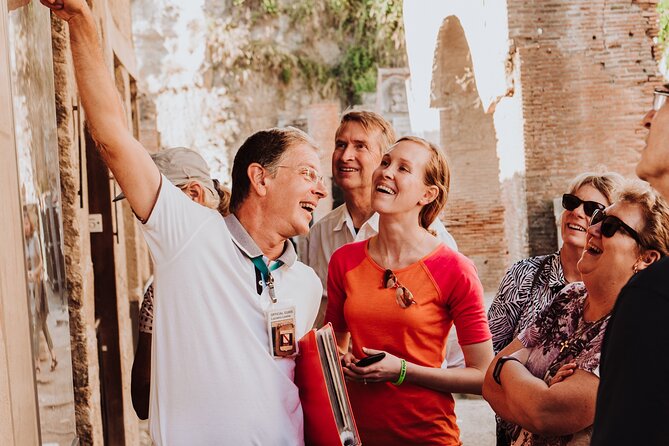
- Archaeologist-led visits: The guide explains buildings, excavation work, social customs, and how the cities functioned.
- Skip-the-line entry is included: Your Pompeii and Herculaneum admission tickets are covered in the price.
- A break at Maximall Pompeii: The shopping center provides air conditioning, restrooms, food options, a welcome kit, and a discount card.
- Expect a demanding schedule: The tour lasts about 11 hours and 30 minutes, with uneven ancient roads and extensive walking.
Why the Rome to Naples setup works

You begin at Rome Termini Station without a guide beside you. The high speed train tickets are sent one day before departure, so you board on your own and travel to Naples. This arrangement sounds less hand-held than a hotel pickup, but it keeps the morning simple and gives you a direct route south.
At Naples Central Station, walk across Piazza Giuseppe Garibaldi to the Starhotels Terminus. It is directly across from the station, which makes the meeting point easy to locate. There you meet the local guide and the Askos Tours driver, then continue by minibus to the archaeological sites.
The train ride is one of the strongest reasons to consider this trip. Planning Pompeii and Herculaneum independently from Rome means juggling rail tickets, local transport, entrance reservations, and guided visits. Here, the return rail ticket, minibus transfers, site tickets, and guide are bundled together.
You do need to pay attention. Naples has more than one station stop on some train routes, so follow the instructions carefully and remain on board until the correct arrival point. Keep your passport or another valid ID with you, since the tour specifically requires one.
More Bullet Train Tours in Italy
- Pompeii and Naples Tour by High-Speed Train
★ 4.0 · 7 reviews - Private Pompeii Day Trip From Rome by Fast Train to Naples and Car Service
★ 5.0 · 7 reviews - Private Full Day Tour to Pompeii and Amalfi Coast from Rome in Fast Train
★ 4.5 · 4 reviews
Pompeii begins at Porta Marina
The Pompeii visit starts at Porta Marina, one of the ancient city’s important entrances. From here, the archaeologist guide sets out the basic story: Pompeii was a functioning Roman town before Mount Vesuvius erupted in 79 AD, burying streets, houses, public buildings, and people under volcanic material.
The first part follows Via dell’Abbondanza, Pompeii’s main commercial and social artery. Walking here helps you understand the city as a place where people lived and worked, rather than as a collection of isolated ruins. The street leads toward houses, public buildings, and theaters that show how varied Roman urban life could be.
You visit the House of Menander, named for a Greek playwright whose image appears in the house. The property gives you a look at an affluent residence and the decorative world of Pompeii’s upper class.
The Granaries of the Forum offer a different view. Instead of focusing only on painted rooms and mosaics, the guide can explain how objects from Pompeii are stored and studied. The area also helps connect the city’s ruins with modern archaeological work.
Pompeii’s baths, brothel, and grand houses
The Stabian Baths are among the useful stops for understanding ordinary Roman routines. Bathing was not simply about washing. It was part of public life, and the complex shows how Roman towns provided shared facilities for exercise, conversation, and leisure.
The Lupanar, or brothel, is one of Pompeii’s most talked-about buildings. Its small rooms and surviving imagery offer a blunt glimpse into the commercial side of Roman society. It is an adult historical site, and the guide’s explanation matters here because the building can otherwise become a quick photo stop without much context.
The House of the Faun is one of Pompeii’s grandest residences. Its scale and decoration point to considerable wealth, and its name comes from a statue of a dancing faun. You should not expect to inspect every room in the house, but the stop helps you see the difference between a modest urban home and an elite Roman residence.
The Odeon, or Small Theatre, and the Great Theatre shift attention toward entertainment. These spaces show that Pompeii had an active public culture, with performances drawing people from across the city. Their preserved forms also make it easier to imagine crowds gathering long before the eruption.
The guide’s role is especially valuable in Pompeii because the site is enormous. Without direction, you can spend hours wandering from one impressive wall to another without understanding how the pieces fit together. The strongest guides, including Raphael, Alfredo, and Michele, have been praised for combining specific details with a wider explanation of Roman life.
Why the Maximall stop is more useful than it sounds
The visit includes a 50-minute break at Maximall Pompeii, described as the largest shopping center in southern Italy. You receive a branded welcome kit and discount card for special offers in the stores.
A shopping mall may sound out of place on an ancient-sites tour, but the pause serves a practical purpose. Pompeii has little shade, the stone streets can be tiring, and you need a break for food, drinks, restrooms, and air conditioning. One short stop can make the second archaeological visit more manageable.
Do not think of this as a major sightseeing stop. It is a service break, not an ancient site. If you prefer every minute to be spent among ruins, you may see it as lost time. If your feet are already complaining, you will probably appreciate it.
More Bullet Train Tours in Naples:
- Private Tour Rome to Pompeii in private vehicle or fast train
★ 4.5 · 4 reviews - Mt Fuji and Hakone 1-Day Bus Tour Return by Bullet Train
★ 5.0 · 26,383 reviews - Mt Fuji & Hakone Cruise, Drum Show Bullet Train 1 Day from Tokyo
★ 4.0 · 7,413 reviews - Tokyo Mt Fuji 5th St & Hakone Cruise Bus Tour w/Bullet Train
★ 4.4 · 5,024 reviews
Herculaneum shows a different side of the disaster
After Pompeii, the minibus takes you to Herculaneum. The tour spends about two hours in the archaeological park, visiting a selected group of houses and public buildings.
Herculaneum is much smaller than Pompeii, but it is often the more immediately striking site. The volcanic material that covered it preserved details that are not as common in Pompeii, including mosaics, frescoes, wooden elements, and household fittings. The House of the Wooden Partition is a good example of why this site feels so personal. A surviving wooden feature can make the ancient past seem close and physical.
The House of the Skeleton gives the visit a darker edge. The Central Thermae returns you to the public bathing culture seen at Pompeii, while the House of the Relief of Telephus shows the decorative tastes of a wealthy home.
You also see the Samnitic House, the House of the Fine Courtyard, the House of the Grand Portal, and the House of the Black Salon. Each stop is brief, usually around five to ten minutes, so the guide has to choose details carefully. You will not study every room, but you will get a structured route through several different types of Roman domestic space.
The Terrace of Nonio Balbo and the College of the Augustales add public and religious context. Together, these stops prevent Herculaneum from becoming only a tour of villas. They show how the town’s public identity worked alongside private homes.
Several guides have worked to make the two sites feel different rather than repetitive. That is important. Pompeii gives you a wide city with streets and large public buildings. Herculaneum gives you a smaller town with unusually clear domestic remains. The best way to appreciate both is to notice the contrast.
The guide can make or break the day
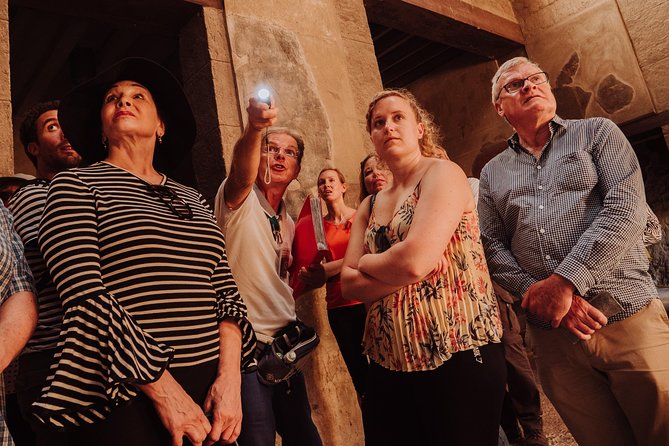
An archaeologist guide is a major part of the value here. You are not simply being led from one building to the next. The guide explains excavation, preservation, geology, architecture, and the way people used the spaces.
Names that have received especially strong praise include Alfredo, Michele, Raphael, Gennaro, Paolo, Roberta, Bruno, Diego Michele, and Carmine. You are not guaranteed a particular person, but the guide quality is clearly central to the experience. Michele and Alfredo, for example, have been praised for answering questions and tying the ruins to everyday life. Raphael has been noted for mixing humor with detailed explanations.
Headsets are provided, which is helpful in a group. Still, one poor experience involved sound cutting out when the guide walked too far ahead, and another mentioned an intercom that was hard to hear. Stay close to the guide and speak up quickly if the audio fails. A headset cannot help if the group stretches out across a wide street.
The group can include up to 20 people. That is small enough to be manageable, but it is not a private tour. Pompeii can feel crowded, and one person specifically wished for fewer people during that portion. Keep realistic expectations: a small group does not mean you will have each building to yourself.
How much walking and time should you expect?
This is an 11-hour-and-30-minute day, including the train journeys, Naples transfers, two archaeological visits, and the mall break. The schedule is efficient, but it is not leisurely.
Pompeii’s ancient paving stones are uneven. Herculaneum also requires time on your feet, and both sites involve steady walking. The tour is not recommended for someone with significant leg or knee problems, and anyone with mobility concerns should think carefully before combining both locations in one day.
Pompeii has very little shade. Bring practical sun protection, water, and comfortable shoes. Meals and drinks are not included, so use the Maximall break to buy lunch or refreshments. The stop is short, so do not plan a long restaurant meal.
Luggage is another practical concern. The minibus may not have room for suitcases, and not every vehicle has a luggage compartment. Store large bags at the station or another luggage facility before joining the excursion.
Is $204.38 a fair price?
At $204.38 per person, this is not a budget outing. The price includes roundtrip high speed rail from Rome Termini, Pompeii Express admission, Herculaneum admission, minibus transport from Naples, an archaeologist guide, headsets, and the Maximall welcome materials.
The listed adult entrance fees alone total 36 euros, with Pompeii at 20 euros and Herculaneum at 16 euros. The larger value comes from saving planning time and avoiding the need to coordinate several separate bookings.
I think the cost is reasonable for a visitor who wants a tightly organized day from Rome and values expert interpretation. It is less attractive if you are happy using local trains, studying the sites on your own, or spending a full day at Pompeii alone.
The main value is convenience plus explanation. The main limitation is that the schedule cannot provide a complete Pompeii visit. One guide-led day can show you the highlights, but it cannot cover every street, house, and public building.
Who should book this day trip?
I would choose this for a first visit from Rome, especially if you want both archaeological sites without changing hotels. It suits people who value rail travel, clear transfers, and a guide who can explain what you are seeing.
Families can manage the day if children are comfortable with walking and a quick pace. One strong point is that the mall break provides a pause, restrooms, food, and air conditioning. Still, the total day is long, so very young children may find it tiring.
This tour also suits anyone who wants more than a postcard view of Pompeii. The archaeologist-led commentary can explain how homes, baths, theaters, shops, and public institutions fit together. It is less suitable for photographers or independent explorers who want long, quiet periods inside individual buildings.
The tour ends with a minibus ride back to Starhotels Terminus. From there, you return to Naples Central Station independently and board your high speed train to Rome. The transfer is designed to get you back in time, but the schedule can leave a substantial wait before the train. That extra margin protects you from missing the return journey, though some visitors would prefer more time at the ruins.
Should you book it?
Book this tour if you want both Pompeii and Herculaneum in one organized day from Rome, with rail, admission, transfers, and an archaeologist guide handled together. The contrast between the broad streets of Pompeii and the better-preserved domestic details at Herculaneum makes the pairing worthwhile.
Skip it if you need a slow pace, have mobility problems, or want a full and unhurried exploration of Pompeii. For most first-time visitors with good stamina, the tour offers a practical way to see two major sites without turning the day into a transport puzzle.
Free cancellation is available up to 24 hours before the start time. Changes or cancellations made later are not refunded.
FAQ
Where does the tour begin?
You begin independently at Rome Termini Station. The high speed train tickets are sent one day before the tour, and no guide meets you in Rome.
Where do I meet the guide in Naples?
Meet the guide and driver at Starhotels Terminus, at Piazza Giuseppe Garibaldi 91, directly across from Naples Central Station.
Are Pompeii and Herculaneum admission tickets included?
Yes. The tour includes Pompeii Express entry tickets and Herculaneum ruins entry tickets. The listed adult admission prices are 20 euros for Pompeii and 16 euros for Herculaneum.
Is lunch included?
No. Meals and drinks are not included. The itinerary provides a 50-minute break at Maximall Pompeii, where you can arrange food and drinks.
Can I bring a suitcase?
Large luggage is not recommended. The minibus may not have suitable storage, so use a luggage deposit at the station or another facility before the excursion.
How many people can join the tour?
The maximum group size is 20 people. Headsets are provided so you can hear the archaeologist guide during the site visits.
Just added around Naples
- Pompeii and Naples Tour by High-Speed Train★ 4.0 · 7 reviews
- Private Transfer from Naples to Sorrento coast★ 5.0 · 4 reviews
- Transfers Airport, port, train, hotel in Naples★ 5.0 · 31 reviews
- Guided tour of the Royal Palace of Caserta with train option★ 5.0 · 2 reviews
- Private Pompeii Day Trip From Rome by Fast Train to Naples and Car Service★ 5.0 · 7 reviews
- Private Full Day Tour to Pompeii and Amalfi Coast from Rome in Fast Train★ 4.5 · 4 reviews
- Private Tour Rome to Pompeii in private vehicle or fast train★ 4.5 · 4 reviews
- Naples Private Transfer – Sorrento, Amalfi Coast, Airport, Train★ 5.0 · 34 reviews
Naples Train Tours, compared.
Guided tour of Pompeii skip-the-line and round-trip train
Read our review →
Caserta Palace Ticket and Train with Audioguide
Read our review →

Naples Private Transfer – Sorrento, Amalfi Coast, Airport, Train
Read our review →

Browse the lists this tour appears in