REVIEW · HANOI
Sapa Trek Tour with Sleeper Bus/Night Train – Overnight at Hotel
Sapa’s best moments come on foot, among rice terraces, mountain streams, and H’Mong villages. This tour gives you a quick taste of that world without making you arrange every bus, meal, guide, and hotel yourself. The local guide is a major plus, especially on the walks around Cat Cat, Lao Chai, and Ta Van.
I like the small maximum group of 15 and the practical central hotel, which makes evening time in Sapa easy. I also like the choice of transport and add-ons, including sleeper bus, night train, Fansipan, Bac Ha, and direct travel onward to Ha Giang. The main caution is the packed schedule and some confusing option details, so confirm exactly what you have booked before departure.
Key points to know before booking
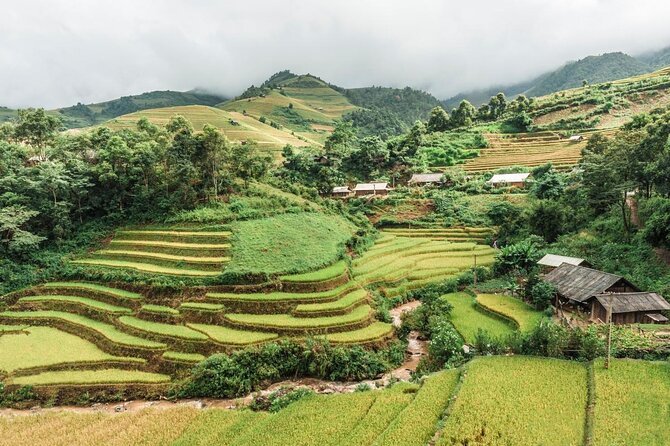
- Cat Cat begins the walking program: Visit a Black H’Mong village, waterfall, stream, old French-era hydroelectric plant, and terrace fields after arriving in Sapa.
- The second trek is the scenic heart of the tour: Lao Chai and Ta Van bring you through rice terraces and along the Muong Hoa Stream.
- Transport is part of the value: The standard plan includes Hanoi to Sapa and back, with sleeper bus or other transport depending on your selected option.
- Bac Ha is an optional-style extension: Sunday’s market, Pho village, and Hoang A Tuong’s Castle require careful confirmation because the schedule and inclusions vary by booking choice.
- You spend the night in central Sapa: That makes it easy to explore town after dinner instead of returning to a remote base.
- Pack for walking, not just sightseeing: Sport shoes and comfortable clothes are specifically recommended, and the tour includes several hours of trekking.
What this Sapa trip is really designed to do
At $66 per person, this is best understood as a compact Sapa sampler. You travel from Hanoi, spend a night in town, walk through several ethnic minority villages, eat included meals, and return with the main arrangements handled for you.
That price is appealing because transport, hotel accommodation, meals, entrance tickets, and English-speaking guides are listed as included. A comparable self-planned trip could require separate bus reservations, hotel arrangements, local transport, and village guiding. Here, you trade some independence for convenience.
You should also read the title and schedule with care. The advertised experience is described as a three-day trip, but the main Hanoi to Sapa itinerary runs from early Day 1 through the evening of Day 2. The Bac Ha Market program appears as Day 3 and is tied to Sunday timing, while the supplied details also describe an optional route directly from Sapa to Ha Giang. Ask the operator to confirm your exact sequence, especially if you are booking Bac Ha or a night train option.
The group limit of 15 is small enough for a more personal walk than a large coach excursion. It also matters in the villages, where a guide can keep the group together and explain what you are seeing without shouting across a crowd.
More Overnight and Sleeper Trains in Hanoi
- Sapa: 3-Day, 3-Night Trek and Hotel with Overnight Train
★ 4.2 · 64 reviews - From Hanoi: Sapa Hill Tribes 2-Day Tour by Overnight Train
★ 4.4 · 62 reviews - Sa Pa Trekking 2 Days 3 Nights Homestay by Night Train
★ 4.5 · 11 reviews
Leaving Hanoi at 6:30 in the morning
Your meeting point is 160 Tran Quang Khai in Hanoi’s Hoan Kiem area. Departure is listed for 6:30 am, so this is not a leisurely start. The ride to Sapa takes about six hours and includes two or three rest stops.
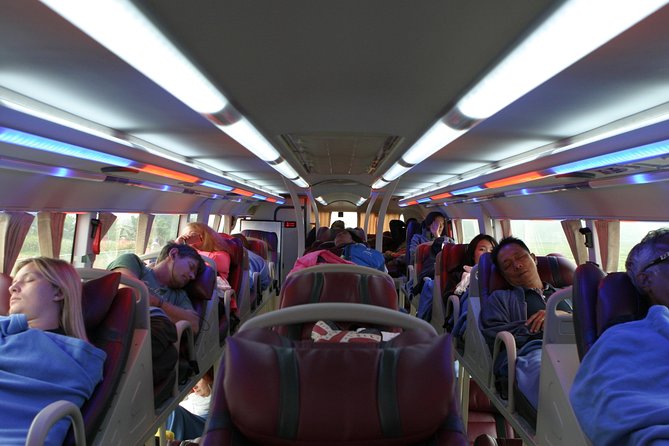
The transfer uses an air-conditioned bus, with a sleeper bus listed among the options. The exact vehicle depends on the package you choose. That distinction matters: do not assume the same bus or seating arrangement applies to every booking.
A six-hour road trip is a large part of the first day, but the direct highway route keeps the schedule manageable. Free pickup and drop-off are highlighted, although the stated meeting point is the place to use unless your booking confirms another arrangement.
You should have water, a light jacket, and anything you need during the ride close at hand. The tour later asks you to prepare a light bag for the Cat Cat walk, so avoid packing your entire luggage into the day’s trekking load.
Cat Cat Village and the first afternoon walk
The guide is scheduled to meet you in Sapa around 1:00 pm and take you to the hotel for lunch. Afterward, you prepare a light bag and set out for Cat Cat with a local H’Mong guide.
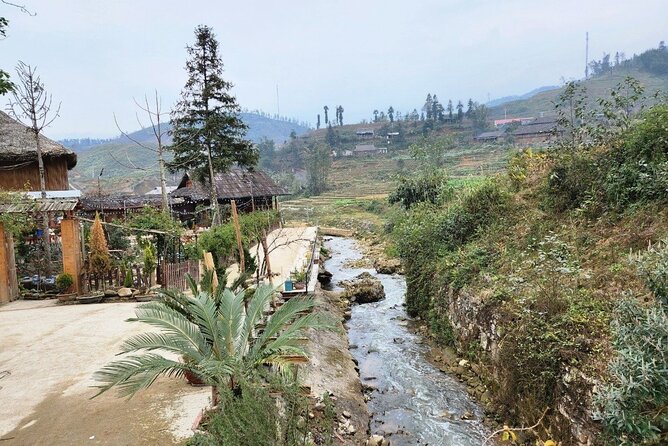
Cat Cat is home to Black H’Mong people. The walk includes terrace fields, the Muong Hoa Stream, and a waterfall. You also see a hydroelectric power plant dating from the French period and schools serving local children. These details give the afternoon more substance than a simple viewpoint stop.
The listed visit lasts about four hours, including the walk and village visit. That is a useful first introduction, but it is still a busy afternoon after a long morning on the road. You will want proper shoes, not city sandals, and clothing that allows easy movement.
The village experience is not presented as a private household visit or a long cultural workshop. Instead, you walk through a living settlement and see pieces of daily life, local infrastructure, and the surrounding scenery. Keep your expectations in the right place: this is a guided introduction rather than an extended homestay.
Dinner is scheduled around 6:30 to 7:00 pm. Afterward, you have free time to explore Sapa center on your own. This is one of the better design choices in the program. You are not rushed from one arranged activity to another all evening, and the central hotel puts town within easy reach.
Lao Chai and the Muong Hoa Stream
Day 2 starts with breakfast and time to refresh at the hotel. The main walk then heads toward Lao Chai, passing rice terraces and following the Muong Hoa Stream.
Lao Chai is a Black H’Mong village surrounded by the Hoang Lien Son Mountain range. The appeal here is the combination of village life and open mountain scenery. The walk is not just a road transfer to a photo stop. You spend several hours moving through the area, which gives the terraces and stream time to become part of the experience rather than a quick backdrop.
The listed walking time is about four hours. The route may feel straightforward to an active walker, but the tour is still outdoors and terrain can be uneven. The supplied advice is simple and sensible: wear sport shoes and comfortable clothes.
An extra Fansipan option is available for an additional fee, paid directly on the tour. Fansipan is not part of the standard experience as described, so treat it as a replacement or added choice rather than an included highlight. Confirm how it affects the Lao Chai walk, the schedule, and the transport before agreeing to it.
More Overnight and Sleeper Trains in Vietnam
- Private Overnight Train Hanoi To Sapa Or Return
★ 3.5 · 10 reviews - 3 Days Sapa Tour with Night Train from Hanoi
★ 4.5 · 8 reviews - Sapa Trekking Tour by Night Train from Hanoi 3 Nights – 2 days
★ 5.0 · 7 reviews - 2 days 3 Nights Sapa Trekking Tour by Night Train from Hanoi
★ 4.0 · 7 reviews
Ta Van Village and a different rural setting
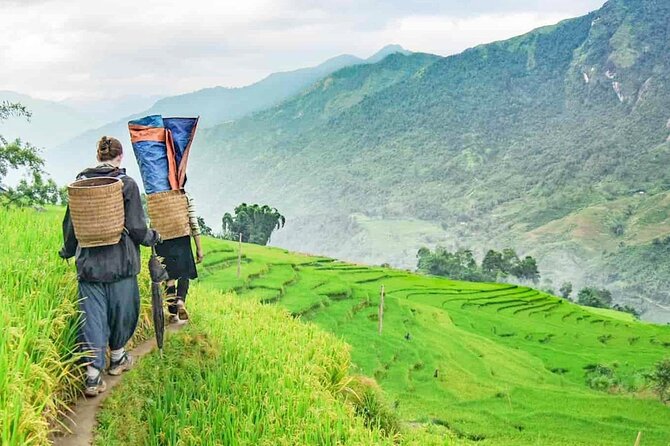
From Lao Chai, the program continues to Ta Van Village. Ta Van is associated with the Zay people, who live on flatter ground in wooden houses. The walk takes about an hour and includes more rice terraces and views of village life.
The change from Black H’Mong Lao Chai to Zay Ta Van is one of the tour’s strongest cultural features. You are not visiting one village and being told that all mountain communities are alike. The communities have different identities and home styles, and the guide can help you understand those differences in context.
The tour information does not promise a formal cultural performance or a cooking lesson, which is useful to know. The value lies in walking through the villages with a local English-speaking guide and seeing how homes, fields, streams, and roads fit together.
After lunch at the hotel, the return bus leaves Sapa at about 1:30 pm. The ride back to Hanoi takes around five and a half hours, with arrival at the original meeting point expected around 8:30 pm. That makes the basic trip a demanding but efficient overnight escape.
The Bac Ha Sunday option

Bac Ha is a separate highlight in the program and requires careful timing. Its market takes place only on Sunday morning. If you are in northern Vietnam on the right day, it can add a very different experience to the Sapa trek.
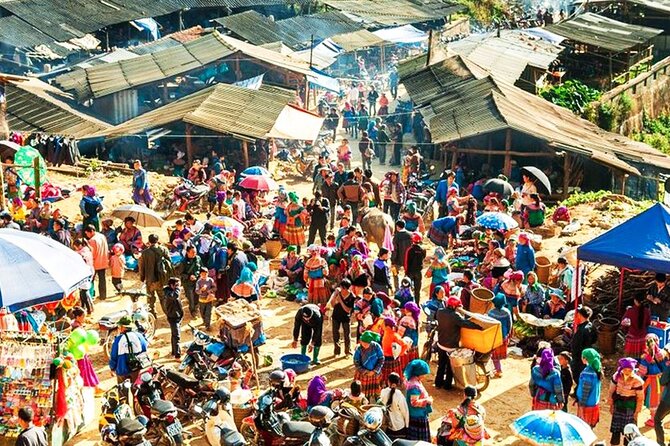
The market brings together several ethnic communities, including Red H’Mong, Zay, Red Dao, and Tay people. The description emphasizes the old-style exchange of goods, including animals, food, and souvenirs. That mixture gives Bac Ha a stronger market focus than the village walks around Sapa.
The market visit lasts about three hours. You then walk near Pho village for about an hour, seeing a quieter road and the daily life of local residents. The pace is slower here, and that short village walk helps balance the busy market.
Hoang A Tuong’s Castle adds a final historical stop. It was the home of a H’Mong ruler and his family and is described as the most luxurious residence in the area during that period. The visit is brief, about 30 minutes, so think of it as a compact architectural and historical stop rather than a full museum visit.
The Bac Ha program is listed with a private car and guide if that option is selected. It also refers to hotel accommodation in Bac Ha, while other parts of the schedule place you back in Hanoi after Day 2. Because of that mismatch, contact Go Asia Travel and confirm whether Bac Ha replaces the return to Hanoi, follows an overnight stay, or is available only under a separate package.
Continuing from Sapa to Ha Giang
One useful feature is the possibility of going directly from Sapa to Ha Giang instead of returning to Hanoi. This can save time if you are building a longer northern Vietnam route.
Two departures are listed: an 18-seat limousine bus at 2:30 pm from May Hotel, taking about six hours, and a 40-seat sleeper bus at 7:30 pm from its meeting point, also taking about six hours. Both require an extra payment.
This option is practical, but it is not included in the $66 base price. It also changes the shape of your trip, so confirm luggage arrangements, pickup location, departure time, and the extra charge. If your wider plan includes Ha Giang, direct travel from Sapa may be more sensible than returning to Hanoi only to head north again.
Hotel, meals, and what the price covers
The accommodation is described as a hotel in central Sapa. That location matters because you have free time after dinner and do not need to depend on a late transfer just to reach town.
The package lists three lunches, two breakfasts, and two dinners. It also lists entrance tickets, transfers between Hanoi and Sapa, and local English-speaking guides in Sapa and Bac Ha. Drinks, travel insurance, VAT, tips, and personal expenses are not included.
At $66, the package offers good practical value if your selected option truly includes the hotel, meals, and round-trip transport. The value is less clear if you add night train upgrades, Fansipan, Bac Ha, or direct Ha Giang transport. Those extras may be useful, but they can change the final cost considerably.
A holiday surcharge of 700,000 Vietnamese dong per person applies on April 30, May 1, September 1 through 3, December 31, and January 1. Check the date before you compare this tour with other Sapa packages.
The guide makes the difference
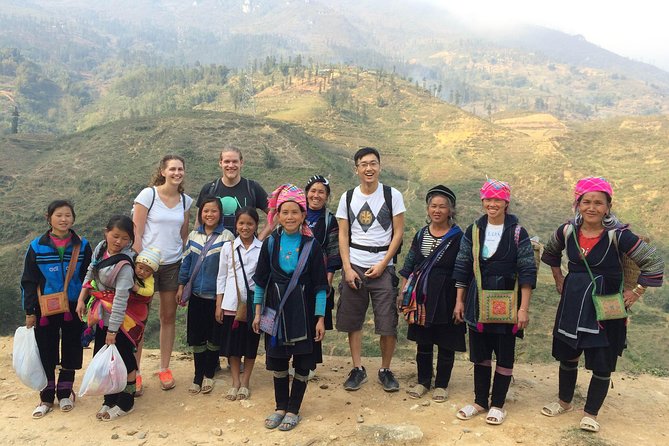
The tour uses experienced local English-speaking guides in Sapa and Bac Ha. The guide is especially important on the walks because the scenery alone does not explain the differences between Black H’Mong, Zay, Red H’Mong, Red Dao, and Tay communities.
One published rating gives the experience five stars and singles out the beautiful rice-field scenery, the local feel of the guide, clear English, and a friendly manner. That is a useful sign, though the rating sample is very small, with only two reviews. I would treat the positive guide feedback as encouraging rather than conclusive.
No guide’s personal name is supplied, so you cannot request a named guide from the information available. You can, however, ask whether your booking includes one guide for the Sapa walks and a separate guide for Bac Ha.
Who should book this tour?
You are a good fit if you want to see Sapa’s main villages without planning every transport detail. The tour suits active visitors who enjoy several hours of walking, rural scenery, and a quick look at local communities.
It also works well for first-time visitors who want a structured introduction to northern Vietnam. The small group, central hotel, included meals, and local guides reduce the usual friction of arranging Sapa independently.
You may want a different plan if you prefer slow travel, private pacing, or long stays in one village. The schedule is tight, and the return to Hanoi on the second evening makes the trip feel more like an efficient sampler than a restful mountain holiday.
You should also think twice if you dislike early departures, long bus rides, or uncertain add-on arrangements. The main journey includes roughly six hours from Hanoi to Sapa and another five and a half hours back. That is a lot of road time for a short trek.
Practical details that will save you trouble
Wear sport shoes with a secure grip. Comfortable clothing is more useful than polished sightseeing clothes, especially on the Cat Cat, Lao Chai, and Ta Van walks.
Bring a small day bag for the first trek and keep your main luggage organized for the hotel transfer. Carry money for drinks, tips, personal purchases, and any optional additions.
The activity is near public transportation, but the stated start and end point is 160 Tran Quang Khai in Hanoi. Confirmation is provided at booking, and the maximum group size is 15 people per booking.
Most people can participate according to the supplied information, but the itinerary includes several hours of walking and mountain village terrain. If you have concerns about hills, streams, or uneven paths, ask the operator about the exact route before paying.
Cancellation is generous only if handled early: a full refund requires cancellation at least six full days before the start time. Cancelling two to six full days before the start can receive a 50 percent refund, while cancellations less than two full days before departure are nonrefundable. Changes follow the same cutoffs.
Should you book the Sapa trek?
Book it if you want a low-cost, organized introduction to Sapa with a local guide, central hotel, included meals, and the main villages covered in a short time. The rice terraces, Cat Cat waterfall, Muong Hoa Stream, Lao Chai, and Ta Van give you a good range of scenery and culture.
Before paying, confirm three things in writing: your transport type, whether Bac Ha is included in your chosen package, and whether your schedule returns to Hanoi or continues toward Ha Giang. If those details are clear, the $66 starting price is attractive for an active short trip.
FAQ
How long is the Sapa tour?
The experience is advertised as approximately three days, but the main Hanoi to Sapa and return schedule runs from early Day 1 through the evening of Day 2. Bac Ha is shown as a Day 3 program, and the exact length depends on the option selected.
Where does the tour start and finish in Hanoi?
The stated meeting point is 160 Tran Quang Khai, Ly Thai To, Hoan Kiem, Hanoi. The activity ends back at the meeting point.
What transport is used between Hanoi and Sapa?
The tour uses an air-conditioned bus, with a sleeper bus available depending on the option booked. An overnight train option is also listed, depending on the selected package.
Is accommodation included?
Yes. Accommodation in a central Sapa hotel is included. Hotel accommodation in Bac Ha is also listed, but you should confirm whether it applies to your chosen Bac Ha package.
Are meals included?
The package lists three lunches, two breakfasts, and two dinners. Drinks are not included.
Can I visit Bac Ha Market on any day?
No. Bac Ha Market takes place only on Sunday morning. The Bac Ha visit includes the market, Pho village, and Hoang A Tuong’s Castle when that option is selected.
Can I travel from Sapa directly to Ha Giang?
Yes. Direct buses from Sapa to Ha Giang are listed, including a limousine bus at 2:30 pm and a sleeper bus at 7:30 pm. Both require an extra fee.
More Evening Trips in Hanoi
- Vespa Female Ao Dai riders Night Street Food + See Train Street
★ 5.0 · 254 reviews - Hanoi Jeep By Night Street Food Tour and Train Street Experience
★ 5.0 · 66 reviews - Hanoi Jeep Night Street Foodie Tour, Train Street and Egg Coffee
★ 5.0 · 60 reviews - Female Riders Vespa Night Street Food + Train Street food 4 Hours
★ 5.0 · 35 reviews
More Walking and Hiking Trips in Hanoi
- Trekking Sapa – Bac Ha Market: Sleep on Train & Homestay
★ 4.5 · 7 reviews - 2-day Sapa Trekking & Fansipan Cable Car & Bus from Hanoi
★ 4.0 · 7 reviews - Explore Sa Pa with Overnight Train & Sleeper Bus & Trekking
★ 3.9 · 7 reviews - Sapa – Bac Ha Trek Tour – Night Train & Bus & Homestay overnight
★ 5.0 · 6 reviews
Just added around Hanoi
- Visit Train Street Hear History &Eat Local Food Know Culture★ 5.0 · 20 reviews
- Uncover Hanoi’s Hidden Treasures: Old Quarter & Train Street★ 5.0 · 61 reviews
- The insider’s Hanoi + Train Street 4,5 Hours Female Ao Dai Riders★ 5.0 · 53 reviews
- The insider’s Hanoi 4.5 hours All highlight Places & Train Street★ 5.0 · 41 reviews
- Female Riders Vespa Night Street Food + Train Street food 4 Hours★ 5.0 · 35 reviews
- Highlights and Secrets of Hanoi Old Quarter Through Train Street★ 5.0 · 24 reviews
- Red River island backroad, Rural Countyside Area and Train Street★ 5.0 · 57 reviews
- Hanoi Vespa After Dark Street food + Train Street+ Live Music★ 5.0 · 18 reviews
Hanoi Train Tours, compared.
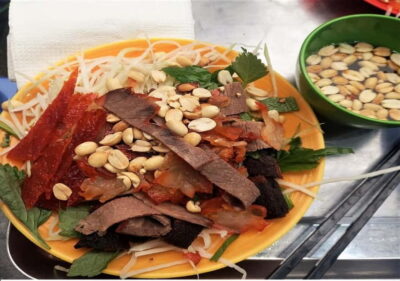
Street Food Tour with Train Street & Hidden Alleyways
Read our review →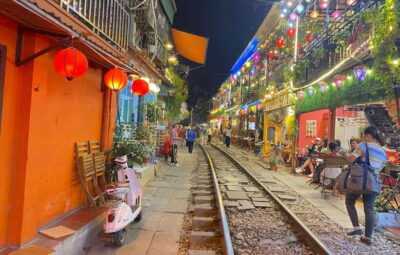
Guided Street Food Tour with Train Street Experience
Read our review →
Hanoi City Tour Highlight, Train Street Combine visit Countryside
Read our review →
Hanoi Walking Street Food Tour with Train-Street Visit
Read our review →
Hanoi Jeep City Highlight, Backstreet, Train Street, Countryside
Read our review →