
REVIEW · WALKING
Timisoara All in One – Walking and Tram Tour
Timisoara’s story comes into focus as you move from its former Ottoman core to Austrian fortifications and grand Baroque squares. This private walking and transport tour covers more ground than a standard city stroll, including places beyond the central streets.
I like the personal pace, especially for photography or mobility needs, and I like the way the route connects several eras instead of treating Timisoara as just a pretty square. Guides named Sergiu and Ludovic are associated with especially strong English, patient explanations, and practical help. The main drawback is that the Banat Museum is currently closed, and the exact tram portion of the experience is not clearly detailed.
Key points to know before booking
- Private transport saves your legs: You can reach more of Timisoara than you would on foot alone, while still exploring the main squares by walking.
- Five central stops cover several centuries: The route links Ottoman Timisoara, Austrian military power, Baroque design, and Art Nouveau buildings.
- The Banat Museum is closed: You discuss the castle that houses it rather than entering the museum, and admission is not included.
- The guide sets the pace: You have time for photographs, questions, and breaks rather than being pushed through a large group schedule.
- The tour lasts four to five hours: It begins at 9:00 am and returns to the meeting point on Strada Alba Iulia 2.
- The price suits a private group: At $92.92 per person, value depends on how many people share the booking and how much you value private transport and personal attention.
Why this route gives you a useful first look at Timisoara
Timisoara can seem easy to cover at first. The central squares are close together, and you can walk between several landmarks in a short time. But the city makes more sense when you understand how Ottoman rule, Austrian rebuilding, military defenses, and later architectural fashions changed the same streets.
That is the main strength of this experience. You are not simply taken from one photogenic square to another. The guide uses each stop to explain a different layer of the city. You begin with the castle connected to the Banat Museum, then move through Ottoman-era stories, an old mosque site, an Austrian bastion, and Timisoara’s most celebrated square.
The mix of walking and private transport also matters. The tour promises more coverage than a walking-only outing, along with visits to important districts outside the city center. The supplied route details focus on five central stops, so you should confirm how much time will be spent outside the core if that is your main reason for booking.
This is a private activity, meaning only your own group takes part. That gives you a better chance to ask about details that catch your attention. It also makes the tour more practical for mixed groups, since the guide can adjust the pace more easily than on a fixed large-group walk.
More Tram and Streetcar Tours in the world:
- Mallorca: Island Tour with Boat, Tram & Train from the South
★ 4.4 · 3,888 reviews - Lisbon: 72/96-Hour Hop-On Hop-Off Bus, Tram & Boat Ticket
★ 4.4 · 2,170 reviews - From Cape Town: Franschhoek Wine Tram Hop-on Hop-off
★ 4.7 · 1,972 reviews
Starting at the Banat Museum castle
The first stop is the Banat Museum, but there is an important change to expect: the museum is currently closed. You do not enter for a museum visit. Instead, the guide discusses the castle that houses the museum.
That may disappoint you if you were hoping for indoor exhibits, especially on a rainy morning. Still, the castle gives the guide a useful opening point for explaining the region and the role of the building. The stop is listed as about five minutes, so it functions more as an introduction than a full visit.
Admission is not included, though the current closure means this is not a normal ticketed museum stop at present. If museum collections are a major reason you are choosing the tour, check the operating status before you book and keep your expectations focused on exterior interpretation.
I would treat this stop as a short orientation. The real substance of the tour comes later, when you reach the squares and bastion where the city’s changing political and architectural identity is easier to see.
Libertatii Square and the Ottoman chapter
At Libertatii Square, the guide spends about 20 minutes discussing Timisoara during the Ottoman occupation. This is one of the more useful parts of the route because it gives context to the city before Austrian rule reshaped its center.
You are not just looking at a square and hearing dates. You are being asked to picture Timisoara as a frontier city with a very different political and religious setting from the one you see today. That background helps explain why later Austrian buildings and military works feel so deliberate.
The square is free to visit, and the stop leaves enough time for questions and photographs. If you like urban stories, this is likely to be one of the stronger sections of the morning. The guide can connect what is no longer visible with the streets and spaces that remain.
I would bring a few questions of your own here. Ask how the Ottoman period changed the city’s layout, which traces remain, and how the Austrian authorities altered the center afterward. Since this is a private tour, you have a better chance of getting an answer tailored to your interests.
Saint George’s Square and the lost central mosque
Saint George’s Square is a shorter stop, about 10 minutes, but it adds an important detail to the Ottoman story. The guide explains that a central mosque stood here around 400 years ago.
This is the sort of information that can change how you read a present-day city. The square may look like a European urban space shaped mainly by later architecture, yet the guide points to a religious building that once played a central role here. The absence of the mosque becomes part of the story.
Because the stop is brief, do not expect a long lecture or an indoor visit. You are mainly using the square as a place to understand what once occupied the site. I like this approach because it focuses on change rather than presenting Timisoara as frozen in one period.
Saint George’s Square also breaks up the walking with a compact stop. If you are taking photographs, you should have enough time to make a few images, but the tour is not designed as a dedicated photography session. The guide can allow extra time when the group needs it, as long as the overall schedule remains workable.
More Walking Tours in the world:
- Old Quebec Classique Walking Tour with Funicular
★ 5.0 · 1,317 reviews - Plitvice Lakes: Guided Walking Tour with Train and Boat Ride
★ 4.4 · 1,093 reviews - Hanoi Walking Street Food Tour with Train-Street Visit
★ 5.0 · 857 reviews - Lyon Highlights & Secrets Walking Guided Tour (small group) including Funicular
★ 5.0 · 831 reviews
Maria Theresia Bastion and Austrian military Timisoara
The Maria Theresia Bastion receives about 20 minutes. Built by the Austrians in 1732, it shows how seriously the city’s defenses were treated after the Ottoman period.
This is the most clearly military stop on the route. Rather than seeing only elegant squares, you get a sense of the defensive structure behind Timisoara’s development. The bastion gives the guide a solid setting for explaining Austrian rule and the city’s strategic role.
The stop is free, and you explore the bastion rather than simply pausing for a quick photograph. Twenty minutes is enough for an overview, though not enough for a lengthy visit if you want to inspect every corner. You should listen for the link between the fortifications and the later city center. The route is strongest when the guide makes those connections clear.
For me, this is also where private transport earns its keep. A four to five hour tour that includes several walking stops can become tiring, especially in poor weather or for anyone with a knee problem. One participant specifically received help from Ludovic when dealing with a bad knee, and umbrellas were provided when rain began. That does not turn the activity into an accessible tour in the formal sense, but it suggests a guide willing to respond to ordinary travel problems.
Unirii Square, where Timisoara’s styles meet
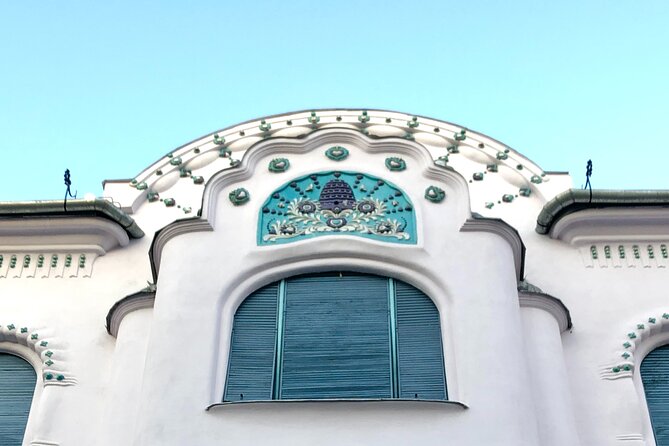
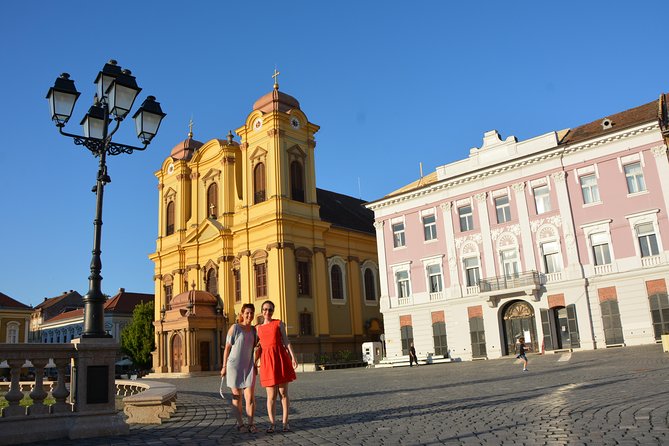
Unirii Square is the final listed stop and receives about 20 minutes. It is described as the former city center and one of Timisoara’s most beautiful squares. The design is largely Baroque, but the surrounding buildings also include some of the city’s finest Art Nouveau work.
This is likely to be the visual high point of the route. The square gives you a chance to compare architectural styles in one place rather than seeing them as isolated examples. The guide can point out how the formal Baroque setting works alongside the more decorative Art Nouveau facades.
You will want time for photographs here. The tour is not supposed to rush you, and the guide can leave room for images, which is valuable if photography is your main interest. Still, 20 minutes is a guided overview, not a full architectural study. If you want to examine every facade, return later on your own.
Unirii Square also provides a natural ending because it brings together the themes introduced earlier. Ottoman Timisoara, Austrian control, military planning, Baroque urban design, and later artistic fashion all help explain the city you see today.
Walking, private transport, and the tram question
The experience is called a walking and tram tour, but the confirmed inclusion is private transportation. The detailed stop information does not specify the tram vehicle, tram route, or length of any tram ride. That distinction matters if riding a historic or public tram is the main attraction for you.
You should book this primarily as a private city tour that combines walking with transport. The transport lets you cover more ground and reach districts beyond the immediate center without spending the entire morning on foot. The walking portions then give you time to stand in the squares and hear the explanations properly.
At about four to five hours, the pace should feel substantial without taking your whole day. The start time is 9:00 am, and the activity returns to the original meeting point. You still have the rest of the day for a relaxed meal, independent exploring, or a return to Unirii Square for photographs.
Wear shoes suitable for city walking and bring weather protection. The guide supplied umbrellas during rain for one outing, but you should not rely on that as a guaranteed service. Food and drinks are not included, so plan a snack or meal separately.
The guide’s role makes the private format worthwhile
The strongest part of a private tour is not simply having a vehicle. It is having someone who can adjust the experience to your group.
The guides connected with this activity include Sergiu and Ludovic. Sergiu is noted for very clear English, broad knowledge of Timisoara, and patience when explaining complicated points. Ludovic is associated with practical help during rain and with adapting the pace for a guest with a bad knee.
Clear English matters here because the route depends on explanation. A quick list of dates would not do much for the old mosque site or the Austrian bastion. You want a guide who can explain why the city changed and answer questions without making you feel rushed.
The personal pace is useful for photographers, older family members, and anyone who prefers conversation over a fixed script. Children can take part, but they must be accompanied by an adult. Most people can participate, though the tour still includes walking and should be judged against your own comfort level.
Is $92.92 per person good value?
The listed cost is $92.92 per person. That is not a bargain if you are a solo visitor comparing it with a free walk around the central squares. The value improves when several people share the private booking and when you want transport, a dedicated guide, and a half-day introduction in English.
You are paying for more than admissions, since nearly all listed stops are free. The cost covers private transportation and the guide’s time. It also buys flexibility that is hard to get in a large group, including time for photographs and questions.
The closed Banat Museum weakens the value slightly if you expected an indoor museum visit. The exact tram details are another point to clarify before paying. On the other hand, the route covers several periods of Timisoara’s past in one morning, and the private format can be especially useful if you have limited time in the city.
Group discounts are available, which may make the price more attractive for families or friends traveling together. Since only your group participates, you should calculate the total cost across your party rather than judging the per-person figure alone.
Who should book this Timisoara tour?
I would choose this experience if you have one day in Timisoara and want a structured introduction without giving up personal attention. It is also a good match if you want to understand the city’s Ottoman and Austrian layers instead of simply checking off its prettiest squares.
Photographers should appreciate the time allowed for images, though you may want to return independently to Unirii Square for a slower look. Families and small groups can benefit from private transport and the ability to ask questions without holding up strangers.
This tour is less suitable if your top priority is entering the Banat Museum, since it is currently closed. It may also disappoint you if you expect a long, clearly defined tram ride. Confirm that detail first if the tram is central to your plans.
Cancellation is free when you cancel at least 24 hours before the 9:00 am start. Changes or cancellations made within 24 hours are not accepted for a refund. Confirmation arrives within 48 hours of booking, subject to availability.
Should you book it?
Book this tour if you want a private, English-language overview that links Timisoara’s Ottoman past with Austrian defenses and later Baroque and Art Nouveau design. The combination of transport and walking gives you a practical way to see more without turning the morning into a march.
I would be more cautious if you mainly want museum interiors or a guaranteed tram experience. For everyone else, the tour offers a useful first orientation, especially when the guide is as patient and adaptable as Sergiu or Ludovic. The personal format, photo-friendly pace, and strong historical focus make the $92.92 price easier to justify for a small group.
FAQ
Where does the tour start?
The tour starts at Strada Alba Iulia 2, Timișoara 300077, Romania.
What time does the tour begin?
The start time is 9:00 am.
How long does the experience last?
The tour lasts approximately four to five hours.
Where does the tour end?
The activity ends back at the meeting point.
Is this a private tour?
Yes. Only your group participates in the activity.
Is the tour offered in English?
Yes. The tour is offered in English.
Is private transportation included?
Yes. Private transportation is included.
Is food included?
No. Food and drinks are not included.
Can children join the tour?
Yes, but children must be accompanied by an adult.
Is the Banat Museum open during the tour?
The Banat Museum is currently closed. The guide discusses the castle that houses the museum instead, and admission is not included.
Can I cancel for a full refund?
Yes. You can receive a full refund if you cancel at least 24 hours before the experience start time. Cancellations made less than 24 hours before the start are not refunded.
Just added around the world
- Zurich: Audio Guided City Tour and Train to “Top of Zurich”★ 4.2 · 65 reviews
- Zermatt Village & Gornergrat Railway Tour | From Bern★ 5.0 · 2 reviews
- Zagreb: Plitvice With Secured Tickets, Boat And Train Ride★ 4.6 · 15 reviews
- Zagreb: Private Walking Tour with Funicular Ride & Transfers★ 5.0 · 2 reviews
- York Day Rail Tour from London including Hop-on Hop-off tour★ 5.0 · 3 reviews
- Xi’an: Maiji Grottoes & Fuxi Temple Day Trip by Bullet Train★ 5.0 · 2 reviews
- Zagreb: Group walking tour of Zagreb (funicular included)★ 4.9 · 16 reviews
- Winter Tour Viking Village, Nærøyfjord Cruise & Flåm Railway★ 4.6 · 26 reviews
Walking Tours, compared.
Old Quebec Classique Walking Tour with Funicular
Read our review →
Plitvice Lakes: Guided Walking Tour with Train and Boat Ride
Read our review →
Hanoi Walking Street Food Tour with Train-Street Visit
Read our review →
Lyon Highlights & Secrets Walking Guided Tour (small group) including Funicular
Read our review →
Versailles Château and Gardens Walking Tour from Paris by Train
Read our review →
Quebec City: Old Quebec Classic Walking Tour with Funicular
Read our review →Browse the lists this tour appears in