
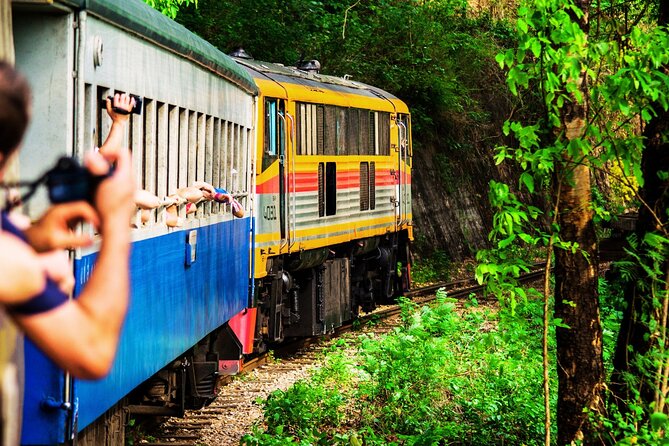
REVIEW · BANGKOK
From Bangkok: Death Railway & Hellfire Pass Tour with Lunch
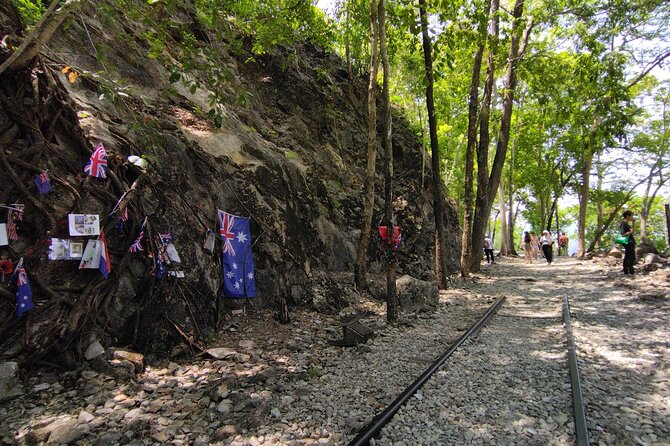
The most powerful part of this long day is Hellfire Pass, where you walk through the rock cutting made by forced labor during World War II. The quiet trail and memorial museum put a human scale on a story that can feel distant in a textbook.
I like the mix of solemn history and scenery, especially the train ride along the Death Railway and the chance to visit several sites that explain different parts of the same story. I also like that transport, lunch, admissions, insurance, and the train ticket are bundled into the $82 price.
The main drawback is time. Twelve hours sounds generous, but Bangkok traffic and the distance to Kanchanaburi leave little room for lingering. Some parts can feel rushed, especially if the museum and walking trail are both given only about 30 to 40 minutes.
Key points to know before booking
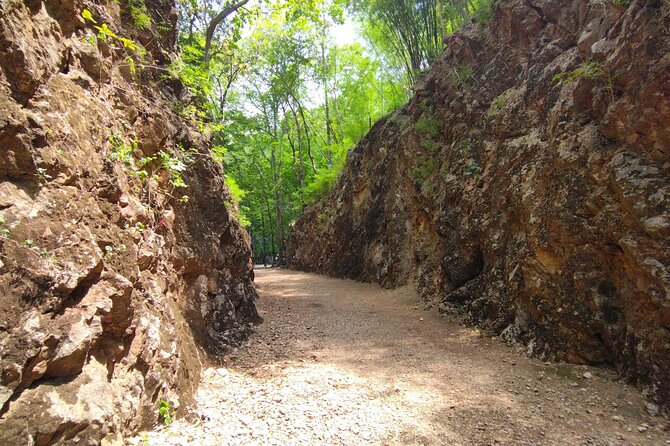
- Hellfire Pass is the emotional center: Walk the memorial trail and see the rock cutting where construction was carried out under brutal conditions.
- The day covers several connected sites: You visit the bridge, railway, museums, cemetery, and the Hellfire Pass area rather than seeing only one landmark.
- A train ticket is included: The ride near Nam Tok and Wang Pho adds scenery and a change of pace after the museums.
- The group is limited to 15 people: This is more manageable than a large coach tour, though the exact pace still depends on the group.
- Lunch and admission fees are covered: The price includes an air-conditioned vehicle, English-speaking guide, food, train fare, insurance, and taxes.
- The schedule needs realistic expectations: You should treat this as an overview of Kanchanaburi, not a slow, in-depth visit to every site.
Why Hellfire Pass deserves the long ride from Bangkok
Kanchanaburi is not a quick hop from Bangkok. The journey takes much of the day, but Hellfire Pass gives the trip a clear purpose. This was one of the most difficult sections of the Thailand-Burma Railway, built during World War II by Allied prisoners of war and Asian laborers under terrible conditions.
At the Hellfire Pass Interpretive Centre, you begin with background on the railway and the people forced to build it. The memorial walking trail then takes the story outdoors. You walk through the cutting itself, where the scale of the work becomes easier to grasp than it is in a museum display.
You have about an hour here, including admission. That is enough to see the centre and walk part of the trail, but not enough for a slow visit with long pauses at every display. Wear comfortable shoes and plan to walk at a thoughtful, steady pace rather than treating this as a quick photo stop.
The setting is quiet, which matters. The point is not spectacle. The rock walls, rough path, and sparse memorial setting make the place feel personal and serious. I would give Hellfire Pass your full attention, even if that means taking fewer photographs elsewhere.
More Death Railway and River Kwai Tours in Bangkok:
- From Bangkok: Death Railway & Hellfire Pass Tour with Lunch
★ 4.6 · 931 reviews - Bridge on the River Kwai and Thailand-Burma Railway Tour
★ 4.5 · 658 reviews - Bridge on the River Kwai and Thailand-Burma Railway Guided Tour
★ 4.5 · 353 reviews
The Death Railway train ride near Nam Tok
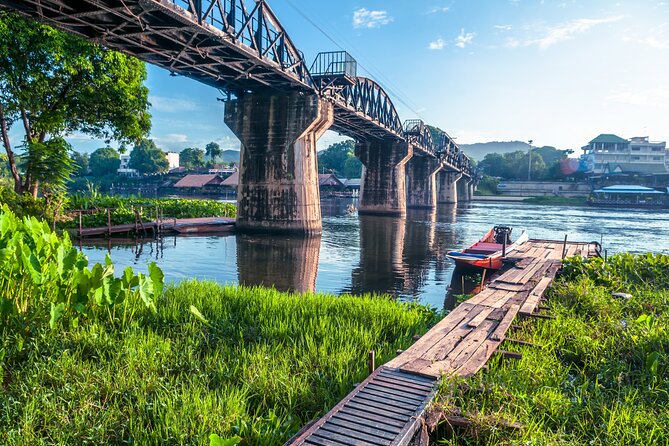
The train portion gives the day a needed change of mood. After the memorial sites, you board a train for a section of the historic railway near Nam Tok. The ride lasts about 1 hour and 40 minutes according to the planned schedule, though the exact running time can depend on the day’s operations.
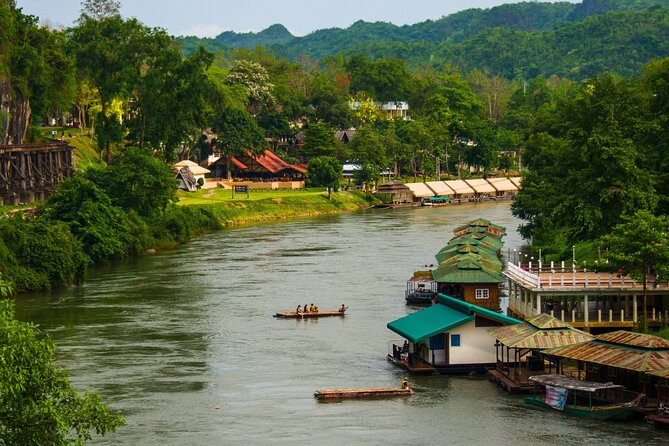
This is not simply transport between attractions. The railway follows the River Khwae area and passes through scenery that contrasts sharply with the history behind the line. You see how the route cuts through the countryside and why construction was so demanding.
A train ticket is included, which adds real value to the package. You do not have to arrange a separate fare or work out the railway on your own after a long morning. It also gives you time to sit, watch the views, and let the information from Hellfire Pass settle.
The train ride is one of the more enjoyable parts of the day, but keep expectations sensible. This is a historic railway journey, not a luxury scenic train. You are taking a working train through a famous section of railway, with comfort and timing shaped by local operations.
Lunch is also part of the package, with Wang Pho identified as the lunch stop in the schedule. The meal breaks up the day well, and the timing places food near the train experience. Since the tour covers a large area, the included lunch saves you from having to search for a place to eat while watching the clock.
River Khwae Bridge: famous, brief, and worth context
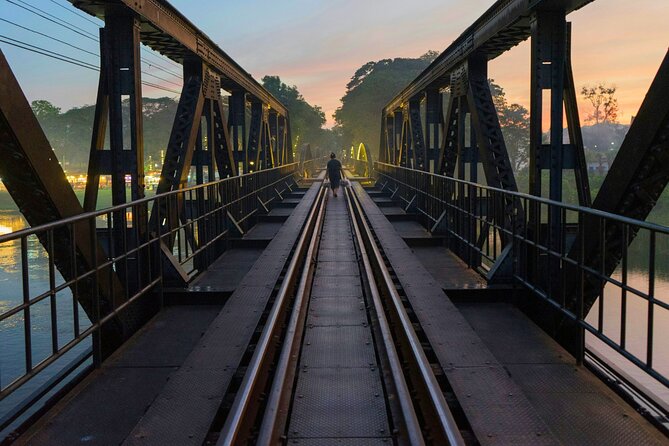
The bridge over the River Khwae is the best-known symbol of the railway. You have about 30 minutes at the River Kwai Bridge station area, with no separate admission fee listed.
This is a short stop, so you should see it as a chance to stand on or near an important landmark rather than a full historical visit. The bridge itself is visually striking, but its meaning becomes clearer after the museum and Hellfire Pass explain the labor, disease, hunger, and loss connected to the railway.
If you arrive here early in the day, the bridge can feel like an isolated photo stop. I prefer it after some context, because then you can connect the structure in front of you with the wider railway project. The order of stops may vary, so ask your guide when you will receive the main explanation.
The bridge is also one place where the schedule can feel tight. Thirty minutes gives you time to look around, take photographs, and listen to an introduction. It does not allow for a long pause or a detailed exploration of every nearby display.
Museums that give the story its human scale
The tour includes two museum visits, each with a different purpose.
The Hellfire Pass Interpretive Centre focuses on the construction of the railway and the suffering behind the Hellfire Pass section. Its location beside the walking trail makes the displays especially useful, because you can immediately connect what you see indoors with the physical work outside.
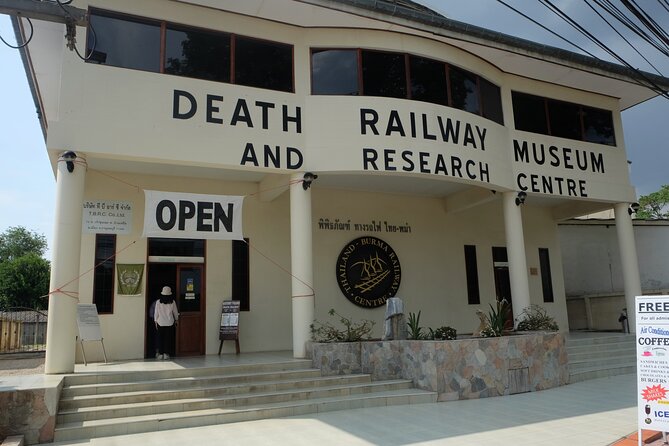
The Death Railway Museum and Research Centre in Kanchanaburi gives a broader account of the Thailand-Burma Railway. It covers the experiences of Allied prisoners and Asian laborers and helps explain why the railway became associated with such a high death toll.
Allow time to read. One of the strongest practical criticisms of this tour is that the museum visit may be limited to around 40 minutes, followed by roughly 30 minutes of walking. That is enough for a guided overview, but it can be frustrating if you want to study the displays closely.
The order matters too. If you visit the cemetery before the research centre, you may see names and dates without having the full context for why deaths rose at certain points in the railway’s construction. If the schedule allows, ask the guide to explain the larger story before the cemetery stop. This small adjustment can make the later memorial visit more meaningful.
A guide named Alex was praised for helping one tour run smoothly, but guides can vary. Your English-speaking guide should connect the stops rather than simply point out buildings. If you want more detail about labor conditions, the railway’s construction dates, or the difference between Allied prisoners and Asian laborers, ask directly.
More Train Tours with Lunch in Bangkok:
- Maeklong Railway & Floating Market Tour (Private & All-Inclusive)
★ 5.0 · 108 reviews - Delhi to Agra and Taj Mahal Private Day Trip by Express Train with Lunch
★ 5.0 · 1,389 reviews - All Inclusive Taj Mahal & Agra Tour by Superfast Train From Delhi
★ 5.0 · 918 reviews - Jaipur Day Trip from Delhi by Car or Train – All Inclusive
★ 5.0 · 663 reviews
Kanchanaburi War Cemetery and the weight of the visit
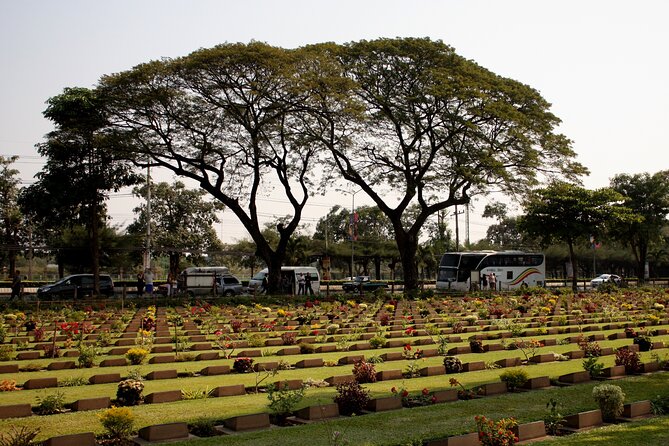
The Kanchanaburi War Cemetery is a quiet and carefully maintained memorial for Allied prisoners of war and laborers who died during construction of the railway. You have about an hour here in the planned schedule.
This is not a stop to rush through. Rows of graves make the human cost clear, and the cemetery can be emotionally intense after the museum visits. I recommend slowing down, reading a few names, and allowing the place to remain quiet rather than treating it as another item on a sightseeing checklist.
The cemetery also helps correct a common misunderstanding. The railway’s story is not only about famous bridges and wartime engineering. It is about people who suffered and died while working under extreme conditions. The cemetery gives that fact a personal presence.
Because the day includes several attractions, your time here may depend on how smoothly earlier stops run. If the group arrives late, you may need to choose between reading more carefully and keeping up with the schedule. The tour is strongest when the guide protects enough time for this stop.
How the 12-hour schedule works in practice
The tour starts at about 7:00 a.m. and lasts roughly 12 hours. Pickup and drop-off are offered for hotels in areas including Chatuchak, Lard Pao, Bang Khen, Don Muang, Suvarnabhumi, and other listed zones.
That wide pickup area is useful if you are staying outside central Bangkok, but it can add time at the start and end of the day. Bangkok traffic can also affect the return journey. One practical suggestion is to avoid planning a flight, show, dinner reservation, or train connection soon after the stated finish.
Transport is by air-conditioned vehicle, and the maximum group size is 15 people. That is a reasonable middle ground. You get the convenience of a guided tour and shared transport without being placed in a huge coach group. Still, 15 people can take time to gather at each stop, particularly when the schedule is already close.
The guide may not always accompany the group all the way back to each hotel. In those cases, the driver is responsible for getting you safely to your hotel. This is worth knowing if you expect a guide-led conversation during the full return trip.
The day includes a fair amount of sitting, walking, and moving between stops. You should be comfortable with an early start and a long return. Most people can take part, but the schedule is not designed for a slow, flexible pace.
Is $82 good value for this Kanchanaburi trip?
At $82 per person, the value depends on how much organization you want to avoid. The package includes air-conditioned transport from Bangkok, hotel pickup and drop-off where available, an English-speaking guide, lunch, train fare, attraction admissions, insurance, and taxes.
Paying for these pieces separately would require planning transport to Kanchanaburi, arranging the railway ticket, finding food, and coordinating several sites spread across the province. The tour also removes the need to drive or navigate after a long day.
The price is especially fair if you want an overview in one day. You see Hellfire Pass, both museum experiences, the bridge, the cemetery, and a railway section without having to spend a night in Kanchanaburi.
The trade-off is depth. You are paying for broad coverage rather than long museum visits or quiet time at every memorial. If your main interest is military history and you want to read every panel, a private tour or overnight stay would give you more control. If you want the key locations handled in one trip, the bundle makes sense.
Tips are not included, so plan for that extra cost if you wish to thank the guide or driver. Free cancellation is available if you cancel at least 24 hours before the start time. Changes or cancellations made inside that period are not refunded.
Who will appreciate this tour most
I would recommend this experience to you if you want the major Kanchanaburi sites in one day and prefer not to arrange transport yourself. It suits history-minded visitors, first-time visitors to the region, and anyone who wants Hellfire Pass explained before walking the trail.
It also works well if you want a balance of serious memorials and a scenic train ride. The train, lunch, and bridge keep the day from becoming a series of indoor exhibits, while the museums and cemetery give the journey substance.
You may want another option if you dislike early starts, long road journeys, or fixed schedules. It is also not ideal if you need extensive time at each museum. The tour has a lot to cover, and the pace can feel hurried when traffic or delays reduce the time at a stop.
Dates matter as well. Hellfire Pass is closed on December 5, 24, 25, 26, 27, and 31, 2025, plus January 1, 2026. On those dates, the alternative attraction is Wat Tham Suea, also known as Tiger Cave Temple, in Kanchanaburi. If Hellfire Pass is the reason you are booking, check your date carefully.
Should you book the Death Railway and Hellfire Pass tour?
Book it if you want a practical, well-packed introduction to Kanchanaburi from Bangkok. The strongest reasons are the combination of Hellfire Pass and the train ride, the included transport and admissions, and the chance to place the River Khwae Bridge and war cemetery in a wider story.
Go in expecting a long day, not a leisurely one. Ask the guide for historical context before the cemetery, protect your time at Hellfire Pass, and accept that some museum visits may be brief. With those expectations, this is a moving and useful day trip that connects real places to one of the darkest chapters of World War II.
FAQ
How long is the tour from Bangkok?
The tour lasts approximately 12 hours and starts at about 7:00 a.m.
Is hotel pickup and drop-off available?
Yes. Pickup and drop-off are available for hotels in areas including Chatuchak, Lard Pao, Bang Khen, Don Muang, Suvarnabhumi, and other listed locations.
What is included in the tour price?
The price includes an air-conditioned vehicle, lunch, an English-speaking guide, travel insurance, all fees and taxes, attraction admissions, and the train ticket.
How many people can join the tour?
The maximum group size is 15 people.
What happens if Hellfire Pass is closed?
Hellfire Pass is closed on December 5, 24, 25, 26, 27, and 31, 2025, and January 1, 2026. Wat Tham Suea, or Tiger Cave Temple, is offered as the alternative attraction on those dates.
Can I cancel for a full refund?
Yes. You can cancel at least 24 hours before the experience start time for a full refund. Cancellations or changes made less than 24 hours before the start time are not accepted for a refund.
More Trips with Lunch in Bangkok
- Bangkok: Floating Market, River Kwai, Railway Tour w/ Lunch
★ 4.4 · 7 reviews - Historic Kanchanaburi: Train, Boat & Skywalk + Lunch From Bangkok
★ 4.5 · 3 reviews - Historic Kanchanaburi:Train, Boat, Skywalk from Bangkok(No Lunch)
★ 5.0 · 2 reviews - Montserrat & Cogwheel Train, Gourmet Wine Tasting & Tapas/Lunch
★ 5.0 · 6,290 reviews
Just added around Bangkok
- Floating & Railway Markets and Erawan Waterfall [Optional Luxury]★ 5.0 · 43 reviews
- Small Group: Kanchanaburi Death Railway, Erawan Waterfall and Elephant★ 4.0 · 3 reviews
- Floating Market & Railway Market near Bangkok★ 4.0 · 5 reviews
- Historic Kanchanaburi: Train, Boat & Skywalk + Lunch From Bangkok★ 4.5 · 3 reviews
- Railway Market, Floating Market and After the Rain Cafe★ 5.0 · 16 reviews
- Maeklong & Damnoen Saduak Markets: Railway & Floating Market Tour★ 4.0 · 17 reviews
- Historic Kanchanaburi:Train, Boat, Skywalk from Bangkok(No Lunch)★ 5.0 · 2 reviews
- Private tour : Railway & Floating Market and the Bridge over river Kwae★ 5.0 · 2 reviews
Bangkok Train Tours, compared.
Damnoen Saduak Market and Maeklong Railway Market
Read our review →
The Old Siam: Damnoen Saduak and Maeklong Railway Market
Read our review →
Half-Day Railway Market and Floating Market Tour in Thailand
Read our review →
Damnoen Saduak, Train Market & Mahanakhon Day Trip
Read our review →
Damnoen Saduak Floating Market and Maeklong Railway Market Tour
Read our review →
Day Trip to Bangkok Floating Market & Maeklong Railway
Read our review →
Railway and Floating Market Tour with Dragon Temple
Read our review →
Browse the lists this tour appears in