
REVIEW · BANGKOK
Private Historic River Kwai Death Railway, War Cemetery and Hellfire Pass Tour
The most sobering part of this private River Kwai tour is Hellfire Pass, where a rough walking trail leads through a railway cutting made by prisoners of war and Asian laborers during World War II. The day also brings you to the Kanchanaburi War Cemetery, the Death Railway, Tham Kra Sae cave, and the famous bridge over the River Kwai.
I like the one-to-one format, since your group has its own air-conditioned vehicle and guide rather than following a large crowd. I also like that lunch, bottled water, entrance fees, and hotel transfers are included, which makes a long day outside Bangkok easier to manage. The drawback is the distance: you should expect a very early start and a road day that can stretch toward ten hours, with roughly three hours each way in traffic.
Key points to know before booking
- Hellfire Pass is the emotional center: Allow two hours for the interpretive centre and walking trail.
- The private vehicle gives you breathing room: Only your own group takes part, with room for questions and some schedule flexibility.
- The day covers five important sites: The war cemetery, Hellfire Pass, Death Railway Museum, Tham Kra Sae, and River Khwae Bridge.
- The 6:30 a.m. start matters: Bangkok traffic and the long drive to Kanchanaburi make an early departure useful.
- Lunch and entry costs are covered: You pay $162.40 per person for transport, a guide, food, water, and included admissions.
- The walking is moderate, not effortless: You need enough fitness for the Hellfire Pass trail and a walk along the railway.
Why this Kanchanaburi day trip matters
Kanchanaburi is not a quick side trip from Bangkok. It is a full-day outing built around a painful chapter of World War II, when the Thai-Burma Death Railway was constructed under brutal conditions. The route links several places, each showing a different part of that story.
I find the order of the day useful because it moves from a quiet cemetery to the railway works themselves, then on to the bridges and river. You are not seeing one isolated monument. You are putting together the scale of the project, the human cost, and the way the railway still shapes the area.
The private setup matters most here. These are places where you may want to stop, ask a question, or take a little time before moving on. A guide such as Nan or Peter can help connect the sites, though the quality of the day will still depend on how much historical explanation your assigned guide provides.
The tour is priced at $162.40 per person. That is not the cheapest way to reach Kanchanaburi, especially since several sites have no admission charge and you could hire a driver for less. You are paying for convenience, a private vehicle, a guide, lunch, water, hotel transfers, and a planned route that covers a lot in one day.
More Death Railway and River Kwai Tours in Bangkok:
- From Bangkok: Death Railway & Hellfire Pass Tour with Lunch
★ 4.6 · 931 reviews - Bridge on the River Kwai and Thailand-Burma Railway Tour
★ 4.5 · 658 reviews - Bridge on the River Kwai and Thailand-Burma Railway Guided Tour
★ 4.5 · 353 reviews
Leaving Bangkok at 6:30 a.m.
The early departure is not a small detail. Kanchanaburi is far enough from Bangkok that traffic can turn a simple drive into a very long one. A 6:30 a.m. start gives you the best chance of reaching the first sites with enough time for the planned stops.
You will ride in an air-conditioned vehicle, a real benefit in Thailand’s heat and humidity. The transport is private, so you are not sharing the day with a large mixed group. That can make the long drive easier, especially if your party wants to talk, rest, or ask the guide questions along the way.
The full experience lasts about ten hours. One account of the day describes roughly three hours of driving in each direction, so set your expectations accordingly. This is not a relaxed afternoon excursion. It is a serious day out, but the long ride is the price of seeing Hellfire Pass and the railway sites from Bangkok.
Lunch is included, along with bottled water. You do not need to pack a meal, although the tour details do not specify the restaurant, menu, or exact lunch time. The practical advantage is simple: you can focus on the sites without arranging food during a tightly scheduled day.
Kanchanaburi War Cemetery and the cost of remembrance
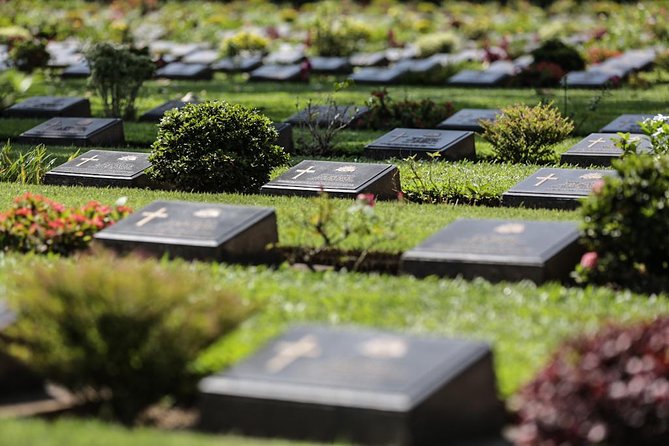
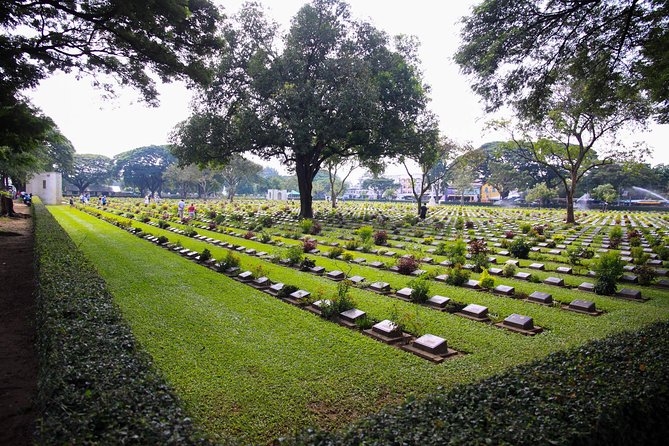
The first stop is Kanchanaburi War Cemetery, where 6,982 Allied prisoners of war who died during construction of the Thai-Burma Death Railway are buried. It is a carefully maintained place, and its quiet order contrasts sharply with the conditions faced by the men whose names are recorded there.
You have about 30 minutes here. That is enough for a respectful walk through the grounds and time to read some of the inscriptions, but it is not a long cemetery visit. If you care deeply about military history, you may wish the schedule allowed more time. The guide can help place the cemetery in the wider story, but you should also expect a brief stop rather than a full lecture.
This is one of the places where the private format can help. You can move at your own pace within the available time, rather than waiting for a large group to gather. The cemetery is also listed with free admission, so its value comes from the setting, the guide’s explanation, and the chance to pause before the more active railway stops.
Two hours at Hellfire Pass
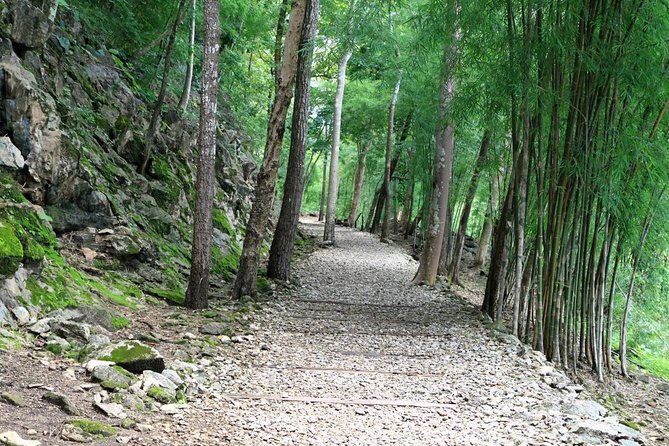
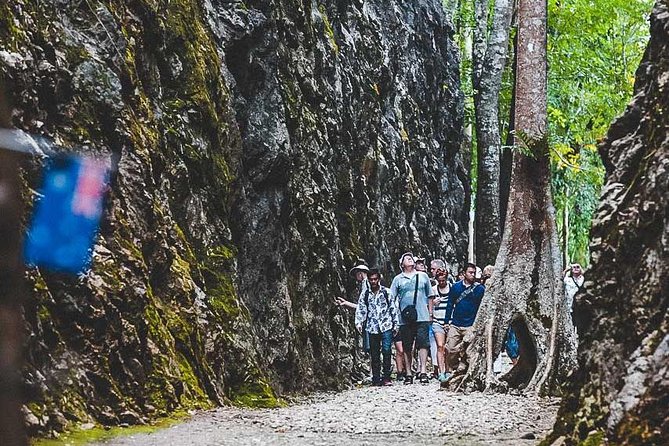
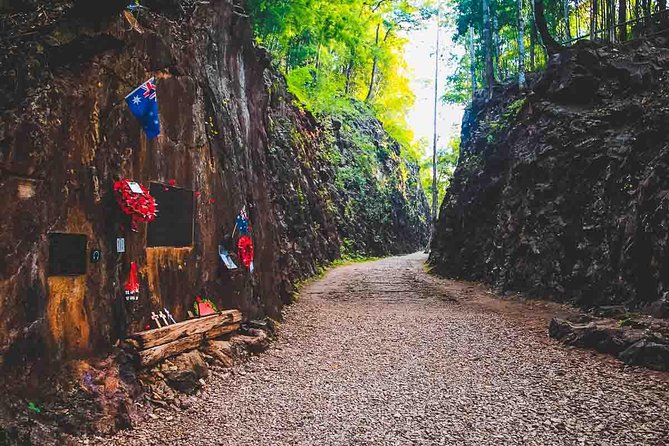
Hellfire Pass is the main reason to choose this particular tour instead of a basic bridge visit. The railway cutting was made under terrible wartime conditions, and the site is linked to the deaths of more than 16,000 Allied prisoners and countless Asian laborers.
Your two-hour stop includes the Hellfire Pass Interpretive Centre and Memorial Walking Trail. The centre gives the historical background, while the trail takes you into the cutting itself. Walking through the place where the railway was forced through the rock makes the scale of the work easier to grasp than a museum display alone.
You should bring sensible footwear and be ready for a moderate physical outing. The tour requires enough fitness for the trail, and the walking is one reason this experience may not suit someone looking for a mostly vehicle-based sightseeing day.
I would give Hellfire Pass your full attention. It is easy to rush through a memorial site when you have several more stops ahead, but this is where the tour asks you to slow down. The combination of the museum and trail gives the day its strongest historical focus.
The site can also feel heavy. This is not entertainment dressed up as sightseeing. The story involves forced labor, disease, exhaustion, violence, and mass death. A good guide should help you understand the facts without turning the visit into a rushed list of dates.
More History Trips in Bangkok:
- Historic River Kwai Bridge: Train Journey & Tour
★ 3.0 · 4 reviews - Historic Kanchanaburi: Train, Boat & Skywalk + Lunch From Bangkok
★ 4.5 · 3 reviews - Historic Kanchanaburi:Train, Boat, Skywalk from Bangkok(No Lunch)
★ 5.0 · 2 reviews - Prague: Hop-on Hop-Off Historical Tram Ticket for Line 42
★ 4.1 · 1,702 reviews
The Death Railway Museum and the railway itself
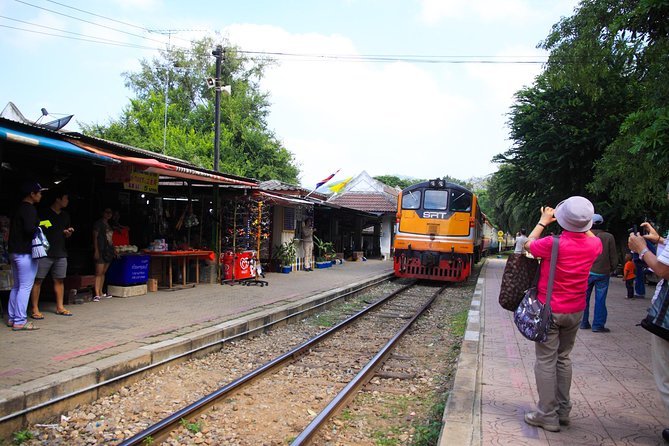
The next stop is the Death Railway Museum and Research Centre, with about 30 minutes set aside. The tour also includes a walk along the notorious railway built beside the river.
This part of the day is useful because it shifts your view from the memorial trail to the railway as a working structure. You can see how the route occupies the terrain and understand why the railway became such a major wartime project. The stop is short, so do not expect a long museum session or an exhaustive study of every object and document.
The wording of the visit suggests a mix of museum time and walking. Wear shoes that feel secure and be prepared for uneven surfaces. You are moving through a historic site, not a polished indoor attraction.
The guide’s role becomes important here. The physical railway is easy to see, but the meaning behind it is not always obvious without context. Guides including Nan and Peter have been praised for making the day informative and personal, and that kind of explanation is what turns a short railway walk into something more useful.
Tham Kra Sae Bridge and its small Buddha cave
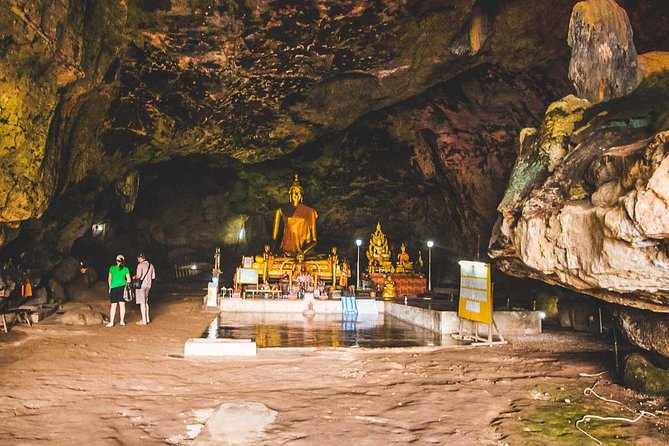
Tham Kra Sae Bridge is a short stop of about 15 minutes. It includes a cave with a Buddha image inside, and the cave was once a camp for prisoners of war during railway construction.
The stop is brief, so treat it as a compact historical pause rather than a major attraction. You will see the cave and the bridge area, but there is not enough scheduled time for a long visit. Its value comes from the connection between the physical setting and the wartime camp that once occupied it.
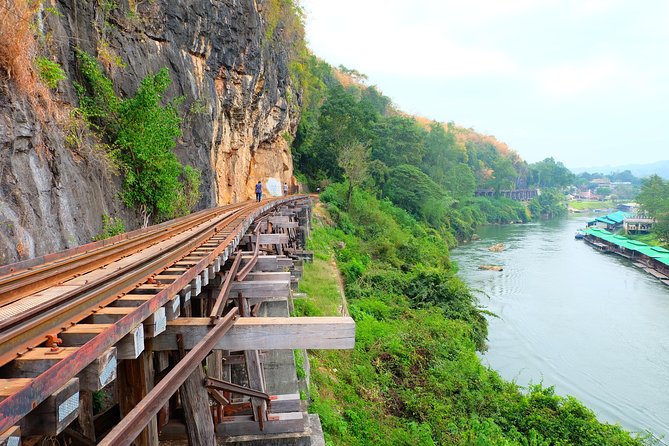
This is also one of the moments when the day’s scenery comes forward. The railway was built alongside the river, and the route gives you a different view from Hellfire Pass. You are not only reading about the line in a museum. You are seeing the route cut through and around the land.
Because the stop lasts only 15 minutes, listen carefully to the guide’s explanation before wandering off. A few minutes can disappear quickly, especially if you want to look into the cave and walk near the bridge.
Walking across the Bridge over the River Kwai
The final major stop is the famous River Khwae Bridge, often called the Bridge over the River Kwai. You have about an hour here, giving you more time than at Tham Kra Sae or the museum.
The bridge is an active reminder that wartime history is not always found in a sealed memorial. You can walk along the iron structure and look over the river, while the guide explains its link to the Death Railway and the conflict surrounding its construction.
The bridge is also the most recognizable stop of the day, but I would not make it the main reason to book. On its own, it can be a short photo stop. Paired with the cemetery, Hellfire Pass, the museum, and the railway, it becomes the closing piece of a much larger story.
An hour gives you time to walk without feeling hurried. It also provides a change of pace after the solemn cemetery and Hellfire Pass. Still, the setting can be busy and less reflective than the cemetery, so your experience may feel more like a public landmark visit than a quiet memorial.
How much value do you get for $162.40?
The price makes the most sense if you value time, privacy, and a planned day. You receive private transportation, an air-conditioned vehicle, hotel transfers, a professional guide, lunch, bottled water, and entrance fees. Your group also avoids the compromises of a large shared tour.
The price is harder to justify if you only want transportation. The war cemetery, Death Railway Museum, Tham Kra Sae Bridge, and River Khwae Bridge are listed with free admission. A driver could take you to the sites for less, and you could use the displays and signs to guide yourself.
That cheaper option also removes much of the structure. You would need to plan the route, manage the long drive, arrange lunch, and decide how much time to spend at each site. You may also miss useful links between the cemetery, railway, labor camps, and bridge.
For me, the key question is not simply private versus shared. It is guide versus driver. If your assigned guide provides clear historical context and answers questions, the extra cost has a purpose. If the guide offers little beyond transportation, the price feels high because several stops have no admission fee.
The rating is 4.6 out of 5, with 92 percent recommending the experience. That points to a strong overall result, but the mixed response also gives you a fair warning: the value depends heavily on the guide and on how much you want interpretation rather than independent sightseeing.
Who should book this tour?
I would choose this tour if you are staying in Bangkok and want to see the major Kanchanaburi WWII sites in one day without arranging each part yourself. It suits couples, families, and small groups who prefer a private vehicle and want to ask questions along the way.
It is also a good fit if Hellfire Pass is your priority. The two-hour stop gives it proper weight, rather than treating it as a quick photo opportunity. A moderate fitness level is needed because the walking trail and railway visits involve time on foot.
I would be more cautious if you dislike long road journeys. Ten hours is a substantial day, and the route can involve about three hours each way. If you have only one free day in Bangkok and want a light, easy outing, this is not the best match.
You should also think about your interest in military history. The tour is built around death, forced labor, prisoners of war, and wartime suffering. The bridge is famous, but the strongest parts of the day are the cemetery and Hellfire Pass, not simple sightseeing.
Final call: a worthwhile private day for the right reader
Book this tour if you want a private, well-organized route through Kanchanaburi and prefer having a guide connect the sites. The combination of Hellfire Pass, the war cemetery, the Death Railway, Tham Kra Sae, and the bridge gives you a fuller picture than a quick visit to the bridge alone.
Skip it if you mainly need a cheap driver or want to explore independently. Since several stops are free, the $162.40 price depends on the value you place on private transport, lunch, hotel pickup, and guided explanation.
For most people choosing between convenience and the lowest possible cost, this is the more comfortable option. Just start early, wear practical shoes, prepare for a long day in the vehicle, and approach the sites with the attention they deserve.
FAQ
What time does the tour start?
The tour starts at 6:30 a.m.
How long does the tour last?
The experience lasts approximately 10 hours.
Is hotel pickup available?
Yes. Hotel transfers are provided in an air-conditioned vehicle.
Is this a private tour?
Yes. Only your group will participate in the private tour or activity.
Is lunch included?
Yes. Lunch and bottled water are included in the tour price.
What level of fitness is required?
A moderate level of physical fitness is recommended because the tour includes the Hellfire Pass walking trail and walks along the railway and bridge.
Can I cancel for a full refund?
Yes. You can cancel at least 24 hours before the start time for a full refund. Cancellations or changes made less than 24 hours before the experience are not accepted for a refund.
Just added around Bangkok
- Floating & Railway Markets and Erawan Waterfall [Optional Luxury]★ 5.0 · 43 reviews
- Small Group: Kanchanaburi Death Railway, Erawan Waterfall and Elephant★ 4.0 · 3 reviews
- Floating Market & Railway Market near Bangkok★ 4.0 · 5 reviews
- Historic Kanchanaburi: Train, Boat & Skywalk + Lunch From Bangkok★ 4.5 · 3 reviews
- Railway Market, Floating Market and After the Rain Cafe★ 5.0 · 16 reviews
- Maeklong & Damnoen Saduak Markets: Railway & Floating Market Tour★ 4.0 · 17 reviews
- Historic Kanchanaburi:Train, Boat, Skywalk from Bangkok(No Lunch)★ 5.0 · 2 reviews
- Private tour : Railway & Floating Market and the Bridge over river Kwae★ 5.0 · 2 reviews
Bangkok Train Tours, compared.
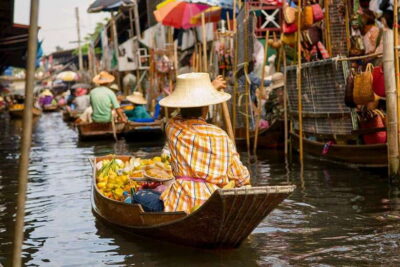
Damnoen Saduak Market and Maeklong Railway Market
Read our review →
The Old Siam: Damnoen Saduak and Maeklong Railway Market
Read our review →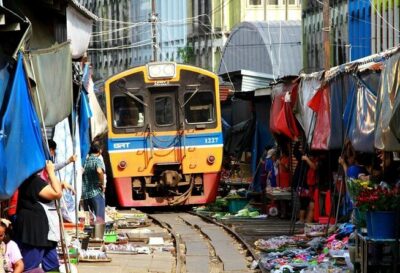
Half-Day Railway Market and Floating Market Tour in Thailand
Read our review →
Damnoen Saduak, Train Market & Mahanakhon Day Trip
Read our review →
Damnoen Saduak Floating Market and Maeklong Railway Market Tour
Read our review →
Day Trip to Bangkok Floating Market & Maeklong Railway
Read our review →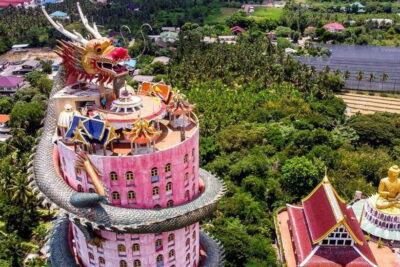
Railway and Floating Market Tour with Dragon Temple
Read our review →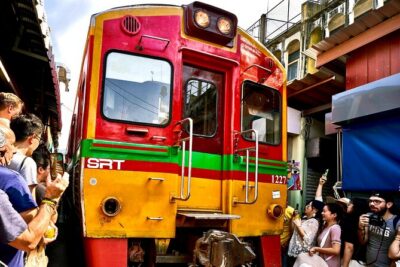
Browse the lists this tour appears in