
REVIEW · BANGKOK
Bridge over River Kwai and Hellfire Pass Tour with Train Ride
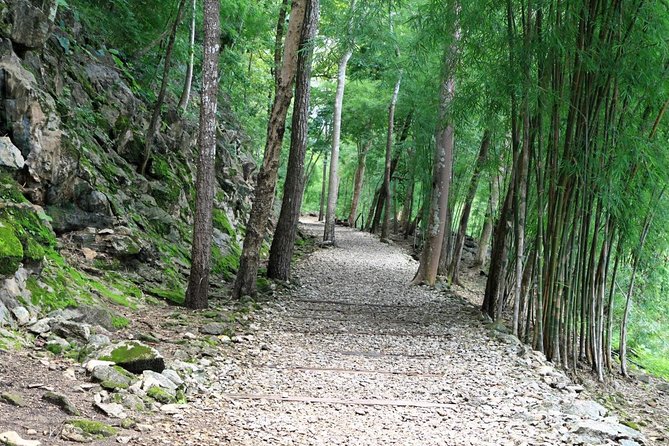
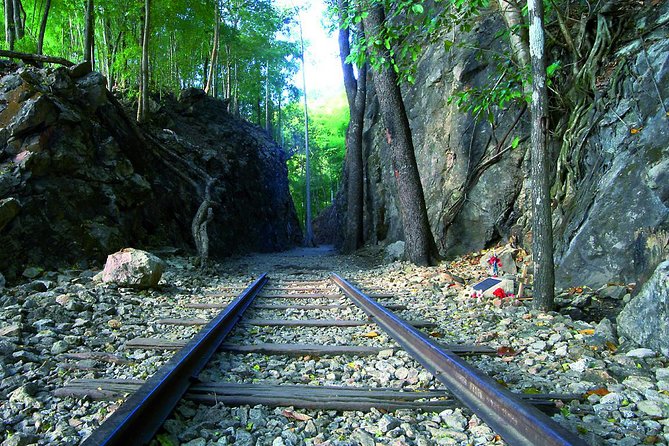
The most powerful part of this day is Hellfire Pass, where a short walking trail follows the cutting made through rock by prisoners of war and forced Asian laborers. The place is quiet, stark, and far removed from the polished version of the story shown in the famous film.
I like the private format, which gives you room to ask questions and adjust the pace. I also like the one-hour Death Railway train ride, when the subject shifts from museums and memorials to river views and open countryside. The catch is simple: this is a long day, often close to 12 hours, with roughly six hours spent on the road and rail.
Key points to know before booking
- Hellfire Pass is the emotional center: Allow time for the interpretive centre and the memorial walking trail, not just a quick photo stop.
- The train ride adds scenery and context: You get a different view of the railway than you do from a museum display.
- Private guides make a real difference: Guides including Ken, Lucky, Rudy, Anna, Thanya, and Miss Diamond have been assigned to this tour.
- The day covers several important sites: Hellfire Pass, the Kanchanaburi War Cemetery, JEATH War Museum, and the River Khwae Bridge.
- Hotel pickup removes much of the hassle: A private air-conditioned vehicle, lunch, bottled water, and return transfer are included.
- Come ready for a full day: The Hellfire Pass trail can be steep and physically demanding in places, although a buggy has been arranged for a visitor with a painful knee.
Why this Bangkok day trip matters
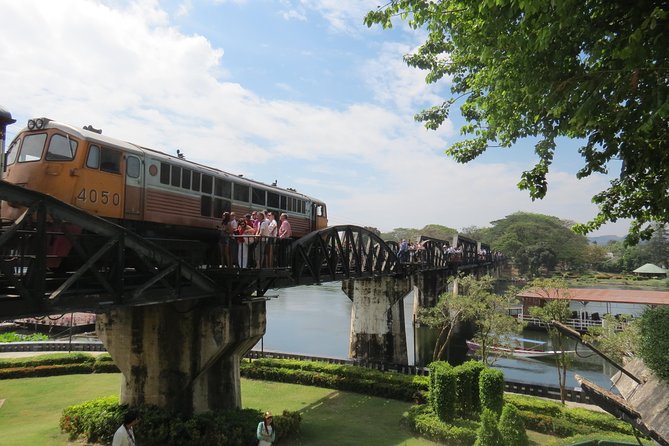
The Bridge over the River Kwai is not just a film location or a scenic railway stop. It is part of the Burma Railway, built during World War II under brutal conditions. Allied prisoners of war suffered terribly, and large numbers of Asian laborers were also forced into the work. The museums and memorials help put the bridge into its proper human context.
This private tour brings the main sites together in one demanding but well-organized day. From Bangkok, you leave the city at about 7:00 am and spend the day in Kanchanaburi Province. You return to your hotel later in the afternoon or early evening, with some schedules reaching about 12 hours from pickup to drop-off.
I would choose this trip if you want the full story rather than a single bridge visit. You see the places, hear the background from a guide, walk part of the railway route, and ride the surviving line through the countryside.
The tour costs $172.84 per person. That is not a budget outing, especially for a solo visitor, but the price includes a private vehicle, professional guide, lunch, bottled water, and hotel transfers. For two or more people who value personal attention, the cost can make sense because you are not joining a large group or spending the day arranging separate transport between scattered sites.
More Death Railway and River Kwai Tours in Bangkok:
- From Bangkok: Death Railway & Hellfire Pass Tour with Lunch
★ 4.6 · 931 reviews - Bridge on the River Kwai and Thailand-Burma Railway Tour
★ 4.5 · 658 reviews - Bridge on the River Kwai and Thailand-Burma Railway Guided Tour
★ 4.5 · 353 reviews
The long ride from Bangkok to Kanchanaburi
Your guide and driver collect you from your Bangkok hotel in the morning. The vehicle is private, and the supplied details describe air conditioning, cold water, and, in some cases, extra soft drinks or iced coffee. That matters in Thailand, because this is a day of heat, walking, waiting, and repeated trips in and out of the vehicle.
The road time is a major part of the outing. One estimate puts total travel at about six hours, although the exact length depends on your hotel location, traffic, and the order used at each stop. You should not book this expecting a relaxed half-day trip.
The private arrangement does give the day some flexibility. Guides have changed the order of stops to avoid busy periods, allowed extra time for photographs, and helped with practical problems. One guide, Anna, adjusted the route to reduce congestion. Another, Ken, helped choose train seats and photo positions.
Vehicle comfort may vary. Most descriptions point to a clean, comfortable, air-conditioned van, but one person found a minibus less comfortable for a private party of two and would have preferred a car. If vehicle size matters to you, ask the operator what will be supplied before departure.
Walking through Hellfire Pass
Hellfire Pass is the most serious stop of the day. At the interpretive centre, you learn how the railway was forced through difficult terrain using hand tools and exhausting labor. The memorial trail then lets you walk into the cutting itself.
This is not a grand monument with a polished finish. Its power comes from the bare rock, the narrow route, and the knowledge of what happened there. The quiet setting makes it easier to think about the people who worked and died on the railway.
The scheduled visit lasts about two hours, which is useful. You are not limited to a brief stop at a signboard. Take time in the centre, then walk only as far as feels comfortable on the trail. Some sections are steep, so sturdy shoes and sensible clothing are a good idea. The stated dress code is casual, but casual does not mean flimsy footwear.
Physical ability is worth considering. One person with a painful knee was helped with a buggy, which shows that assistance may be possible, but you should not assume every part of the trail will be suitable for every mobility level. The tour says most people can participate, yet Hellfire Pass remains the part of the day that requires the most care.
The guide’s approach matters here. Several assigned guides, especially Ken, have been praised for explaining both the facts and the emotional weight of the site. A good guide will not turn the visit into a lecture alone. You have time to ask questions and connect what you see with the wider story.
Paying respects at Kanchanaburi War Cemetery
The Kanchanaburi War Cemetery offers a sharp change of mood. After the rough cutting at Hellfire Pass, you enter a quiet, carefully maintained memorial ground with rows of graves belonging to Allied service members who died during the railway project.
The scheduled stop is about 30 minutes. That is enough for a guided visit and a moment of quiet, but it is not a long cemetery tour. If you have a family connection to someone buried there, tell your guide early. One guide helped locate a family member’s grave, showing how the private format can be especially valuable for personal remembrance.
The cemetery is not only about British, Australian, Dutch, or American prisoners. The wider story also includes the Asian laborers who were forced into the project and suffered in very large numbers. A visit here is more meaningful when you keep both groups in mind.
I would treat this stop with respect rather than rushing through it for photographs. The setting is peaceful, but the subject is not. Guides such as Rudy and Ken have been noted for handling the serious parts thoughtfully while still keeping the day approachable.
More Train Tours in Bangkok:
- Bangkok: Damnoen Saduak Market and Maeklong Railway Market
★ 4.5 · 26,723 reviews - The Old Siam: Damnoen Saduak and Maeklong Railway Market
★ 4.5 · 10,992 reviews - Bangkok: Train Market & Floating Market with Boat Ride
★ 4.7 · 9,547 reviews - Half-Day Railway Market and Floating Market Tour in Thailand
★ 4.5 · 3,924 reviews
Understanding the story at JEATH War Museum
The JEATH War Museum gives you another way to approach the railway story. The visit is guided and lasts about an hour, making it one of the more substantial stops.
The museum helps fill in details that can be missed at the bridge itself. You can ask about the prisoners, the construction work, and the way the railway operated during the war. The name refers to Japan, England, America, Australia, Thailand, and Holland, reflecting the national groups connected with the wartime story.
Museum conditions can feel less polished than those at a modern interpretive centre. That is part of the character of the visit, but it also means you should not expect a high-tech attraction. The value is in the material and the explanation, especially if you have already seen the film but want a fuller account of what really happened.
The order may vary. Some days begin with the museum before the bridge, while others place Hellfire Pass first. Your guide may change the sequence to manage traffic and opening conditions. That flexibility is one of the better reasons to choose a private tour.
Seeing the River Khwae Bridge
At the River Khwae Bridge, you get free time to look around and take photographs. The stop is listed at about 30 minutes, though the exact time may depend on the train schedule and the rest of the day.
The bridge is an active railway structure, not a quiet exhibit. Pay attention to your surroundings and follow your guide’s directions when trains or other visitors are nearby. Its fame can make the area feel more commercial and busy than Hellfire Pass, especially later in the day.
Still, the bridge is an essential part of the route. Standing on it connects the museum material with a real railway line, the river below, and the continuing use of the track. The famous movie created a popular image of the place, but the actual story is broader and far darker.
Your guide can also help with photographs. Ken, in particular, has been praised for choosing good photo spots and getting the timing right. If you want the bridge before it becomes crowded, mention that preference at the start. The private format may allow the guide to adjust the order.
Riding the Death Railway through the countryside
The train ride is one of the tour’s best additions. It lasts about an hour and gives you views that a road transfer cannot provide. Instead of moving from one indoor site to another, you see the railway from the track itself, passing through the countryside and along sections connected with the original Burma Railway.
The train is also a useful pause in a history-heavy day. You have time to sit, look out, and process what you have seen. Guides have helped people find good seats and photo positions, which is useful because the best views may depend on where you are placed.
Do not treat the ride as guaranteed luxury rail travel. It is included as part of a working railway experience, and delays can happen. On one occasion, a train broke down and the guide arranged for the driver to collect the group from a siding. That story says two useful things: the rail segment can be unpredictable, and a private guide can respond quickly when plans change.
The ride may be scenic, but scenery is not the main point. The value comes from feeling the scale of the railway and seeing how it cuts through the countryside. It gives you a physical sense of distance after the museums have explained the cost of building it.
Lunch, water, and the small comforts
Lunch is included, usually described as Thai food at a local restaurant, sometimes served buffet-style. One account describes a meal overlooking a wooden section of the Death Railway. Dietary arrangements can sometimes be adjusted, as one guide organized different food for a husband, but you should explain any needs when booking.
Bottled water is included, and the vehicle may also carry other cold drinks. That is more than a minor convenience on a long day. You will be outside at Hellfire Pass, walking around the bridge, and spending hours in transit.
Alcohol is not included, though it can be purchased. The overall arrangement is practical rather than luxurious: private transport, guide, lunch, water, and a full set of stops in one day.
Which guide experience can you expect?
The operator assigns different guides, so you cannot assume you will receive a particular person unless the company confirms it. Ken appears often in the supplied feedback, along with Lucky, Rudy, Anna, Thanya, Miss Diamond, and others.
The strongest pattern is the value of a guide who can explain difficult material in clear English, answer questions, and judge when to speak and when to give you quiet time. Ken has been praised for combining facts with humor, while Lucky and Rudy have also been described as attentive and thoughtful. Anna received praise for adapting the route and helping with a personal cemetery visit.
Your driver is separate from the guide. Drivers identified as Mr Yoon, Bat, Yuri, and Kampala have been praised for safe driving and calm handling of the long route. Since you spend many hours in the vehicle, this part of the service matters almost as much as the commentary.
Who should book this private tour?
I would recommend it to you if World War II history is a major interest, if you have limited time in Bangkok, or if you want to visit the bridge without arranging several separate transfers. It also suits families or couples who prefer to ask questions privately and set a comfortable pace.
The day is especially worthwhile if you want Hellfire Pass, not just the bridge. The pass supplies the emotional and historical weight, while the cemetery, museum, train, and bridge build the wider picture.
I would hesitate if you dislike early starts, long road journeys, warm-weather walking, or tightly packed sightseeing days. The tour includes many stops, but that also means little idle time. A person looking only for a scenic train ride could find the museums and memorials too serious.
Free cancellation is available if you cancel at least 24 hours before the start time. Changes or cancellations inside that period are not accepted for a refund.
Should you book the Bridge over River Kwai and Hellfire Pass Tour?
Book it if you want the complete Kanchanaburi story in one day and value a private guide more than a low group-tour price. The strongest parts are Hellfire Pass, the thoughtful guiding, the train ride, and the convenience of hotel pickup and drop-off.
At $172.84 per person, it is best value for a small group that will use the private vehicle and ask plenty of questions. It is a poor fit for someone seeking a short, easy outing. For the right person, the long day is the trade-off for seeing the railway, the memorial sites, and the countryside in one carefully supported trip.
FAQ
How long does the tour last?
The tour lasts approximately 10 to 12 hours. Pickup begins at about 7:00 am, and the return time depends on traffic, your hotel location, and the timing of the stops.
What is included in the price?
The price includes round-trip private transport, a professional guide, lunch, and bottled water. Alcoholic drinks are not included, though they are available to purchase.
Is this a private tour?
Yes. Only your group participates, with a private guide and private transfer.
Which sites are visited?
The schedule includes Hellfire Pass Interpretive Centre and Memorial Walking Trail, Kanchanaburi War Cemetery, JEATH War Museum, and the River Khwae Bridge.
Is a train ride included?
Yes. The experience includes a Death Railway train ride, described as lasting about one hour and offering countryside views.
Is hotel pickup available?
Yes. Pickup and drop-off at your Bangkok hotel are included. The listed start time is 7:00 am.
Is Hellfire Pass physically demanding?
Parts of the memorial trail are steep and can be challenging. Most people can participate, and assistance such as a buggy has been arranged for a visitor with a painful knee.
Can I cancel for a full refund?
You can receive a full refund if you cancel at least 24 hours before the experience start time. Cancellations or changes made less than 24 hours before the start time are not accepted for a refund.
Just added around Bangkok
- Floating & Railway Markets and Erawan Waterfall [Optional Luxury]★ 5.0 · 43 reviews
- Small Group: Kanchanaburi Death Railway, Erawan Waterfall and Elephant★ 4.0 · 3 reviews
- Floating Market & Railway Market near Bangkok★ 4.0 · 5 reviews
- Historic Kanchanaburi: Train, Boat & Skywalk + Lunch From Bangkok★ 4.5 · 3 reviews
- Railway Market, Floating Market and After the Rain Cafe★ 5.0 · 16 reviews
- Maeklong & Damnoen Saduak Markets: Railway & Floating Market Tour★ 4.0 · 17 reviews
- Historic Kanchanaburi:Train, Boat, Skywalk from Bangkok(No Lunch)★ 5.0 · 2 reviews
- Private tour : Railway & Floating Market and the Bridge over river Kwae★ 5.0 · 2 reviews
Bangkok Train Tours, compared.
Damnoen Saduak Market and Maeklong Railway Market
Read our review →
The Old Siam: Damnoen Saduak and Maeklong Railway Market
Read our review →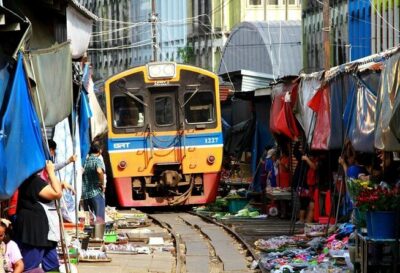
Half-Day Railway Market and Floating Market Tour in Thailand
Read our review →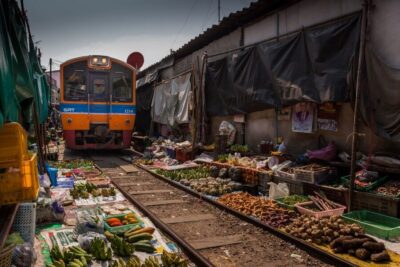
Damnoen Saduak, Train Market & Mahanakhon Day Trip
Read our review →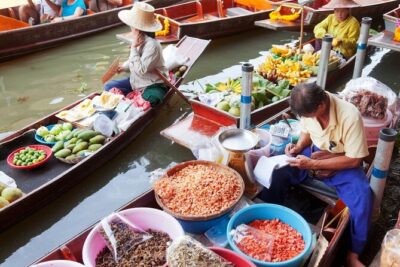
Damnoen Saduak Floating Market and Maeklong Railway Market Tour
Read our review →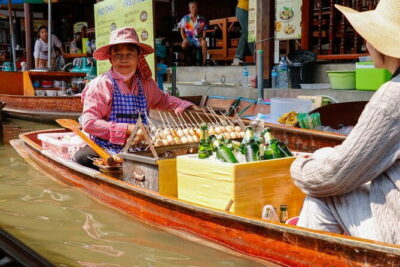
Day Trip to Bangkok Floating Market & Maeklong Railway
Read our review →
Railway and Floating Market Tour with Dragon Temple
Read our review →
Browse the lists this tour appears in