
REVIEW · BANGKOK
Small Group: Kanchanaburi Death Railway, Erawan Waterfall and Elephant
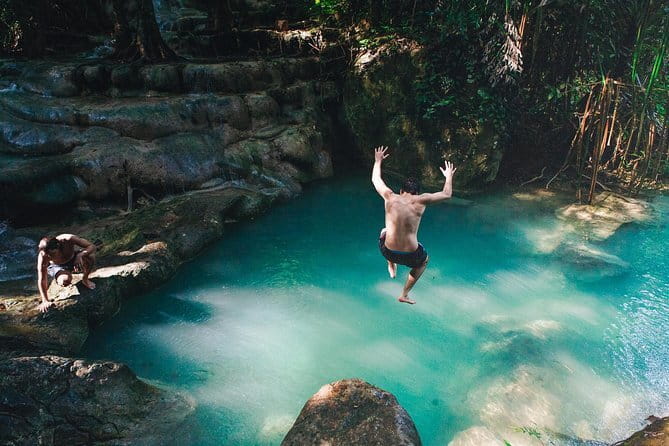
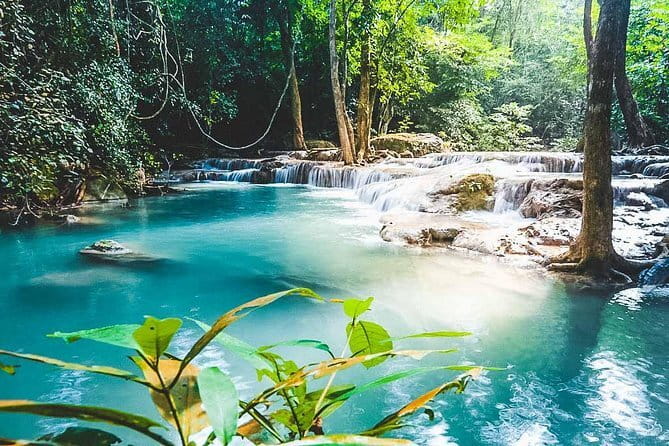
The day’s strongest moment comes early, at Erawan Waterfall, where you can swim in emerald pools or climb through several forested levels. Later, the mood changes sharply as you walk beside the Death Railway, visit a former prisoner-of-war camp site, and cross the iron bridge over the River Kwai.
I like the efficient mix of nature and wartime history, and I like the small maximum group of nine, which should make a long day easier to manage. The main caution is physical: the waterfall climb can be slippery and tiring, and flip-flops may be accepted but are not the best choice.
Key points at a glance
- Erawan Waterfall takes three hours: You have time to swim, walk between levels, or climb toward the upper falls.
- The day begins at 6:00 AM: Expect a long road journey from Bangkok before the first major stop.
- The Death Railway is a walking visit: You will see the railway along the River Kwai and take on a short but meaningful trackside walk.
- Kra Sae Cave links nature with wartime history: A Buddha statue sits inside a cave that once served as a POW camp during railway construction.
- The elephant stop includes a wet activity: The tour focuses on rescued elephants and provides the activity as part of the package.
- A group of up to nine keeps it personal: Transport, lunch, admission fees, and bottled water are included.
A long day with two very different sides of Kanchanaburi
This is not a quick sightseeing loop. It is an approximately 12-hour outing from Bangkok, with an early start and several hours on the road. You meet at Hua Lamphong Rong Muang at 6:00 AM, ride in an air-conditioned vehicle, and return to the same meeting point at the end of the day.
The reward is variety. In one morning, you can walk through a national park setting, swim in cool pools, and climb beside a series of falls. By afternoon, you are looking at railway tracks built during World War II under terrible conditions, then visiting the famous bridge that gave the River Kwai its place in popular memory.
I like this contrast. Kanchanaburi is not presented as only a pretty day out, and the historic stops are not treated as a dry museum visit. Still, the schedule leaves little room for lingering. Three hours at Erawan is generous, but the Death Railway, cave, elephant stop, and bridge each receive a shorter visit.
More Death Railway and River Kwai Tours in Bangkok:
- From Bangkok: Death Railway & Hellfire Pass Tour with Lunch
★ 4.6 · 931 reviews - Bridge on the River Kwai and Thailand-Burma Railway Tour
★ 4.5 · 658 reviews - Bridge on the River Kwai and Thailand-Burma Railway Guided Tour
★ 4.5 · 353 reviews
Erawan Waterfall from 9:00 AM
The first major stop is Erawan Waterfall, reached at about 9:00 AM after the morning drive. You have three hours here, which is the best portion of the schedule for setting your own pace.
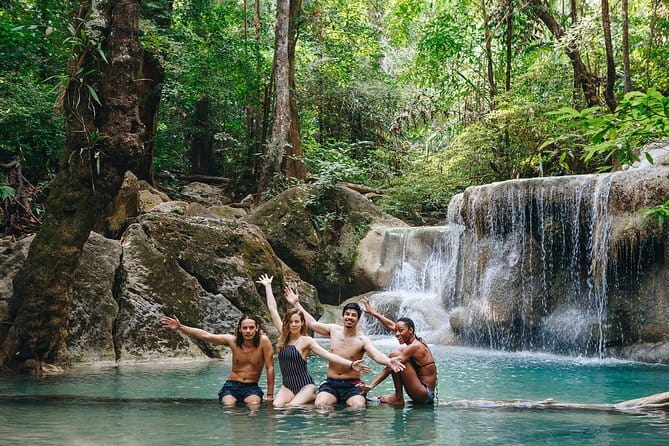
You can stay near the lower pools, swim at leisure, or walk upward through the waterfall levels. The higher you go, the more effort the path demands. The supplied description calls for a moderate level of fitness, and that matters most here. Even if you do not reach the top, the ability to move between levels gives you more than a simple roadside photo stop.
Bring proper footwear if you have it. Flip-flops are considered acceptable for the activity, but the operator recommends shoes for faster hiking and better support. One serious complaint about the day involved flip-flops being described as suitable, followed by a difficult climb that ended with the visitor going barefoot. That is a useful warning, not a minor detail.
You may also be asked to carry a life jacket during the waterfall section, including while walking upward. This can feel awkward if you are not planning to swim right away, so ask the guide at the start how the jackets will be handled. The information provided confirms a swimming opportunity, but it does not explain the exact safety procedure.
The pools are a major reason to book this outing, yet you should plan around wet clothes and uneven ground. The tour includes bottled water, but you should still dress for a day that moves between swimming, walking, and sightseeing. No separate equipment list is provided, so pack only what you can manage comfortably.
Walking beside the Death Railway
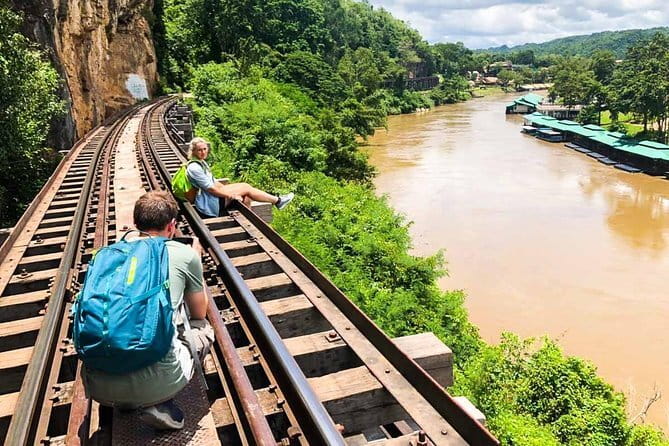
After Erawan, the day shifts from outdoor recreation to wartime history. The Death Railway was built along the cliffs beside the River Kwai, and the visit includes a walk along the railway itself.
This is not described as a long museum session. You will explore the railway area, take in the river scenery, and make a short walk on or beside the track. That physical setting gives the stop its force. You are not only reading about the railway. You are seeing the route cut through the terrain and the difficult conditions workers faced during construction.
The visit lasts about 30 minutes and admission is included. That is enough time to understand the setting, but not enough for a detailed study of every part of the railway story. If you want a slow museum visit with extensive historical interpretation, this itinerary may feel brief.
I would listen closely to the guide here. The tour gives you a professional guide, but no guide name is provided in the booking details. Since the stop is short, a clear explanation will make a big difference. The railway is more than a scenic photo opportunity, and the best use of this time is to connect the river, cliffs, tracks, and wartime events.
Kra Sae Cave and the former POW camp
The next stop is Tham Kra Sae, also called Kra Sae Cave. It is a small cave with a Buddha statue inside. The cave once served as a camp for prisoners of war during the construction of the railway.
You have about 20 minutes here, so think of it as a compact stop rather than a full cave visit. Its value comes from the combination of place and memory. The cave is not separate from the railway story. It helps you picture how the railway project affected the people forced to build it.
The short time also keeps the day moving. You will not spend long underground, and the visit should suit you if you prefer a broad view of Kanchanaburi rather than a single-site tour. If you need extra time for photographs, quiet reflection, or a slower walk, this stop may feel rushed.
More Train Tours in Bangkok:
- Bangkok: Damnoen Saduak Market and Maeklong Railway Market
★ 4.5 · 26,723 reviews - The Old Siam: Damnoen Saduak and Maeklong Railway Market
★ 4.5 · 10,992 reviews - Bangkok: Train Market & Floating Market with Boat Ride
★ 4.7 · 9,547 reviews - Half-Day Railway Market and Floating Market Tour in Thailand
★ 4.5 · 3,924 reviews
Meeting rescued elephants in Kanchanaburi
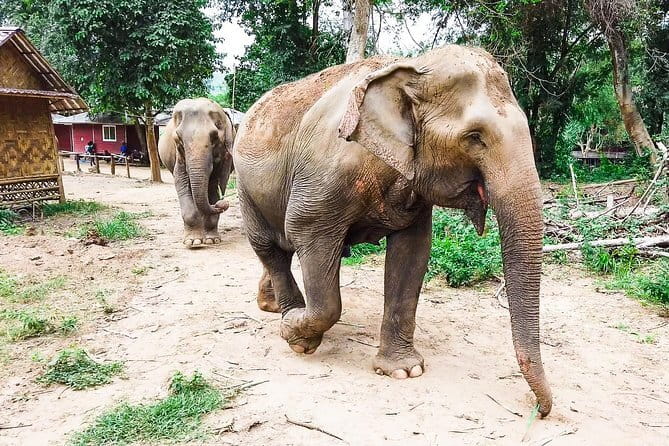
The elephant portion lasts about an hour and includes a wet activity at the elephant camp. The stated focus is on rescued elephants, which gives the stop a different purpose from a simple animal photo visit.
The exact activity details are limited, so you should ask the guide what the wet activity involves and what clothing is practical. What is clear is that the activity is included, along with admission fees and transport. If you are choosing this trip mainly for an elephant encounter, confirm the details before booking rather than assuming the format.
This is also the point where personal comfort matters. You have already spent time around water at Erawan, so a wet elephant activity can fit naturally into the day, but you will want clothing that dries or a change of clothes. The tour information does not promise showers, lockers, towels, or a particular type of interaction.
I appreciate that the description centers on rescued elephants, but animal activities deserve attentive choices. Use the hour to observe how the camp handles the animals and follow the guide’s instructions. The supplied information does not provide further welfare standards, so do not treat the phrase rescued elephants as a substitute for asking sensible questions on site.
The Bridge over the River Kwai
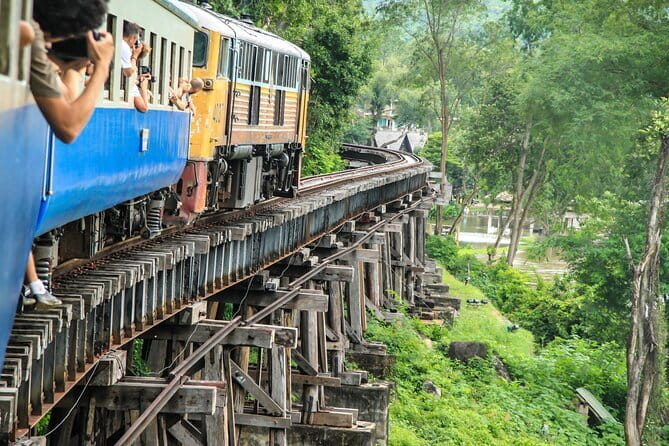
The final major stop is the River Khwae Bridge, known more widely as the Bridge over the River Kwai. You get about an hour to walk across the iron structure and take in the history tied to it.
The bridge is famous, but its importance is not only cinematic. It represents the wartime railway project and the loss and suffering connected with its construction. The tour presents the stop as a chance to walk along the bridge, not as a long guided lecture, so your guide’s explanation will again shape how much historical context you receive.
The bridge may be the most recognizable photograph of the day, but it should not overshadow the railway walk and Kra Sae Cave. Together, those sites provide a fuller sense of the route and the people affected by it.
An hour is a useful amount of time for a short walk, photographs, and a little independent looking. The schedule does not say that you will take a train ride across the bridge. You should expect to visit and walk on it, not a rail journey.
What the small group and included lunch mean
The group is limited to a maximum of nine people. That is a good size for a day with several stops, especially when you need to hear instructions around water, railway tracks, and the elephant activity. It also gives you a better chance to ask questions than you would on a large coach tour.
Transport is by air-conditioned vehicle, a welcome feature for a full day that begins in Bangkok and continues through Kanchanaburi. The road time is a major part of the outing, so the vehicle is not a minor convenience. The exact travel time between stops is not provided, but the start and end times make clear that this is a substantial day.
Lunch at a local restaurant is included. That keeps the day simple and avoids making you search for food between timed visits. The information does not specify the menu, dietary options, or restaurant name, so tell the provider about dietary needs before setting out.
Admission fees and bottled water are also included. Personal expenses are not, so bring money for anything beyond the listed package. The displayed price is $0.00, which is unusual for a commercial full-day tour. Treat that as a listing price that needs checking before payment or confirmation, not as proof that every part of the day is free.
Fitness, clothing, and practical planning
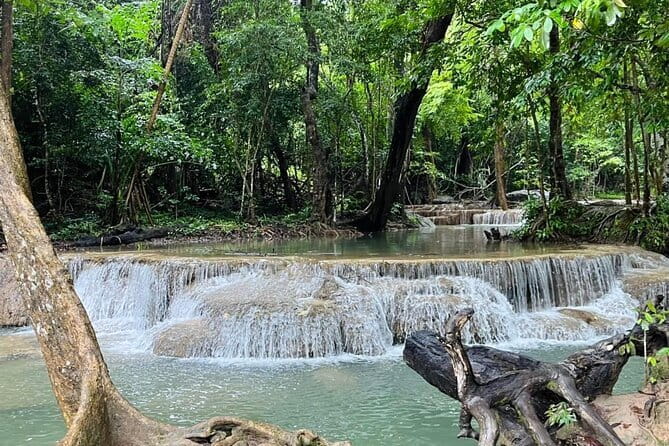
You should have a moderate level of physical fitness for this outing. The biggest challenge is the waterfall section, where the climb can become tiring and footing may be wet. The railway walk and bridge visit add more time on your feet.
Wear secure shoes if possible. The provider says flip-flops are acceptable, but also recommends shoes for comfort and support. Based on the footwear problem described in the feedback, I would not choose thin flip-flops for the upper waterfall paths.
You should also plan for water. Erawan includes swimming, and the elephant stop includes a wet activity. The tour supplies bottled water, but the information does not confirm towels, changing rooms, or storage for wet clothing. A change of clothes is a sensible precaution, though it is not listed as an included item.
The early meeting time is another real consideration. You meet at 6:00 AM at Hua Lamphong Rong Muang in Bangkok and finish back at that meeting point. This is a poor fit if you want a relaxed morning or an early evening plan after returning.
The tour provides a mobile ticket, and confirmation is normally issued when you book. If you book within nine days of travel, confirmation can take up to 48 hours and remains subject to availability. Free cancellation is available until 24 hours before the start time. Inside that window, the amount paid is not refunded and changes are not accepted.
Who should book this Kanchanaburi day trip?
I would choose this tour if you want to combine Erawan Waterfall with the main Kanchanaburi wartime sites in one day. It suits you if you value variety, prefer organized transport from Bangkok, and can handle an early start, a long road day, and a moderate amount of walking.
It also works well for a small party that wants a guide and a fixed plan. The maximum group of nine is more appealing than a large bus, and the included lunch, water, admissions, and air-conditioned transport make budgeting easier once the final price is confirmed.
I would hesitate if your main goal is a slow waterfall visit. Three hours is useful, but the rest of the day is tightly filled. I would also hesitate if you dislike wet activities, have difficulty on uneven paths, or want a detailed museum experience rather than short historical stops.
Should you book it?
Book this trip if you want the broad Kanchanaburi picture in one demanding day: waterfall, railway, cave, elephants, and bridge. Wear real walking shoes, prepare for wet clothes, and clarify the life-jacket and elephant activity arrangements before you leave.
Skip it if you need a gentle pace or a precise, specialist history tour. For active visitors who want nature and World War II sites without arranging several separate journeys, the format offers solid practical value, provided the final price and activity details are confirmed.
FAQ
Where does the tour start?
It starts at Hua Lamphong Rong Muang, Pathum Wan, Bangkok 10330, Thailand.
What time does the tour begin?
You meet the guide at 6:00 AM in the hotel lobby or designated meeting arrangement.
Where does the tour end?
The activity ends back at the original meeting point.
How long is the tour?
The full outing lasts approximately 12 hours.
How large is the group?
The maximum group size is nine people.
Is lunch included?
Yes. Lunch at a local restaurant is included.
Are entrance fees included?
Yes. All listed admission fees are included.
Can I swim at Erawan Waterfall?
Yes. You can swim in the pools or walk upward through the waterfall levels.
What is the cancellation policy?
You can cancel at least 24 hours before the start time for a full refund. Cancellations or changes made within 24 hours are not accepted and are not refunded.
Just added around Bangkok
- Floating & Railway Markets and Erawan Waterfall [Optional Luxury]★ 5.0 · 43 reviews
- Floating Market & Railway Market near Bangkok★ 4.0 · 5 reviews
- Historic Kanchanaburi: Train, Boat & Skywalk + Lunch From Bangkok★ 4.5 · 3 reviews
- Railway Market, Floating Market and After the Rain Cafe★ 5.0 · 16 reviews
- Maeklong & Damnoen Saduak Markets: Railway & Floating Market Tour★ 4.0 · 17 reviews
- Historic Kanchanaburi:Train, Boat, Skywalk from Bangkok(No Lunch)★ 5.0 · 2 reviews
- Private tour : Railway & Floating Market and the Bridge over river Kwae★ 5.0 · 2 reviews
- Bangkok: Railway & Damnoen Saduak Floating Market with Transfer★ 4.5 · 14 reviews
Bangkok Train Tours, compared.
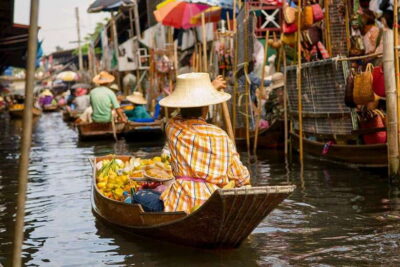
Damnoen Saduak Market and Maeklong Railway Market
Read our review →
The Old Siam: Damnoen Saduak and Maeklong Railway Market
Read our review →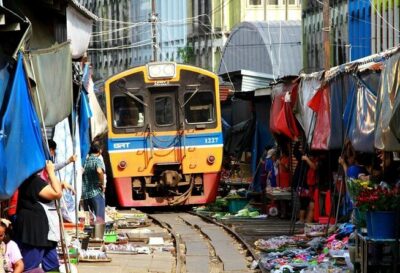
Half-Day Railway Market and Floating Market Tour in Thailand
Read our review →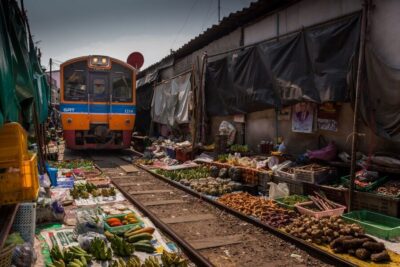
Damnoen Saduak, Train Market & Mahanakhon Day Trip
Read our review →
Damnoen Saduak Floating Market and Maeklong Railway Market Tour
Read our review →
Day Trip to Bangkok Floating Market & Maeklong Railway
Read our review →
Railway and Floating Market Tour with Dragon Temple
Read our review →
Browse the lists this tour appears in