
REVIEW · BANGKOK
Bangkok: Kanchanaburi, River Kwai & Death Railway Tour
The most moving part of this Bangkok day trip is its shift from wartime remembrance to open-air scenery. You begin at the quiet Kanchanaburi War Cemetery and the JEATH Museum, then see the famous Bridge over the River Kwai before following the railway toward Tham Krasae.
I like the small group size, limited to nine, and the chance to combine serious World War II history with Wat Tham Suea’s 18-meter Buddha and views over the River Kwai. The drawback is the long road time: up to five and a half hours of the day can go to transport, so this is a full, tiring outing rather than a leisurely escape from Bangkok.
Key points to know before booking
- The day begins with remembrance: Kanchanaburi War Cemetery and the JEATH Museum put the Death Railway in human terms.
- The famous bridge is only one part of the story: Tham Krasae adds a working railway, cliffside views, and the chance to see a train pass.
- Wat Tham Suea requires effort: The steep climb is optional in spirit, but the best view of the Buddha comes from the top.
- Expect a very early start and a long return: The drive from Bangkok is the main cost in time.
- Lunch is not included: You stop at a local restaurant, but bring cash for food and personal purchases.
- The trip has a lighter footprint: Glass-bottle water and carbon offset credits are included, and the tour is GSTC-certified.
Why the Death Railway deserves a full day from Bangkok
Kanchanaburi is not a quick side trip. It sits far enough west of Bangkok that you spend much of the day in the van, but the subject matter gives the journey a clear purpose.
The Death Railway was built during World War II under the Japanese Empire. Prisoners of war and civilians from several countries worked in brutal conditions on the Siam-Burma Railway. The stops on this tour let you approach that story in different ways: a cemetery for quiet reflection, a museum for physical evidence, and a railway line that still functions today.
That mix matters. The bridge is famous because of the film and the name, but the railway was not simply a dramatic movie setting. It was a massive wartime project tied to suffering, death, and forced labor. I find the cemetery and museum more important than the photo stop at the bridge, while the railway at Tham Krasae helps connect the past to the present.
The tour rating is listed at 4.9 from 36 reviews, with particularly warm comments about guides including Fern, Jeerawat, Nina, Nat, and Niranya. Guide quality can shape a history-focused day, so the repeated praise for friendly explanations, patience, and help with photos is worth noting. Still, guide assignments can change, and one account found the historical explanations less detailed than expected. If you already know the subject well, you may want to prepare a little before leaving Bangkok.
More Death Railway and River Kwai Tours in Bangkok:
- From Bangkok: Death Railway & Hellfire Pass Tour with Lunch
★ 4.6 · 931 reviews - Bridge on the River Kwai and Thailand-Burma Railway Tour
★ 4.5 · 658 reviews - Bridge on the River Kwai and Thailand-Burma Railway Guided Tour
★ 4.5 · 353 reviews
The Bangkok pickup and long ride west
Pickup is offered from hotels or registered accommodations, not roadside locations or shopping malls. You should wait in the hotel lobby 10 minutes before the confirmed time. The team sends the pickup details by email the evening before, and your guide carries a TripGuru sign.
The vehicle is air-conditioned, and the small group format limits the number of people sharing the ride. That is a real comfort advantage over a large coach, especially on a day with several stops. A glass bottle of drinking water is provided, and you can use the ride to sleep or simply watch Bangkok give way to the outskirts and countryside.
The schedule lists about two and a half hours to Kanchanaburi, followed by roughly three hours back to Bangkok. Actual timing depends on pickup order and road conditions, but the message is clear: this is not a short transfer. One account described the return drive as especially tiring and suggested that a longer break would help.
Pack lightly, but do not forget sunscreen, comfortable clothing, a camera, and cash. The heat can be severe. One January-to-April account described temperatures above 42 C, and even in cooler periods you will spend time outdoors.
Kanchanaburi War Cemetery: a quiet first stop
The Kanchanaburi War Cemetery is the right place to begin. Its carefully maintained grounds create a sharp contrast with the scale of the railway project and the suffering tied to it.
You have about 30 minutes here. That is enough to walk among the graves, read names and dates, and pause without rushing through a crowded attraction. The cemetery honors prisoners of war and civilians who died while working on the railway, so this stop gives the day a human focus before you encounter the famous bridge.
I would use the time quietly. This is not a place for hurried group photos or a quick glance before moving on. Ask your guide for context, but also allow the grounds to speak for themselves. The limited time is the main weakness. If memorial sites matter greatly to you, 30 minutes may feel short.
JEATH Museum and the physical evidence of war
The next stop lasts about 30 minutes and adds objects to the story. JEATH refers to the nationalities associated with the railway: Japanese, English, Australian, American, Thai, and Hollander.
Inside, you can expect wartime weapons, tools, uniforms, medals, and replicas of the cramped conditions in which prisoners of war lived. These displays help explain what the cemetery cannot show. A grave records a life and a death; the museum offers a glimpse of the work, equipment, and confinement behind the names.
Do not expect a large modern museum requiring half a day. The visit is brief and can feel more like a focused historical stop than a polished institution. The tour description identifies the JEATH entrance fee as included. One account raised the possibility of being taken to the less suitable of two similarly named museums, so it is sensible to confirm with your guide which JEATH museum you are visiting.
The quality of the explanation matters here. Several guides have been praised for making the history understandable and answering questions. Another account found the guide more useful as a photographer than as a source of detailed historical information. Your own preparation can make the museum more rewarding, especially if World War II history is the main reason you are booking.
More Train Tours in Bangkok:
- Bangkok: Damnoen Saduak Market and Maeklong Railway Market
★ 4.5 · 26,723 reviews - The Old Siam: Damnoen Saduak and Maeklong Railway Market
★ 4.5 · 10,992 reviews - Bangkok: Train Market & Floating Market with Boat Ride
★ 4.7 · 9,547 reviews - Half-Day Railway Market and Floating Market Tour in Thailand
★ 4.5 · 3,924 reviews
The Bridge over the River Kwai
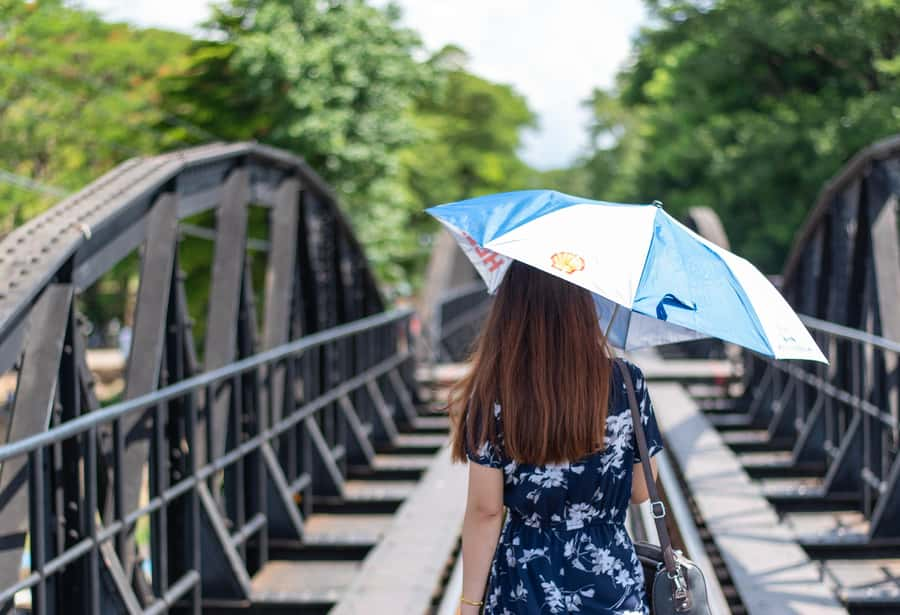
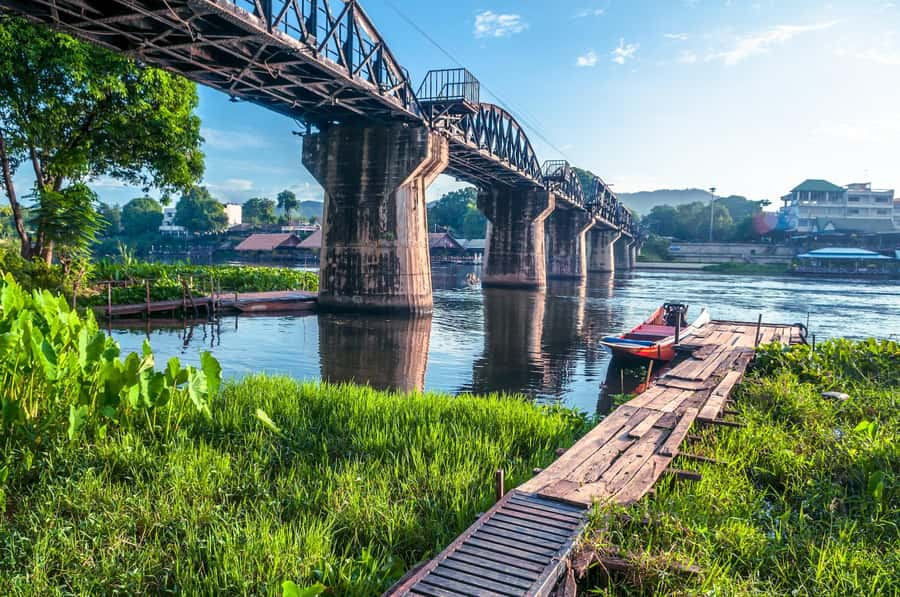
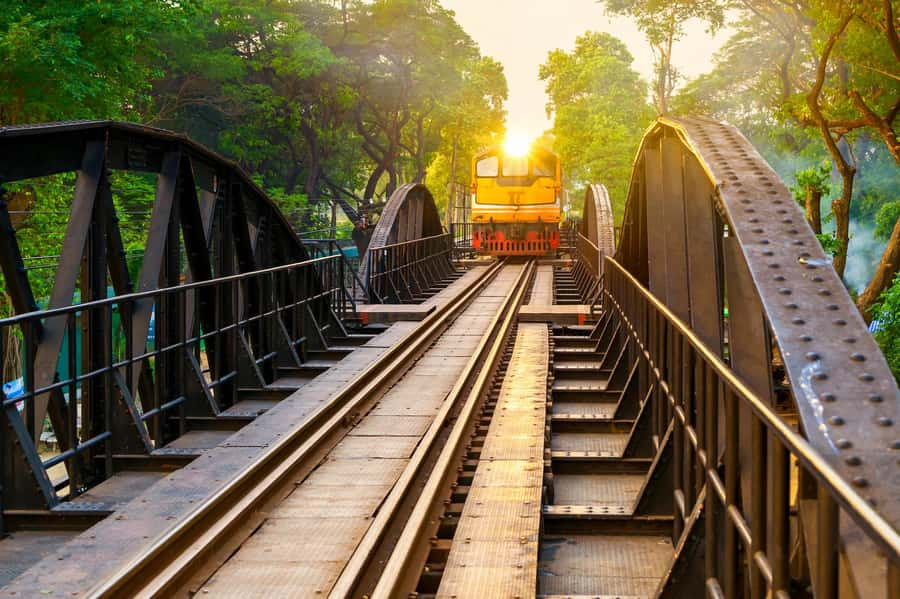
The bridge is the best-known stop, but fame can distort expectations. You will see a real railway bridge over the river, not a preserved movie set removed from daily life. Trains still use the line, and the bridge remains part of the region’s active railway story.
The schedule allows about an hour and a half for the bridge section, though the broader timing also includes lunch and nearby sightseeing. That gives you time to look from different angles, take photographs, and listen to your guide rather than rushing in and out.
The bridge itself is not the most emotionally powerful place on the day. Its importance comes from what it represents and from the way it connects the museum’s past to a railway still in use. I would resist treating it as just a famous backdrop. Take the photo, then pay attention to the guide’s explanation and the fact that trains continue to pass through this historic setting.
Tham Krasae Station and the cliffside railway
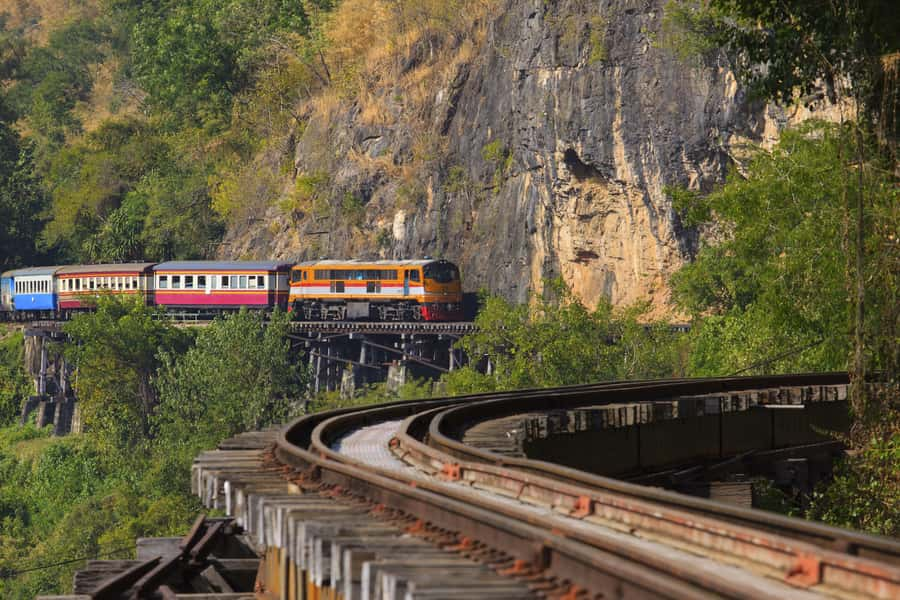
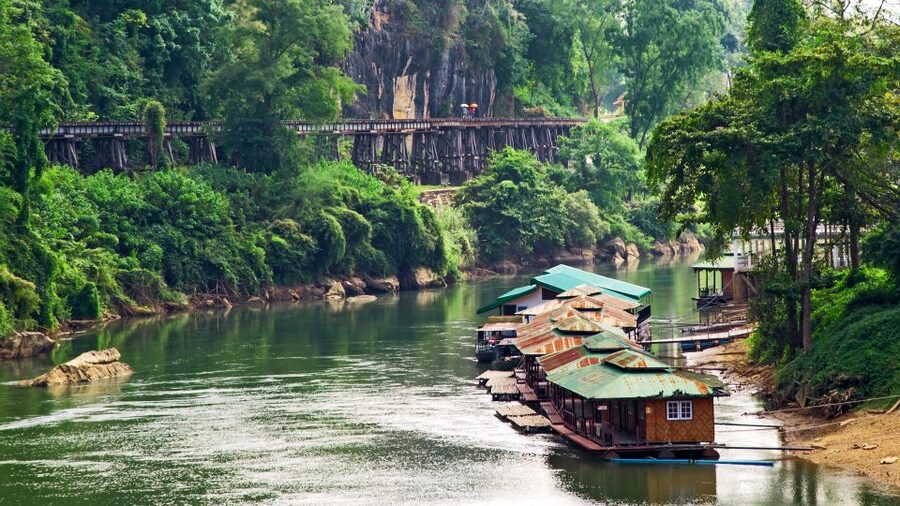
Tham Krasae Station is one of the most visually striking parts of the route. Here, the railway curves beside a cliff, with open views toward the River Kwai and surrounding countryside. The train may pass while you are there, so keep your camera ready, but do not count on a dramatic photo at a precise minute.
This stop lasts about 30 minutes and follows lunch at a local restaurant. Lunch is not included in the $102 price, so bring cash. The food stop is practical rather than elaborate, though one account described the meal as especially good and the setting as beautiful. Another praised a buffet as good value.
The station gives the day some breathing room after the memorials and museum. You can stretch your legs, see the railway from close range, and take photographs without the solemn weight of the cemetery. The short stop may feel tight if a train is delayed or the heat is intense, but it is a worthwhile part of the route.
Coffee, heat, and the final temple climb
A 30-minute coffee stop breaks up the afternoon. It is a small detail, but on a day with long drives and outdoor walking, a chance to sit and cool down helps.
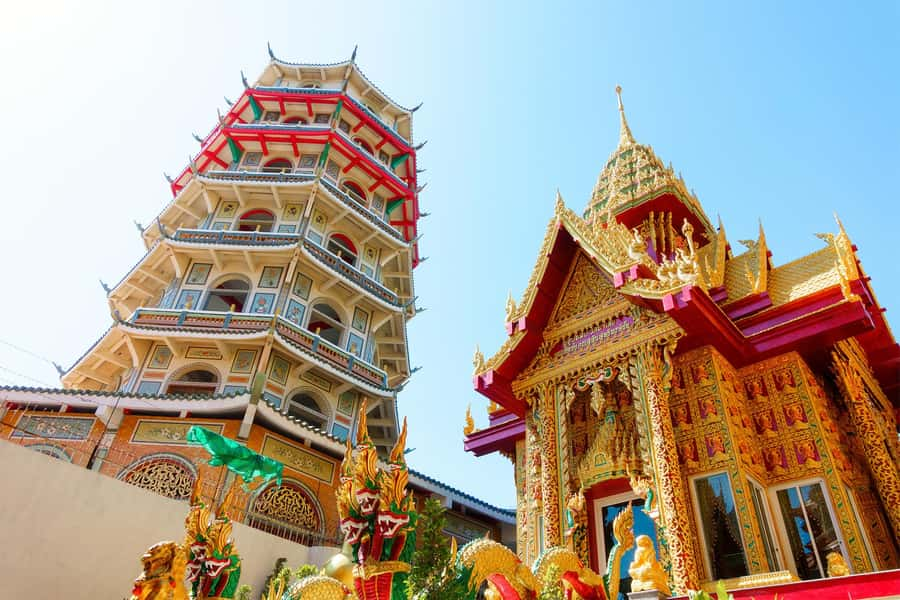
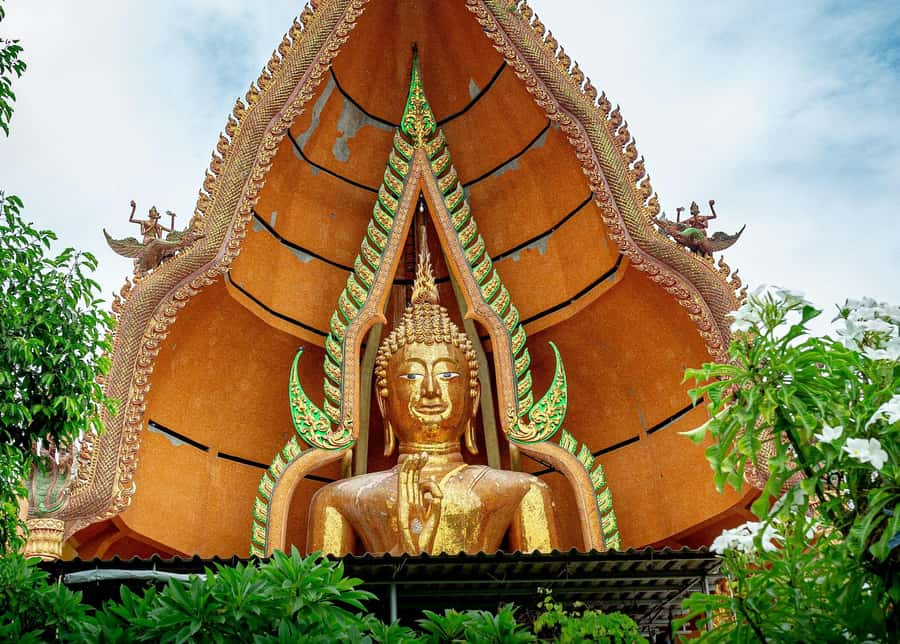
Then comes Wat Tham Suea, or Tiger Cave Temple. The temple is known for tiger paw prints on the cave walls and a gleaming Buddha statue about 18 meters tall. The statue sits at the top, so you face a steep climb if you want the closest view.
This is where you should judge your energy honestly. The hike can be demanding in hot weather, especially after a full day of driving and sightseeing. Comfortable clothes and sunscreen are essential. You must also dress properly: avoid short skirts, short shorts, and sleeveless shirts when entering temple areas.
The reward is both the Buddha and the broad view from above. The scenery reaches toward the River Kwai and the foothills, giving you a strong finish to a day that began with enclosed museum rooms and cemetery paths. You can take photographs, look for the cave markings, and spend about an hour exploring before the return to Bangkok.
What the $102 price really buys you
At $102 per person, this is not a cheap Bangkok day trip, but the value depends on what you would otherwise have to arrange. The price includes transport in an air-conditioned vehicle, an English-speaking guide, the JEATH Museum entrance, a glass bottle of water, and carbon emissions offset credits.
It does not include lunch or personal expenses. You should budget separately for food at the local restaurant, drinks, and any purchases along the way.
The small group limit of nine is important. You get more room in the vehicle and a better chance to ask questions than you would on a large bus. Private options are also available, and one account found the extra cost worthwhile because it allowed a slower pace and more questions. If you want maximum flexibility, private travel may justify the higher price. If you mainly want transport and a guide at a controlled cost, the small group option is the sensible middle ground.
The main value problem is time. About half the day can disappear into driving, and the return is particularly long. You are paying not only for the stops, but also for the convenience of reaching Kanchanaburi without arranging trains, taxis, and local transfers yourself.
The environmental measures are a useful plus. The operator describes the tour as GSTC-certified, provides water in glass bottles, and offsets carbon emissions. These steps do not erase the impact of a long van journey, but they show an effort to reduce it.
Who should book this Kanchanaburi tour?
I would choose this tour if you have limited time in Bangkok and want both Death Railway history and Wat Tham Suea in one organized day. It suits people who value a guide, prefer not to arrange several transfers, and can handle an early start, heat, and a long ride.
It is especially good for first-time visitors who want an introduction to Kanchanaburi rather than a specialist military history program. Guides such as Fern, Jeerawat, Nat, Nina, and Niranya have been praised for being warm, helpful, and willing to answer questions, which makes a difference when the schedule moves quickly.
I would hesitate if you dislike long van rides or want every stop explored slowly. The cemetery and museum receive only about 30 minutes each, and the return to Bangkok can feel draining. A private version may suit you better if you want to ask many questions, linger at the memorials, or set the day around your own pace.
Book at least a little background reading if the Death Railway is your main interest. The tour provides the places and the broad story, but the depth of the historical discussion may vary with the guide.
Should you book it?
Book it if you want a practical, well-packed introduction to Kanchanaburi and accept that the road from Bangkok is a major part of the day. The strongest combination is the cemetery, JEATH Museum, the active railway at Tham Krasae, and the temple’s high viewpoint.
Skip it if you want a relaxed day with little driving, or if you need extended time at each historical site. For most people with only one free day, though, the tour offers solid value, thoughtful environmental touches, and a memorable route from wartime remembrance to one of Thailand’s most scenic temples.
FAQ
How long does the Bangkok to Kanchanaburi tour last?
The advertised duration is 10 hours. The schedule includes about two and a half hours going from Bangkok to Kanchanaburi and about three hours returning, plus sightseeing, lunch, and a coffee stop.
Is lunch included in the tour price?
No. Lunch is taken at a local restaurant, but you pay separately. Bring cash for lunch, drinks, and personal expenses.
Is hotel pickup included?
Hotel pickup and drop-off are included when you select the private option. Pickup services are offered from hotels or registered accommodations, not roadsides or shopping malls.
What should I wear to Wat Tham Suea?
Wear comfortable clothing suitable for a steep climb and dress properly for the temple. Avoid short skirts, short shorts, and sleeveless shirts.
Is the tour suitable for wheelchair users?
The activity is listed as wheelchair accessible. You should still confirm your specific needs when booking because the itinerary includes outdoor sites and the climb at Wat Tham Suea.
Can I cancel the booking?
You can cancel up to 24 hours in advance for a full refund. The reserve-now, pay-later option lets you book without paying immediately.
Just added around Bangkok
- Floating & Railway Markets and Erawan Waterfall [Optional Luxury]★ 5.0 · 43 reviews
- Small Group: Kanchanaburi Death Railway, Erawan Waterfall and Elephant★ 4.0 · 3 reviews
- Floating Market & Railway Market near Bangkok★ 4.0 · 5 reviews
- Historic Kanchanaburi: Train, Boat & Skywalk + Lunch From Bangkok★ 4.5 · 3 reviews
- Railway Market, Floating Market and After the Rain Cafe★ 5.0 · 16 reviews
- Maeklong & Damnoen Saduak Markets: Railway & Floating Market Tour★ 4.0 · 17 reviews
- Historic Kanchanaburi:Train, Boat, Skywalk from Bangkok(No Lunch)★ 5.0 · 2 reviews
- Private tour : Railway & Floating Market and the Bridge over river Kwae★ 5.0 · 2 reviews
Bangkok Train Tours, compared.
Damnoen Saduak Market and Maeklong Railway Market
Read our review →
The Old Siam: Damnoen Saduak and Maeklong Railway Market
Read our review →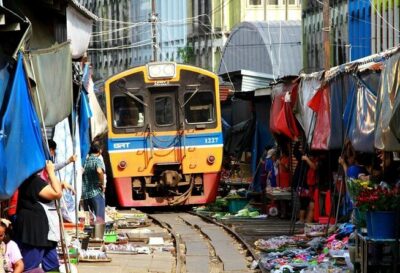
Half-Day Railway Market and Floating Market Tour in Thailand
Read our review →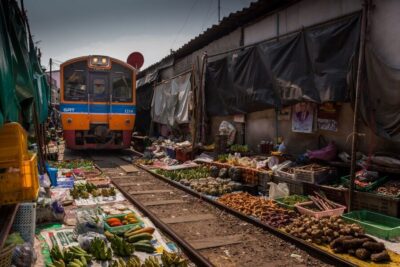
Damnoen Saduak, Train Market & Mahanakhon Day Trip
Read our review →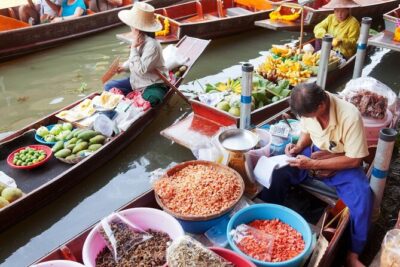
Damnoen Saduak Floating Market and Maeklong Railway Market Tour
Read our review →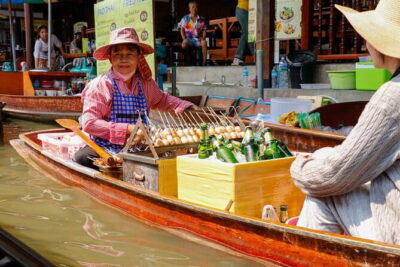
Day Trip to Bangkok Floating Market & Maeklong Railway
Read our review →
Railway and Floating Market Tour with Dragon Temple
Read our review →
Browse the lists this tour appears in