
REVIEW · SOUTH KOREA
Busan and Gyeongju 2 days Tour from Seoul by KTX Bullet Train
Busan gives you Korea at its most varied: fishing boats and seafood stalls, war-era hillside villages, broad beaches, and a temple built beside the sea. This tour adds Gyeongju, the former Silla capital, so you get two very different sides of the country in one fast trip.
I like the private format, which lets your guide adjust the pace for your group. I also like the smart use of the KTX bullet train. You avoid a long road journey between Seoul and Busan and spend more of your limited time seeing places.
The catch is the packed schedule. Fourteen stops across two days leave little room for lingering, and the $800 price is high unless you value private transport, a personal guide, included admissions, and the convenience of having the main arrangements handled.
Key points to know before booking
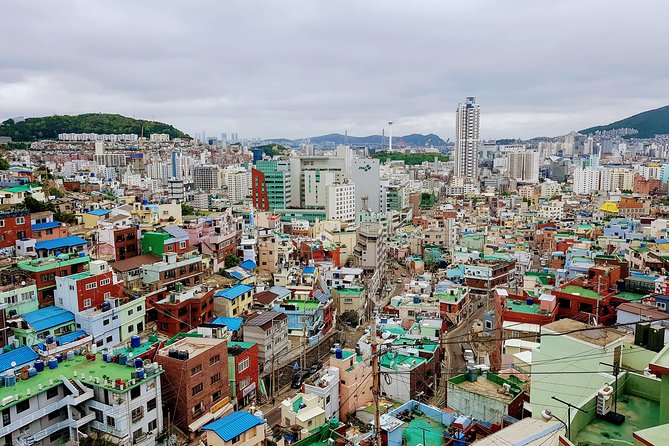
- Ami-ro and Amidong reveal Busan’s wartime story, before the tour moves to its postcard views.
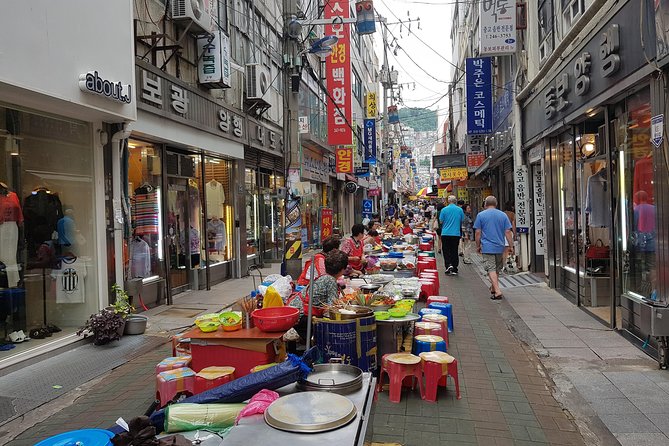
- Gamcheon Culture Village and Jagalchi Market offer color, street life, and a strong sense of local identity.
- Haedong Yonggungsa is the coastal temple highlight, with a setting rarely found among Korea’s major temples.
- Gyeongju connects royal tombs, palace ruins, museum treasures, and Buddhist art in one concentrated day.
- The $800 cost covers KTX, admissions, a guide, and private Busan transport, but not meals or accommodation.
- The trip is private, so only your group takes part, with pickup offered in Seoul and hotel pickup and drop-off in Busan.
The KTX start makes Seoul to Busan practical
Your day begins at 6:30 a.m. in Seoul. That early start matters because the itinerary covers a lot of ground, and the KTX keeps the longest transfer quick and comfortable compared with traveling the whole way by road.
Round-trip economy KTX fare is included. The train gets you between Seoul and Busan, while private transport is provided for the Busan portion. This split works well: use Korea’s fast rail network for the long distance, then let a local driver handle the city sights.
The tour is described as lasting about 16 to 18 hours, yet it is also presented as a two-day experience. That wording deserves attention before you pay. Accommodation is not included, and the listed inclusions cover hotel pickup and drop-off in Busan, not hotel drop-off in Seoul. Ask for the exact train schedule, overnight plan, and return arrangement so you know where you will sleep and when you will reach Seoul.
More Bullet Train Tours in South Korea:
- Busan city tour from Seoul by KTX bullet train
★ 5.0 · 39 reviews - Jeonju City tour by KTX bullet Train from Seoul
★ 5.0 · 2 reviews - Mt Fuji and Hakone 1-Day Bus Tour Return by Bullet Train
★ 5.0 · 26,383 reviews
Day one begins with Busan’s human story
The first stop is the Choi Min-Shik Gallery on Ami-ro. Choi Min-Shik was a first-generation documentary photographer whose black-and-white images focused on ordinary people living through war, poverty, and rapid modernization.
The visit lasts about 30 minutes and admission is free. It is a small stop, but an important one. Instead of starting with a view or a shopping street, you begin with Busan’s people. The photographs give context to the city’s postwar neighborhoods and help explain why so much of Busan feels built through hardship and improvisation.
If you prefer famous sights only, this stop may feel brief. I would keep it, since it gives the rest of the day more meaning.
Amidong and Gamcheon show how refugees shaped the hillsides
At Amidong Tombstone Culture Village, you see a stark chapter of Busan’s Korean War story. People first lived here in tents from 1951. As the settlement grew, homes were built over Japanese graves because space was scarce.
The stop lasts about an hour and admission is free. From the village, you can look across much of Busan. The setting explains the city’s steep streets and tightly packed homes better than a standard sightseeing circuit can.
Next comes Gamcheon Culture Village, another hillside settlement that became a refuge for people fleeing to Busan during the war. A creative urban renewal project beginning in 2010 brought murals, painted houses, small galleries, and visitor paths to the area. The project turned a once overlooked neighborhood into one of Busan’s best-known sights.
You have about an hour here. Expect steps, slopes, and narrow lanes. The bright colors make Gamcheon easy to photograph, but the place is more than a picture stop. It shows how a working neighborhood was reshaped without losing its connection to the city’s refugee past.
The short visit means you will see the main feel of the area rather than explore every lane. A private guide can help your group decide how much time to spend on viewpoints, art, and the neighborhood itself.
Jagalchi Market puts seafood at the center
Jagalchi Market is Korea’s largest seafood market, with live and dried fish sold by mostly female vendors known as Jagalchi ajumma. The name ajumma refers to a married or middle-aged woman.
You get about an hour here. It is a useful pause after the hillside villages because the market brings you down to the waterfront and into Busan’s working commercial life. You can see the difference between live seafood displays and the dried fish trade, two parts of the city’s long connection to the sea.
Food is not included, so any meal or seafood purchase is your own expense. That gives you control over spending, but the $800 tour price should be viewed as covering transport and guiding rather than a full meal package.
More Two-Day Trips in South Korea:
- Granada City Train 1 or 2-Day Hop-On Hop-Off Ticket
★ 3.5 · 3,128 reviews - Cusco: Machu Picchu 2-Day Inca Trail with Panoramic Train
★ 4.9 · 260 reviews - From Hanoi: 2-Day 2-Night Sapa Tour by Overnight Train
★ 4.4 · 96 reviews - From Delhi: 2 Days Taj Mahal & Agra City Tour With Fatehpur Sikri
★ 5.0 · 90 reviews
Gwangalli and Haeundae deliver Busan’s famous coast
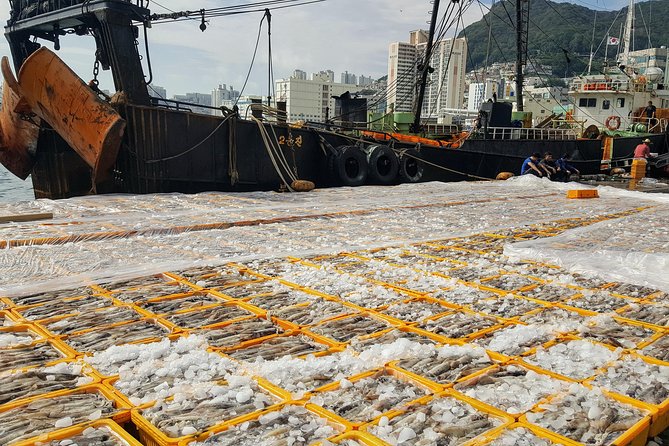
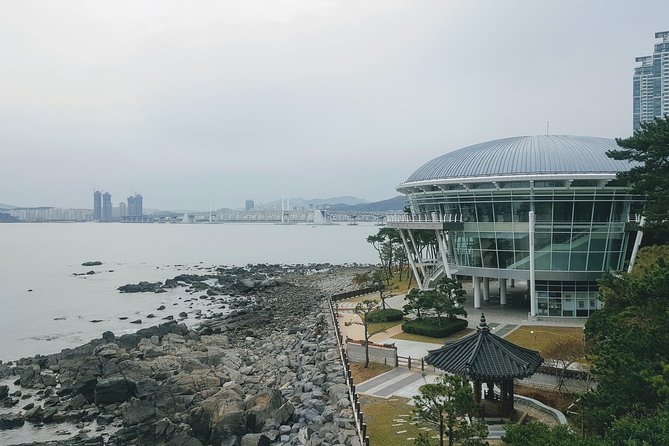
Gwangalli Beach offers fine sand, cafes, restaurants, and views of the bridge across the water. The tour allows about an hour, enough for a walk and photographs rather than a long beach stay.
The bridge looks different depending on the time of day. In daylight it gives the bay a strong urban frame. After dark, its illumination changes the mood. Since the day starts early and includes many stops, do not assume you will have a long evening here unless the guide’s timing allows it.
Haeundae Beach follows with a shorter 30-minute stop. It is Busan’s best-known beach, with a long strip of white sand beside a shallow bay. The visit is mainly for orientation and scenery. If you want swimming time, this schedule is not designed for it.
The two beaches work well together. Gwangalli feels more connected to cafes and the bridge view, while Haeundae is the classic broad beach setting. You get both without spending the whole day on one shoreline.
Haedong Yonggungsa is the day one centerpiece
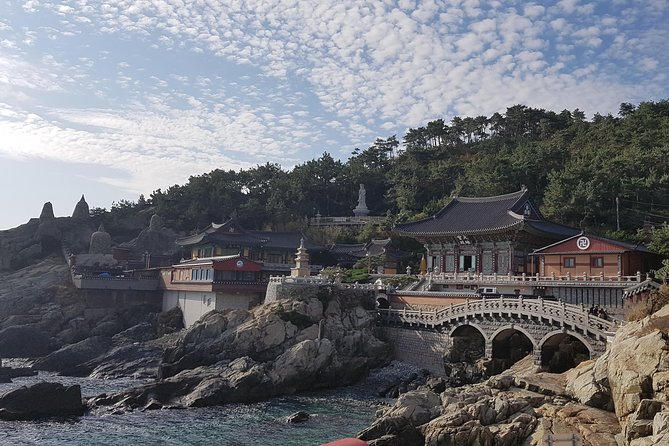
Haedong Yonggungsa receives the longest visit on day one, about one hour and 40 minutes. That is sensible. The temple is on Busan’s northeastern coast, an unusual setting in a country where many major Buddhist temples sit in mountain valleys.
The approach, stairs, temple buildings, and sea views make this more than a quick photo stop. You have time to look at the architecture and take in the setting without rushing through in 20 minutes.
The site can be demanding for anyone who finds stairs difficult. The itinerary does not provide a separate accessibility description, so ask the operator about the walking route if that is important for your group. Most people can participate, according to the tour information, but the full day still involves repeated walking and hills.
The UN Memorial Cemetery adds quiet reflection
The final Busan stop is the UN Memorial Cemetery, with about 40 minutes on site. It honors soldiers who died during the Korean War while serving under the UN flag.
The cemetery has a central memorial, flags from participating nations, and the names of those who died. After the noise and color of markets and beach districts, this is a calm place for remembrance.
It also ties together several themes from the day: war, displacement, international cooperation, and the rebuilding of Busan. The stop is short, but its tone is deliberately different from the more scenic parts of the tour.
Day two shifts from modern Busan to Silla-era Gyeongju
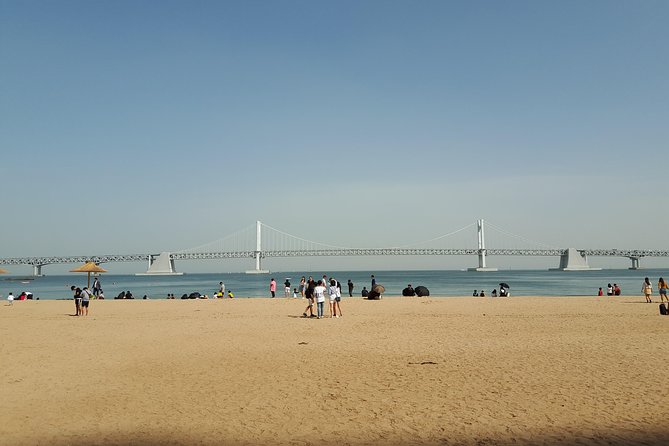
Gyeongju gives the second day a clear historical focus. The former Silla center is presented through tombs, palace remains, museum collections, and Buddhist architecture. You will see major sites, but the pace remains brisk.
At Daereungwon Tomb Complex, you spend about an hour among the large burial mounds of Silla kings and queens. The rounded tombs are easy to recognize and create a strong visual link to the ancient kingdom.
Admission is included. This is one of the better places for understanding Gyeongju’s identity because the tombs are not hidden inside a museum. They sit in open grounds and make the scale of Silla’s royal culture visible.
Banwolseong Fortress, also called the Half-Moon Fortress, receives 30 minutes. The old defensive site is known for its half-moon shape and archaeological importance. The visit is brief, so think of it as a focused walk and photo stop rather than a full archaeological tour.
Donggung Palace and Wolji Pond bring the Silla court to life
The next hour is spent at Donggung Palace and Wolji Pond. Donggung served as a secondary palace for the Silla crown prince, while Wolji Pond formed part of the palace complex.
The pond is known for its scenic setting and is especially attractive when illuminated at night. If your schedule places the visit during daylight, you will still see the relationship between the water, palace grounds, and surrounding ruins, but the famous evening effect may not be part of your tour.
Admission is included. This is a good place to slow down for a moment, although the overall Gyeongju day leaves limited spare time.
Gyeongju National Museum supplies the missing details
At Gyeongju National Museum, you have one hour to see Silla artifacts, including pottery, sculptures, and gold treasures. The museum gives useful context to the outdoor sites.
I find this kind of pairing valuable. The tombs and ruins show the shape of the past, while museum objects show the skill, beliefs, and status behind it. Without the museum, the ancient sites can blur together during such a busy day.
Admission is included, and the museum also has exhibitions and educational programs. With only an hour, you will need to follow the guide’s priorities rather than attempt every display.
Bulguksa and Seokguram complete the Buddhist story
Bulguksa Temple is a UNESCO World Heritage Site built during the Silla period in the eighth century. Its stone carvings and temple buildings reflect the artistic and religious achievements of the era.
You have about an hour here. The complex includes the Daeungjeon main hall and important stone features. Admission is listed as included, though the stop description also labels the ticket free. In practical terms, you should not expect a separate entrance charge for this tour.
Seokguram Grotto, written as Seokgulam in the stop list, follows with another hour. The grotto holds a carved Buddha statue and is another UNESCO World Heritage Site. Its design and stonework are often treated as the high point of Silla Buddhist art.
Bulguksa and Seokguram are close enough in theme to make a strong final pairing, but they also add more walking to an already full trip. Wear shoes suited to repeated walking and stairs. The tour does not include a specific footwear recommendation, but the schedule makes comfort a sensible priority.
What the $800 price really buys you
At $800 per person, this is not a low-cost way to reach Busan. You are paying for convenience and private service rather than just transportation.
The price includes:
- Round-trip economy KTX fare between Seoul and Busan
- An English-speaking guide
- Private transportation with a private minivan in Busan
- Admission fees to the listed tourist sites
- Hotel pickup and drop-off in Busan
Food, drinks, and accommodation are not included. Seoul hotel drop-off is also excluded. Group discounts are offered, and the private format may make the cost easier to justify when shared across a family or small group.
The strongest value comes from the amount covered in two days. You get Busan’s major districts, two beaches, a coastal temple, a market, and war-related sites, then move to Gyeongju’s main Silla attractions. Doing this independently would require careful rail planning, local transport, admission checks, and coordination between two cities.
The trade-off is that you pay a premium for a tightly managed schedule. If you have several days in Korea, you may prefer to visit Busan and Gyeongju separately at a slower pace. If your time is short, the private setup has a clearer advantage.
Who should book this private Busan and Gyeongju trip
I would recommend it most strongly to families, first-time visitors, and small groups who want major sights without managing every transfer. One family with two elementary-age children received especially attentive help from Kyung Ae, who worked to keep the trip comfortable for the children. That detail suggests the operator can be responsive to family needs, though you should still share your group’s requirements at booking.
The tour also suits you if you want an English-speaking guide and prefer to ask questions as you go. Since only your group participates, you do not have to match the pace of a large bus group.
I would hesitate if you dislike early starts, long sightseeing days, or repeated walking. The schedule is ambitious. I would also hesitate if your main goal is food, shopping, or relaxing at the beach, since those are secondary to covering the sights.
Free cancellation is available up to 24 hours before the start time for a full refund. A minimum number of participants is required, and if the operator cancels for that reason, you can choose another date or receive a full refund.
Should you book it?
Book this tour if you have limited time and want a private guide, KTX transport, and the main Busan and Gyeongju sights arranged in one package. It is especially useful for families and small groups that place a high value on convenience.
Skip it if you can give each city more time or want an unhurried trip. At $800 per person, the tour earns its price through transport, guiding, and planning, not through meals or overnight lodging. Confirm the exact two-day timing and accommodation details before booking.
FAQ
Where does the tour start?
The tour starts in Seoul, South Korea, at 6:30 a.m.
How do I travel from Seoul to Busan?
The tour uses the KTX bullet train. Round-trip economy-class KTX fare is included.
Is this a private tour?
Yes. Only your group participates in the activity.
Is hotel pickup offered?
Pickup is offered in Seoul, and hotel pickup and drop-off are included in Busan.
Is hotel drop-off in Seoul included?
No. Hotel drop-off service in Seoul is not included.
Is accommodation included?
No. Accommodation is not included in the tour price.
Are meals included?
No. Food and drinks are not included.
What type of guide is provided?
A qualified English-speaking guide is included. The tour information identifies Kyung Ae as a guide connected with the experience.
Are admission fees included?
The tour includes admission fees to the tourist sites. The stop information specifically lists included admission for Daereungwon Tomb Complex and Donggung Palace and Wolji Pond.
Can I cancel for a full refund?
Yes. You can cancel at least 24 hours before the experience start time for a full refund. Changes or cancellations made less than 24 hours before the start time are not accepted for a refund.
Just added around South Korea
- Seoul Tram Pedal Challenge★ 5.0 · 32 reviews
- Scenic Escape: Nami Island, Garden of Morning Calm, and Rail Bike★ 3.0 · 2 reviews
- Nami Island & Petite France & Italian Village & Gangchon Rail Bike One-Day Tour★ 4.5 · 52 reviews
- Gyeongju UNESCO Sites Tour by KTX train; The Museum Without walls★ 4.5 · 11 reviews
- Private Tour Rail Bike & Nami Island & (Petite France or Garden of Morning Calm)★ 4.5 · 13 reviews
- Nami Island Trip with Petite France & Italian Village and Gangchon Rail Bike★ 4.5 · 41 reviews
- Eobi+Nami+Hanbok Tour with Rail Bike or Strawberry Option★ 5.0 · 10 reviews
- Special Private Tour Nami Island, Rail Bike, Petite France★ 5.0 · 42 reviews
South Korea Train Tours, compared.
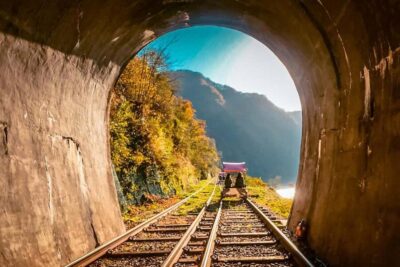
Nami Island, K-drama Garden & Rail Bike Day Tour
Read our review →
Day Trip to Nami Island with Rail bike and The Garden of Morning Calm
Read our review →
Nami+Alpaca+Garden of Morning Calm (+Rail Bike Option)
Read our review →
Alpaca, Nami, Morning Calm or Eobi (+Rail Bike)
Read our review →
Full-Day Tour in Mt. Seorak & Nami (+Rail Bike Option)
Read our review →
Alpaca World and Nami Island with Gangchon Rail Bike Tour
Read our review →
Nami Island & Petite France & Italian Village & Gangchon Rail Bike One-Day Tour
Read our review →
Special Private Tour Nami Island, Rail Bike, Petite France
Read our review →Browse the lists this tour appears in