
REVIEW · CAIRO
Cairo : Luxor Full Day Guided Tour & Overnight Train Rounded trip
Luxor packs some of Egypt’s greatest ancient sites into one long day. This tour gets you there by overnight train, places you with a licensed Egyptologist, and covers both the West and East Banks before sending you back to Cairo.
I like the private air-conditioned vehicle, which makes moving between scattered monuments far easier. I also like that station transfers are included at both ends, since arriving before sunrise in an unfamiliar city is no time to bargain for a taxi.
The trade-off is the pace. You spend about nine hours on each overnight train journey and visit five major sites in one day. The train class also needs clarification: the schedule describes a first-class seated train, while the additional information calls it a sleeper train.
Key points to know before booking
- Five major Luxor sights in one day: The route includes the Valley of the Kings, Hatshepsut’s Temple, the Colossi of Memnon, Karnak Temple, and Luxor Temple.
- Two overnight train rides: You leave Cairo on Day 1 and return to Cairo after your Luxor sightseeing day.
- Private guiding with an Egyptologist: You receive personal attention in a private tour setting, with different guide languages available.
- Entrance fees are extra: Pay admission at the monuments in Egyptian pounds. An international student card gives 50 percent off entrance fees.
- Khalde may be your guide: One highly praised guide named Khalde is noted for clear explanations and arranging a good lunch stop.
- Early arrival and a long day: You reach Luxor in the morning, tour until the evening, then return to the station for the overnight trip back.
Why this Cairo to Luxor trip works
Luxor is too important to skip, but reaching it from Cairo takes time. The cities are far apart, and a short domestic visit requires more planning than many first-time visitors expect. This package turns the transfer into part of the trip by using an overnight train in both directions.
That saves you from paying for two nights in Luxor and keeps the daytime free for sightseeing. You leave your Cairo or Giza hotel on the first evening, reach the station with an arranged transfer, and board the train. After the Luxor tour, you return to the station and take the night train back to Cairo.
I like this format for travelers with limited time in Egypt. You can see the main monuments without arranging a separate hotel, driver, guide, and rail tickets. At the same time, you should be honest with yourself about the physical cost. The tour gives you one full sightseeing day, but that day follows an overnight journey and ends with another overnight journey.
The tour price is $333 per person. That includes round-trip train tickets, Cairo and Luxor station transfers, transport in an air-conditioned vehicle, a guide, taxes, landing fees, and parking fees. The price does not include admission to the archaeological sites, meals, or any train upgrade.
That can be good value if you want a tightly organized visit. The private transport and guide are the most useful parts, since Luxor’s sights are spread across two sides of the Nile. Still, add entrance fees and food to your budget before deciding. Ask for the exact rail arrangement too, since the description refers both to a first-class seated train and a sleeper train.
More Overnight and Sleeper Trains in Cairo
- Egypt on Budget – 8 Days ( Cairo , Aswan , Nile Cruise – Luxor ) Sleeper Train
★ 4.5 · 121 reviews - 6- Days Aswan , Abu Simbel , Cruise , Luxor & Round Sleeper Train
★ 5.0 · 25 reviews - Cairo : Luxor East and West Banks Tour & Overnight SLEEPER Train Rounded trip
★ 4.5 · 21 reviews
Day 1: Leaving Cairo for the overnight train
Pickup is available from your hotel in Cairo or Giza. A transfer takes you to the Cairo train station, where you board the overnight service to Luxor.
The schedule gives the train ride as about nine hours. That is a long stretch, so pack water, a camera, and whatever you need for a night on the train. The supplied details say the train is a sleeper train round trip, but the Day 1 description calls it a first-class seated train and says a sleeper upgrade may cost extra.
This is the one practical point I would settle before paying. Ask the operator in writing:
- Is the included ticket seated first class or a sleeper berth?
- Is the sleeper option available on both journeys?
- What extra charge applies?
- Where will the Cairo pickup take place?
- What time should you expect to reach Luxor?
The tour is meant to keep things simple, but rail comfort matters here. A seated overnight ride and a sleeper journey are very different experiences, especially when you have a full day of ancient sites ahead.
The West Bank: tombs, cliffs, and royal power
You arrive at Luxor in the morning and meet a licensed guide at the train station. From there, a private air-conditioned vehicle takes you to the monuments.
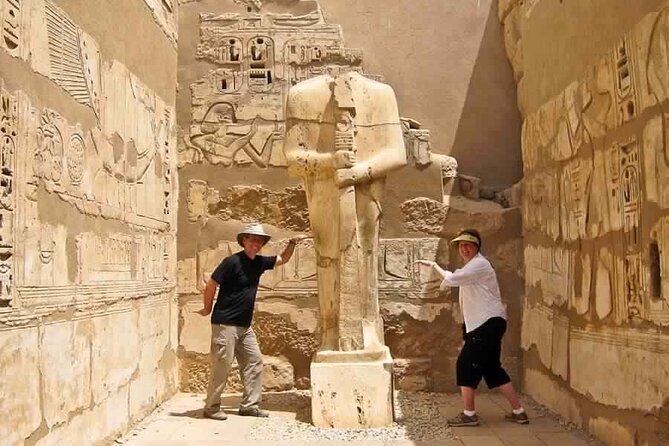
The day begins on Luxor’s West Bank, where the Valley of the Kings provides the main event. This desert valley served as the burial ground for pharaohs including Thutmose I, Thutmose III, Tutankhamun, Ramesses VI, Merenptah, and Amenhotep II.
You have about two hours here. That sounds generous, but the Valley of the Kings can easily absorb much longer. Your admission fee is not included, and the number of tombs open to the public can vary. The basic entrance ticket normally covers a set number of tombs, while special tombs can require an additional payment. Since the tour information does not state which tombs are included, ask your guide on arrival.
The famous name is Tutankhamun, but the smaller tomb is not the only reason to visit. I find the decorated burial chambers of the other pharaohs especially valuable because they show how Egyptian ideas about the afterlife were recorded in color and symbol. Your guide can help you read the scenes rather than simply walk past painted walls.
The site is not a gentle stroll. Expect an exposed setting, some walking, and a hot, dry feel depending on the weather. Wear practical shoes and bring your camera. The tour specifically recommends bringing one, though photography rules may differ from tomb to tomb.
Hatshepsut’s Temple and the Colossi of Memnon
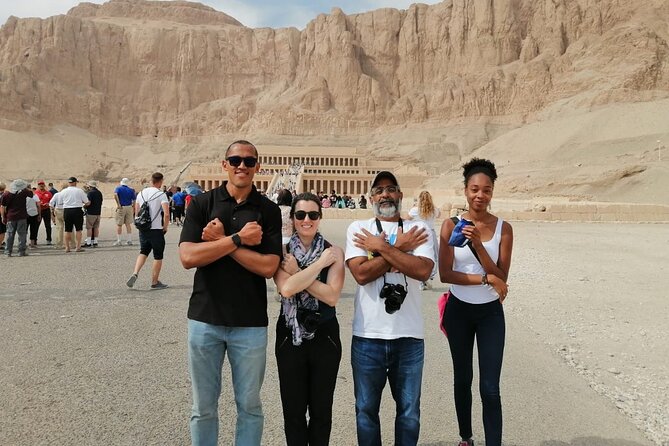
Next comes the Temple of Queen Hatshepsut at Deir el Bahari, with about an hour and a half devoted to the visit.
Hatshepsut is one of ancient Egypt’s most interesting rulers because she was a woman who took the full title and role of pharaoh. The temple’s broad terraces and setting against the cliffs make it different from the underground tombs you have just seen. Your guide’s explanation is important here, since the political story behind Hatshepsut’s rule is more memorable than a quick walk around the stonework.
Admission is extra. The site is open and exposed, so your pace may slow in the heat. The time allotment is enough for a useful visit, but not for lingering over every detail.
The next stop is the Colossi of Memnon, with about 40 minutes. These two enormous seated statues once guarded the entrance to the mortuary temple of Amenhotep III. The temple itself has largely disappeared, but the statues remain a quick and worthwhile stop.
Admission to the Colossi is included, according to the tour details. This is a shorter visit than the Valley of the Kings or Karnak, and it gives you a chance to see a monumental site without another long walk. Keep your camera ready, since the statues make an easy visual record of your West Bank morning.
More Overnight and Sleeper Trains in Egypt
- Kings of Ancient Egypt : 6 Days Cairo and Luxor Guided Tours & Overnight Train
★ 5.0 · 7 reviews - Egypt 8 D: Cairo, Aswan,Abu Simbel, cruise, Luxor & Sleeper Train
★ 4.5 · 7 reviews - Cairo : 3-Days Cairo and Luxor Guided Tours by Overnight Train
★ 5.0 · 6 reviews - Full day Luxor tour from Cairo by a sleeper train
★ 5.0 · 5 reviews
Karnak Temple: the grandest stop of the day
After crossing to the East Bank, you spend about two hours at Karnak Temple.
Karnak is not one single building. It is a huge religious complex developed by successive rulers over many centuries. The scale can be hard to grasp until you enter the great hypostyle hall, where massive columns fill the space and carved surfaces carry royal and religious scenes.
This is the stop where a good Egyptologist guide earns the fee. Without context, Karnak can become a procession of columns, gateways, and statues. With guidance, you begin to understand how different rulers added to the complex and how its parts worked together as a place of worship.
Admission is not included, and you pay in Egyptian pounds at the sightseeing stops. An international student card gives a 50 percent discount on entrance fees in Egypt, so carry it if you have one.
Two hours is a reasonable introduction, though the site is large. You will not examine every corner. Instead, expect a focused route through the most important areas. If you are especially interested in temples, this is the place where the one-day schedule may feel tight.
Luxor Temple after the daylight sites
The final major stop is Luxor Temple, with about two hours scheduled.
Luxor Temple differs from Karnak in scale and mood. It is a more compact complex in the heart of the city, built for religious ceremonies connected with kingship. Statues, columns, gateways, and later additions help show how the site changed over time.
The temple is a fitting end to the sightseeing day because it gives you a final concentrated look at ancient Luxor before you return to the train station. Like Karnak, it requires an additional admission fee, payable in Egyptian pounds.
By this point, you will have already visited the Valley of the Kings, Hatshepsut’s Temple, and the Colossi of Memnon. You may be tired, so do not expect the same energy you had at the first stop. The private vehicle helps by reducing unnecessary walking between sites, but the full day remains demanding.
One practical detail is not spelled out: the exact timing of lunch. One guide named Khalde is praised for taking a family to an excellent restaurant with tasty food. If Khalde leads your tour, you can ask about a similar lunch stop. If another guide is assigned, confirm whether lunch is included or simply arranged at your own expense, since meals are not listed among the inclusions.
The overnight return to Cairo
After Luxor Temple, you are taken to the Luxor station for the overnight train back to Cairo. The return ride is listed at about nine hours.
You arrive at Cairo station around 5 AM on Day 3 and receive a transfer to your hotel in Cairo or Giza. This is a useful service. After a night train, finding your own way across Cairo before sunrise would add needless strain.
The schedule means you should plan nothing demanding on the morning of arrival. The tour ends with the hotel transfer, but your body may need rest after the two train journeys and the long Luxor day.
What the guide adds to the experience
The tour includes an Egyptologist guide, and that matters most at the Valley of the Kings, Hatshepsut’s Temple, Karnak, and Luxor Temple. These places reward explanation. Names, symbols, royal succession, and religious purpose are not always obvious from the stones alone.
The tour is described as private, with a maximum of 15 people for the activity. That suggests a smaller setting than a large coach tour, though you should confirm how the private arrangement applies to your own booking. A private vehicle also lets the day move at your group’s pace within the fixed schedule.
Different guide languages are available. If you want a specific language, request it when booking rather than assuming it will be assigned automatically.
Khalde is the only guide named in the supplied information. He is praised for explaining the history of each site clearly and for choosing a good restaurant. That gives you a useful name to request, though availability is not guaranteed.
What the $333 price really covers
At $333 per person, this is not a low-cost rail transfer. It is a packaged private excursion with transport, guiding, and station handling included.
The strongest value comes from combining several services:
- Round-trip Cairo to Luxor train tickets
- Pickup and drop-off at Cairo and Luxor stations
- Private air-conditioned transport in Luxor
- An expert guide
- Taxes, parking fees, landing fees, and service charges
You still need to pay for monument admissions. The tour also does not list meals, drinks, or a sleeper upgrade as included. Because the train description is inconsistent, confirm the ticket type before comparing this price with other Luxor options.
I would consider the price reasonable for someone who values organization and personal guiding more than flexibility. If you already know Luxor well and only need transportation, you may prefer to arrange the train and a local guide separately. If this is your first visit and you want the main sites handled in one tightly planned trip, the included transfers remove several points of friction.
Who should book this experience
I would choose this tour if you have only a few days in Egypt and want Luxor without changing hotels. It suits people who prefer a guide at major monuments and do not want to arrange station pickups, a private vehicle, and rail tickets on their own.
Families can also benefit from the private format, since the guide can explain the sites at a level that works for the group. Children must be accompanied by an adult, and the long train rides and full sightseeing day should be considered before booking.
I would hesitate if you dislike overnight trains, need a slow schedule, or want time for less famous Luxor sites. The route focuses on the major attractions and leaves little room for wandering. You also need to be comfortable paying entrance fees separately and carrying Egyptian pounds for them.
Free cancellation is available if you cancel at least 24 hours before the start time. Changes or cancellations within 24 hours are not refunded, and poor weather may lead to a new date or a full refund.
My verdict on the Cairo to Luxor train tour
Book this tour if your priority is seeing Luxor’s essential monuments in one organized burst. The combination of a private vehicle, Egyptologist guide, station transfers, and round-trip rail tickets is useful, especially for a first visit.
Before booking, confirm the train class, sleeper upgrade cost, guide language, entrance-fee budget, and lunch arrangements. If you accept the overnight travel and fast pace, this is an efficient way to put the Valley of the Kings, Karnak, and Luxor Temple into a short Egypt itinerary. If you want comfort and unhurried exploration, spend at least one night in Luxor instead.
FAQ
How long does the tour last?
The experience lasts about three days. You leave Cairo on Day 1, tour Luxor on Day 2, and arrive back at Cairo train station around 5 AM on Day 3.
Does the tour include round-trip train tickets?
Yes. Train tickets between Cairo and Luxor are included.
Is the train seated or a sleeper train?
The tour information gives both descriptions. The Day 1 schedule refers to an overnight first-class seated train and mentions a sleeper upgrade at extra cost, while the additional information calls it a sleeper train round trip. Confirm the exact ticket type before booking.
Are Cairo and Luxor station transfers included?
Yes. Pickup and drop-off at the train stations in both cities are included. Cairo hotel transfers are available for hotels in Cairo or Giza.
Which Luxor sites are visited?
The route includes the Valley of the Kings, the Temple of Hatshepsut at Deir el Bahari, the Colossi of Memnon, Karnak Temple, and Luxor Temple.
Are entrance fees included?
No. Entrance fees for the sightseeing stops are not included. You should pay them at the sites in Egyptian pounds.
Can an international student card reduce the entrance fees?
Yes. An international student card gives a 50 percent discount on entrance fees in Egypt.
Is a guide included?
Yes. The tour includes an expert guide, with different guide languages available. The Luxor guide is described as licensed and trained as an Egyptologist.
Is the tour private?
The experience is described as a private tour with personal attention and a maximum of 15 participants. Confirm the exact group arrangement when booking.
What happens if I cancel?
You receive a full refund if you cancel at least 24 hours before the experience starts. Cancellations or changes made less than 24 hours before the start time are not refunded or accepted.
More Full-Day Trips in Cairo
- Cairo : Luxor Full Day Guided Tour & Overnight SLEEPER Train Rounded trip
★ 5.0 · 2 reviews - Bangkok: Ayutthaya, Railway & Floating Markets Full-Day Tour
★ 4.7 · 1,200 reviews - Porto: Douro Valley Full-Day Boat, Train, and Lunch Tour
★ 4.7 · 787 reviews - Full-Day Franschhoek Hop On Hop Off Wine Tram Tour from Cape Town
★ 4.5 · 579 reviews
Just added around Cairo
- over night by train from Cairo to luxor with hot air balloon★ 5.0 · 2 reviews
- 2-Day Private Tours to Luxor and Dendera from Cairo by Sleeper Train★ 5.0 · 3 reviews
- Private Tour: 8 Days 7 Nights Great Pyramids & Nile Cruise by Train from Cairo★ 4.5 · 3 reviews
- Luxor Day Tour by Sleeper Train★ 5.0 · 3 reviews
- Package 8 Days 7 Nights to Pyramids, Luxor & Aswan by Train★ 5.0 · 3 reviews
- Package 7-Days 6-Nights Cairo Pyramids, Nile Cruise&Alexandria by Sleeper Train★ 5.0 · 2 reviews
- Cheap Egypt holiday 11 Days Cairo-Luxor-Aswan-Abu Simbel by sleeping train★ 5.0 · 4 reviews
- 10 Day Around Egypt to Cairo ,Giza ,White desert ,Nile Cruise With Train & Hotel★ 5.0 · 5 reviews
Cairo Train Tours, compared.

Overnight Luxor Tours by train from Cairo with Hot Air Balloon and much more
Read our review →
6- Days Aswan , Abu Simbel , Cruise , Luxor & Round Sleeper Train
Read our review →
Luxor East and West Banks Tour & Overnight SLEEPER Train Rounded trip
Read our review →
Luxor East and West Banks Tour by Overnight Sitting Train Rounded trip
Read our review →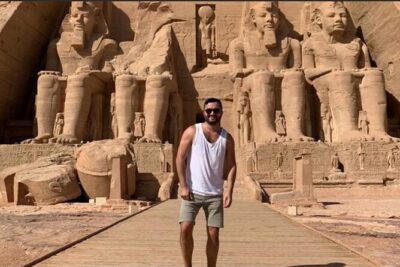
4 Days Nile cruise luxor, Aswan,Hot air balloon&abu simbel with Train from Cairo
Read our review →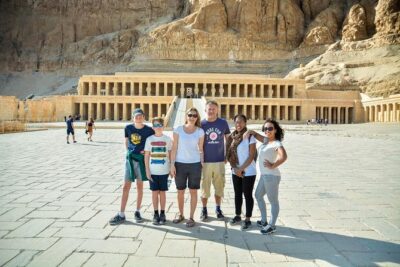
Luxor East and West Banks Guided Tour& Overnight Sitting Train Round Trip
Read our review →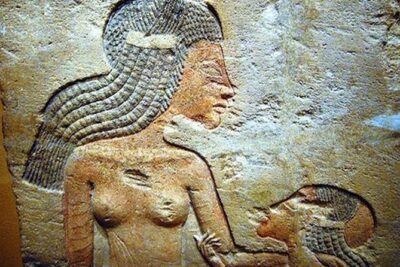
12-Night Private Tour: Amarna and El Minya with Cruise and Train
Read our review →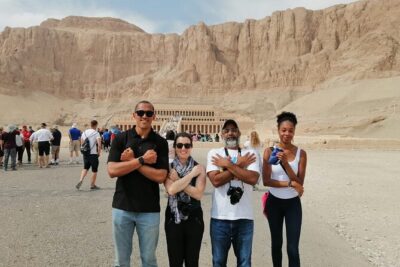
Egypt 8 D: Cairo, Aswan,Abu Simbel, cruise, Luxor & Sleeper Train
Read our review →Browse the lists this tour appears in