
REVIEW · BANGKOK
Erawan Waterfall, River Kwai & Railway Tour : From Bangkok
The best part of this day is the sharp change of scene: you leave central Bangkok by air-conditioned van, cross the famous River Kwai Bridge, then trade wartime history for forest trails and swimming holes at Erawan Waterfall. I like the combination of a train ride and time in nature, two experiences that are hard to fit together on a short Bangkok stay.
I also like that the price includes transport, park admission, train fare, a Thai lunch, and a guide. The drawback is the long road time, about seven hours in total, and the train can suffer delays or breakdowns. You should book this as a full-day outing, not a quick side trip.
Key points to know
- Two major Kanchanaburi sights in one day: Visit the River Kwai Bridge and Erawan National Park without arranging separate transport.
- The train ride is part of the story: You ride the Death Railway across the river, though service problems can shorten the journey.
- Seven waterfall levels: Erawan offers walking, hiking, swimming, and quiet spots beside the water.
- A long day from Bangkok: Expect roughly 12 hours, with around three hours by van in each direction.
- Useful inclusions: Transport, entrance fees, train ticket, Thai lunch, and an English-speaking guide are covered.
- Pack for both hiking and swimming: Bring sturdy comfortable shoes, a towel, dry clothes, sun protection, water, and cash.
Why this Bangkok day trip works
This is a history-and-nature outing rather than a relaxed sightseeing day. You begin with the difficult story of the Burma Railway, often called the Death Railway, then spend the second half of the day among streams, rocks, and jungle paths at Erawan National Park.
I like the way the two halves balance each other. The River Kwai portion gives the day purpose and context. Erawan gives you room to move, cool off, and slow down. If you only want a waterfall visit, this tour includes more history than you need. If you want only museums and memorials, the waterfall will feel like a change of gear.
The tour costs $125 per person. That is a serious price for Thailand, but it covers the long round trip from Bangkok, an air-conditioned vehicle, the national park ticket, the train fare, lunch, and a licensed local guide. The value depends on how much you value convenience. Doing these stops independently would require arranging intercity transport, local transfers, park entry, and the railway ticket yourself.
The day has a 4.5 rating from 25 bookings, with strong praise for the organization, comfortable vehicle, driver, lunch, and clean, well-marked park. The weaker side is guide commentary. Some departures have included plenty of explanation, while others have offered less detail about the wartime past than expected.
More Death Railway and River Kwai Tours in Bangkok:
- From Bangkok: Death Railway & Hellfire Pass Tour with Lunch
★ 4.6 · 931 reviews - Bridge on the River Kwai and Thailand-Burma Railway Tour
★ 4.5 · 658 reviews - Bridge on the River Kwai and Thailand-Burma Railway Guided Tour
★ 4.5 · 353 reviews
Leaving Bangkok for Kanchanaburi
Pickup is offered from a wide group of central Bangkok areas, including Khaosan Road, Chinatown, Ratchathewi, Phayathai, Pratunam, Siam, Silom, Sathorn, Chidlom, Asok, and parts of Sukhumvit. Some private bookings can include hotel pickup and drop-off, but group departures use designated meeting or pickup points.
Start early and expect a long ride. The van journey to the first major stop takes about three hours. That sounds demanding because it is, but the air-conditioned vehicle makes the distance more manageable. You will want water, a light layer, and a way to pass quiet stretches of road.
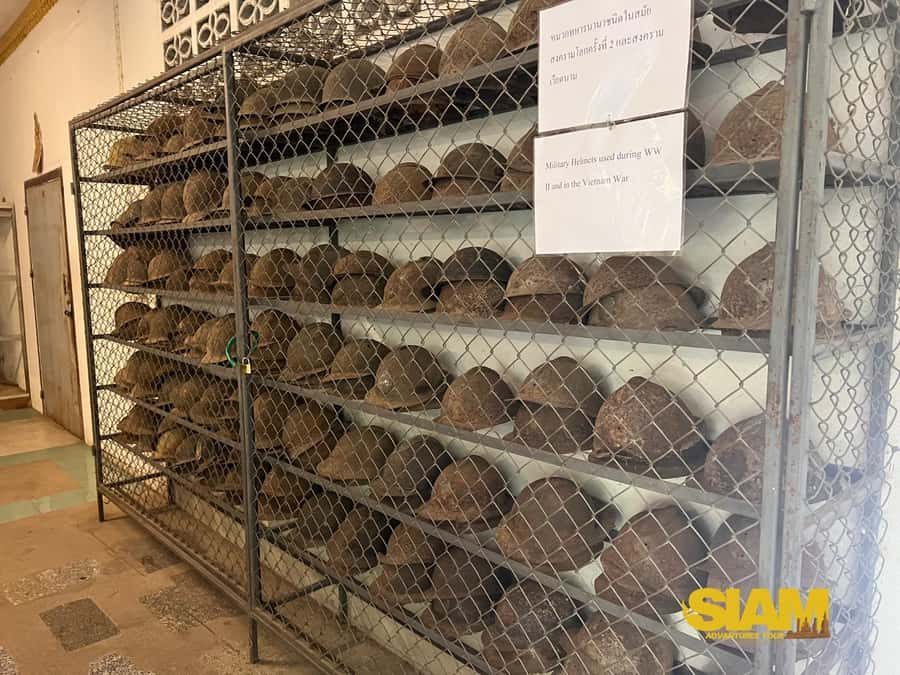
The guide is meant to explain the region as you travel. This part matters because Kanchanaburi is not just a collection of scenic stops. The bridge and railway are tied to the forced labor and wartime deaths connected with construction of the Burma Railway during World War II.
The quality of this commentary can shape your day. If you care strongly about the historical side, ask questions and listen closely when the guide explains the route. The tour includes an English-speaking guide, with Thai and German also available, but the amount of detail may vary.
Walking across the River Kwai Bridge
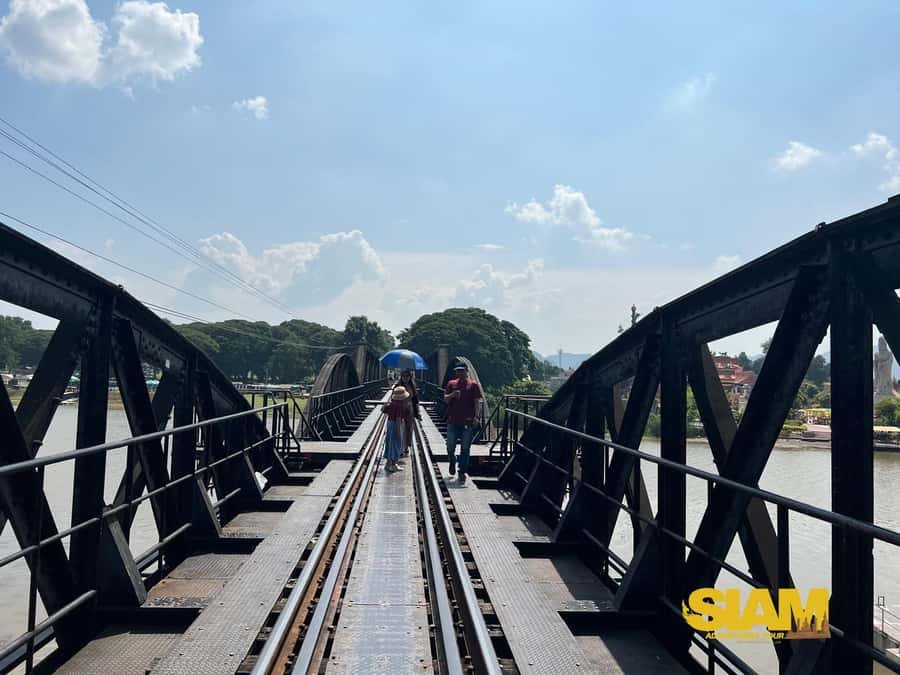
The bridge is the tour’s first main stop. You have time to see it, walk around, take photographs, and hear about its place in the railway story. This is not simply a photo stop with a famous name. The bridge helps you picture the railway as a working route built under brutal wartime conditions.
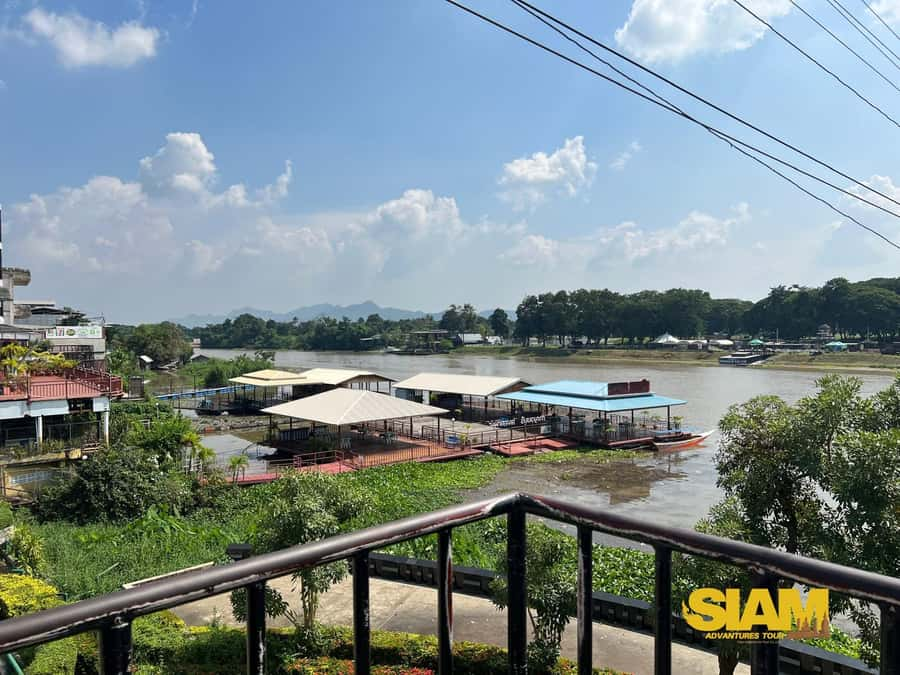
The setting also gives you a first look at the river and surrounding countryside. The visit is active but not strenuous in the same way as Erawan. You can walk across the bridge and pause for views, though you should stay aware of railway operations and follow local instructions.
The main limitation is time. This is a guided stop within a packed day, not a long museum visit or a full study of the railway. If you want detailed information about prisoner-of-war camps, labor conditions, or the wider wartime campaign, you may want a separate visit to a museum or memorial in Kanchanaburi.
Still, the bridge is a strong opening. It gives the day a real sense of place before you board the train.
Riding the Death Railway beside the river
After the bridge, you travel by van for about an hour to the railway portion of the day. The train ride offers a more personal connection to the route than viewing the bridge from the roadside. You sit with local passengers and see the river and countryside from the tracks.
The ride is not a luxury rail journey. Its value comes from the setting and the history. You are using part of the route associated with the Death Railway, and the slower train gives you time to look out rather than rush past the area in a van.
There is an important practical warning here: train service can be unpredictable. One departure had a breakdown halfway through, cutting out much of the more scenic portion and reducing the value of the rail segment. That is not something the tour can fully control, so you should treat the train as a worthwhile possibility rather than the guaranteed highlight of the day.
Even with a shorter ride, the train adds something the road transfer cannot. It connects the historical explanation to the actual railway line and brings you across the river in a way that feels less staged than a standard sightseeing stop.
More Train Tours in Bangkok:
- Bangkok: Damnoen Saduak Market and Maeklong Railway Market
★ 4.5 · 26,723 reviews - The Old Siam: Damnoen Saduak and Maeklong Railway Market
★ 4.5 · 10,992 reviews - Bangkok: Train Market & Floating Market with Boat Ride
★ 4.7 · 9,547 reviews - Half-Day Railway Market and Floating Market Tour in Thailand
★ 4.5 · 3,924 reviews
Lunch before the waterfall
A Thai lunch is included, usually placed between the railway visit and Erawan National Park. The meal helps break up the day, and the restaurant has been described as having traditional decoration, friendly service, and a good meal.
Do not expect lunch to be the main reason to book. It is a practical included meal during a long excursion. Drinks are not included, so bring cash and plan to buy beverages as needed. You should also carry your own water for the waterfall walk, especially in hot weather.
The lunch timing is useful because Erawan comes after another vehicle transfer. You will be glad to have eaten before tackling the park trails, particularly if you plan to reach several of the upper levels.
Seven levels at Erawan National Park
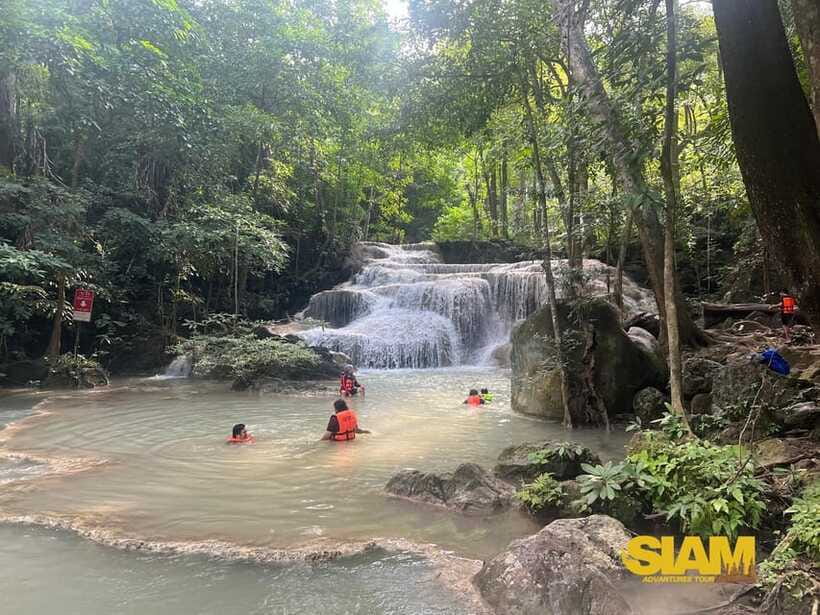
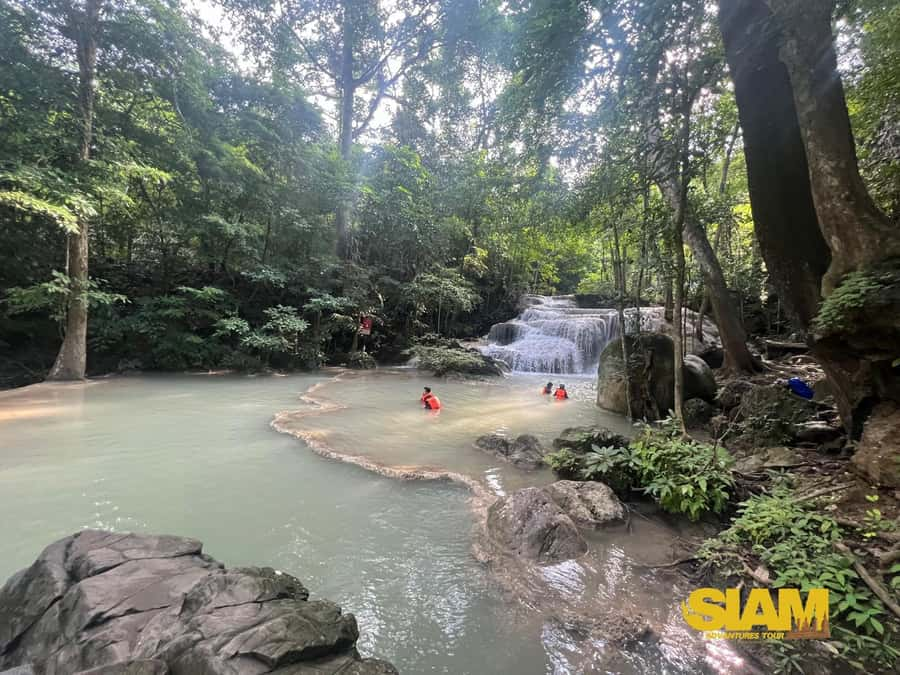
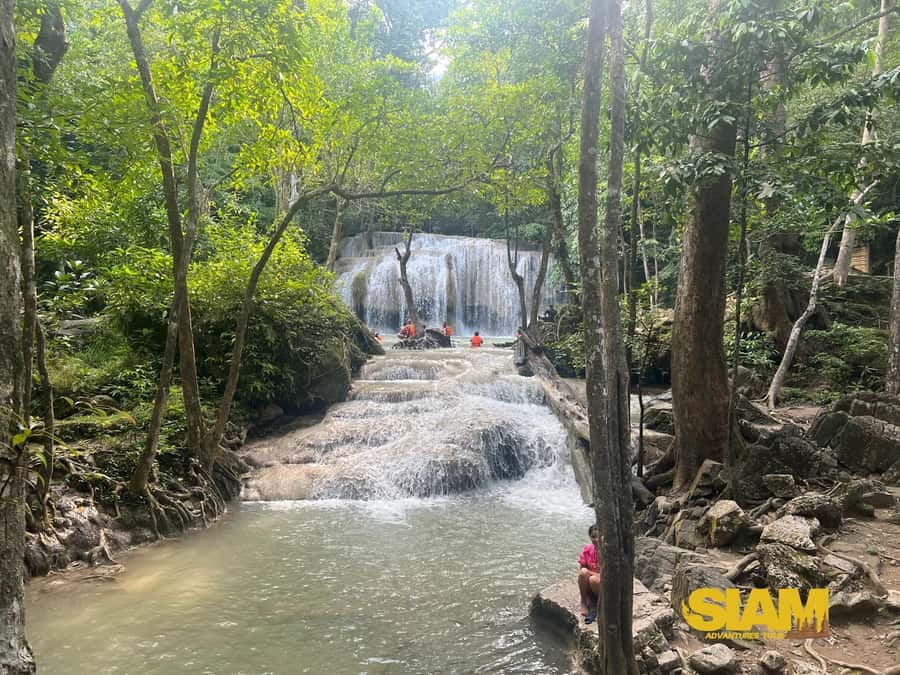
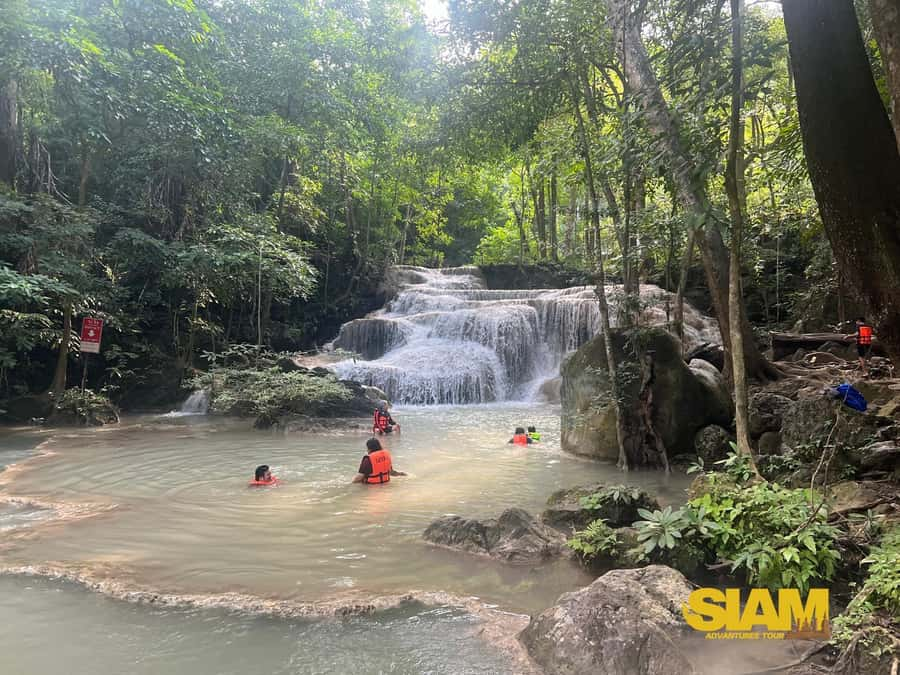
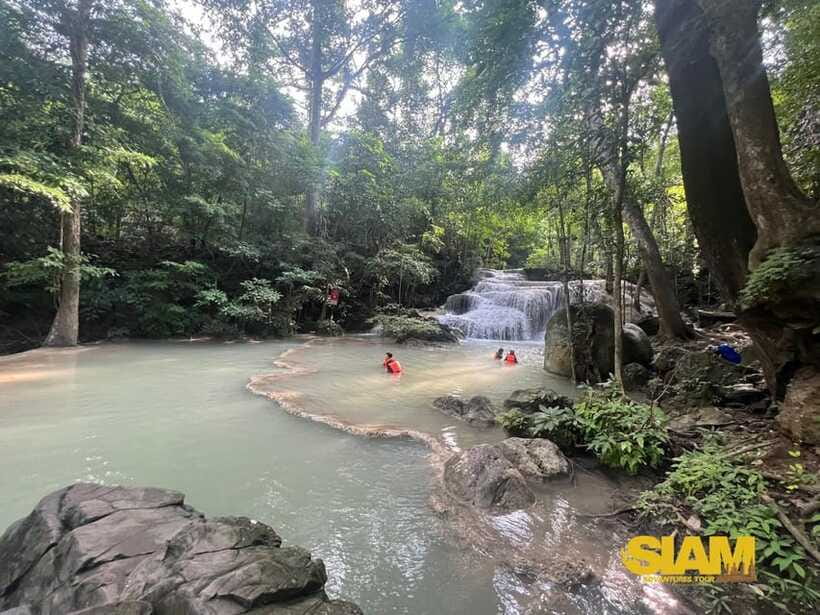
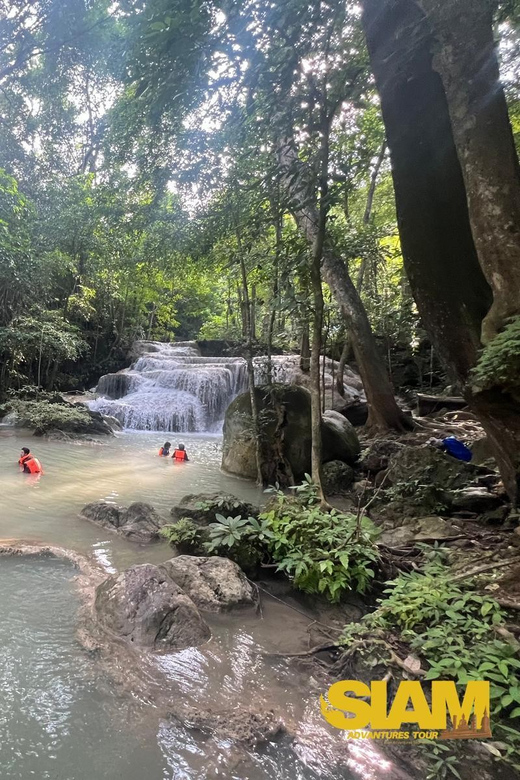
Erawan Waterfall is the day’s outdoor reward. The Huai Mong Lai River runs down the mountain for about 1,500 meters, forming seven natural tiers. Each level has its own pool or cascade, and the lower areas are easier to reach than the upper ones.
You can walk, hike, swim, or simply sit beside the water. The park is described as clean and well marked, which matters because the trail climbs and you will want to know how far you have gone. The water is the main attraction, but the walking is part of the experience.
Be realistic about the climb. Reaching the top requires many steps and uneven sections, so this is not a simple stroll from the parking area to one pool. You do not have to climb every level, but the upper tiers require more effort and time. Comfortable shoes are essential. Sandals may work for a short visit, but they are a poor choice if you plan to hike upward.
Swimming is allowed at the natural tiers, and you should bring a towel, swimsuit, and change of clothes. A life jacket can be rented for 20 baht. A golf cart is also available for 30 baht, though the tour information does not promise that it will take you through the whole waterfall route. Bring sunscreen, sunglasses, a hat, and a waterproof camera if you want photographs near the pools.
Your time here is one of the most important parts of the schedule. You get a chance to cool off after the road and railway sections, but the visit is still bound by the return drive to Bangkok. If you want to hike every level slowly, swim at several pools, and stop for photographs, a dedicated Erawan visit would give you more freedom.
For this tour, I would pick one clear goal. You might aim for a higher waterfall tier, swim at a lower pool, or simply enjoy a short forest walk. Trying to do everything can make the stop feel rushed.
The return to Bangkok
The return van journey takes about three hours, making this a 12-hour day overall. Depending on traffic, the trip may stretch toward 14 hours. You are dropped back at central Bangkok locations such as Khaosan Road, Chinatown, Phaya Thai, Ratchathewi, Phloen Chit, Asok, and other listed areas.
That timing is useful because you can still have an evening in Bangkok, but do not plan a fixed dinner reservation or show too close to the stated return. Road traffic and the train schedule can affect the finish.
This is also why the tour suits visitors with limited time in Bangkok better than people staying several weeks. You spend much of the day in transit, but the transport solves a real problem: River Kwai and Erawan are far enough from Bangkok that independent travel takes planning and energy.
Who should book this experience
I would recommend this tour to you if you want three things in one day: a major Kanchanaburi sight, a railway ride, and time in nature. It works well for first-time visitors who do not want to arrange several connections themselves.
It is especially suitable for active adults and older children who can manage a long van ride and a climb with steps. Children must have their own paid booking. Wheelchair users should not book this experience because the waterfall trail and steps are not suitable.
You should think twice if you dislike long road transfers, need a slow pace, or want a detailed historical tour. The drive time is substantial, and the amount of history explained can vary. A private group may be the better choice if you want more control over the pace and pickup arrangements.
The tour also makes sense for swimmers and walkers. If you are not interested in getting wet or hiking, Erawan may feel like a long detour after the bridge and railway.
What to pack and what to leave behind
Pack light. Oversize luggage and large bags are not allowed, and there is no reason to bring more than you need for one active day.
Bring:
- Comfortable walking shoes
- Swimsuit, towel, and spare clothes
- Sunscreen, sunglasses, and a sun hat
- Water and small snacks if needed
- Cash for drinks, a life jacket, or the golf cart
- A waterproof camera or protected phone
The park visit combines heat, water, and steps. A dry change of clothes can make the final ride back much more pleasant. Keep valuables secure and avoid carrying anything you would not want exposed to splashes or trail dust.
My verdict on the $125 price
At $125, this is not the cheapest way to see Kanchanaburi. It is a convenience purchase. You are paying to avoid finding your own way from Bangkok to the bridge, railway, and national park, while also covering entrance, train, lunch, and a guide.
The price feels fair if you value a full schedule and do not want to handle transport details. It feels less attractive if the train breaks down or if you only spend a few hours actively sightseeing after all the driving. The tour’s value rises when the train runs properly and the guide gives strong historical context.
The best way to judge it is to ask yourself how much planning you want to do. If you want one organized day with several major stops, the package is practical. If you want more time at Erawan or a deeper look at the railway’s past, split the visits across separate days.
Should you book it?
Book this tour if you have one free day in Bangkok and want a broad introduction to Kanchanaburi without arranging buses, park entry, train tickets, and lunch yourself. The bridge, railway, and seven-tier waterfall make a varied day, and the included transport removes the hardest logistics.
Skip it if you want a quiet day, a long waterfall hike, or a full historical study. The road time is real, the train may be shortened by mechanical trouble, and the guide commentary may not satisfy serious history fans.
For most fit visitors with limited time, I would book it, pack for swimming, and keep expectations realistic: this is a long, useful overview of Kanchanaburi, not an unhurried exploration.
FAQ
How long is the tour?
The stated duration is 12 hours. The schedule includes about three hours of van travel to the attractions and about three hours back to Bangkok, and traffic or train delays can make the day longer.
Where can I be picked up in Bangkok?
Pickup is available in central areas including Khaosan Road, Phranakorn, Chinatown, Ratchathewi, Phayathai, Pratunam, Phetchaburi Road in the listed range, Silom, Sathorn, Siam, Pathumwan, Ploenchit, Chidlom, Asok, parts of Sukhumvit, and Charoen Krung Road in the listed range.
Is hotel pickup included?
Hotel pickup and drop-off are included only for private bookings and service areas. Group departures do not include hotel pickup and use listed pickup locations.
Is the train ticket included?
Yes. The train ticket for the Death Railway ride is included in the tour price.
Can I swim at Erawan Waterfall?
Yes. The seven natural waterfall levels are described as swimming areas. Bring a swimsuit, towel, change of clothes, and sunscreen.
Is a life jacket included?
No. A life jacket can be rented for 20 baht.
Is the golf cart included?
No. A golf cart at the waterfall costs 30 baht.
Is lunch included?
Yes. A Thai local lunch is included. Drinks are not included.
Is the waterfall difficult to reach?
You should be prepared to climb many steps to reach the upper waterfall levels. Comfortable shoes are recommended, and the experience is not suitable for wheelchair users.
Can I cancel the booking?
You can cancel up to 24 hours in advance for a full refund. The activity also offers reserve now and pay later.
Just added around Bangkok
- Floating & Railway Markets and Erawan Waterfall [Optional Luxury]★ 5.0 · 43 reviews
- Small Group: Kanchanaburi Death Railway, Erawan Waterfall and Elephant★ 4.0 · 3 reviews
- Floating Market & Railway Market near Bangkok★ 4.0 · 5 reviews
- Historic Kanchanaburi: Train, Boat & Skywalk + Lunch From Bangkok★ 4.5 · 3 reviews
- Railway Market, Floating Market and After the Rain Cafe★ 5.0 · 16 reviews
- Maeklong & Damnoen Saduak Markets: Railway & Floating Market Tour★ 4.0 · 17 reviews
- Historic Kanchanaburi:Train, Boat, Skywalk from Bangkok(No Lunch)★ 5.0 · 2 reviews
- Private tour : Railway & Floating Market and the Bridge over river Kwae★ 5.0 · 2 reviews
Bangkok Train Tours, compared.
Damnoen Saduak Market and Maeklong Railway Market
Read our review →
The Old Siam: Damnoen Saduak and Maeklong Railway Market
Read our review →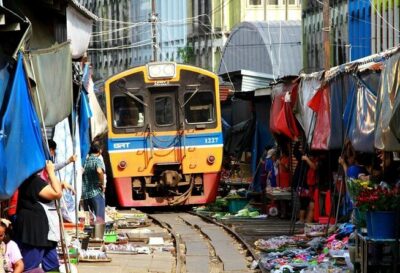
Half-Day Railway Market and Floating Market Tour in Thailand
Read our review →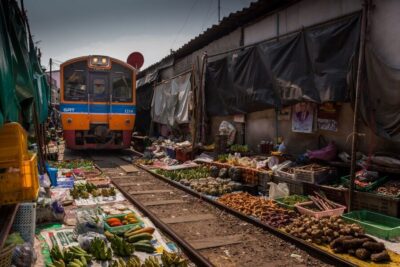
Damnoen Saduak, Train Market & Mahanakhon Day Trip
Read our review →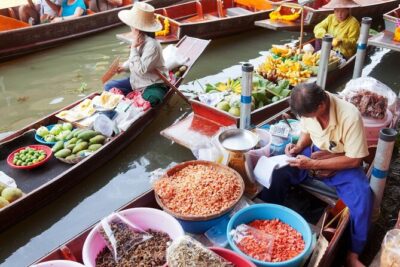
Damnoen Saduak Floating Market and Maeklong Railway Market Tour
Read our review →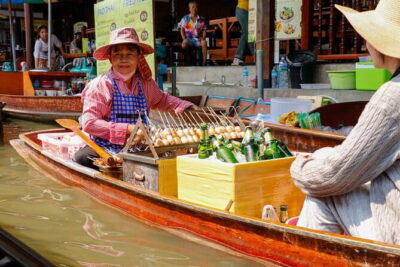
Day Trip to Bangkok Floating Market & Maeklong Railway
Read our review →
Railway and Floating Market Tour with Dragon Temple
Read our review →
Browse the lists this tour appears in