
REVIEW · BANGKOK
Kanchanaburi and Death Railway Private Tour from Bangkok
The most powerful part of this day is not the famous steel bridge. It is the chance to connect the bridge, railway, museum, cave, and river into one clear story about the World War II Death Railway. You also get a train ride along the original route, with views of the river, fields, farms, and hills.
I like the private format, since your group can ask questions and set the pace with your guide. I also like the mix of history and scenery: the museum gives context, while the train and Krasae Cave make the past feel tied to a real place.
The trade-off is the road time. You will spend roughly 2 hours 30 minutes getting to Kanchanaburi and about 2 hours 40 minutes returning to Bangkok, making this a full, early-starting day.
Key points to know before booking
- The 6:30 am departure matters: You need an early start to fit in Kanchanaburi, the bridge, train ride, cave, museum, lunch, and the long return drive.
- A private vehicle keeps the day personal: Only your group takes part, and pickup is offered from Bangkok city center.
- The 40-minute train ride is the heart of the outing: You travel along railway built during World War II, passing the River Kwai, fields, farms, and hills.
- The museum adds needed context: The Thailand-Burma Railway Centre explains the railway story through an interactive museum and research center.
- Guides are a major strength: Paula, Johnny, and Harry are named as especially clear, friendly, and considerate guides, with driver Manuel also praised.
- The price buys convenience as much as sightseeing: At $161.98 per person, the value depends on how much you value private transport, guiding, and a carefully packed day.
Why this Kanchanaburi day trip works
Kanchanaburi gives you a sharp change from Bangkok. Instead of city traffic and high-rise streets, you spend the day beside a river, on a historic railway, and at sites linked to one of the most difficult construction projects of World War II.
I like the way this tour connects several places that could feel scattered if visited without help. The bridge is the recognizable symbol. The museum explains the wider story. The train shows you the route at ground level. Krasae Cave adds a small, physical site where the railway builders faced difficult conditions.
You should think of this as a history tour with a scenic ride, not as a relaxed countryside outing. The schedule is full, and the long drive from Bangkok takes up a large part of the day. Still, the private setup makes the distance easier because you travel with only your own group and have a guide beside you.
The experience is especially useful if you have seen or read about the Bridge on the River Kwai and want to understand the actual place. You do not need to be a serious history fan, though. The train, river views, cave, and local lunch give the day enough variety for people who want more than museums.
More Death Railway and River Kwai Tours in Bangkok:
- From Bangkok: Death Railway & Hellfire Pass Tour with Lunch
★ 4.6 · 931 reviews - Bridge on the River Kwai and Thailand-Burma Railway Tour
★ 4.5 · 658 reviews - Bridge on the River Kwai and Thailand-Burma Railway Guided Tour
★ 4.5 · 353 reviews
Leaving Bangkok at 6:30 am
The day begins at 6:30 am, with pickup offered in Bangkok city center. The drive to Kanchanaburi takes about 2 hours 30 minutes, including a stop, so the early departure is not a minor detail. It is what allows the tour to include all the main stops before returning to the city.
A private vehicle is a real advantage here. You avoid arranging separate buses and train tickets, and you can use the drive to ask your guide questions about the places ahead. The exact vehicle and road conditions are not specified, but the experience includes a driver, and the car was praised as comfortable by one person who took the tour.
The drive is also the main drawback. You will spend several hours on the road, and the full day runs about 9 to 10 hours. If you want a slow morning or have only limited energy for sightseeing, this may feel demanding.
For most people, I would treat the journey as part of the price of reaching Kanchanaburi from Bangkok. The tour is built for convenience, not for minimizing travel time.
The Bridge over the River Kwai
The bridge is the first major sight in Kanchanaburi. You have about 30 minutes here, with no separate admission ticket listed for this stop.
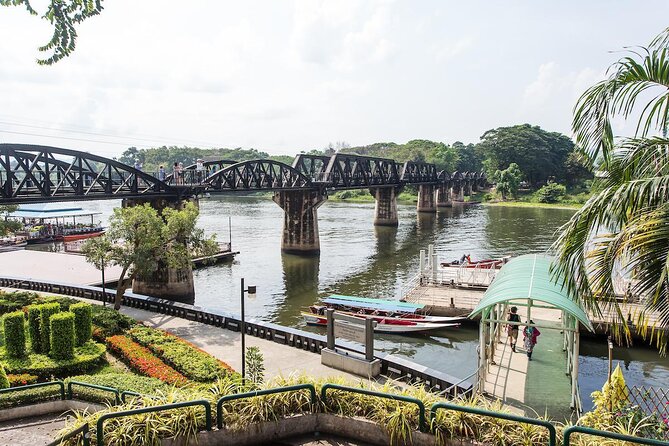
This is the place many people recognize from the film and the famous name. The steel railway bridge is also linked to the hardest sections of the wartime railway construction. Standing beside it helps turn a familiar historical reference into a real location.
Do not expect a long, unhurried visit. Thirty minutes gives you time to see the bridge, take in the river setting, and listen to an introduction from your guide, but it is not enough for a deep visit to every nearby point of interest. The tour’s strength is that the bridge is only one part of the day rather than the entire program.
Your guide can help explain why the bridge mattered and how it fits with the railway ride and museum later on. Named guides connected with this experience include Paula, Johnny, and Harry. Paula is described as informative and a good communicator. Johnny is praised for explaining where the group was going and meeting its needs. Harry is noted for being friendly, expert, and considerate.
Those qualities matter at a site like this. Without explanation, you might see a bridge and move on. With a good guide, the stop becomes the opening chapter of a larger story.
Riding the Death Railway for 40 minutes
After visiting the bridge, you travel to the station for a train ride lasting about 40 minutes. The wider train portion is listed as about 1 hour 30 minutes, which allows time for reaching the station and handling the rail segment.
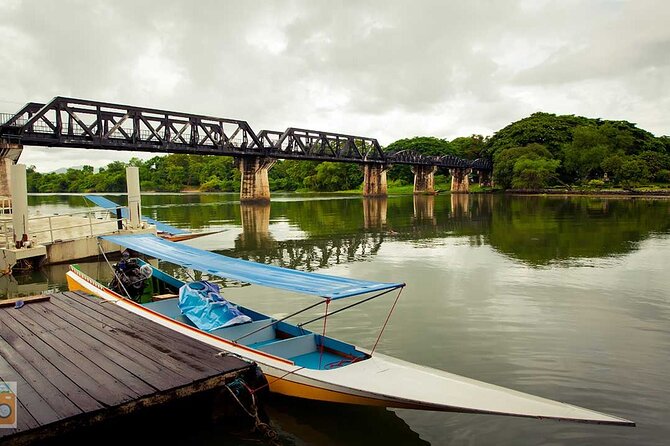
This is the most distinctive part of the day. You ride on the same railway built during World War II, passing the River Kwai, mountains, fields, and farms. The scenery gives you a break from the heavy historical subject matter, but it never feels disconnected from it. The rails beneath you are the reason the bridge and museum matter.
I like the balance here. A museum can explain facts, but a train ride gives you a sense of the route itself. You watch the countryside pass at a slower pace than it would from a road vehicle, and you see how the railway links the river and rural areas.
The train ride is not described as a luxury rail journey, and you should not book it expecting polished tourist entertainment. Its value is the setting and the connection to the past. The ride is fairly short, so keep your attention on the views and listen carefully when your guide explains the route.
The train portion also gives the day a welcome change of rhythm. You have driven, walked around the bridge, and then settle into a moving view of the countryside. For many people, this will be the most memorable part of the tour.
More Private Train Tours in Bangkok:
- Private Excursion to Maeklong Railway and Floating Markets
★ 5.0 · 850 reviews - Floating and Railway Market (Optional Waterfall): Private Tour
★ 5.0 · 827 reviews - Private Tour to Railway Market and Damnoen Saduak Floating Market
★ 5.0 · 200 reviews - Private Tour: Thai–Burma Death Railway Bridge on the River Kwai from Bangkok
★ 4.5 · 172 reviews
Lunch at a local restaurant
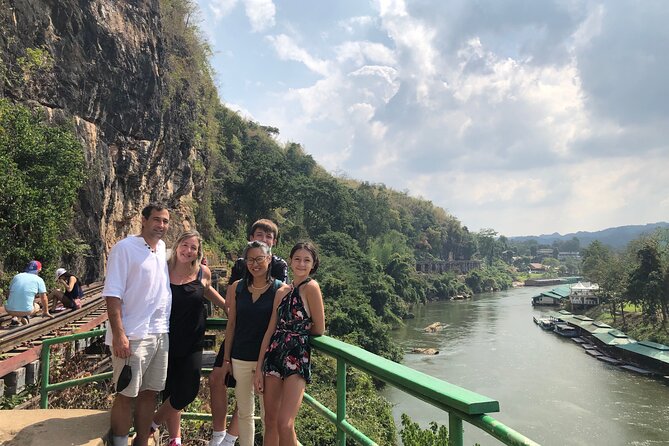
Lunch lasts about one hour at a local restaurant. The meal is included in the experience, which makes the day easier because you do not need to find a place to eat during a tightly timed schedule.
The supplied details do not specify the menu, restaurant name, or dietary options, so I would not book this expecting a particular dish. Think of lunch as a practical pause between the train and the afternoon history stops.
That hour also matters because this is a long day. You have already spent hours on the road and taken the train, so a seated meal gives you time to rest before continuing. If you have dietary needs, ask about them when booking rather than assuming the included meal will suit you.
Krasae Cave and the difficult railway stretch
Tham Krasae, also called Krasae Cave, is a short 20-minute stop. The cave was used by the Japanese while building a particularly difficult stretch of the Death Railway.
Because the visit is brief, this is more of a focused historical stop than a long cave tour. You get a glimpse of the physical challenges tied to the railway project and another point of reference beyond the bridge.
I find this stop valuable because it adds texture to the story. The bridge is a large public landmark, while the cave feels more closely tied to the hard work of building the rail line through difficult ground. It helps you picture the railway as a series of demanding sections rather than one isolated bridge.
Twenty minutes will pass quickly, so listen to the guide and stay aware of the group schedule. The stop is included for its historical importance and location, not for a lengthy exploration underground.
The Thailand-Burma Railway Centre
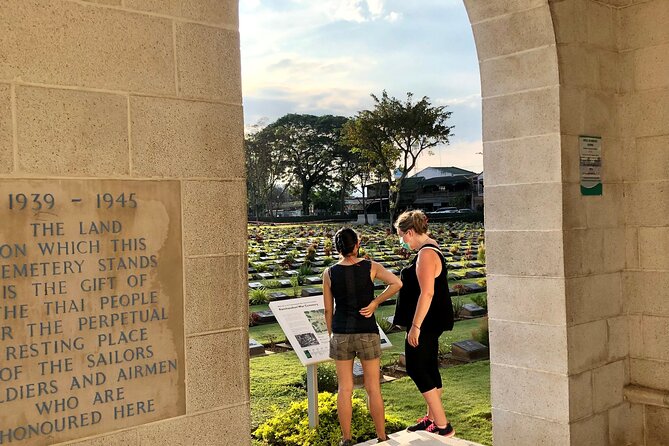
The Death Railway Museum and Research Centre, also called the Thailand-Burma Railway Centre, gets about 45 minutes. Admission is included.
This is the stop that gives the day its clearest historical framework. The center is an interactive museum, research facility, and information center dedicated to the Thailand-Burma Railway. After seeing the bridge and riding the railway, you can place those experiences within a broader account of the line and its construction.
I would pay close attention here, even if museums are not normally your first choice. The train ride gives you impressions, but the museum helps organize them. It can also answer questions that arise earlier in the day.
Forty-five minutes is enough for a useful visit, but not enough to read every display at length. If you prefer to move slowly through museums, the schedule may feel brisk. The private format helps because you can ask your guide for the most important points instead of trying to take in everything.
The museum is also why this tour works better than a quick photo stop at the bridge. You leave with more than an image of the River Kwai. You get a connected account of the bridge, the railway, the difficult construction sites, and the wartime setting.
Guide quality can shape the whole day
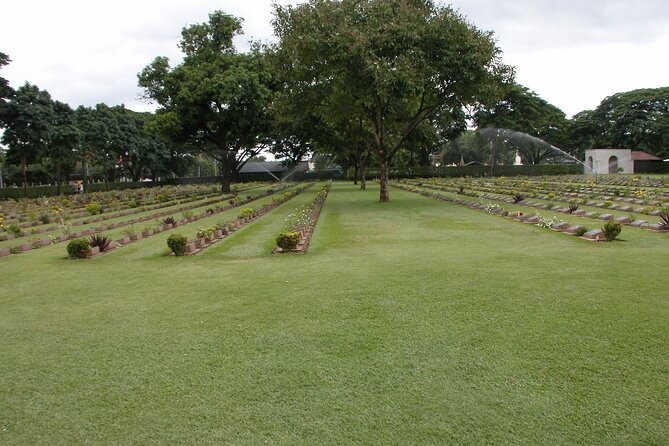
The experience depends heavily on the assigned guide. Paula, Johnny, and Harry are named guides associated with the tour, and each is described in notably different but useful terms.
Paula is praised for being informative, well informed, and a good communicator. Johnny is praised for his clear explanations, kindness, and attention to the group’s needs. Harry is described as friendly, expert, and considerate, with an ability to answer questions and keep conversation enjoyable.
You should not assume you will receive a specific one of these guides unless the company confirms it. Still, the details give you a useful sense of what to expect from a strong guide on this route: clear communication, historical explanation, patience, and help with the practical flow of the day.
The driver matters too. Manuel is specifically praised as excellent, and the vehicle is described as comfortable. On a day with several hours of driving, those are not small details. A careful driver and comfortable transport can make the long route from Bangkok much easier.
Is $161.98 per person a fair price?
At $161.98 per person, this is not the cheapest way to reach Kanchanaburi. The value comes from combining private transportation, a guide, the train ride, museum admission, lunch, and pickup into one full-day plan.
The price makes the most sense for a small group that wants a private outing instead of joining a larger vehicle. If two or more people share the experience, the cost may feel easier to justify because you are paying for a private arrangement rather than just a seat on a bus.
You are also buying time and simplicity. The tour handles the long journey from Bangkok, gets you to the bridge and station, includes the historic train, and adds the museum and lunch without requiring you to coordinate each part yourself.
The value is weaker if you mainly want a quick photograph of the bridge or prefer to explore slowly on your own. The schedule is organized and full, and the road journey is unavoidable. For a first visit to Kanchanaburi, though, the combination gives you a lot in one day.
Who should book this private tour?
I would recommend it to you if you want history explained in plain language and prefer a private guide who can answer questions as you go. It also suits first-time visitors to the area who want the bridge, train, cave, museum, and lunch handled in one day.
It is a good fit for friends or family groups because only your group participates. The private format can make the long day more comfortable and keeps the experience more personal than a large coach outing.
You should think twice if you dislike early starts, long road journeys, or tightly scheduled sightseeing. The tour is not designed for a lazy day in the countryside. It is a focused historical excursion with several stops and a substantial return drive.
Free cancellation is available if you cancel at least 24 hours before the 6:30 am start time. Cancellations or changes made less than 24 hours ahead are not accepted for a refund.
Should you book it?
Book this tour if you want the full Kanchanaburi story in one day, not just the bridge. The train ride, Krasae Cave, and Thailand-Burma Railway Centre give real weight to the visit, while the private vehicle and guide remove much of the planning work.
I would choose it for a first trip from Bangkok, especially if your group values clear explanations and personal attention. I would skip it only if the long drive feels like too much or if you want a slower, more independent visit.
FAQ
How long does the Kanchanaburi tour last?
The experience lasts approximately 9 to 10 hours, including the journey from Bangkok and the return trip.
What time does the tour start?
The stated start time is 6:30 am.
Is pickup available in Bangkok?
Yes. Pickup is offered, with the starting point described as Bangkok city center.
Is this a private tour?
Yes. Only your group participates in the private activity.
How long is the Death Railway train ride?
The historic train ride lasts about 40 minutes. The broader train stop, including travel to the station and the rail experience, is listed as about 1 hour 30 minutes.
Is lunch included?
Yes. The tour includes a one-hour lunch at a local restaurant.
Can I cancel for a full refund?
Yes, if you cancel at least 24 hours before the experience start time. Cancellations or changes made less than 24 hours before the start are not accepted for a refund.
Just added around Bangkok
- Floating & Railway Markets and Erawan Waterfall [Optional Luxury]★ 5.0 · 43 reviews
- Small Group: Kanchanaburi Death Railway, Erawan Waterfall and Elephant★ 4.0 · 3 reviews
- Floating Market & Railway Market near Bangkok★ 4.0 · 5 reviews
- Historic Kanchanaburi: Train, Boat & Skywalk + Lunch From Bangkok★ 4.5 · 3 reviews
- Railway Market, Floating Market and After the Rain Cafe★ 5.0 · 16 reviews
- Maeklong & Damnoen Saduak Markets: Railway & Floating Market Tour★ 4.0 · 17 reviews
- Historic Kanchanaburi:Train, Boat, Skywalk from Bangkok(No Lunch)★ 5.0 · 2 reviews
- Private tour : Railway & Floating Market and the Bridge over river Kwae★ 5.0 · 2 reviews
Bangkok Train Tours, compared.
Damnoen Saduak Market and Maeklong Railway Market
Read our review →
The Old Siam: Damnoen Saduak and Maeklong Railway Market
Read our review →
Half-Day Railway Market and Floating Market Tour in Thailand
Read our review →
Damnoen Saduak, Train Market & Mahanakhon Day Trip
Read our review →
Damnoen Saduak Floating Market and Maeklong Railway Market Tour
Read our review →
Day Trip to Bangkok Floating Market & Maeklong Railway
Read our review →
Railway and Floating Market Tour with Dragon Temple
Read our review →
Browse the lists this tour appears in