
REVIEW · BANGKOK
River Kwai Bridge and Death Railway World War II Tour in Thailand
The most moving part of this day is not the bridge itself. It is the chain of places around it: the quiet rows at Kanchanaburi War Cemetery, the stark JEATH War Museum, and the train ride along the Death Railway route. Together, they show both the scale of the wartime project and the human cost behind it.
I like the private air-conditioned vehicle, which makes a long day from Bangkok easier, and I like that lunch, train tickets, museum admission, snacks, drinks, and two bottles of water per person are covered. The possible drawback is the price: at $179.49 per person, this costs more than a basic group outing, and the 10-hour schedule leaves little room for a slow, unplanned visit.
Key points to know before booking
- A private Bangkok to Kanchanaburi day: Only your group takes part, with private transport and a guide.
- The Death Railway is the centerpiece: You spend about an hour on the train from near the River Kwai Bridge toward Krasae Cave.
- The history is presented in several ways: Cemetery, museum, bridge, train route, and wartime cave site each add something different.
- Lunch and admissions are included: Thai food, mineral water, museum entry, and train tickets are part of the package.
- Guide quality matters here: Mike is specifically praised for excellent English and strong explanations throughout the day.
- Expect a full schedule: The tour lasts about 10 hours and requires a moderate level of physical fitness.
Why the River Kwai day matters
The River Kwai Bridge is a famous sight, but it can be easy to treat it as just another photo stop. This tour gives you more context before and after the bridge, which is the right way to see it.
The railway was built during World War II by prisoners of war and civilians under harsh conditions. The route linked Kanchanaburi toward the Burmese border, crossing rivers and cutting through difficult mountain terrain. The train ride lets you see why the work was so punishing. The track follows the river and curves beside the rock face, with views that are scenic now but tied to a painful past.
I appreciate that the day does not rely on one monument to explain everything. The cemetery is quiet and personal. The museum is more direct and documentary in tone. The bridge is the most recognizable site. The railway ride puts you physically along part of the route. Krasae Cave adds another layer, since the cave is also used as a Buddhist place of meditation.
That mix gives you a fuller picture than a quick stop at the bridge. It also means the day has emotional shifts. Some moments are solemn, some are scenic, and some are simply practical sightseeing.
More Death Railway and River Kwai Tours in Bangkok:
- From Bangkok: Death Railway & Hellfire Pass Tour with Lunch
★ 4.6 · 931 reviews - Bridge on the River Kwai and Thailand-Burma Railway Tour
★ 4.5 · 658 reviews - Bridge on the River Kwai and Thailand-Burma Railway Guided Tour
★ 4.5 · 353 reviews
Leaving Bangkok in a private vehicle
The tour begins in Bangkok and returns there after the day’s visits. The listed meeting point is Terminal 21 Asok, while the tour description also says private pickup and return to your hotel are offered. Confirm the exact pickup arrangement when booking, especially if you are staying outside central Bangkok.
Private transport is one of the clearest reasons to consider this experience. Kanchanaburi is far enough from Bangkok that comfort matters. In a private vehicle, you avoid spending the whole day managing a large group or waiting for people at every stop. You can also ask your guide for explanations as you go.
The vehicle is described as having air conditioning, an important detail in Thailand. The day is long, and you will likely value a cool, quiet ride between sites. This is not a compact city tour. It is a substantial excursion beyond Bangkok, so the private setup helps the schedule feel more manageable.
The tour requires a minimum of two people. It is not designed as a solo booking that operates regardless of demand. If the minimum is not met, you are offered another date or experience, or a full refund.
Kanchanaburi War Cemetery: a quiet first stop
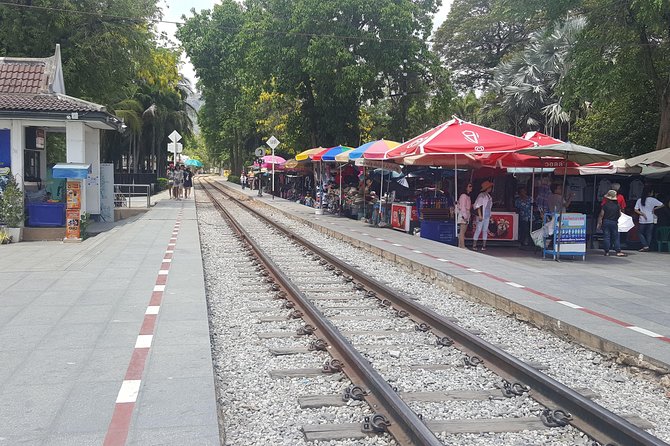
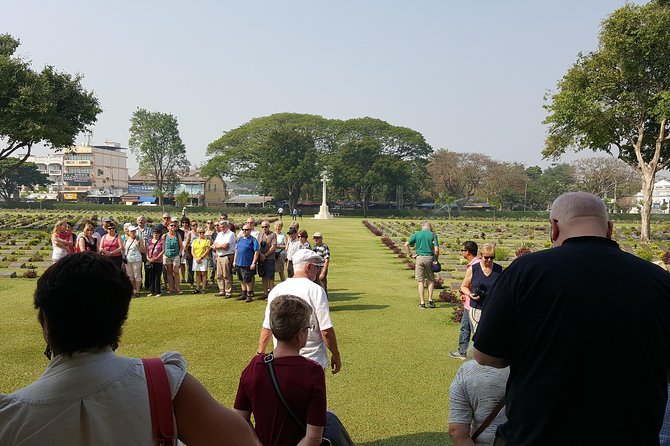
The first visit is Kanchanaburi War Cemetery, where 6,892 prisoners of war are buried. You have about 30 minutes here, with admission included at no extra charge.
This is a good opening stop because it slows the day down before the more active parts begin. The cemetery is not a place to rush through while looking for a photo. The rows of graves make the human cost clear in a way that statistics cannot.
Thirty minutes is enough for a respectful visit, though it is not a long time if you want to read every marker or linger. If you prefer a quiet start, this stop will likely be one of the strongest parts of the morning. I would use the time to take in the scale of the cemetery and listen carefully to the guide’s explanation.
The moderate fitness requirement is worth noting here and throughout the day. The tour includes walking, standing, boarding a train, and visiting a cave and bridge area. The information does not describe severe hiking, but this is not a sit-in-the-van excursion.
JEATH War Museum and the story of forced labor
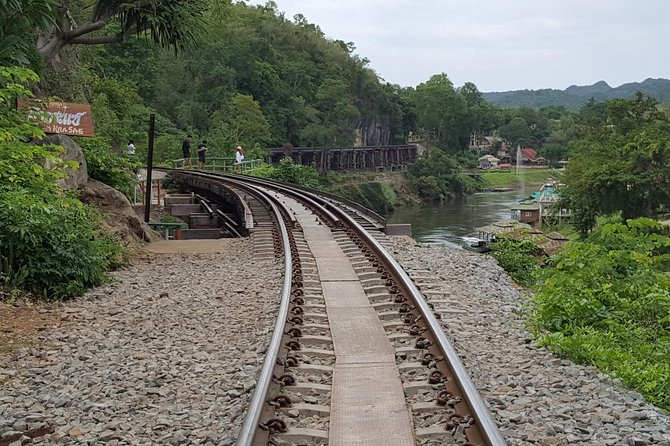
Next comes the JEATH War Museum, with about 40 minutes inside. Admission is included.
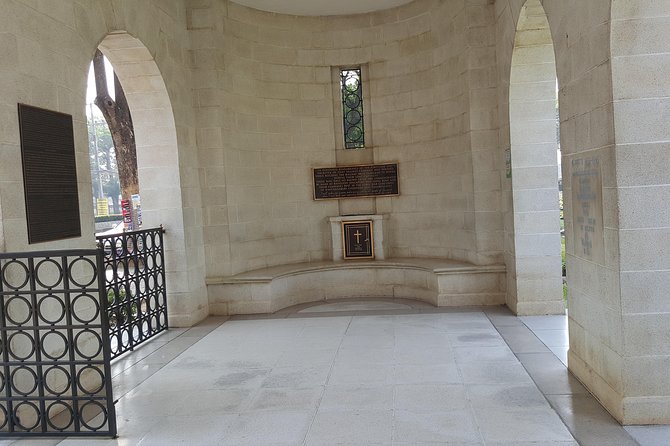
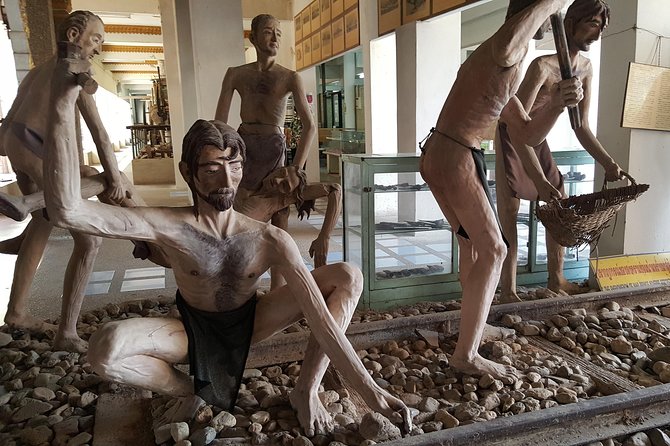
The museum focuses on the building of the Thai-Burmese railway and the experience of prisoners of war during World War II. It works best as a companion to the cemetery because it shifts attention from the names and graves to the conditions and work behind the railway.
Forty minutes gives you time to look through the displays and hear the main explanation without turning the visit into a long museum session. If you enjoy detailed military history, you may wish the schedule allowed more time. For a day trip with several stops, though, the visit is reasonably focused.
Your guide is important here. Mike is specifically praised for his English and for explaining the area from the memorial through the train ride. The operator says its guides have completed Thailand tourism training, and a strong English-speaking guide can make the museum much easier to understand.
More Train Tours in Bangkok:
- Bangkok: Damnoen Saduak Market and Maeklong Railway Market
★ 4.5 · 26,723 reviews - The Old Siam: Damnoen Saduak and Maeklong Railway Market
★ 4.5 · 10,992 reviews - Bangkok: Train Market & Floating Market with Boat Ride
★ 4.7 · 9,547 reviews - Half-Day Railway Market and Floating Market Tour in Thailand
★ 4.5 · 3,924 reviews
The River Kwai Bridge, with time to look beyond the photo
The bridge stop lasts about 30 minutes and has no separate admission charge.
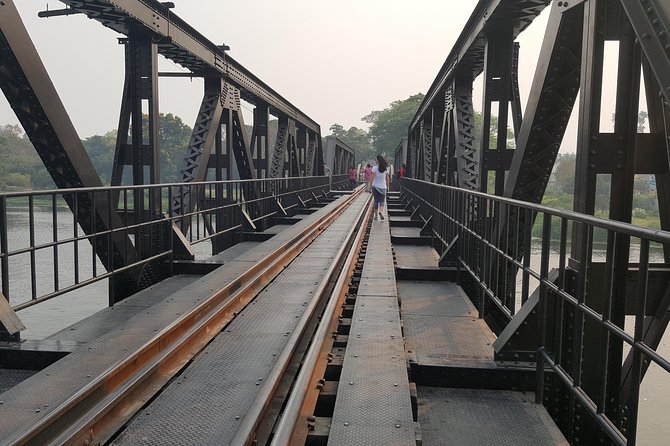
The present bridge is a reconstruction maintained by the Thai government as a memorial to the World War II railway. That distinction matters. You are not looking at an untouched wartime structure in every detail, but you are visiting a site tied to the original route and to one of the best-known stories from wartime Thailand.
You will have time to see the bridge, walk around the area, and take photographs. The bridge itself is the most familiar part of the outing, so it can feel crowded or tourist-oriented compared with the cemetery. That is not a reason to skip it. It is the place that connects the history lesson to the physical railway route.
I would pay attention to the bridge’s setting rather than treating it as a single object. The river, rail line, and surrounding town help explain why this crossing mattered. The stop is brief, so listen for the guide’s context before focusing on pictures.
The one-hour Death Railway train ride
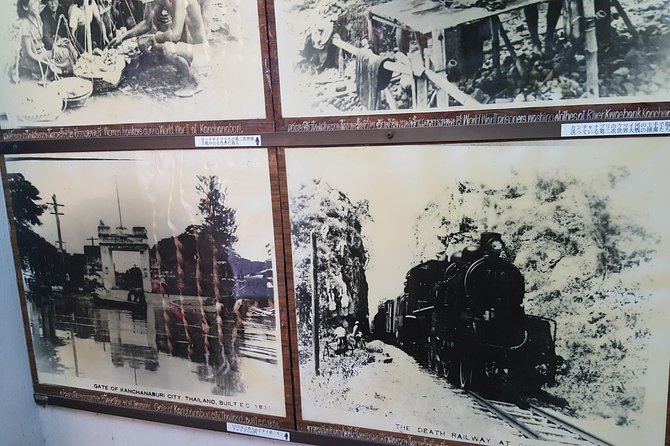
The train ride is the heart of the tour. You board near the River Kwai Bridge and ride for about one hour toward the Death Railway section at Krasae Cave.
This is where the tour becomes more than a memorial circuit. From the train, you see the countryside and the railway’s route beside the river and mountain areas. The scenery is pleasant, but it carries an uncomfortable contrast. The same curves and difficult terrain that look beautiful today were part of a dangerous construction project carried out by prisoners of war and civilians with poor food and brutal treatment.
The ride helps you understand the physical challenge. A museum can explain that the railway was hard to build. Sitting on the track as it follows the riverside gives that fact some shape. You see the sharp curves and the narrow route near the rock face.
The train ride is listed as included, with admission and tickets covered. It lasts about an hour, so it is long enough to feel like a genuine part of the day rather than a token ride. At the same time, train conditions and exact seating are not described, so you should approach it as a historical railway journey rather than a luxury rail excursion.
Lunch near Krasae Cave
Lunch takes about one hour and is served at a local Thai restaurant. Food, snacks, drinks, and mineral water are included, with two bottles of water per person listed in the package.
This is a useful inclusion on such a long day. You do not have to spend time choosing a restaurant or paying separately during the main itinerary. The meal also breaks up the history stops and train ride.
One strong practical detail comes from the experience description: lunch is presented as a proper restaurant meal rather than a thin sandwich. The exact dishes are not specified, so do not book this expecting a particular menu. You can expect Thai food at a restaurant, but personal preferences, dietary needs, and soft drinks may involve extra cost.
Soft drinks and personal expenses are not included. Bring some money for anything beyond the covered meal, water, snacks, and admissions.
Tham Kra Sae Bridge and its sharp curve
After the train and lunch, you visit Tham Kra Sae Bridge. The stop lasts about 30 minutes.
This section of the railway runs along a mountain cliff and beside the river. Its sharp curve is one of the most striking parts of the route, and it makes clear why construction and maintenance were so difficult. The bridge is scenic, but the setting should not erase the story of the people forced to build it.
You will want to take care near the bridge area. The tour description calls it dangerous, and the day requires moderate physical fitness. Exact safety arrangements are not given, so follow your guide’s instructions and avoid treating the rail line or cliffside as a casual place to wander.
The 30-minute visit is enough for a look and photographs, though it will feel short if you want a long, slow walk. The schedule favors seeing several connected sites rather than lingering at one viewpoint.
Tham Krasae Cave and the Buddhist side of the day
The final listed stop is Tham Krasae Cave, also at the Death Railway bridge. You have about 30 minutes here.
The cave is used by Buddhist monks as a place away from the village for meditation. A large Buddha is inside. This changes the mood again, moving from wartime memorials and railway engineering to a living religious place.
You should treat the cave with the same care you would give any Buddhist site. The description does not provide a dress code or detailed access information, so ask your guide what is appropriate before entering. The cave visit is brief, but it adds a local spiritual dimension that many bridge-focused day trips would not include.
The visit also gives you another way to understand the area. Krasae is not only a railway viewpoint. It is part of the daily religious life of the region as well.
Is $179.49 a fair price?
At $179.49 per person, this is not the cheapest way to see the River Kwai Bridge. The price makes more sense if you value a private vehicle, a personal guide, included admissions, a restaurant lunch, and a full itinerary from Bangkok.
A lower-priced group trip may suit you if keeping costs down is the main goal. The tradeoff is usually less control over the schedule and less individual attention. Here, the private format means only your group participates, and the guide can explain the memorials and railway without addressing a large mixed crowd.
The cost also includes the one-hour train ride, JEATH War Museum entry, lunch, snacks, drinks, and mineral water. Those inclusions reduce the number of small payments you need to handle during the day. You still pay separately for soft drinks and personal expenses.
The strongest case for the price is the guide and vehicle. One experience specifically praises Mike’s excellent English and his explanations from the memorial to the train ride. Another highlights the air-conditioned van, personal service, and a better restaurant lunch. Those details suggest that the quality of the day depends heavily on the guide assigned to you, so you may want to ask whether Mike is available if that matters to you. His availability is not guaranteed by the tour information.
Who should book this day trip?
I would recommend this tour to you if you want the major Kanchanaburi sights in one organized day and prefer privacy over the lowest price. It suits couples, families, and small groups who want a guide, private transport, and a clear schedule.
It is also a good fit if the historical side matters as much as the bridge photo. The cemetery, museum, train, and cave provide a stronger mix than a quick drive-by visit.
You may want a different option if you dislike long day trips, prefer to explore at your own pace, or want to spend hours at one museum or memorial. The 10-hour duration is fixed enough to make this a full commitment. The tour also requires moderate physical fitness, and the bridge and cave areas may not feel easy for everyone.
One unusual detail is that a past experience included a stop at an elephant sanctuary. That stop is not part of the stated itinerary, so do not assume it will be included. Ask before booking if that is important to you.
Final verdict: a thoughtful choice for a private history day
Book this tour if you want a well-covered introduction to the River Kwai area without arranging several pieces yourself. The private air-conditioned vehicle, English-speaking guide, included train ride, Thai lunch, and linked historical stops give the day real value.
The main caution is cost and pace. You pay a premium over a basic group tour, and the schedule is full. For me, the strongest reason to choose it is not the bridge alone. It is the way the cemetery, museum, railway, cliffside bridge, and Buddhist cave build a more complete picture of Kanchanaburi.
FAQ
How long does the River Kwai tour last?
The tour lasts approximately 10 hours, including the journey from Bangkok, the Kanchanaburi visits, the train ride, lunch, and the return to Bangkok.
Is this a private tour?
Yes. This is a private activity, and only your group participates. The tour requires a minimum of two people.
Is pickup from my hotel available?
The tour description says private pickup and return to your hotel are offered. The listed meeting point is Terminal 21 Asok, so confirm the exact pickup details when booking.
What is included in the price?
The package includes lunch with Thai food, mineral water, two bottles of water per person, train tickets, museum admission, snacks, food, and drinks. Soft drinks and personal expenses are not included.
How long is the Death Railway train ride?
The train ride takes about one hour. It runs from the main station near the River Kwai Bridge through the old railway route toward the Death Railway section at Krasae Cave.
Which historical sites are visited?
The itinerary includes Kanchanaburi War Cemetery, JEATH War Museum, the River Kwai Bridge, Tham Kra Sae Bridge, and Tham Krasae Cave.
What level of fitness is required?
A moderate level of physical fitness is recommended. The day includes walking, the bridge and cave area, and boarding the train.
Can I cancel for a full refund?
Yes. You can cancel at least 24 hours before the experience start time for a full refund. Cancellations or changes made less than 24 hours before the start time are not accepted for a refund.
Just added around Bangkok
- Floating & Railway Markets and Erawan Waterfall [Optional Luxury]★ 5.0 · 43 reviews
- Small Group: Kanchanaburi Death Railway, Erawan Waterfall and Elephant★ 4.0 · 3 reviews
- Floating Market & Railway Market near Bangkok★ 4.0 · 5 reviews
- Historic Kanchanaburi: Train, Boat & Skywalk + Lunch From Bangkok★ 4.5 · 3 reviews
- Railway Market, Floating Market and After the Rain Cafe★ 5.0 · 16 reviews
- Maeklong & Damnoen Saduak Markets: Railway & Floating Market Tour★ 4.0 · 17 reviews
- Historic Kanchanaburi:Train, Boat, Skywalk from Bangkok(No Lunch)★ 5.0 · 2 reviews
- Private tour : Railway & Floating Market and the Bridge over river Kwae★ 5.0 · 2 reviews
Bangkok Train Tours, compared.
Damnoen Saduak Market and Maeklong Railway Market
Read our review →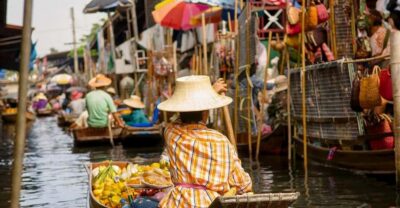
The Old Siam: Damnoen Saduak and Maeklong Railway Market
Read our review →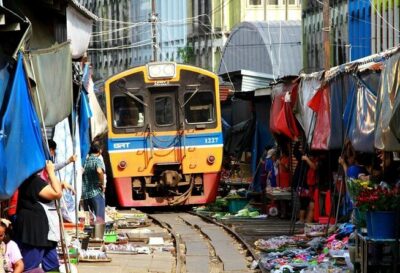
Half-Day Railway Market and Floating Market Tour in Thailand
Read our review →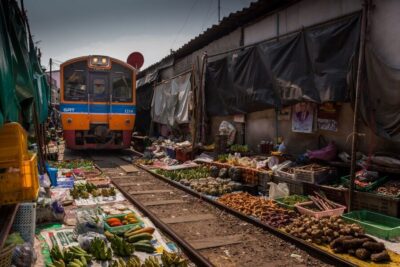
Damnoen Saduak, Train Market & Mahanakhon Day Trip
Read our review →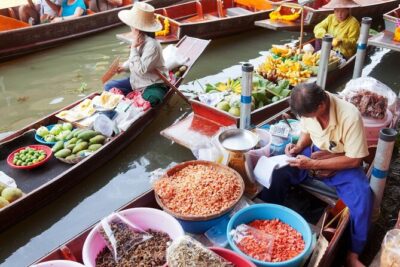
Damnoen Saduak Floating Market and Maeklong Railway Market Tour
Read our review →
Day Trip to Bangkok Floating Market & Maeklong Railway
Read our review →
Railway and Floating Market Tour with Dragon Temple
Read our review →
Browse the lists this tour appears in