

REVIEW · USA
Walking Tour of Still’s Underground Railroad in Alexandria
The most moving part of this Alexandria walk is its use of William Still’s firsthand accounts. Still, an abolitionist and careful recorder of freedom seekers’ stories, gives the tour a human focus as you follow the routes and places tied to escape from slavery.
I like two things right away: the tour stays on foot in central Old Town, and each stop adds a different piece of the story. You get both the public face of 1850s Alexandria and the quieter streets where enslaved people made dangerous choices. The guide has also been praised for being well informed and easy to listen to.
The main consideration is its 90-minute walking format. You will cover six stops at a steady pace, but this is an outdoor tour, not a museum visit with time for long displays or extended questions. Good shoes and suitable weather matter.
Key points about Alexandria’s Underground Railroad walk
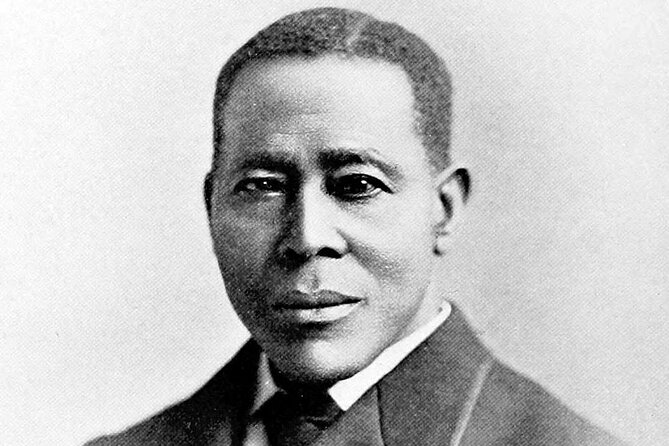
- William Still’s records guide the story, linking the walk to named freedom seekers and their own escape accounts.
- Six central Old Town stops cover City Hall, Captain’s Row, Christ Church, Cameron Street, King Street, and Market Square.
- The $15 price is modest, especially for a small-group history walk capped at 25 people.
- The tour starts at 12:30 pm and lasts about 90 minutes, ending where you began.
- The setting does much of the teaching, from cobblestones and market buildings to old homes and commercial streets.
- Free cancellation is available up to 24 hours before departure, with weather-related alternatives or refunds handled by the operator.
Why William Still makes this walk different
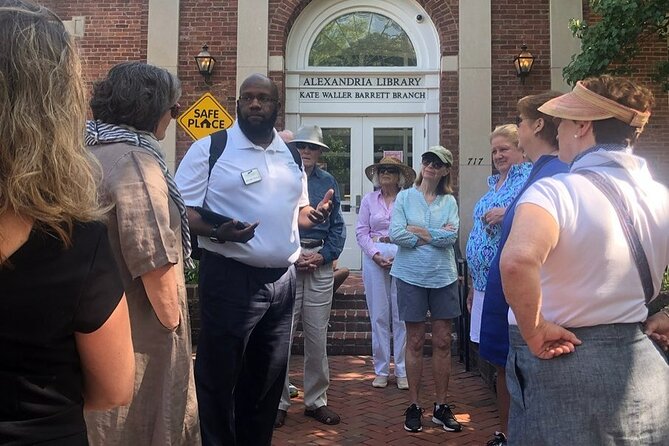
Many historical walks in Alexandria focus on buildings, dates, and famous residents. This one uses the writings of William Still to put escape stories at the center.
Still was an abolitionist whose work recorded the movements and experiences of people fleeing slavery. His writings help connect Alexandria to the larger Underground Railroad network, not as an abstract idea, but as a series of choices made by people facing serious danger.
That focus matters. You are not simply looking at an old house and hearing that something happened there. You are considering who lived there, who was held there, who left, and what freedom required once a person reached the road north.
The tour also shows how ordinary streets could carry extraordinary risk. A market square, a church, a business on King Street, or a house on Cameron Street could all become part of an escape story. Alexandria’s old center provides the setting, but the human decisions provide the weight.
The guide’s job is important here. The most positive feedback centers on clear storytelling and strong command of the subject. The best way to enjoy this tour is to listen for the details in each account and notice how the city around you changes meaning from stop to stop.
More Walking Tours in the USA:
- NYC: History of Slavery & Underground Railroad Walking Tour
★ 4.7 · 87 reviews - Self-Guided Boston’s Beacon Hill Underground Railroad Audio Tour Walking Tour
★ 4.5 · 29 reviews - New York City: Roosevelt Island Walking Tour with Tram Ride
★ 4.6 · 12 reviews
City Hall and Market Square: starting with the record
The walk begins at 132 N Royal Street, near Alexandria City Hall and Market Square. This is a practical starting point because it places you in the center of Old Town, close to public transportation and the main historic streets.
The opening stop introduces William Still and explains why his writings are so important to what we know about the Underground Railroad. Expect the first 15 minutes to establish the larger subject before the walk turns to individual places and stories.
City Hall and Market Square also help you picture Alexandria as a working town rather than a preserved backdrop. Market activity, civic business, and daily movement all shaped who could be seen and who might pass unnoticed.
The site is free to enter, as are all the stops listed for this experience. You are mainly paying for the guide’s interpretation and the organized route, not admission fees.
Because this is the first stop, it may be the most useful place to ask yourself what you want from the tour. If you enjoy social history and personal accounts, the material should give you a strong base. If you prefer grand architecture or long interior visits, you may find the introduction more talk-focused than visual.
Captain’s Row: reading the city as it was in the 1850s
Captain’s Row brings you onto a cobblestoned street and alley that help show what Alexandria looked like during the period when the Underground Railroad was most active there.
This stop is valuable because the physical setting helps you think about movement. Old streets can make the past feel tidy and finished, but a cobblestoned lane in the 1850s was part of a living town. People worked, traded, watched one another, and moved through spaces that were not private in the modern sense.
The guide discusses the city’s appearance and character during that period. You get context for the routes that freedom seekers and those helping them might have taken, without needing a long bus ride or a separate historic site.
Captain’s Row is also a reminder that the Underground Railroad was not a single track or marked route. It was a changing network of people, homes, roads, workplaces, and hiding places. The walk’s strength is that it keeps this complicated subject tied to real streets.
You should expect to remain outside. The tour lasts about 15 minutes at this stop, so the pace is purposeful rather than leisurely. Pause for photos only when it does not interrupt the group’s movement or the guide’s explanation.
Market Square and the farmers market connection
The third stop returns to Alexandria’s Market Square, the center of early Alexandria and the site of the nation’s longest continuously running farmers market.
That detail gives the square another layer. It was not only a civic meeting point or a place to buy food. It was part of the town’s daily rhythm, where people crossed paths and where information, work, and commerce came together.
The tour uses this setting to place Alexandria’s Underground Railroad activity within normal urban life. The escape stories did not happen in a vacuum. They unfolded near shops, homes, markets, churches, and streets used by many kinds of people.
This stop may overlap physically with the opening area, but it serves a different purpose. The first stop introduces Still and the historical framework. Here, the market itself becomes the focus, helping you see why this particular square mattered to Alexandria.
The market’s continuing use also makes the stop easy to remember. You can look at the same public space as both a modern gathering place and a location connected to the city’s earlier past. That contrast is one of the walk’s better teaching tools.
More Train Tours in the USA:
- Verde Canyon Railroad Adventure Package
★ 4.5 · 2,821 reviews - Key West Conch Tour Train
★ 4.5 · 792 reviews - Streetcar Food Tour and Findlay Market with Riverside Food Tours
★ 5.0 · 653 reviews - Jackson Hole: Aerial Tram and Gondolas Sightseeing
★ 4.8 · 632 reviews
Christ Church and the story across the street
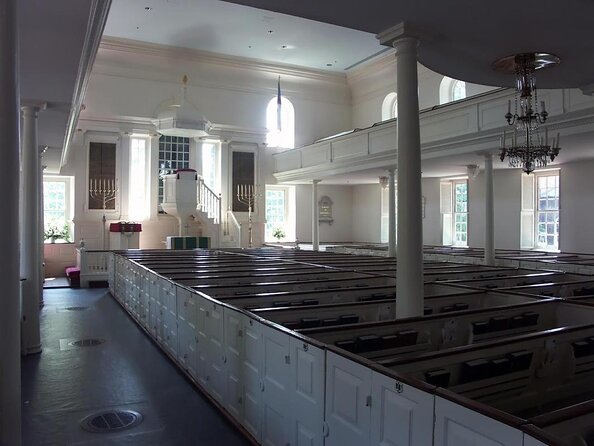
At Alexandria’s Christ Church, the guide discusses an Underground Railroad escape story from across the street. The tour does not list an admission visit inside the church, so you should expect this stop to be an exterior setting for the story.
That arrangement keeps the attention on the person who ran away and the circumstances around the escape. The church provides a familiar landmark, but the key information lies in what happened nearby and how the site fits into Alexandria’s social structure.
A stop like this can be easy to underestimate. A well-known building may draw your eyes, yet the important detail is often the less obvious property or street beside it. Listen closely for the connection between the landmark and the freedom seeker’s account.
The 15-minute timing works well for a focused story, though it leaves little room for a long architectural discussion. If you want to explore Christ Church itself, plan that separately rather than assuming it forms part of the tour.
Cameron Street and two men who sought freedom
The walk then reaches a house in the 500 block of Cameron Street. Here, the guide tells the story of two enslaved men who left the house and found freedom in the Northern states.
This is the kind of stop that gives the walk its emotional force. Two people made a decision to leave, and that decision involved more than physical distance. Escape meant uncertainty, exposure, and the risk of capture, yet the story ends with their discovery of freedom in the North.
The house also makes the subject immediate. You are not hearing only about a general population or an unnamed group. You are connecting a specific address with two men whose actions changed the meaning of that place.
The stop lasts about 15 minutes. That is enough time for a clear account, but you should not expect every part of their later lives to be covered. The tour’s purpose is to connect the people, the escape, and Alexandria’s streets within a single route.
Cameron Street is a good example of why this experience works better as a walk than as a lecture indoors. The setting gives the story a physical point of reference, and you can carry that location with you as the tour continues.
King Street and an escape tied to business
The final story takes place on King Street and concerns an enslaved man whose owner managed a business there.
King Street is one of Alexandria’s main historic corridors, so this stop connects slavery and escape to the commercial life of the town. It is a useful correction to the idea that slavery belonged only to plantations or rural settings. Enslaved people also lived and worked in towns, shops, homes, and businesses.
The guide focuses on the man’s life and escape. That personal account brings the walk back to the central question: how did someone living under control in a commercial city find a path toward freedom?
Because this is the last stop, the story also serves as a closing thought. The tour has moved from William Still’s records to public spaces, residential streets, a church setting, and a business corridor. Together, the stops show how widely slavery shaped daily life in Alexandria.
The walk ends back at the starting point. That makes it easy to continue exploring Old Town, find lunch, or return to your accommodation without arranging another pickup.
What the $15 price really covers
At $15 per person, this is an inexpensive guided experience for Alexandria. You are getting about 90 minutes of interpretation, six stops, and a carefully connected subject rather than a general sightseeing walk.
The value is strongest if you want context. You could walk past City Hall, Captain’s Row, Christ Church, Cameron Street, and King Street on your own, but the addresses would not explain themselves. The guide links them to Still’s writings and to specific escape stories.
There are no admission charges at the stops, so the fee mainly supports the guide’s time, preparation, and storytelling. That also means the tour’s worth depends heavily on your interest in the subject. If you want a broad introduction to Alexandria’s architecture, another tour may suit you better.
A group maximum of 25 keeps the experience from becoming a huge procession. It is not a private tour, and a group of 25 can still feel full on narrow streets, but the limit is reasonable for a walking talk.
The tour is booked, on average, about 18 days before its date. That does not guarantee every departure will fill early, but it is a useful sign to plan ahead if your Alexandria schedule is fixed.
Timing, walking, and practical planning
The start time is 12:30 pm, and the experience lasts about 90 minutes. That timing makes it easy to pair with a morning activity or a later afternoon plan.
You should wear comfortable shoes. The route includes cobblestoned streets and outdoor walking, and the six 15-minute stops create a steady rhythm. The tour is not presented as strenuous, but it is still best approached as a proper walk rather than a short stroll between parked cars.
The meeting point is 132 N Royal Street in Alexandria, Virginia. The tour ends there as well, which simplifies planning and makes the experience convenient if you are already spending time in Old Town.
A mobile ticket is provided, so you do not need to arrange a paper voucher. The area is near public transportation, and service animals are allowed. Most people can take part, though the supplied details do not promise a specific level of wheelchair access or describe the surface at every point.
The experience requires good weather. If poor weather cancels the tour, you are offered another date or a full refund. You can also cancel for a full refund up to 24 hours before the start time. Cancellations or changes inside that 24-hour window are not refunded or accepted.
Who will get the most from this tour
I would choose this walk if you want personal stories tied to real addresses. It suits anyone interested in slavery, abolition, African American history, Alexandria, or the Underground Railroad.
Families with older children may find the format useful because the walk breaks a large subject into six manageable stops. The material concerns slavery and dangerous escapes, so parents should decide if that subject is appropriate for their children.
It also works well for first-time visitors who want a focused introduction to Old Town. You see several central places without spending half a day inside a museum.
You may want to skip it if you dislike outdoor tours, need lots of time for photography, or prefer architectural commentary over social history. The tour is tightly timed, and its main reward comes from listening rather than wandering at your own pace.
The experience has a 4.8 rating from nine reviews, and the strongest praise centers on the meaningful stories and the guide’s clear delivery. That matches the tour’s design: its success depends on making the accounts understandable, respectful, and connected to the streets around you.
Should you book the Alexandria Underground Railroad walk?
Book it if you want a short, affordable tour that treats Alexandria as a place of individual choices, not just old buildings. The William Still connection, the six central stops, and the $15 price make it a strong choice for a focused afternoon activity.
Go with realistic expectations. You will not receive a long museum session, a full city tour, or a detailed interior visit at every landmark. You will spend 90 minutes outdoors, moving through Old Town while a guide connects homes, markets, churches, and businesses to the struggle for freedom.
For most people interested in Alexandria’s past, that is a worthwhile trade. The city becomes easier to understand when you hear who walked these streets and why some of them risked everything to leave.
FAQ
How long is the Walking Tour of Still’s Underground Railroad in Alexandria?
The tour lasts approximately 1 hour and 30 minutes.
What time does the tour begin?
It begins at 12:30 pm.
Where does the tour meet?
The meeting point is 132 N Royal Street, Alexandria, Virginia 22314, USA.
Where does the tour end?
The tour ends back at the meeting point.
How much does the tour cost?
The price is $15 per person.
How many stops are included?
The walk includes six stops: Alexandria City Hall and Market Square, Captain’s Row, Alexandria Farmers Market, Alexandria’s Christ Church, a house in the 500 block of Cameron Street, and King Street in Old Town.
Is the tour conducted outdoors?
Yes. The experience is a guided walking tour through central Alexandria, and it requires good weather.
Is the tour available by mobile ticket?
Yes. A mobile ticket is provided.
What is the cancellation policy?
You can cancel up to 24 hours before the start time for a full refund. Cancellations or changes made less than 24 hours before the experience are not accepted or refunded. If poor weather or an insufficient minimum number of participants cancels the tour, you are offered another date or experience, or a full refund.
Just added around the USA
- Virginia City Day Tour From Lake Tahoe with Train Ride★ 4.8 · 19 reviews
- Ventura: Rail Bike Guided Tour with Farm Stand Stop★ 4.1 · 18 reviews
- Winnipesaukee Scenic Railroad★ 4.5 · 7 reviews
- Laughton Glacier Hike and White Pass Rail Adventure★ 5.0 · 12 reviews
- Uncorked: Wine Fest at Verde Canyon Railroad★ 5.0 · 8 reviews
- Grand Canyon Excursion from Sedona with First Class Train Ride★ 4.5 · 47 reviews
- Snoqualmie Fall & Railway Museum 3-Hours (Private Tour)★ 5.0 · 4 reviews
- Grape Train Escape: Wine Tasting and Verde Canyon Railroad Adventure★ 4.5 · 30 reviews
USA Train Tours, compared.

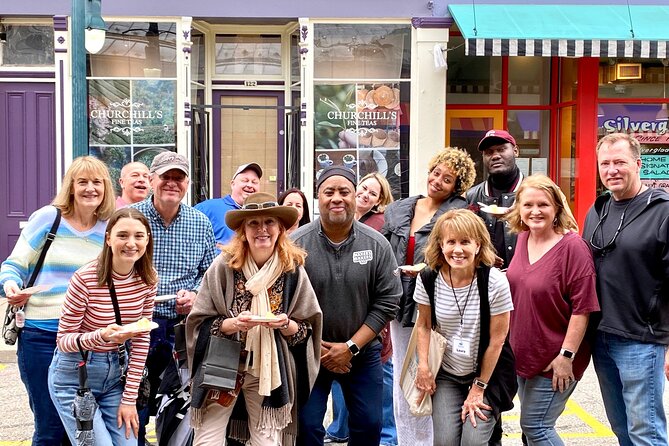
Streetcar Food Tour and Findlay Market with Riverside Food Tours
Read our review →
Jackson Hole: Aerial Tram and Gondolas Sightseeing
Read our review →
Washington DC: Arlington Nat. Cemetery Ticket & Tram Tour
Read our review →
New York City Slavery and Underground Railroad Tour
Read our review →
Alaska Railroad Anchorage to Seward Round-Trip Same Day Return
Read our review →
Colorado: All Aboard the Royal Gorge Route Railroad!
Read our review →Browse the lists this tour appears in