
REVIEW · MUMBAI
Dabbawaala Dhobi Ghat Dahravi slum With Local Train Ride
Mumbai’s most interesting stories often come from people at work. This tour brings you close to the dabbawalas, the lunch-box couriers who move tens of thousands of home-cooked meals across the city, then adds Dhobi Ghat, a local train ride, and Dharavi’s busy network of homes and workshops.
I like the mix of working Mumbai and local transport. You see a famous open-air laundry, watch pottery and recycling in tight spaces, and learn how a community earns its living. The guide’s connection matters too: the guide lives in Dharavi, so the walk is not simply a sightseeing loop.
The main consideration is that this is an active urban tour. You will walk through narrow alleys and working areas, use public transport, and see crowded conditions that may feel intense. Pregnant women are advised not to join, and comfortable shoes are essential.
Key points to know before booking
- The dabbawala story is the tour’s most unusual opening: roughly 5,000 couriers deliver about 130,000 lunch boxes across Mumbai each day.
- Dhobi Ghat is easy to recognize from Mahalaxmi: rows of concrete washing pens sit beside Mahalaxmi railway station.
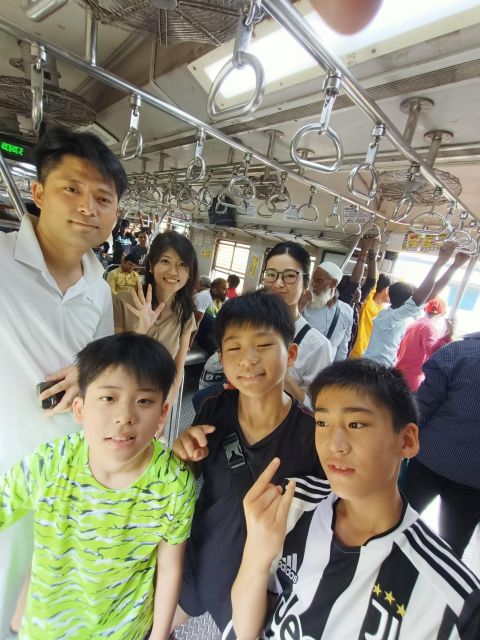
- The local train ride adds real Mumbai context: you travel as residents do rather than seeing the city only from a vehicle.
- Dharavi is presented as a working neighborhood: the route includes leather, pottery, soap, baking, dyeing, recycling, schools, hospitals, homes, and a market.
- The guide lives in Dharavi: that personal link can help you understand the area beyond its label as a slum.
- The price is $34 per person: that is fair for a multi-part city tour with an English-speaking guide, but the value depends on your comfort with a busy walking route.
Why the dabbawalas are the perfect start
The dabbawala system gives you a quick lesson in how Mumbai functions. A dabbawala is, literally, a person who carries a box. In practice, these lunch-box delivery workers collect filled metal or aluminum containers from homes, send them through the city to offices, and return the empty boxes later in the day.
The scale is remarkable. Around 5,000 dabbawalas deliver about 130,000 lunch boxes daily. The system completes roughly 260,000 movements in about six hours, six days a week, for 51 weeks of the year.
What I find most useful here is the contrast between the size of the operation and its simple tools. The service is described as operating without computers or even mobile phones as its core technology. The workers rely on routines, markings, sorting, timing, and cooperation.
That makes this more than a quick photo opportunity. You get a look at a service built around home cooking, office life, rail transport, and neighborhood networks. Mumbai’s famous business energy is often presented through high-rise offices and finance. The dabbawalas show another side of the city, one built on daily discipline and human coordination.
The exact meeting arrangement and time with the dabbawalas are not specified, so you should confirm those details when booking. The important point is that their work forms the first major theme of the tour: Mumbai runs on people who know the city street by street.
More Train Tours in Mumbai:
- Dabbawala, Dhobi Ghat & Dharavi slum Tour with Local Train Ride
★ 5.0 · 102 reviews - Mumbai: Dharavi Slum and Dhobi Ghat Tour with Train Ride
★ 5.0 · 9 reviews - Primmum Mumbai Sightseeing With Local Train Ride Experience
★ 5.0 · 7 reviews
Riding Mumbai’s local train
The train ride gives the day a practical rhythm. Instead of moving between attractions only by private vehicle, you use the same transport system that helps workers cross this huge city.
The ride also connects the tour’s subjects. The dabbawalas depend on Mumbai’s transport network. Dhobi Ghat sits beside Mahalaxmi railway station. Dharavi is part of the city’s central urban fabric, not an isolated place at the edge of Mumbai.
You should expect a public transport experience rather than a sightseeing train. The provided details do not specify the train route, travel time, seating, or carriage type. Keep your belongings secure, follow your guide’s directions, and wear shoes you can walk in comfortably.
I like this part because it keeps the tour grounded. You are not only looking at Mumbai’s working communities. You are also moving through the city in a way connected to their daily routines.
Seeing Mahalaxmi Dhobi Ghat from above
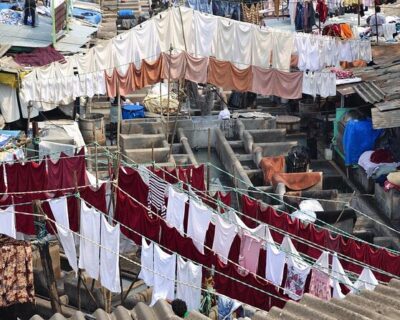
Dhobi Ghat is Mumbai’s famous open-air laundry. The dhobis, or washermen and women, wash clothing in rows of concrete pens, each with its own washing stone. Laundry from hotels and hospitals is handled here in the open air.
The site is next to Mahalaxmi railway station at the Saat Rasta roundabout. It can be seen easily from the flyover bridge near the station, giving you a useful view of the layout.
The visual appeal comes from repetition. Row after row of washing spaces creates a clear picture of the work. You can understand the scale more easily from a raised viewpoint than from ground level, where individual pens may be harder to take in.
This stop is short in concept but important in context. Mumbai is a city where land is expensive and work often happens in compact spaces. Dhobi Ghat shows how a major service industry operates in a highly organized outdoor setting.
There is a practical limit here. You are looking at an active workplace, not entering a museum built for visitors. The focus should be observation and explanation. The tour description does not promise a hands-on laundry activity, so expect to view the operation rather than take part in it.
Entering Dharavi with a local connection

Dharavi was founded in 1882 during British rule and is now a dense community in the middle of Mumbai. It is often described as Asia’s largest slum, but that label tells only part of the story.
The useful reason to visit with a guide is that Dharavi is also a place where people live, make products, run businesses, study, worship, and trade. The route includes homes, schools, hospitals, small lanes, a market, and workspaces.
The guide’s own connection is especially important. Since the guide lives in Dharavi, you are not relying only on outside descriptions of the neighborhood. You can ask about the daily realities of a community that is often reduced to poverty in films and headlines.
The tour also visits a place associated with Slumdog Millionaire. That connection may interest film fans, but it should not become the main reason for coming. The more useful lesson is seeing how much economic activity takes place in a very small area.
You should be prepared for close quarters. Narrow alleys are part of the route, and some workspaces may be compact. Keep an open mind and follow the guide’s instructions about photography and personal space. The supplied information does not give a photography policy, so ask before taking pictures of people, homes, or workshops.
Same tracks, a very different ride:
- Mumbai City + Dabbawala aka Lunchbox + Train Ride Tour – The Unfeigned Mumbai.
★ 5.0 · 6 reviews - Mumbai: Dhobi Ghat Tour with Dharavi and Train Ride Options
★ 3.4 · 5 reviews - Dharavi Slum & Dhobi Ghat Mumbai: Private Guided Tour
★ 5.0 · 4 reviews - Dhobi Ghat Laundry and Dharavi Slum Tour with Local Train
★ 5.0 · 4 reviews
Small workshops that make Dharavi work

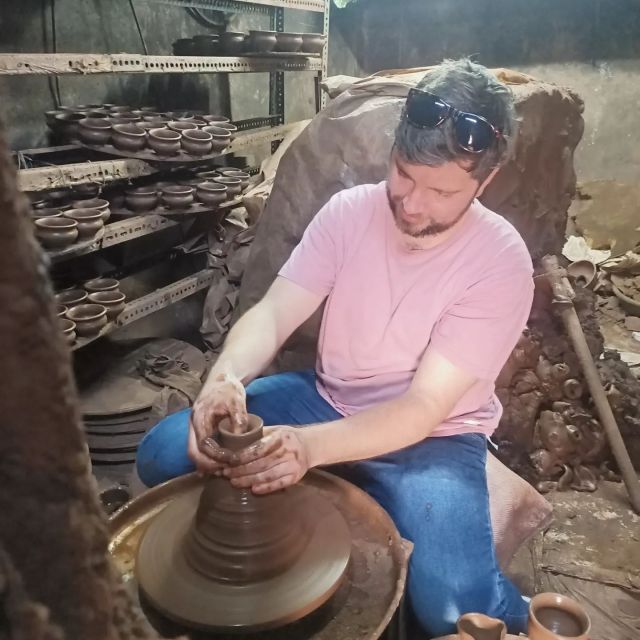
The tour’s workshop stops are where the visit gains its strongest detail. You may see leather industries, pottery, soap making, bakeries, color dyeing, and plastic recycling.
Each activity shows a different way people use limited space. A pottery area connects craft with local trade. A bakery shows food production close to the people who buy it. Leather work and dyeing reveal the industrial side of the neighborhood, while soap making shows how basic products can be made in small units.
Plastic recycling is another important stop. It gives you a look at the less visible work behind city consumption. Used material does not simply disappear after collection. It can be sorted, processed, and returned to the economy through small businesses.
The tour also includes recycling of vegetable oil cans. This is a modest detail, but it helps you notice the practical habits that keep a dense neighborhood functioning. Dharavi’s economy is not one single industry. It is a collection of specialized tasks linked to shops, households, markets, and outside buyers.
Some workshops may be noisy, crowded, or strongly scented. That is part of seeing real production rather than a polished demonstration. If you prefer quiet attractions and carefully arranged displays, this route may feel demanding.
Schools, hospitals, homes, and a local market
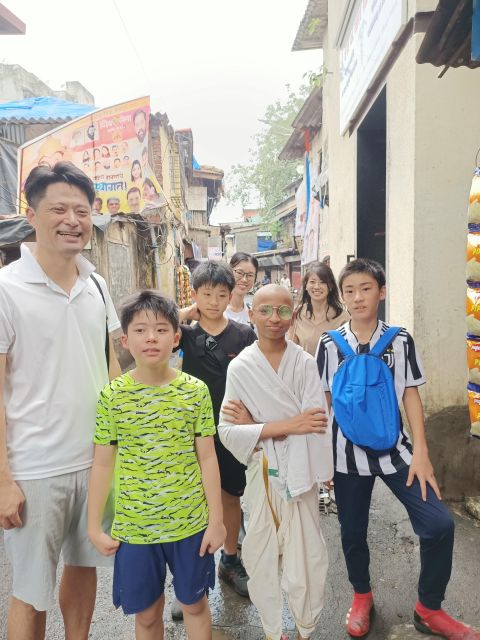
Dharavi is not only a collection of workplaces. The route includes schools, hospitals, homes, and a market, which helps you see the neighborhood as a complete community.
A school tells you that children live and learn here, not simply pass through. A hospital points to the everyday services any large community needs. Homes placed beside workshops show how closely work and domestic life can overlap.
The market adds another layer. Markets are where production becomes daily commerce, and a visit can help you understand how goods move from small makers to local customers.
One particularly interesting detail is the mention of Muslim people making a shrine for Hindus. This is a small but meaningful example of shared neighborhood life. It challenges the easy assumption that religious communities always operate separately. You see cooperation expressed through a local project rather than through a broad lecture about harmony.
Still, you should approach these places with care. Homes, schools, and medical facilities are not attractions in the usual sense. Let the guide decide where it is appropriate to stop, and avoid treating residents’ daily lives as a backdrop.
What the $34 price really covers
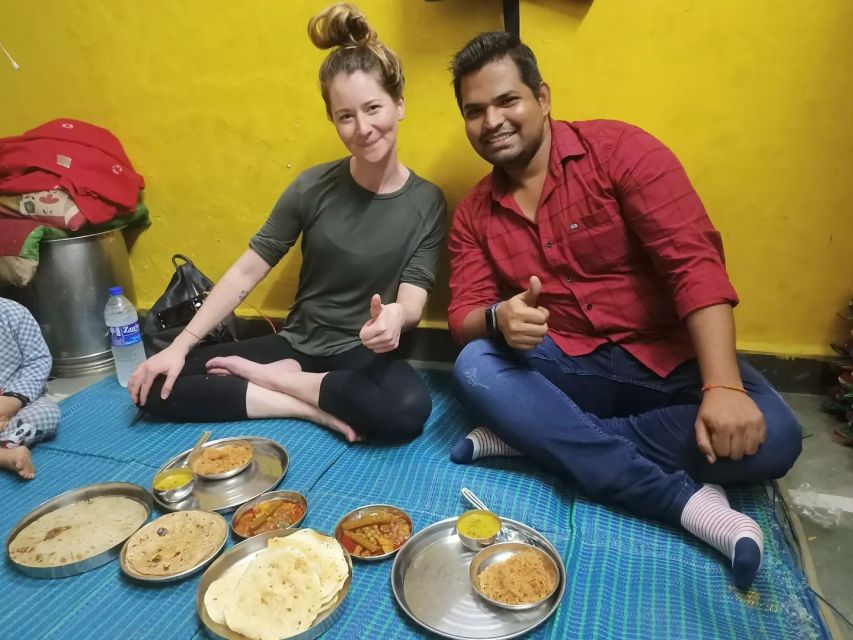
At $34 per person, this is a strong value if you want several different Mumbai experiences in one outing. The price brings together the dabbawala story, Dhobi Ghat, a local train ride, and a guided walk through Dharavi.
You also get access to subjects that are difficult to understand from a passing taxi ride. The dabbawala system needs explanation. Dhobi Ghat makes more sense when you know what work takes place there. Dharavi benefits from a local guide who can connect workshops, homes, services, and markets.
The price is less attractive if you want a private, slow-paced, luxury-style tour. The public train and narrow walking route make this a practical city experience, not a polished sightseeing package.
The English-language guidance is useful because much of the value comes from context. Without explanation, you may see concrete washing pens, crowded lanes, and small workshops without understanding how they fit together. The guide’s own residence in Dharavi gives the neighborhood portion a personal point of reference.
You can reserve now and pay later, which helps if your Mumbai plans are still changing. Cancellation is allowed up to 24 hours before the tour for a full refund. Those terms are useful, but the bigger decision is personal: are you comfortable spending part of your day in working communities where space is tight and daily life is visible?
Who will get the most from this tour
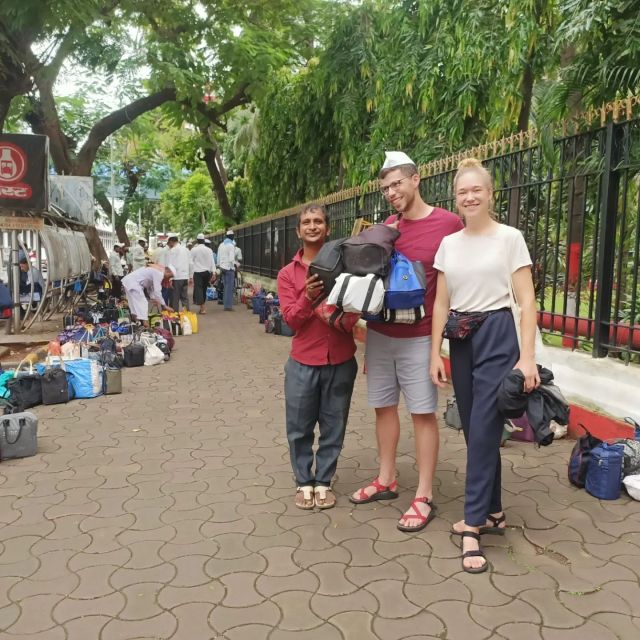
I would choose this tour if you want Mumbai explained through its workers and neighborhoods. It suits first-time visitors who want more than monuments, as well as returning visitors looking for a different side of the city.
It is a good match for you if you enjoy:
- Public transport and ordinary city routines
- Local industries and small-scale production
- Guided walks with social and economic context
- Food, laundry, recycling, pottery, and market activity
- Learning from a guide with a direct connection to the neighborhood
It may not suit you if you want a relaxed day with long breaks, formal museums, or wide open spaces. The route includes walking, narrow alleys, active work areas, and public transport.
Pregnant women are specifically advised not to join. Alcohol and drugs are not allowed. Comfortable shoes are the one packing item clearly required, and they are sensible advice for any tour combining a train ride with a neighborhood walk.
Should you book the Dabbawala, Dhobi Ghat, and Dharavi tour?

Book it if you want a direct look at how Mumbai works. The strongest parts are the human systems: dabbawalas moving lunch boxes, dhobis handling laundry, and Dharavi residents running many kinds of small businesses in a tightly packed community.
The tour’s best feature is its range. In one experience, you connect transport, labor, recycling, craft, home life, and local commerce. The guide’s life in Dharavi adds useful first-hand context.
Skip it if you dislike crowded public transport or feel uneasy visiting residential and working areas. This is not a comfortable sightseeing bubble. It asks you to pay attention, show respect, and accept that Mumbai can be noisy, close, and intense.
For $34, I think it is a worthwhile choice for curious visitors who want the city’s everyday systems explained clearly. Go with comfortable shoes, modest expectations, and respect for the people whose work and homes you are seeing.
FAQ
How much does the tour cost?
The tour costs $34 per person.
What language is the tour offered in?
The tour is offered in English.
Does the experience include a Mumbai local train ride?
Yes. A local train ride is part of the experience.
What places are included?
The tour includes the dabbawalas, Mahalaxmi Dhobi Ghat, a Dharavi walk, a place connected with Slumdog Millionaire, and local work areas such as leather, pottery, soap making, baking, dyeing, plastic recycling, and vegetable oil can recycling.
Is the tour suitable for pregnant women?
No. The experience is listed as not suitable for pregnant women.
What should I bring, and what is not allowed?
Bring comfortable shoes. Alcohol and drugs are not allowed.
Just added around Mumbai
- Mumbai Unseen: Local Train Ride And Sightseeing Tour★ 5.0 · 3 reviews
- Mumbai Slum Tour with Dhobi Ghat Laundry & Train Ride Tour★ 5.0 · 2 reviews
- All in one-Combo of City, Dhobighat, Slum & Dabbawala with ferry and train ride.★ 4.5 · 2 reviews
- Dharavi Slum & Dhobi Ghat Mumbai: Private Guided Tour★ 5.0 · 4 reviews
- Meet Dabbawala Visit Dhobi Ghat & Dharavi slum with Train★ 5.0 · 2 reviews
- Mumbai: Dhobi Ghat Tour with Dharavi and Train Ride Options★ 3.4 · 5 reviews
- Dhobi Ghat Laundry and Dharavi Slum Tour with Local Train★ 5.0 · 4 reviews
- Best Combo Tour: Dabbawalas, Dhobi Ghat and Slum with Train★ 3.5 · 3 reviews
Mumbai Train Tours, compared.

Dabbawala, Dhobi Ghat & Dharavi slum Tour with Local Train Ride
Read our review →
Primmum Mumbai Sightseeing With Local Train Ride Experience
Read our review →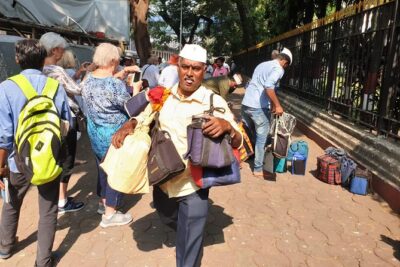
Mumbai City + Dabbawala aka Lunchbox + Train Ride Tour – The Unfeigned Mumbai.
Read our review →
Dhobi Ghat Tour with Dharavi and Train Ride Options
Read our review →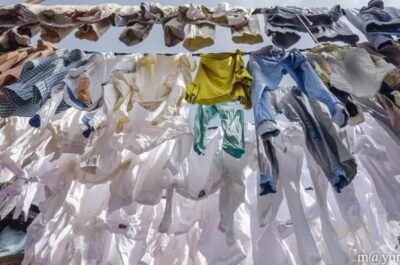
Dhobi Ghat Laundry and Dharavi Slum Tour with Local Train
Read our review →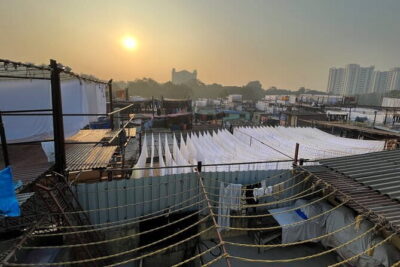
Dharavi Slum & Dhobi Ghat Mumbai: Private Guided Tour
Read our review →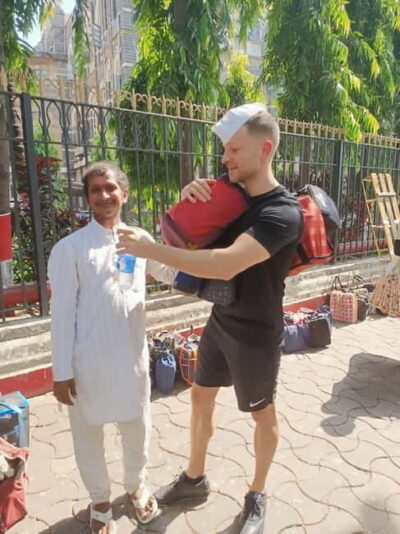
Best Combo Tour: Dabbawalas, Dhobi Ghat and Slum with Train
Read our review →Browse the lists this tour appears in