
REVIEW · MUMBAI
Dharavi Slum & Dhobi Ghat Mumbai: Private Guided Tour
Mumbai’s Dharavi is far more than a maze of crowded lanes. It is a working district where pottery, leather, textiles, and plastic recycling support a major local economy. This private three-hour tour puts that enterprise at the center, then pairs it with a look at Mahalaxmi Dhobi Ghat, the city’s famous open-air laundry.
I like two things here: the local-led storytelling, which treats Dharavi as a community rather than a spectacle, and the chance to see real small businesses at work. Guides including Priti, Shruti, Max, and Ruba have been singled out for clear answers, warm manners, and careful attention to guests’ questions.
The main consideration is that this is a walking tour through narrow lanes, and Dhobi Ghat is viewed from outside rather than entered. The route may also involve local train travel, so this will suit you better if you enjoy an active, unpolished city experience rather than a polished sightseeing circuit.
Key points before you book
- Dharavi’s working economy: See pottery, leatherwork, textiles, and recycling instead of receiving only a poverty-focused view.
- Kumbharwada pottery area: The tour includes a look at Dharavi’s pottery workshops and the people who keep this traditional work going.
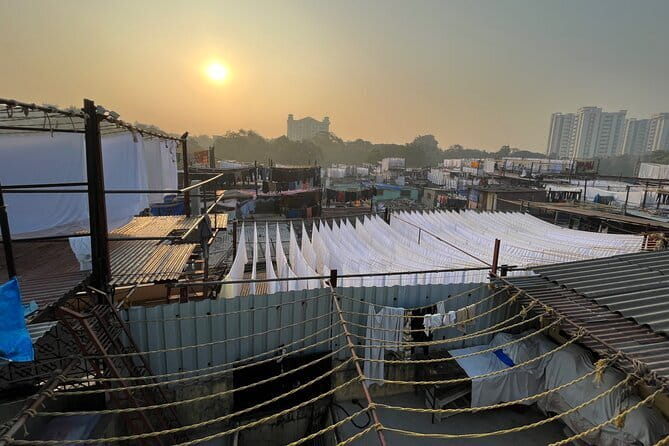
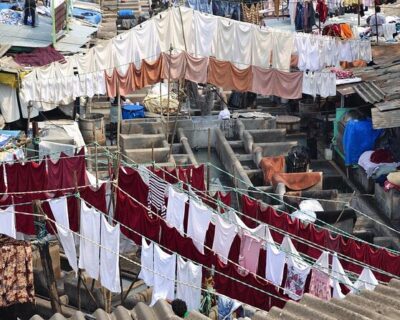
- Mahalaxmi Dhobi Ghat: Watch clothes being washed, dried, and pressed at the world’s largest open-air laundry from a designated viewing point.
- Private attention: Only your group takes part, giving you more time for questions and a more personal pace.
- Helpful local guides: Priti, Shruti, Max, and Ruba are named guides praised for friendly, prompt, informative service.
- Useful inclusions: Bottled water, train tickets, and a professional English-speaking guide are included, with group discounts available.
Dharavi is a business district, not a postcard of poverty
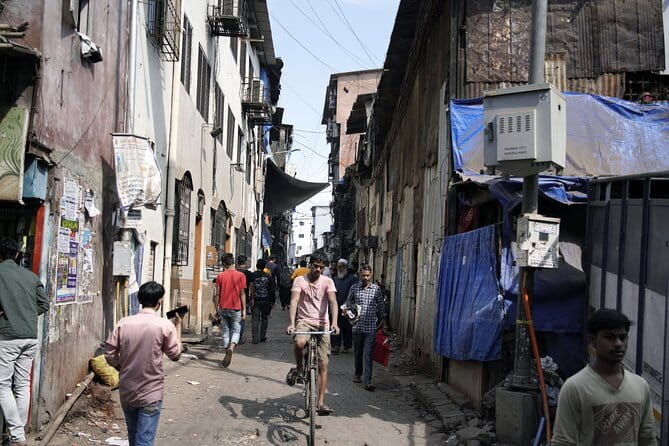
The most useful idea on this tour is the focus on the enterprise of Dharavi. Many visitors arrive with a narrow picture of a slum: cramped homes, difficult conditions, and little else. This experience tries to correct that picture by showing how people work, trade, produce, and support one another inside a dense urban district.
You will walk through narrow lanes with a local guide who explains Dharavi’s history, economy, and community life. The setting is busy and close-packed, but the point is not simply to look around. You are there to understand how industries operate in limited space and how residents contribute to Mumbai’s wider economy.
That shift in focus matters. A responsible tour should not reduce a neighborhood to hardship. Here, the guide explains both the challenges and the resourcefulness of the area. You may see workshops where objects are made, sorted, repaired, or prepared for sale. The experience is most valuable when you pay attention to the work itself and listen to the guide’s explanation of how the district functions.
The tour also allows interaction with locals, though the information does not promise a formal workshop or hands-on activity. Think of this as a guided walk with observation and conversation, not a staged cultural performance.
More Private Train Tours in Mumbai:
- From Delhi: Private Taj Mahal and Agra Tour by Express Train
★ 4.9 · 1,605 reviews - Delhi to Agra and Taj Mahal Private Day Trip by Express Train with Lunch
★ 5.0 · 1,389 reviews - Private Excursion to Maeklong Railway and Floating Markets
★ 5.0 · 850 reviews
Leather, pottery, textiles, and plastic recycling
Dharavi’s industries give the walk its substance. The tour specifically includes leatherwork, pottery, recycling, and textile production. Each one offers a different way to understand the neighborhood.
Leather is one of the important trades highlighted by the guide. You may see workers handling materials and producing goods in compact workspaces. The value of this stop is not only seeing the finished products. It is learning how a local trade fits into a neighborhood where homes and workplaces often sit close together.
Kumbharwada, Dharavi’s pottery area, adds a different texture to the visit. Pottery workshops show a more traditional side of the district, with craft skills passed through working communities. The tour does not promise a pottery lesson, so you should expect to watch and listen rather than make something yourself.
Plastic recycling is another striking part of the route. The tour describes sophisticated recycling units, which challenges the common idea that Dharavi is only a place of informal or unplanned work. Recycling requires sorting, processing, and organization. Seeing that system helps you understand why Dharavi has such a strong economic role in Mumbai.
Textiles round out the picture. Together, these industries show a district with many types of work rather than one single identity. I like that the route gives you several lenses: craft, manufacturing, repair, recycling, and trade.
Photography requires good judgment here. The description emphasizes respectful storytelling, and that should guide your behavior. Ask before photographing people or workplaces, follow the guide’s instructions, and remember that you are walking through someone’s home and job site, not a film set.
Dhobi Ghat from the outside
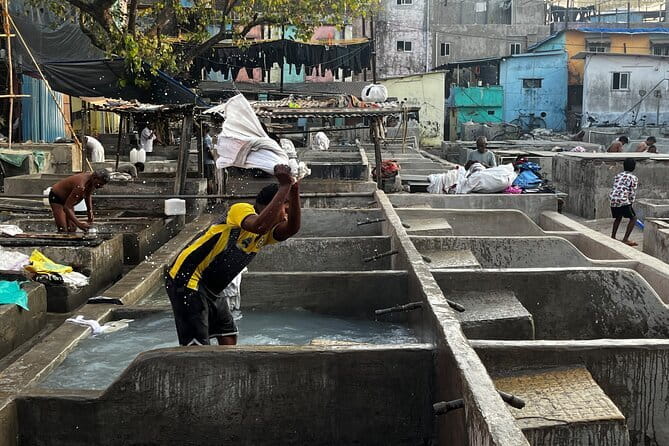
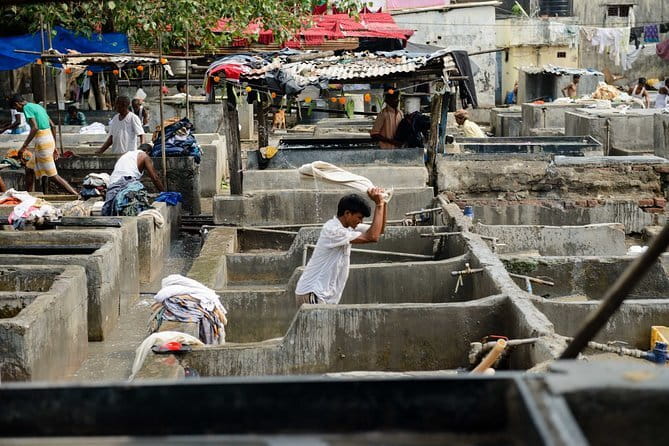
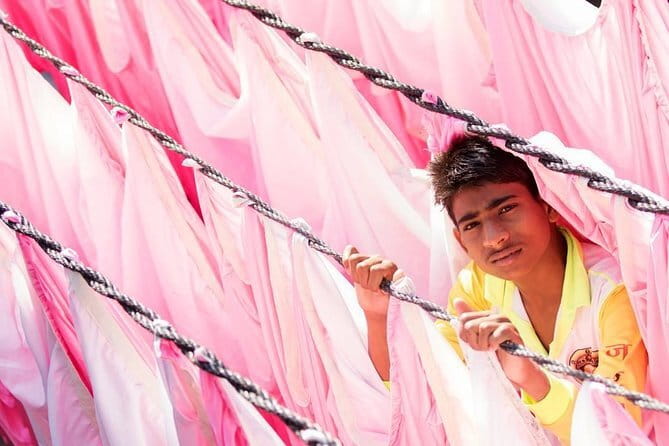
The Dhobi Ghat stop offers a different look at Mumbai’s working life. From a designated vantage point, you can watch clothes being washed, dried, and pressed in the open air. The laundry serves hotels, hospitals, and households across the city, so this is not a display preserved only for tourists. It is part of Mumbai’s daily service network.
Your guide explains the dhobis’ manual washing methods, routines, and the scale of the operation. You will also hear about the site’s long working tradition and the challenges involved in keeping the system going.
The tour does not take you inside Dhobi Ghat. That is worth knowing before you book. You receive an outside view rather than a close walk through the washing area. For many people, this is a sensible arrangement because it gives you a clear perspective without interrupting a working operation.
The viewing point also helps with photography. The open layout lets you see the organized movement of clothing, workers, washing areas, and drying spaces. Still, the best value comes from the explanation, not from trying to collect a dramatic photograph. Mumbai’s laundry system makes more sense when you understand who uses it and why it remains important.
The supplied details place the tour’s end at Dhobi Ghat in Shanti Nagar, Lower Parel, where you can catch an Uber or take a train back to your hotel. That makes the final stop practical if you are planning to continue sightseeing on your own.
A private walk with room for questions
This is a private activity, so only your group participates. That is a major advantage in Dharavi. Narrow lanes can make large groups awkward, and a private setting gives you more freedom to pause when something catches your interest.
The guide can also adjust the amount of explanation to your questions. The strongest comments about this experience focus on the guides’ personal service. Priti is noted for helping a guest understand why Dharavi matters to Mumbai. Shruti is described as prompt, friendly, and clear, with special care given to questions and arrangements. Max is praised for useful information and attention to requests, while Ruba is credited with offering insight into daily life.
Those details suggest that the guide can shape the quality of the morning. I would make a point of asking about the industries you see, how the businesses connect to the rest of Mumbai, and what daily life is like for people who live and work in the area.
The tour includes a professional English-speaking guide. That is important because much of the value lies in context. Without explanation, you might see a workshop or a row of laundry stations but miss the wider economic story.
More Guided Trips in Mumbai:
- Hanoi: Guided Food Tour with Train Street Visit
★ 4.9 · 6,239 reviews - From Cairns: Self-Guided Kuranda Trip with Train and Skyrail
★ 4.6 · 3,392 reviews - Hanoi: Guided Street Food Tour with Train Street Experience
★ 4.9 · 2,479 reviews - Milan to St. Moritz: Scenic Bernina Train Tour with Guide
★ 4.4 · 1,840 reviews
Timing, transport, and meeting details
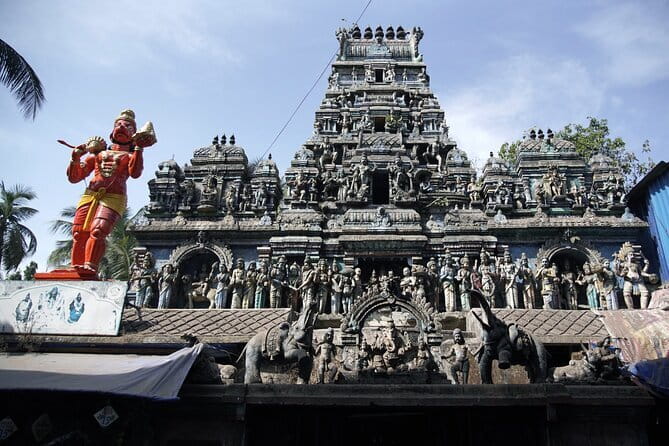
The experience lasts about three hours. The published plan gives roughly 15 minutes to Dhobi Ghat and about two hours to Dharavi, with the remaining time allowing for meeting, movement, and transitions.
The starting point is Third Wave CoffeeTip Road, Unit 58, Ground, Ram Mahal, Senapati Bapat Marg, Marinagar Colony, Station, Mahim, Mumbai, Maharashtra 400016. You should allow time to locate the meeting point and arrive ready for a walking tour.
Train tickets are included, which is useful for a route that connects different parts of Mumbai. Bottled water is also provided, a small but welcome detail during a walk. The tour description also refers to private air-conditioned transfers, while the included items specifically list train tickets. Because those details do not fully match, I would confirm the exact transport arrangement when booking.
The tour is near public transportation, and most people can participate. No special accessibility details are provided, so you should be comfortable walking through narrow lanes and managing ordinary city travel. The experience ends at Dhobi Ghat rather than returning you to the original meeting point.
Is $17.57 a good value?
At $17.57 per person, this is priced modestly for a private experience in Mumbai. The value comes less from admission tickets, since both main stops are described as free to enter or view, and more from the guide, local transport, and access to a focused explanation of places that are not easy to understand on your own.
A private guide at this price is especially useful if you are traveling with friends or family and can share the cost. Group discounts may make the price more attractive for larger private parties.
You should also keep the limits in mind. This is not a long museum visit, a cooking class, or a polished heritage tour. You are paying for a guided walk, local context, train tickets, and a chance to see working neighborhoods. If you value authentic city life and direct explanation, the price is strong. If you want comfort, extensive indoor time, or a photo-only outing, the value may feel less convincing.
The 5-star feedback attached to the experience places the strongest emphasis on the guides. That makes sense. The streets and businesses are the setting, but the guide determines whether you see a collection of crowded lanes or understand a working part of Mumbai.
How to approach Dharavi respectfully
Your attitude will shape the experience. Dharavi is home to residents and workers, not an attraction built for outsiders. Go with curiosity, listen carefully, and avoid treating people’s lives as visual souvenirs.
The tour’s emphasis on dignity is one of its best features. It presents residents as workers, business owners, craftspeople, and neighbors. You will still see difficult conditions, but the tour does not make hardship the whole story.
Wear practical clothing and shoes suitable for walking. The information provided does not give a dress code or weather advice, so keep your choices simple and comfortable. Carry only what you need, follow your guide through the lanes, and ask before taking photos.
A good question can make the tour far more useful. Ask how the pottery trade works, where recycled plastic goes, how leather production is organized, or how Dhobi Ghat serves hotels and hospitals. The guides are specifically praised for answering questions, so use the private format to learn rather than simply follow the route.
Who should book this tour?
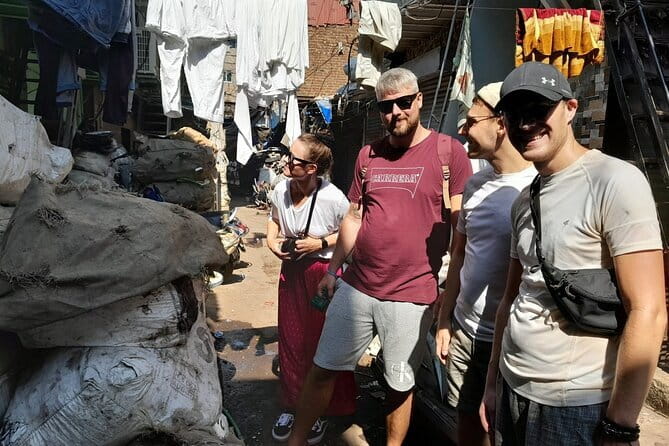
I would recommend it to you if you want to understand Mumbai through its working neighborhoods. It is a good match for first-time visitors who want context, photographers who prefer a designated viewpoint at Dhobi Ghat, and families or friends who would benefit from a private guide.
It also suits people who are uncertain about taking a slum tour. The focus on industries and community gives the visit a more careful purpose than simply looking at poverty. Still, you should be comfortable with the fact that this is a real neighborhood and an active workplace.
You may want to skip it if you dislike walking in confined spaces, need a fully accessible route, or prefer formal attractions with clear visitor facilities. The exact transport setup should also be confirmed, since both air-conditioned transfers and train tickets are mentioned.
Cancellation is free if you cancel at least 24 hours before the local start time. Cancellations or changes within 24 hours are not refunded or accepted.
Should you book it?
Book this tour if you want a short, affordable introduction to the people and industries that keep Mumbai moving. The combination of Dharavi’s pottery, leather, textile, and recycling work with Dhobi Ghat’s huge laundry operation gives you two strong examples of the city’s practical, human side.
The best reason to choose it is the private local guide. Priti, Shruti, Max, and Ruba are all highlighted for friendly explanations and careful attention. Confirm the transport details, arrive ready to walk, and approach the neighborhood with respect. Do that, and this can be one of the more useful ways to see Mumbai beyond its famous monuments.
FAQ
How long does the Dharavi and Dhobi Ghat tour last?
The tour lasts approximately three hours. The stated schedule allows about 15 minutes at Dhobi Ghat and around two hours in Dharavi, with the rest of the time used for travel and transitions.
Is this a private tour?
Yes. Only your group participates, so you can ask questions and move at a more personal pace.
What is included in the price?
Bottled water, train tickets, and a professional English-speaking guide are included. Group discounts are available.
Can I enter Dhobi Ghat?
No. The tour views Dhobi Ghat from a designated vantage point. Your guide explains the washing, drying, and pressing work from outside.
Where does the tour end?
The tour ends at Dhobi Ghat in Shanti Nagar, Lower Parel, Mumbai. From there, you can take an Uber or a train back to your hotel.
What is the cancellation policy?
You can cancel for a full refund up to 24 hours before the experience start time. Cancellations or changes made less than 24 hours before the start time are not refunded or accepted.
Just added around Mumbai
- Mumbai Unseen: Local Train Ride And Sightseeing Tour★ 5.0 · 3 reviews
- Mumbai Slum Tour with Dhobi Ghat Laundry & Train Ride Tour★ 5.0 · 2 reviews
- All in one-Combo of City, Dhobighat, Slum & Dabbawala with ferry and train ride.★ 4.5 · 2 reviews
- Meet Dabbawala Visit Dhobi Ghat & Dharavi slum with Train★ 5.0 · 2 reviews
- Mumbai: Dhobi Ghat Tour with Dharavi and Train Ride Options★ 3.4 · 5 reviews
- Dhobi Ghat Laundry and Dharavi Slum Tour with Local Train★ 5.0 · 4 reviews
- Dabbawaala Dhobi Ghat Dahravi slum With Local Train Ride★ 5.0 · 2 reviews
- Best Combo Tour: Dabbawalas, Dhobi Ghat and Slum with Train★ 3.5 · 3 reviews
Mumbai Train Tours, compared.

Dabbawala, Dhobi Ghat & Dharavi slum Tour with Local Train Ride
Read our review →
Primmum Mumbai Sightseeing With Local Train Ride Experience
Read our review →
Mumbai City + Dabbawala aka Lunchbox + Train Ride Tour – The Unfeigned Mumbai.
Read our review →
Dhobi Ghat Tour with Dharavi and Train Ride Options
Read our review →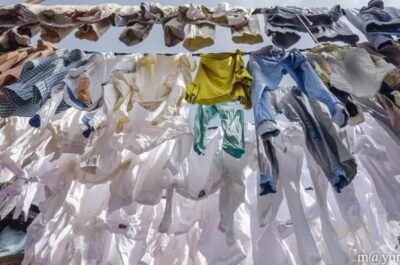
Dhobi Ghat Laundry and Dharavi Slum Tour with Local Train
Read our review →
Best Combo Tour: Dabbawalas, Dhobi Ghat and Slum with Train
Read our review →
Mumbai Unseen: Local Train Ride And Sightseeing Tour
Read our review →Browse the lists this tour appears in